
What Instinct actually is
Instinct is a personal AI agent you text or call, one of a new wave of AI personal assistants that act instead of just chatting. It runs errands on its own computer: booking travel, ordering groceries, chasing threads you forgot about. It launched invite-only in late August 2026, and it comes from a company called Spear Street Technology, led by Noah Shinn, who co-wrote the τ-bench paper, a benchmark that tests AI agents on simulated customer service tasks.
I work the eesel support queue every day, so I read Instinct from the receiving end. The Instinct AI review covers what it is like as a user, and the Instinct AI pricing post covers what it costs. This post answers the question support teams actually type into Google: can it help my support team, and what happens when it shows up in my inbox?
Three updates since launch matter for support teams:
- Its own email address (Sep 8). Each Instinct gets an inbox so it can "contact a restaurant about a special request, ask a business about availability, or sign up for a service," per Noah Shinn's launch post. The addresses sit on the
mail.instinct.comdomain. - Phone calls via Instinct Concierge (Sep 16). The Concierge announcement lists booking a restaurant that won't take online reservations, getting on a dentist's cancellation list, or having "that cable bill sorted out."
- Shopify partnership (Sep 28). Instinct says 35% of its users shop through it, and the Shopify post promises "delivery updates and return-window reminders" inside the same chat.
There's one more: the Instinct-to-Instinct network, where agents coordinate with each other, lists "Small local businesses" among the contacts a user's agent can talk to, per Noah Shinn's announcement. Instinct says agents had coordinated over 300k times in the network's first week.
The Shopify news is a hint about where the tickets will land: ecommerce support desks, right in the refund, return and order-status queue. It's the same agentic commerce trend that has stores rethinking checkout, now reaching the after-sale side.
Can you use Instinct to run your customer support?
Short answer: no, and the reasons are in Instinct's own documents rather than in any opinion of mine.
The Instinct terms (last revised August 26, 2026, unchanged when I re-checked on October 6) say: "We hereby permit you to use the Services for your personal use only." There is no business, team or commercial plan anywhere on instinct.com, and the /business, /help and /faq pages all return a 404. The terms do mention someone using it "on behalf of a company," but the license itself stays personal.
Even setting the license aside, a support queue needs things a personal agent isn't shaped for. Here's how the two line up:
| What a support queue needs | Instinct today | A support AI like eesel |
|---|---|---|
| License for business use | Personal use only | Built for business queues |
| Helpdesk connection | None published | Zendesk, Freshdesk, Gorgias and more |
| Answers from your knowledge | Works from the user's own accounts | Your help center, macros and past tickets |
| Who it works for | One person (your customer) | Your team |
| Test before going live | No published test mode | Simulation on past tickets |
| Escalation rules | None for a queue | Hands off what it isn't sure of |
| Liability if it goes wrong | Capped at the greater of $100 or 6 months of fees | Your vendor contract |
The liability line comes straight from section 9 of the terms, which cap Instinct's total liability at "the greater of one hundred dollars ($100.00), or the amount you paid" in the past six months. That's a reasonable cap for a personal errand app. It's not something you'd want sitting between your brand and a customer.
If you were hoping for a cheap generalist agent to work your queue, the same "personal agent, wrong shape" problem applies to Grok Bot for customer support, and the same goes for Meta Muse for customer support.
Open-source Hermes Agent for customer support is closer, but you'd be building the support layer yourself.
The tool you want there is a support-specific AI agent, and if you're still weighing personal agents, the Instinct AI alternatives list covers the field.
The real support story: Instinct is on your customer's side
Here's the reframe. For support teams, Instinct isn't a tool to buy. It's a new kind of customer to serve.
Noah Shinn spelled out the support use case himself in the email launch thread: "forward an order confirmation and ask Instinct to arrange a return. It can contact support, provide the order details, ask whether you'd prefer a refund or replacement, and bring you the return label." TechCrunch's post on the same launch summed it up as letting the agent "contact businesses, handle support requests."
Users are already pointing it at the companies they least enjoy calling:
"give instinct a phone number. I'll never have to deal with customer service then"
A viral prompt in early September had Instinct users audit their Amazon order history and file claims for anything they were owed. The results are a preview of your queue:
"I asked Instinct to go through all my Amazon purchases and get me refunds. And it worked perfectly... And instinct works with support to get you refunded the difference."
Another user, Sachin Seth, said the same prompt found a refund "short by $3 from an order back in 2025" and came back with "a $10 goodwill refund." Somebody on a support team made that $10 call in response to an agent. That's a policy decision, and it'll get made thousands of times.
And the one that should make every refund-policy owner sit up:
"My first SMS to my Instinct agent returned me $88 - and I can't imagine the refund was in line with that company's policy; an agent with infinite time just happened to be infinitely persistent."

(Worth knowing: Jonny's post goes on to pitch his own company's product, but the $88 story is his own experience.)
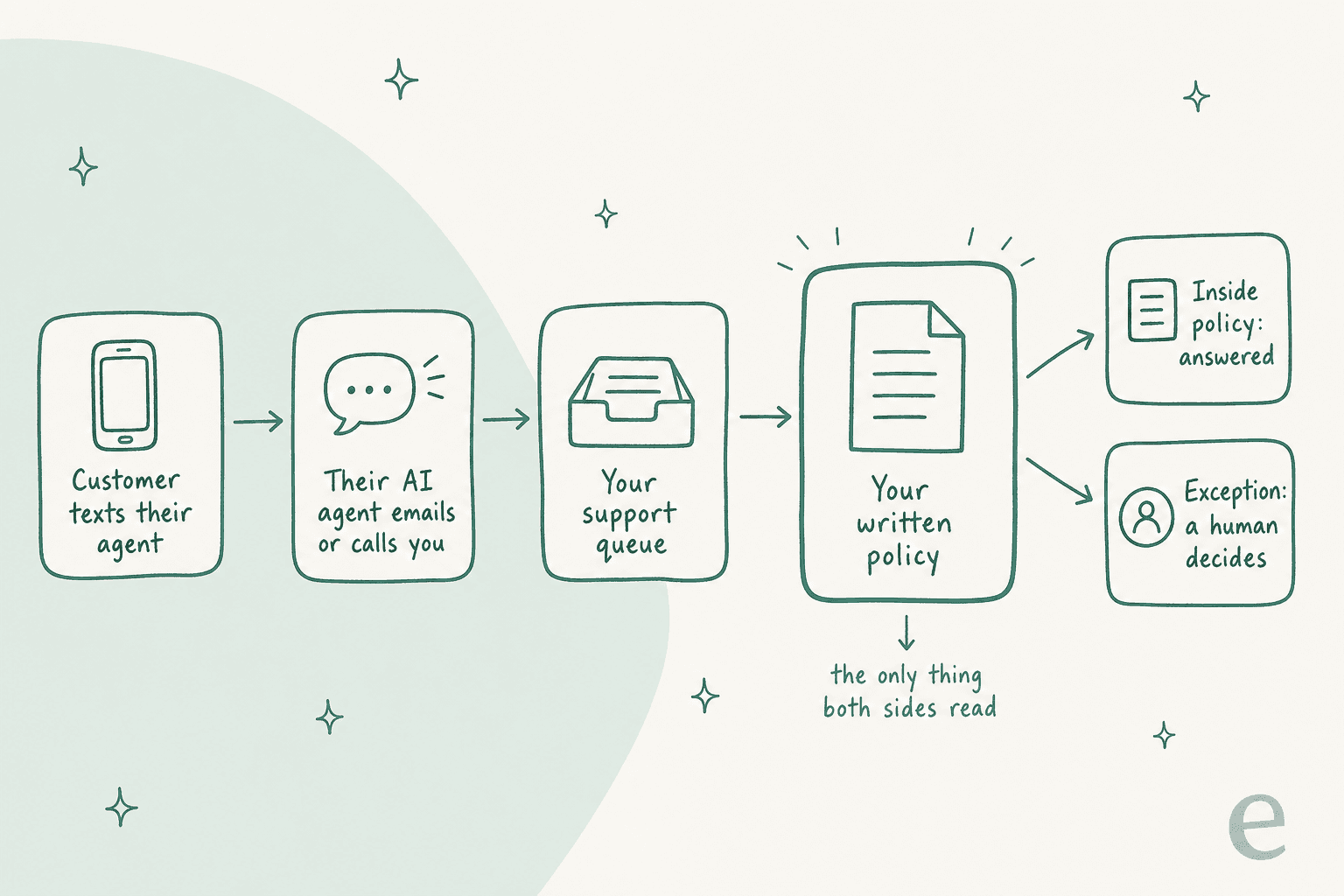
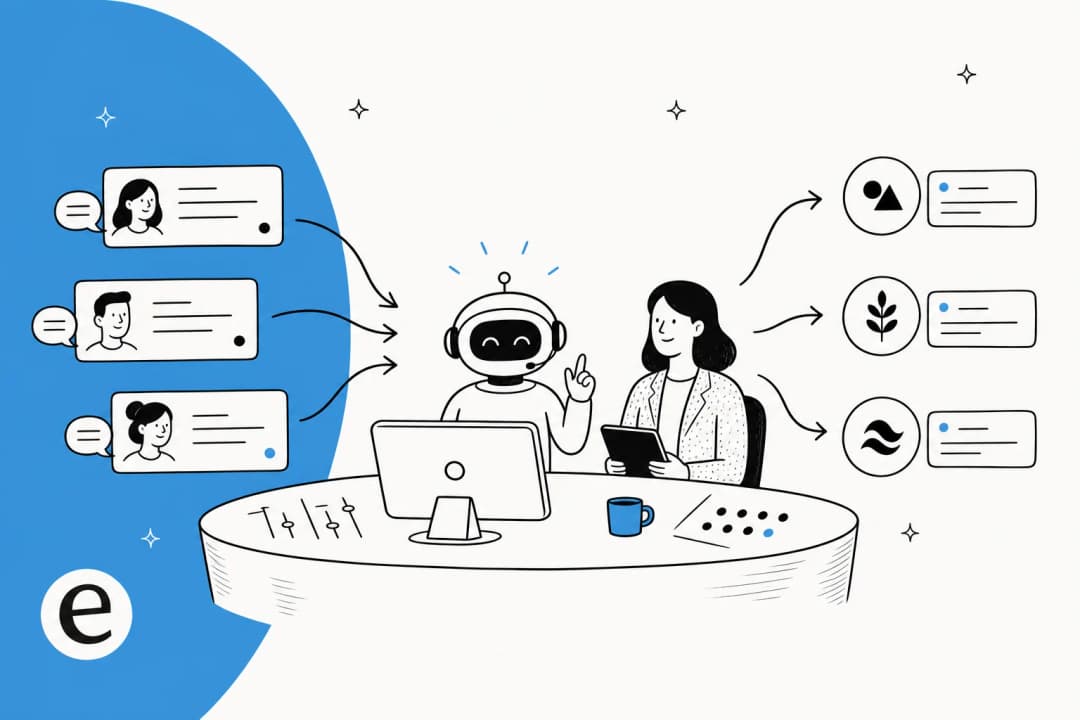
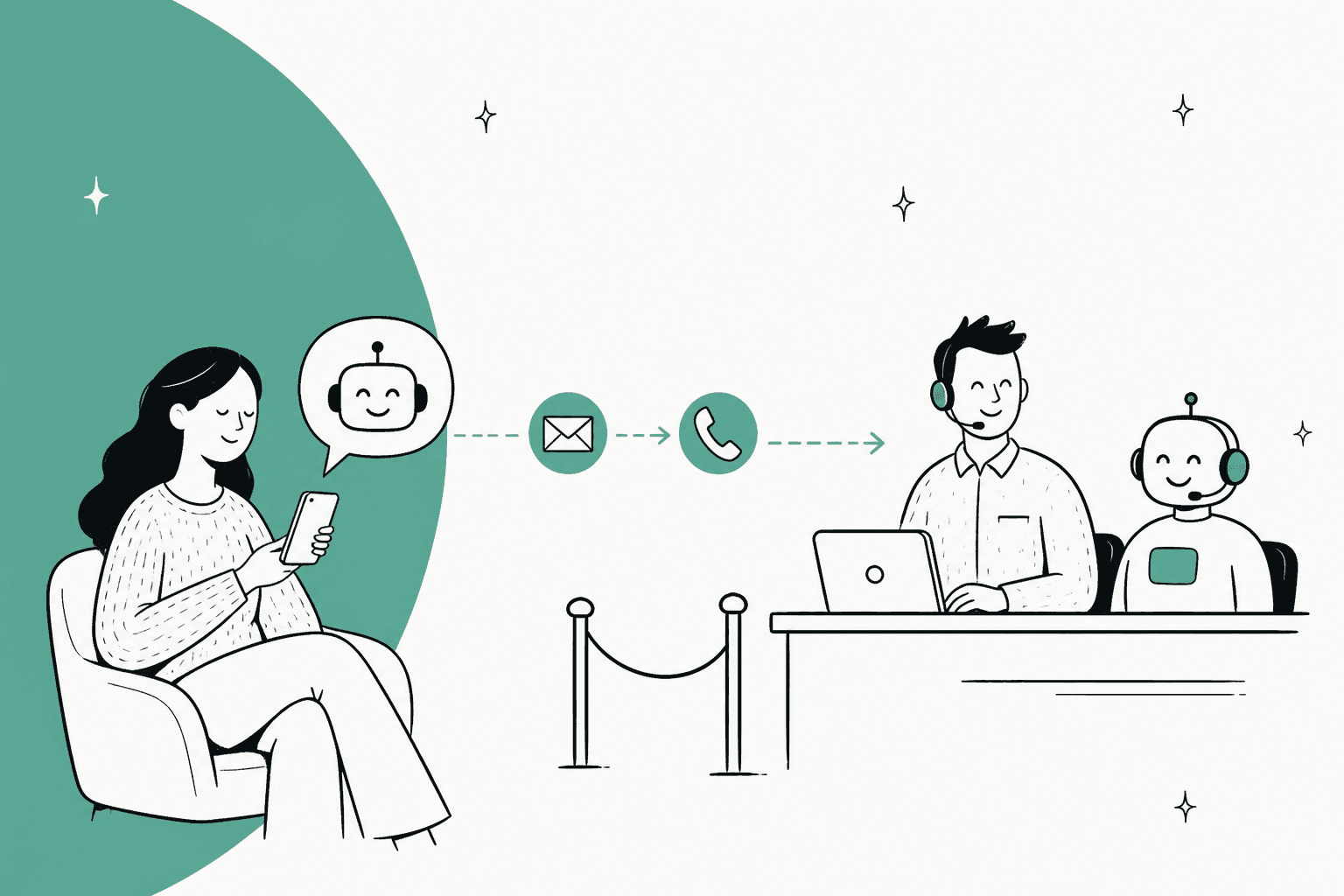
The picture above is the whole shift in one line. The customer talks to their agent, their agent talks to your queue, and the only thing both sides read is your written policy. If that policy lives in one senior agent's head, the persistent bot will find the gap between what's written and what you actually do.
What changes when the customer is an agent
Most of the tickets won't be new. When I look at what eesel customers bring to me and the team, the same three requests dominate: one multi-brand ecommerce operator handling 500+ tickets a day told the eesel team that refund requests, unsubscribes and order tracking make up most of their volume. Those are exactly the errands an agent like Instinct is built to run, alongside chargeback questions and the steady stream of subscription cancellations.
The volume is the part to plan for. When filing a complaint costs the customer nothing, more of them get filed:
"AI agents reduce the cost of complaints/requests to ~ zero. Anything free is consumed at much higher rates, so we should expect the total volume of this category to explode."
What changes is the sender's behavior:
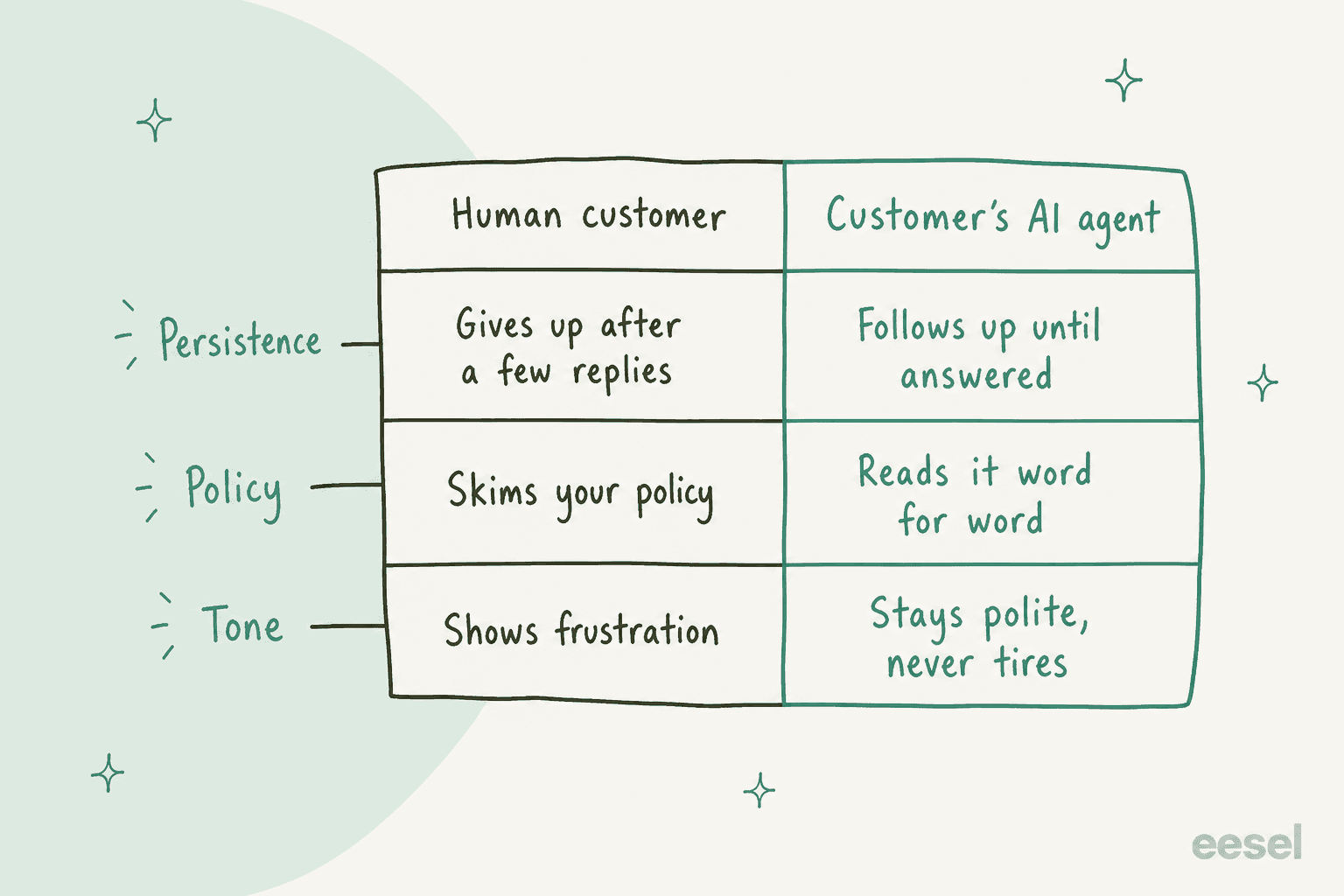
- Persistence. Instinct is designed to keep going. Jake Finkelstein, reading through its terms on LinkedIn, put it well: it "seems much more willing than most assistants to keep working toward the goal instead of constantly stopping and asking what to do next" (his post). A soft "we'll look into it" won't end the thread.
- Literal policy reading. An agent will quote your return window back to you, and it won't be swayed by the warm phrasing in your customer service tone guide. If your site says 30 days and your team quietly honors 45, expect that to be found.
- No frustration signals. The usual cues for escalation (all caps, "this is my third email") disappear. Your escalation rules need to fire on content and history, not tone.
- Spam filters. Agent mail can look like cold outreach. Gergely Orosz noted finding "emails from Instinct's AI bot" in his spam folder. If your support inbox filters aggressively, genuine customer requests may be landing there too, which is worth a look if you've automated email support rules sitting in front of the queue.
There's also a disclosure gap. Instinct's acceptable use policy bans users from "Representing that Outputs are human-generated," but that rule binds the user. I couldn't find anything in Instinct's terms, privacy policy or acceptable use policy promising that its emails or Concierge calls will tell your agent they're talking to an AI. So don't build a process that depends on the agent announcing itself.
Who is your team actually dealing with?
Contact-center people are already asking this. George D., writing about contact centers, put the situation plainly on LinkedIn:
"Your contact center is starting to get calls from callers that aren't people. Not a hypothetical. It's happening now, and most organizations have no framework for what to do about it."
His easy case is "a customer's own assistant calling to check a policy, confirm a balance, reschedule something," which he describes as "Not fraud. Just new." That's most Instinct traffic. It's still worth reading the terms closely to see who you're dealing with.
Section 3 of the Instinct terms says the user appoints Instinct "as your agent to enter into agreements, commitments or transactions on your behalf," and that "any such agreements or commitments shall be binding on you as if entered into directly by you." On purchases, it adds that "disputes regarding any such purchase are between you and the applicable Connected Service provider, not us."
In plain terms for a support team:
- You're still dealing with your customer. The agent is their representative. Instinct steps out of the dispute.
- Your own policy still governs. The same section says each purchase "is subject to the Connected Service provider's terms and conditions, including pricing, fees, shipping, cancellation and refund policies." That's your policy.
- Identity checks stay yours. An agent that holds the customer's email login can pass an email-based check. For anything that moves money or changes who controls the account, use the verification you'd use for any risky request, like a code to the phone on file or a two-factor step in your helpdesk.
That's not legal advice, just a support lead reading the same document your legal team will. The practical upshot is that you don't need a separate "AI agent policy." You need your existing policy written down well enough that a machine can read it.
How to handle tickets from customers' AI agents
Some people expect companies to slam the door:
"All this outsourcing of human interaction to agents is going to get locked down. Customer service relies on people not overabusing it, and that trust is getting abused by agents."

I'd push back on blanket blocking. Most agent-sent tickets come from real customers who are busy, and turning them away just moves the same request to a chargeback. Here's the playbook I'd run on a support queue this month instead.
- Tag agent-sent tickets. Add a helpdesk rule on the
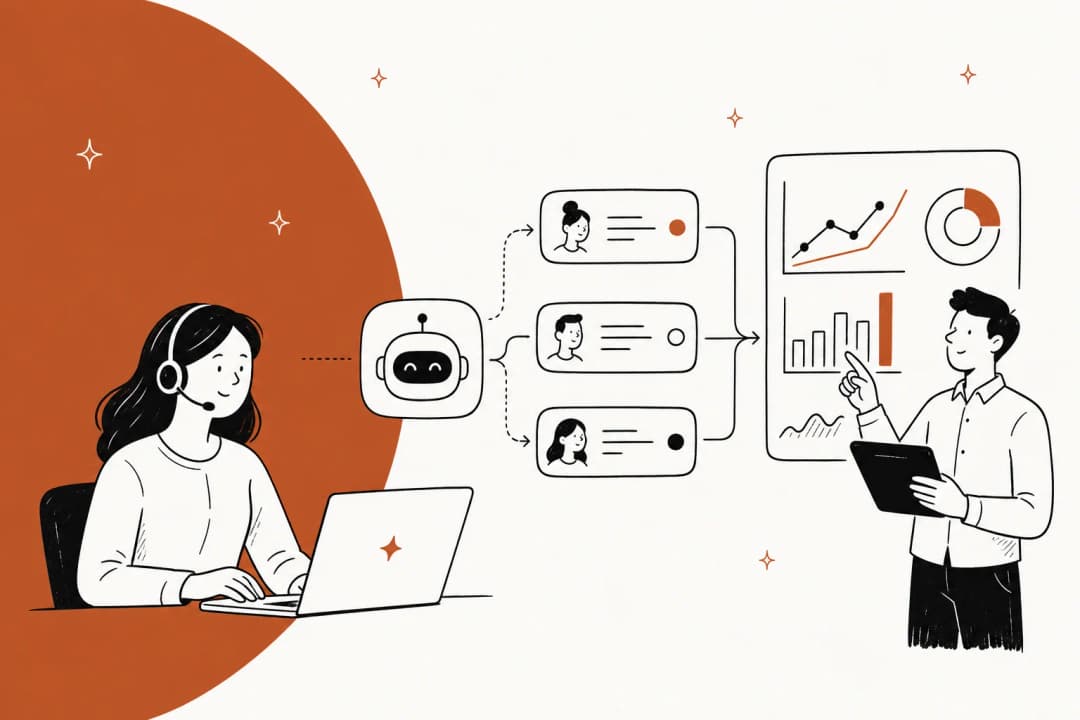
mail.instinct.comsender domain. You're not treating them differently yet, you're measuring how many there are and what they ask for. Track their containment and escalation rate separately for a month. - Write down the exceptions you actually make. Every "we usually allow it if..." that lives in someone's head is where a persistent agent will find inconsistency. The guide to support policy change management covers keeping that doc current.
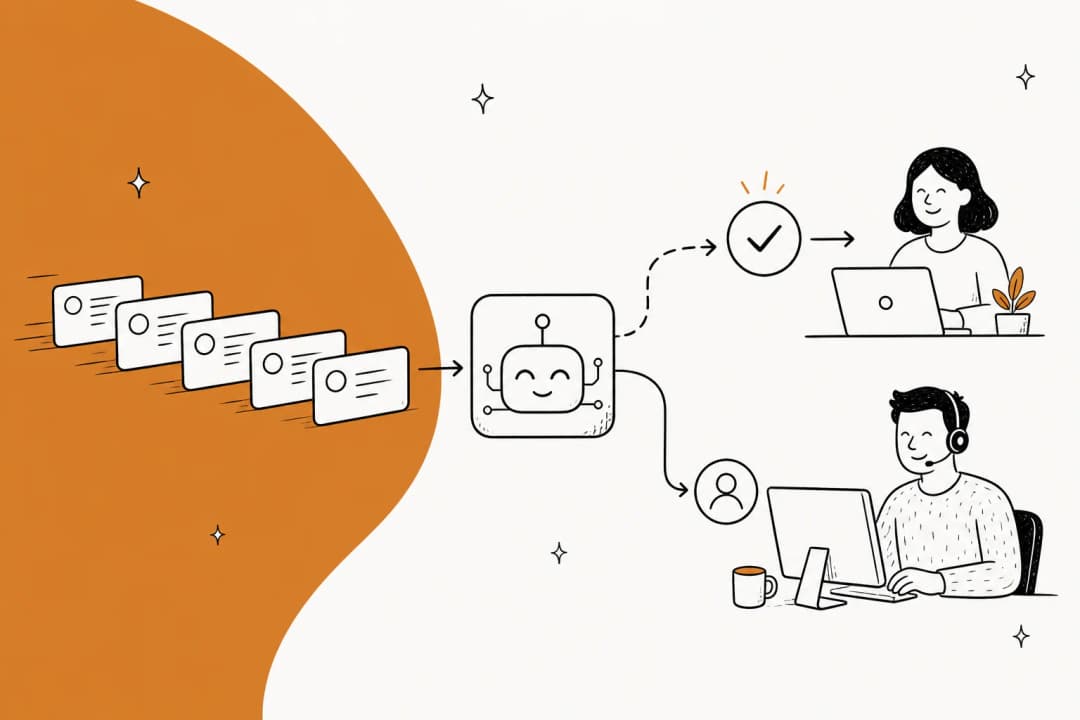
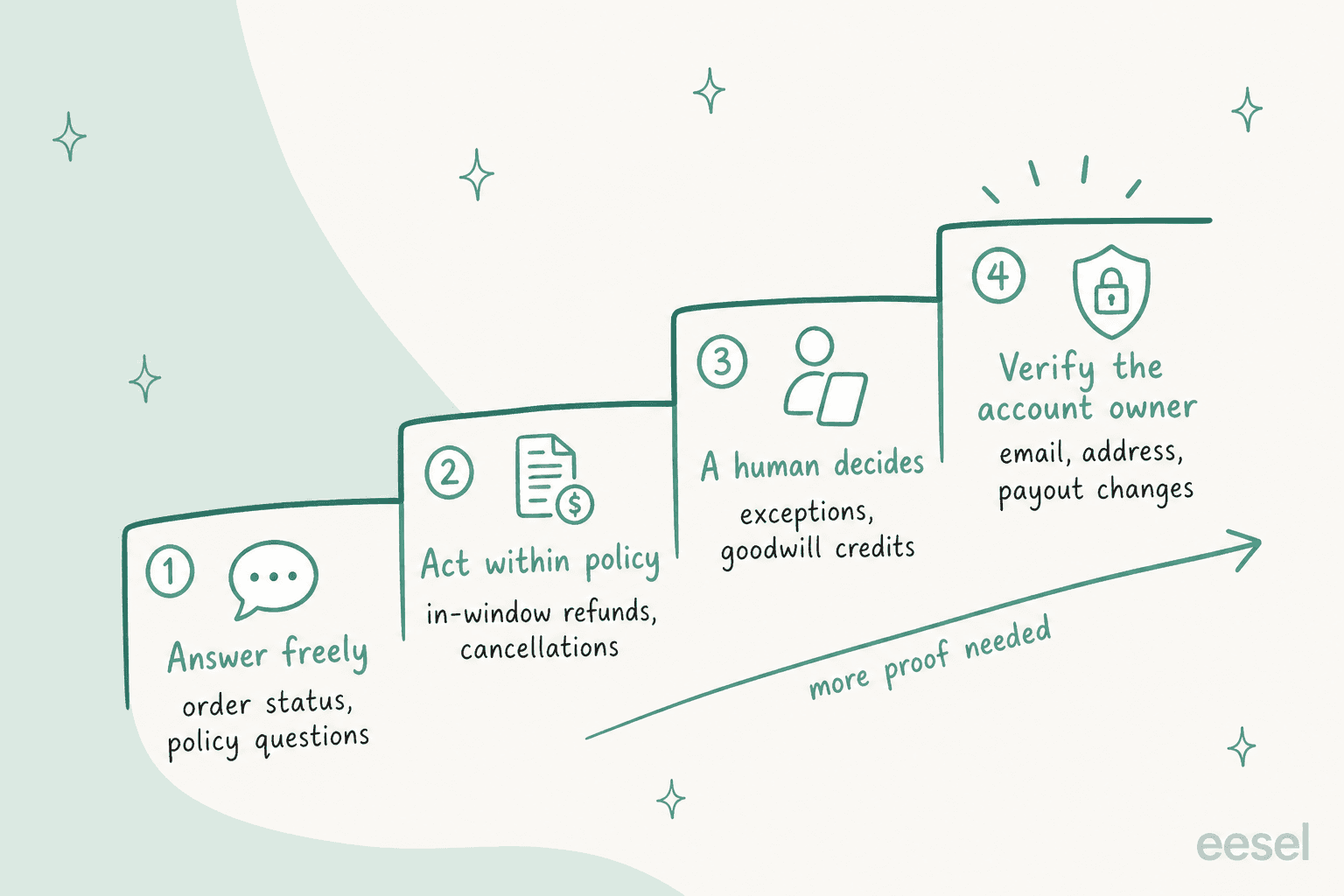
- Match the action to the proof it needs. Use the staircase above. Order status and policy questions get answered straight away. Refunds and cancellations inside policy get processed. Exceptions and goodwill credits go to a person. Email, address or payout changes get a verification step on any channel.
- Answer fast, and answer the same way every time. A slow reply invites another follow-up. A consistent reply removes the reason to keep pushing. This is where an AI teammate on your side earns its keep: it reads the same written policy the customer's agent is quoting and gives the same answer at 3am that your best agent gives at noon.
- Route the odd ones to a human with context. The handoff should carry the order, the policy line and what's already been said, so the person doesn't restart the conversation. The notes on human handoff in chat apply here too.
If your volume is phone-heavy, the same steps apply to AI phone support: Concierge calls are early access for now, but the request types will be the same, and an AI voice agent on your side faces the same policy questions.
Where an AI support teammate fits
Put the two agents side by side and the job of your own AI becomes clear. The customer's agent is persistent and literal. Yours needs to be just as literal, quick, and honest about what it isn't allowed to decide.
That last part matters most. One DTC supplements CX lead summed up what they wanted from support AI on a call with eesel: "The AI will never be able to answer 100% of the questions... I need an AI who is only handling the tickets that it's confident to handle and all the other ones, leave them alone." That is the right posture when the other side is a bot pushing for an exception.
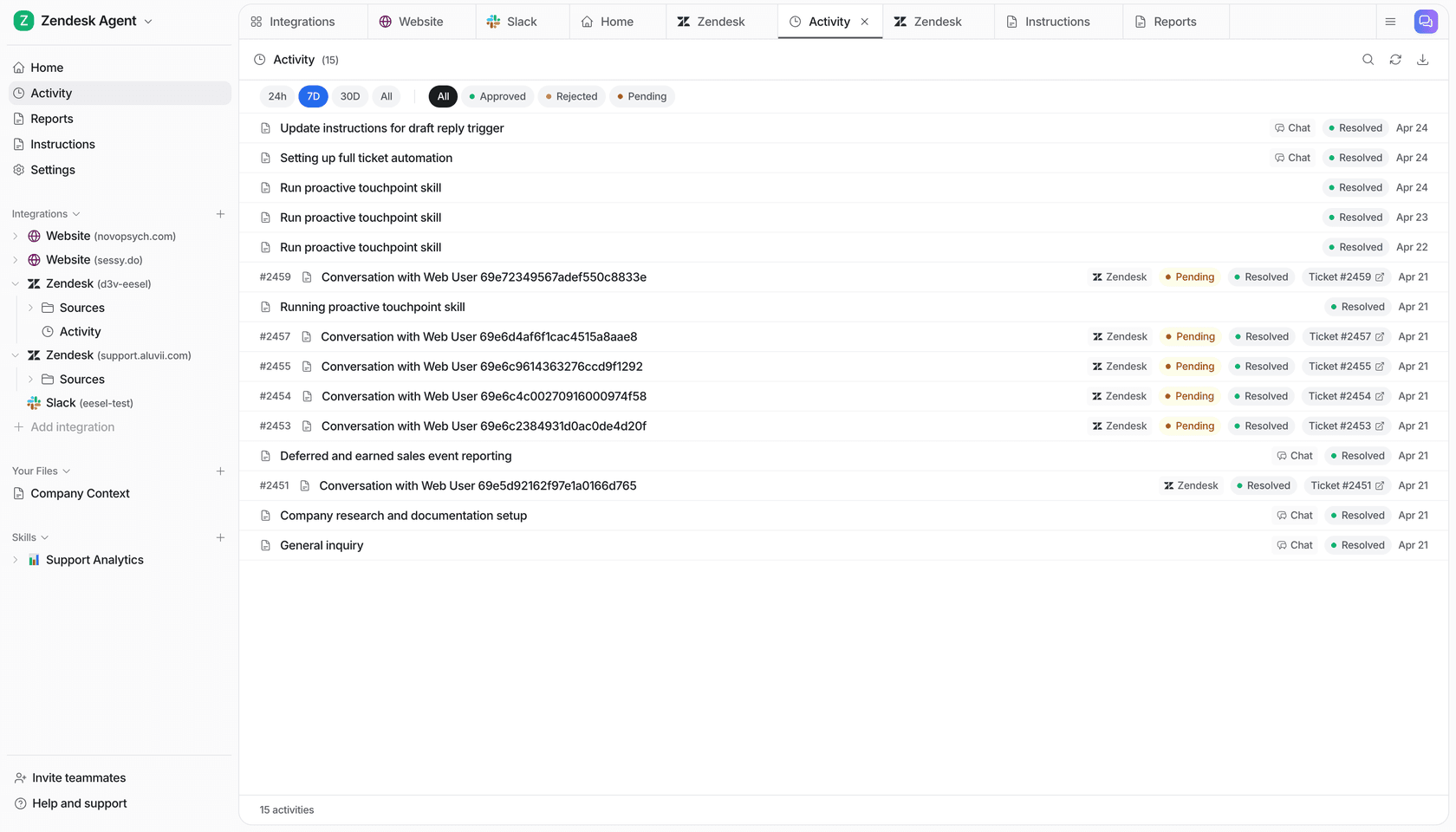
What that looks like with eesel, in practice:
- It learns your policy from your actual material. Your help center, macros and past tickets, so the answer matches what your team really does. The guide on knowledge base training shows the setup.
- You test it before it replies. eesel simulates every rollout against historical tickets first, because I've watched confident-sounding bots give wrong answers. In one real ecommerce trial on Zendesk, eesel's drafts on returns and refunds came out useful 93.8% of the time.
- It hands off what it shouldn't decide. Exceptions and anything touching account ownership go to a person, with the context attached, following your escalation management rules.
- It handles the repetitive refund work end to end. If you want the step-by-step, see how to automate refund requests.
- It works where your queue already is. eesel runs inside Zendesk, Freshdesk, Gorgias and other helpdesks, so tagged agent tickets get the same treatment as everything else.
For ecommerce teams expecting Shopify-driven agent traffic, the roundups of the best AI for Shopify support and the best AI helpdesk for ecommerce go deeper, and the AI refunds guide covers the refund policy side in detail.
Try eesel for agent-sent tickets
Instinct is a fine errand runner for your customers. eesel hires out AI teammates for defined jobs, and the helpdesk one is built for exactly this side of the conversation. Your side of the conversation needs a teammate that knows your policy cold. eesel's AI helpdesk teammate plugs into your helpdesk in minutes, answers refund, return and cancellation tickets from your written policy whether a person or an agent sent them, and escalates the exceptions to your team. You can run it against your past tickets before it sends a single reply. Try eesel free and see how it would have handled last month's queue.
Frequently Asked Questions
Can I use Instinct AI for customer support at my business?
Does Instinct AI contact customer support on behalf of users?
How do I know if a support ticket was sent by Instinct?
Should support teams process refunds requested by Instinct AI?
Is Instinct AI free for customers to use?
Will AI agents like Instinct increase support ticket volume?
What is the best AI for customer support if Instinct is personal only?


Article by
Riellvriany Indriawan
Riell is a designer and writer at eesel AI with about two years of experience researching CX platforms, AI chatbots, and helpdesk software. She combines her design background with a sharp eye for how these tools actually look and feel in practice — making her comparisons unusually visual and user-focused.