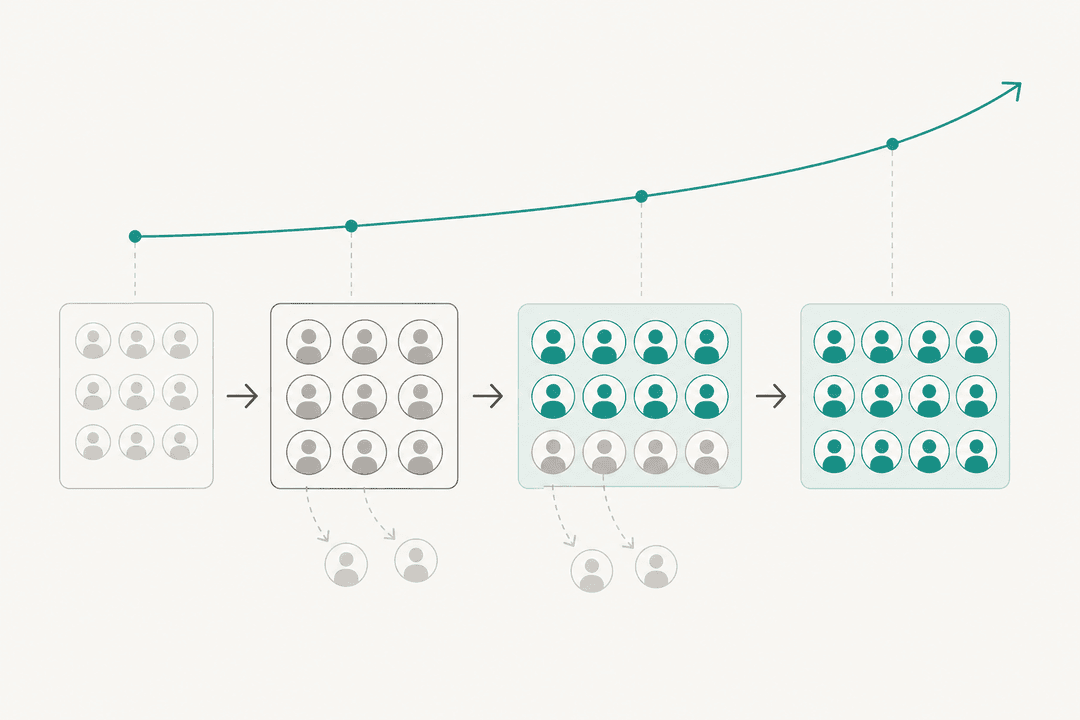
Somewhere between 10% and 40% of the customers who click "cancel" on a subscription weren't fully decided. They were frustrated, or hadn't used the product that week, or saw an invoice hit and flinched. They clicked cancel the way people google symptoms at midnight: not because they've made a firm decision, but because the friction of staying felt higher than the friction of leaving.
That gap between "clicked cancel" and "actually gone" is where retention happens. And it's increasingly where AI earns its place in the support stack.
This post covers what the data actually says about why customers cancel, where AI can intervene before and during the cancellation moment, which tools do this well, and how to set up a support infrastructure that treats cancellation as a signal to act on rather than a transaction to confirm.
Why customers actually cancel
The generic explanation ("poor customer service") is too vague to do anything with. When you dig into the actual data and practitioner experience, the reasons cluster differently.
According to RevenueCat's research on cancellation flows, the dominant reasons for voluntary subscription cancellations are: not using the product enough to justify the cost, price feeling high relative to perceived value (not necessarily unaffordable, just not feeling worth it), switching to a competitor, and a specific missing feature that blocked a key workflow.
What's notable here is that most of these are addressable at the cancellation moment. "Not using it enough" often means the customer never found the value, and a good retention offer (a pause option, a usage walkthrough) can speak directly to that. "Price feels too high" is a very different objection than "I can't afford it" - one responds to a discount, the other might respond to a downgrade.
The ChartMogul SaaS retention report, which analyzed 3,500 software companies through 2025, adds a specific angle on AI products: the "AI tourist problem." Customers sign up for AI tools out of curiosity, pay before they've committed to a workflow, and cancel when the ROI doesn't materialize fast enough. AI-native products selling for under $50/month saw just 23% gross revenue retention (GRR) and 32% net revenue retention (NRR), far below the 88-90% annual retention rate that's the B2B SaaS floor. The same report found that AI-native products selling for over $250/month see 70% GRR and 85% NRR, essentially comparable to traditional B2B SaaS. The difference isn't the product; it's how deeply embedded in a workflow the customer becomes before paying.
The upshot: the customers most at risk of cancelling are often the ones who never really got started. Support quality at the early stages isn't a nice-to-have: it's a retention lever.
"Churn starts before cancellation: a bad first week can quietly kill retention. A user signs up, gets confused, opens a couple of support tickets that go unanswered or get generic replies - and by week 2 they've mentally checked out."
Where AI fits in the cancellation flow
The traditional model treats cancellation as something that happens to you. A customer clicks a button, you send a "we'll miss you" email, done. The modern model treats it as something you can shape: by predicting it, intervening at the right moment, and following up intelligently.
AI adds value at three distinct moments in that arc.
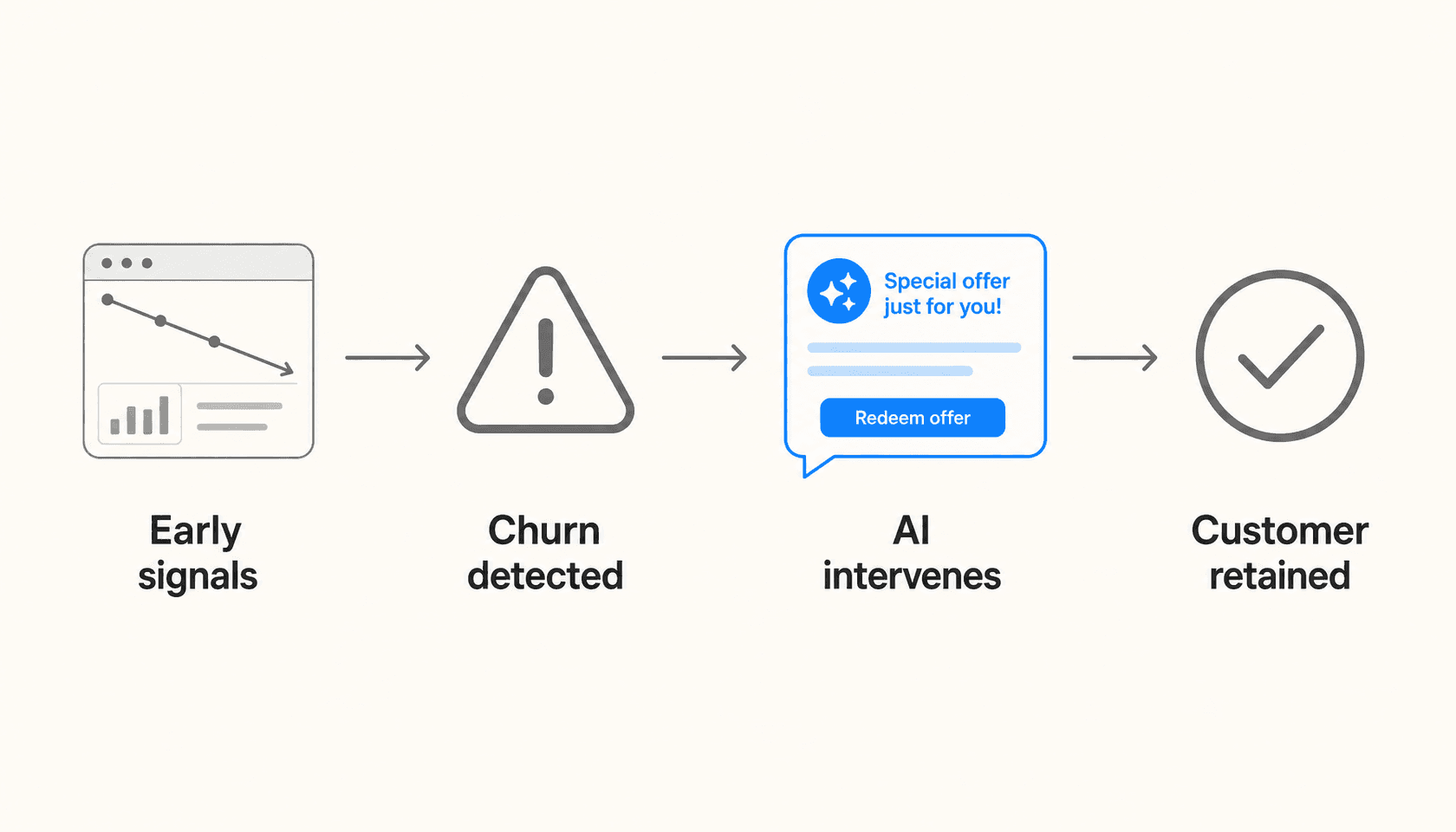
Before the cancel button: early churn detection
Most cancellations are predictable. The customer who emails support three times about the same unresolved issue, then goes quiet, then cancels: that pattern is recognizable. The customer who logged in daily for two months and then stopped completely is showing a signal. The customer whose recent support tickets are increasingly frustration-heavy is telling you something.
AI can read these patterns across every customer simultaneously, in real time, and surface the ones that need attention before a human would catch them. For teams using AI helpdesk agents, this means every support interaction is also generating retention intelligence: the same tool handling tickets is flagging which customers are at risk.
This matters because intervention at this stage is far cheaper than intervention at the cancel button. A proactive check-in ("we noticed you haven't used X feature: here's a quick setup guide") lands completely differently than a desperate discount offer after someone has already decided to leave.
At the cancel button: real-time response
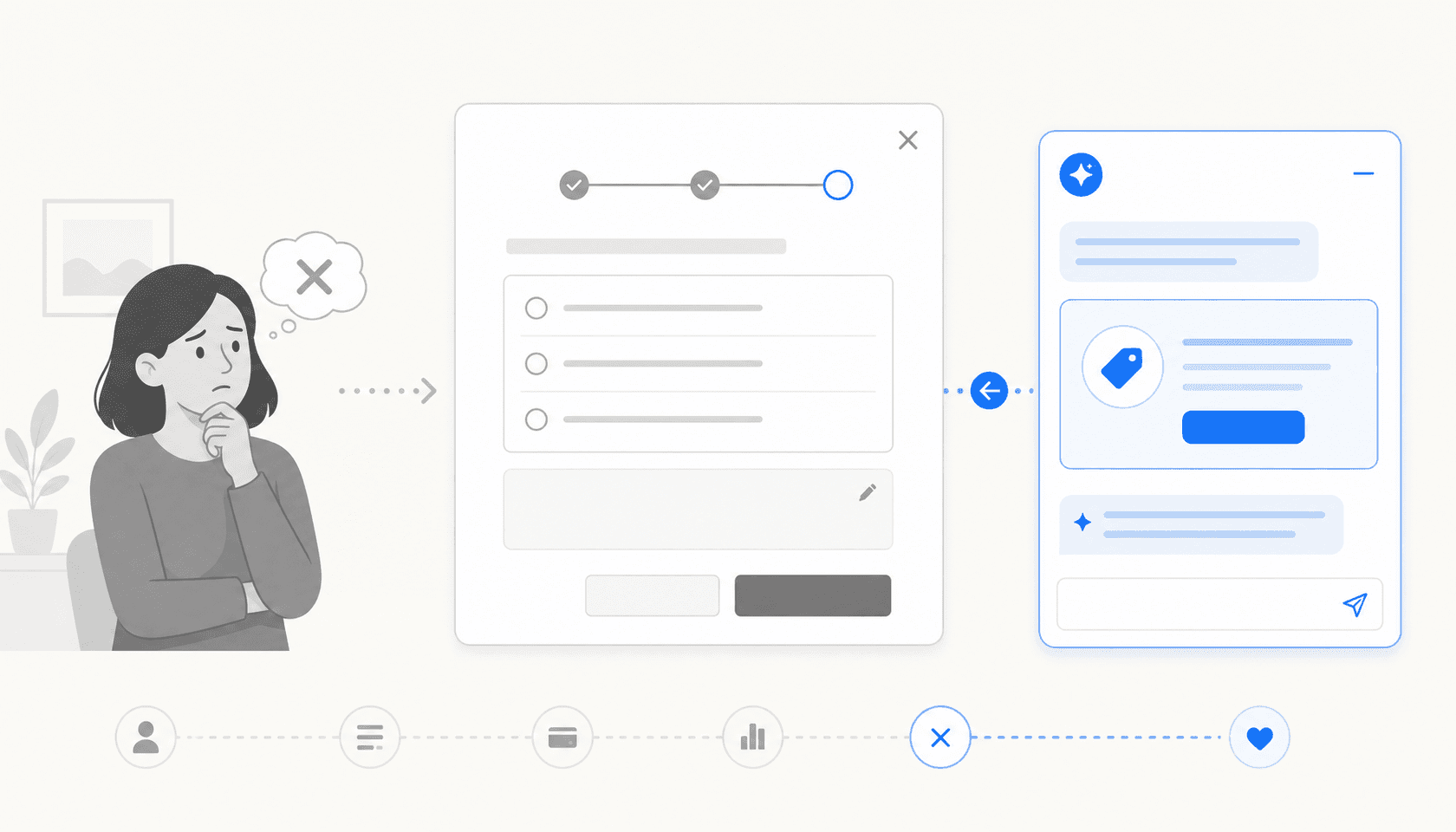
When a customer reaches the cancel flow, they've made some kind of decision: but as the data shows, it's often not a final one. Smart cancel flows reduce churn by 10-40% at the point of cancellation, according to analysis from practitioners in the CustomerSuccess community. Most of those saves come from customers who weren't fully committed.
What makes a cancel flow smart rather than annoying is personalization. The customer who says "it's too expensive" and the customer who says "I'm not using it enough" need completely different responses. The one who says "I'm missing a feature" needs to know whether that feature is on the roadmap. A generic "here's 20% off" misses all three.
RevenueCat's case studies show what personalization at this stage looks like in practice: VidiVet, a vet app, retained a customer by offering a better-priced annual plan in an email that mentioned the dog's name and acknowledged the specific usage pattern (occasional vet consultations, not daily use). That offer would have been impossible without the combination of structured cancellation data and customer context.
AI handles this at scale. Instead of a CS rep manually crafting offers for each cancellation attempt, the system reads the stated reason, cross-references customer history, and generates the appropriate response automatically.
After cancellation: win-back campaigns
Customers who cancel aren't always gone forever. Annual plans have 10-20 percentage points higher NRR than monthly plans, partly because the commitment forces more deliberate onboarding, but also because monthly churners often return when circumstances change. A win-back campaign that times outreach to the right moment (three months after cancellation, when quarterly budget review might be happening) performs substantially better than one that emails everyone on the same schedule.
AI can segment churned customers by cancellation reason and time win-back messages accordingly. The customer who cancelled because of a missing feature gets an outreach when that feature ships. The one who cancelled for budget reasons gets contacted during a promotional period. The one who switched to a competitor gets a comparison message when that competitor raises prices.
Key tactics for AI-powered retention
The concepts above translate into four concrete plays. These aren't theoretical: each has enough practitioner evidence behind it to treat as a tested approach.
Structured exit surveys at the cancellation moment
The most foundational change is replacing an unstructured "tell us why" text box with a structured exit survey. Structured means multiple-choice reasons (randomized to reduce order bias), a follow-up question that varies based on the reason selected, and a targeted offer presented based on the combination.
The raaft.io analysis of cancellation flows frames this clearly: aggregate churn metrics (churn rate, NRR) tell you that churn went up, but the structured cancellation flow data tells you why: which is what you can actually act on. Without that data, every retention effort is guesswork.
Raaft is a free platform specifically for this. Setup takes around 30 minutes. The insight value alone justifies it before you factor in the retention impact.
Plan pauses instead of full cancellation
For customers cancelling due to temporary circumstances (a slow period, an injury, a budget freeze), a pause option removes the friction of cancelling and re-subscribing. RevenueCat's case studies cite Peloton as a well-executed example: they offer explicit pause periods, acknowledging that some customers can't use the product consistently rather than forcing them to either keep paying or fully churn.
The pause option is only useful if it's presented to the right customers - those whose stated cancellation reason suggests temporary circumstances rather than a permanent decision. AI handles the routing: if the customer selects "not using it enough right now" or "temporarily tight on budget," the pause offer is surfaced. If they select "switching to a competitor," it isn't.
Confidence-based routing for at-risk accounts
AI helpdesk agents like eesel operate on a graduated autonomy model: they handle straightforward support requests automatically, but flag low-confidence situations for human review. Extend this logic to retention: when the AI detects a customer showing pre-churn signals, route those tickets to a senior agent rather than the general queue.
This is the "AI as triage" use case, not replacing the human relationship, but making sure the human relationship happens at the right moment for the right accounts. A customer who's had three frustrating interactions and is now submitting their fourth ticket gets flagged to someone who can actually resolve the pattern, not just the individual ticket.
Post-cancellation win-back with reason-based segmentation
Rather than batch-emailing all churned customers on a monthly cadence, segment them by cancellation reason and send targeted messages when the specific barrier to returning has changed. This requires having that reason data, which comes back to the exit survey.
The timing logic matters too. ChartMogul's data shows that companies selling annual plans see dramatically better long-term NRR, partly because commitment forces adoption. A win-back offer that leads with an annual plan (with the implied "commit to actually using it this time") converts better than a discounted monthly offer for customers who churned due to underuse.
Tools that handle this in 2026
The market for cancellation retention has split into two categories. Dedicated cancel-flow tools sit at the billing layer; support AI platforms address the upstream problem.
Dedicated cancel flow tools
Churnkey is the most fully-featured option in this category. Its cancel flow widget replaces the standard cancel button with a multi-step retention experience (exit survey, targeted offer, A/B-tested messaging). The "Build with AI" feature generates cancel flow copy and offers from a single prompt. Churnkey claims up to 54% reduction in active churn and protects over $2 billion in ARR. LTV extension averages 26% across their customer base. The Intelligence plan adds Adaptive Offers (AI selects the best offer per subscriber) and an Account Agent that proactively monitors at-risk accounts.
ProsperStack takes a similar approach with its "Autopilot Offers" feature, using AI to optimize which offer to show each subscriber. ProsperStack claims up to 39% churn reduction at the point of cancellation. Clay Reimus from Roll20 (Director of Growth & Analytics) noted: "We now have a real-time look into reasons for cancellation so we can react quickly and significantly reduce churn."
Raaft is a free entry point with structured feedback capture and offer presentation built in, no development work required, 30-minute setup. Good for teams that want structured cancellation data before investing in a paid tool.
| Tool | Starting price | Churn reduction claim | Best for |
|---|---|---|---|
| Churnkey | $250/month | Up to 54% | Teams with $5k+/mo churn volume; full AI automation |
| ProsperStack | $200/month | Up to 39% | 50-500 cancel sessions/month; AI Autopilot on Prosper plan |
| Raaft | Free | Not claimed | Getting started with structured exit data |
All three integrate with Stripe, Chargebee, and major subscription billing platforms.
Support AI with retention capabilities
The tools above address the moment of cancellation. But as the ChartMogul data shows, churn decisions are usually made weeks before the cancel button gets clicked. Addressing them requires a different layer.
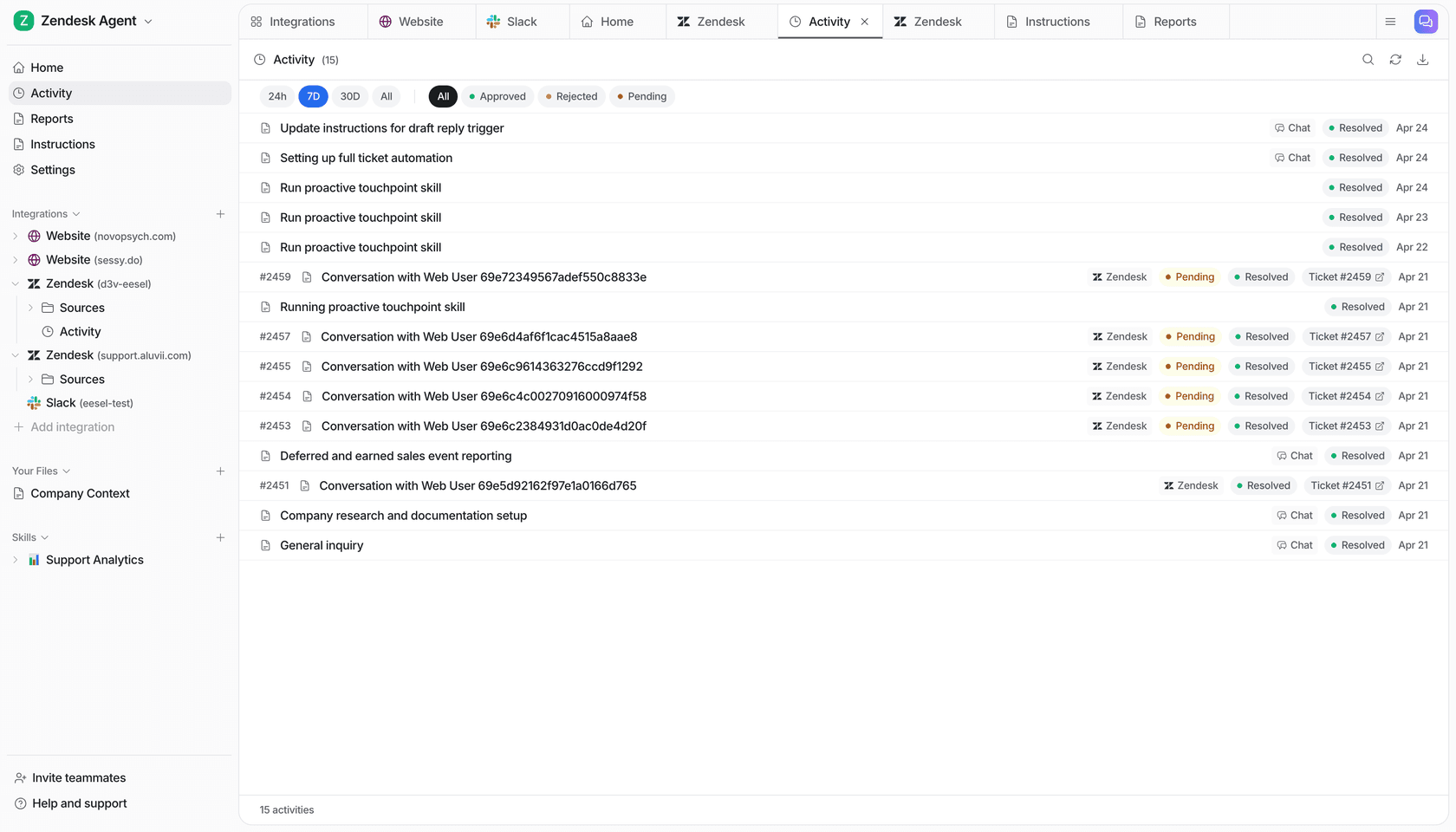
eesel AI is an AI agent that runs inside your existing helpdesk (Zendesk, Freshdesk, Gorgias, Help Scout) and handles support tickets autonomously. The retention-relevant capabilities are:
- Confidence-based routing: tickets that trigger low-confidence responses (edge cases, unusual complaints, frustration-heavy language) queue for human review automatically, rather than getting a generic auto-reply
- Theme analysis: eesel surfaces recurring ticket patterns. If 30 customers in the past two weeks have submitted tickets about the same feature gap, that's visible to your team
- Simulation mode: before going live, eesel tests against thousands of past tickets to forecast where it would perform well and where human review is needed
The support quality angle matters directly for retention. When a customer's third ticket about a billing issue gets a useful, immediate response at 2am in their language, they don't cancel. When it gets a canned response three days later, they do.
eesel's pricing runs $0.40 per ticket (pay-per-task) with $50 free credits on signup. An Enterprise add-on ($1,000/month) covers SSO, HIPAA, BAA, and a dedicated solutions engineer.
For teams evaluating the best AI tools for customer support, eesel's no-migration value is a practical differentiator: it works on top of the helpdesk you already use, without moving data.
How the layers connect
The most effective setup combines both layers: a cancel flow tool at the billing moment, and a support AI that makes the support experience good enough that fewer customers reach that moment in the first place.
In practice this looks like:
- AI helpdesk agent handles day-to-day tickets, routes complex or frustration-heavy tickets to senior agents
- Theme analysis surfaces recurring patterns to the product team (knowledge gaps, feature requests that are actually churn drivers)
- When a customer hits cancel anyway, a dedicated cancel flow tool (Churnkey, ProsperStack) intercepts with structured exit survey + targeted offer
- Churned customers are segmented by reason and entered into win-back sequences that trigger based on whether their specific barrier has changed
Each layer generates data that feeds the next. Exit survey data from the cancel flow tells you what the support AI's theme analysis should be looking for. Support ticket patterns tell you which customer segments to prioritize in win-back outreach.
Common mistakes
Offering discounts to everyone who tries to cancel. A blanket discount trains customers to threaten cancellation whenever they want a deal. The data from Churnkey's anti-gamification features (cooldown periods that prevent customers from claiming the same offer twice) reflects the real-world problem this creates. Personalized offers based on stated reason avoid it entirely: the customer who says "I found a better alternative" probably isn't going to be saved by a 20% discount anyway.
Making cancellation hard on purpose. The Audible example is the canonical cautionary tale: the majority of their 1-star reviews focus on how difficult it is to cancel. FTC's Click-to-Cancel rule (finalized in 2024) makes this legally risky as well as brand-damaging. A well-designed cancel flow can be easy to complete and effective at retention. These aren't in conflict.
Treating support tickets as cost, not signal. Every support ticket is a data point about why a customer might eventually leave. Teams that automate support purely to reduce costs without capturing that data are optimizing for the wrong thing. The most valuable output of good support AI isn't cost savings. It's the pattern recognition that tells you what's actually driving churn.
Missing the timing window. A win-back email sent 24 hours after cancellation competes with the immediate emotions of the decision. One sent 3 months later competes with "I've forgotten this existed." The right timing depends on the reason for cancelling (seasonal users have different patterns than price-sensitive churners), which is why reason-based segmentation of win-back campaigns consistently outperforms broadcast sequences.
Not closing the feedback loop. If 40 customers cancel citing a missing feature, and your product team doesn't hear about it, you've collected data and done nothing with it. The cancel flow feedback needs a clear path to whoever makes product decisions. Tools like eesel's theme analysis or Churnkey's Feedback AI can surface this automatically, but only if someone is watching the output. The companies using AI for customer service most effectively share this pattern: they treat AI output as inputs to product decisions, not just deflection metrics.
What good actually looks like
A B2B SaaS company reducing annual churn from 10% to 8% can see over 20% revenue impact over 3-5 years. That two-percentage-point difference, compounded, is not a small number.
The companies getting there aren't doing anything exotic. They're running structured exit surveys so they know why customers leave. They're using that data to serve relevant offers at the cancellation moment rather than generic discounts. They're using AI at the support layer to catch frustrated customers before they get to that moment. And they're closing the loop between cancellation data and product decisions, so the things that drive churn actually get fixed.
B2B SaaS median annual retention sits at 88-90%. Top-quartile benchmarks are 90%+. The gap between those numbers is, in most cases, the quality of what happens when a customer shows signs of leaving.
For teams looking to close that gap, a useful starting point is the eesel simulation mode. Run the AI against thousands of your past tickets before going live to forecast exactly where it would have made a difference. The AI ticket deflection guide covers the full spectrum of what changes and what the downstream retention impact tends to be.
The customers who were going to leave anyway will leave. The ones who weren't fully decided - and there are more of them than you think - are worth a proper conversation.