


An AI receptionist is worth it for a real estate office, but only on the calls that currently hit voicemail: sign calls, showing-hour overflow and after-hours inquiries. NAR data says 75% of buyers interview just one agent, so the first person who answers often gets the client. Have it answer only from your listing details, book showings, and log questions about neighborhoods, schools or price for the agent, since the Fair Housing Act covers spoken statements. Allo is cheapest at about $45 a month; Smith.ai adds humans behind the AI. When the same clients also email, text and WhatsApp, eesel keeps one set of answers across every channel.
Is an AI receptionist worth it for a real estate office?
Yes, if you treat it as a better voicemail and not as a new agent. The buyer who calls the number on the yard sign at 7:40pm doesn't want to leave a message. They want to know if the house is still available and whether they can see it Saturday. An AI receptionist can answer both of those, take their details and book the slot. Voicemail can't.
The case for answering every call is right there in NAR's own buyer data. In its 2025 generational trends report, 95% of buyers rate responsiveness as very important in an agent, second only to honesty. 75% of buyers interviewed only one agent, and NAR's 2024 Profile highlights found 81% of sellers contacted only one agent. Real estate is a business where the first answer usually wins the client, and an agent mid-showing can't answer.
Agents already use AI, just not for this. NAR's 2026 technology report says 48% of agents use AI daily or weekly, mostly for listing descriptions (75%), social posts (56%) and follow-up emails (52%). Phone answering doesn't make the top of that list, even though whether AI can answer calls is mostly settled. That's the gap these tools sell into, and it's also why the AI tools for real estate most agents know are writing tools, not phone tools.
I've spent two years watching what people actually search for around AI in support, and the real estate version of this query is unusually specific. When I asked ChatGPT the question a team lead would ask ("our agents miss calls during showings, is an AI receptionist a good idea?"), it came back with five vendors and one strong line of advice: use AI as the first point of contact, not a replacement for your agents. I agree with that, and the rest of this post is about how to set it up so it holds.
The pushback is real, so I'll put it up front. On a thread asking whether realtors would use an AI receptionist, the top reply was from the caller's side:
"I'll respond from the customer end: If I call a realtor and get an AI Assistant I will hang up and never call or work with that agent again."

Another commenter in the same thread said they'd hang up on "anybody but that realtor", AI or human. That's a fair warning and it shapes my advice: keep your agents on the calls they can take, and give the AI the ones that would otherwise ring out. An unanswered call loses that buyer for certain. An AI that answers well and hands off fast loses far fewer.
What calls does a real estate office actually get?
Before you pick a tool, sort your calls. This is the same exercise as choosing any AI for phone support, just with real estate lanes. A real estate line isn't one kind of call. It's five, and the AI should treat each one differently.
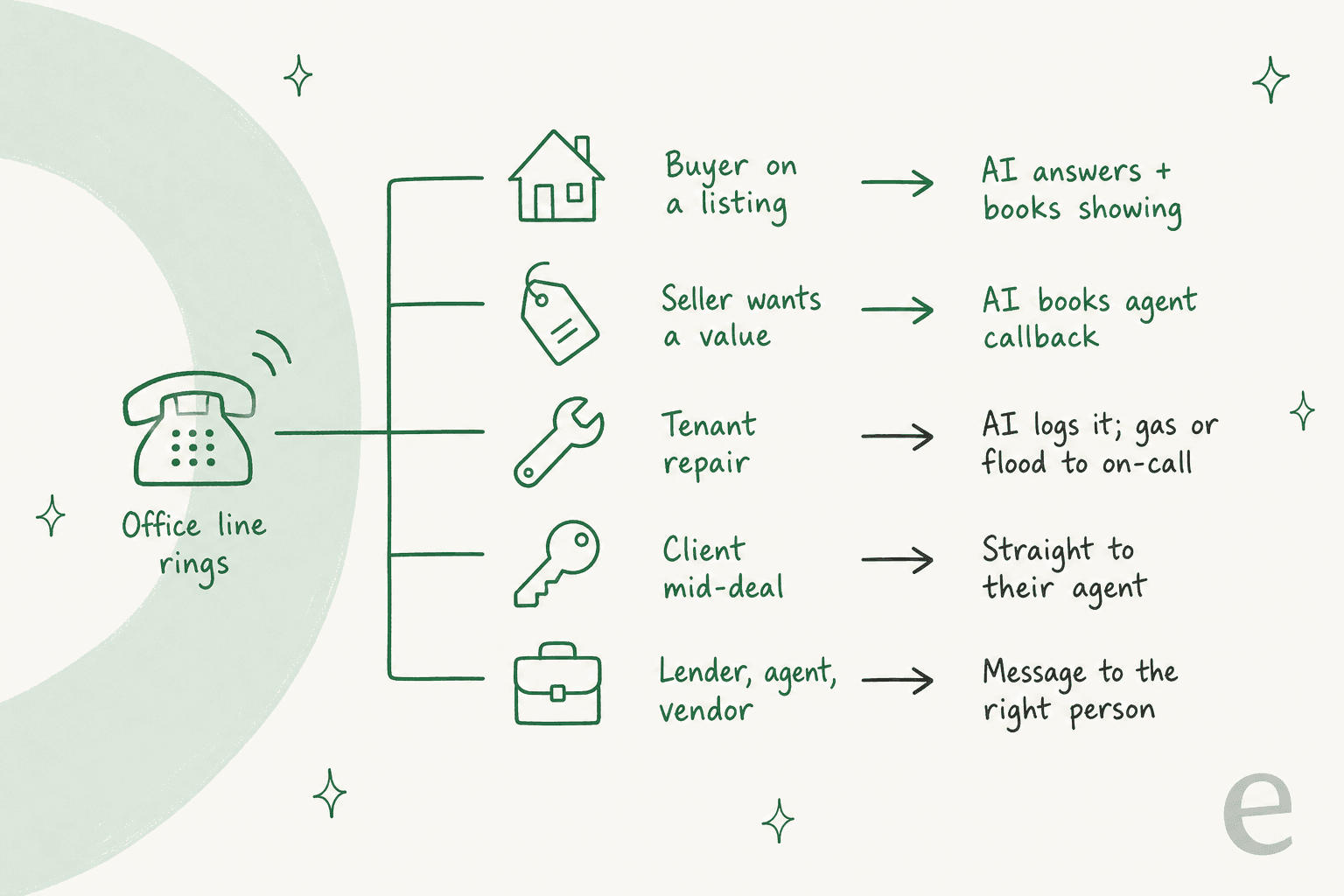
- A buyer calling about a listing. This is the sign call, the portal call, the "is it still available?" call. It's the AI's best lane: answer from the listing sheet, ask budget, timeline and pre-approval, and book a showing like an AI appointment setter. This is classic lead qualification and it's where the money is.
- A seller wanting a valuation. The AI takes the address, the timeline and the reason for selling, then books a callback with an agent. It never guesses a value.
- A tenant with a repair (if you manage rentals). The AI logs the issue. Anything urgent, like a leak, no heat or a lockout, goes straight to whoever is on call.
- A client mid-deal. "Did the inspection come back?" "When's closing?" These go straight to their agent. The AI doesn't know where a live deal stands, and it shouldn't guess.
- Lenders, other agents and vendors. Take a message, send it to the right person.
Only the first two lanes are "receptionist" work in the sales sense. The other three are routing. A tool that handles lanes 1 and 2 well but sends lane 4 a cheerful "I can help you with that!" will cost you a client you've already won.
smava, a German loan comparison site and one of eesel's customers, wrote the same rule into its setup. In its customer story, a customer who already has a credit advisor "should hear from that advisor, not from an automatic reply." eesel checks the advisor field on every ticket first, and only tickets with no advisor are eligible for an automatic reply. Swap "credit advisor" for "listing agent" and you have lane 4.
What should an AI receptionist never say on a real estate call?
This is the part most vendor pages skip, and it's the part that can get a brokerage in trouble. An AI receptionist speaks for you. Under the Fair Housing Act, what it says counts.
The steering rule in 24 CFR 100.70 bans restricting a buyer's or renter's choices "by word or conduct" because of race, color, religion, sex, disability, familial status or national origin. The next section, 24 CFR 100.75, applies to "all written or oral notices or statements" by anyone selling or renting a home. A voice agent's answer is an oral statement.
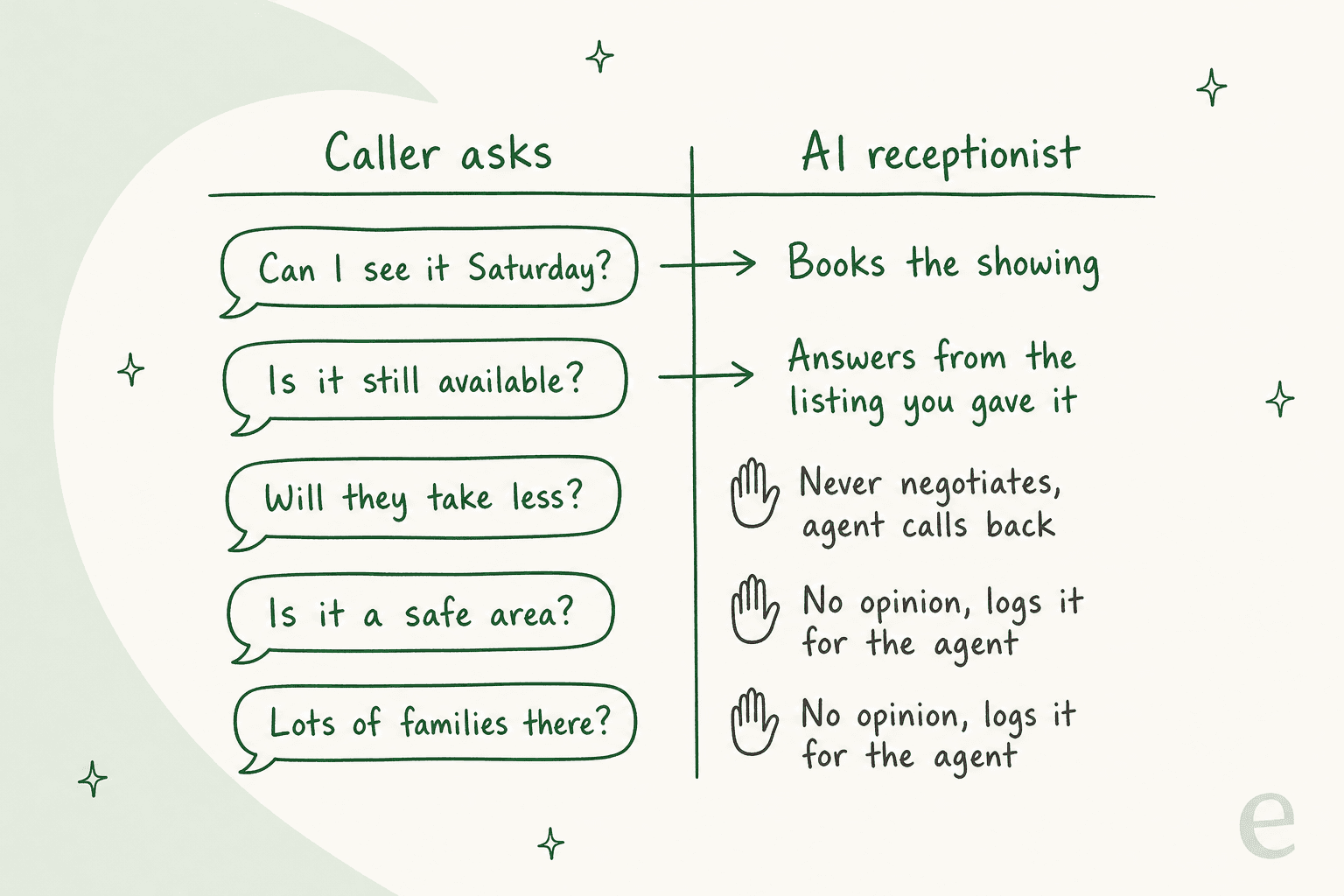
So the risky moments aren't exotic. They're the questions buyers ask every day: "Is it a safe area?" "Are there a lot of families on that street?" "How are the schools?" A chatty AI trained on your website will happily answer all three. Allo's real estate setup gets this right: its sample instructions tell the agent to "never comment on the neighborhood's schools, safety or who lives there" and to "never negotiate the price or say whether the seller will accept an offer." That's the bar. Rosie's real estate page, by contrast, suggests training it on details "such as recent renovations, school district, or financing options." A school district name is a fact you can state. A view on whether the schools are good is where I'd draw the line.
Two other things to know about where the rules stand in late 2026:
- HUD's AI guidance is gone, the law isn't. HUD withdrew its 2024 guidance on AI and digital ad targeting effective September 17, 2025, per its Federal Register notice. The same notice says actions that don't comply with the Act itself "continue to be subject to enforcement." Fewer guidance documents doesn't mean a looser statute.
- The AI is effectively an unlicensed front desk. One r/realtors commenter advising a new brokerage receptionist put it plainly: "Do not discuss properties with buyers unless instructed to." State rules on what unlicensed staff can say vary, so ask your broker what your front desk is allowed to say and give the AI the same script.
The other failure is the one every AI has: making things up. An agent on r/realtors described a buyer who arrived at an open house angry about HOA fees because an AI chatbot had told him the fees at comparable condos were much lower, and "it was completely wrong." On a phone call, the fix is to only let the AI answer from the listing details you give it, and to take the question for the agent when it doesn't know. I've written more on preventing AI hallucinations in support, and the same rules apply here.
This is general information, not legal advice. Run your AI's script past your broker or a fair housing attorney before it goes live.
What about calling leads back with AI?
Answering inbound calls is the easy part legally. Calling people back is where it gets stricter. The FCC's February 2024 declaratory ruling confirmed that the TCPA's limits on "artificial or prerecorded voice" calls cover AI-generated voices, so callers need prior express consent before an AI voice calls someone. Telemarketing calls need prior express written consent under 47 CFR 64.1200, and the FCC's consumer guide says commercial texts need written consent too.
That matters because "AI calls our old Zillow leads" is the first upsell every vendor offers. NuTalk is upfront about it on its own real estate page: AI-voice calls to mobile numbers "need prior express consent; marketing calls need it in writing." Before you turn on automated outbound calls, read the consent language on the form those leads filled out.
Call recording is the other one. Every tool in this post records and transcribes by default, and some states require every party's consent. California's Penal Code 632 is the common example. The simple fix is a greeting that says the caller is talking to an AI assistant and that the call is recorded. If transcripts land in a shared system, it's also worth redacting personal details like Social Security or account numbers.
How much does an AI receptionist for real estate cost?
The sticker prices aren't comparable, because the vendors bill in different units: per seat, per minute, per call or per unique caller. So I priced them all for one office. Say six agents, 200 calls a month that would otherwise go to voicemail, averaging three minutes each (600 minutes), from about 150 different callers.
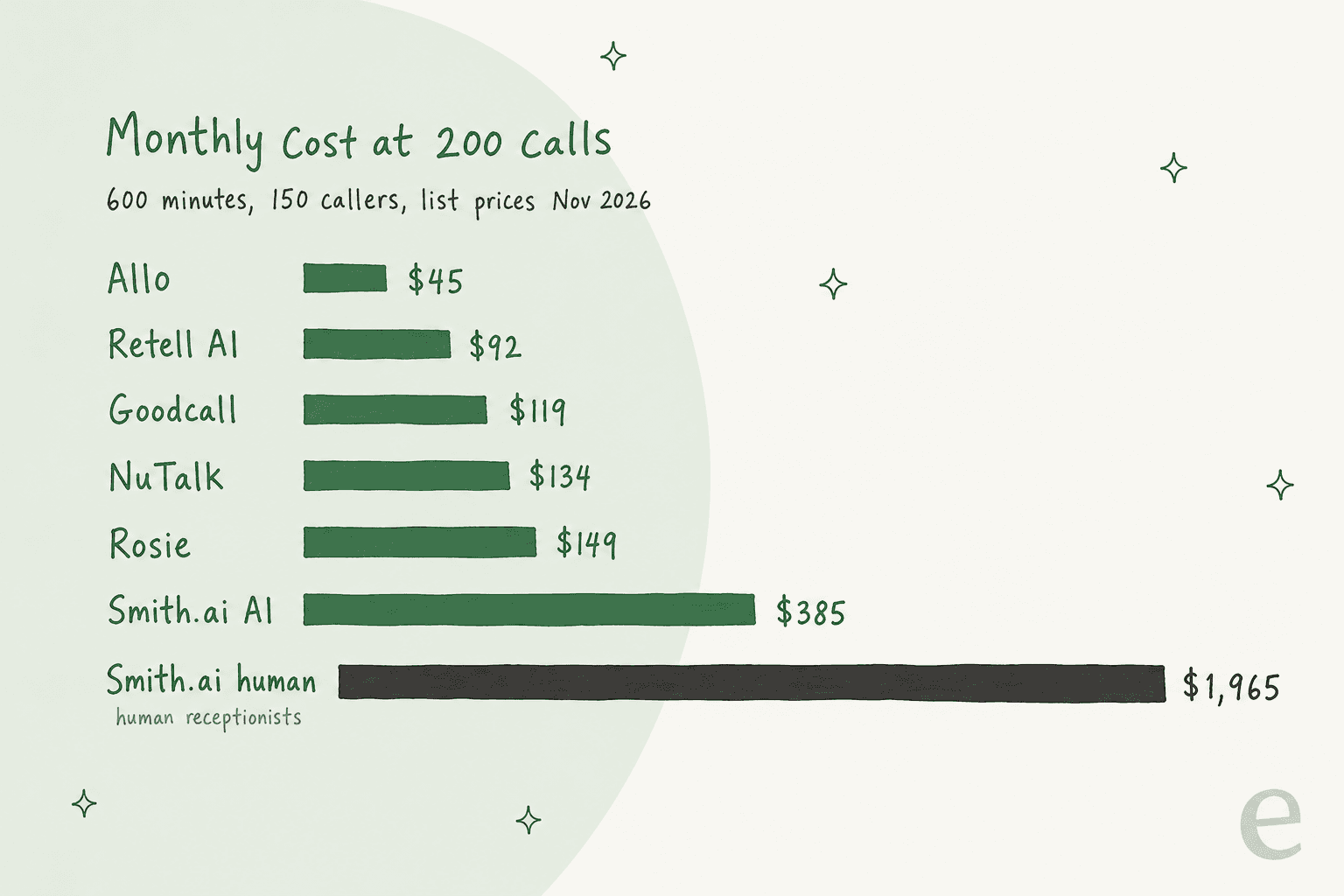
| Tool | How it bills | Cost at 200 calls / 600 min | How I got there | Books showings | Live transfer to a person |
|---|---|---|---|---|---|
| Allo | Per AI receptionist seat | $45 (or $32 billed yearly) | One Business seat, no per-minute meter | Yes | Yes |
| Retell AI | Per minute, assembled | about $92 | 600 x $0.15 default + $2 number; range $0.07 to $0.31/min | Yes | Yes (warm) |
| Goodcall | Per unique caller | about $119 | Starter $79 for 100 callers + 50 x $0.79 | Yes | Yes |
| NuTalk | Per minute (or flat line) | about $134 | 500-min pack $109 + 100-min pack $25 | Yes | No |
| Rosie | Minute bundles | $149 | Scale plan, 1,000 minutes | From Scale | From Scale |
| Smith.ai AI | Per call | about $385 | Pro 150 calls $270 + 50 x $2.30 | Yes | Yes, to human receptionists |
| Smith.ai human | Per call | about $1,965 | Basic $810 for 90 calls + 110 x $10.50 | Add-on | Yes |
Prices come from each vendor's own pricing page, checked November 4, 2026, and each one is linked in that tool's section below.
Three things that table doesn't show. Retell is a developer platform, so $92 assumes someone builds and maintains the agent. NuTalk's minute packs expire after 30 days. And Allo's page notes its pricing "is early and can still change." For most small offices, the real cost difference is under $150 a month, so pick on fit (CRM, transfers, showing rules), not on price. Human receptionists are the outlier at roughly 5 times Smith.ai's AI plan and 13 times Rosie, which is the gap these tools exist to close. If you're weighing a full outsourced team instead, that table is the comparison to make.
The 6 AI receptionists worth a look for real estate
These are the six I'd shortlist, including the five ChatGPT names when you ask it this question. Each one gets the same four checks: what it does on a real estate call, what it costs, what to watch for, and who it suits. Facts come from each vendor's own pages, checked November 4, 2026.
| Tool | Real estate page | Entry price | Real estate CRM | Languages | Best for |
|---|---|---|---|---|---|
| Allo | Yes | $32/mo yearly, $45 monthly | Follow Up Boss (native) | English, French, Spanish and more | Small teams on Follow Up Boss |
| NuTalk | Yes | $0 + $0.25/min, or $299/mo per line | HubSpot, Kommo | English, Spanish | Bilingual offices, WhatsApp leads |
| Smith.ai | Yes | Free for 25 calls, Pro $150 | Follow Up Boss (listed) | Bilingual setup | Offices that want a human backstop |
| Rosie | Yes | $49/mo (250 min) | Zapier only | English, Spanish | Solo agents |
| Goodcall | No | $79/mo (100 callers) | HighLevel, Zapier | Not stated | Agents on HighLevel |
| Retell AI | Yes | $0.07 to $0.31/min | HubSpot, Salesforce, Zoho, HighLevel | Depends on voice model | Teams with a developer |
None of the six names kvCORE, BoldTrail or Lofty as a built-in integration. If that's your CRM, plan on Zapier or an API, and test the sync before you sign anything.
1. Allo
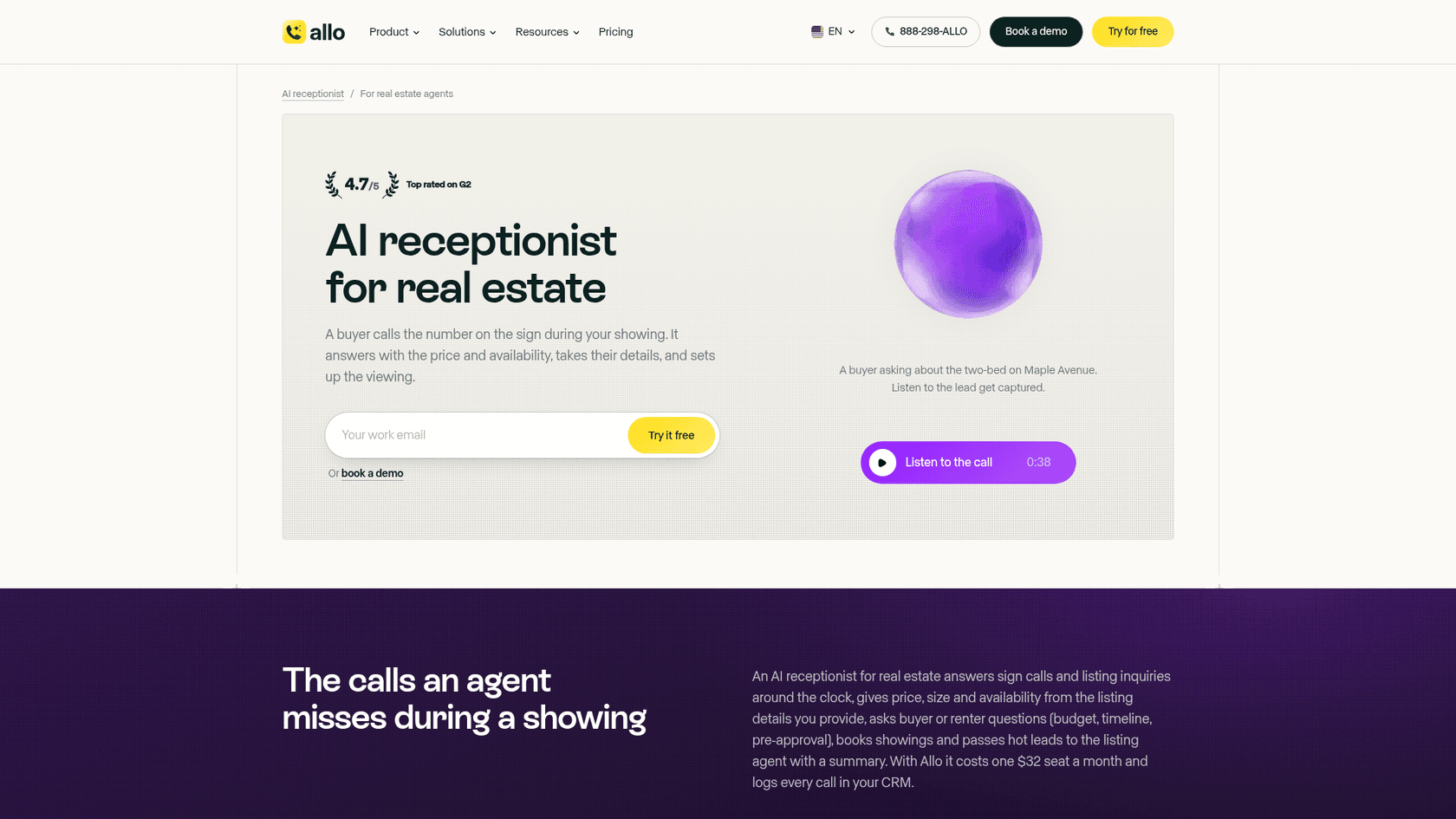
What it does on a real estate call. Allo is a business phone system with an AI receptionist on top. According to its real estate page, it answers sign calls and listing inquiries around the clock, gives price, size and availability "from the listing details you provide", asks about budget, timeline and pre-approval, books showings into Google Calendar, Outlook, Cal.com or Calendly with buffers for driving, and passes hot leads to the listing agent with a summary. The right agent's phone rings, not the whole office. When a caller asks something it wasn't told, it takes the question for the agent instead of guessing. For property managers, it has rules for urgent tenant calls like a leak or a lockout.
Pricing. The AI receptionist takes one Business seat: $32 a month billed yearly or $45 month to month, with no per-minute meter and a 3-day free trial. Texting needs a one-time $24 registration, per the pricing page. Missed buyers also get a text back, which is the kind of AI texting buyers actually reply to.
Watch out for. You're adopting Allo as your phone system, or at least forwarding calls to an Allo line when nobody picks up. Pricing is labeled early.
My take: the best value here for a small team, and its native Follow Up Boss integration that logs each call's summary, transcript and recording on the matching contact. It also has the most careful fair housing guidance of any vendor I read.
2. NuTalk
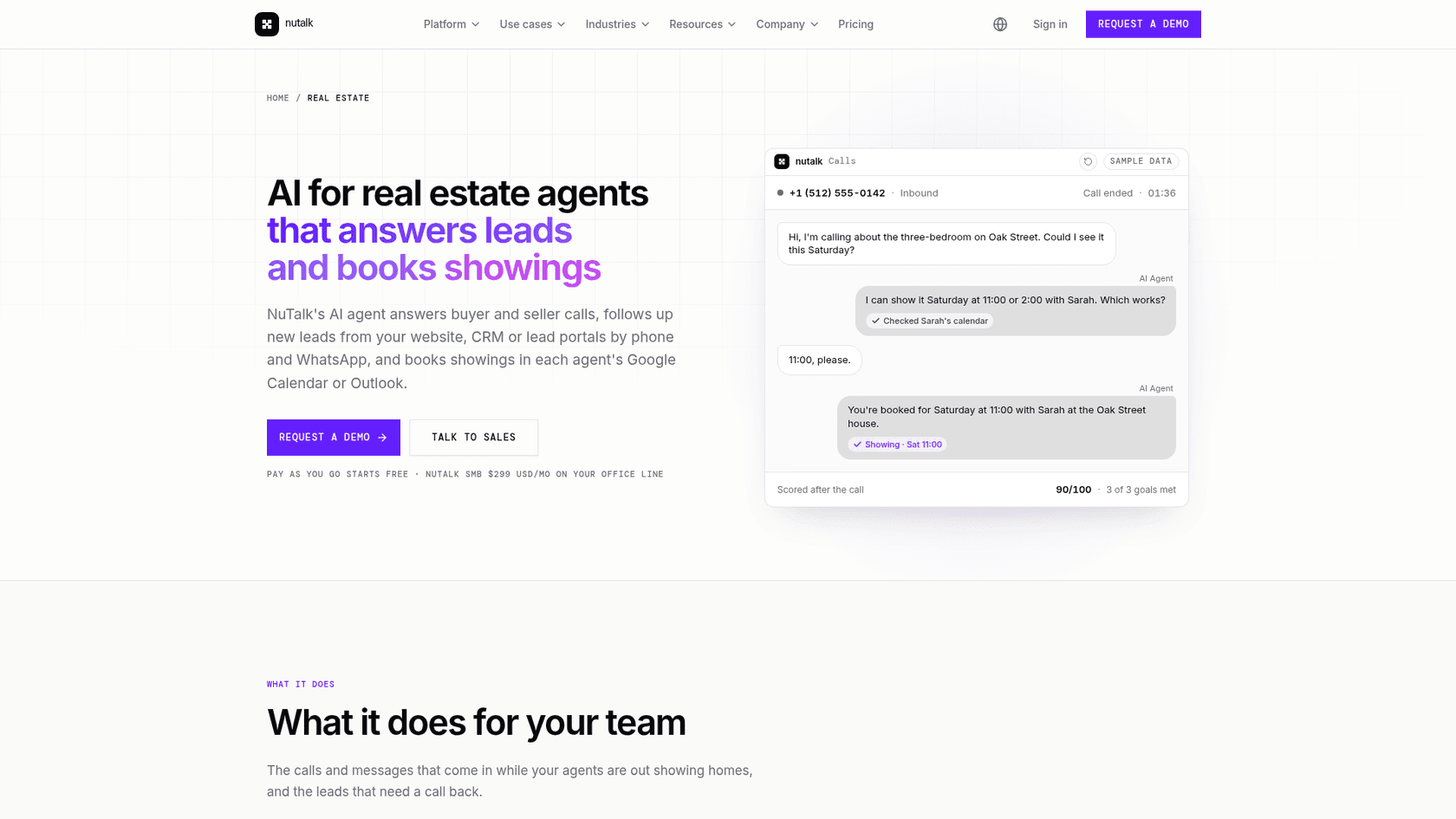
What it does on a real estate call. NuTalk's real estate page says it answers buyer and seller calls in English or Spanish, takes each caller's name, budget, area and timeline, and books showings synced with each agent's Google Calendar or Outlook. Its WhatsApp agent answers from the listing sheets you upload, understands voice notes and books the showing in the same chat, which suits offices where buyers message more than they call. I compared more WhatsApp support tools separately. It can also call new leads from your website or CRM inside your calling hours.
Pricing. Pay as you go is $0 a month plus $0.25 per call minute, with about 40 free minutes a month. Minute packs run from $25 for 100 to $749 for 5,000. The NuTalk SMB plan is $299 a month for unlimited calls on your own line, but it needs an analog landline and a $149 box install, per the pricing page.
Watch out for. NuTalk lists its own limits, which I appreciate: it doesn't connect to an MLS or IDX feed, it doesn't send showing reminders on real estate plans, and "it doesn't put a person on the line mid-call." Hot leads go to the agent after the call, with a transcript.
My take: the pick for bilingual offices and teams whose buyers live on WhatsApp. Skip it if a caller asking for a person needs to reach one right then.
3. Smith.ai
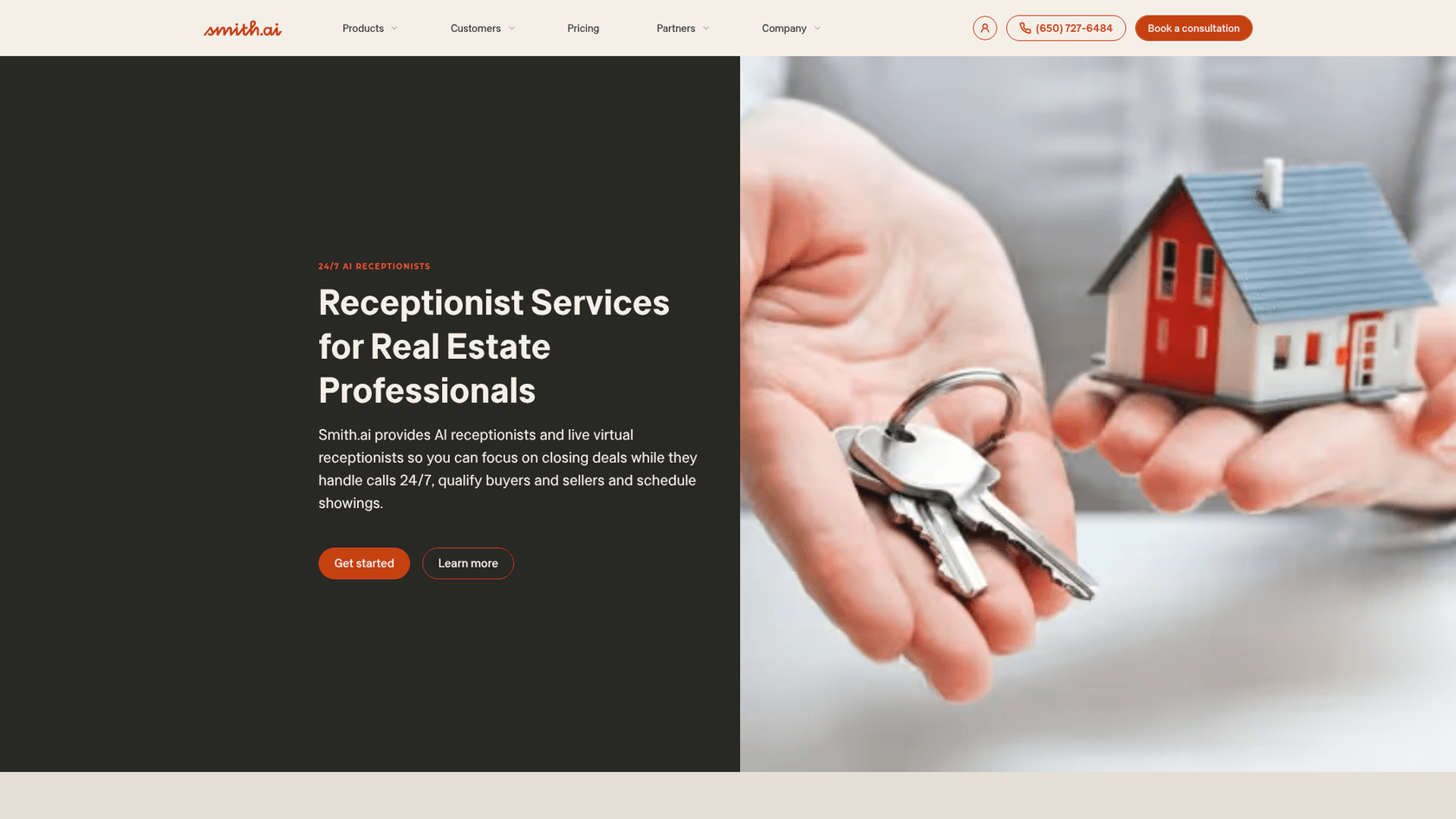
What it does on a real estate call. Smith.ai's real estate page offers AI receptionists and live virtual receptionists that answer 24/7, qualify buyers and sellers on budget, pre-approval, preferences, timeline and location, and schedule showings. Its split is sensible: AI for high-volume lead screening, live receptionists for sensitive calls like foreclosures or estate sales. It lists a Follow Up Boss integration.
Pricing. The AI plans bill per call, not per minute: Free for 25 calls a month ($3 per extra call), Pro from $150 for 75 calls, $270 for 150, and Enterprise $500 for 300, per the AI receptionist pricing. Human receptionists start at $300 for 30 calls.
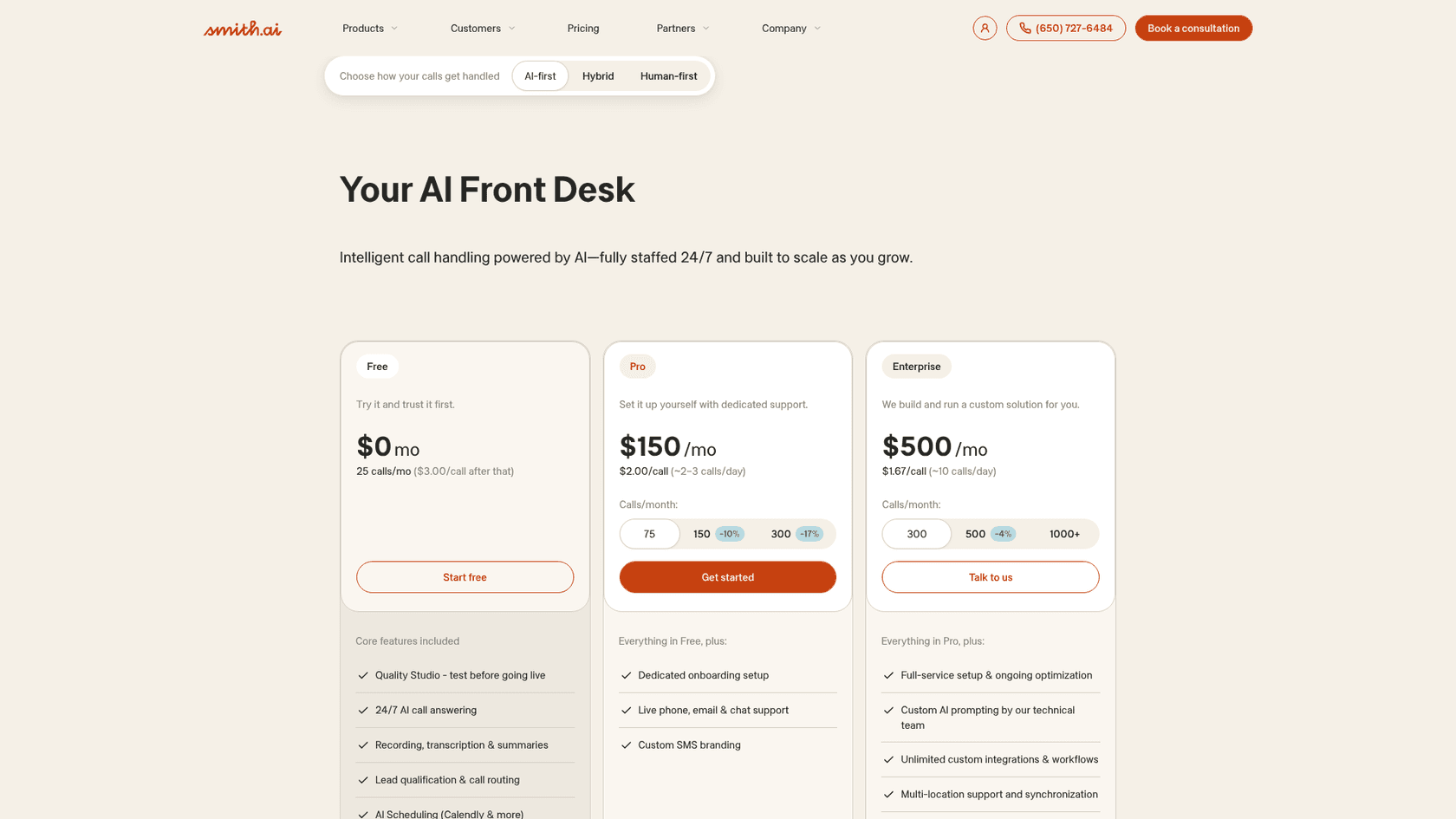
Watch out for. Per-call pricing adds up faster than flat plans once you pass 75 calls. The real estate page also mentions integration with "MLS systems" but doesn't name one, so ask which.
My take: the right call for a brokerage where one lost listing costs more than a year of the plan. Any caller who needs a person can be transferred to a live North America-based receptionist, day or night, and that's the best answer to the "I'll hang up on AI" problem I've seen.
4. Rosie
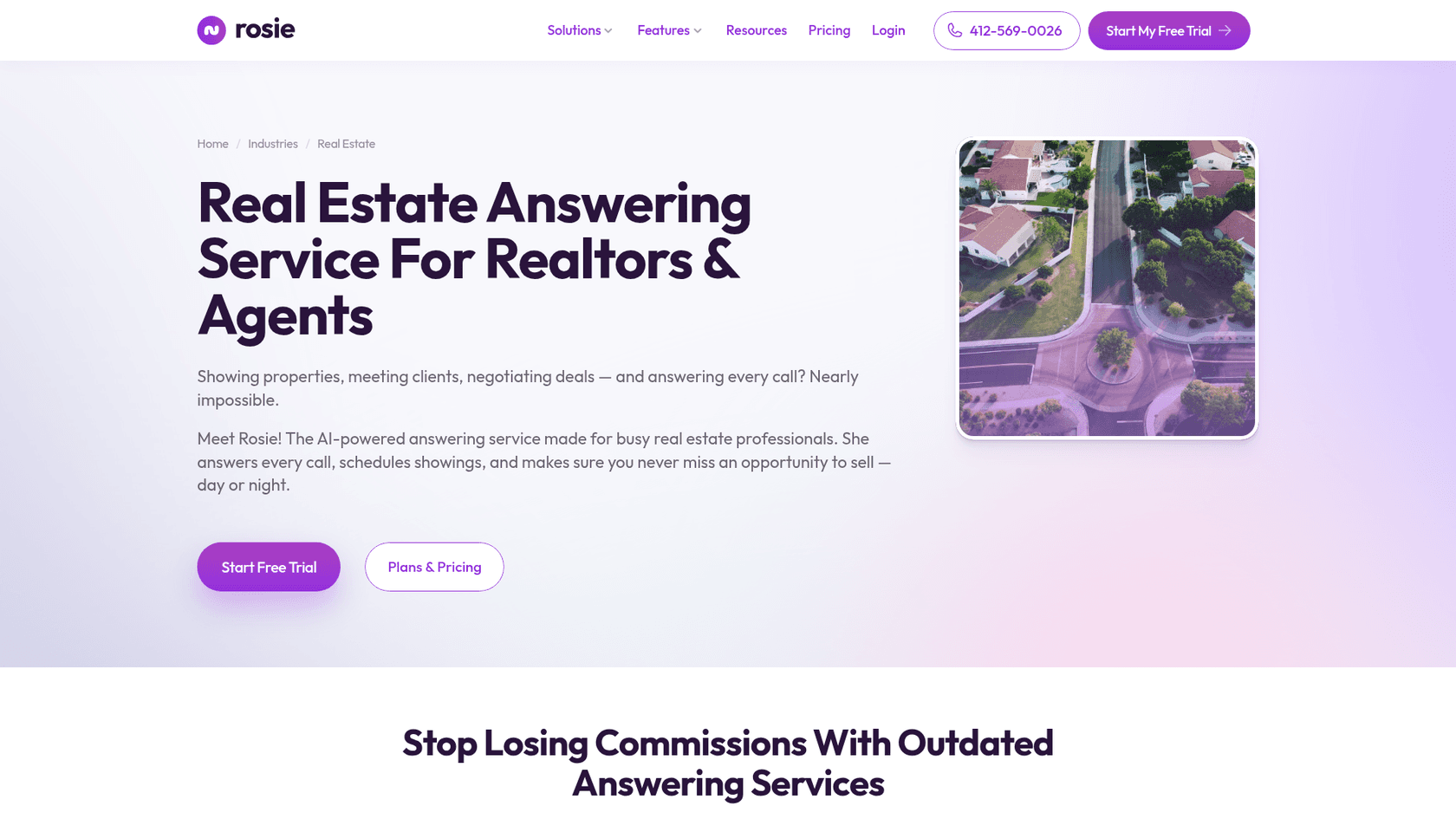
What it does on a real estate call. Rosie learns from your website, MLS listings, Google Business profile and anything else you add, according to its real estate page. It answers in English and Spanish, takes messages and can forward calls to another agent when you're busy.
Pricing. Professional is $49 a month for 250 minutes, Scale is $149 for 1,000 minutes, Growth is $299 for 2,000, per the pricing page. Calendar booking and live transfers start on Scale. On the $49 plan, it texts the caller a booking link instead.
Watch out for. Rosie's own pages disagree on showings: the real estate FAQ says it can't schedule showings directly, while the pricing page lists direct calendar booking on Scale. Test it on the plan you'd buy. CRM syncing is Zapier only.
My take: an easy start for a solo agent who mostly needs messages taken and calls forwarded. A team that needs booking and transfers should budget for Scale from day one.
5. Goodcall
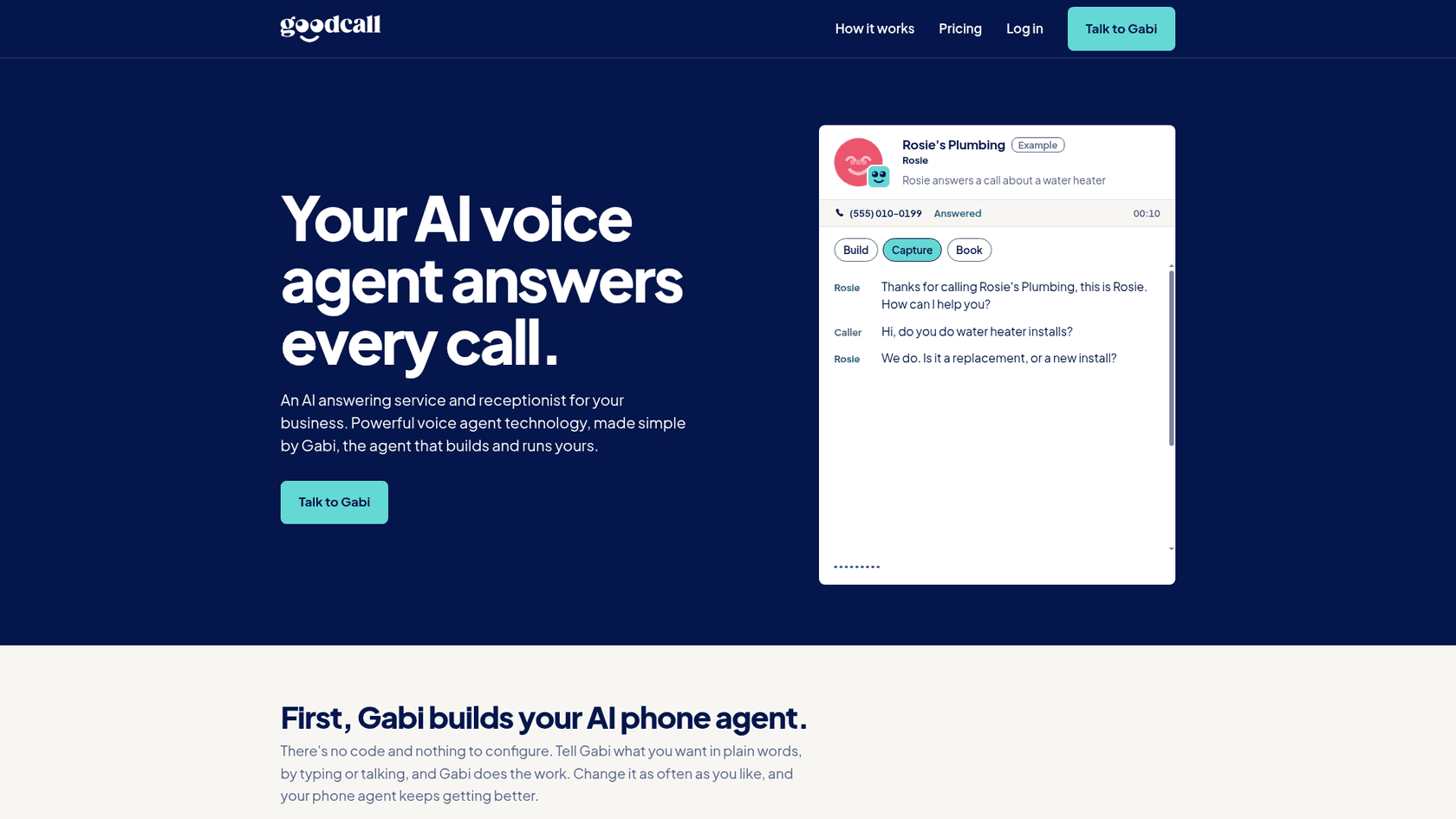
What it does on a real estate call. Goodcall is a general small-business receptionist with no real estate page (both URLs I tried returned "we can't find that page"). It answers around the clock, books on your calendar, and transfers by trying up to three contacts. It connects natively to HighLevel and Google Sheets, with Zapier for other CRMs.
Pricing. Billed per unique caller per month: Starter $79 for 100 callers, Growth $129 for 500, Scale $299 for 2,000, per the pricing page.
Watch out for. It can text callers but, per Goodcall, "can't receive replies yet". You write all the real estate logic yourself.
My take: per-caller billing is kind to offices where the same buyers call back several times about one listing. Worth a look if your team already runs on HighLevel.
6. Retell AI

What it does on a real estate call. Retell is a platform for building voice agents, not a ready-made receptionist. Its real estate page shows what you can build: answer buyer, seller and renter calls, qualify leads, book tours, warm-transfer ready prospects and re-engage aged leads. It connects natively to HubSpot, Salesforce, Zoho, HighLevel, Calendly and Cal.com. It's closer to a custom AI voice agent than a receptionist app.
Pricing. $0.07 to $0.31 per minute depending on the model and voice you pick, with $10 in free credits, plus $2 a month per phone number. Once a call transfers to a person, the AI fee stops. More detail in my Retell AI pricing breakdown.
Watch out for. Someone has to design, test and maintain it. Follow Up Boss isn't on its integrations list.
My take: the pick for a large team or brokerage with a developer who wants full control over the script. For everyone else, it's more work than the five above. There are more options in this roundup of AI voice agents.
How should you set up an AI receptionist for real estate?
Every tool above lets you test before going live, through a free plan, a trial or a demo. Use that time properly. A few test calls from your own phone won't tell you much. Here's the setup and test I'd run, in this order:
- Start with overflow and after hours only. Forward calls to the AI when nobody picks up, or outside office hours. A property manager on Reddit described the bar well: very few after-hours calls "can't wait until morning," and only true emergencies should wake anyone up. Your agents keep every call they can take. This is the same pattern as after-hours support in any other business.
- Write the "never" list first. No comments on neighborhoods, schools, safety or who lives there. No price negotiation. No status updates on a live deal. No promises about a showing the agent hasn't confirmed.
- Give it only listing facts it can't get wrong. Price, beds, baths, square footage, HOA fee, open house times, and whether it's still available, updated when the listing changes. If the listing details are out of date, the AI will confidently repeat old information.
- Ask for a person in the first ten seconds. It should transfer, or take a number and say exactly when someone will call. If it argues, that's a dead end and a lost client. The handoff rules that apply to chat apply here word for word.
- Test the questions it should refuse. Call and ask "is it a good area for kids?" and "will the seller take 20 less?" Check the recording. Then check every call summary reaches the right agent in a form they can act on in 30 seconds.
Run that against the calls you actually get, not the ones you wish you got. eesel's own rollouts work the same way: before an agent answers anyone, it's simulated against past tickets to see what it would have said. Plenty of confident-sounding bots give wrong answers, and the only way to catch it is to replay real conversations before go-live. I'd ask any phone vendor to show you the equivalent.
When the call is about a deal you've already won
Most AI receptionists are built for lane 1: catch the new lead, book the showing. That's the part with the obvious payback, and every tool above does it. The harder part is everything after the first call: the buyer asking about earnest money, the seller asking what happens after inspection, the tenant chasing a repair. Those questions come in by phone, email, text and WhatsApp, and they need the same answer on every channel.
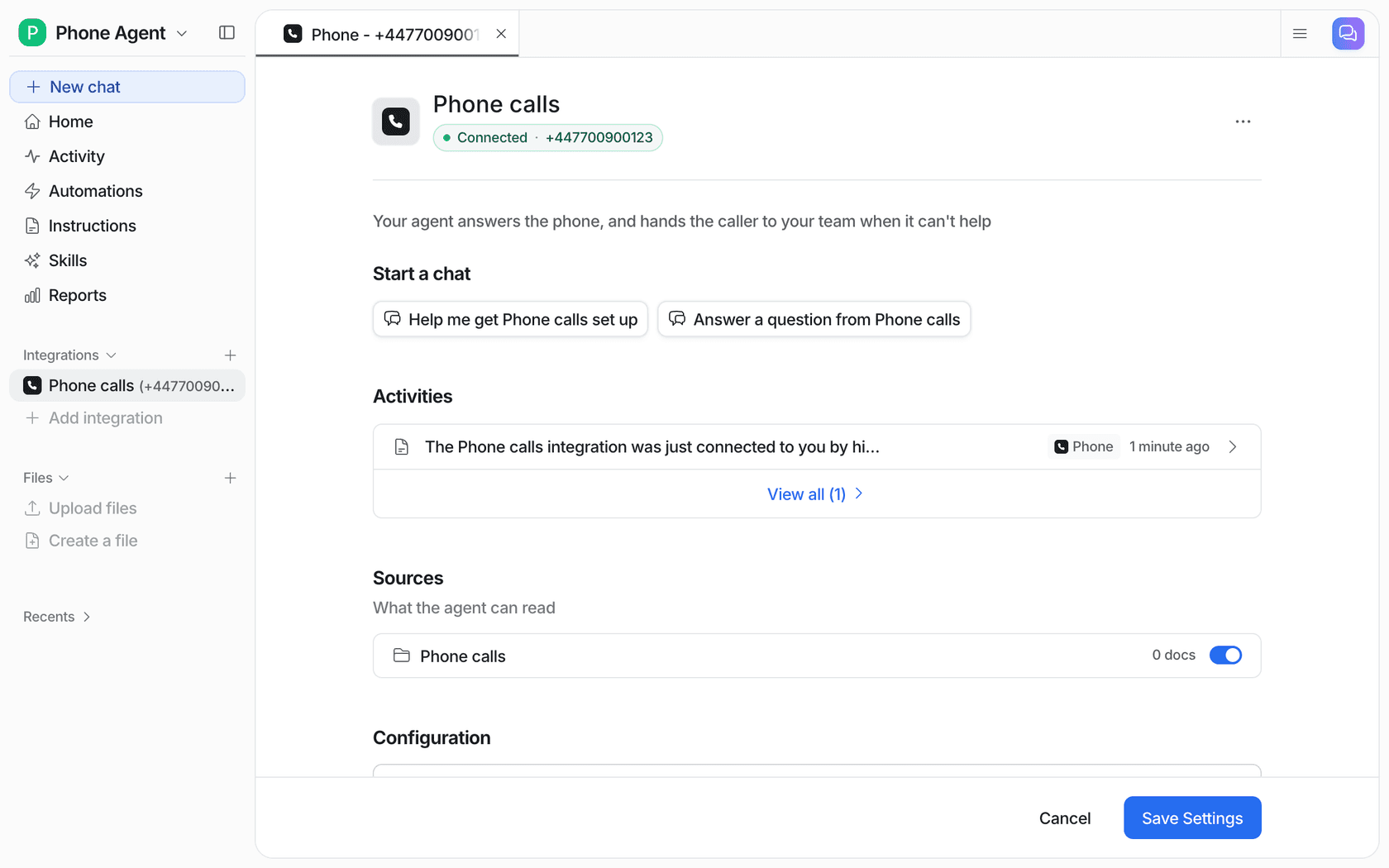
That's where I'd look at eesel. It's an AI helpdesk teammate that answers from your own documents and past replies, and it now answers phone calls too. The phone calls docs say it answers in the caller's language, uses the same instructions and knowledge it uses in chat, transfers to your team's number when it can't help (or offers a call back), and saves every call to Activity with the full transcript. You can keep your number by forwarding it.
It also handles WhatsApp, email and website chat from the same setup. Text messages work too, through the SMS integration.
I'll be clear about the limits. Phone calls aren't self-serve yet: the eesel team turns them on and sets up the number with you. On a call it only looks things up, so anything that changes data stays with your team. It doesn't book showings by phone, and it doesn't connect to an MLS. If all you need is "catch the sign call and book the showing", Allo or Smith.ai fits better.
Where eesel fits is a marketplace-shaped business with rules about who gets told what. Swiftreg, a UK private number plate marketplace, sits between private sellers and buyers the way a brokerage does. Its setup has two rules a real estate office would recognize: live lookup results beat anything else, so eesel never reports a status a lookup hasn't confirmed, and sellers are only ever "the seller" or "the current owner", never named. When a seller confirms a plate is still for sale, eesel finds every buyer waiting on it and replies to each. In one month it handled about 2,100 tickets and sent 1,494 public replies. Back in May 2026, a support team handling vacation-rental guests told eesel their agents were writing up voice interactions by hand so the AI could use them, and that fixing it "would significantly increase our usage." Keeping calls and messages in one place is the point. If you'd rather hand the whole inbox and phone line over, eesel's Managed Support runs every channel for $5,000 a month flat, though it's built for ecommerce brands first.
My pick, by situation
- Small team on Follow Up Boss: Allo, at
$32to$45a month. - A lost listing costs you thousands: Smith.ai, for the live receptionists behind the AI.
- Bilingual office or buyers on WhatsApp: NuTalk.
- Solo agent who mostly needs messages taken: Rosie Professional,
$49. - Brokerage with a developer: Retell AI.
- Clients who call, email and text about live deals: eesel, on every channel at once.
Whichever you pick, judge it on one thing in the first month: did any caller who wanted a person fail to reach one? If the answer is no, it's already better than the voicemail it replaced. For a wider view of the category, my AI phone receptionist guide covers the trades and clinics side, and this guide to real estate support covers the inbox.
Try eesel for your real estate clients
Your agents can't answer every call mid-showing, and they shouldn't have to answer "when's my closing?" five times a week either. eesel works like a new hire who already knows your documents and past replies, answers clients on the phone, email and WhatsApp, and hands anything about a live deal to the right agent with the transcript attached. Book a demo to get phone calls set up, or try eesel on email and chat first, with plans from $299 a month.
Frequently Asked Questions
What is an AI receptionist for real estate?
How much does an AI receptionist for real estate cost?
$45 a month for Allo to $385 for Smith.ai's AI plan. Human receptionists from Smith.ai cost about $1,965 for the same calls. Check whether a plan bills per minute, per call or per caller, because that decides your bill, as I break down in this AI call center agent guide.Can an AI receptionist book property showings?
$149 Scale plan, though its real estate page says it sends booking links instead, so test it. Give it buffers for driving time, the same way you'd set up any AI scheduling assistant.