The short answer, and the honest one
I build AI agents for a living, and I've spent the last few years watching them run on live support queues, so I'll give you the version I'd give a friend deciding whether to point their phone line at one.
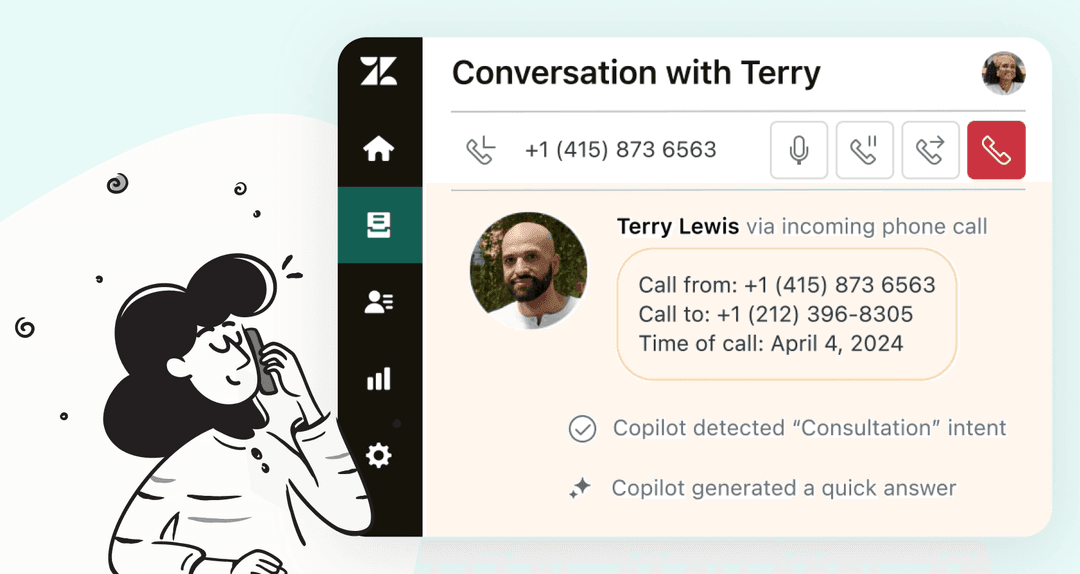
The short answer is yes. The honest answer is that "AI phone support" hides two very different jobs, and which one you mean changes everything. The first is an AI voice agent that literally answers the phone and talks to the caller. The second is deflection: catching the question on a faster, cheaper channel so the phone never rings. Both are real, both work, but they carry different cost and different risk, and they're worth deploying in a specific order.
What's actually changed is the voice quality. The old IVR tree, "press 1 for sales, press 2 for support," was a menu, not a conversation. Today's agents understand intent and speak naturally. As one practitioner put it on r/SaaS:
"Voice AI Agents are now handling real phone conversations, not IVR menus. They can understand intent, speak naturally, answer FAQs, and integrate with CRMs... They don't replace humans, they handle repetitive calls so teams can focus on complex issues."
That's the shift in one sentence. The technology can answer the phone. The interesting question is what you should let it answer.
How an AI voice agent actually handles a call
Under the hood, a good voice agent runs the same loop on every call, and it's worth seeing the steps because the weak link is always the same one.
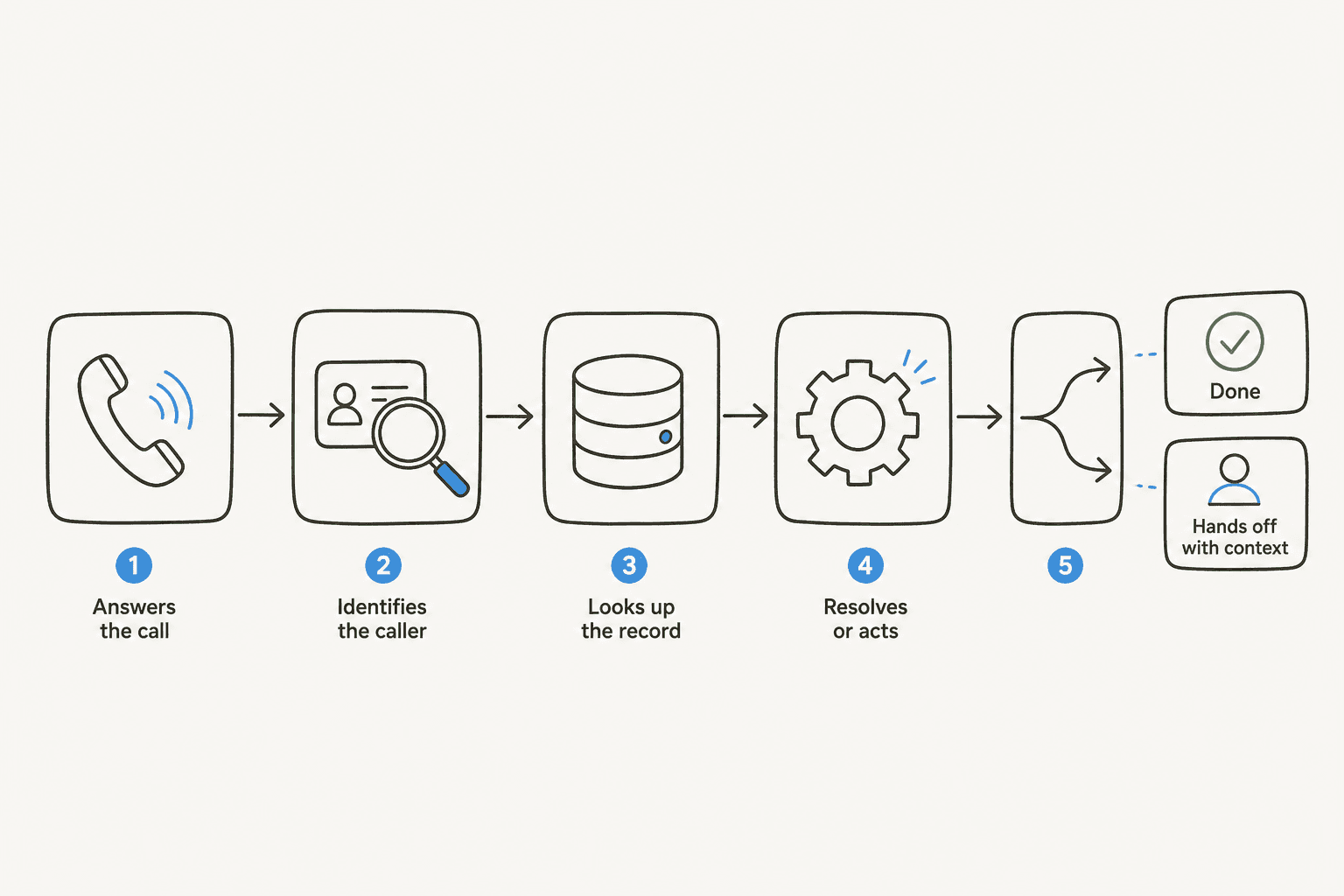
It answers, figures out who's calling, pulls their record from a connected system, takes an action or answers the question, and then either wraps up or hands off to a person. The load-bearing step is the last one. A voice agent that resolves 70% of calls and dumps the other 30% back to square one is worse than no agent. The 30% have to transfer with context, so the human picks up where the AI left off.
The infrastructure to do this is mature. Developer-focused Retell AI lets teams build a voice agent that does exactly this loop, with sub-second latency and a fallback system built in, and it's transparent about pricing right down to the per-minute model cost.
At the enterprise end, PolyAI runs its own dialog model trained on over a billion conversations, with SOC 2, HIPAA, GDPR, and PCI DSS as standard, and cites a restaurant chain CMO crediting it with "just over $7M in incremental revenue." If you're already on a helpdesk, there are platform-native options too, like Zendesk AI voice assistants, Freshdesk voice AI agents via Freshcaller, a Salesforce AI voice agent, or call-platform players like CloudTalk AI and Dialpad. I rounded up the broader category in our guide to AI voice companies.
What AI answers well on the phone, and what it doesn't
Here's the honest split, because overselling this is how you end up with angry customers.
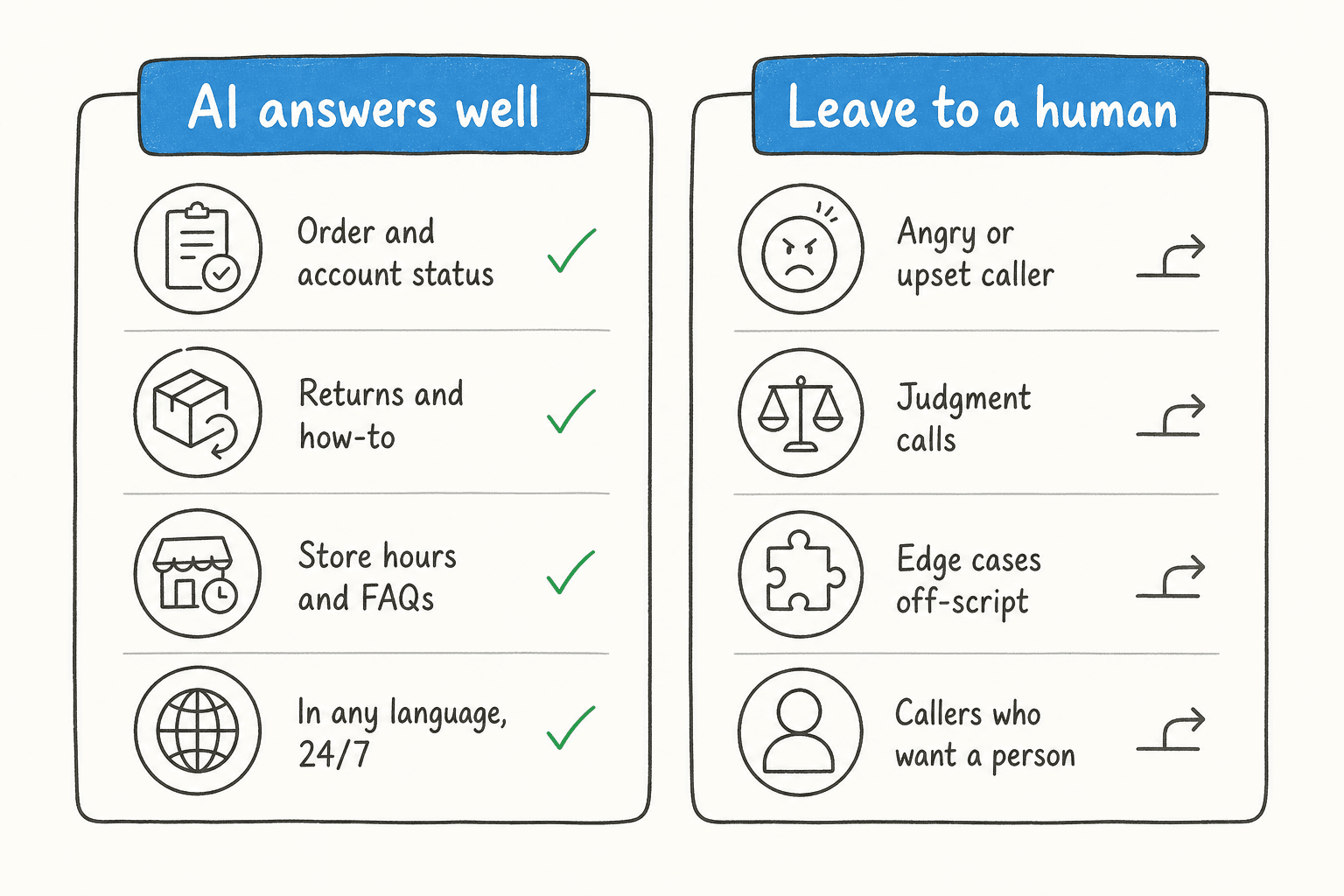
What it's good at is the lookup lane. Account and order status, returns and exchanges, how-to questions, hours, and basic FAQs, the calls that map cleanly to a record or a policy. These are the same questions a good AI customer service chatbot already fields on chat every day, in 80+ languages, around the clock. They don't need a clever model, they need the data and a clear policy. This holds across IT service desks and internal Teams support bots just as much as customer-facing lines.
Where it breaks is anything needing judgment, empathy, or a decision the policy doesn't cover. A furious caller, a genuine edge case, a one-off request. And there's a quieter trap: plenty of people call because they want a human. Automating that call away doesn't help them, it just hides the door. The skeptics on r/customerexperience put the worry plainly:
"Automation saves time, but some customers get frustrated when there's no human judgment. Where's the sweet spot for bots versus humans in real support?"
The sweet spot isn't a percentage you hit, it's a behaviour you design for, which brings us to the one rule that matters most.
The thing that actually makes or breaks voice AI
If you take one thing from this post, take this: the AI should only handle what it's confident about, and hand off everything else, cleanly. An ops lead at a DTC brand doing around 7,000 tickets a month framed the non-negotiable better than I could:
"The AI will never be able to answer 100% of the questions, but if it tries and just answers 'sorry I don't know this,' I cannot go and check all my tickets to see if the AI actually made a good answer. I need an AI who is only handling the tickets that it's confident to handle, and all the other ones, leave them alone."
That's exactly right, and it's why confidence-based routing matters more than raw resolution rate. A confident wrong answer on a live call is the worst outcome there is, worse than a transfer, because the customer acts on it and you find out later. The DTC operator who hit 70% deflection nailed why his setup worked: the calls that transferred went to a person with context about what was already discussed, and "customers mostly don't realize they're talking to AI until they ask something really complex and it says it needs to transfer them." Get the handoff right and voice helps; get it wrong and it infuriates.
What it costs, and why the billing model bites
The two layers price very differently, and the difference is easy to miss until the bill arrives.
| Approach | How it's billed | Typical range | Where it stings |
|---|---|---|---|
| AI voice agent (per minute) | Per call minute, plus telephony | ~$0.07–$0.31/min (Retell AI) | A long or repeated call costs more, and a volume spike multiplies it |
| Enterprise voice platform | Custom, per deployment | Quote-based (PolyAI) | Setup and minimums; built for scale, not small teams |
| Text deflection (per conversation) | Flat per resolved conversation | $0.40/conversation, no per-seat fee | Doesn't answer the phone, so you still need a line for callers |
The thing to watch is what happens at peak. Per-minute voice billing and per-resolution billing both climb exactly when you can least control them, during a product launch, an outage, or a holiday rush. A flat per-conversation rate keeps November's bill shaped like March's. (Retell does one nice thing here: the moment a call transfers to a human, the agent fee stops and only telephony continues.) If you're weighing the full picture, our AI vs human agent cost and AI support agent cost breakdowns are good starting points.
The better first question: did the call need to happen?
This is the part I'd actually lead with if you're starting from scratch. Before you automate the call, ask whether the call needed to happen.
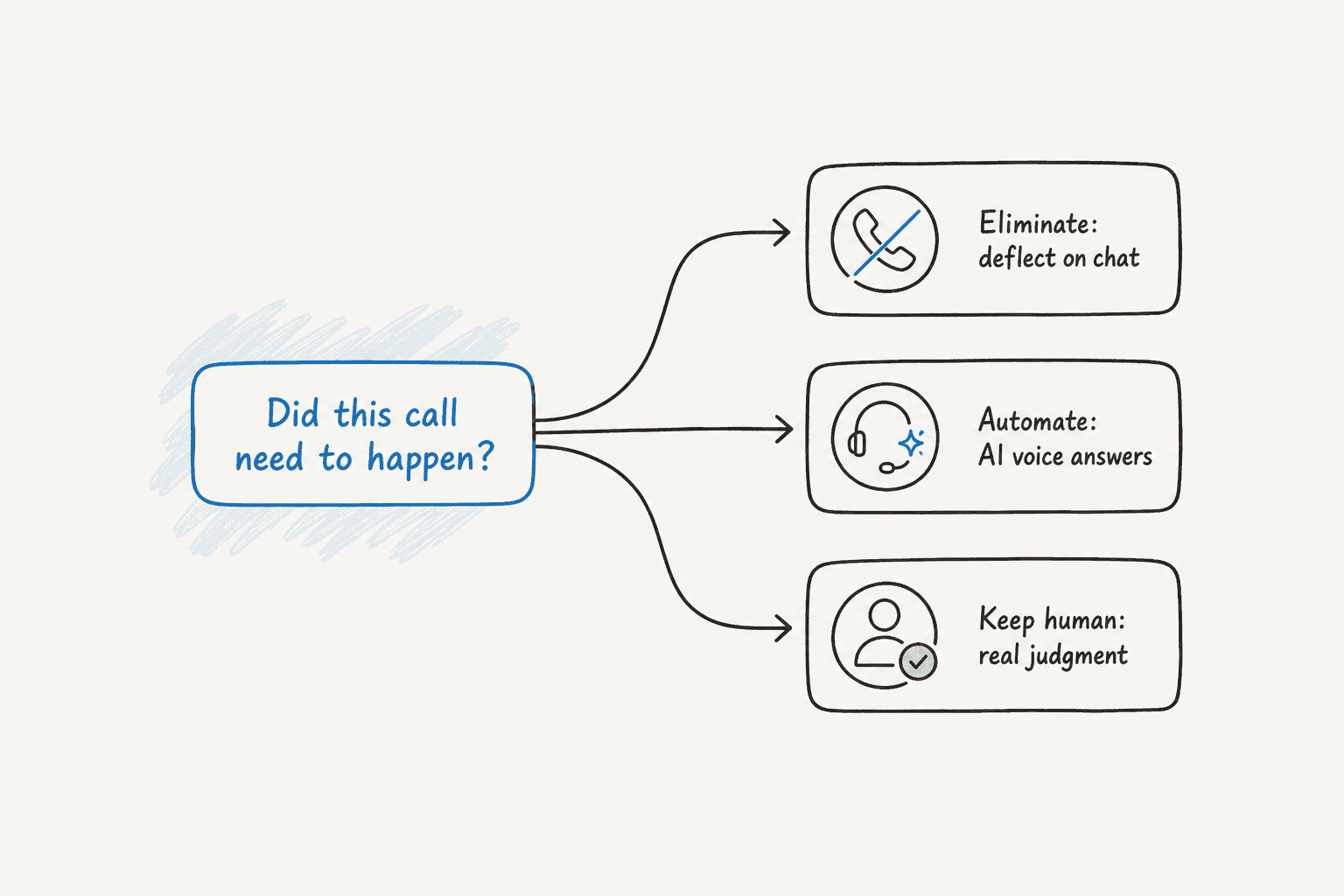
Sort every inbound call into one of three lanes. Some you want to eliminate, because the customer would happily self-serve if the answer were instant. Some you can automate with a voice agent. And some you want to keep human. The biggest lane, by a distance, is the first one, and that's good news, because deflection is cheaper, lower-risk, and faster to deploy than voice for one simple reason: a text mistake is recoverable, and a bad live phone call isn't.
I trust this lane because I've watched it work on real traffic. In one trial on a German store's live Zendesk queue, our AI hit 93% triage accuracy and drafted useful answers on every product-inquiry and refund-status ticket, none of which needed a clever model, just the record and a clear policy. On another rollout, Gridwise saw eesel resolve 73% of tier-1 requests in the first month. Those are the same lookup questions that otherwise show up as phone calls.
This deflection lane is where eesel AI is built to live. It sits on your chat widget and inside your helpdesk, learns from your past tickets and help docs, and resolves the repetitive questions before they become a call, handing off to a person the moment it isn't sure. It won't answer the phone, but it will quietly shrink the number of calls you need a phone agent for in the first place.
Try eesel for support automation
If your phone is mostly carrying status checks, returns, and how-to questions, the fastest payback isn't a robot on the line, it's an AI support agent that resolves those questions on chat and inside your helpdesk before they ever become a call. eesel connects to your existing tools, learns from your past tickets and help docs, and answers in 80+ languages, escalating to a human the second it isn't confident.

The differentiator is that you can simulate the whole thing on your historical tickets before going live, so you know your resolution rate up front instead of finding out in production, which is exactly the dry run that separates a rollout from a gamble. eesel doesn't answer the phone itself, so if you need the voice line too, run it alongside one of the AI voice companies above. You can try eesel free, or browse our pick of the best customer service AI to see where it fits.
Frequently Asked Questions
Can AI answer support phone calls without a human?
How much does an AI phone agent cost?
What support calls should AI handle, and which should it not?
Is an AI voice agent better than an AI chatbot for support?
How do I keep an AI phone agent from giving wrong answers?


Article by
Alicia Kirana Utomo
Kira is a writer at eesel AI with a Computer Science background and over a year of hands-on experience evaluating AI-powered customer service tools. She focuses on breaking down how helpdesk platforms and AI agents actually work so that support teams can make better buying decisions.