If you're evaluating AI for customer support, you've probably come across Decagon. The company has raised $231 million at a $1.5 billion valuation and counts brands like Duolingo, Notion, and Chime among its customers. That kind of backing gets attention.
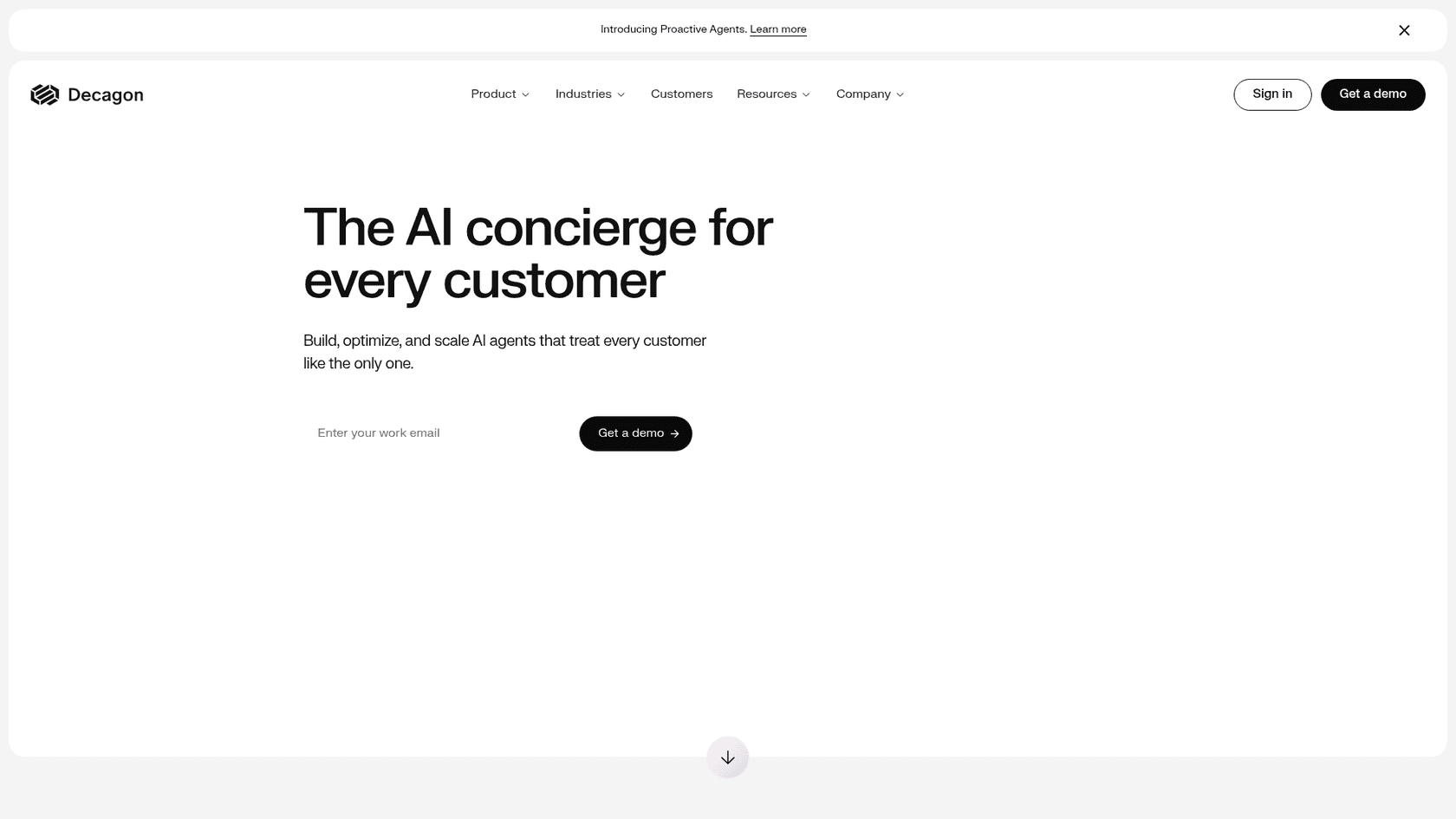
But here's the question that actually matters for your business: is Decagon worth it?
The short answer: it depends entirely on who you are. Decagon is purpose-built for large enterprises with complex needs, engineering resources, and budgets to match. For teams outside that profile, there are more practical alternatives.
Let's break down what Decagon offers, what it costs, and how to know if it's the right fit for your situation.
What is Decagon AI and who is it for?
Decagon is an enterprise AI platform that automates customer support through AI agents handling chat, email, and voice interactions. Founded in 2023 by Jesse Zhang (ex-Google) and Ashwin Sreenivas (ex-Palantir), the company has grown rapidly, reaching over $10 million in ARR in its first year.
The platform is designed for companies that need sophisticated automation with deep customization. Think fintech companies handling sensitive transactions, large SaaS platforms with complex product suites, or enterprises with strict compliance requirements.
Decagon's customer list reads like a who's who of tech: Chime, Duolingo, ClassPass, Rippling, Notion, Bilt, Hertz, and Affirm. These are companies with large support teams, multi-million dollar support budgets, and the engineering resources to dedicate to AI implementation.
If you're a startup, SMB, or mid-market company without a dedicated engineering team for AI projects, Decagon is likely not designed for you. That's not a criticism. It's simply a different category of product.
For teams looking for accessible AI support automation without the enterprise overhead, eesel AI offers a more practical starting point. More on that later.
Decagon pricing: what you're actually paying for
Decagon doesn't publish public pricing, which is typical for enterprise software sold through sales teams. According to Vendr data, annual contracts range from $95,000 to $590,900 or more.
Here's how their pricing models work:
| Pricing model | How it works | Best for |
|---|---|---|
| Per-conversation | Fixed fee for every AI-handled interaction | Predictable monthly costs |
| Per-resolution | Higher fee only for successfully resolved issues | Outcome-based ROI focus |
Both models are usage-based, which means your costs scale with volume. That can be good (you pay for what you use) or problematic (unpredictable spikes during busy periods).
The sticker price is just the beginning. Decagon requires dedicated "Agent Engineers" for implementation and ongoing maintenance. Implementation timelines run weeks to months. You're not just buying software; you're buying a white-glove service engagement.
Compare that to typical AI support tools:
| Tool type | Starting price | Implementation |
|---|---|---|
| Decagon AI | $95,000+/year | Weeks to months with dedicated engineers |
| eesel AI | $239/month | Hours to days, self-serve |
| Other AI tools | $500-$2,000/month | Days to weeks |
The high price point exists because Decagon delivers custom development, deep integrations, and hands-on implementation. Whether that value proposition makes sense depends on your specific situation.
What Decagon does well
Decagon's strengths align with what enterprise customers actually need. Here's where the platform delivers:
Deep backend integrations. Decagon connects to CRMs, helpdesks, knowledge bases, and internal systems through pre-built integrations and custom APIs. The platform supports MCP (Model Context Protocol) for open connectivity to any data system.
Agent Operating Procedures (AOPs). This is Decagon's core innovation. You define agent workflows in natural language, and the system compiles that into code-level logic. Non-technical users can shape agent behavior while technical teams retain control over guardrails and integrations.
Omnichannel by design. Decagon unifies voice, chat, and email within a single intelligence layer. The voice AI (powered by ElevenLabs) offers customizable voice profiles, real-time responsiveness, and smooth handoffs to human agents.
Real customer results. The numbers are impressive:
| Customer | Metric | Result |
|---|---|---|
| Chime | Chat and voice resolution | 70% |
| Duolingo | Deflection rate | 80% |
| ClassPass | Cost reduction | 95% |
| Rippling | Increase in deflection | 32% |
Enterprise-grade security. Built-in guardrails, role-based access controls, and compliance features for regulated industries. The platform includes Watchtower for monitoring user sentiment, flagging fraud mentions, and enforcing guardrails across conversations.
If your organization needs this level of sophistication and has the resources to support it, Decagon delivers.
Where Decagon falls short
No platform is perfect. Here are the limitations to consider:
The "black box" problem. While Decagon offers observability through Watchtower, some users report difficulty understanding exactly how the AI makes decisions. When you're trusting AI with customer interactions, that opacity can be concerning.
Engineering dependency. Decagon requires technical resources for setup, customization, and maintenance. This isn't a self-serve tool you can configure in an afternoon. You need dedicated "Agent Engineers" (either from Decagon or your own team) to keep things running.
Long implementation timelines. Going live takes weeks to months. If you need AI support next week, Decagon won't get you there.
Pricing opacity and unpredictability. Without public pricing, you enter sales conversations without knowing if you're in the right ballpark. Usage-based pricing means costs can spike during busy periods.
Agent Assist limited to Zendesk. If you want AI copilot features for your human agents, you're restricted to Zendesk. Other helpdesks don't get the same support.
Basic user roles. Some users report that user permissions lack granularity, limiting how you can control access across large teams.
These limitations don't make Decagon a bad product. They make it a specialized product for a specific type of customer.
Is Decagon worth it? A decision framework
Let's get practical. Here's how to decide if Decagon is worth the investment for your team.
Choose Decagon if:
- You have 100+ support agents and multi-million dollar support budgets
- You need deep custom integrations with internal systems
- You have engineering resources to dedicate to implementation
- You're in fintech or regulated industries requiring compliance
- You want a white-glove, done-for-you implementation
- Your support volume justifies six-figure annual investments
Don't choose Decagon if:
- You're a startup, SMB, or mid-market company
- You need to go live quickly (days or weeks, not months)
- You want self-serve control without engineering help
- Your support volume doesn't justify enterprise pricing
- You prefer predictable, transparent pricing
- You need AI copilot features for helpdesks beyond Zendesk
ROI calculation framework:
Decagon makes sense when the cost of the platform is significantly less than the cost of the human support it replaces. If you're paying $200,000/year for Decagon but saving $500,000/year in support headcount, the math works. If you're paying $200,000/year to automate $100,000 worth of support work, it doesn't.
The break-even point typically comes at high volumes (tens of thousands of tickets monthly) with relatively routine queries that AI can handle effectively.
A better alternative for most teams: eesel AI
If Decagon's enterprise focus doesn't match your situation, eesel AI offers a more accessible path to AI-powered support.
Here's how the two compare:
| Factor | Decagon AI | eesel AI |
|---|---|---|
| Starting price | $95,000+/year | $239/month ($2,868/year) |
| Implementation | Weeks to months with engineers | Hours to days, self-serve |
| Control | Engineering-dependent | No-code dashboard, plain text prompts |
| Testing | Available | Sandbox environment with past ticket simulation |
| Voice AI | Yes | No |
| Multi-agent | Limited | Yes (orchestrate multiple agents) |
Who eesel AI is for:
- SMBs and mid-market companies looking for accessible AI automation
- Teams that need to go live quickly without engineering resources
- Organizations that prefer predictable, transparent pricing
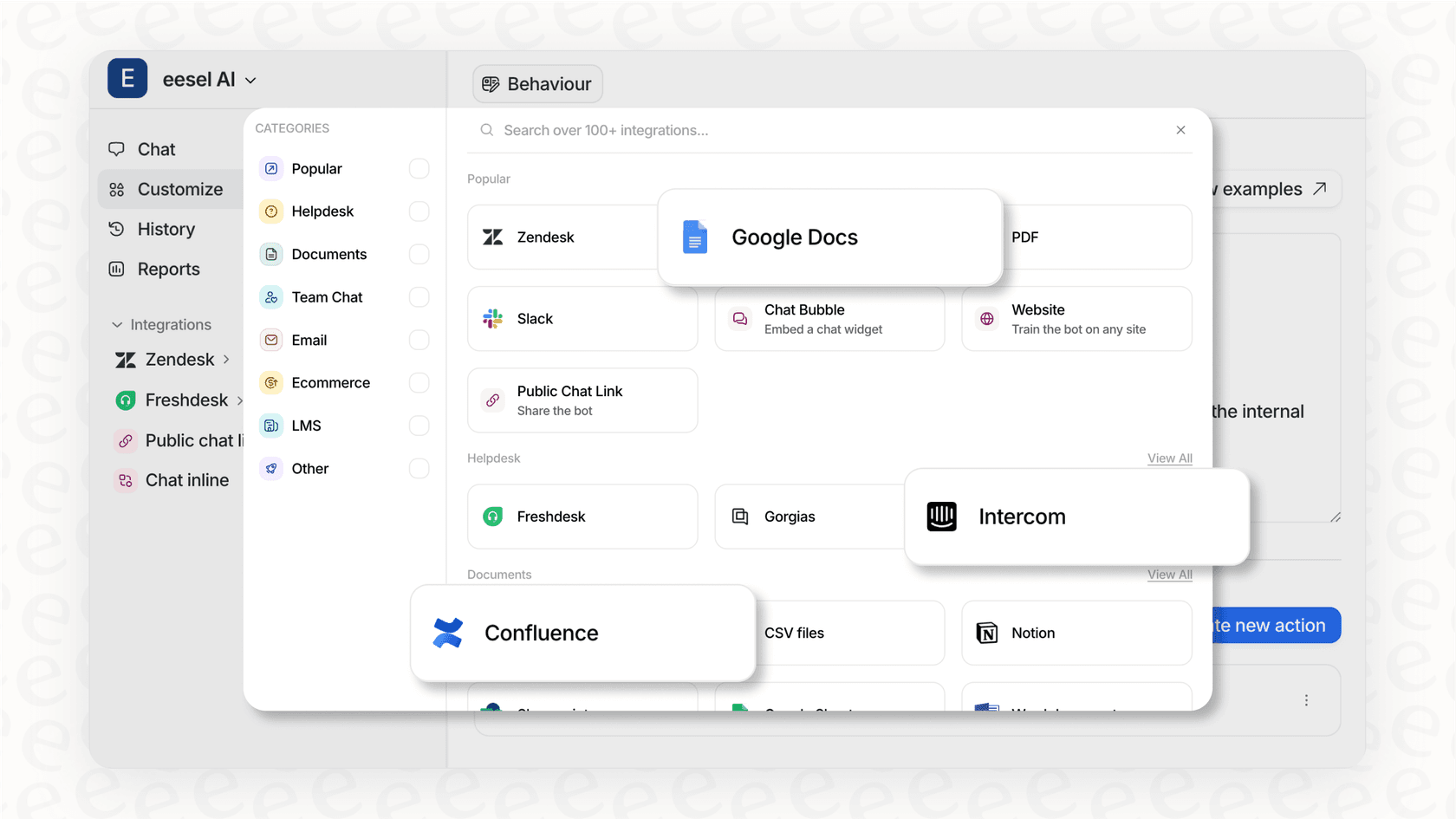
- Support teams using helpdesks beyond Zendesk (we integrate with Zendesk, Freshdesk, Intercom, Gorgias, and more)
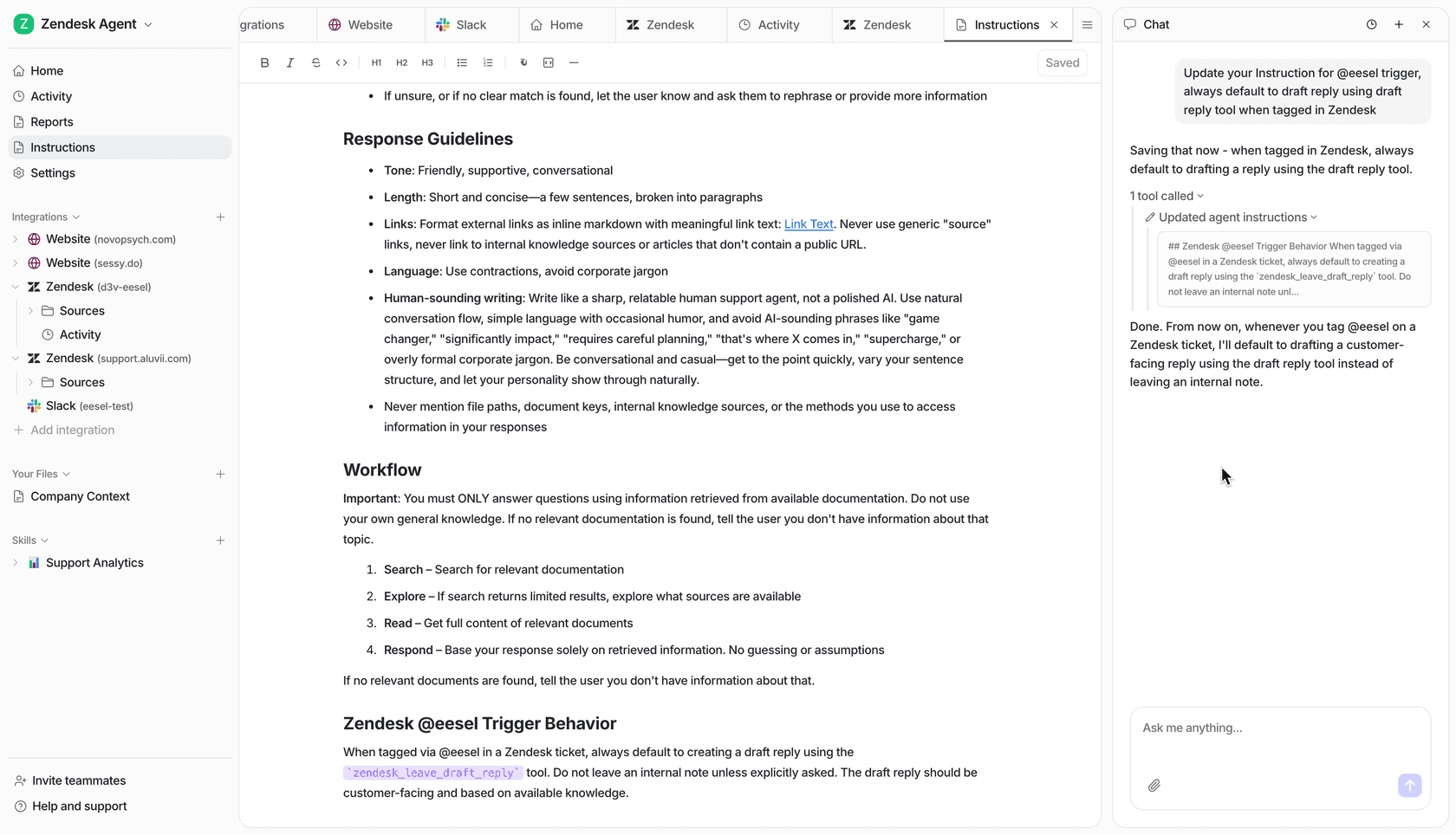
Our AI Agent learns from your past tickets, help center, and company docs to handle frontline support autonomously. You can test everything in a sandbox before going live, and control behavior using plain English prompts rather than code.
With eesel AI pricing starting at $239/month and a 7-day free trial, you can validate whether AI support works for your team without a six-figure commitment.
Making the right choice for your team
So is Decagon worth it? The honest answer: yes, for the right customer.
If you're a large enterprise with complex needs, engineering resources, and the budget to match, Decagon delivers sophisticated AI automation with white-glove service. The customer results speak for themselves.
For everyone else, Decagon is overkill. You don't need a $100,000+ platform with dedicated engineers to automate routine support queries. You need something that works out of the box, integrates with your existing tools, and delivers value without months of implementation.
That's exactly what we built eesel AI to do. Our AI learns your business in minutes, not weeks. It integrates with 40+ tools including Zendesk, Freshdesk, Confluence, and Slack. And you can start with a 7-day free trial to see if it works for your team.
Ready to explore AI support automation? Try eesel AI free for 7 days and see how quickly you can start deflecting tickets.