


If you run an e-commerce business, you know the question. It’s probably flooding your inbox as we speak: “Where is my order?”
It’s more than just annoying, it’s a real drag on your business. With 90% of shoppers expecting real-time order tracking, support teams are stuck answering the same "WISMO" questions all day long. This drives up costs, burns out your agents, and leaves customers feeling like they're shouting into the void.
The old way of handling this is officially broken. The good news? There’s a better way: AI chatbots. But let's be real, a bad bot can make a frustrating situation ten times worse. This guide will walk you through how to use chatbots to handle everything from simple order updates to the messy details of returns, so you can actually help customers instead of just managing tickets.
What are chatbots for order status, returns, and shipping?
Think of these as AI-powered assistants that live on your website or in your app. Their main job is to automatically answer all the questions a customer has after they click "buy." Instead of a human agent digging through systems to find an order number, the chatbot does it instantly.
This isn’t just smoke and mirrors; it’s powered by a couple of key technologies:
-
Natural language processing (NLP): This is the magic that helps the bot understand what a customer is actually asking. Whether they type "track my package," "where is my order," or "shipping status," the NLP figures out what they mean.
-
API integrations: This is what makes the whole thing work. APIs are basically bridges that let different software talk to each other. A good chatbot uses them to connect to your e-commerce platform (like Shopify), your shipping carriers, and your warehouse systems to pull live data and give the customer a correct, up-to-the-minute answer.
Start with the easy stuff: Order and shipping updates
If you’re new to automation, this is the perfect place to start. Answering basic order and shipping questions is the lowest-hanging fruit for any e-commerce business, and the payoff is huge.
You can give customers instant answers 24/7, meaning they get an update the moment they ask, not hours later. This alone makes for a much better customer experience. Even better, you'll see a big drop in your support costs. For most online stores, WISMO inquiries make up a whopping 30-50% of all support tickets. Automating them is a massive win for your budget.
You can even do some quick back-of-the-napkin math to see the savings:
(Total Monthly WISMO Tickets) x (Deflection Rate %) x (Your Cost Per Ticket) = Monthly Savings
A smart chatbot can even be proactive. Imagine automatically sending a message when an order ships or is out for delivery. You turn a moment of customer anxiety into a positive touchpoint that builds trust.
How chatbots get one right answer from many places
Here’s the catch: a complete order update usually requires information from a few different places. The order details are in your Shopify store, the fulfillment status is in your warehouse system, and the live location is with the carrier like FedEx or UPS.
This is where most basic chatbots fall flat. They can only connect to one system, so they give incomplete answers like, "Your order has shipped," but can't say where it is. This just creates another ticket for your human team, which kind of defeats the whole purpose.
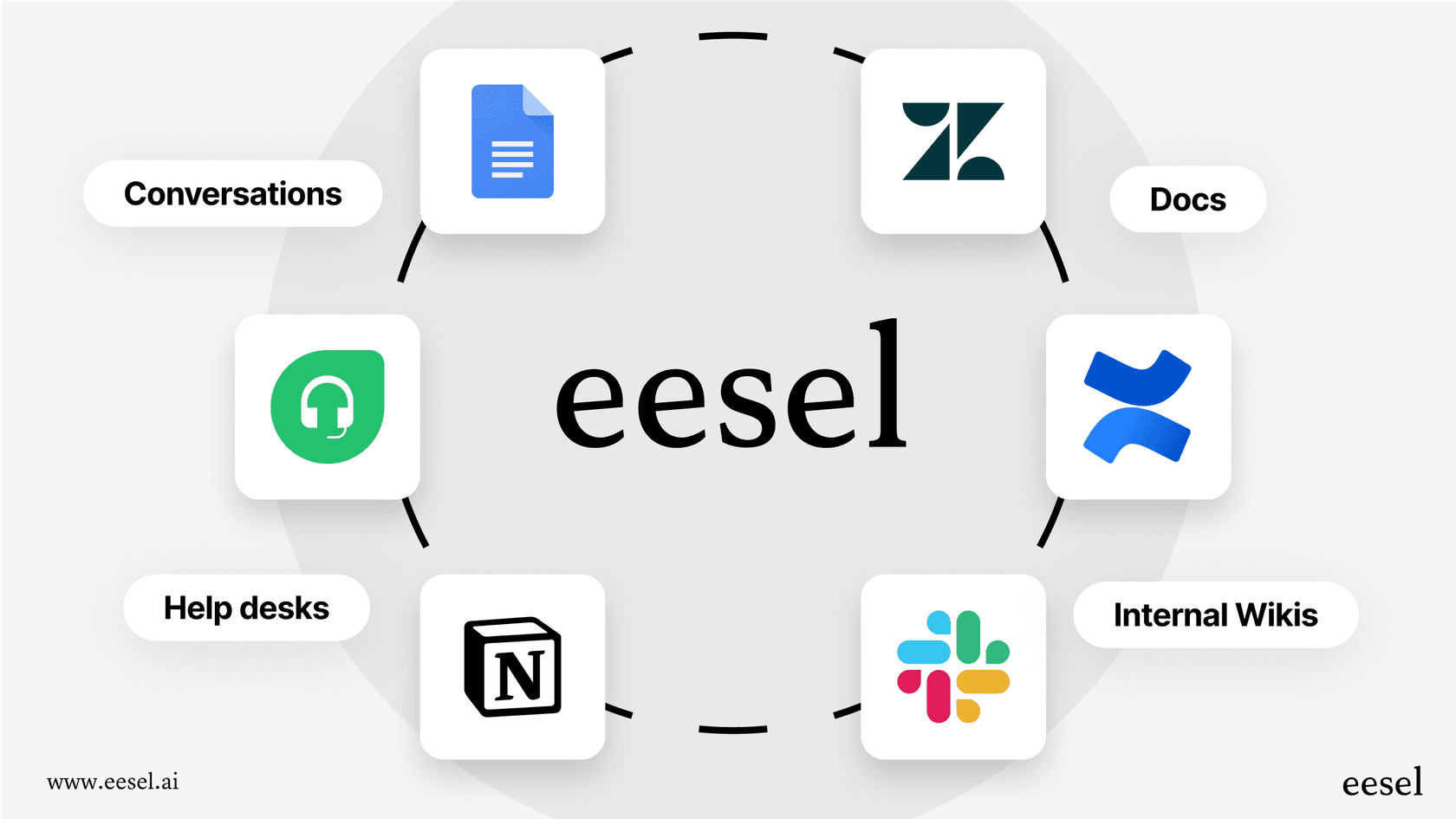
Modern AI platforms, like eesel AI, are built to solve this exact problem. They connect to all your systems at once. When a customer asks about their order, the AI can pull information from your helpdesk like Zendesk, your e-commerce store, and the carrier's tracking all at the same time. It then pieces everything together to give one complete, correct answer in seconds.
The tricky part: Handling returns
Let's be honest, handling returns with a bot sounds risky. There's a big debate about whether they should even try. Many people argue that the process is too complex and emotional for a machine, and that a bot will only frustrate customers and hurt your brand.
And you know what? They're right, but only when they’re talking about basic, rule-based chatbots. Modern AI agents are a completely different ballgame and are more than capable of handling returns with grace.
Why old-school chatbots stumble on returns
The clunky, scripted chatbots you’ve probably dealt with are basically just glorified flowcharts. They follow a rigid script, which is why they fail so spectacularly when it comes to something as nuanced as a return.
-
They don't get the nuance. A simple bot can't tell the difference between a customer who needs a different size and one who is furious about receiving a damaged item. To the bot, they're both just "return requests."
-
They have zero flexibility. If your return policy has exceptions (like for final sale items or VIP customers), a scripted bot can't handle it. It just gets stuck, which is incredibly frustrating for the user.
-
They trap customers in loops. When a simple bot doesn’t understand, it just repeats, "I'm sorry, I didn't get that." This forces the customer to give up and start over with a human, creating a terrible experience.
How modern chatbots handle returns the right way
A modern AI agent isn't a script; it's a powerful workflow engine that you're in charge of. This is what lets it handle the complexities of returns so well.
-
You define the workflows. The real power is having total control. With a platform like eesel AI, you don’t use a canned script. Instead, you set the rules. You can tell the AI to automatically process a simple size exchange but to immediately escalate any conversation that mentions words like "damaged" or "broken" to a senior human agent. You control the logic, so the bot only handles what you want it to.
-
It can actually do things. An advanced AI does more than just chat. It can be set up to perform actions in your other systems. It can generate a return shipping label, update a ticket in a helpdesk like Gorgias, or log the reason for the return in a Google Sheet. It becomes an active part of your operations.
-
It knows when to ask for help. A smart agent understands its own limits. When a customer gets upset or asks something outside its scope, it doesn't trap them. It smoothly transfers the entire conversation, along with the customer's details and chat history, to the right live agent. No more making customers repeat themselves.
graph TD A[Customer initiates return] --> B{AI analyzes request}; B --> C{Simple exchange?}; C -->|Yes| D[AI generates shipping label]; D --> E[AI updates order status]; C -->|No| F{Damaged item?}; F -->|Yes| G[Escalate to senior agent]; G --> H[Agent resolves issue]; F -->|No| I[AI follows other custom rules];
| Feature | Basic Rule-Based Chatbot | Advanced AI Agent (like eesel AI) |
|---|---|---|
| Policy Handling | Follows a single, rigid script. Fails with exceptions. | Manages complex rules. ("If VIP customer, then free return shipping.") |
| Available Actions | Can only provide text answers or links. | Can trigger actions to generate labels, update tickets, and process refunds. |
| Escalation | Dumb transfer. The agent has no context. | Smart handoff with full conversation history and customer data. |
| Integration | Limited to one or two data sources. | Pulls knowledge from all your systems (e-commerce, carriers, helpdesk, docs). |
How to pick the right platform
So, how do you choose a platform that can actually do all this? Here are a few things that should be non-negotiable.
Look for a simple setup (no sales calls needed)
A lot of enterprise AI platforms feel like they're stuck in the past. They make you sit through mandatory demos, go through a long sales cycle, and then wait months for a complicated implementation that needs a developer. You don't have time for that.
Look for a platform that is truly self-serve. You should be able to sign up, connect your tools, and build your first chatbot on your own, all in one afternoon. With eesel AI, the goal is to get you from sign-up to a working AI agent in minutes, not months. You shouldn't have to talk to a salesperson just to see if the product is a good fit.
Your chatbot should learn from your business, not a textbook
An out-of-the-box chatbot is pretty much useless. It gives generic, unhelpful answers because it doesn't know your products, your specific return policies, or your brand's voice.
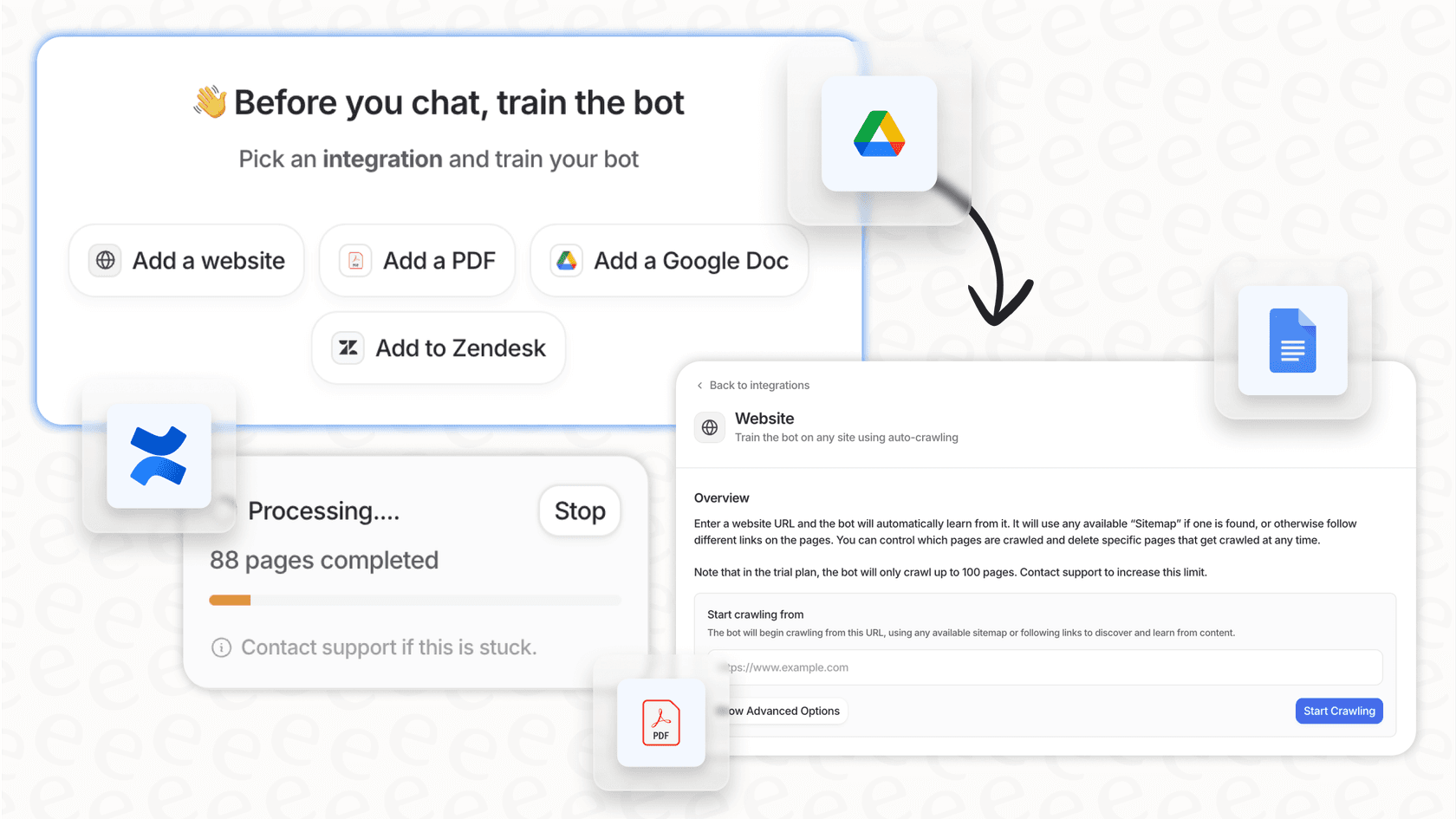
An AI platform is only as good as the data it's trained on. It’s essential that the AI learns from your actual business knowledge. This is a core idea behind eesel AI, which automatically trains on your past support tickets, help center articles, and even unstructured docs you already have in places like Google Docs or Confluence. This makes sure the AI sounds like your team from day one and gives answers that are actually correct.
Test your chatbot before you trust it
Launching a new, customer-facing AI can feel like a big risk. How can you be sure it's going to work as expected without frustrating real customers and causing a headache?
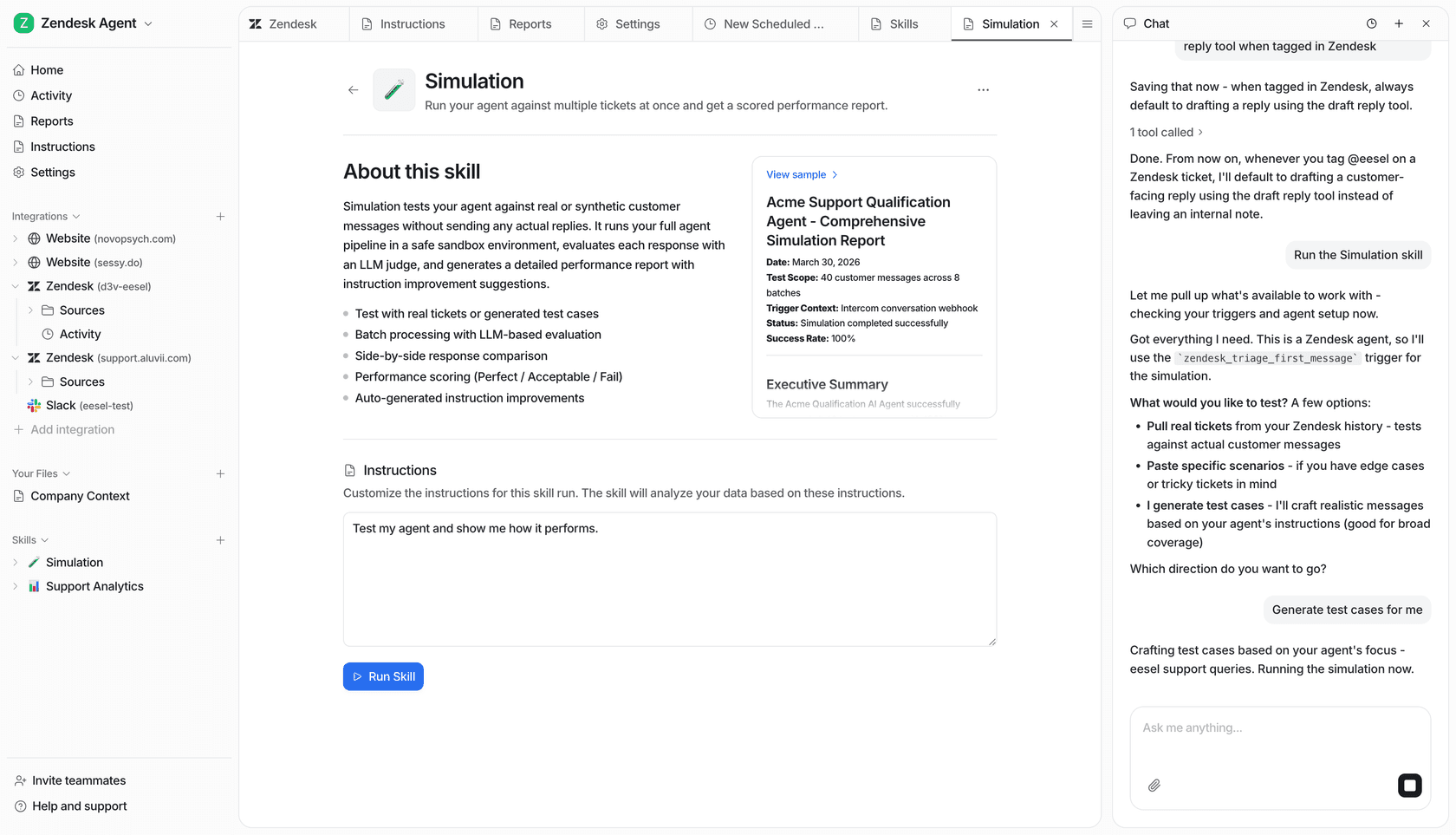
A powerful simulation mode is the only way to launch with confidence. Before you ever let the bot talk to live customers, you need to see exactly how it will perform on real-world questions. The simulation environment in eesel AI is a huge advantage here. It lets you test your entire setup against thousands of your own past support tickets. You can review every single conversation, see how the AI would have responded, and get a precise, data-backed forecast of your automation rate and cost savings before you ever go live.
Turn support from a headache into an advantage
Automating order status, shipping updates, and even returns is no longer just a nice-to-have for e-commerce brands; it's how you stay competitive. Drowning your support team in repetitive questions is expensive, inefficient, and creates a poor customer experience.
The key is to move beyond the simple, frustrating bots of the past and embrace smart, customizable AI agents that you control. When you find the right platform, you can transform your support from a reactive cost center into a proactive engine for customer loyalty and repeat business.
Ready to stop answering "Where is my order?" and start building a better customer experience? eesel AI gives you a fully customizable and self-serve platform to automate everything from simple shipping updates to complex returns. Start your free trial and you can simulate your ROI in minutes.
Frequently asked questions
What exactly are chatbots for order status, returns, and shipping, and what's their primary role?
Chatbots for order status, returns, and shipping are AI-powered assistants that automate post-purchase customer service on your website or app. Their main job is to instantly provide information on order tracking, shipping updates, and guide customers through return processes without human intervention.
How do advanced chatbot platforms handle integrating information from multiple sources?
Advanced platforms use API integrations to connect simultaneously with your e-commerce platform, shipping carriers, and warehouse systems. This allows them to pull and combine real-time data from various sources to provide customers with one complete and accurate answer.
Is it truly safe to use chatbots for returns, given their complexity?
Yes, modern AI agents are designed to handle returns safely. They allow you to define custom workflows and escalation rules, enabling them to process simple requests and perform actions like generating labels, while seamlessly transferring complex or sensitive cases to human agents with full conversational context.
What are the main benefits for an e-commerce business using chatbots for these inquiries?
Implementing these chatbots offers significant benefits, including instant 24/7 customer support and a dramatic reduction in "Where Is My Order?" (WISMO) tickets, often by 30-50%. This leads to substantial cost savings and improved customer satisfaction through immediate, proactive updates.
How can I ensure that a chatbot learns and responds with information specific to my business?
To ensure specificity, choose an AI platform that trains the chatbot on your unique business knowledge base. This includes your past support tickets, help center articles, and internal documents, so the bot's responses are accurate and consistent with your brand's voice and policies.
Before going live, how can I confidently test the effectiveness of a chatbot?
Look for a platform with a robust simulation mode that allows you to test the chatbot against thousands of your own historical support tickets. This enables you to review their responses, predict automation rates, and forecast cost savings with data-backed confidence before deploying to live customers.