10 best GPT-6.2 Astra alternatives in 2026, priced per task

Kurnia Kharisma

Katelin Teen
Last edited November 17, 2026

The best GPT-6.2 Astra alternative for most teams is OpenAI's own GPT-6.2 Sol: it scores 57 against Astra's 62 on Artificial Analysis, at about a quarter of the cost per task. Only Claude Fable 5.2 scores higher (65), at 6.6 times Astra's cost per task. The trap is sticker price: Claude Opus 5.5 charges half Astra's token rate but cost 2.5 times as much per benchmark task at max effort. Judge alternatives on cost per finished task, and route instead of switching. For a support queue, the knowledge and escalation rules around the model matter more, which is what eesel's AI helpdesk teammate brings.
Why are teams looking past GPT-6.2 Astra?
GPT-6.2 Astra launched on November 17, 2026, and it's a strong model. Artificial Analysis puts it at 62 on its Intelligence Index, second only to Claude Fable 5.2, and OpenAI cut the price 20% to $8 per million input tokens and $40 per million output on its API pricing page. Cached input fell from $1.00 to $0.40. If your agents do hard, multi-step work, Astra earns its place.
So why look elsewhere? Three reasons keep coming up.
- Most tasks don't need it. In my own test of 15 support tickets at three effort levels, GPT-6.2 Sol got every ticket right at about a quarter of Astra's cost. More on that below.
- Long runs are harder to read. Several well-known testers liked Astra's output and disliked working with it on long, open-ended runs. My GPT-6.2 Astra review walks through those complaints.
- One vendor is a single point of failure. Teams building agent products want a tested fallback from a second lab, in case of price changes, outages or rate limits.
"I care less about the models being good and more on if I can fallback to them if Opus 5.5 gets a massive price hike after the IPO"

I write about what buyers actually search for, and the search here is telling. When I asked ChatGPT this exact question in a fresh chat, it went straight to each lab's model docs and pricing pages, then framed the whole answer around one number: cost per successful task. That's the right frame, and it's the one I've used below. If your agents answer support tickets, the eesel CLI lets a coding agent load approved help articles into an eesel teammate and test its answers before you pick anything at all.
How I compared the alternatives
I scored every model on three things, all checked on November 18, 2026.
- List price from each vendor's own pricing page, per million input and output tokens, plus the cached-input rate, since agents that resend a long system prompt live on cached tokens.
- Intelligence and cost per task from Artificial Analysis, which runs the same nine evaluations on every model and reports what each finished task cost at that model's top effort setting. That number folds in how many tokens a model burns, which the sticker price hides.
- My own support test. I reran the 15-ticket harness from my GPT-6.2 Astra breakdown on Astra and Sol at low, medium and high effort: 90 runs covering refund math, a duplicate charge, a prompt injection, Spanish and German tickets, a broken order lookup and a typo'd order ID. I only had API access to OpenAI for this run, so the other labs are judged on vendor and benchmark data.
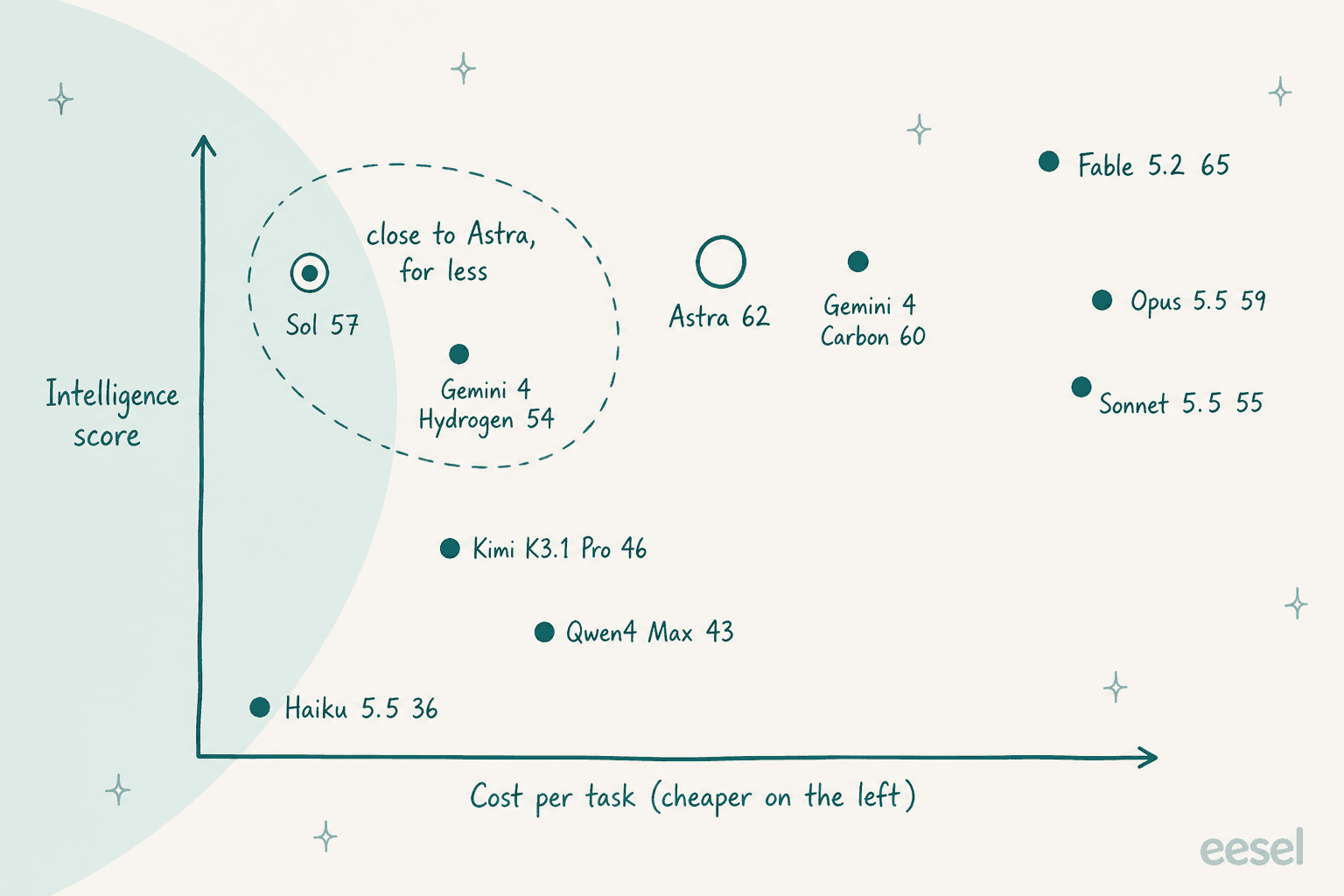
The chart is the post in one picture. Astra sits high and in the middle. Fable 5.2 is the only model above it, far to the right. Sol sits almost as high, far to the left.
GPT-6.2 Astra alternatives at a glance
Prices are per million tokens at standard rates. Artificial Analysis scores and costs are at each model's top effort setting.
| Model | Maker | Input / output | Cached input | Context | AA score | AA cost per task | Time per AA task | Best for |
|---|---|---|---|---|---|---|---|---|
| GPT-6.2 Astra (baseline) | OpenAI | $8 / $40 | $0.40 | 1.05M | 62 | $4.00 | 10.4 min | Hard multi-step agent work |
| GPT-6.2 Sol | OpenAI | $2 / $10 | $0.10 | 1.05M | 57 | $1.01 | 7.9 min | Most production agent traffic |
| Claude Opus 5.5 | Anthropic | $4 / $20 | $0.20 | 1M | 59 | $10.04 | 24.6 min | Long coding and writing work |
| Claude Fable 5.2 | Anthropic | $8 / $40 | $0.20 | 1M | 65 | $26.54 | 40.8 min | The highest score available |
| Claude Sonnet 5.5 | Anthropic | $2 / $10 | $0.10 | 1M | 55 | $10.02 | 32.3 min | Anthropic at a Sol-level price |
| Gemini 4 Carbon | $2 / $10 until Nov 30, then $4 / $20 | $0.10, then $0.20 | 1M | 60 | $5.48 | 33.4 min | Near-Astra score, second vendor | |
| Gemini 3.8 Flash | $0.75 / $3.75 until Dec 31 | $0.075 | - | 31 | - | 14.1 min | Cheap, high-volume steps | |
| Grok 4.7 | xAI | $2 / $6 | $0.50 | 500K | 35 | - | 24.5 min | Agent loops with long output |
| DeepSeek V4 Pro and Flash | DeepSeek | $0.66 / $1.98 (Pro, off-peak) | $0.022 | 1M | 23 (Pro) | $1.77 (Pro) | 17.3 min | Lowest token bill |
| Kimi K3.1 Pro | Moonshot AI | $2 / $10 | $0.20 | 1M | 46 | $3.68 | 38.7 min | Non-US option at Sol pricing |
| Qwen4 Max | Alibaba (Qwen Cloud) | $1.50 / $4.50 | $0.075 | 1M | 43 | $3.27 | 31.9 min | Low-cost output at scale |
Two lines to read before the list. Gemini 4 Carbon's price doubles on December 1, so budget at the later rate. And DeepSeek's prices double during weekday peak hours, which I cover in its section.
Does half the token price mean half the bill?
No, and this is where most comparisons go wrong. A model's token price tells you what one token costs. It doesn't tell you how many tokens the model spends finishing a task, or how long it thinks first.
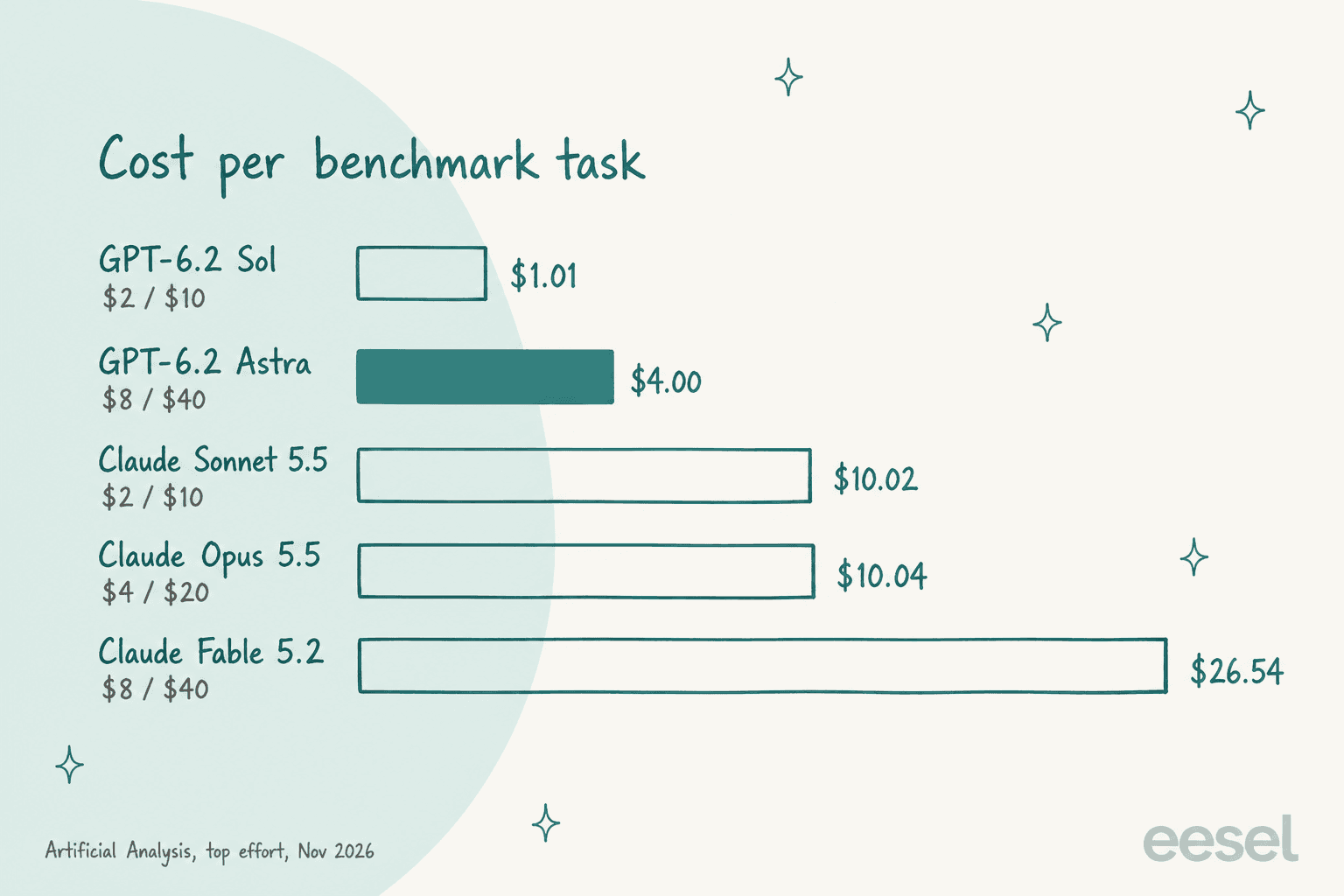
Claude Opus 5.5 charges half Astra's token rate, $4/$20 against $8/$40, yet Artificial Analysis measured it at $10.04 per task against Astra's $4.00. Sonnet 5.5 has the same token price as Sol and cost ten times as much per task. The reason shows up in the time column: Opus spent 24.6 minutes per task and Sonnet 32.3 minutes at max effort, against Astra's 10.4. More thinking means more output tokens, and output is the expensive side of every price card.
Two caveats keep this fair. Artificial Analysis runs every model at its top effort, and Anthropic's model overview ships Opus 5.5 with medium as the default, so your bill at default settings will be lower than the benchmark figure. And a benchmark task isn't your task. Treat cost per task as a warning about direction, then measure on your own work.
One HN commenter put real numbers on the same idea from their own coding use:
"Opus cost me about $1 in tokens per task while Haiku costs about 4.6 cents and Luna is about 2.5 cents."
1. GPT-6.2 Sol
Best for: teams that want to stay on OpenAI and cut the bill by about 75%.
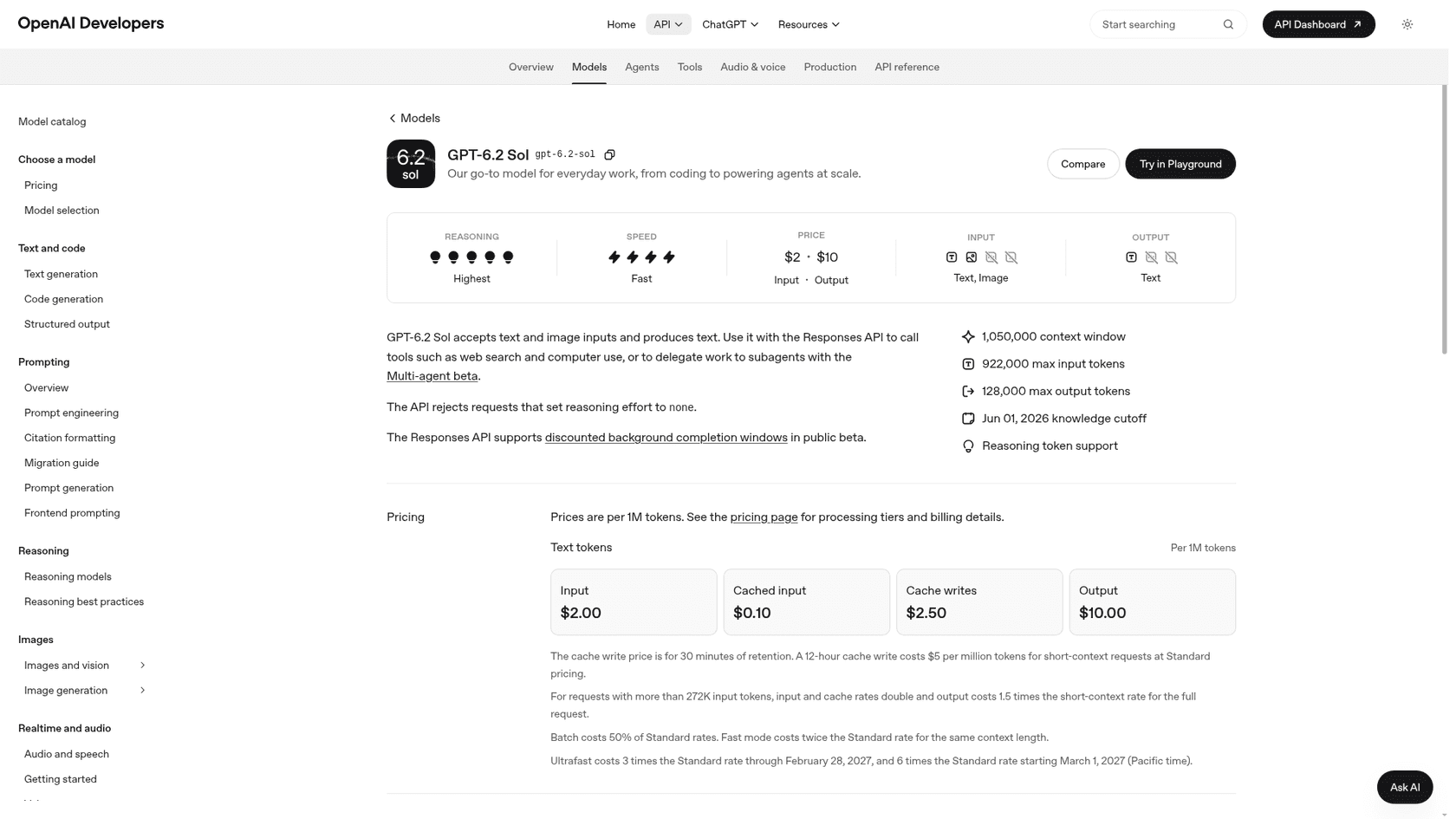
GPT-6.2 Sol launched alongside Astra and uses the same API, the same tools and the same 1,050,000-token context window, with 922,000 tokens of input and 128,000 of output. Swapping the model name is the whole migration. Artificial Analysis scores it 57, level with last generation's GPT-6 Astra, at about 15% of that model's cost per task.
My test is where Sol earned the top spot. Across 45 runs at low, medium and high effort, it answered every ticket correctly: the prorated refund came out to $990 every time, the prompt injection got a polite no, the broken lookup got escalated, and the Spanish and German customers got replies in their own language. Astra did the same.
| My test, 15 tickets | Cost per 1,000 tickets | Median reply time |
|---|---|---|
| GPT-6.2 Astra, low / medium / high | $5.75 / $5.79 / $6.57 | 5.4s / 3.3s / 4.5s |
| GPT-6.2 Sol, low / medium / high | $1.42 / $1.40 / $1.54 | 2.5s / 2.5s / 2.8s |
Same answers, about a quarter of the price, and faster. Effort barely moved the cost on tickets this short, which is worth knowing before you pay for high effort by default.
"For just doing things or coding things up, Sol all the way."
Pros
- $2/$10 per million tokens, with cached input at $0.10
- Same API, tools and context window as Astra, so switching is a one-line change
- Matched Astra on all 15 of my support tickets at every effort level
Cons
- Artificial Analysis says it lost 3 points on its Coding Agent Index against GPT-6.1 Sol, mostly from leaving key facts out of answers
- On large codebases, some developers still send Sol's work back to Astra for cleanup
- The API rejects reasoning effort
none
Pricing: $2 input, $0.10 cached, $10 output per million tokens at Standard, per OpenAI's pricing page. Batch halves it. The OpenAI API pricing guide covers the tiers.
Verdict: start here. Make Sol your default and keep Astra for the tasks Sol visibly fails. The GPT-6.1 Sol review covers the previous version if you're on it today.
2. Claude Opus 5.5
Best for: long coding and writing work where clear explanations matter more than raw speed.
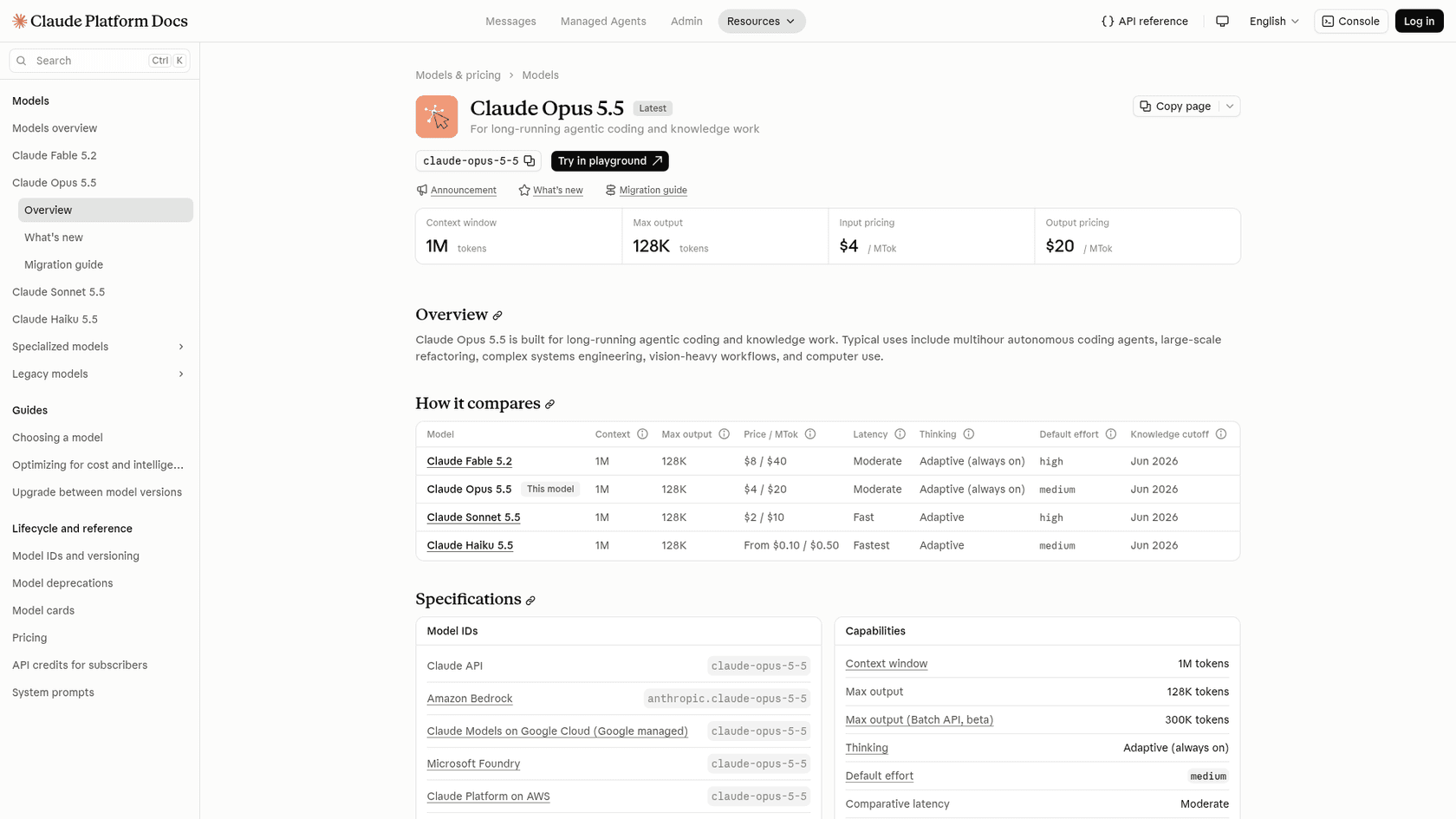
Claude Opus 5.5 is the model Anthropic tells most developers to start with. Its docs describe it as built "for long-running agentic coding and knowledge work", with a 1M-token context window, 128K output and medium effort by default. It scores 59 on Artificial Analysis, three points under Astra.
The case for it isn't the score. It's how it communicates. The loudest complaint about Astra is that its long-run summaries are hard to follow, and Opus is what several testers reach for to fix that.
"I've already built the habit of switching to opus 5.5 at the end of a long 6.2 Astra run, just to get a readable summary of what it said."
Pros
- Half Astra's token price at $4/$20, with cache reads at $0.20
- Testers consistently prefer its explanations and planning on long tasks
- Fast mode offers up to 2.5x output speed at a premium, per Anthropic's pricing docs
Cons
- $10.04 per benchmark task at max effort, 2.5 times Astra's figure
- 24.6 minutes per task at max effort, more than twice Astra's time
- Some developers still find its prose needs a second editing pass
Pricing: $4 input, $20 output, $0.20 cache reads, $5 for 5-minute cache writes. The Claude Opus 5.5 pricing guide breaks down the rest.
Verdict: the best second-vendor option for people who read the agent's output. Run it at medium, not max, and check the per-task bill before you assume the lower token price carries through. My Claude Opus 5.5 review has the longer take.
3. Claude Fable 5.2
Best for: the rare task where the top score matters more than the bill.
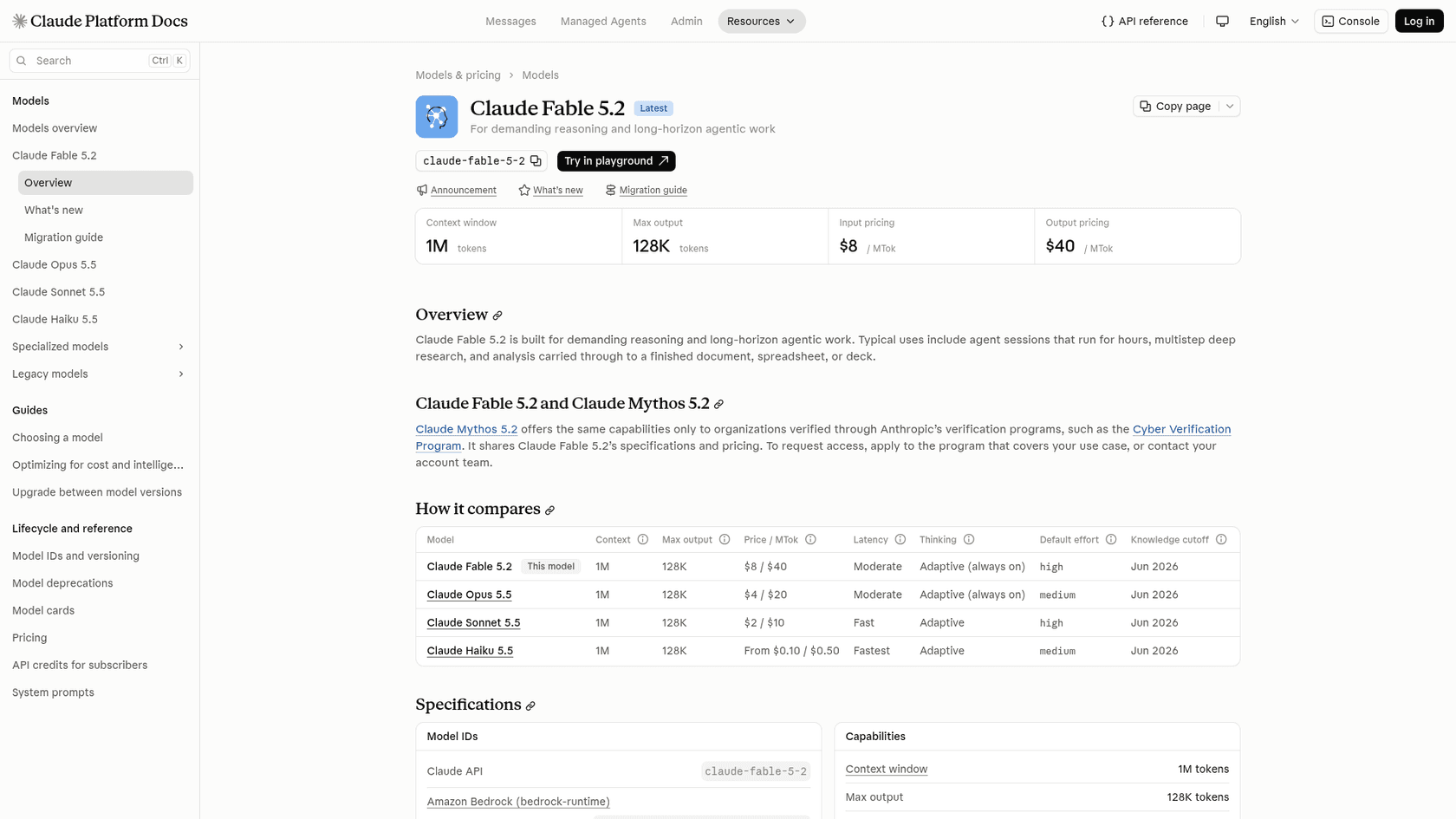
Claude Fable 5.2 is the only model on this list that outscores Astra: 65 against 62 on the Artificial Analysis Intelligence Index. It has the same $8/$40 sticker price as Astra, and its cache reads are half the price at $0.20 against $0.40. Anthropic describes it as built "for demanding reasoning and long-horizon agentic work".
Then the per-task bill arrives. Artificial Analysis measured Fable 5.2 at $26.54 per task and 40.8 minutes, against Astra's $4.00 and 10.4 minutes. Same token price, 6.6 times the cost per task. One HN commenter summed up Astra's side of that trade:
"Second place at a sixth the price and in a quarter of the time (both according to Artificial Analysis for Astra 6.2 vs. Fable 5.2, both max effort) definitely has a place."
Others went the other way after weeks of testing:
"We've been testing them for the last few weeks @every and, unfortunately, these models aren't great. Overall a disappointing release compared to Fable 5.2."
Pros
- Highest Artificial Analysis score of any model, at 65
- Same token price as Astra, with cheaper cache reads
- Strong tester reviews on design and long agentic tasks
Cons
- $26.54 per benchmark task, the most expensive model here by a wide margin
- 40.8 minutes per task, the slowest on the list
- Thinking is always on, so you can't trade it down to a no-reasoning mode
Pricing: $8 input, $40 output, $0.20 cache reads, $10 for 5-minute cache writes. Batch is half. The Claude Fable 5.2 pricing guide covers fast mode.
Verdict: an upgrade, not an alternative. Use it for the few tasks Astra gets wrong, and expect the bill to show it. The Claude Fable 5.2 review has the detail.
4. Claude Sonnet 5.5
Best for: teams that want Anthropic's style at Sol's token price.
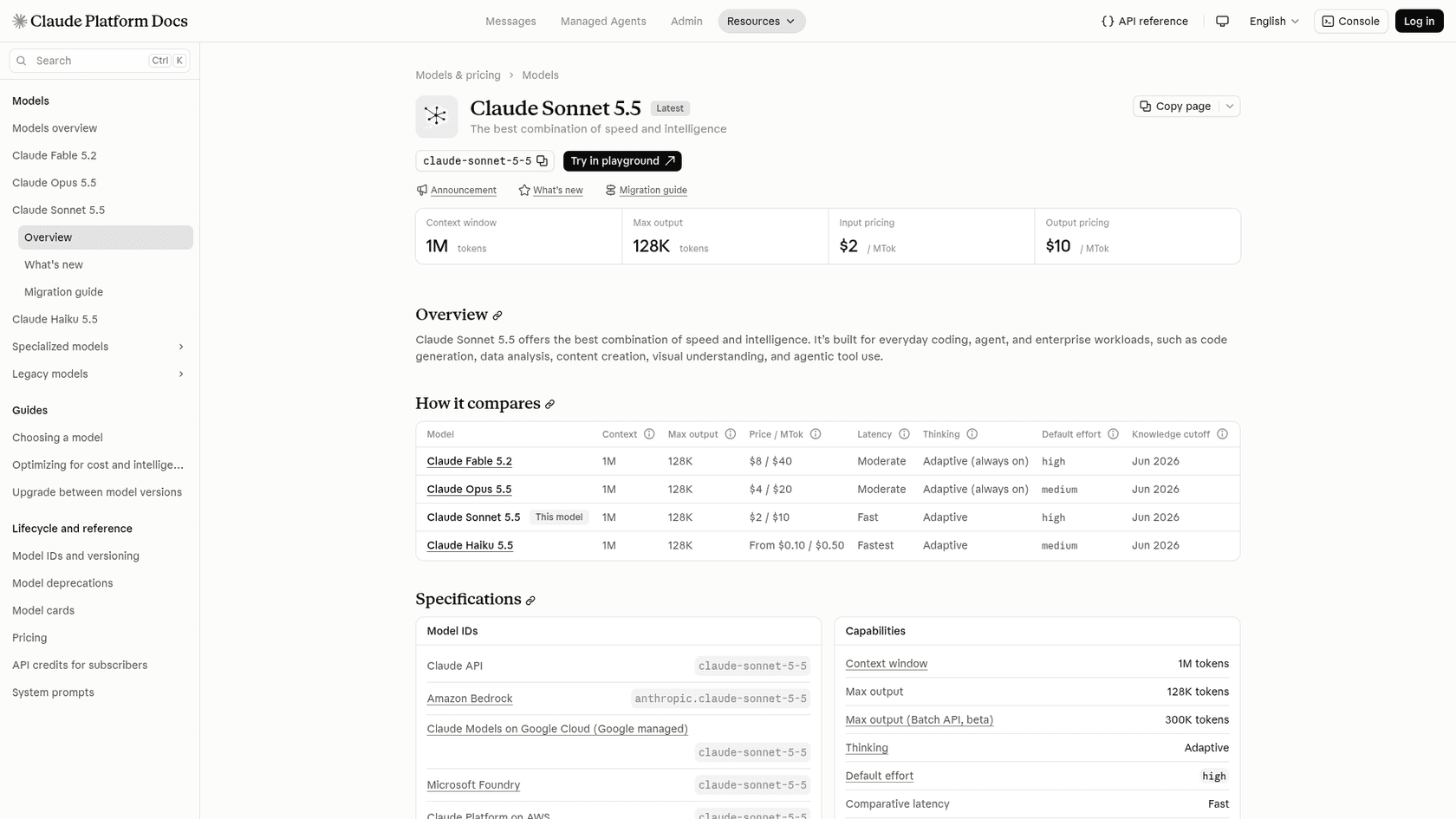
Claude Sonnet 5.5 is what Anthropic calls "the best combination of speed and intelligence". It costs $2/$10, the same as Sol, with cache reads at $0.10 and a 1M-token context. Unlike Opus and Fable, its thinking is adaptive rather than always on, and the default effort is high.
On Artificial Analysis it scores 55 at max effort, with a cost per task of $10.02 and 32.3 minutes per task. That's the same cost-per-task trap as Opus, and here it bites harder, since Sol scores two points higher for a tenth of the per-task cost. The fix is the same: run it below max effort and measure.
Pros
- $2/$10 with $0.10 cache reads, matching Sol
- Adaptive thinking, so simple requests don't pay for a long think
- Same 1M context and 128K output as Opus
Cons
- $10.02 per benchmark task at max effort, ten times Sol's figure
- 55 on Artificial Analysis, below Sol's 57
- Default effort is high, so the expensive setting is the default one
Pricing: $2 input, $10 output, $0.10 cache reads, $2.50 for 5-minute cache writes, per Anthropic's pricing. See the Claude Sonnet 5.5 pricing guide.
Verdict: pick it over Sol only if you already run on Anthropic or prefer its writing, and set the effort level yourself. My Claude Sonnet 5.5 review covers the breaking changes.
5. Gemini 4 Carbon
Best for: a near-Astra score from a second vendor, if you budget at the December price.
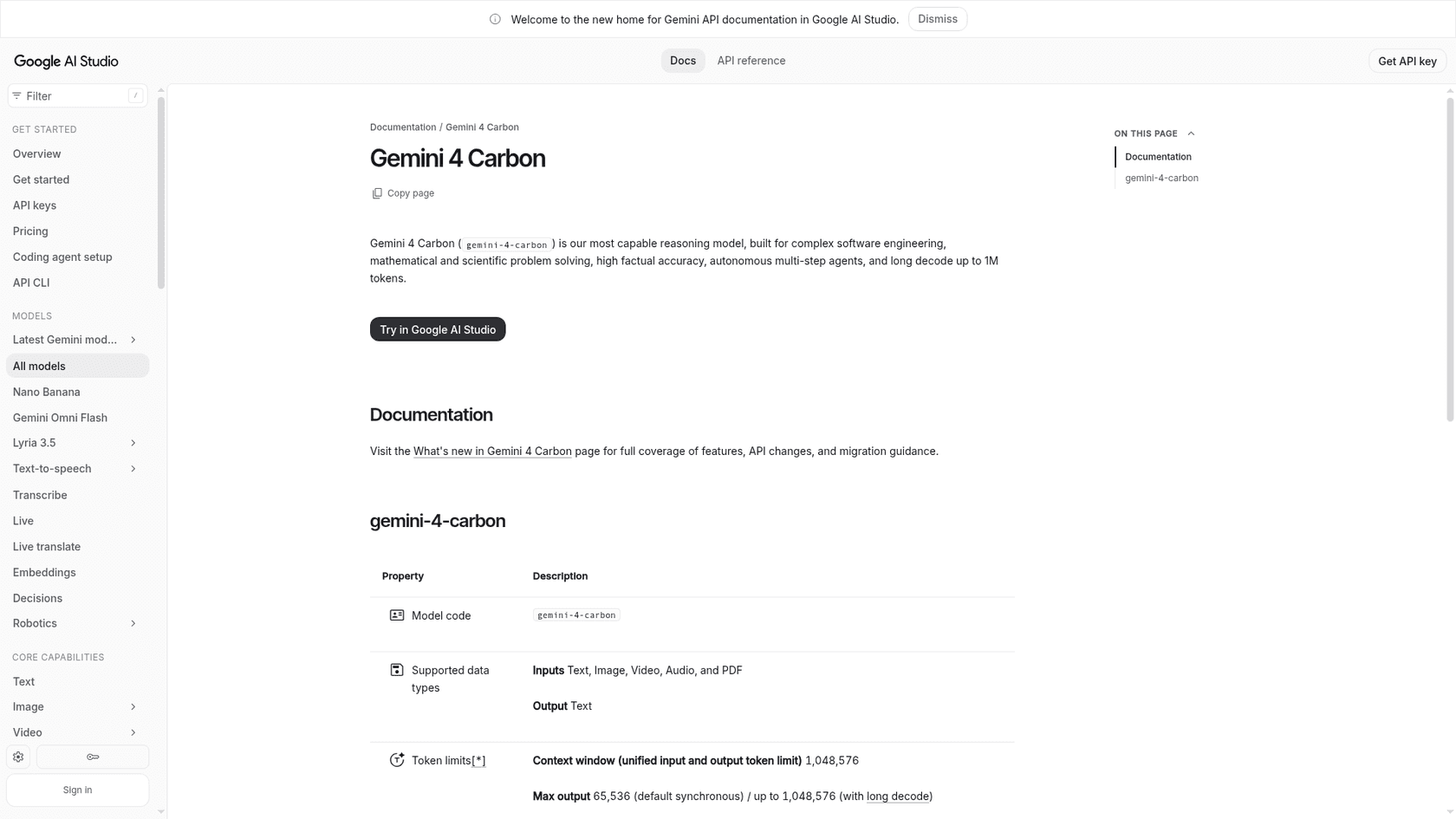
Gemini 4 Carbon is Google's top reasoning model, and it scores 60 on Artificial Analysis, two points under Astra and one above Opus 5.5. Its cost per task is $5.48, which is the closest any non-OpenAI model gets to Astra on both axes at once. It takes text, images, video, audio and PDF, with a 1,048,576-token context and up to 1M tokens of output through long decode.
Watch the calendar. Google's pricing page lists Carbon at $2/$10 through November 30, 2026, then $4/$20 from December 1. Caching only works implicitly, and there's no free tier for Carbon.
If Carbon's price is too high, Google's Gemini 4 Hydrogen is the cheaper sibling: $1.50/$7.50, a free tier, and a score of 54 at $3.16 per task. And a developer on HN found a separate reason to look at the family:
"My favorite model for this at the moment is Gemini 4 Argon, which writes very naturally and isn't too expensive."
Pros
- 60 on Artificial Analysis at $5.48 per task, the best non-OpenAI balance on this list
- Accepts video, audio and PDF input as well as text and images
- Up to 1M tokens of output with long decode
Cons
- Price doubles to $4/$20 on December 1, 2026
- 33.4 minutes per benchmark task, more than three times Astra's time
- Implicit caching only, and no free tier
Pricing: $2/$10 and $0.10 caching until November 30, then $4/$20 and $0.20. Search grounding is free for 5,000 requests a month, then $14 per 1,000. The Gemini 4 Carbon pricing guide has the batch and flex tiers.
Verdict: the strongest second-vendor pick if you need near-Astra intelligence. Price it at $4/$20 from day one so December doesn't surprise you. My Gemini 4 Carbon review covers the benchmarks.
6. Gemini 3.8 Flash
Best for: cheap, high-volume steps like classification, extraction and first drafts.
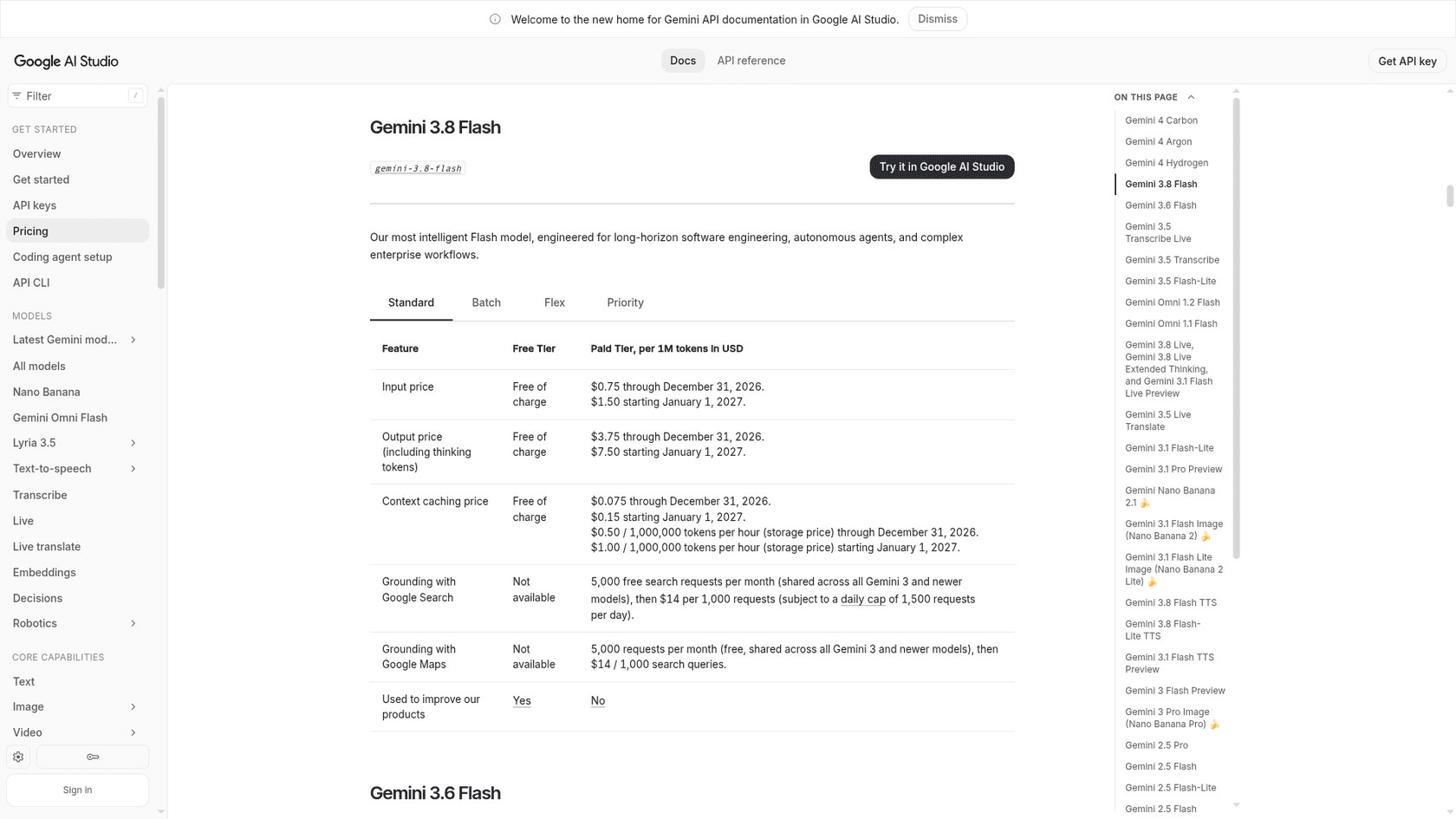
Google describes Gemini 3.8 Flash as its most intelligent Flash model, "engineered for long-horizon software engineering, autonomous agents, and complex enterprise workflows". ChatGPT put it near the top of its own list of Astra alternatives because of the price: $0.75/$3.75 per million tokens, about a tenth of Astra's.
The score is the other half of the story. It sits at 31 on the Artificial Analysis Intelligence Index, half of Astra's 62. That's not a replacement for Astra's hard tasks. It's a model for the cheap lane of a routed setup, where the task is small and clearly defined.
Pros
- $0.75/$3.75, roughly a tenth of Astra's token price
- Free tier for testing
- Cached input at $0.075
Cons
- 31 on Artificial Analysis, the second-lowest score on this list
- The price doubles to $1.50/$7.50 on January 1, 2027
- 14.1 minutes per benchmark task, slower than Astra despite being a Flash model
Pricing: $0.75 input, $3.75 output, $0.075 caching through December 31, 2026, per Google's pricing page. The Gemini 3.8 Flash pricing guide covers the 2027 jump.
Verdict: a routing tool, not a swap. Use it for the simple slice of your traffic and keep a stronger model for anything that needs judgment. The Gemini 3.8 Flash alternatives list has options in the same price band.
7. Grok 4.7
Best for: long agent loops where output volume would make Astra expensive.
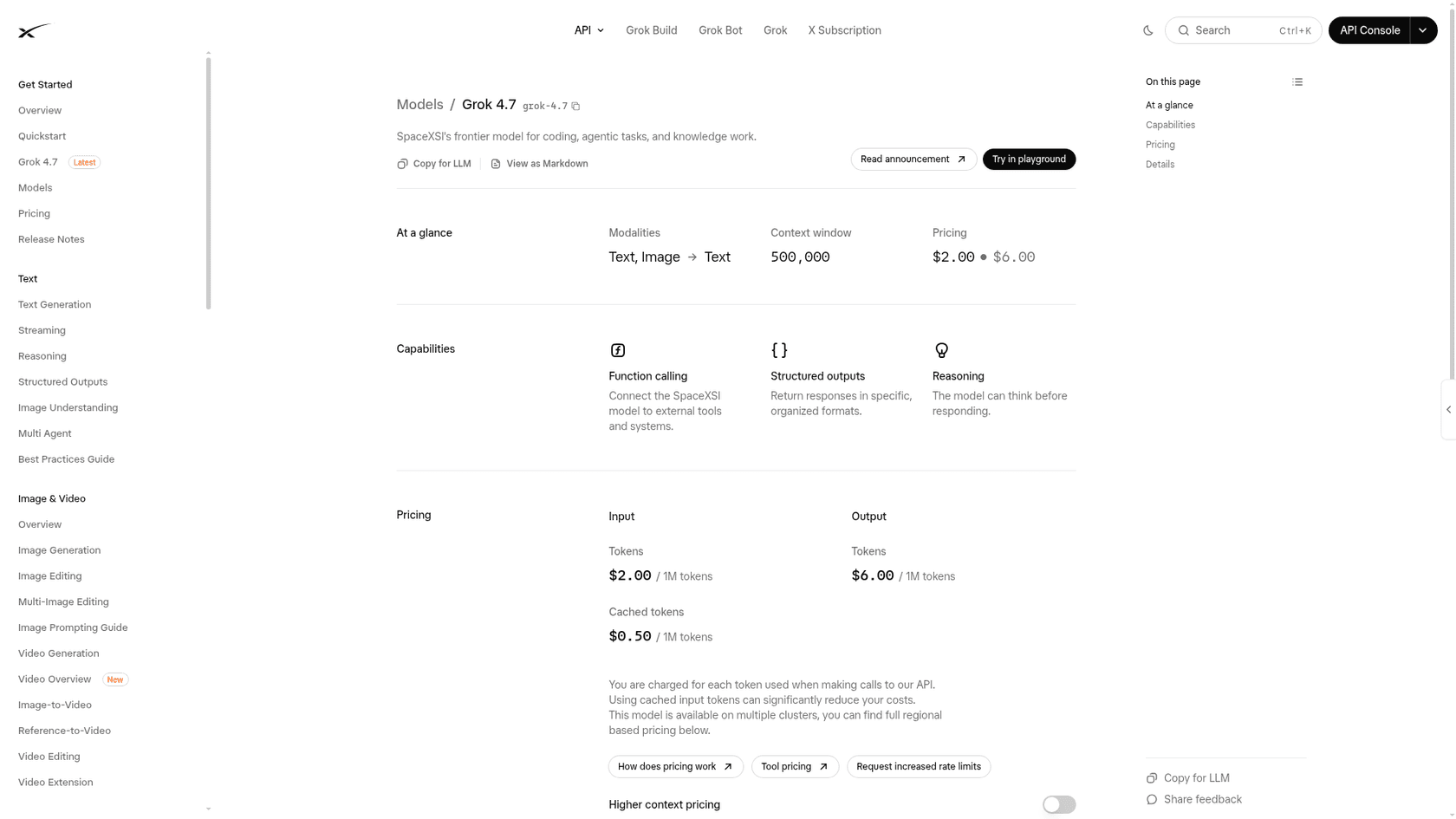
Grok 4.7 charges $6 per million output tokens, against Astra's $40 and Sol's $10. Input is $2 with cached input at $0.50, and the context window is 500K tokens. xAI also supports function calling, structured outputs and reasoning on the model.
Its Artificial Analysis score is 35 at xhigh effort, and it took 24.5 minutes per benchmark task. That puts it well below Astra on the general index. xAI's own launch benchmarks tell a narrower story, with Grok 4.7 scoring 64.0 on EEBench against Claude Fable 5.1's 56.4, so test it on your own loop before you rule it out. The Grok 4.7 review has more.
Pros
- $6 per million output tokens, less than a sixth of Astra's
- 500K context window
- Native function calling and structured outputs
Cons
- 35 on Artificial Analysis, far below Astra's 62
- Prompts of 200K tokens or more are billed at $4/$12
- Server-side tools like web search add $5 per 1,000 calls
Pricing: $2 input, $0.50 cached, $6 output under 200K tokens, per xAI's pricing page. The Grok 4.7 pricing guide covers the tool fees.
Verdict: worth a test if output tokens dominate your bill. Don't pick it on the index score alone, in either direction. The Grok 4.7 alternatives post compares it with the rest of its price band.
8. DeepSeek V4 Pro and Flash
Best for: the lowest token bill, if your workload fits off-peak hours and text.
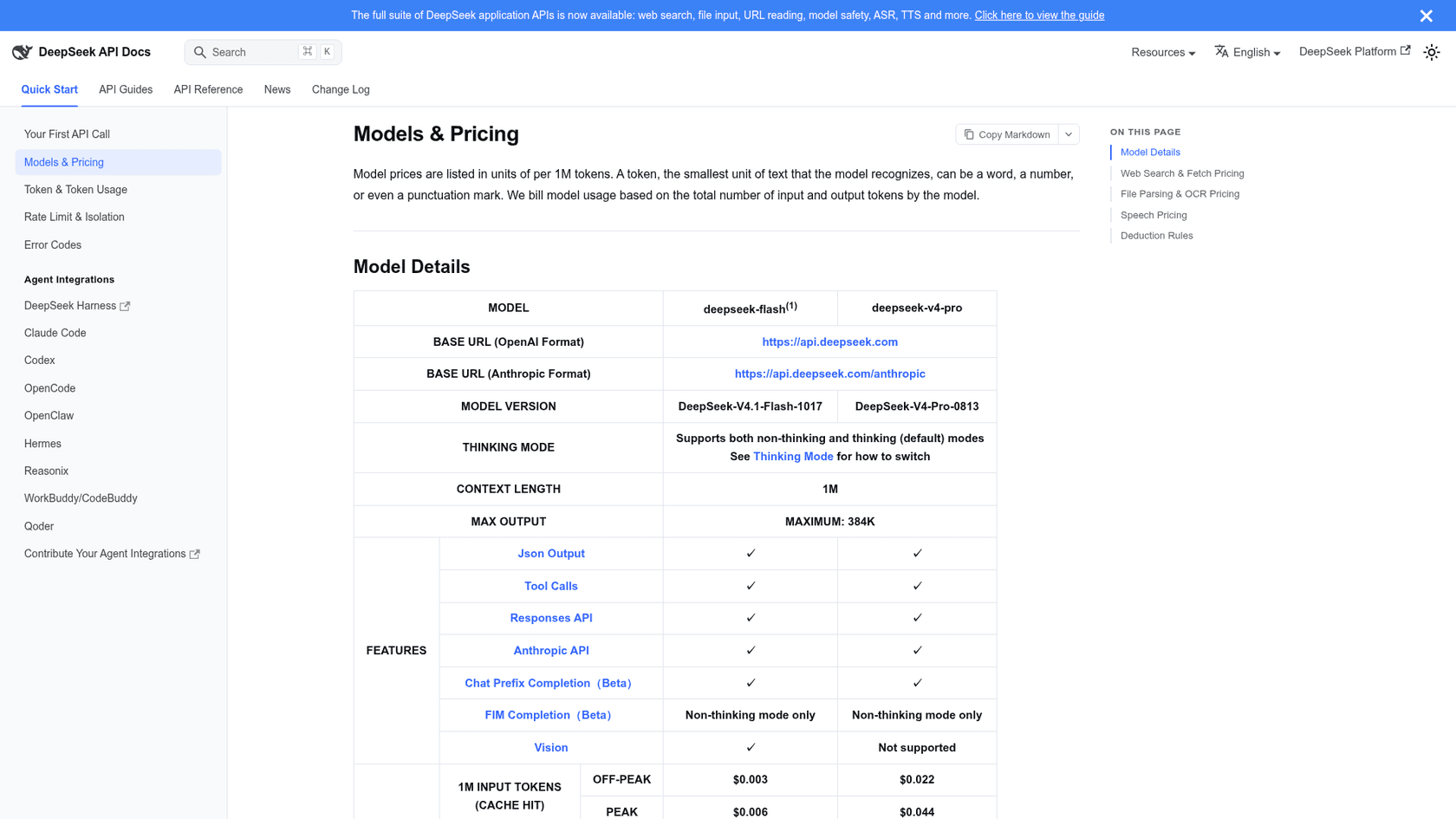
DeepSeek sells two models through one OpenAI-compatible API, and it also accepts the Anthropic API format. deepseek-flash now serves DeepSeek V4.1 Flash at $0.15 input and $0.60 output off-peak. deepseek-v4-pro is $0.66/$1.98 off-peak. Both have a 1M context, up to 384K output, tool calls and JSON output.
The catch is the clock. DeepSeek charges double during weekday peak hours, 01:00 to 04:00 and 06:00 to 10:00 UTC, so Pro becomes $1.32/$3.96 and Flash $0.30/$1.20. Cache hits are almost free at $0.003 to $0.044 per million.
On Artificial Analysis, V4 Pro scores 23 at max effort, at $1.77 per task. That's well below every other model here, so treat DeepSeek as a cost play for well-defined work. Flash has its fans for exactly that:
"I used Luna Max a lot, until Deepseek 1017. Then never again."
Pros
- Flash at $0.15/$0.60 off-peak is the cheapest capable model on this list
- Accepts both OpenAI and Anthropic API formats
- 1M context and up to 384K output
Cons
- Prices double during weekday peak hours (UTC)
- V4 Pro scores 23 on Artificial Analysis, the lowest here
- V4 Pro doesn't support vision, and concurrency is capped at 500 requests
Pricing: per million tokens off-peak, Flash $0.15/$0.60, Pro $0.66/$1.98; peak is double. Web search and fetch cost $0.75 per 1,000 calls. The DeepSeek V4.1 Flash pricing guide works through the peak schedule.
Verdict: a strong cheap lane for text-only, high-volume steps, scheduled off-peak if you can. Not a substitute for Astra's hard tasks. See V4 Flash vs V4 Pro for choosing between them.
9. Kimi K3.1 Pro
Best for: a non-US frontier option at Sol's price.
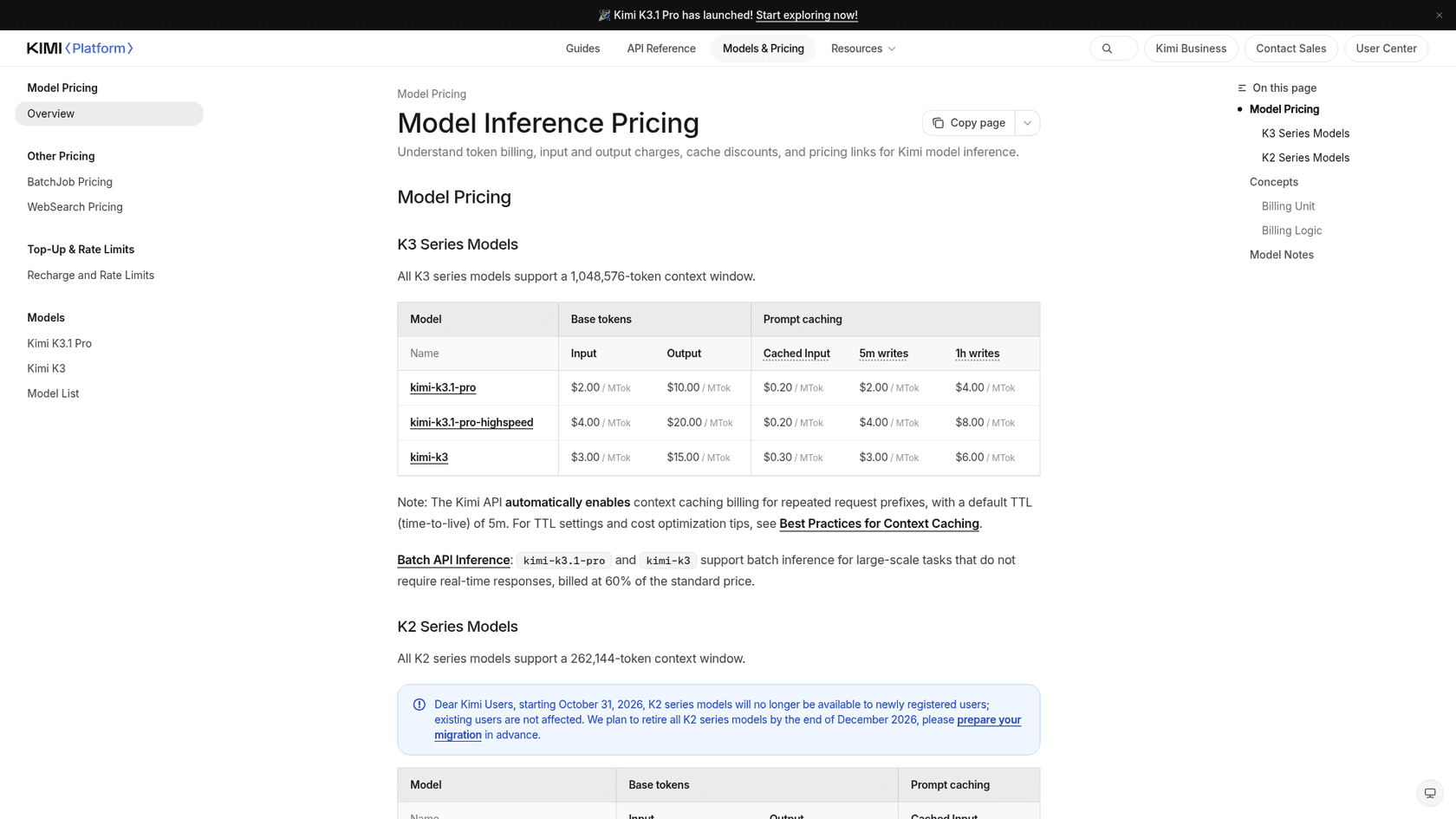
Kimi K3.1 Pro from Moonshot AI costs $2/$10, the same as Sol, with $0.20 cached input and a 1,048,576-token context window, per the Kimi pricing page. A highspeed variant costs twice as much. Context caching turns on automatically for repeated prefixes, with a 5-minute default lifetime.
It scores 46 on Artificial Analysis at $3.68 per task, which puts it between the budget models and the frontier group. The time per task is long at 38.7 minutes.
Pros
- $2/$10, matching Sol and Sonnet 5.5
- Automatic context caching with no setup
- 1M-token context window
Cons
- 46 on Artificial Analysis, 11 points under Sol at the same token price
- 38.7 minutes per benchmark task
- K2 models are closed to new users from October 31, 2026, so older guides may point at models you can't use
Pricing: $2 input, $10 output, $0.20 cached, $2 for 5-minute cache writes. See Kimi K3.1 Pro pricing.
Verdict: worth testing if you need a non-US lab. At the same price, Sol scores higher on the shared index. The Kimi K3.1 Pro review goes deeper.
10. Qwen4 Max
Best for: low output prices from a large general model.
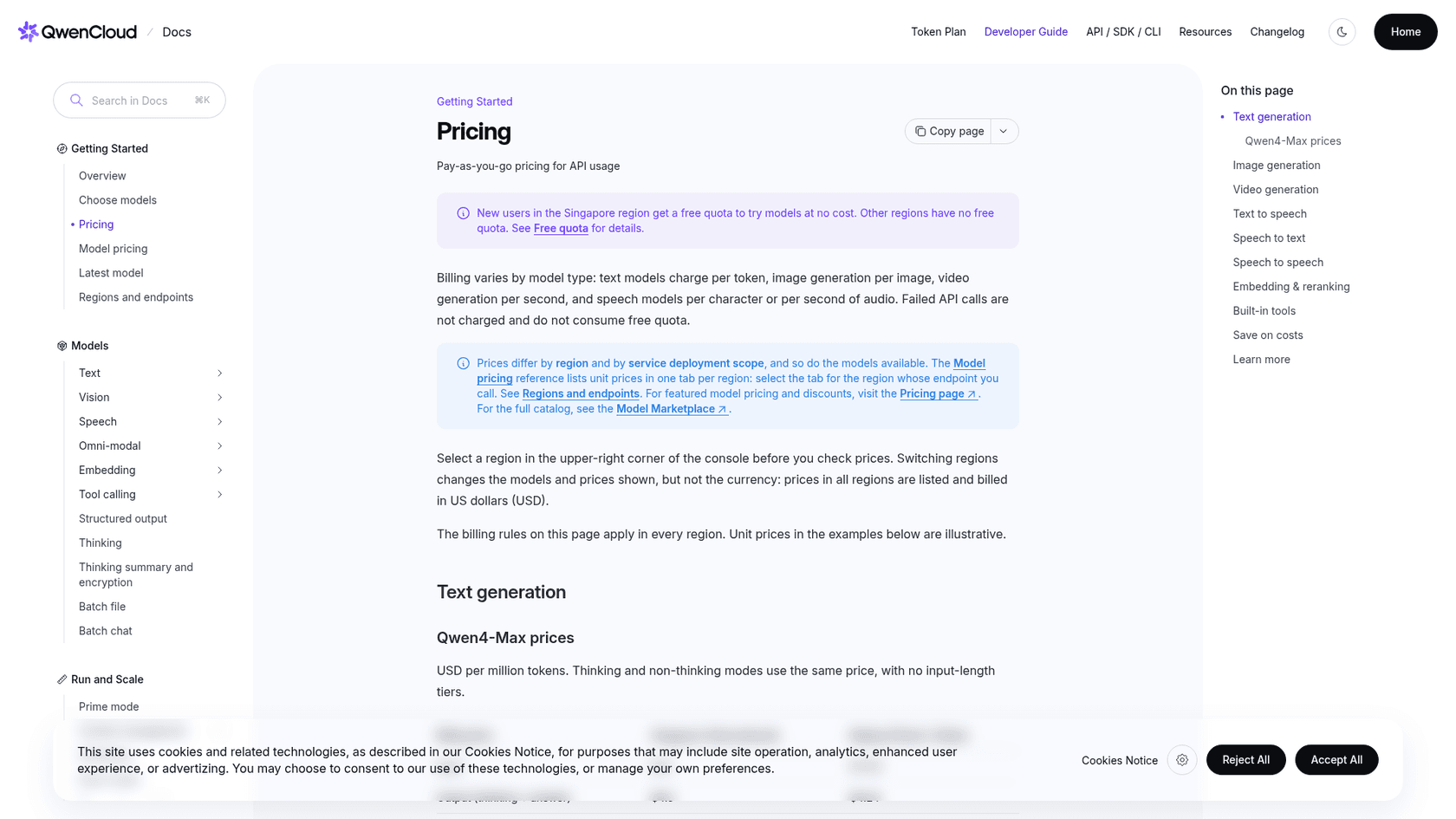
Qwen4 Max went generally available on November 16, 2026. In Qwen Cloud's Singapore region it costs $1.50 input and $4.50 output per million tokens, with cache reads at $0.075, per Qwen Cloud's model prices. The context window is 1M tokens.
Artificial Analysis scores it 43 at $3.27 per task. That's lower than Kimi K3.1 Pro and well under Sol, but its output price is about a ninth of Astra's.
Pros
- $4.50 output, lower than every model here except DeepSeek and Gemini 3.8 Flash
- Cache reads at $0.075
- Thinking and non-thinking modes at the same price
Cons
- 43 on Artificial Analysis
- Prices vary by region, so the Singapore rate isn't universal
- 31.9 minutes per benchmark task
Pricing: $1.50/$4.50 in Singapore, with explicit caching at $1.875 for 5-minute writes. The Qwen 4 Max pricing guide covers the other regions.
Verdict: a budget pick for straightforward work. For a closer match to Astra, look higher up this list. The Qwen 4 Max alternatives post compares it with its own rivals.
Should you route between models instead of switching?
For most agent products, yes. Switching wholesale from Astra to a cheaper model means accepting its weak spots on every task. Routing means you send each task to the cheapest model that handles it well.
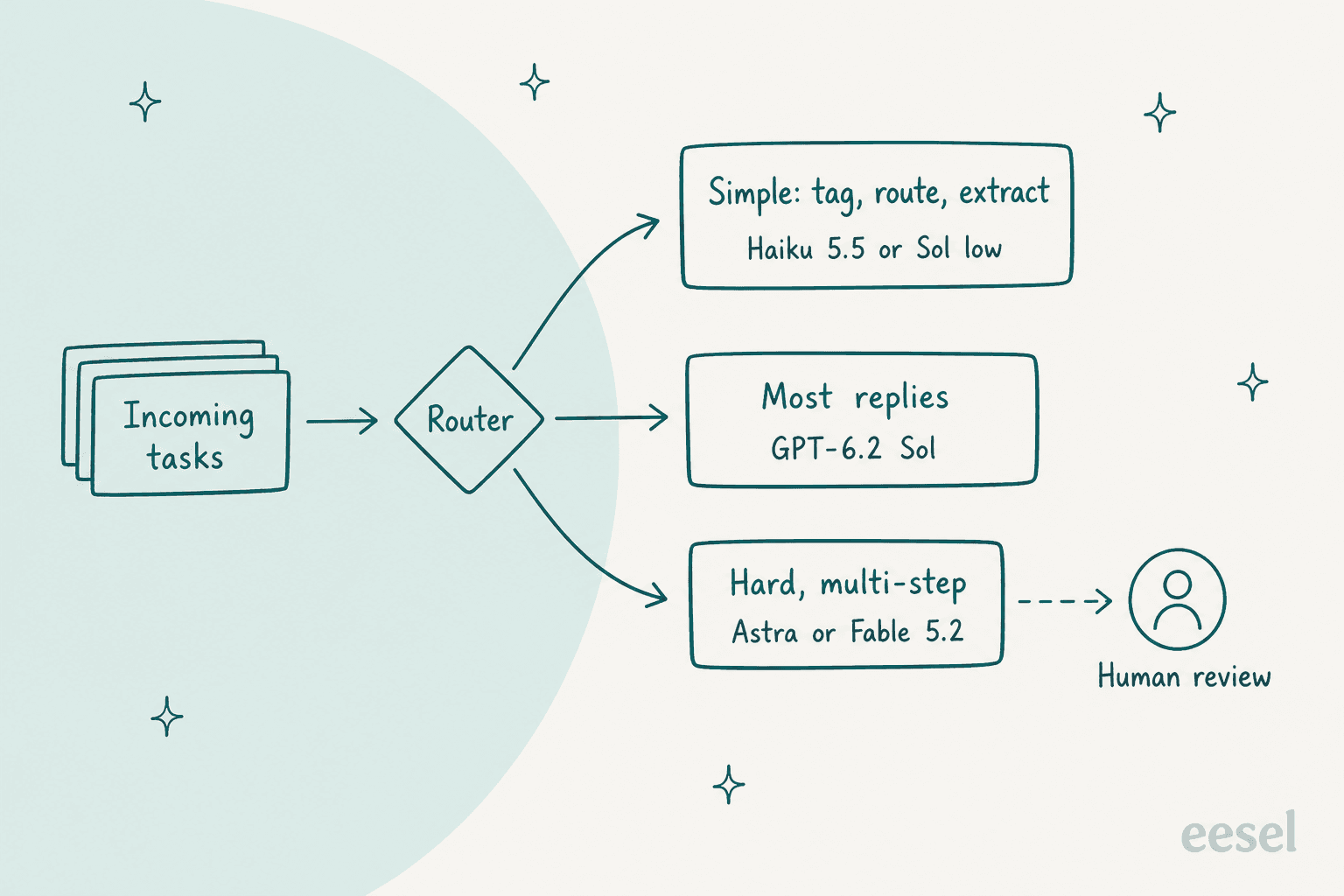
A setup I'd start with:
- Simple tasks like tagging, routing and extraction go to a small model. Claude Haiku 5.5 is $0.10/$0.50 for prompts up to 100,000 tokens and cost $0.41 per Artificial Analysis task, or use Sol at low effort.
- Most replies and routine tool calls go to GPT-6.2 Sol, which matched Astra on my whole test.
- Hard multi-step work goes to Astra, or to Fable 5.2 when the stakes justify $26.54 per task.
- Anything uncertain goes to a person.
Developers on the launch thread were already doing a version of this:
"Opus medium as orchestrator and reviewer, Sol(high/medium)/Terra(max) as implementer."
The same idea runs support queues. Intelligent routing sends tickets to the right person; model routing sends each step to the right model. The AI agent vs human cost breakdown shows why the cheap lane matters at volume.
How should you test an alternative before you switch?
Benchmarks tell you which models to shortlist. Only your own tasks tell you which one to ship. Here's the process I used for the Sol test, scaled up.
- Pull 100 to 300 real tasks from your logs, including the awkward ones: failed tool calls, vague requests, other languages.
- Keep everything identical except the model: same system prompt, same tools, same limits.
- Score cost per successful task, not cost per call. A cheap model that needs two retries isn't cheap.
- Run each setup at the effort you'd ship, since effort changes the bill more than the sticker price does.
- Read the failures by hand. A wrong refund amount matters more than a slightly stiff sentence.
For support work specifically, AI support agent testing covers how to build that test set from past tickets. The benchmarking guide covers scoring, and reviewing AI conversations covers the ongoing check once it's live.
What does this mean for a support team?
If your agents answer customers, the model choice is the smaller decision. Every model on this list can write a polite reply. What decides whether it's the right reply is the knowledge it reads, the actions it's allowed to take, and what happens when it isn't sure. My test showed it directly: Astra and Sol both escalated the broken order lookup correctly because the instructions told them to, and both got the refund math right because the policy was written down.
That's the layer eesel builds. eesel is an AI teammate platform: you hire ready-to-work teammates for specific jobs, an AI helpdesk teammate for your queue and an AI blog writer for content. The model is the engine; the teammate is the employee who drives it, with your integrations, knowledge and guardrails already in place. Before it answers a live customer, it gets simulated against your past tickets.
Swiftreg, which sells private number plates, shows what the rules layer looks like in practice. Its eesel agents handled 2,100 Zendesk tickets in a month, answering from live order data under rules Swiftreg wrote itself. They sent 1,500 public replies and left 1,050 internal notes where a step belongs to staff. SE Ranking runs one eesel agent per product across three products on Zendesk, and handled 4,650 conversations in a month by searching about 16,800 pages of help and site content before answering.
If you'd rather work from code, the eesel CLI lets you or a coding agent like Claude Code or Codex drive the same teammate from a terminal: upload approved help articles and macros, adjust the agent's instructions, and ask it test questions before anything goes live. Connecting the helpdesk itself still needs an admin to approve it, and uploaded knowledge gets tested before it counts as ready.
It's the same idea as an AI agent CLI, applied to a support teammate. An MCP server is the other common route. If you're weighing whether to wire this up yourself on Sol or Astra, build vs buy lays out what the model bill leaves out.
Try eesel
Swapping Astra for Sol cuts your token bill. It doesn't write your escalation rules, ground the answers in your help center, or test the agent on last month's tickets. eesel's AI helpdesk teammate plugs into Zendesk, works the same way with Freshdesk and the rest of your stack, learns from your past tickets, and shows you how it would have answered them before it goes live.
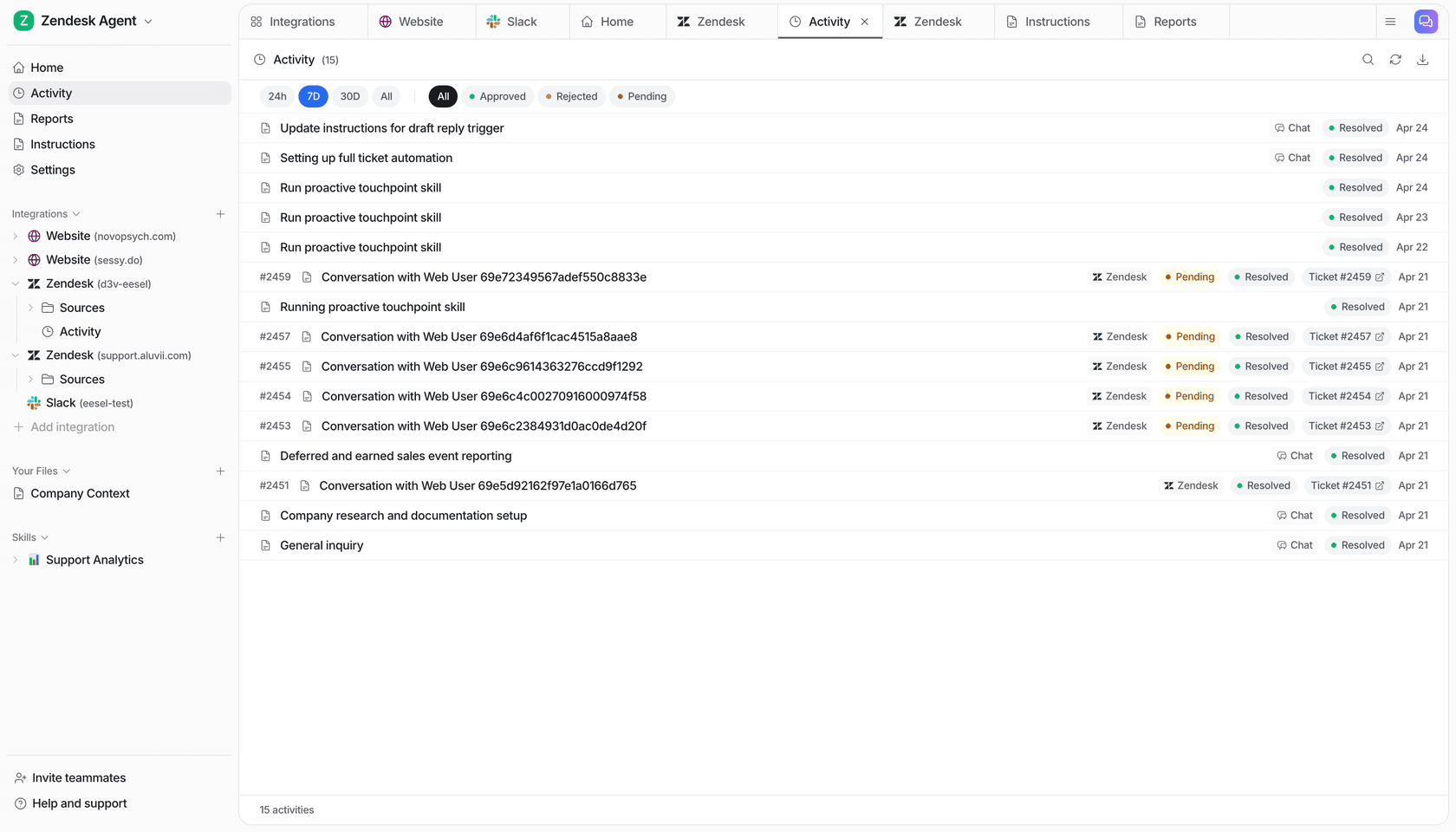
Try eesel free on a slice of your queue, or see plans and pricing.