GPT-6 Cyber alternatives: 8 options and how to actually get access

Rama Adi

Katelin Teen
Last edited November 6, 2026
The best GPT-6 Cyber alternative for most security teams is Claude Opus 5.5 through Anthropic's Cyber Verification Program. Its Red Team tier finished 34 of 50 offensive tasks unblocked, matching the model with safeguards off, at $4/$20 per 1M tokens, a fifth of GPT-6 Cyber's $20/$100. If you only review your own code, OpenAI's own advice holds: start on Daybreak Blue, not Red. GPT-6 Cyber is the right pick only when you need exploits that work against remote targets and can wait for a second approval.
Why are people looking for GPT-6 Cyber alternatives?
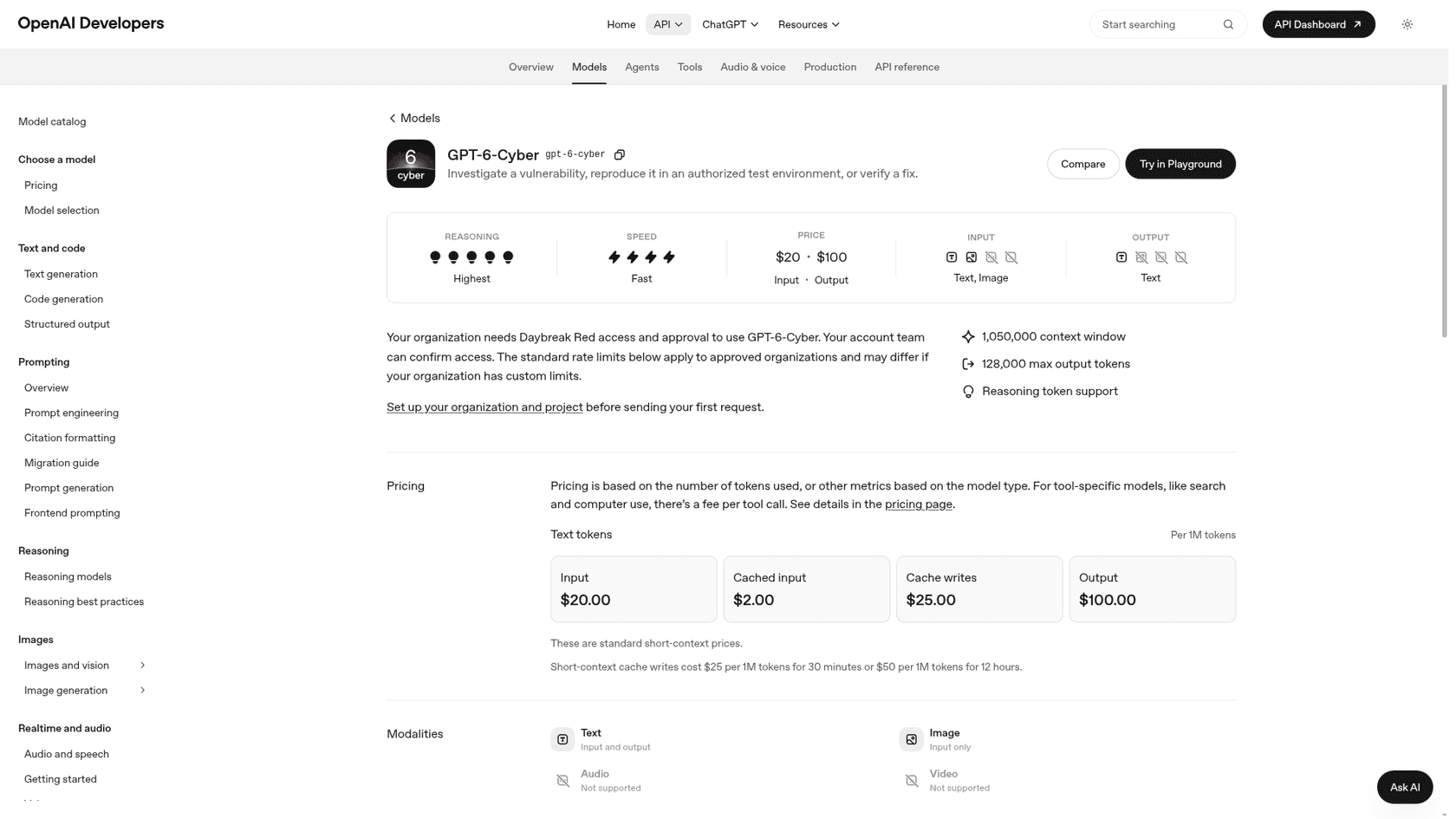
OpenAI launched GPT-6 Cyber on 5 November 2026, and on paper it is the strongest cyber model anyone has published numbers for. On ExploitGym it scores 48.5%, up from 32.1% for GPT-5.6 Cyber. On OpenAI's new RemoteExploitBench, GPT-6 Astra running on Daybreak Blue refused every task, while GPT-6 Cyber completed 95%.
Three things send people looking elsewhere the same day:
- The gate is two gates. The Daybreak access guide says GPT-6 Cyber needs Daybreak Red plus a separate GPT-6 Cyber approval, and the launch post says it starts with "a select group" of Red customers.
- The price doubled. OpenAI's API price card lists
gpt-6-cyberat $20 in and $100 out per 1M tokens. That is twice GPT-6 Astra, which was already the priciest standard rate on the card. - It is rated Critical. OpenAI classifies the model as Critical in cybersecurity under its Preparedness Framework, and Red API access requires IP allowlisting by default.
I'm Rama, and I build the integrations and APIs behind eesel's AI teammates. Most of my week goes into connecting models to real systems, and in my experience the access paperwork usually takes longer than the code. That is the lens for this list. A model you can't get approved for this quarter doesn't help you, no matter how high it scores. It's the same reason eesel ships the eesel CLI: an AI coding agent can load approved knowledge into an eesel teammate and test its answers from a terminal, while connecting the helpdesk itself still waits on an admin's approval.
The community reaction on launch day said the same thing:
"What's the point of delaying Daybreak Blue availability, when high-impact CVEs are being dropped several times a week?"

How I picked these GPT-6 Cyber alternatives
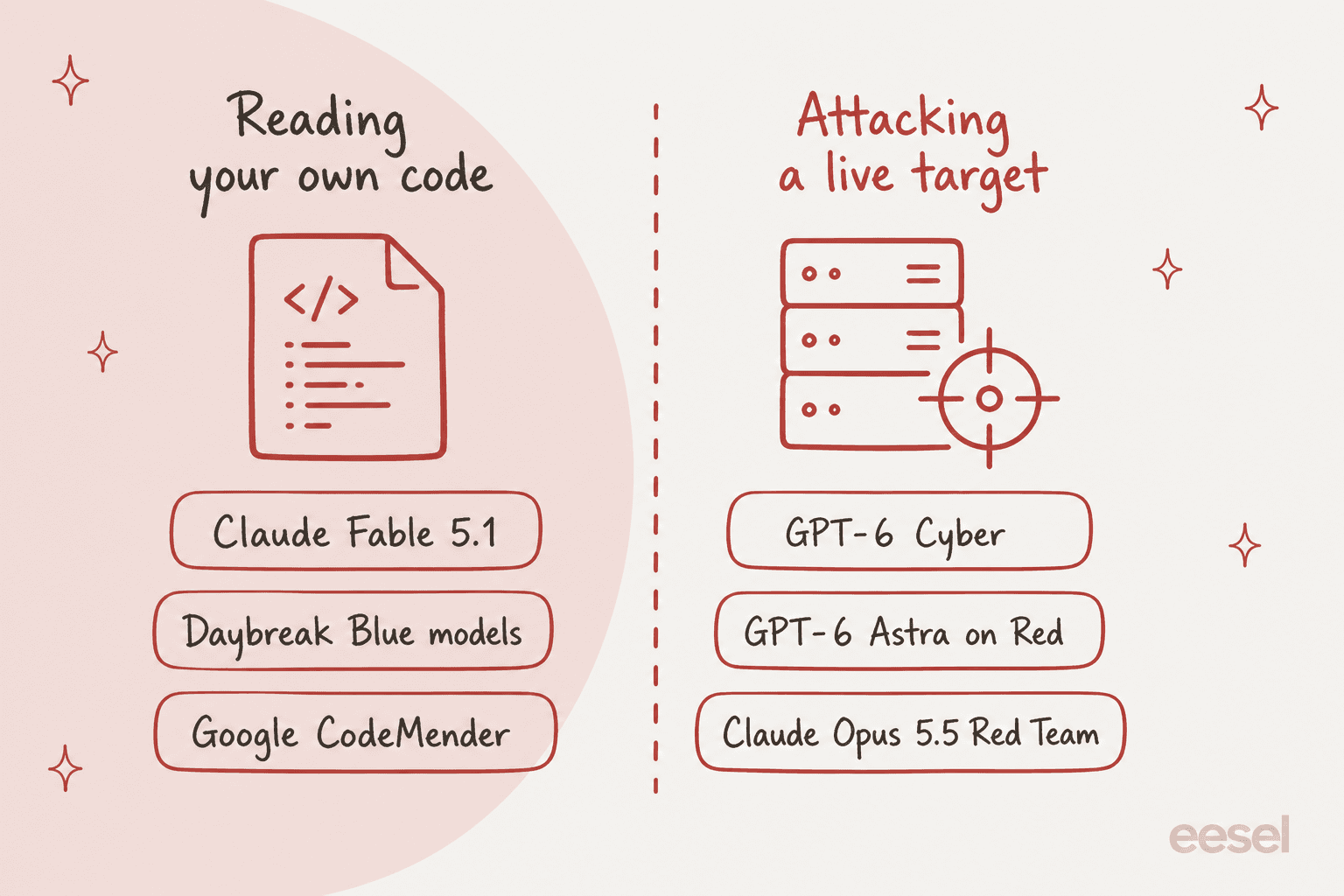
Before writing, I asked ChatGPT the question a security lead would ask, and checked which pages it read. It went straight to Anthropic's Cyber Verification Program, Claude Mythos, and Google CodeMender. It also split the job in two: reading your own source code, and attacking systems that are already running. I kept that split because it decides which gate you have to pass.
Every item below was checked against the vendor's own pages on 6 November 2026. I scored them on:
- Access: who can apply, and how long the review takes.
- Price: the published per-token or per-seat rate, from the vendor's own page.
- Job fit: source-code review, or exploits against live targets.
- Evidence: vendor-published benchmarks, with the caveat that labs mostly test on their own benchmarks.
- Data terms: retention rules, because every cyber program now requires some.
GPT-6 Cyber alternatives compared
| Option | Vendor | Access gate | Typical wait | Price per 1M tokens (in / out) | Exploits live targets? | Self-host | Data retention rule | Best for |
|---|---|---|---|---|---|---|---|---|
| GPT-6 Cyber (baseline) | OpenAI | Daybreak Red + separate approval | Select customers first | $20 / $100 | Yes (95% on RemoteExploitBench) | No | ZDR users must use Private Safety Processing | Remote exploit development |
| Claude Opus 5.5 + CVP | Anthropic | CVP Defense or Red Team Access | Days (Defense), weeks (Red Team) | $4 / $20 | Yes, on Red Team tier | No | Retention required | Most security teams |
| Claude Mythos 5.1 | Anthropic | CVP Specialized Access | In-depth review with US government | $10 / $50 | Yes | No | 30-day retention | Critical infrastructure testers |
| GPT-6 Astra on Daybreak Red | OpenAI | Daybreak Red | Red review | $10 / $50 | Partly (42.4% ExploitGym) | No | Standard OpenAI terms | Half-price OpenAI option |
| GPT-5.6 Cyber | OpenAI | Daybreak Red only | Red review | Not listed by name | Yes (32.1% ExploitGym) | No | Standard OpenAI terms | Red orgs waiting for GPT-6 Cyber |
| Daybreak Blue models | OpenAI | Daybreak Blue | Hardware key for individuals | GPT-6 Luna $0.10 / $0.50 | No | No | Standard OpenAI terms | Defensive review and triage |
| Claude Fable 5.1 | Anthropic | None | Instant | $10 / $50 | No (routed to Opus) | No | Standard Claude terms | Source-code review, no paperwork |
| Google CodeMender | Google Cloud | Sales; cyber models via Fairwind | Sales cycle | Contact sales | Proof-of-concept in your sandbox | Exploits run locally | Code stays in your environment | Find, prove and patch pipeline |
| GLM-5.3 | Z.ai | None | Instant | Free weights | Yes, with no lab oversight | Yes | Yours to set | Air-gapped research |
Which GPT-6 Cyber alternative fits your team?
Answer two questions. Each path ends in one pick and the access step to start today.
I review code my team owns, or triage vulnerability reports
I can't wait for any application
I can wait a few days
I want a managed find-and-fix pipeline
I run authorized pen tests or red-team engagements
We're an organization and can wait a few weeks
We already hold Daybreak Red
We test power grids, telecom or flight systems
Nothing can leave our air-gapped lab
1. Claude Opus 5.5 with the Cyber Verification Program
What you get
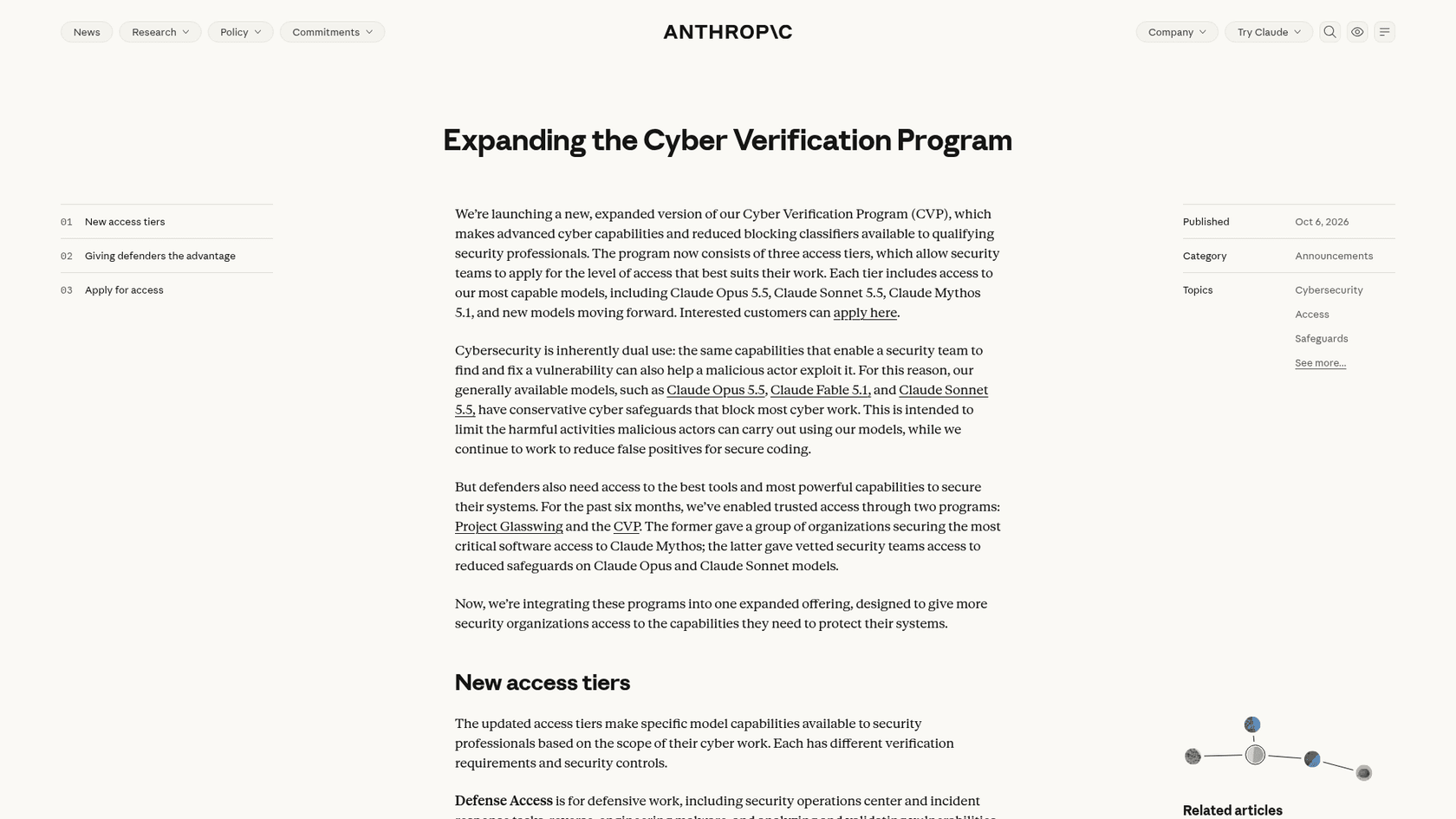
On 6 October 2026 Anthropic folded Project Glasswing and its older verification program into one Cyber Verification Program with three tiers. Claude Opus 5.5 is the model most teams will run on it. Anthropic tested the tiers on CyScenarioBench, which measures multi-stage cyber operations:
- No CVP: every task was blocked on the first prompt.
- Defense Access: 46 of 50 trials were blocked at some point.
- Red Team Access: no blocks, and 34 of 50 tasks completed, matching Opus 5.5's 67.6% success rate with safeguards off.
That last line is the one that matters. On the right tier, the safeguards cost you nothing measurable on this benchmark.
How you get access
Defense Access covers SOC work, incident response, malware reverse engineering and validating vulnerabilities. Anthropic aims to answer those applications "within a few days." Red Team Access adds authorized pen testing and takes a few weeks, and you're placed on Defense Access while you wait. Red Team Access is for organizations only, so individual researchers can't get it.
Price
Opus 5.5 is $4 in and $20 out per 1M tokens on Claude's pricing page. That is one fifth of GPT-6 Cyber's rate on both input and output. See Opus 5.5 pricing for cache and batch rates.
Where it falls short
Data retention is mandatory for every CVP member, so a zero-data-retention setup has to wait for Anthropic's Enterprise Frontier Safeguards, which it says arrive "later this fall." CVP runs on the Claude Platform, Vertex AI and Microsoft Foundry, but on Amazon Bedrock only for teams eligible for those safeguards. And CyScenarioBench is Anthropic's benchmark, so it doesn't line up with OpenAI's ExploitGym.
Pick it if
You're an organization that needs offensive testing and can't wait for OpenAI's second approval. For a head-to-head on the general models, see GPT-6 Sol vs Opus 5.5.
2. Claude Mythos 5.1
What you get
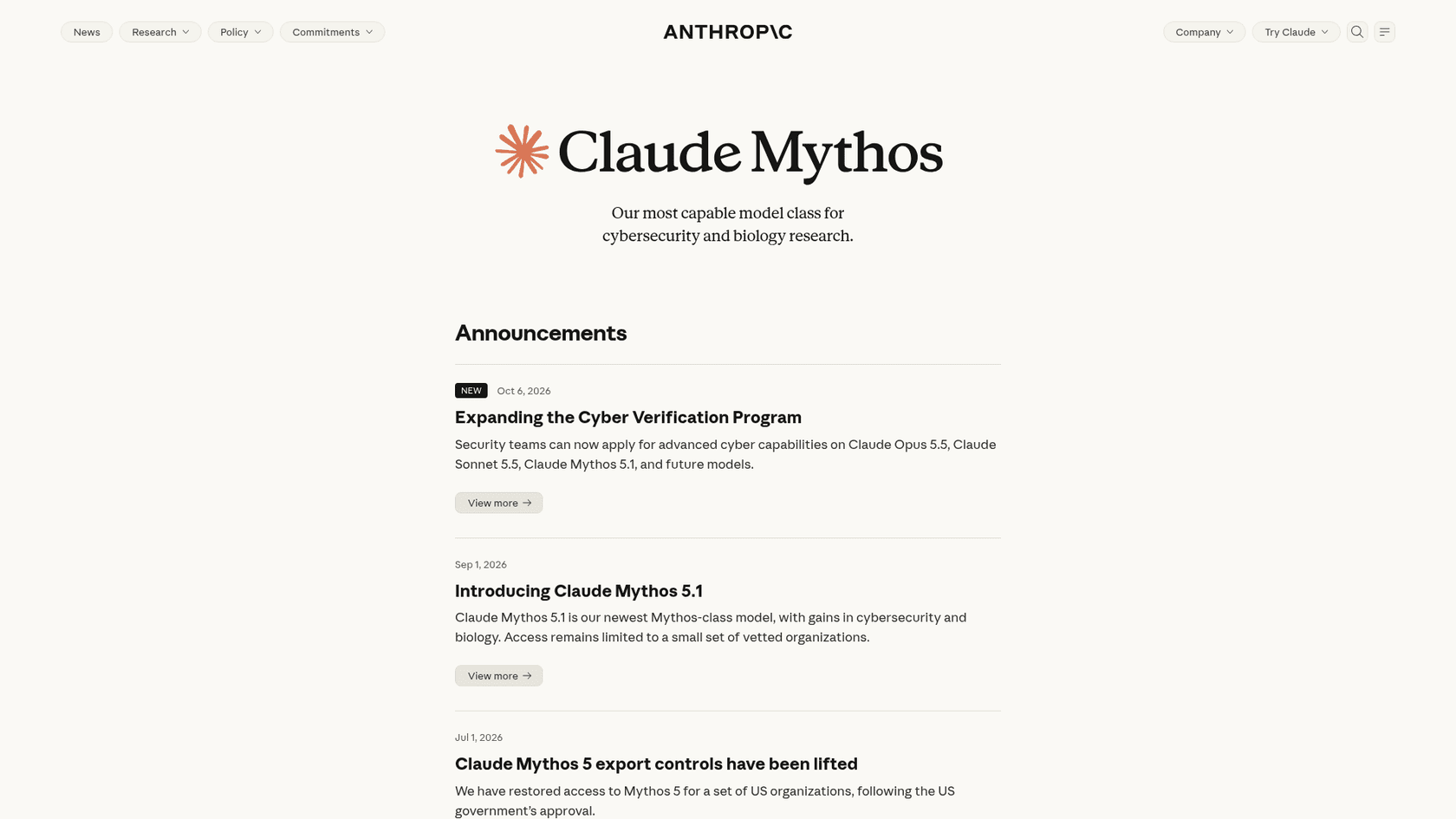
Claude Mythos 5.1 is the closest direct match to GPT-6 Cyber: Anthropic's "most capable model class for cybersecurity and biology research." It's the same underlying model as Claude Fable 5.1, with the cyber safeguards relaxed for vetted users. Anthropic says Glasswing partners using Mythos models found at least 129,000 verified vulnerabilities between April and July 2026. It calls that a lower bound, drawn from 33 partner reports. Anthropic's scan-and-patch product, Claude Security, also runs on Mythos 5.1 now.
How you get access
Through the CVP's Specialized Access tier. It's reserved for organizations testing systems "that could impact people's lives or disrupt markets," such as power grids, telecom networks and interbank transfers. Anthropic reviews each one in depth with the US government. Existing Glasswing members moved across without reapproval.
Price
$10 in and $50 out per 1M tokens, the same as GPT-6 Astra and half of GPT-6 Cyber. More detail in Mythos 5.1 pricing.
Where it falls short
Most teams won't qualify. Using Mythos 5.1 also means accepting a 30-day data retention policy for safety monitoring by default. If you don't test critical infrastructure, Opus 5.5 on Red Team Access is the realistic Anthropic route.
Pick it if
You defend systems in the critical infrastructure category and want the model class OpenAI was racing. My Mythos 5.1 review covers the benchmark gap with Fable.
3. GPT-6 Astra on Daybreak Red
What you get
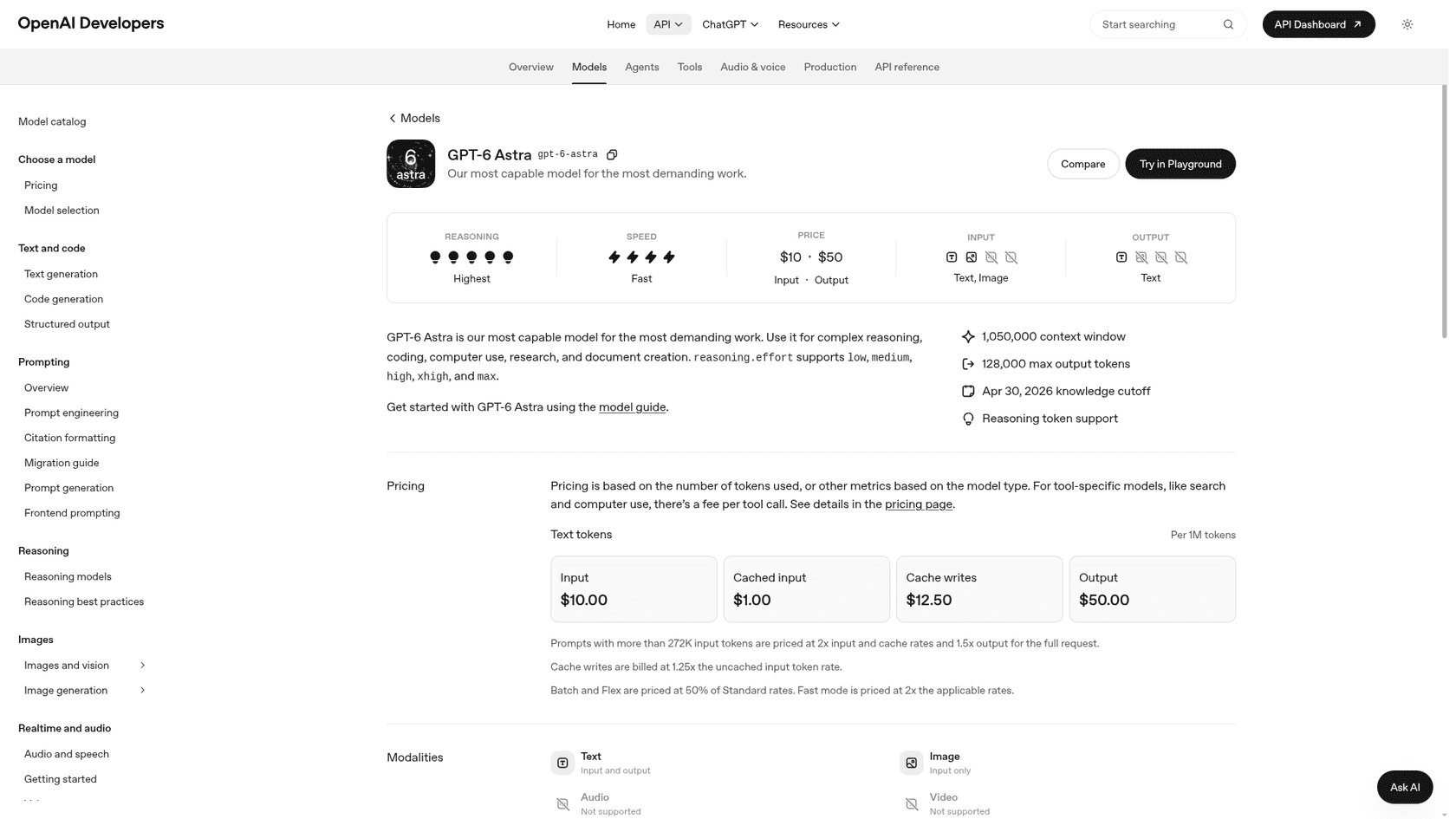
GPT-6 Cyber is "a cyber-specialized variant of GPT-6 Astra," according to its system card. So the base model is already strong. In OpenAI's own ExploitGym chart, Astra running under Daybreak Blue scores 42.4% against GPT-6 Cyber's 48.5%. That is about 87% of the score at half the token price. On the web pen-testing eval, Astra found 32.0% of vulnerabilities to Cyber's 40.3%.
How you get access
The access guide lists reduced refusals on Astra as a Daybreak Red feature. On Blue, Astra keeps standard safeguards, though OpenAI says it's widening a Blue alpha for Astra. Note the warning in the numbers: with standard safeguards on, Astra scored 0.0% on ExploitGym.
Price
$10 in and $50 out per 1M tokens, with cached input at $1. See GPT-6 Astra pricing.
Where it falls short
Astra on Blue refused 100% of RemoteExploitBench tasks, so remote exploitation is exactly where it gives way to GPT-6 Cyber. And you still need Red to get the reduced refusals.
Pick it if
You already have Daybreak Red, your work is mostly local exploit development, and you'd rather not pay double. My GPT-6 Astra review covers it as a general model.
"for code review and security checks I think Astra-6 is really great like it'd go so deep and find bugs so small everybody missed that too with using external skills for review."
4. GPT-5.6 Cyber
What you get
The previous generation, released in August. With the GPT-6 Cyber launch, OpenAI made GPT-5.6 Cyber available to every Daybreak Red customer, with no separate model approval. It scores 32.1% on ExploitGym, so you lose about 16 points against GPT-6 Cyber. On alignment, GPT-5.6 Cyber stayed in scope in 94.49% of OpenAI's honeypot tests, against 99.93% for GPT-6 Cyber.
How you get access
Daybreak Red approval alone. If you're already on Red, it's the version you can use today.
Price
OpenAI's price card doesn't list a gpt-5.6-cyber row by name. My GPT-5.6 Cyber pricing post tracks how that row has changed.
Where it falls short
The out-of-scope rate matters more than the benchmark gap. About 5 in 100 honeypot runs went after services the model wasn't told to touch, so keep it in a sandbox with action review.
Pick it if
You hold Red and want to start this week while your GPT-6 Cyber approval is pending. The older GPT-5.6 Cyber alternatives list shows how far the field moved in three months.
5. Daybreak Blue models (GPT-6 Sol, GPT-6 Luna)
What you get
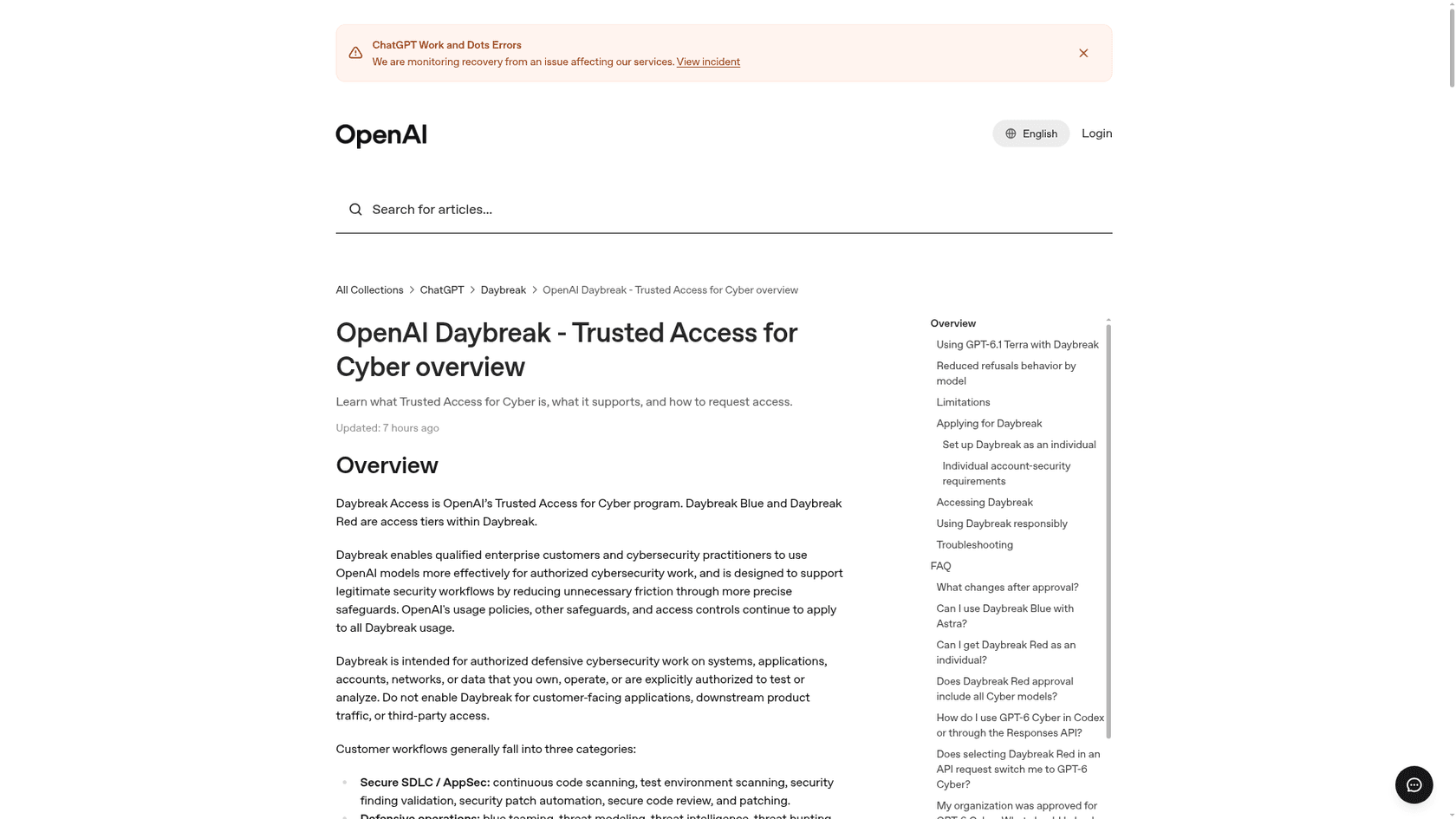
Daybreak Blue gives reduced refusals on supported mainline models, including GPT-5.5, GPT-5.6 Sol, GPT-6 Sol and GPT-6 Luna. It covers secure code review, vulnerability triage, detection engineering, incident response, malware analysis and patch validation. OpenAI calls it the recommended starting point for most security teams.
How you get access
Organizations apply through the Daybreak form. Individuals apply at chatgpt.com/cyber, and need an eligible paid plan, Advanced Account Security, and at least one FIDO2 hardware security key. A synced passkey doesn't count. One more catch from the guide: approval alone doesn't switch anything on. You set access_programs.cyber in the Responses API, or flip the Daybreak toggle in Codex.
Price
GPT-6 Luna is $0.10 in and $0.50 out per 1M tokens. GPT-6.1 Sol is $2 / $10, but note that 6.1 Sol keeps standard safeguards on Blue and only gets reduced refusals on Red.
Where it falls short
No cyber-specialized models, and no exploits against remote targets. Astra keeps standard safeguards here.
Pick it if
Your work is defensive and you live in OpenAI's tools, especially Codex or Codex Security.
"For defensive purposes, do I only need Daybreak Blue? I assume it's much easier to get Daybreak Blue access than Daybreak Red."
Per OpenAI's guide, the answer is mostly yes.
6. Claude Fable 5.1 (no application)
What you get
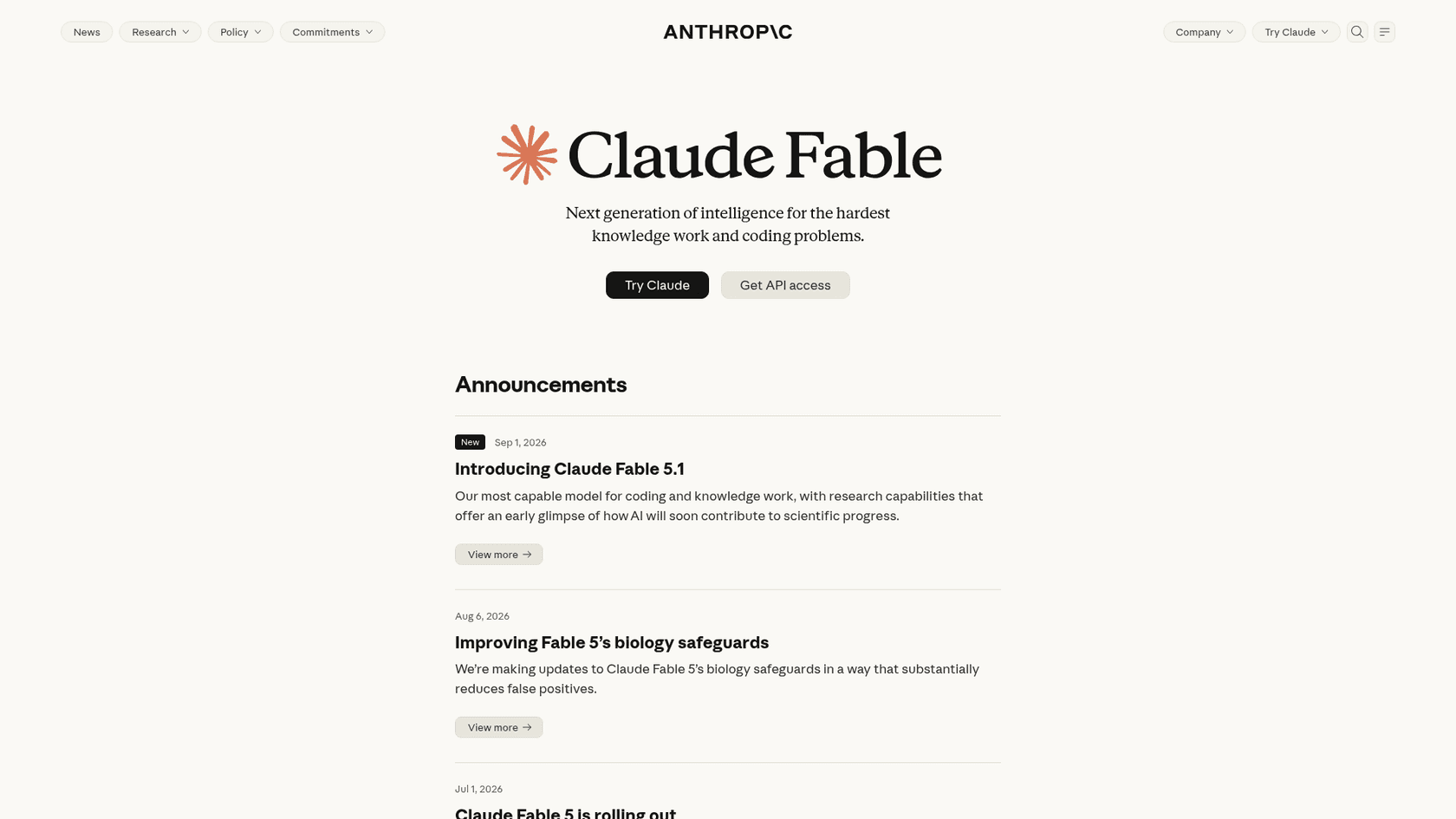
Claude Fable 5.1 is the same underlying model as Mythos 5.1, shipped with cyber and biology safeguards. Since September, those safeguards are narrower: Fable 5.1 can now identify software vulnerabilities in source code. Anthropic's CVP post also says its generally available models can still do code review, patch known issues and find bugs in source code you own.
How you get access
A normal API key. No form, no review.
Price
$10 in and $50 out per 1M tokens, with cache reads at $0.25. Details in Fable 5.1 pricing.
Where it falls short
Pen testing, exploit generation and binary-based vulnerability scanning are still handed off to an Opus model when the safeguards fire. For anything aimed at a live target, you're back to applying for CVP.
Pick it if
You want a frontier model reviewing your code this afternoon. If your team already works in Claude Code, see Claude Code security for permissions.
7. Google CodeMender
What you get
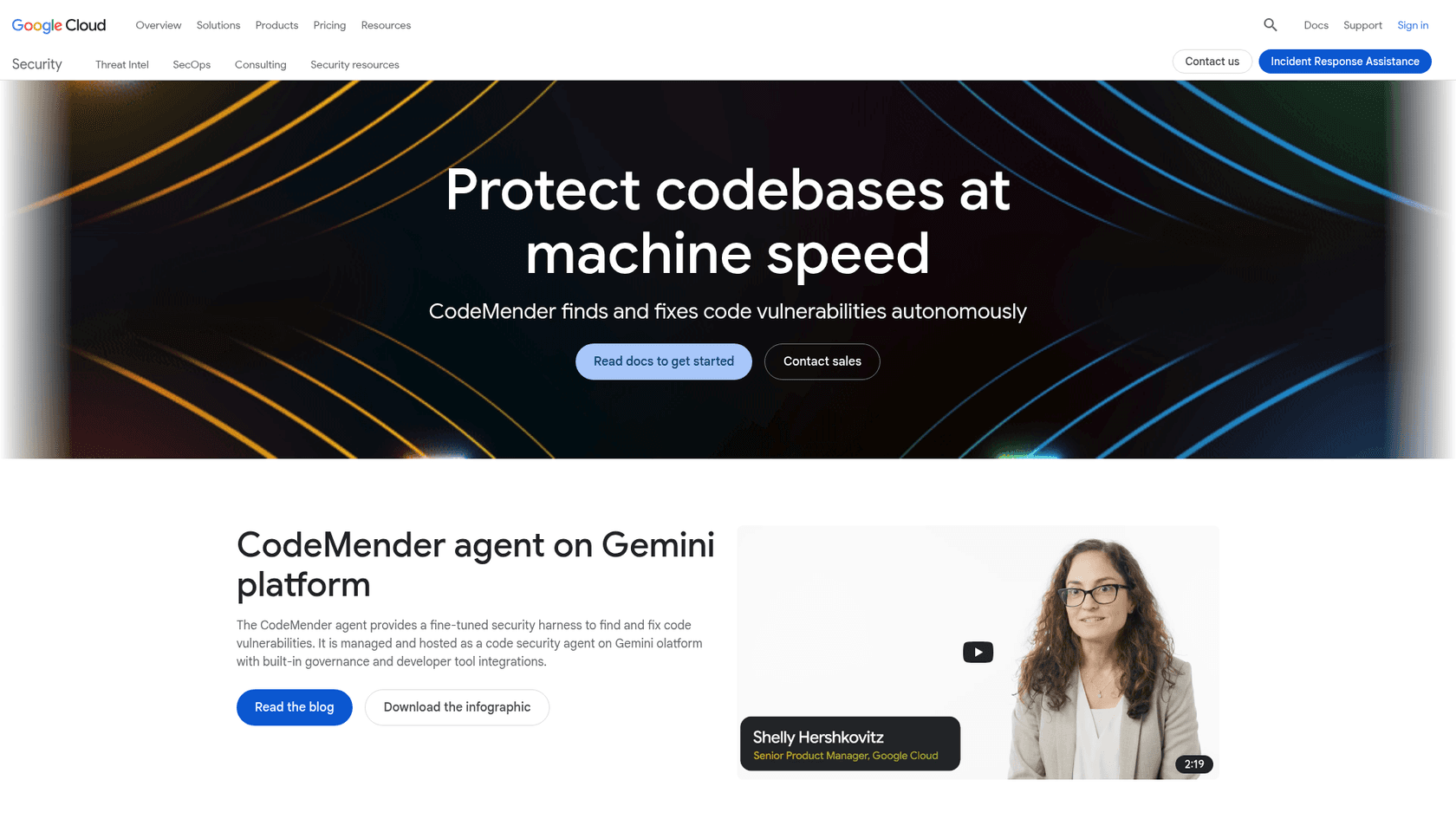
CodeMender is an agent, not a model. It scans, then proves, then patches. It builds your code and runs a proof-of-concept exploit in a customer-managed sandbox to confirm a finding is real. Then it writes a fix, checks the patch with an LLM judge, and hands developers a diff to approve. It supports C/C++, Java, Python, TypeScript/JavaScript, Go, Rust and Ruby, and works with Wiz findings.
How you get access
CodeMender runs on Google's Gemini Enterprise Agent Platform through sales. Google's own cyber models are tighter. The CodeMender page says Gemini 3.8 Flash Cyber is exclusive to customers and governments in the Fairwind Program. Fairwind lists over 650 partners, and a subset of them get Gemini 4 Argon inside CodeMender.
Price
Not published. The page offers "Contact sales."
Where it falls short
It's built for your own codebase, not for pen testing someone else's network. And without Fairwind you're on the general models, not Google's cyber ones.
Pick it if
You want the find, verify and fix loop managed for you, instead of building your own harness around a raw model.
8. GLM-5.3 (open weights)
What you get
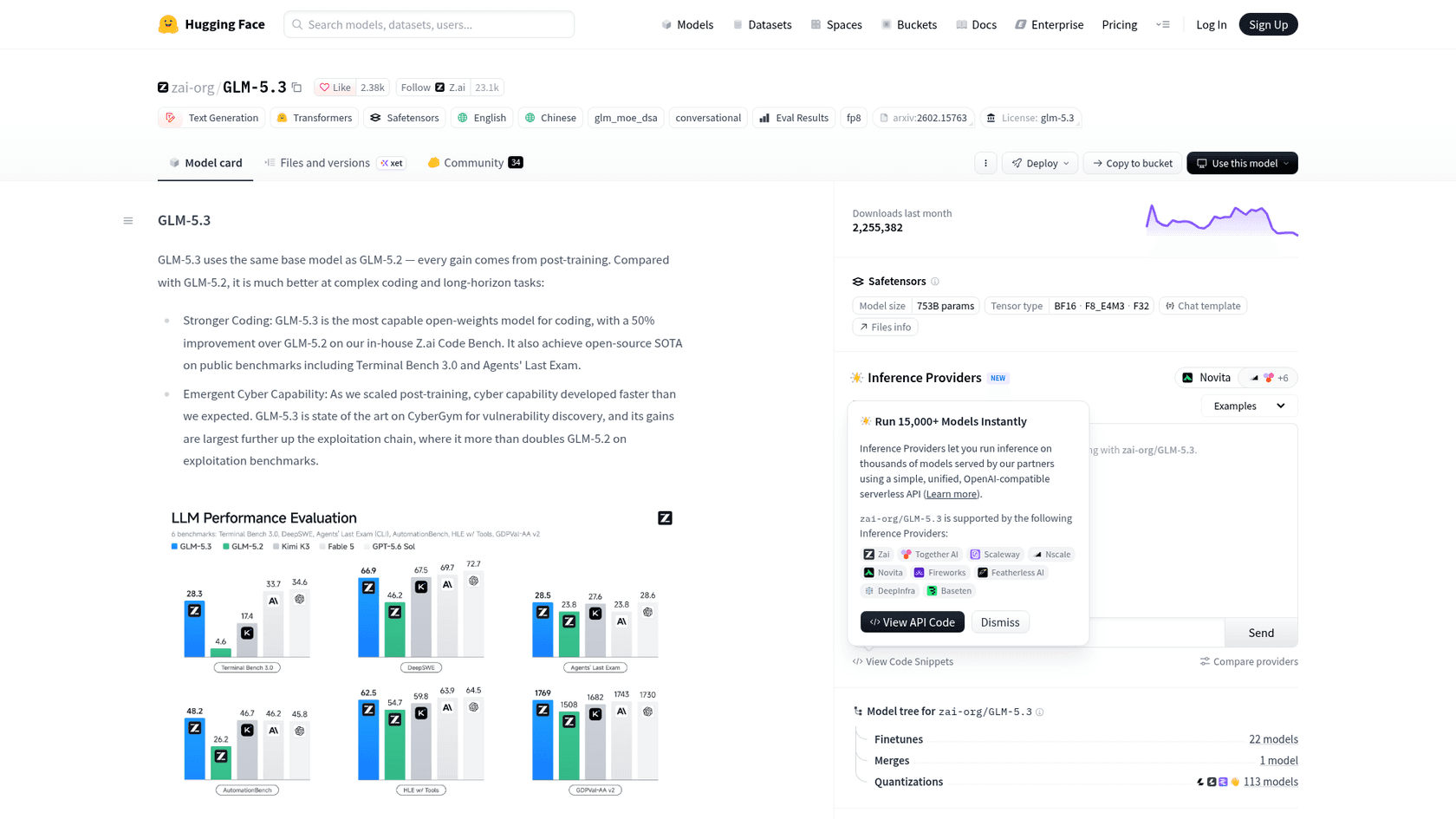
GLM-5.3 from Z.ai is the strongest model you can download. Its model card says cyber skill "developed faster than we expected" during post-training. In Z.ai's own table, GLM-5.3 tops CyberGym at 84.5, but on ExploitBench it scores 54.4 against 76.5 for GPT-5.6 Sol. NIST's CAISI called it the most cyber-capable open-weight model released to date, about four months behind the US frontier, as cited in Anthropic's analysis.
How you get access
Download the weights from Hugging Face. Nobody reviews your use case.
Price
The weights are free. Your bill is the hardware to run a frontier-size model.
Where it falls short
There's no lab watching for misuse, and that cuts both ways. Anthropic found GLM-5.3's built-in refusals could be bypassed 64% of the time with a cover story, 92% with prefilled reasoning, and 100% once abliterated. For a security team, the issue is scope control, not ethics. GPT-6 Cyber stayed in scope in 99.93% of OpenAI's honeypot tests. With GLM-5.3 your own sandbox and rules of engagement do that job.
Pick it if
Your work can't leave an air-gapped lab, or you need reverse engineering with no refusals at all. The smaller GLM-5.3 Flash runs on less hardware.
"Full 5.3 has a scary-good grasp of debugging assembly, QEMU and hex dumps in my experience, it would make for a good “sleuth” model to find potential vulns."
What does each option really cost?
Token prices only compare like with like. Here are the published output rates side by side:
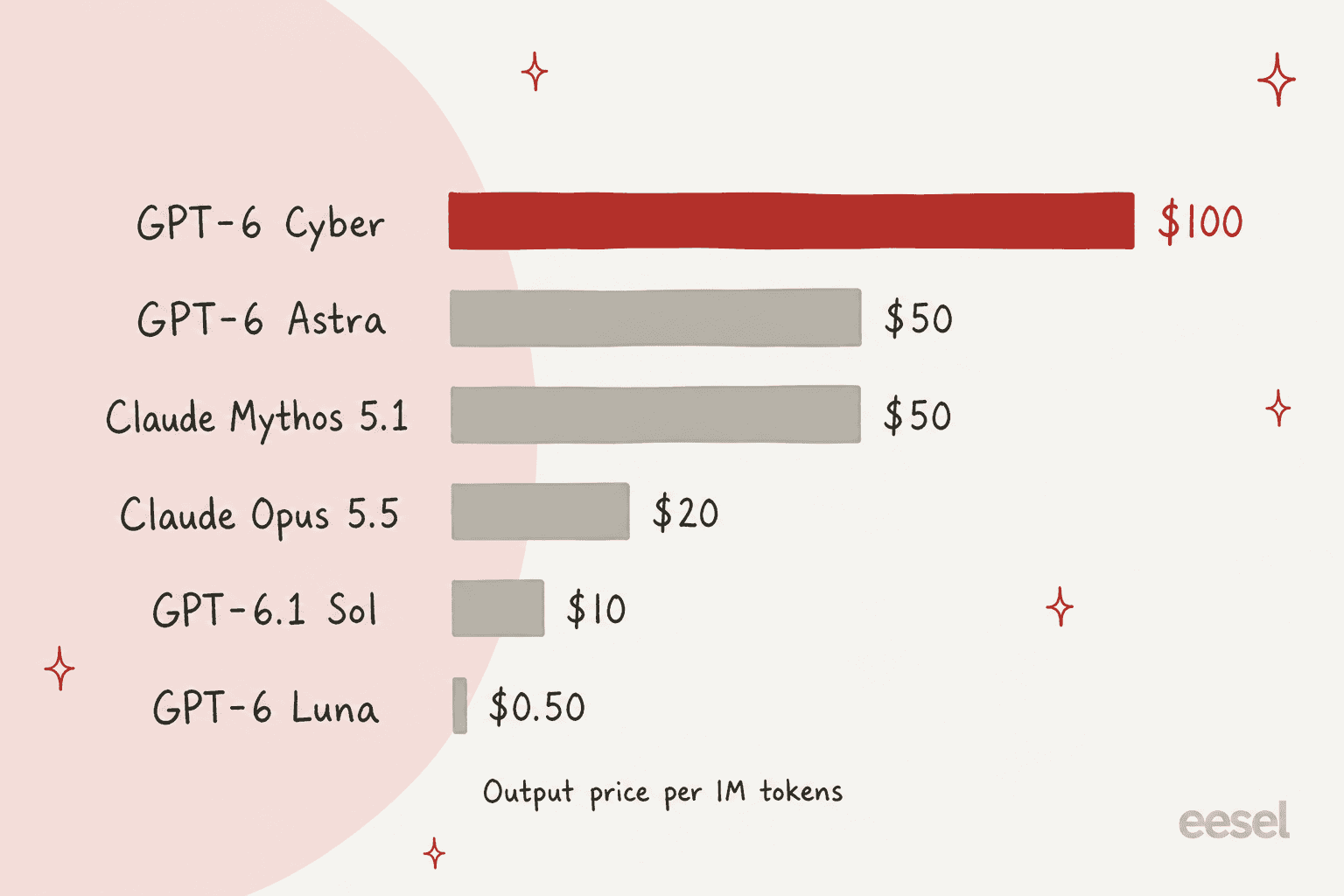
Two things the chart hides. First, cyber work is output-heavy because the model writes exploit code and reports, so the output column is the one that hurts. Second, a cheaper model that refuses half your tasks isn't cheaper. That's why the access tier matters as much as the rate.
If you'd rather buy a product than a model, a few security tools publish prices on their own sites:
| Product | Published price | What it is |
|---|---|---|
| Strix | Pro $29 per seat per month, pentests billed per test | Pentest and PR review agent, 7-day trial |
| MindFort | Starter $499/month (250 credits), Scale $999/month (800 credits) | Continuous pentest agents |
| GitHub security | Secret Protection $19, Code Security $30 per active committer per month | Scanning and autofix in the repo |
| XBOW | Request a quote | Autonomous pentesting |
| Anthropic OSS Scanner | Free for accepted projects | Periodic scans for critical open-source projects |
Open-source maintainers have a second free route through OpenAI's Patch the Planet, run with Trail of Bits, Calif and HackerOne.
How hard is each door to open?
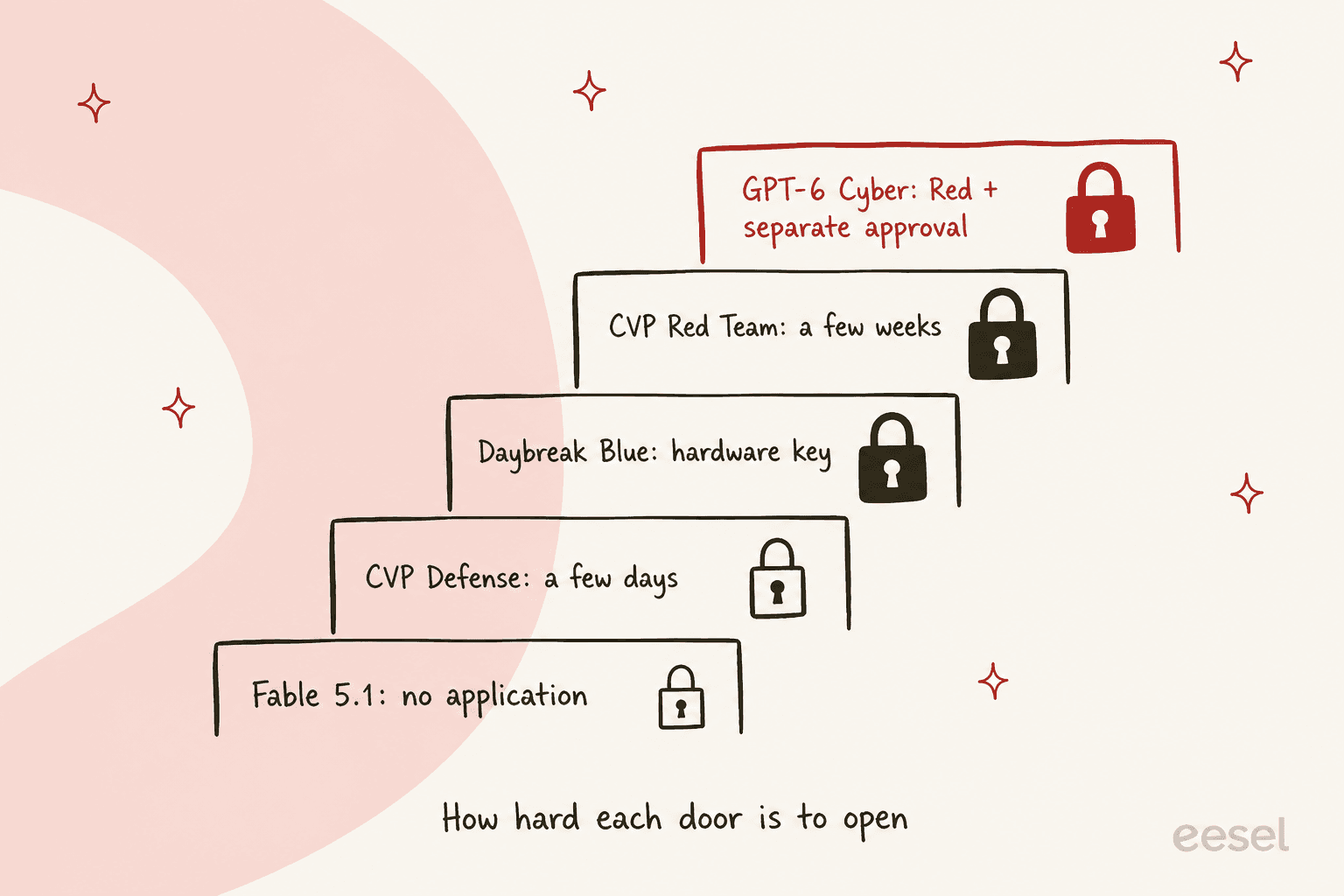
My advice is to apply in parallel. Start Anthropic's Defense Access and OpenAI's Daybreak Blue the same day, then upgrade when your work needs it. Both labs now ask for proof of security controls and some data retention. It's the same review I see on the support side: the AI vendor security checklist a customer runs on eesel looks a lot like what Anthropic asks of a Red Team applicant.
What happens after the vulnerability is found?
Cyber models are getting very good at the first half of the job. GPT-6 Cyber produced reproducible tests for 81 high-severity Firefox vulnerabilities. Mythos partners logged 129,000. Each of those becomes an advisory, then a patch, then a wave of "are we affected?" emails to someone's support inbox.
That second half is where I spend my time. A cyber model is infrastructure. eesel is the teammate who handles the conversations that follow. eesel's AI helpdesk teammate joins your existing helpdesk, learns from your past tickets, help center and the advisory you just published, and gets tested against historical tickets before it answers anyone.
Timengo is a good example. It's a Danish secure email and Digital Post company running eesel on Freshdesk. The teammate drafts technical support replies in Danish from about 5,300 past tickets and help articles, prepared 300 tickets in one month, and wrote 180 drafts, which a support engineer reviews before sending. At larger scale, SE Ranking runs one agent per product on three Zendesk connections and handled 4,650 conversations in a month.
During an incident that matters, because the new advisory and its FAQ can go in as knowledge the same hour, and you can ask the teammate test questions before customers do. There's a walkthrough in managing agents from the terminal.
Shipping a fix this week? Try eesel on your help center and see how it answers the disclosure questions before your customers start asking. More on how these teammates work in AI teammates.
So which GPT-6 Cyber alternative should you choose?
- Most security teams: apply for CVP Defense Access today and run Claude Opus 5.5. Upgrade to Red Team Access if you pen test.
- OpenAI shops doing defensive work: Daybreak Blue on GPT-6 Sol or Luna, as OpenAI itself recommends.
- Already on Daybreak Red: GPT-5.6 Cyber now, Astra for half-price exploit work, GPT-6 Cyber once approved.
- Critical infrastructure: Mythos 5.1 via CVP Specialized Access, or Daybreak Red for Critical Infrastructure.
- Air-gapped or no-application: Fable 5.1 for source code, GLM-5.3 if nothing can leave the lab.
GPT-6 Cyber is the right tool when your job is working exploits against remote targets and you can wait for OpenAI's second approval. For everything else, the door you can open this week beats the model you can't.