


The best Qwen 4 Max alternative for most coding and agent work is Claude Sonnet 5.5 at $2/$10 per million tokens, with Claude Opus 5.5 for hard tasks and DeepSeek V4.1 Flash ($0.15/$0.60 off-peak) for bulk work. But check one thing before you switch: Alibaba shipped the GA qwen4-max on November 16, at $1.50/$4.50. If you liked the preview, changing one model ID is cheaper than any switch.
If the preview was powering a support bot, eesel runs that job without you picking a model, and the eesel CLI lets a coding agent load your help docs and test answers before launch.
What happens to Qwen 4 Max on November 25?
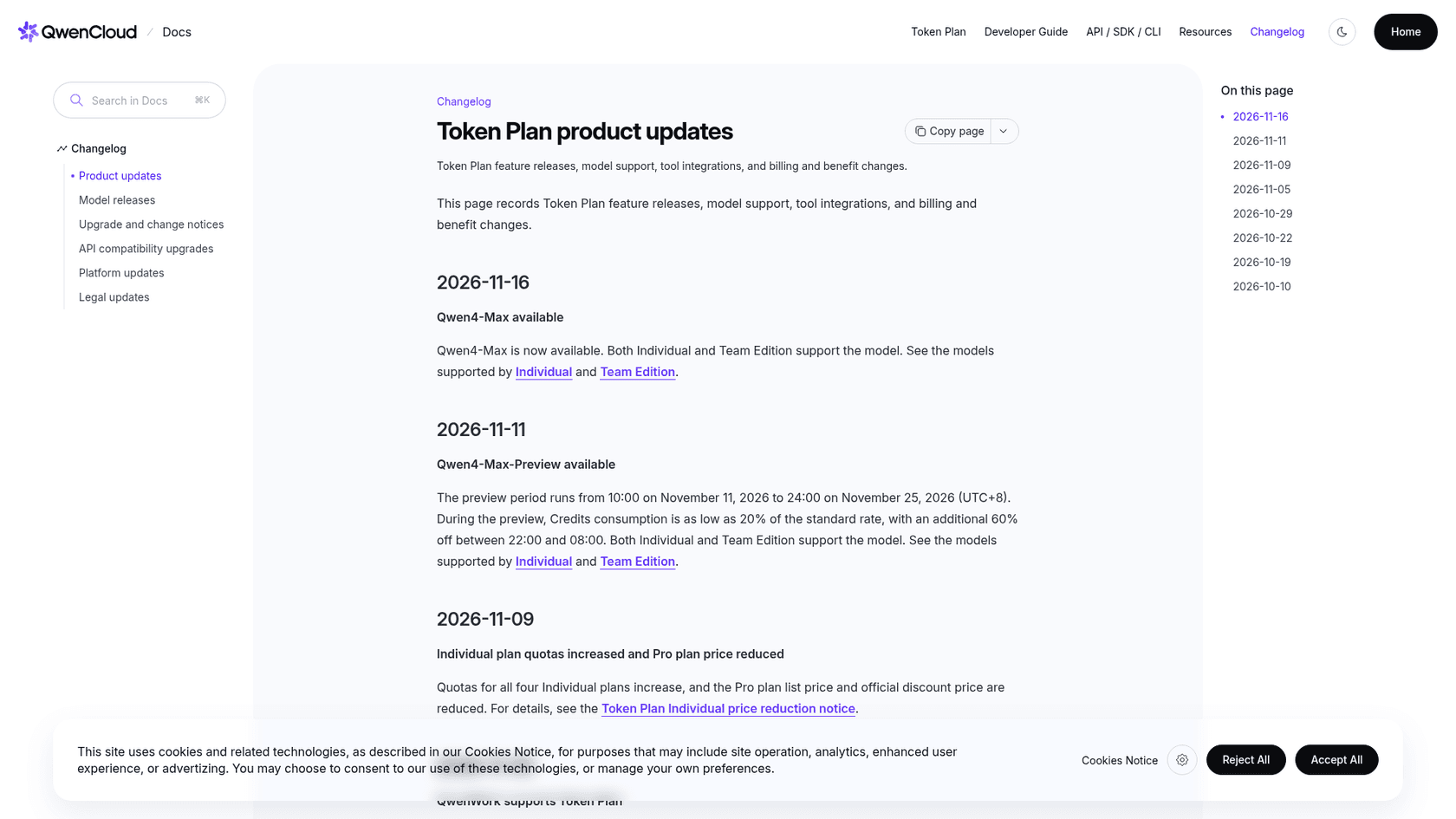
The preview stops. Alibaba's Token Plan changelog says qwen4-max-preview runs from 10:00 on November 11 to 24:00 on November 25, 2026 (UTC+8), and the Token Plan docs say the model will be retired after the preview ends. Any agent, script or Claude Code config still pointing at that ID breaks on the 26th.
What most coverage misses is the next entry in the same changelog. On November 16, Alibaba made qwen4-max generally available on Token Plan Personal, Token Plan Team and the pay-as-you-go API. So the question is no longer "Qwen or something else". It is "the GA Qwen, or something better for my workload".
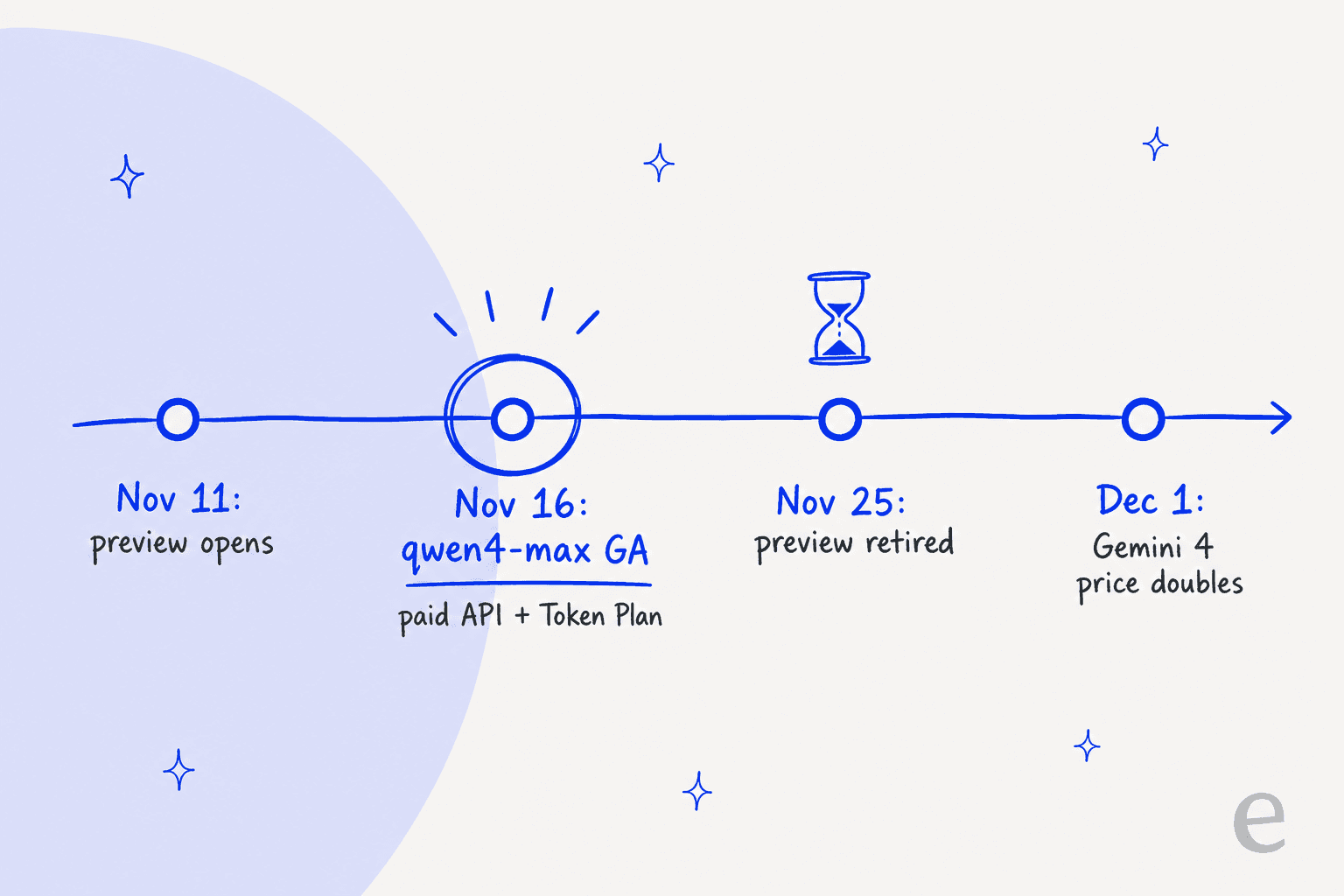
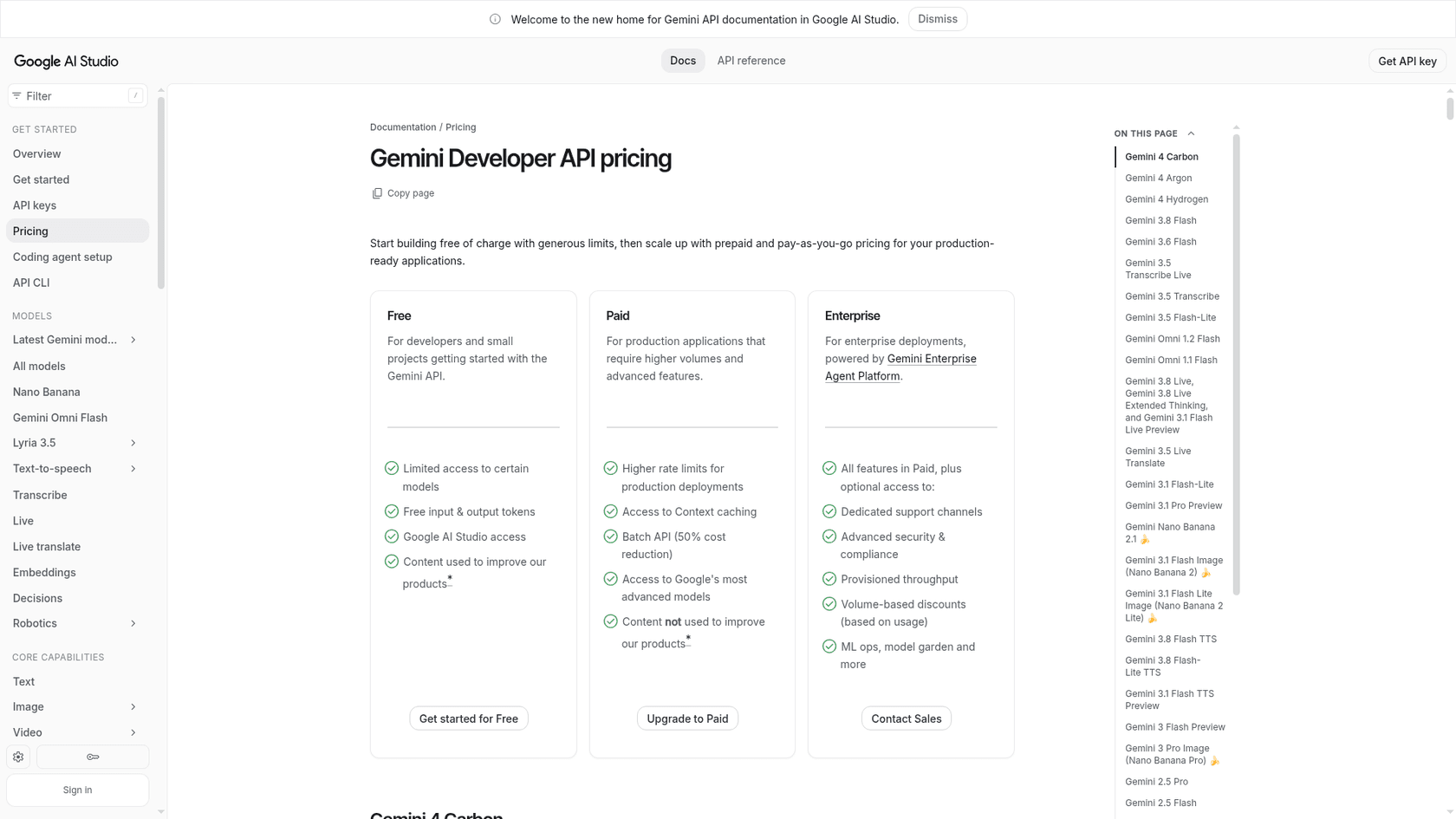
That last stop matters too. Two of the alternatives below, Gemini 4 Argon and Gemini 4 Carbon, are on introductory pricing that doubles on December 1, so a decision made on this week's rate card can change twice in a fortnight.
I'm Alicia, and I build features and AI agents at eesel. We've spent years running models behind live support queues, and the lesson from every forced migration is the same: the model you switch to matters less than whether you tested it on your own work first. Every pick below comes with the price for one stated buyer, so you can compare them on one number before you test.
Should you just move to the GA qwen4-max?
For most people who liked the preview, yes. Here is what changes between the two models, all from Alibaba's Qwen4-Max docs:
| qwen4-max-preview | qwen4-max (GA) | |
|---|---|---|
| Status | Retired after Nov 25 | Generally available since Nov 16 |
| Where you can use it | Token Plan only | Token Plan Personal, Token Plan Team, pay-as-you-go API |
| Price | Credits at 20% of standard rate (8% at night) | $1.50 input / $4.50 output per 1M tokens (Singapore) |
| Context window | 1M tokens | 1M tokens |
| Max thinking + answer | 393,216 tokens | 262,144 tokens |
| Reasoning effort | low, medium, xhigh | low, high (default), xhigh |
| Coding tools | Claude Code via Token Plan | Claude Code, Codex, OpenCode |
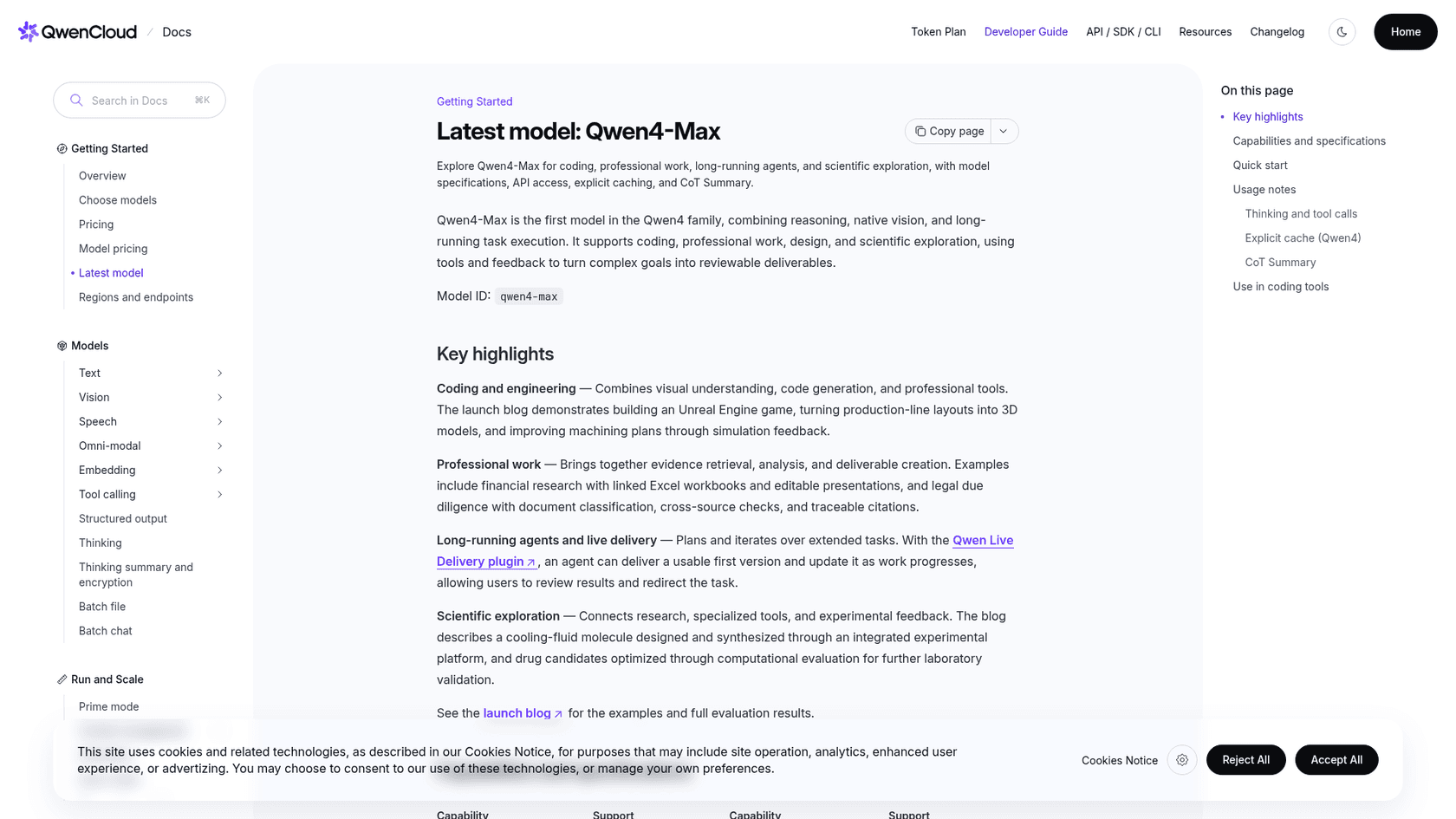
Three things stand out. First, the GA model is cheaper than Qwen3.8-Max: Alibaba lists qwen3.8-max at $2/$6 in Singapore against $1.50/$4.50 for qwen4-max, so the newer flagship is also the cheaper one. Second, the GA model adds explicit caching with a 5-minute or 1-hour TTL and $0.075 cache reads. Third, you lose the preview discount. Token Plan users paid as little as 20% of the standard credit rate during the preview, and 8% overnight, per the Token Plan overview. That deal does not carry over, so expect credits to drain several times faster on the same work.
The migration itself is one line. In the Claude Code setup we documented last week, the Opus slot pointed at qwen4-max-preview; swap it for qwen4-max and keep the same Token Plan key and endpoint. If you hit truncated output, check max_completion_tokens, because the GA model caps thinking plus answer at 262,144 tokens.
When should you leave instead? When the preview never earned its place. Alibaba still has not published independent benchmark results in its docs beyond the launch blog, and the community read during the preview was mixed:
"No benchmarks yet. The smaller Qwen models are extremely popular for people running things locally, yet I don't know absolutely anyone running Qwen Max."

"It's preview; Qwen4-max-preview. It's not disappointing at all, at least so far in my one-shots, but more testing is going on and i'll have a clear answer."
If you were on the preview mainly for the 80% discount, or you need a provider outside Alibaba Cloud, read on.
How I picked and priced these alternatives
I picked models that cover the same three jobs people used Qwen 4 Max preview for: agentic coding in tools like Claude Code, long-context work across a 1M window, and tool calling in multi-step agents. Every price comes from the vendor's own pricing page, checked on November 17, 2026.
To make per-token prices comparable, I priced every model for one buyer: a developer running 10M input and 1M output tokens a month, at standard list price, with no caching or batch discounts. That is roughly a heavy month of solo agent work. Caching changes the picture a lot for agent loops, so the calculator further down lets you add your own cache hit rate.
Qwen 4 Max alternatives at a glance
| Model | Best for | Input / output per 1M | Cache read per 1M | Monthly cost (10M in, 1M out) | Context | Open weights | Subscription option | Price changes soon |
|---|---|---|---|---|---|---|---|---|
| Claude Sonnet 5.5 | Daily coding driver | $2 / $10 | $0.10 | $30 | 1M | No | Claude plans | No |
| Claude Opus 5.5 | Hard agent tasks | $4 / $20 | $0.20 | $60 | 1M | No | Claude plans | No |
| Claude Fable 5.2 | The hardest jobs | $8 / $40 | $0.20 | $120 | 1M | No | Usage credits on Pro | No |
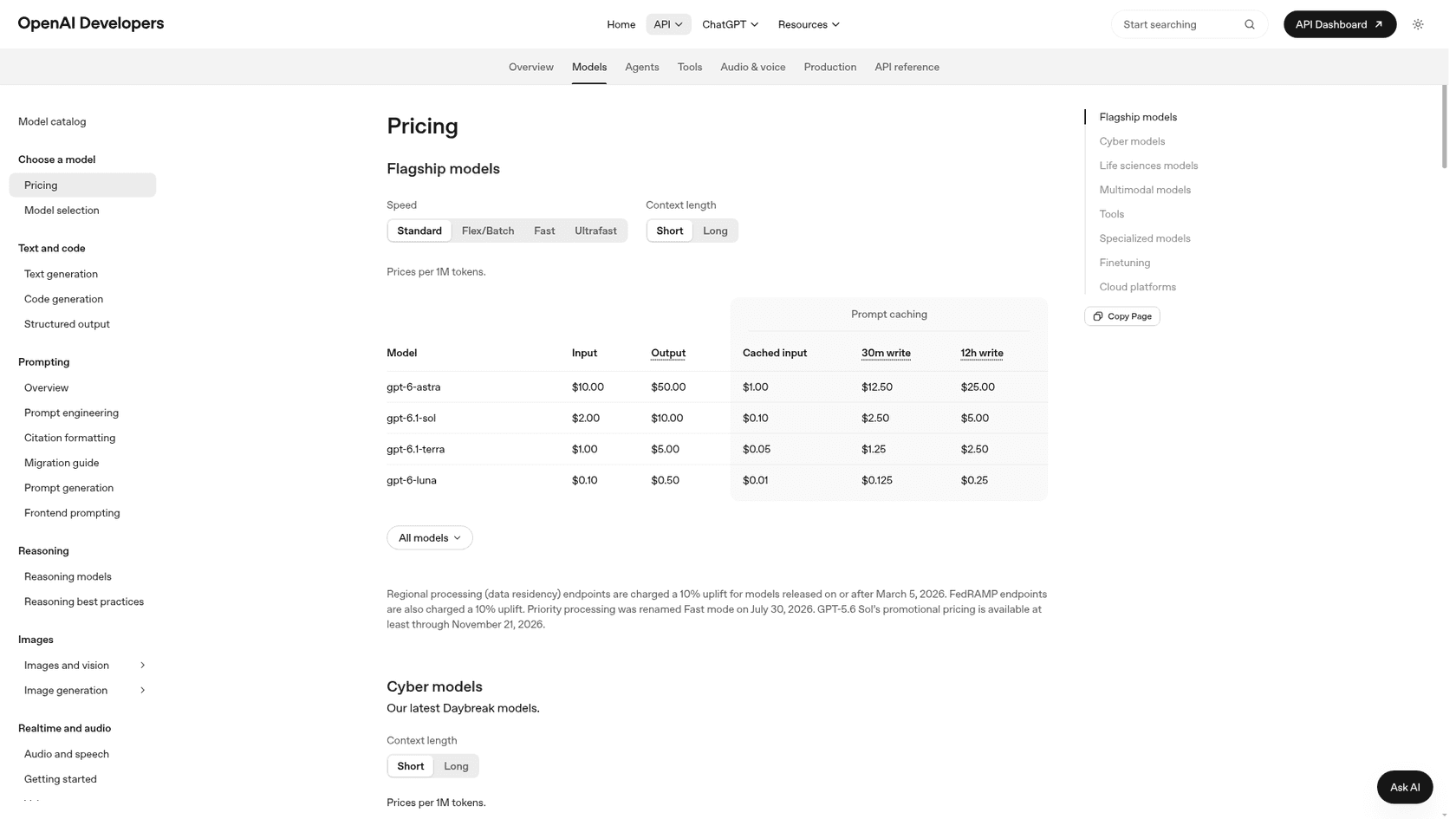
| GPT-6.1 Terra | Cheap frontier-class work | $1 / $5 | $0.05 | $15 | Over 272K costs 2x input | No | ChatGPT plans | No |
| Gemini 4 Argon | Fast Gemini 4 work | $2 / $10 | $0.10 | $30 ($60 from Dec 1) | 1M | No | No | Doubles Dec 1 |
| Gemini 4 Carbon | Long-horizon agents | $2 / $10 | $0.10 | $30 ($60 from Dec 1) | 1M | No | No | Doubles Dec 1 |
| DeepSeek V4.1 Flash | Bulk and budget work | $0.15 / $0.60 off-peak | $0.003 | $2.10 ($4.20 peak) | 1M | Yes | Also on Token Plan | No |
| Kimi K3.1 Pro | Non-US frontier option | $2 / $10 | $0.20 | $30 | 1M | No | $19 to $199/month | No |
| Qwen3.8-Max | Staying on Token Plan | $2 / $6 | $0.25 | $26 | 1M | No | Token Plan | No |
| qwen4-max (GA, for reference) | Same model, kept | $1.50 / $4.50 | $0.075 | $19.50 | 1M | No | Token Plan | No |
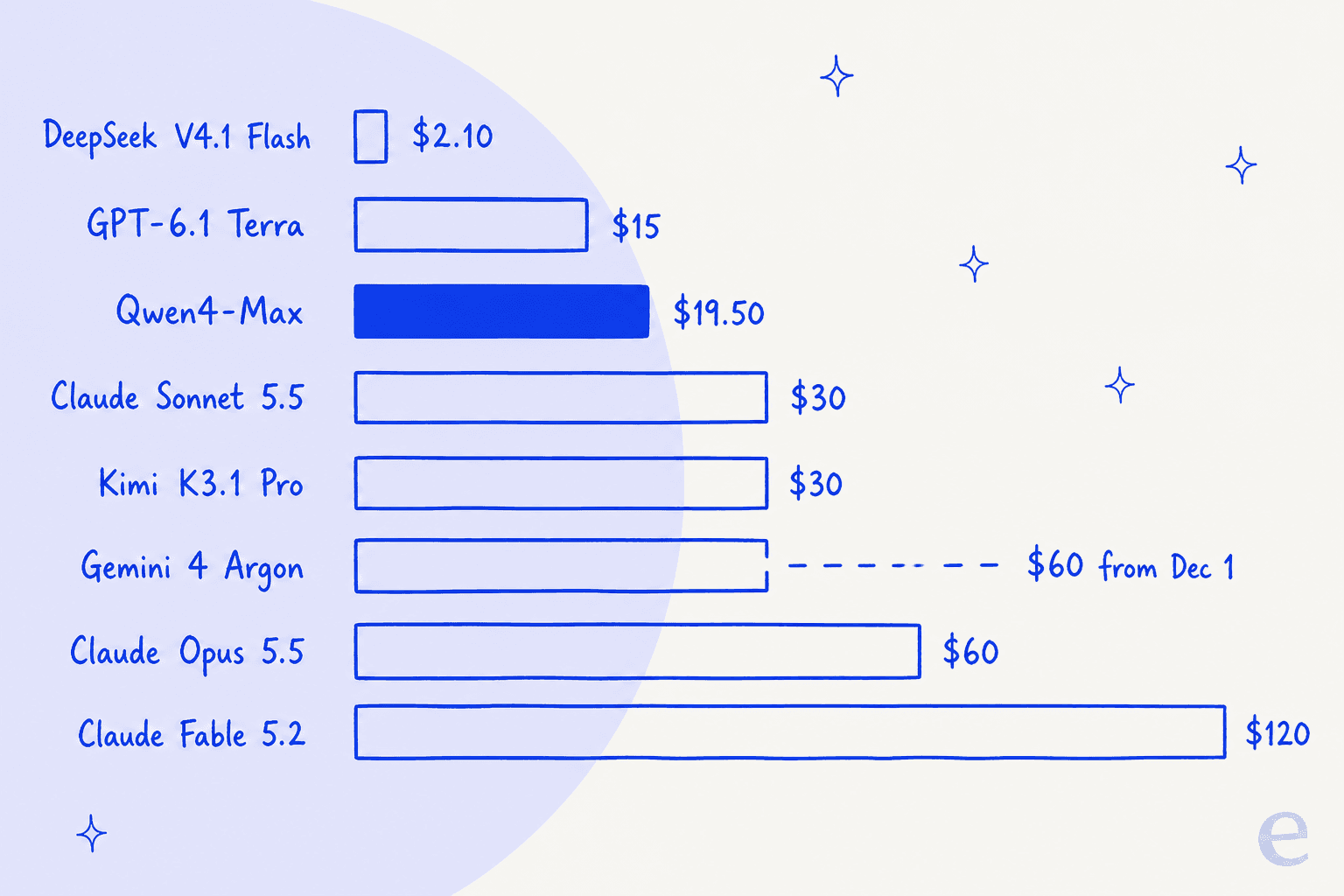
The chart is the surprise most switchers do not expect: only two alternatives are cheaper than the GA Qwen 4 Max at list price. Everything else costs more per month, so a switch has to be about quality, provider risk or tooling, not savings.
Work out your own monthly cost
The 10M/1M buyer is a stand-in. Plug in your own volume and cache hit rate below. Cached input is billed at each vendor's cache-read price; cache writes and batch discounts are left out to keep the comparison simple.
Try a 70% cache hit rate, which is normal for an agent that resends the same system prompt and repo context every turn. Claude Sonnet 5.5 drops from $30 to about $16.70, and qwen4-max drops to about $9.53, so the gap shrinks to around $7.
Why switch away from Qwen 4 Max at all?
To be fair to Alibaba, the GA model fixes most of the preview's problems: it has a real per-token price, a pay-as-you-go API, and support in Claude Code, Codex and OpenCode. The reasons people still leave are narrower:
- The discount was the draw. At 20% of the standard rate, the preview was close to free for heavy users. One HN commenter summed up the appeal: "By November 25th, Beijing time daytime (8am-22pm) -80%, and at night (Western daytime) even -92%!" (linzhangrun, Hacker News). At GA rates, other models compete on price again.
- Thin public evidence. No independent leaderboard entry for
qwen4-maxwas available when I checked, so teams that need numbers before production have little to go on. - Provider concentration. Token Plan Personal is sold from Singapore and, per our pricing write-up, is meant for interactive use, not backend automation. If you need a second provider anyway, now is a good time to pick one.
- A shorter output ceiling. The GA model's 262,144-token thinking-plus-answer cap is lower than the preview's 393,216, which matters for very long single-shot generations.
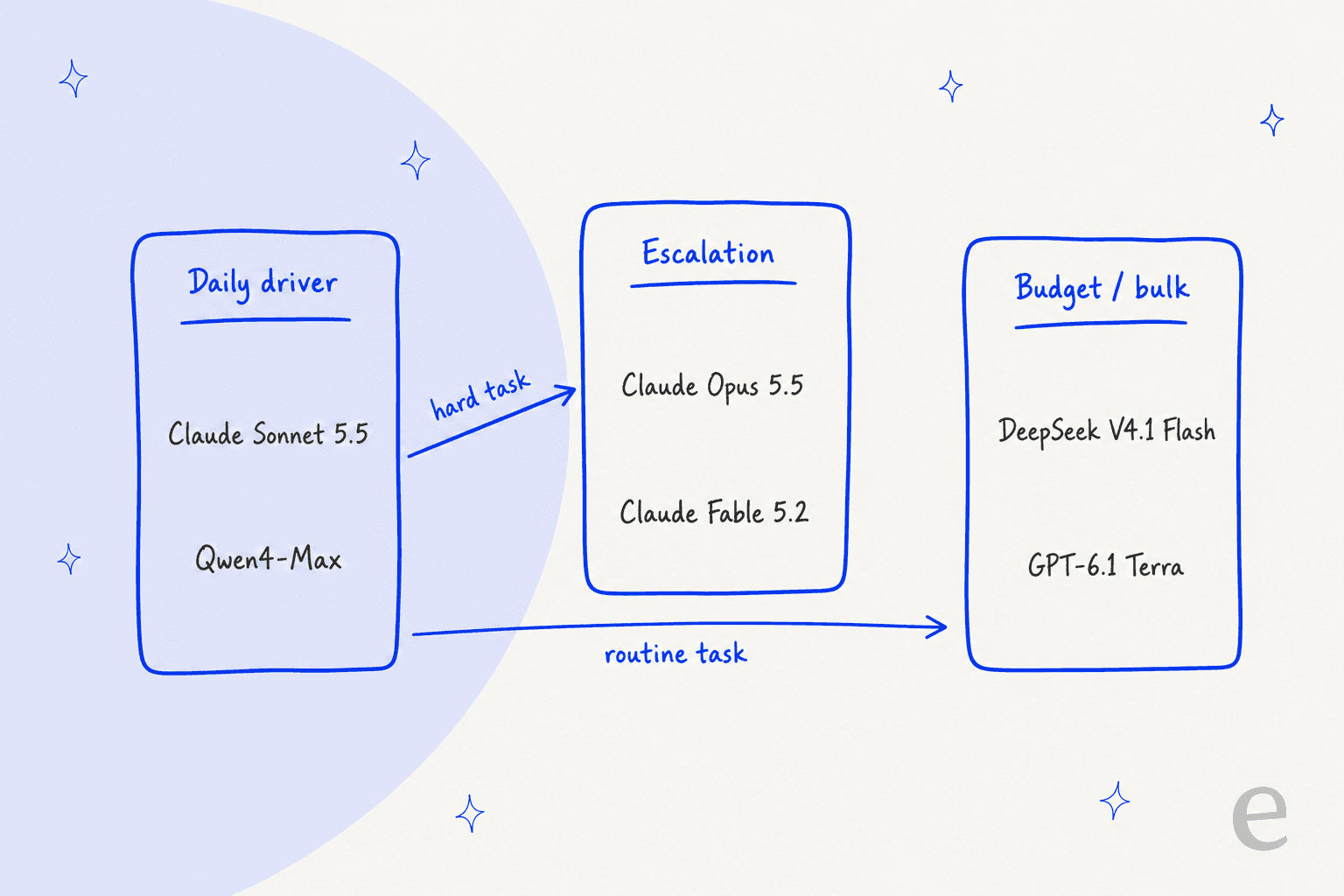
The way most people should think about it is not one replacement but three slots. ChatGPT gave the same advice when I asked it this exact question: a daily model, an escalation model, and a budget model.
1. Claude Sonnet 5.5
Best for: your everyday coding and agent model, especially inside Claude Code.
What it does well
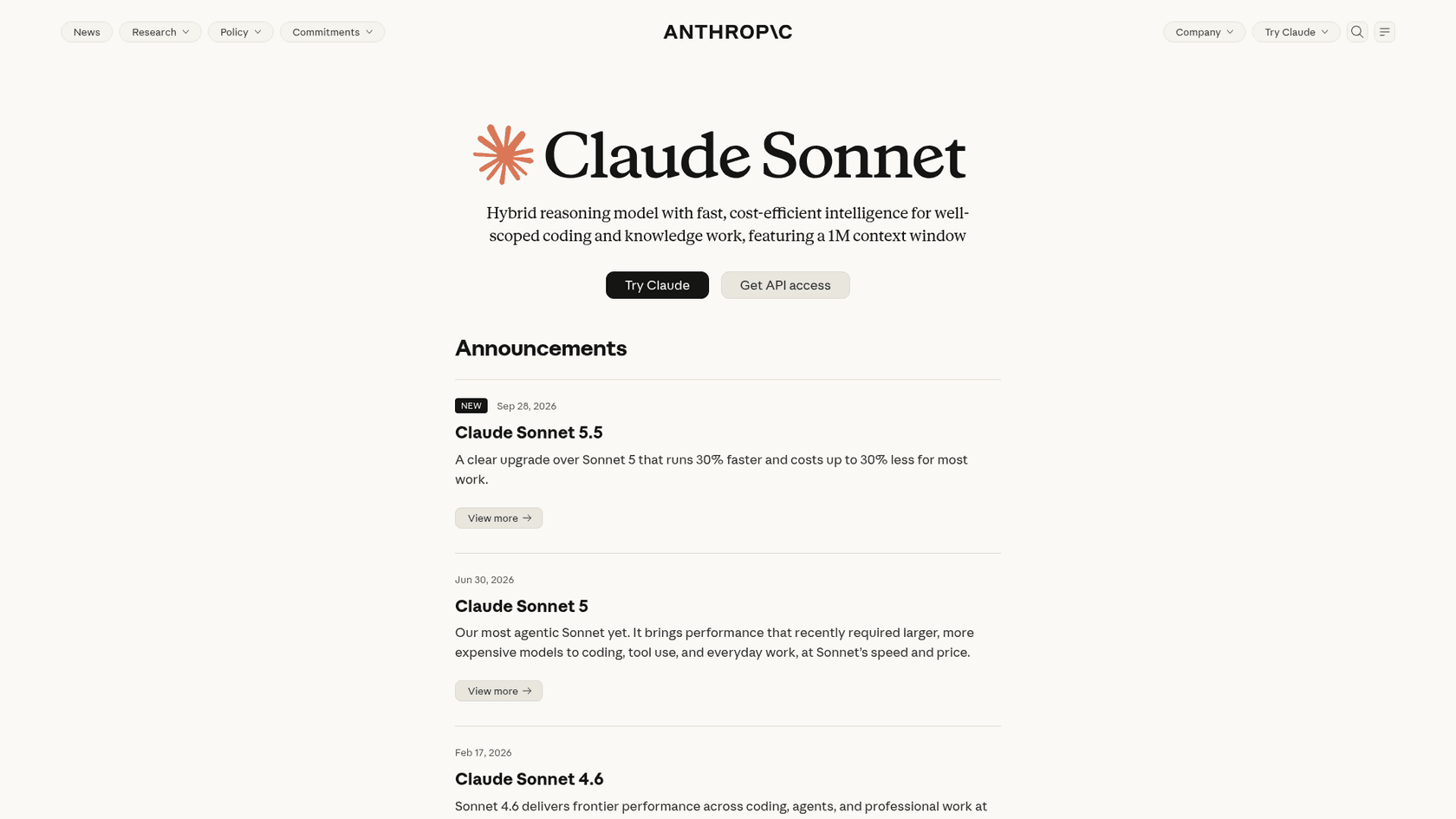
Sonnet 5.5 is the closest like-for-like swap for how most people used Qwen 4 Max preview: a strong agentic coder with a 1M-token context window. Anthropic's Sonnet page says it runs 30% faster and costs up to 30% less than Sonnet 5 for most work. If your setup was Claude Code pointed at Alibaba's endpoint, this is the model Claude Code was built around, so tool calling and file edits behave the way the harness expects.
Pros
- Same
$2/$10price across the full 1M window, with no long-context surcharge - Cache reads at
$0.10per million, cheaper than Opus 5.5 and Fable 5.2 - Included on the free Claude plan for chat use
Cons
- At max effort, Artificial Analysis measured it at
$7.60per task, more than Opus 5.5's$5.98, per our Sonnet 5.5 pricing analysis $30a month for the 10M/1M buyer, about 50% more than GAqwen4-max
Pricing
$2 input and $10 output per million tokens, $0.10 cache reads, per Anthropic's pricing page. For the 10M/1M buyer: 10 x $2 + 1 x $10 = $30 a month.
Our take: pick Sonnet 5.5 as your default if you want one model that just works in Claude Code. Keep it at Low or Medium effort, and escalate to Opus 5.5 rather than cranking Sonnet to max.
2. Claude Opus 5.5
Best for: the hard 10% of tasks: repo-wide refactors, tricky debugging, long autonomous runs.
What it does well
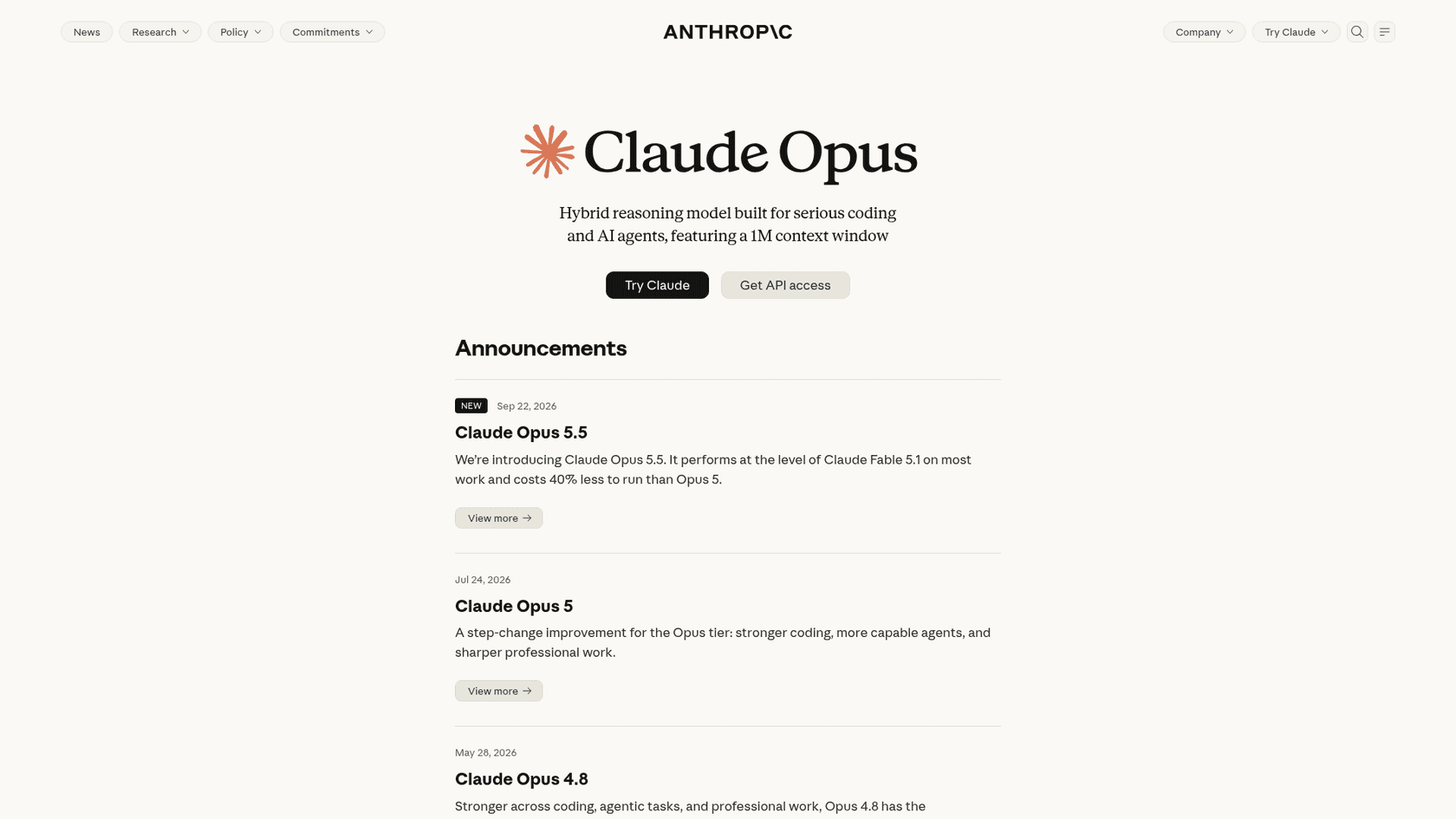
Opus 5.5 is the escalation slot. Anthropic says on its Opus page that it performs at the level of Claude Fable 5.1 on most work and costs 40% less to run than Opus 5, partly because it finishes in fewer tokens and turns. That last part is what matters for agents: per-token price is only half the bill, and the Opus 5.5 review covers how much the step count drops.
Pros
- Fewer steps per task, so the real bill is lower than the rate card suggests
- Batch API halves both rates to
$2/$10 - Fast mode available when latency matters
Cons
$4/$20is 2.7x the GA Qwen 4 Max input price and 4.4x the output price$60a month for the 10M/1M buyer if you run everything through it
Pricing
$4 input, $20 output, $0.20 cache reads per million tokens, per Anthropic's pricing page. For the 10M/1M buyer: $40 + $20 = $60. More detail in our Opus 5.5 pricing guide.
Our take: do not make Opus your default. Route the jobs where Sonnet or Qwen gets stuck to Opus 5.5 at Medium effort, and you get most of the quality for a fraction of the all-Opus bill.
3. Claude Fable 5.2
Best for: the hardest, longest agent jobs where a failed run costs more than the tokens.
What it does well
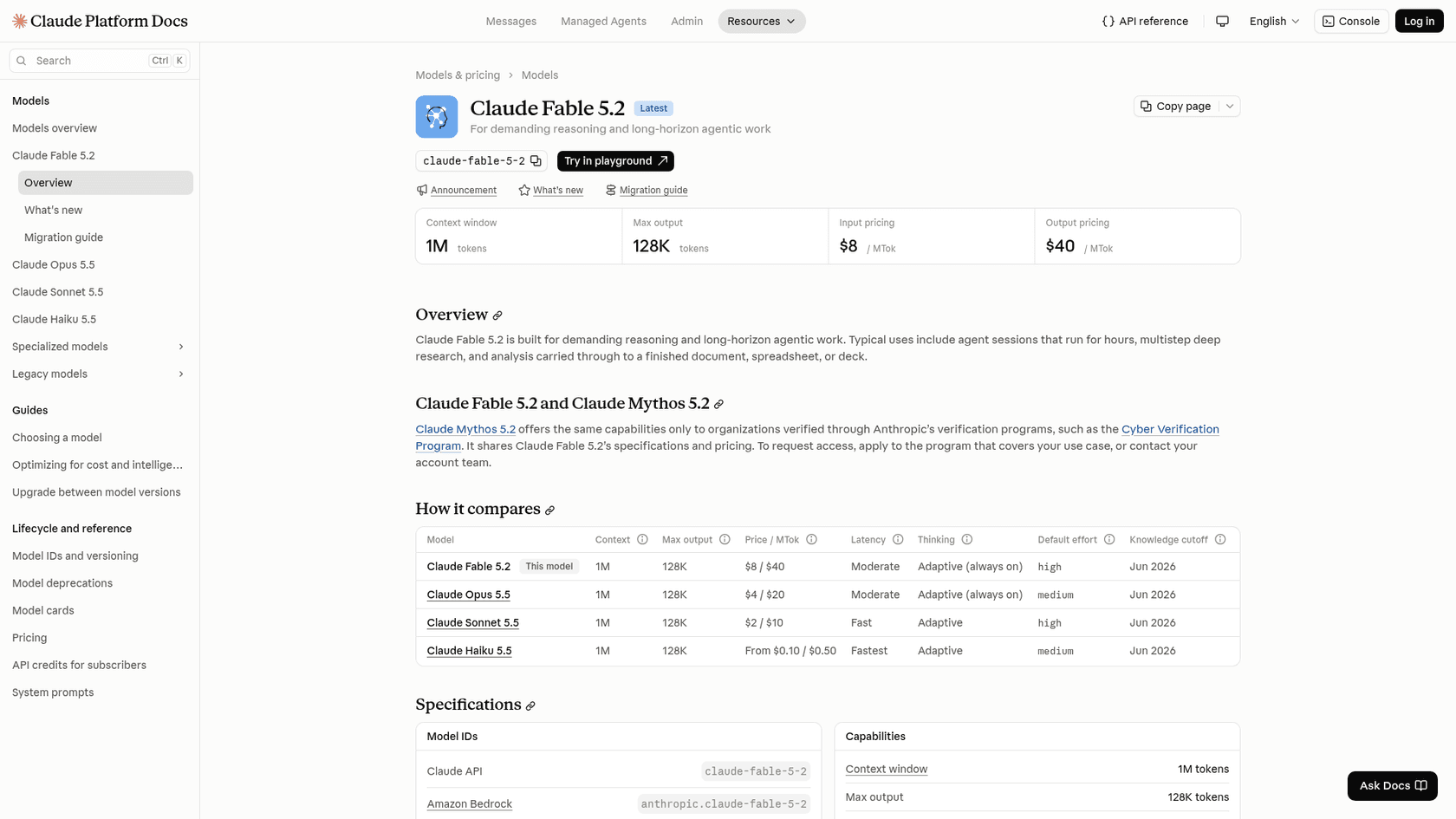
Fable 5.2 sits above Opus 5.5, and ChatGPT's answer to my question noted it leads the coding leaderboard it checked. The useful fact is about cost, not rank: Anthropic measured Fable 5.2 at High effort matching Opus 5.5 at Max for about half the cost per task, as covered in our Fable 5.2 pricing breakdown. So for jobs where you would push Opus to max, Fable at High can be the cheaper call.
Pros
- Strongest model in this list for long-horizon work
- Cache reads at
$0.20, the same as Opus 5.5 - Can beat Opus on cost per task at matched quality
Cons
$8/$40sticker, the most expensive per token here- Separate, lower rate limits than Opus and Sonnet
- On the Pro plan it runs on usage credits, not the normal allowance
Pricing
$8 input, $40 output per million tokens, per Anthropic's pricing page. For the 10M/1M buyer: $80 + $40 = $120.
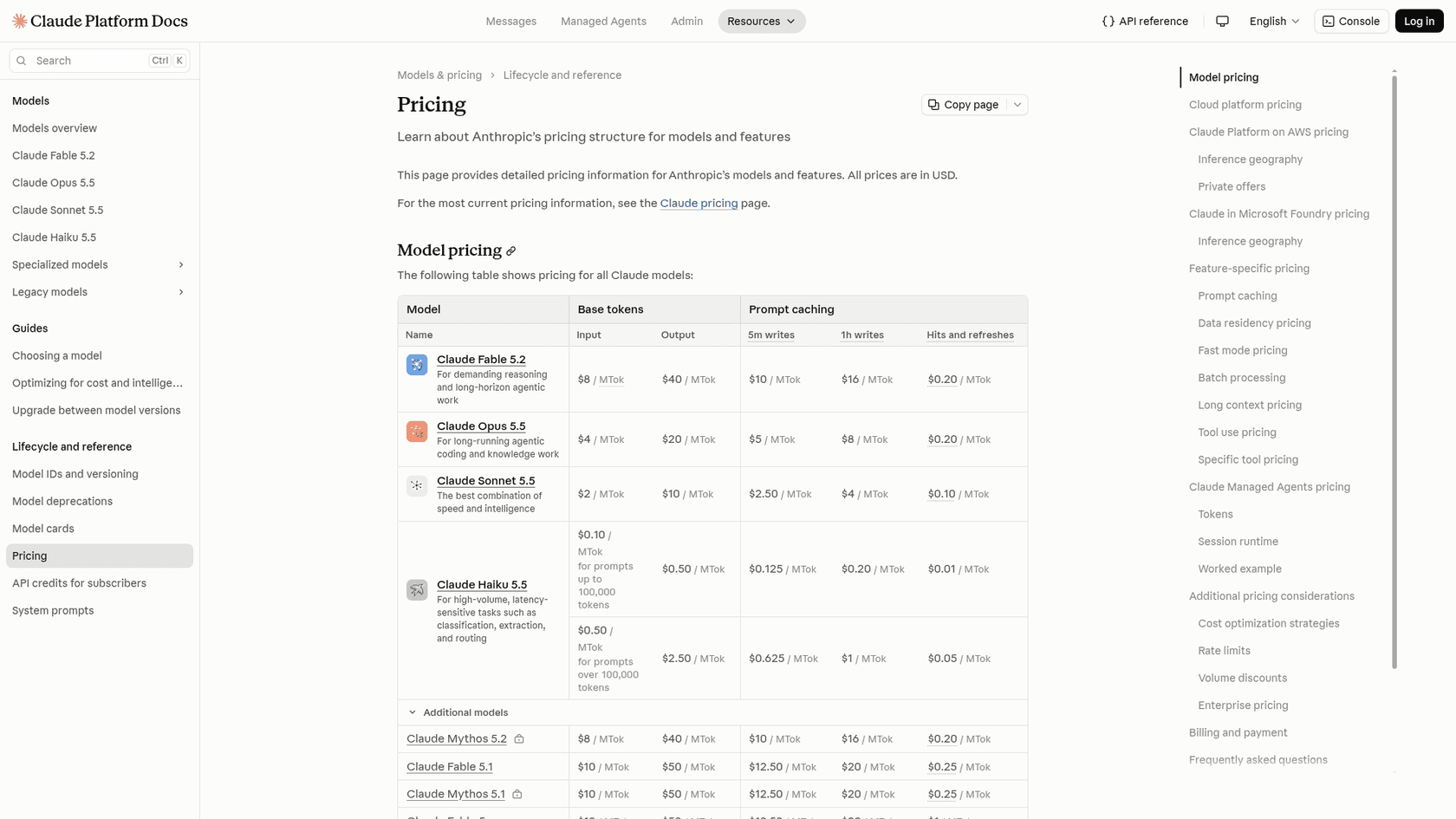
Our take: a specialist, not a daily driver. Use it where you would otherwise run Opus at max, and read the Fable 5.2 review before you trust it with unattended runs.
4. GPT-6.1 Terra
Best for: teams that want a cheap frontier-class model from a second provider.
What it does well
Terra is the one alternative that beats GA Qwen 4 Max on price without dropping to a Flash-class model. At $1/$5 it is half the price of GPT-6.1 Sol per token, and Artificial Analysis put it at $0.05 a task at low effort and $0.40 at max, per our Terra pricing post. If you want an OpenAI model in your rotation, this is the one to start with.
Pros
$15a month for the 10M/1M buyer, cheaper thanqwen4-max- Cached input at
$0.05, a 95% discount - Batch and Flex halve the price to
$0.50/$2.50
Cons
- Prompts over 272K tokens bill the whole request at
$2input and$7.50output - Not the right pick if you need the full 1M window at flat pricing
Pricing
$1 input, $5 output, $0.05 cached input per million tokens, per OpenAI's pricing page. For the 10M/1M buyer: $10 + $5 = $15.
Our take: the best value pick if your prompts stay under 272K. For whole-repo context, Sonnet 5.5 or qwen4-max keep flat pricing across 1M.
5. Gemini 4 Argon
Best for: fast Gemini 4 work, if you can live with the December price change.
What it does well
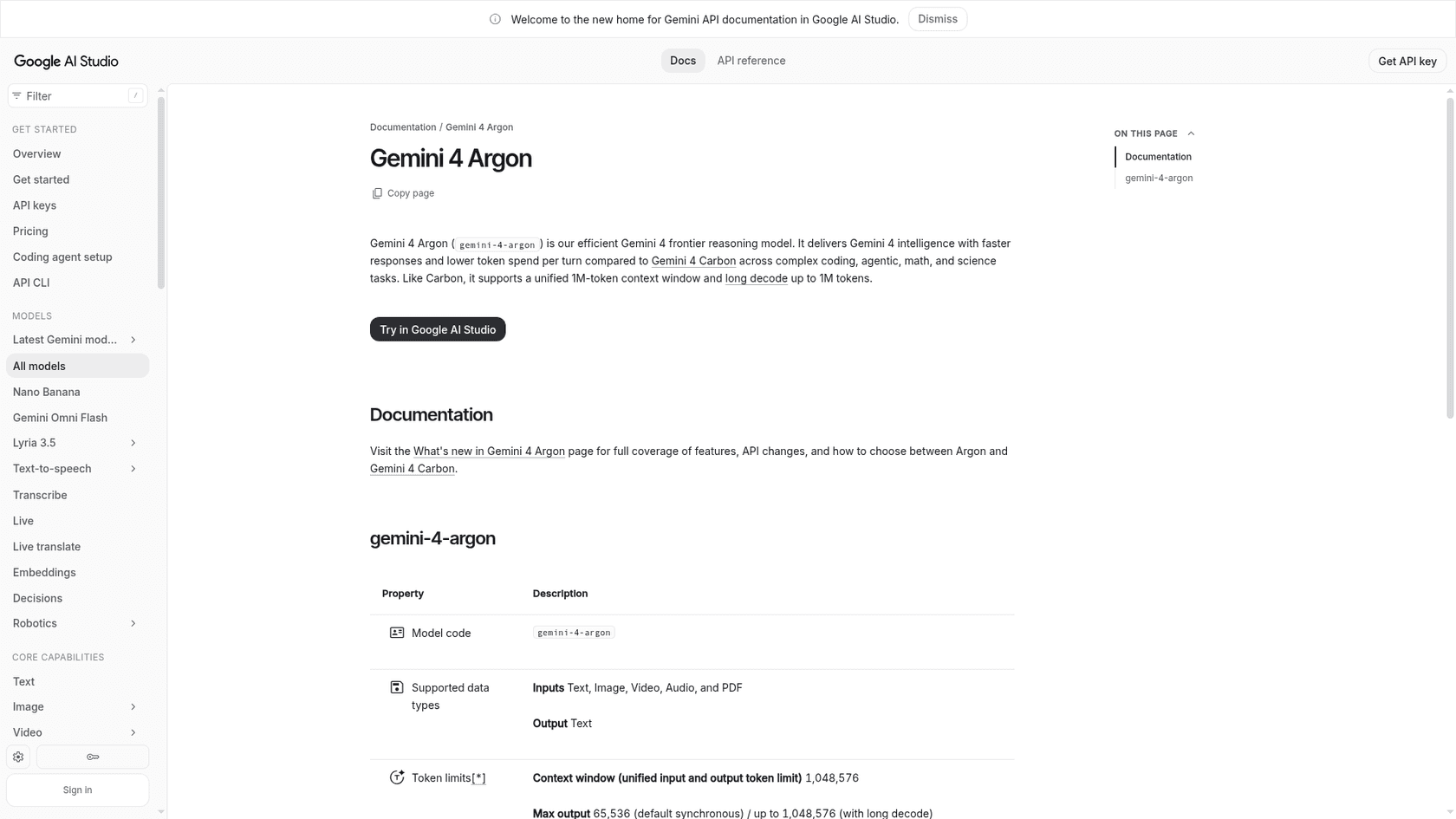
Google's pricing page describes Argon as the efficient Gemini 4 model, with faster responses and lower token spend per turn than Carbon across coding, agentic, math and science tasks. Its context window is 1,048,576 tokens, the same class as Qwen 4 Max. ChatGPT's own shortlist suggested Argon for regular work and Carbon for hard autonomous tasks, which matches Google's positioning.
Pros
$2/$10with$0.10cached input through November 30- 1M context, with long decode up to 1M output tokens on the docs page
- Same Google account and API key as other Gemini models
Cons
- Price doubles to
$4/$20on December 1, 2026 - No free tier for this model
- Implicit caching only; explicit caching is not supported
Pricing
$2 input and $10 output through November 30, then $4 and $20 from December 1, per Google's pricing page. For the 10M/1M buyer: $30 now, $60 from December. See our Argon pricing guide for the cost-per-task math.
Our take: budget at $4/$20, not the promo. At that price it costs the same as Opus 5.5, so test both on your workload before committing.
6. Gemini 4 Carbon
Best for: long-horizon agents and the hardest reasoning on Google's stack.
What it does well
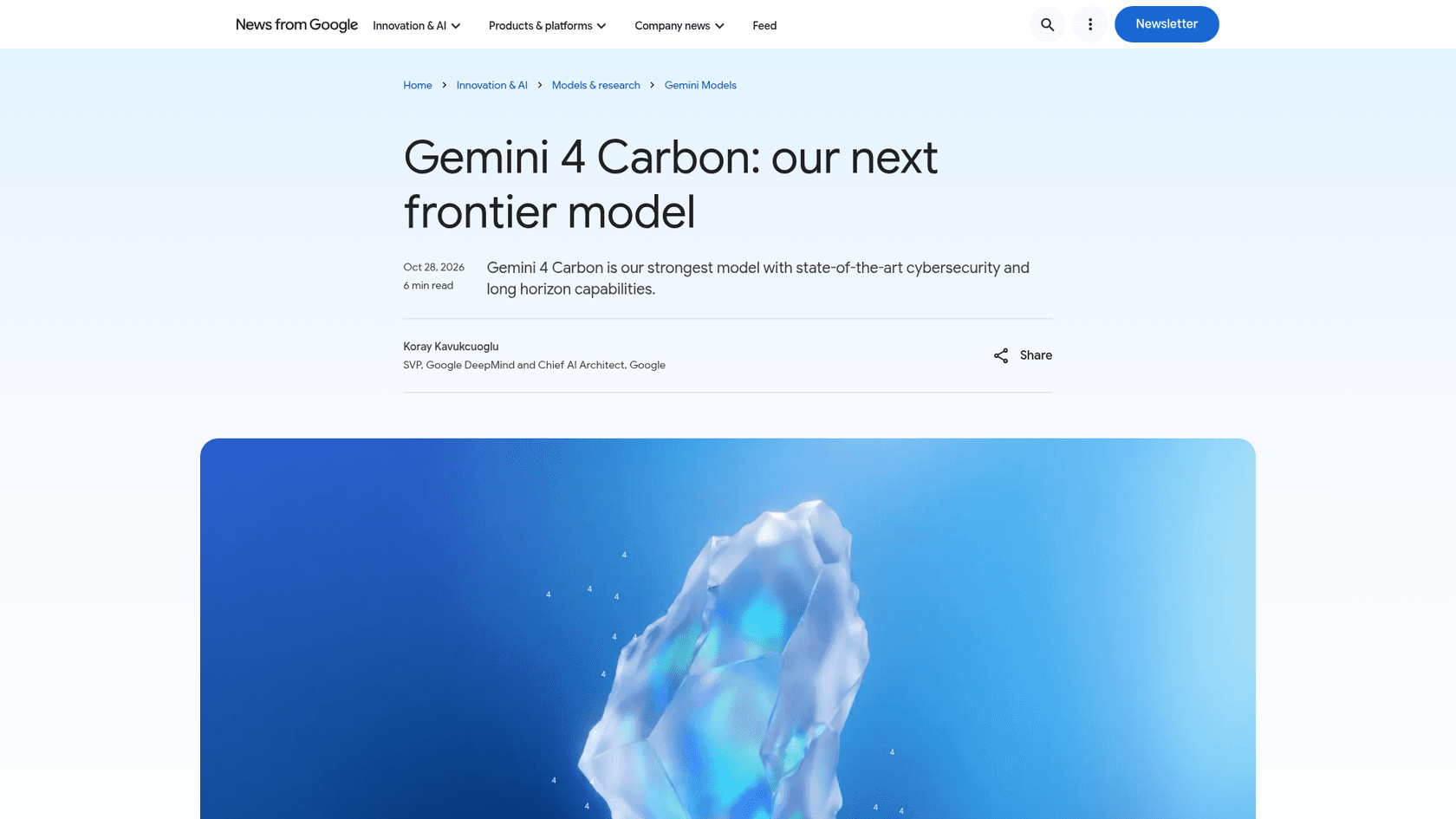
Carbon is Google's most capable reasoning model, built for complex software engineering, autonomous multi-step agents and long-decode generation up to 1M tokens, per the pricing page. The interesting number: on Artificial Analysis, Carbon cost $7.76 per task at list price against $7.68 for Argon, while scoring 59 instead of 50. Same bill, nine points higher.
Pros
- Same price as Argon, so you pay nothing extra for the stronger model
- 1M context and up to 1M output tokens
Cons
- Same December 1 price doubling as Argon
- Writes a lot of tokens per task, so per-task cost runs high
Pricing
$2/$10 through November 30, $4/$20 from December 1, per Google's pricing page. For the 10M/1M buyer: $30, then $60. Details in our Carbon pricing post.
Our take: if you are going to Gemini, go to Carbon rather than Argon for agent work. The Carbon review has the benchmark detail.
7. DeepSeek V4.1 Flash
Best for: high-volume, routine agent steps where price matters more than peak quality.
What it does well
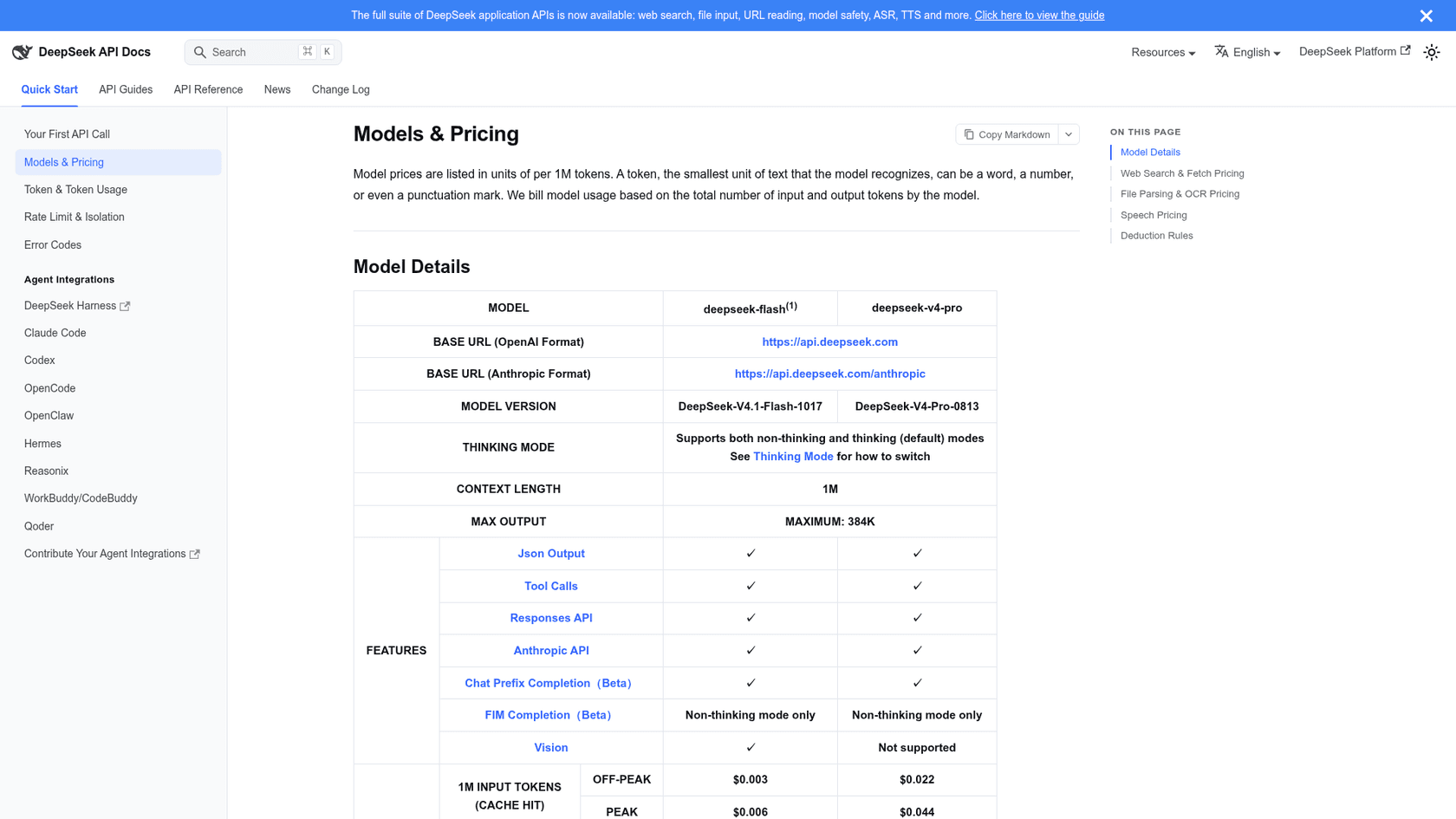
DeepSeek V4.1 Flash is the cheapest serious model in this list by a wide margin. On DeepSeek's pricing page, the deepseek-flash model (DeepSeek-V4.1-Flash-1017) costs $0.15 input and $0.60 output off-peak, with a 1M context window and up to 384K output. It supports tool calls, JSON output, vision and both OpenAI and Anthropic API formats, so it drops into Claude Code-style setups. And if you want to stay on Alibaba's bill, the Token Plan docs list deepseek-v4.1-flash too, with 50% off at night.
Pros
$2.10a month for the 10M/1M buyer off-peak- Cache hits at
$0.003per million - Available on Token Plan as well as DeepSeek's own API
Cons
- Peak hours (01:00 to 04:00 and 06:00 to 10:00 UTC, weekdays) double every rate
- A Flash-class model, so keep a stronger model for hard tasks
Pricing
$0.15 input (cache miss), $0.003 (cache hit), $0.60 output per million tokens off-peak; double at peak, per DeepSeek. For the 10M/1M buyer: $1.50 + $0.60 = $2.10 off-peak, $4.20 at peak. See our V4.1 Flash pricing guide.
Our take: the budget slot. Route bulk work like summarising logs, writing tests and simple edits here, and keep Sonnet 5.5 or qwen4-max for anything that needs judgement.
8. Kimi K3.1 Pro
Best for: developers who want a strong non-US frontier model with a flat-fee option.
What it does well
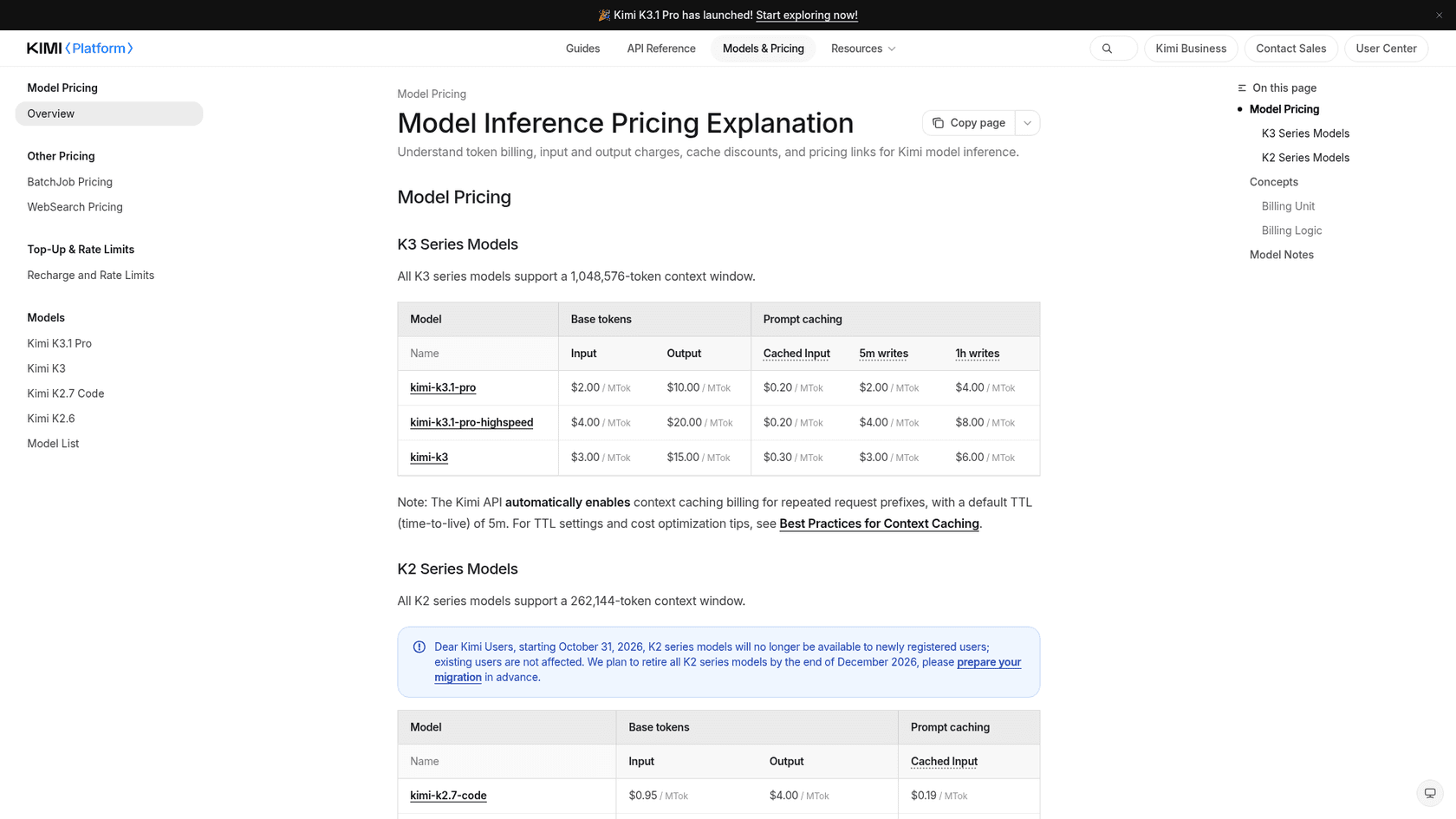
Kimi K3.1 Pro is the obvious pick if what you liked about Qwen was having a capable model outside the big US labs. Moonshot's quickstart describes it as a 3T-class model with a 1M context window, and the API speaks both OpenAI and Anthropic formats, so it works in Claude Code. Per our K3.1 Pro pricing analysis, it averaged $2.11 per task on Artificial Analysis, under half the per-task cost of Sonnet 5.5 or Opus 5.5 at max effort.
"So their base price is 1/5th of Opus 5.5 per token, but if you want "highspeed" it's 2x that and then I guess it generates 2x the number of tokens as well? That might suggest that Opus is competitively priced after all."
Pros
$2/$10per token, or flat plans from$19to$199a month- Highspeed variant at about 2-3x the speed
- Moonshot cites major gains in coding, 3D creation and financial research
Cons
- Writes a lot of tokens, so per-task savings are smaller than the sticker suggests
- Subscription plans have a rolling 5-hour limit that early buyers hit fast
Pricing
$2 input, $10 output, $0.20 cached input per million tokens; Highspeed $4/$20, per the Kimi pricing page. For the 10M/1M buyer: $30.
Our take: a good second provider if you want to avoid both Alibaba and the US labs. Read the K3.1 Pro review before buying a subscription plan for heavy agent use.
9. Qwen3.8-Max
Best for: Token Plan users who want an older, better-documented Qwen flagship with a night discount.
What it does well
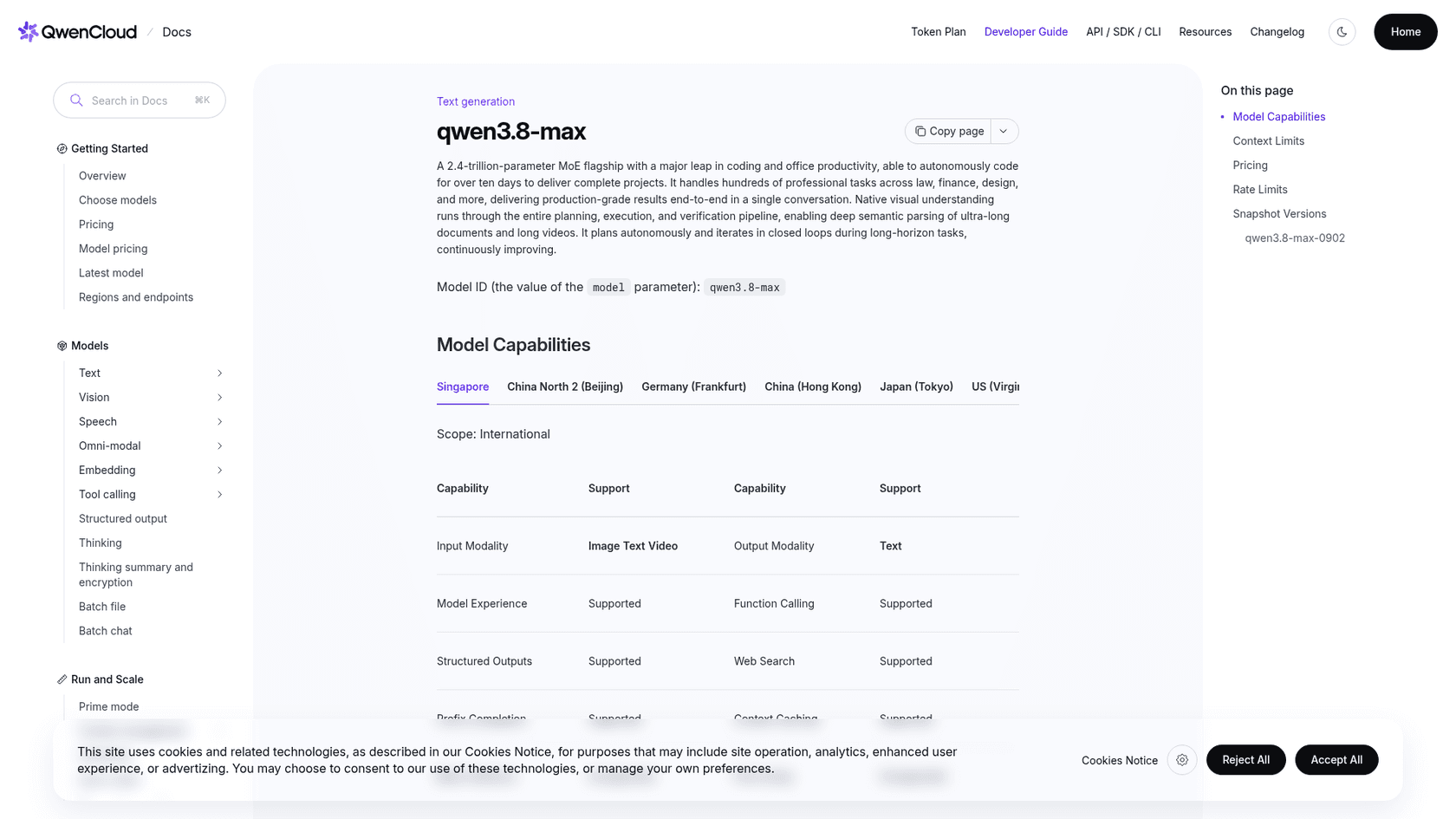
Qwen3.8-Max is the in-family fallback. Alibaba describes it as a 2.4-trillion-parameter MoE flagship that can code autonomously for long stretches, and it is on the same Token Plan as Qwen 4 Max, so your keys and endpoints do not change. On Token Plan it still gets 60% off between 22:00 and 08:00 UTC+8, which is US working hours. Our Qwen3.8-Max review covers how it held up after launch.
Pros
- No config changes beyond the model ID if you are already on Token Plan
- Night discount still running on Token Plan
- Months of community use behind it
Cons
- More expensive than GA
qwen4-maxon the pay-as-you-go API ($2/$6against$1.50/$4.50) - An older generation than the model you are replacing
Pricing
$2 input and $6 output per million tokens in Singapore, $1.65 and $4.951 in Beijing, per Alibaba's qwen3.8-max page. For the 10M/1M buyer: $26.
Our take: only worth it on Token Plan, for the night discount. On the API, the GA qwen4-max is newer and cheaper, so there is little reason to step back.
Which Qwen 4 Max alternative fits your setup?
Your answer mostly depends on where you were running the preview:
- Claude Code on Token Plan: change the model ID to
qwen4-maxfirst. If the results disappoint, move the Opus slot to Claude Opus 5.5 and the Sonnet slot to Claude Sonnet 5.5. - Your own agent on an API: add a second provider. Sonnet 5.5 or GPT-6.1 Terra as the daily model, DeepSeek V4.1 Flash for bulk calls.
- Mainly for the discount: DeepSeek V4.1 Flash off-peak is the closest thing to the preview's price.
- Long-horizon autonomous runs: Claude Fable 5.2 or Gemini 4 Carbon, tested side by side before December 1.
- A support or customer-facing bot: do not put any preview model in front of customers. That is the case for a managed agent, covered next.
| If you need | Pick | Monthly cost (10M in, 1M out) |
|---|---|---|
| Least change | qwen4-max (GA) | $19.50 |
| Best daily coding model | Claude Sonnet 5.5 | $30 |
| Hardest tasks | Claude Opus 5.5 or Fable 5.2 | $60 or $120 |
| Lowest price | DeepSeek V4.1 Flash | $2.10 off-peak |
| Second provider on a budget | GPT-6.1 Terra | $15 |
| Non-US frontier model | Kimi K3.1 Pro | $30 |
What if the preview was running your support queue?
Then the model ID was never the real problem. A two-week preview retiring on a fixed date is the clearest example of why support teams should not wire a raw model into their helpdesk: every vendor change becomes your migration, your re-test and your risk.
That is the gap eesel fills. Models like the ones above are infrastructure; eesel is the employee. Its AI helpdesk teammate plugs into Zendesk or Freshdesk, learns from your past tickets and help center, and is tested against historical conversations before it answers a live customer. When a better model ships, the swap happens on eesel's side.
Two customers show what that looks like in practice:
- SE Ranking runs three products from one Zendesk team, with one eesel agent per product searching about 16,800 pages of help content. It handled about 4,650 conversations in a month, and none of that depended on which model was underneath.
- OroSoft makes bullion trading software and supports clients through Freshdesk. eesel drafts replies from 6,100 past tickets and 20 help center and reference files, says which ticket or article it used, and flags a person when it cannot find support for an answer.
Try eesel
If you were testing Qwen 4 Max preview to answer customers, eesel gives you that agent without the model churn: it joins your helpdesk in minutes, drafts or sends replies from your own help content, and you see how it would have answered your past tickets before it goes live. Plans start at $299 a month on the eesel pricing page, with 100 free credits to try it. A coding agent can drive the setup through the eesel CLI, uploading approved help articles and asking test questions, while connecting the helpdesk itself still needs an admin to approve it.
Try eesel free, or read how AI for Zendesk works first.