


Why I'm the one telling you to slow down
I build AI agents at eesel, and my day job is the boring part nobody screenshots: what happens after the model gives an answer. We've watched a confident-sounding model quietly hand a customer the wrong refund policy, which is why every eesel rollout now gets simulated against historical tickets before it ever touches a live inbox.
So when a 2.4T model lands with a "second only to Fable 5" banner, my first instinct isn't hype, it's: show me the eval, show me the active parameters, and show me what it does on the 200th ticket, not the demo one. This review is written from that seat. If you want the raw spec sheet, the Qwen overview has it. If you want to know whether Qwen 3.8 Max changes anything for a real team this week, keep reading.
What Qwen 3.8 Max actually is
Qwen 3.8 Max is the flagship of Alibaba's Qwen family, and the team's first multimodal model above 1 trillion parameters. The confirmed shape, from Alibaba's own announcement:
- 2.4 trillion total parameters, built as a sparse Mixture-of-Experts (MoE) model, so only a fraction of those parameters fire on any given token.
- Multimodal: it processes text, images, video, and documents in one model.
- 1M-token context window, inherited from Qwen 3.7 Max.
- API-compatible with both the OpenAI and Anthropic protocols, so you can point existing tooling at it without a rewrite.
- Alibaba says it beats Qwen 3.7 Max on coding, full-stack development, data analysis, and office workflows.
The word doing the heavy lifting is Preview. The public name is Qwen3.8-Max-Preview. Developer Shuai Bai framed it as a model that's "continuously evolving," which in plain English means: this is an early, moving target, not a locked release.
The number Alibaba didn't publish
Total parameters make a great headline. The number that actually decides your cost and speed is active parameters, how many of those 2.4T fire per token. Alibaba hasn't disclosed it. That's not a footnote. For a MoE model, active parameters are most of what determines serving cost, latency, and whether you'd ever run it yourself. A 2.4T model with, say, 40B active behaves very differently in your bill than one with 200B active. Until that number is public, any "it's cheap to run" or "it's expensive to run" take is a guess.
The "second only to Fable 5" claim, unpacked
This is the line everyone repeated, so let's be precise about what it is and isn't.
On its official account, Qwen positions the model as "one of the most powerful model available today... second only to Fable 5." Alibaba's shares even rose on the announcement.
Here's the catch: there is no published benchmark table. No numbers on it beat Fable 5, or trail it, or beat GPT-5.1, or beat Claude Opus. The ranking rests entirely on Alibaba's internal evaluation, and no third party (Artificial Analysis, LMArena) has scored it. On Hacker News, the skeptics were quick to note that Qwen has a reputation as a benchmark specialist, and "trust us, it's #2" is exactly the kind of claim a benchmark table exists to settle.
A 2.4T-parameter multimodal preview shipped before any benchmark, model card, or license.
That's the honest state of it. I'm not saying the claim is false, I don't know, and neither does anyone outside Alibaba's eval team. I'm saying you should treat "second only to Fable 5" as marketing until a third party scores it, the same way you would for any new model launch.
Pricing and access: what you can actually touch today
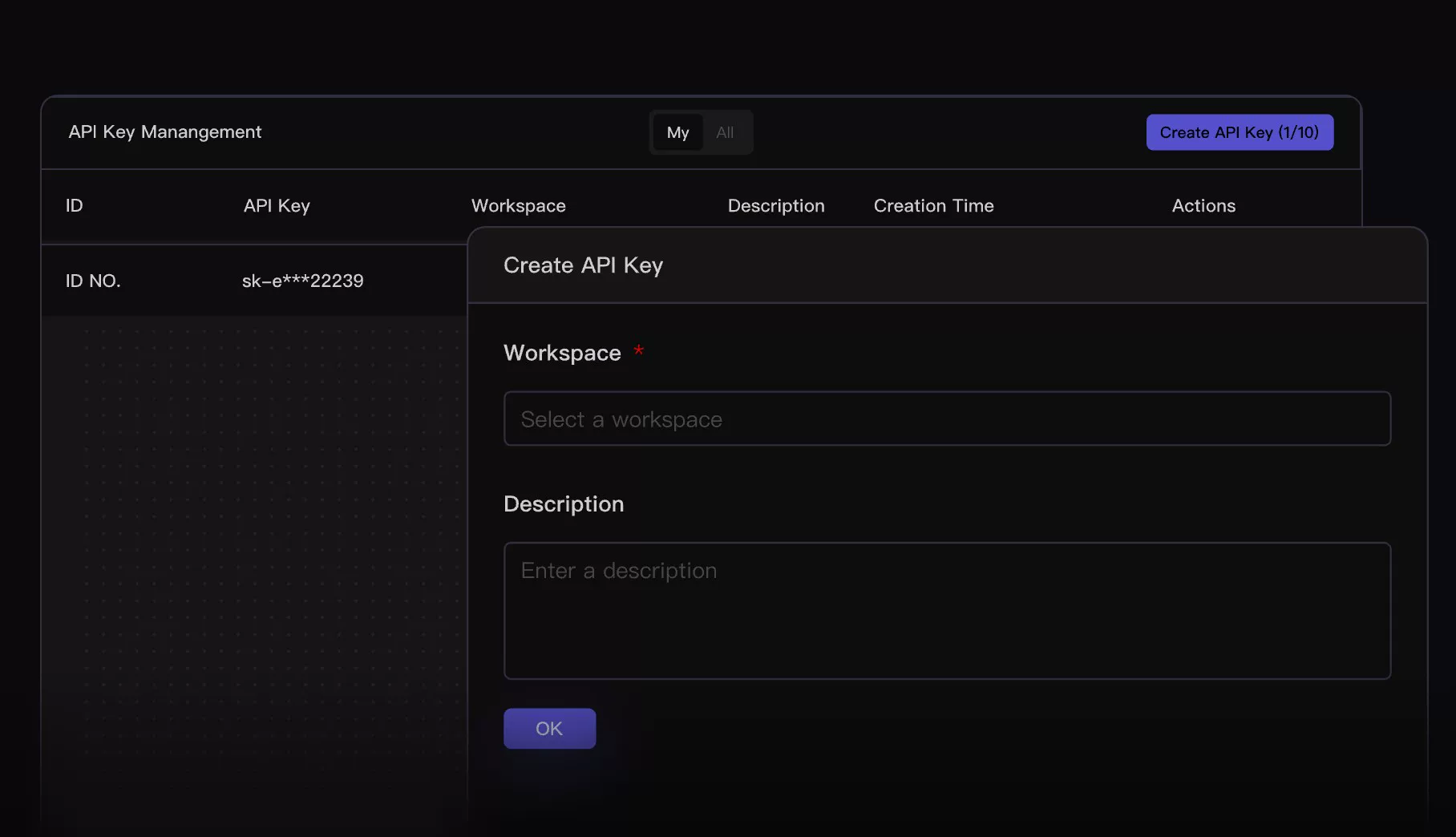
Qwen3.8-Max-Preview is live through three surfaces: Alibaba's Token Plan subscription, and the Qoder and QoderWork agentic platforms. During the preview it runs at 10% of standard pricing.
Token Plan is credit-based, refreshing on a 7-day window:
| Tier | Price | Credits (per 7 days) | Notable |
|---|---|---|---|
| Lite | $6 | 2,500 | Entry tier for trying the preview |
| Pro | $68 | 40,000 | Runs 6–8 agents concurrently |
A few things to flag before you get out your card:
- No per-token API rate is published for 3.8 Max specifically. If you need predictable per-token pricing today, the older Qwen tiers are the safer bet.
- Credits, not tokens. Credit systems make cost hard to forecast, especially when the underlying model is a "continuously evolving" preview whose consumption could change under you.
- The 10% preview discount is temporary by definition. Budget for the un-discounted number, not the promo one.
The self-hosting reality check
"Open-weight soon" is the phrase that got r/LocalLLaMA excited, and then did the math.
A 2.4T model at 4-bit precision needs roughly 1.2 terabytes just for weights. A single Nvidia H200 carries 141GB. Even an 8-card box leaves you with awkward arithmetic and a very short list of people who can actually load it. The practical read: self-hosting Qwen 3.8 Max is not a thing normal teams will do, weights or no weights, until a distilled or smaller variant appears. The open-weight promise matters for the research community and for a handful of well-funded labs, not for the average buyer choosing an AI helpdesk.
And "soon" has no date, no license, and no Hugging Face repo attached yet. If your plan depends on running this in-house, that plan is currently vapor.
So, should you use it? (an honest decision widget)
The answer really depends on what you're doing. Here's the call I'd make for each situation:
Where this fits for a support team
Here's the part I care about most, because it's where I've watched teams burn months.
A frontier model is a raw engine. To answer a customer safely, you still need everything around it: retrieval over your help center and past tickets, guardrails so it only answers what it's confident about, a clean handoff to a human, reporting, and a way to test changes before they hit real people. Qwen 3.8 Max gives you none of that. It gives you a very large, very capable text-and-vision engine and an API key.
The "we'll just build it on the newest model" instinct is strong, and it almost always underestimates that surrounding layer. One eesel customer put the build-vs-buy call plainly:
"We could try to write our own LLM application but we didn't want to invest our time into that. We wanted something that we would not have to maintain."
Karel, GENERAL BYTES
That's the trade. You can wire Qwen 3.8 Max into your helpdesk yourself and own the maintenance forever, or you can use a layer that already did it. eesel is model-agnostic on purpose: it runs on frontier models under the hood, connects to your existing helpdesk and knowledge in minutes, and lets you simulate on real historical tickets so you see the resolution rate before going live, not after a customer complains.
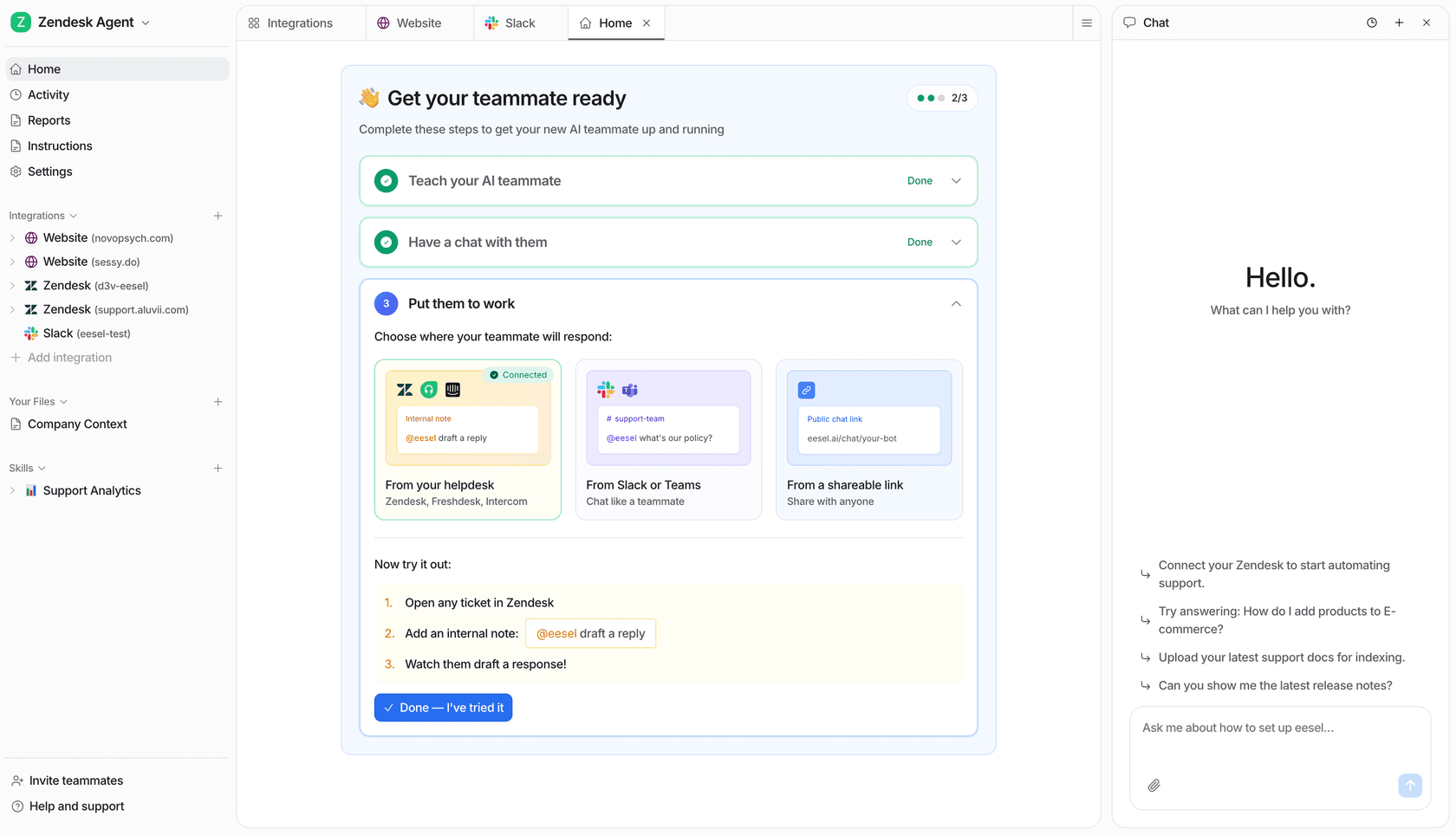
And there's a control point people forget: the DTC supplements CX lead I keep quoting nailed it, "I need an AI who is only handling the tickets that it's confident to handle and all the other ones, leave them alone." No model, however large, gives you that dial by itself. The layer does.
How Qwen 3.8 Max stacks up against the rest
If you're model-shopping in July 2026, Qwen 3.8 Max is one of three big open-ish releases in a two-week window:
- Kimi K3 (Moonshot) shipped as an actual open-weight release, which is what makes Qwen's "soon" look reactive.
- GPT-5.6 and Claude remain the closed frontier that Qwen is measuring itself against.
- Grok, Gemini, and Mistral round out the field of models you'd realistically evaluate.
The differentiator Qwen is leaning on is scale plus the open-weight promise. But for anyone comparing AI agents for a business use case, raw model rank is the wrong axis. What matters is the product built on top, and on that axis a 2.4T preview competes with nothing yet, because there's no product, just an engine. If you're building agents for real work, the best-AI-agents guide is a better starting point than any single model's benchmark claim.
My verdict
Qwen 3.8 Max is an interesting preview and a clear signal that the Chinese labs are racing hard on scale. But as a thing you'd bet on this week, it's early: no benchmarks, no active-parameter count, no license, no realistic self-hosting, and credit-based preview pricing that'll change. Try it for $6 if you're curious. Don't build your roadmap on it yet.
And if your actual goal is fewer tickets and faster answers, the model was never the hard part. The layer around it is.
Frequently asked questions
What is Qwen 3.8 Max?
Qwen 3.8 Max is Alibaba's flagship AI model, previewed July 19, 2026 as Qwen3.8-Max-Preview. It's a 2.4-trillion-parameter, sparse Mixture-of-Experts multimodal model (text, images, video, documents) with a 1M-token context window. See the fuller Qwen review for the family context.
How much does Qwen 3.8 Max cost?
During the preview it runs at 10% of standard pricing through Alibaba's Token Plan, which is credit-based: a $6 Lite tier (2,500 credits per 7 days) up to a $68 Pro tier (40,000 credits, 6–8 concurrent agents). No dedicated per-token API rate for 3.8 Max is published yet; for that, check current Qwen pricing.
Is Qwen 3.8 Max really "second only to Fable 5"?
That's Alibaba's own claim, based on internal evaluations. No third party (Artificial Analysis, LMArena) has scored it, and no benchmark table has been published, so treat it as a positioning claim, not a verified ranking, the way you would with any frontier launch.
Can I self-host Qwen 3.8 Max?
Not realistically today. Alibaba has promised open weights "soon" but with no date, license, or repo. And at ~1.2TB of weights (4-bit) versus 141GB per H200 GPU, there's no practical single-box deployment for normal teams until a smaller or distilled variant ships. Most buyers are better served by a managed AI helpdesk.
How is Qwen 3.8 Max different from Qwen 3.7 Max?
Alibaba says 3.8 Max beats 3.7 Max on coding, full-stack development, data analysis, and office workflows, and it's the team's first multimodal model above 1 trillion parameters. The 1M context window carries over. For the earlier generation's details, see the Qwen overview.
Is Qwen 3.8 Max good for customer service?
As a raw model it has no support features, no retrieval, guardrails, escalation, or analytics. You'd have to build that layer yourself. For support specifically, a purpose-built tool like eesel that runs on frontier models and plugs into your helpdesk is a faster, safer path than wiring up a preview API. Compare options in the best customer service AI roundup.
What are the best Qwen 3.8 Max alternatives?
For raw models, Kimi K3, GPT-5.x, Claude, and Gemini are the direct comparisons. For a support use case, look at AI agents for customer service rather than a model on its own. There's also a fuller Qwen alternatives list.