

What Qwen 3.7 Flash actually is
I ship integrations and APIs for a living. So my first instinct with any launch is to ignore the announcement and go read the model card, and with Qwen 3.7 Flash that was easy, because there was no announcement to ignore.
There is no Qwen blog post for this model. The qwen.ai article feed carries launch posts for Qwen 3.7 Max and Qwen 3.7 Plus, and nothing at all for Flash. One line in the QwenCloud changelog, dated 25 July 2026, is the only first-party notice that exists.
It went live on OpenRouter on 27 July 2026, under the canonical slug qwen/qwen3.7-flash-20260727, with a pinned snapshot named qwen3.7-flash-2026-07-15.
Here is the entire positioning statement, lifted verbatim from the Alibaba Cloud model card:
"The Qwen3.7 native vision-language series Flash models comprehensively enhance multimodal understanding and Agent execution capabilities compared to 3.6-Flash. Key improvements include strengthened foundational multimodal abilities, enhanced object recognition, improved real-world perception and spatial intelligence."
That is the whole pitch. No benchmark table, no eval name, no percentage, no architecture. Qwen has not published the parameter count. Nor whether it is dense or mixture-of-experts, nor how many tokens it saw. For a company that built its reputation on open releases this is a different posture, and the community has noticed.
The mechanical facts are more useful. Text, image and video in, text out. Context is 1,000,000 tokens, with usable input capped at 991,808 and output at 65,536, which is half what Plus and Max allow. The chain-of-thought budget runs to 262,144 tokens and reasoning is on by default. Function calling works. There are built-in tools too, for code interpretation and web extraction, and also image and text search.
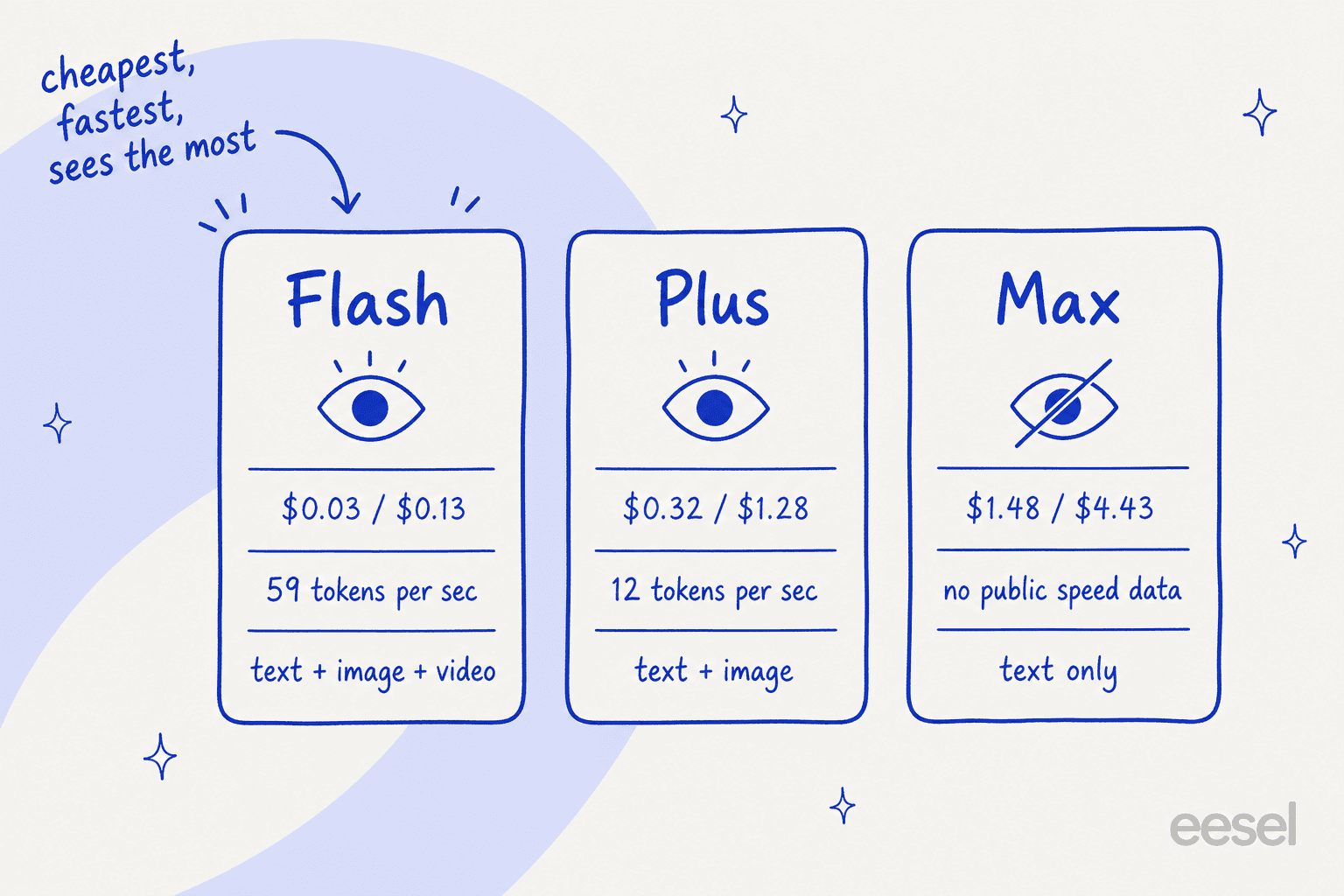
The family map holds a real surprise. Flash is the cheapest of the three and the fastest of the three, 59 tokens per second against Plus's 12, and it is also the only one that accepts video. Qwen 3.7 Max, the flagship, is text-only. Normally the budget tier is the crippled one; here the budget tier sees the most.
The price, and the part the sticker doesn't tell you
If I only read one section of this post, it would be this one. The $0.03 figure everyone is quoting is real. It is also the best case out of three.
| Prompt size | Input / 1M | Output / 1M | Cache read / 1M | Cache write / 1M |
|---|---|---|---|---|
| Under 32K tokens | $0.03 | $0.13 | $0.006 | $0.038 |
| 32K to 256K | $0.10 | $0.40 | $0.02 | $0.125 |
| 256K to 1M | $0.20 | $0.80 | $0.04 | $0.25 |
Those rates come from OpenRouter's models API, and the same three-bracket structure turns up in CNY on Alibaba's own card: 0.2, 0.6 and 1.2 CNY per 1M input in Beijing, Frankfurt and Tokyo. Two views of one pricing scheme, so there is no contradiction to resolve.
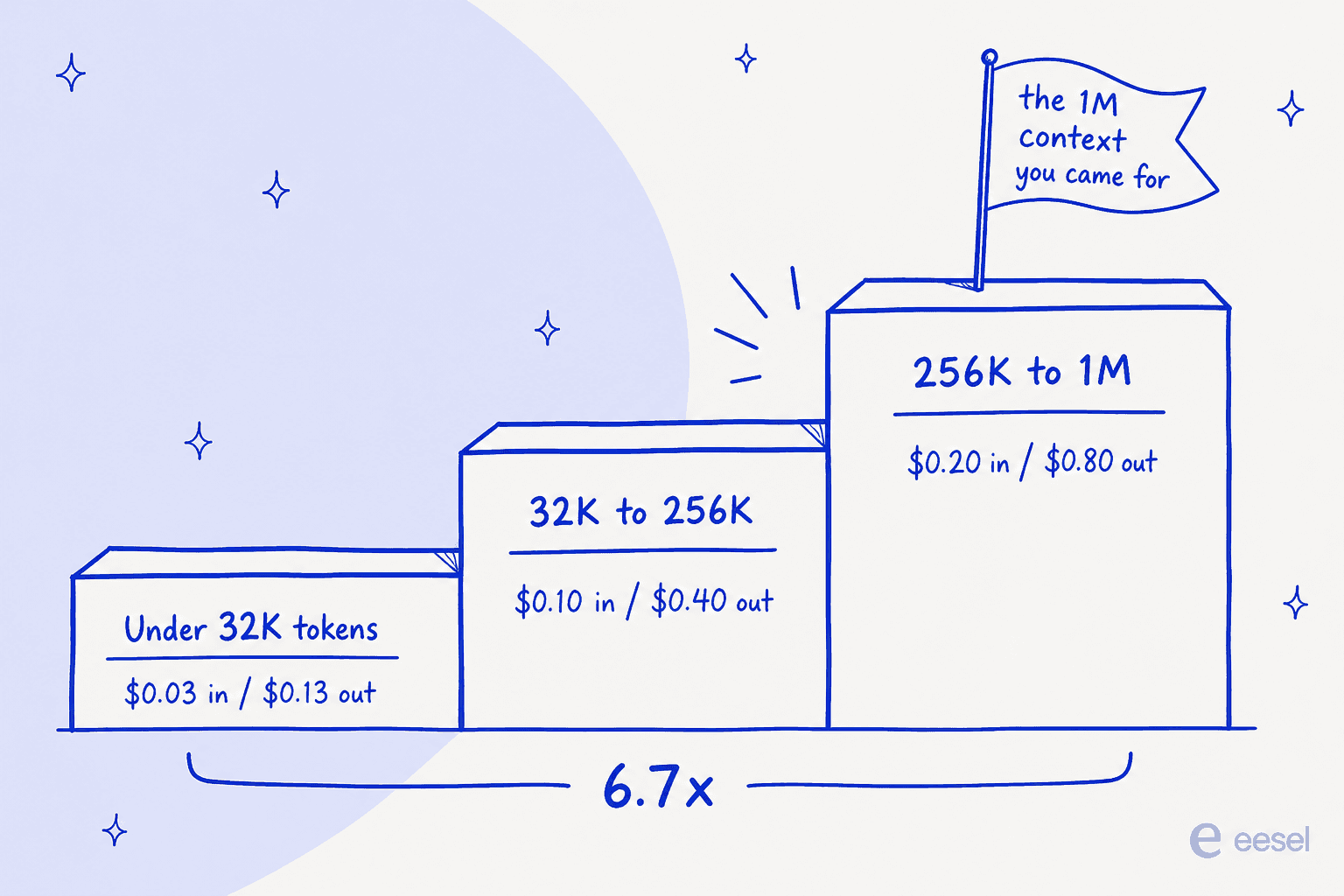
So the marketing pairs "cheapest vision model" with "1M context" and lets you assume you get both at once. You do not. The 1M context and the $0.03 price are mutually exclusive. Anything that actually needs a long window lands in the top bracket at 6.7x the rate you budgeted for, whether that is a big codebase or a video or a stack of documents.
None of this is theoretical. OpenRouter publishes what its customers pay after caching as a rolling 30-day blend, and for this model it is $0.044 input and $0.149 output at a 51.0% cache hit rate. That blend sits above list, which is only possible if a meaningful share of real traffic is already paying the 32K and 256K tiers. The caching discount does not rescue you either.
Plug your own numbers in:
A couple of regional quirks are worth knowing before you pick an endpoint. On the same model, Singapore runs roughly 22% more expensive than Beijing, Frankfurt and Tokyo. Web search only works in Beijing and Singapore. Batch inference only works in Beijing, and fine-tuning is unavailable everywhere.
How it compares to the rest of the cheap tier
Even after you account for the brackets, the price is still the story. Here is the current cheap-and-vision-capable field, with all figures taken from each vendor's own pricing pages. Frontier-priced releases like Kimi K3 are out of scope here.
| Model | Input $/1M | Output $/1M | Context | Vision | Released |
|---|---|---|---|---|---|
| Qwen 3.7 Flash | $0.03 | $0.13 | 1M | Text, image, video | Jul 27, 2026 |
| Mistral Small 4 | $0.15 | $0.60 | 256K | Text, image | Mar 16, 2026 |
| GPT-5.6 Luna | $0.20 | $1.20 | 1.05M | Text, image | Jul 9, 2026 |
| Gemini 3.1 Flash-Lite | $0.25 | $1.50 | Not published | Text, image | Not published |
| Gemini 3.5 Flash-Lite | $0.30 | $2.50 | 1,048,576 | Text, image, video | Jul 21, 2026 |
| Claude Haiku 4.5 | $1.00 | $5.00 | 200K | Text, image | Oct 15, 2025 |
| Gemini 3.6 Flash | $1.50 | $7.50 | 1,048,576 | Text, image, video | Jul 21, 2026 |
A couple of things jump out. Qwen is an order of magnitude cheaper here, 5x under Mistral Small 4 and 10x under Gemini 3.5 Flash-Lite on input. It is also the only model in the set that takes video at a sub-$0.10 input rate, where GPT-5.6 Luna and Mistral Small 4 are image-only.
There is one trap to avoid if you are comparing on your own. Gemini 3.1 Flash-Lite is still cheaper than 3.5 Flash-Lite, at $0.25/$1.50 against $0.30/$2.50. Newer is not automatically cheaper in Google's lineup, where Gemini 3.6 Flash sits at the top end. And GPT-5.6 Luna cut its price by 80% on 30 July 2026, one day before I wrote this, which makes it a much closer competitor than it was a week ago.
The model it really beats, though, is its own predecessor. Against Qwen 3.6-Flash at $0.1875/$1.125, the new base tier is 6.25x cheaper on input and 8.65x cheaper on output. Alibaba just cut its own vision floor by an order of magnitude in one release, whatever else is true about this launch.
"Flash" here means cheap, not fast
This is where the name misleads. Flash means low latency in Google's lineup. Here it means low price. Those are very different products.
OpenRouter measures the sole provider at 59 output tokens per second at P50, with 1.20s time-to-first-token. Artificial Analysis measures Gemini 3.5 Flash-Lite at 382 tokens per second and GPT-5.4 mini at 177. Different harnesses, different conditions, so treat the ratio loosely. A 6x gap is still far too wide to be measurement noise, and reasoning being on by default drags the number down further.
There is a dissenting data point. One developer testing it in a coding tool reported far better throughput than OpenRouter's telemetry shows:
"Qwen 3.7 flash is already available in Command Code. Cheap tiered pricing, super fast 150 TPS. // Capabilities include. 💬 Text input ✓ 👁️ Vision ✓ 🧠 Reasoning ✓ Testing it out. It's gonna be a fun competitor to DeepSeek V4 Flash."
His 150 TPS is about 2.5x OpenRouter's measured P50, and short prompts with a warm cache will do that. I would still plan against the 59 rather than the 150, because production traffic is what OpenRouter is sampling.
The tail is the part that would keep me up at night. End-to-end latency runs 3.56s at P50 and 8.54s at P75, which is fine. Then it goes 17.96s at P90, 29.03s at P95, and 90.19s at P99.
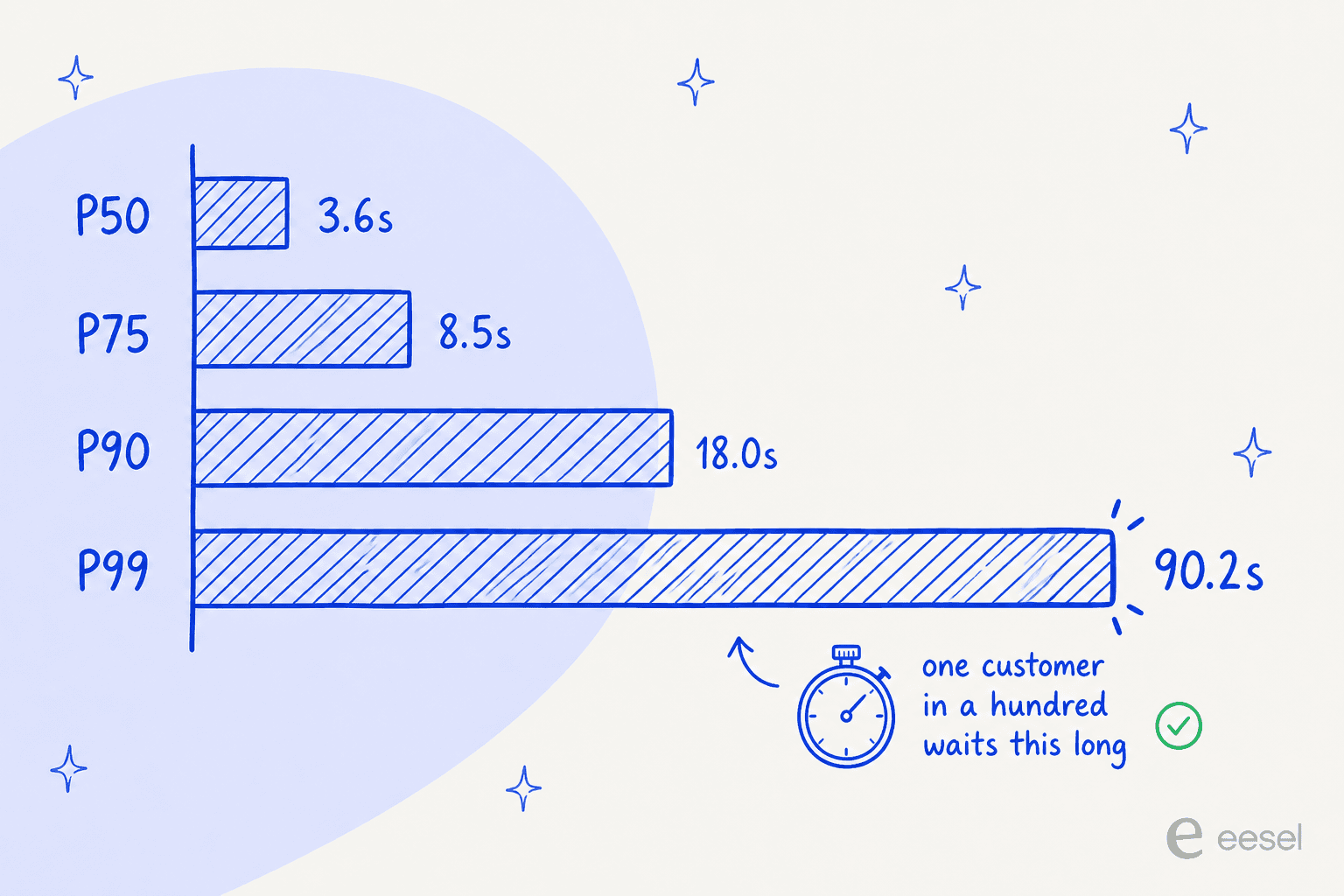
For a batch job that tail is invisible. For anything a person is waiting on, one request in a hundred taking a minute and a half stops being a metric and becomes a product decision. And it compounds inside an AI agent loop, where a single slow tool call stalls every step behind it.
Two more numbers from the same panel. The tool call error rate is 8.88%, against 6.45% for Plus, which means roughly one in eleven tool calls fails on a model explicitly sold for agent work. And exactly one provider serves it. No fallback routing, then, if Alibaba Cloud has a bad afternoon.
There is also a small documentation conflict I could not resolve. Alibaba's model card lists structured outputs as supported. OpenRouter's parameter list does not expose the structured-outputs flag for Flash, only response_format, even though it exposes it for Plus and Max. If strict schema enforcement matters to your pipeline, test it before you commit rather than trusting either page.
The one independent benchmark that exists
Qwen published nothing, so I went looking for someone who had actually scored it. There is exactly one.
Artificial Analysis does not list this model. The model page 404s, and a grep of the site's sitemap confirms the only Qwen 3.7 pages are Max and Plus. LMArena has no Flash entry either. No intelligence index from the usual sources, then, and no Elo, and no published quality score of any kind.
Roboflow's vision evals are the exception, and they are unflattering:
| Task | Score | Rank |
|---|---|---|
| Overall | 61.7% | #22 of 23 |
| Identification | 84.4% | #10 of 23 |
| OCR transcription | 84.1% | #23 of 23 |
| Data extraction | 78.4% | Not ranked |
| Object detection | 42.8% mAP@50 | #16 of 23 |
| Object counting | 46% exact match | Not ranked |
| Cost per sample | ~$0.0001 | #1 of 23 |
It lands 22nd of 23 overall at 61.7%, just behind GPT-5.4 mini at 63.5%, and first of 23 on cost. Being fair to it: the OCR result is last place in a tight field and it is not a failure, since 84.1% average match is respectable in absolute terms. And Qwen never claimed OCR or GUI control for Flash. Those belong to Plus. So "ranks last on OCR" is consistent with what Alibaba said, rather than a broken promise.
But it does clarify what you are buying. Identification is its strong suit at 84.4%; localisation is its weak one at 42.8%. It can tell you what is in the picture far better than it can tell you where. If your workload is "tag ten million images by category", that is a superb fit at a tenth of a cent per thousand samples. If it is "read this invoice and extract the line items", reach for something else.
What the community says, and why there is so little of it
This is the strangest thing about the release, and I think it is the most telling.
A vision model at $0.03 per million tokens shipped four days ago and there is not one comment about it on Hacker News. A full-text search of HN for qwen3.7-flash returns zero hits across stories and comments, all time. No launch thread was ever submitted. The only Qwen-titled story in the window, "Qwen 3.7 or 3.8 30B – 100B. QWhen?", drew zero comments.
It gets better. HN's live Qwen conversation the week it launched was happening inside a DeepSeek thread, where people were asking whether Qwen would ever ship vision at all, four days after Qwen shipped a vision model.
"You have to remember DeepSeek v4 flash even though a bit cheaper, does not have vision abilities, which is a big draw for agentic tasks."

"Most interesting part IMO is whatever Qwen open weight will include image / video capabilities since its where they are strongest."
That second comment points straight at the reason. The audience that used to track Qwen releases is the local-weights crowd, and Qwen stopped serving them. The same point surfaced in a thread about GLM 5.2:
"That's because Qwen's flagship models are not, in fact, open weight. Qwen3.7 Max, Qwen3.7 Plus and others are closed weight."
Flash is closed too. Hugging Face returns an empty array for it, and Roboflow lists the licence as proprietary. Someone was still hoping otherwise on launch day:
"Qwen3.7 Flash vient de faire son apparition sur OpenRouteur, il y a une petite chance que Qwen3.7 soit bientôt dispo pour de l'IA locale !"
That translates to a hope Qwen 3.7 will soon be available for local AI. It will not be.
I should be straight about what this section is. None of these quotes are about Flash, because no such quotes exist yet. They are about the 3.7 family and the gap Flash was built to fill. Verdicts on the family run in both directions, from one HN commenter reporting a month of daily use and calling 3.7 Pro "totally unusable", through to chewz rating 3.7 Max above Opus level on speed. One line from that thread stuck with me, given Qwen published no benchmarks at all for Flash:
"Another thing I experience with the Qwen models is that I do not trust their benchmark scores at all."
There is a certain symmetry in shipping a model with no benchmark scores to an audience that had stopped believing them.
Meanwhile people are quietly using it. OpenRouter's activity panel shows Hermes Agent as the top consumer, ahead of Claude Code and a handful of coding tools. The usage is real; the discourse just never happened.
Who should actually use it
My take, plainly.
Reach for it if you are running high-volume, low-stakes vision work where being occasionally wrong is cheap and being expensive is fatal. Bulk image tagging. First-pass content classification, thumbnail triage, "is there a person in this frame", pre-filtering before a better model does the careful pass. At roughly a hundredth of a cent per sample it changes what is economically worth processing at all, and that is a big deal.
Skip it if you need OCR or document extraction, precise object localisation, predictable latency, weights you can host, or any published quality signal to show a stakeholder. Skip it as well if your prompts are routinely long, because at that point GPT-5.6 Luna after its 80% price cut starts looking reasonable, and so does Gemini 3.5 Flash-Lite. Both are far faster too.
If you want the Qwen family specifically but need more capability, Qwen 3.8 Max is the other end of the range, and our Qwen alternatives roundup covers the rest.
The deciding factor is whether a wrong answer costs you anything. That is a product question rather than a benchmark one, and it is the question I would settle before writing any integration code.
If this is going near a support queue, read this first
Here is where I have to be blunt, because this is the part I actually have scar tissue on.
I build integrations at eesel, and we have spent years running AI on live support queues across thousands of real tickets. The single most expensive misconception I see is the one this post's pricing table encourages: that the model is the product. A $0.03 model looks like it makes building your own support bot nearly free. The cost-per-ticket maths looks great on a spreadsheet too. But the model was never the expensive part.
The expensive parts are retrieval over a help centre that contradicts itself, and ticket classification that routes to the right place, and knowing when to shut up. Escalation that does not drop the customer. A way to find out you are wrong before a customer does. None of that comes in the token price. We learned it the hard way by watching confident-sounding bots give confidently wrong answers, which is why every rollout we do now gets simulated against historical tickets before it touches a live queue.
I am not going to pretend nobody makes the build path work. Some of our own churn is exactly this: customers who left to build directly on an LLM API, including an AR/construction-tech firm and a DTC beauty brand. It is a real option, and sometimes the right one. But the teams who looked hardest at it usually landed somewhere else. An engineering lead at a Bitcoin-ATM hardware company, running a 300-article knowledge base across Confluence and Telegram, put it this way:
"We could try to write our own LLM application but we didn't want to invest our time into that. We wanted something that we would not have to maintain."
And the thing that actually decides whether support AI works is restraint, which no model score captures. A CX lead at a brand doing 7,000 tickets a month framed it better than any benchmark could:
"The AI will never be able to answer 100% of the questions, but if it tries and just answers 'sorry I don't know this,' I cannot go and check all my 7,000 tickets to see if the AI actually made a good answer, then the point is a little bit gone. I need an AI who is only handling the tickets that it's confident to handle and all the other ones, leave them alone."
Now hold Qwen 3.7 Flash up against that bar. An 8.88% tool call error rate, a P99 that stretches to 90 seconds, and no published quality score, plus no independent eval except one that ranks it 22nd of 23. Those are perfectly acceptable numbers for tagging a million images. They are not the numbers I would want between my brand and an annoyed customer. The ticket deflection guide and our notes on AI resolution rate go deeper on why the confidence threshold matters more than the raw model.
If you want to go the build route anyway, I would start with RAG versus fine-tuning, then read up on knowledge base training. Then spend real time on preventing hallucinations. None of those problems get cheaper when the tokens do.
Try eesel
If what you actually wanted from a $0.03 model was cheaper support automation, you can skip the assembly. eesel connects to the helpdesk you already run and learns from your past tickets and help centre, then answers the questions it is confident about while leaving the rest alone.
The part worth stealing regardless of what you build on: before anything goes live, you run it against your real ticket history and get a scored report of what it would have said. That is how you find out a model is wrong without a customer finding out first. It is the check no token price can buy you.
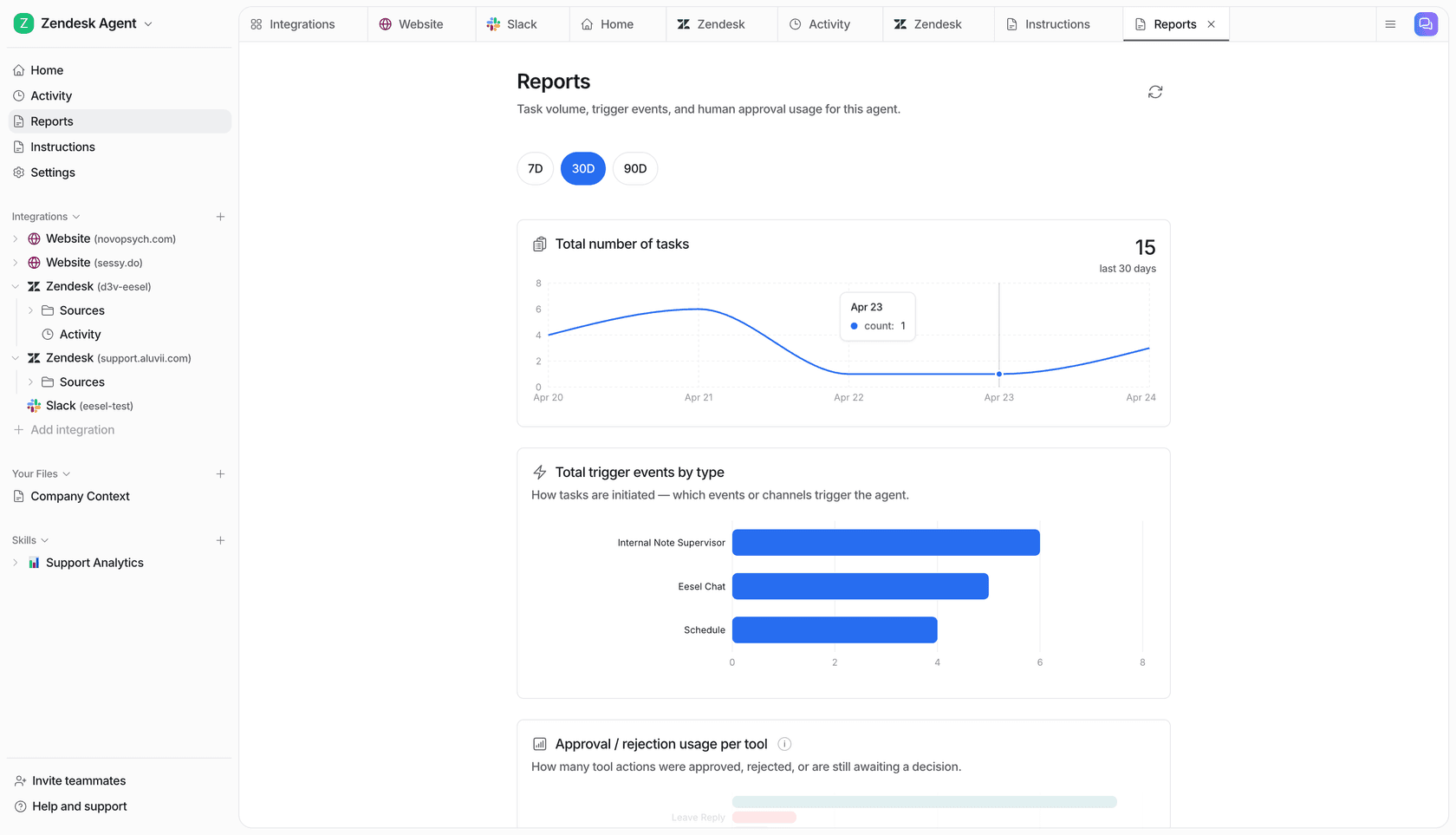
You can try eesel free, or book a demo if you would rather see it run against your own queue first.
Frequently Asked Questions
How much does Qwen 3.7 Flash cost?
Is Qwen 3.7 Flash good for OCR?
Are Qwen 3.7 Flash weights open source?
Qwen 3.7 Flash vs Gemini 3.5 Flash-Lite: which is faster?
Can I use Qwen 3.7 Flash for customer support?
What happens if Qwen 3.7 Flash goes down?


Article by
Rama Adi Nugraha
Rama is a software engineer at eesel AI with two years of experience writing about B2B SaaS, AI tools, and customer support technology. Based in Bali, Indonesia, he brings a developer's perspective to product comparisons — cutting through marketing copy to what the integrations and APIs actually do.