

What Kimi K3 actually is
Kimi is the chat assistant and model family from Moonshot AI, a Chinese lab that has spent the last year setting the size ceiling for open models. Their previous flagship, Kimi K2, was a 1-trillion-parameter open-weight model that a lot of developers loved because it was capable and dirt cheap. K3 is the successor, and Moonshot is swinging for the fences: the launch blog calls it "the world's first open 3T-class model."
Here is the honest version, straight from Moonshot: "While its overall performance still trails the most powerful proprietary models, Claude Fable 5 and GPT 5.6 Sol, Kimi K3 demonstrated frontier-level performance across our evaluation suite, consistently outperforming other tested models." That is a refreshingly un-hyped launch line, and it turns out to be roughly true.
The specs that matter:
- 2.8 trillion total parameters, the largest open model announced to date (Moonshot).
- 1-million-token context window (1,048,576 tokens exactly), so it can hold a very large codebase or document set at once (platform docs).
- Native vision, so it takes text and images in, and returns text.
- Always-on reasoning. K3 always "thinks" before answering, with the level set by a
reasoning_effortfield that currently only supportsmax(quickstart).
Under the hood: how Kimi K3 works
This is where K3 gets genuinely interesting, and where a big parameter count stops being the headline. A 2.8T dense model would be impossibly expensive to run, so K3 is a Mixture-of-Experts model: most of those parameters sit idle on any given token, and only a small slice fire.
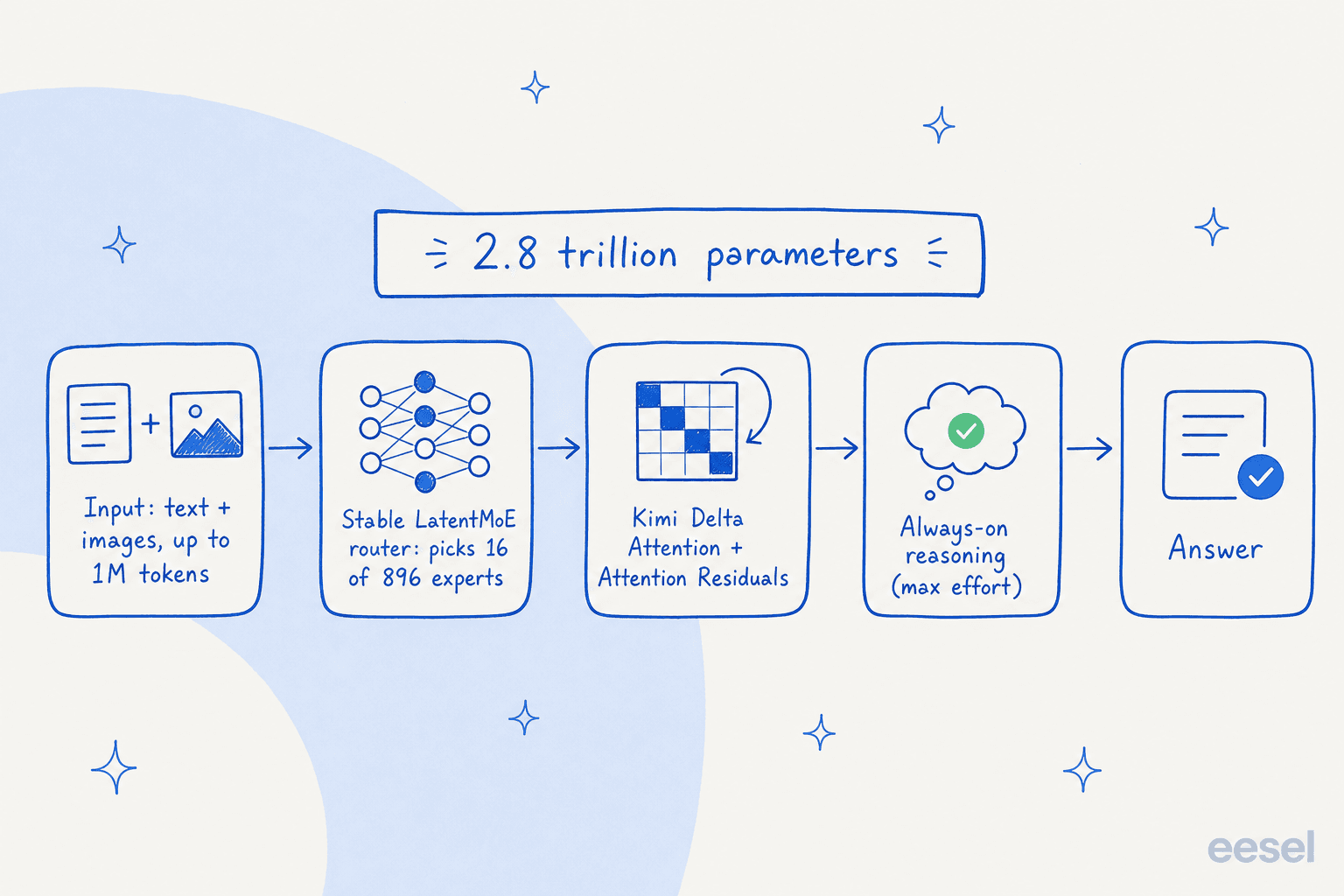
Moonshot scaled the sparsity so the model effectively activates 16 of 896 experts using a framework they call Stable LatentMoE. Two other pieces do the heavy lifting: Kimi Delta Attention, a hybrid linear attention mechanism, and Attention Residuals, a drop-in replacement for standard residual connections that Moonshot open-sourced separately. Put together with a refined training recipe, Moonshot claims these changes yield "an approximate 2.5x improvement in overall scaling efficiency compared to Kimi K2".
The active-parameter count isn't published yet, and neither is the full technical report. Both are promised alongside the open weights. So take the internals as Moonshot's framing for now, not independently confirmed architecture.
How it actually performs
Moonshot published a wall of benchmarks, and the pattern is consistent: K3 sits third behind Fable 5 and GPT-5.6 Sol on hard agentic and coding evals, and comfortably ahead of the previous frontier (Opus 4.8, GPT-5.5) on most of them.
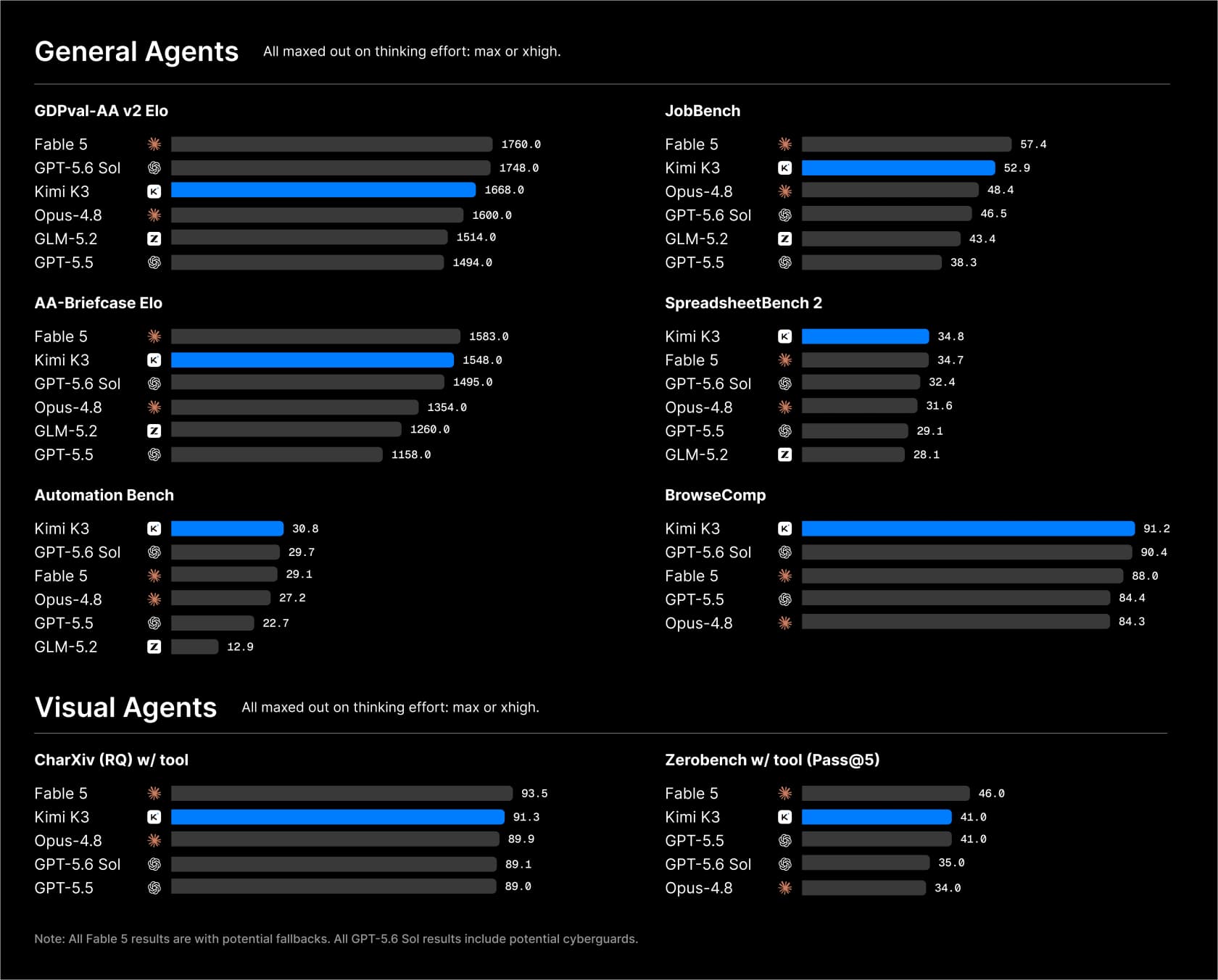
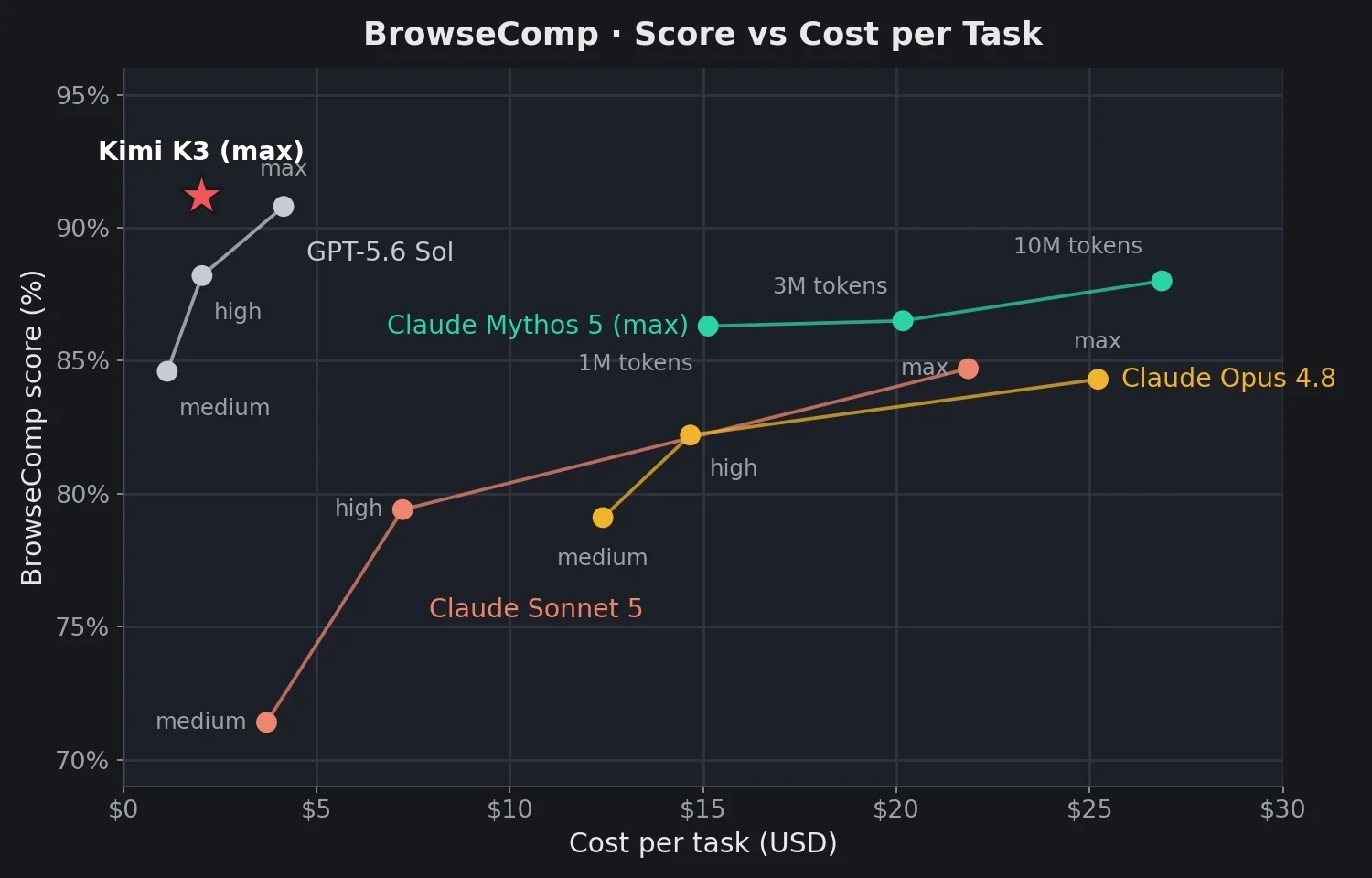
A few concrete reads from Moonshot's charts: K3 tops the field on Automation Bench (30.8), SpreadsheetBench 2 (34.8), and BrowseComp (91.2), and it takes second on AA-Briefcase and JobBench behind Fable 5. On the harder coding evals it slips a notch: Fable 5 leads FrontierSWE (86.6 to K3's 81.2) and Kimi Code Bench 2.0 (76.9 to 72.9). Independent testing from Artificial Analysis put K3's Intelligence Index at 57, ranking it fourth of the 189 models it has evaluated.
The most convincing evidence isn't a number, though. It is developers who ran it on their own work:
"I've been playing around with it for the past few hours, and I think it's an amazing model. I'm not sure I could tell the difference between this and Fable in a blind test. The quota in the $100 Kimi Coding plan seems to roughly align with what I get from the $200 Anthropic plan when I primarily use Fable."

The calmer read in the same threads is worth keeping in mind: this is a "touch below" the very top, and some of the "beats everything" energy came from vendor charts before independent testing had caught up.
"Umm, Fable only really came out 2 weeks ago, and GPT-5.6 Sol only 1 week ago. Yes, Kimi K3 appears a touch below them both, but above all other models. So I'd say a few weeks behind, not months now..."
The demos that made people stop scrolling
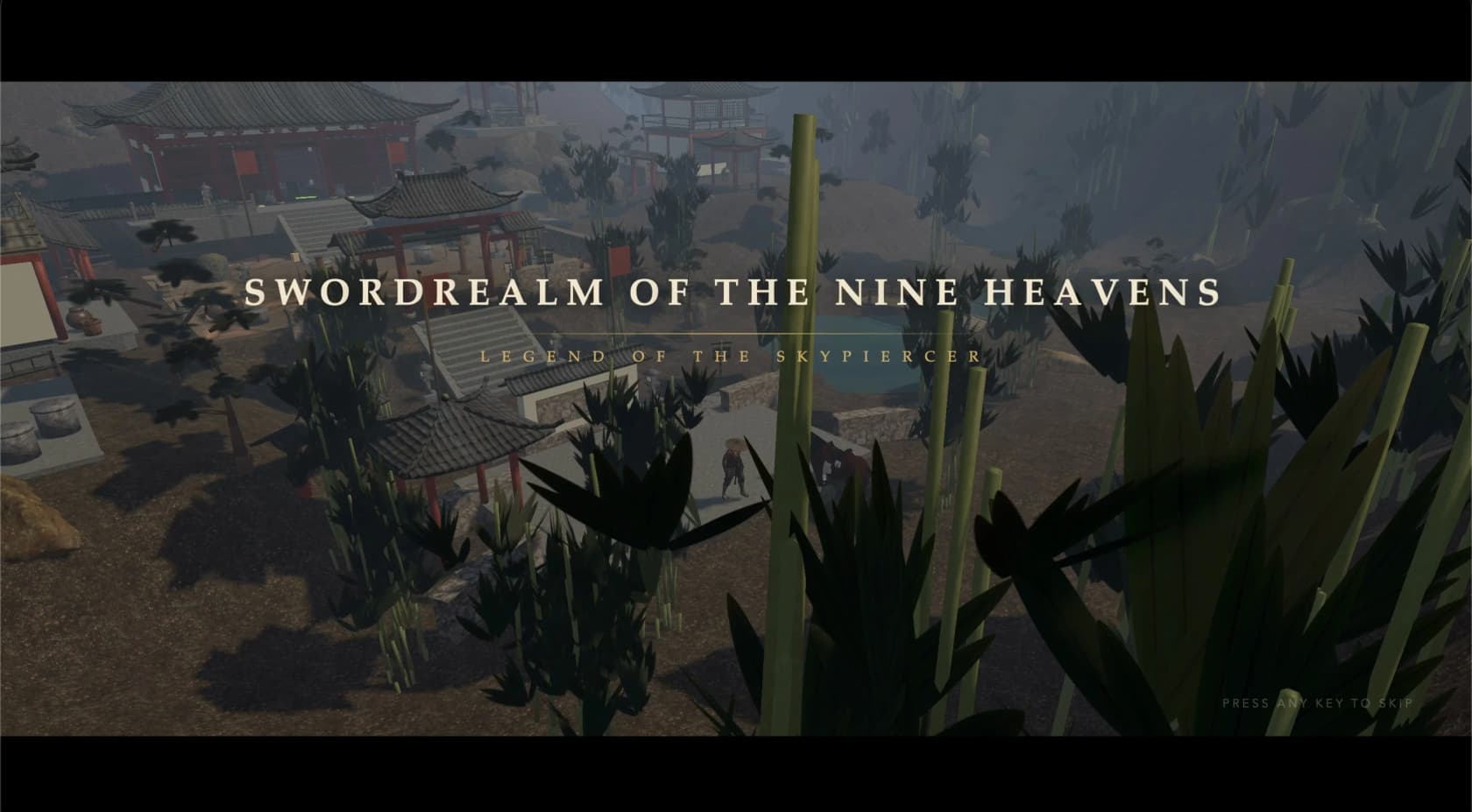
Moonshot's launch leaned hard on long-horizon autonomy, and the showcase did the talking. Given a single prompt, K3 built playable games from scratch: a wuxia open-world RPG, a first-person balloon-shooter arena, a voxel colosseum, a fighting game.
The more serious demos are what raised eyebrows. In one 48-hour autonomous run, Moonshot says K3 designed a chip (Nangate 45nm, 4 mm², simulated at over 8,700 tokens/second decode) to run a small model on its own architecture. In another, it wrote "MiniTriton," a GPU compiler from scratch that matched or beat Triton on some kernels. On a kernel-optimization task it cut a forward-plus-backward pass from 283.6 ms down to 114.4 ms. The developer reaction was equal parts awe and "show us the token bill":
"Did anyone see on the blog post that it was able to code up an entire GPU compiler from scratch? It looks like it even outperformed triton on some GPU kernels. That just seems insane to me. Wonder if they'll open-source this and show how many tokens it cost."
That last line is the honest catch, and it leads straight into the pricing.
What Kimi K3 costs
Here is the plot twist. The whole Kimi story used to be "frontier quality at a fraction of the price." K3 quietly ended that. It is priced like a flagship.
| Model | Input (cache miss) | Input (cache hit) | Output | Context window |
|---|---|---|---|---|
kimi-k3 | $3.00 / 1M | $0.30 / 1M | $15.00 / 1M | 1,048,576 tokens |
Source: official Kimi K3 pricing. A few things stand out. There's one model, one price, because reasoning is always on, so there's no cheaper "non-thinking" variant. Pricing is flat across the whole 1M window, with no premium tier for long prompts. And a cache hit drops input to $0.30, a 90% discount, which is the real cost lever for long-context agent work.
At $3 / $15, K3 lands right on top of Claude Sonnet's pricing, above GPT-5.x and Gemini 3 Pro, and below Claude Opus. It undercuts the top Anthropic tier, so it's still a value play against Opus. But against DeepSeek, whose V4 Flash runs $0.14 in / $0.28 out, K3's output is roughly 50x the price. DeepSeek is still the budget frontier option; K3 is not competing there anymore. That surprise is the single loudest note in the community reaction:
"The new model is notable for the pricing: $3/million input tokens and $15/million output tokens, putting it at the same level as Anthropic's Claude Sonnet series."

Where K3 genuinely shines is cost-for-performance on the tasks it's good at. On BrowseComp, it posts a top score at a fraction of the per-task cost of the Claude models:
If you'd rather use Kimi through the app than the API, the consumer plans are named after musical tempos:
| Tier | Monthly | Annual (per month) | What you get |
|---|---|---|---|
| Free | $0 | -- | Basic chat access |
| Moderato | $19 | $15 | Docs/Sheets/Slides, Deep Research, Kimi Code access |
| Allegretto | $39 | $31 | 2x agent credits, 5x Kimi Code credits |
| Allegro | $99 | $79 | 5x agent credits, Swarm parallel agents |
| Vivace | $199 | $159 | 10x agent credits, max Swarm concurrency |
Source: Kimi membership pricing. Worth flagging: the page carries a banner saying new plans are coming and that Kimi and Kimi Code benefits will be split into separate products, so this ladder is about to change.
There's a second cost the charts don't show: K3 tends to burn more tokens than Fable to finish the same job, which nudges the effective price up even when the per-token rate looks fine. Even fans concede the point rather than deny it. Budget for it if you're running K3 on long agent loops.
What changed from K2 to K3
If you used K2, the jump is bigger than a version bump. Here's the short version of what actually moved.
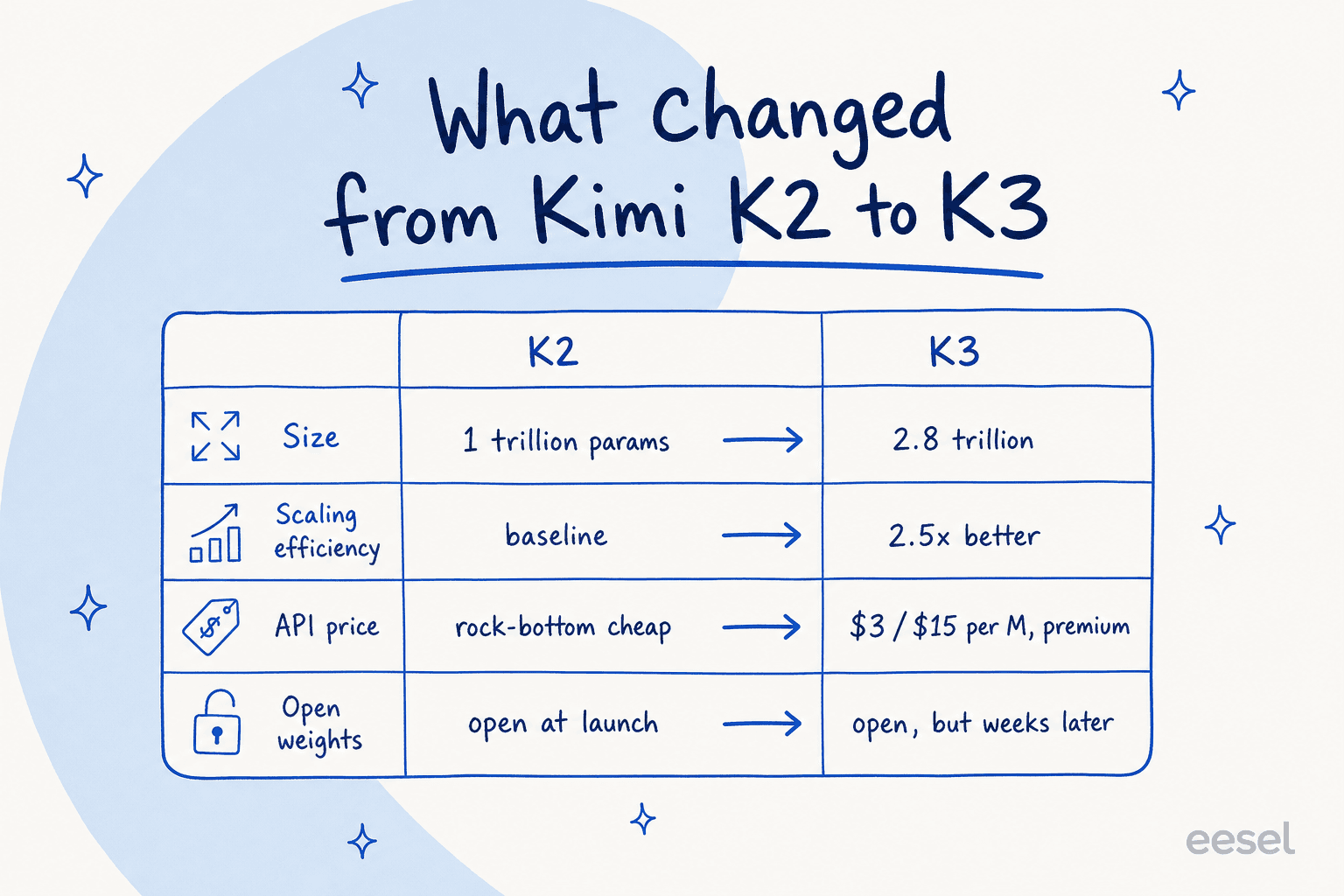
The size nearly tripled, the scaling efficiency improved about 2.5x, and the always-on reasoning replaced K2's separate thinking toggle. The two changes that will actually shape your decision are the ones that go the "wrong" way for switchers: the price climbed into flagship territory, and the open weights, K2's whole appeal, arrive weeks after launch instead of on day one. The excitement is real, but so is the caveat, and the community caught it within hours:
"The full model weights will be released by July 27, 2026."
The bigger picture: an open model at the frontier
Strip away the specifics and here's why K3 mattered enough to trend for a week: an open model, from a Chinese lab, is now trading blows with the closed frontier. For a lot of people that's less about K3 itself and more about a line being crossed.
"Yup some here are in denial but what many said would happen did just happen. They're not "six months behind": the model is totally SOTA. Cheaper, faster and they don't just crush Sonnet 5 and Opus 4.8: on 6 of the 14 benchmarks they posted Kimi K3 is in front of Fable."
There's also a control angle that keeps coming up: part of the pull toward open models is not wanting a single lab deciding what a model will and won't help with. That's a reasonable thing to weigh, especially if you plan to fine-tune or self-host once the weights land.
"I don't think it is ethical to support tooling that's built so a central authority gets to decide what intellectual endeavors and knowledge work are permissible, and what are not."
Where a frontier model stops, and support work begins
Now the part I care about most, because I build AI agents for a living. It is tempting to read a launch like this and think "great, plug the best model in and my support queue solves itself." It doesn't work like that, and the gap is exactly where most AI support projects quietly fail.
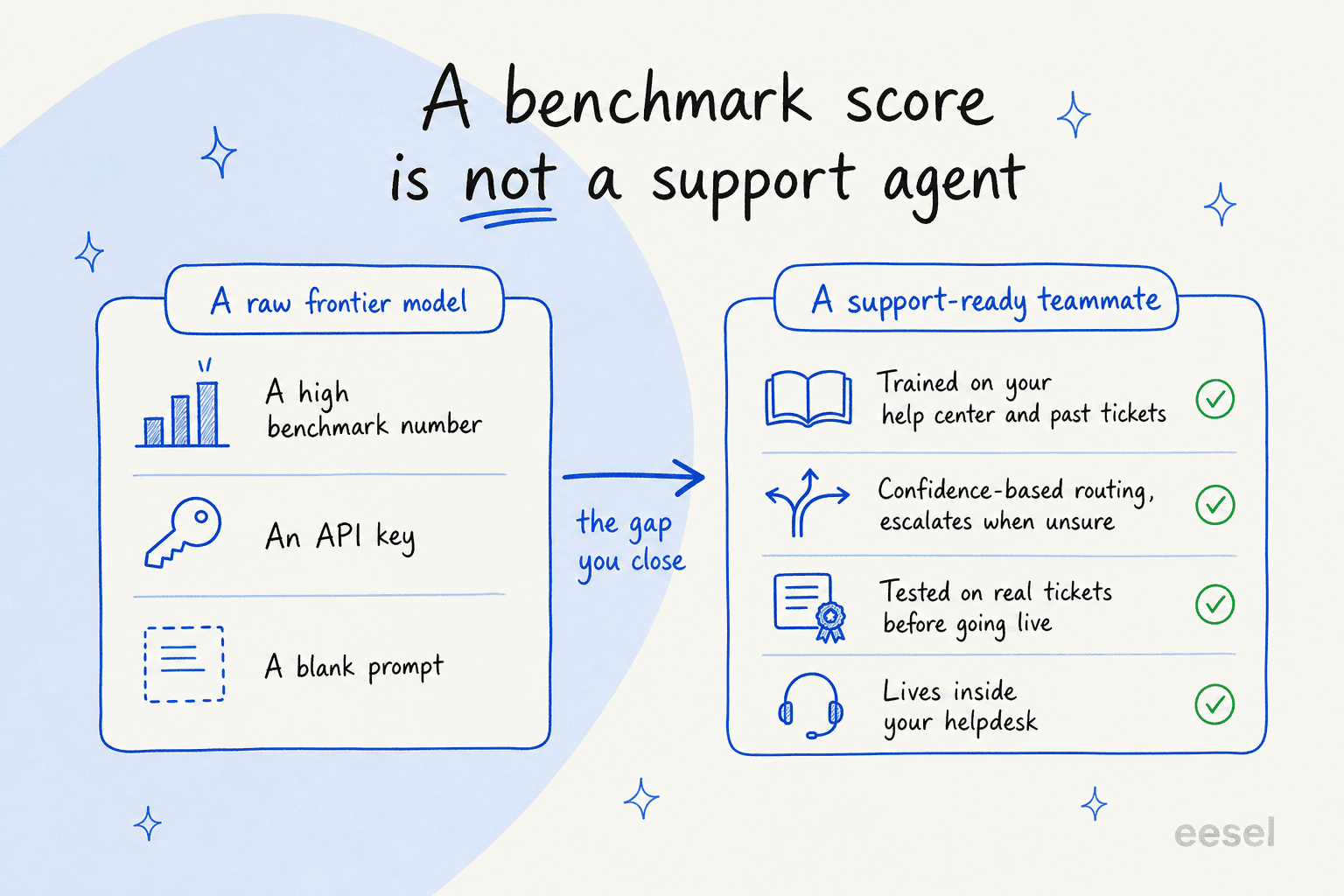
A model like K3 gives you raw reasoning. What it does not give you is any idea of your refund policy, your product edge cases, or the fact that ticket #4021 is a VIP who's already emailed twice. It has no memory of your past tickets, no guardrail to stop it confidently inventing an answer, and no connection to the helpdesk where the work actually happens. A higher benchmark score doesn't fix any of that.
We've spent years putting AI on live support queues, and the lesson that stuck is that a confident-sounding model giving a wrong answer is worse than no answer at all. That's why eesel AI runs a simulation over your historical tickets before anything goes live, so you see the resolution rate and the exact replies on real past conversations first, not after a customer gets burned. It's also why answers route by confidence: if the agent isn't sure, it drafts for a human or escalates instead of guessing. Across 500+ teams, Gridwise hit 73% tier-1 ticket resolution in its first month doing it this way.
The model underneath matters far less than that wrapper. Which is the quietly good news about K3, Fable 5, or whatever wins next month: the frontier keeps getting better and cheaper, and a well-built AI for customer service inherits those gains without you re-plumbing anything.
Try eesel AI
If you got here because you want an AI model to actually resolve tickets and not just chat, that's the whole point of eesel AI. It plugs into Zendesk, Freshdesk, Slack and 100+ other tools, learns from your help center and past tickets, and starts drafting or resolving in minutes, not weeks.

The differentiator is the trust ramp: simulate on your real ticket history, see the numbers, start in draft mode, and go fully autonomous only when you're happy. You get the frontier model's smarts with guardrails built for support. Try eesel free, no credit card needed.