We've all seen AI go from a neat party trick to a tool that's actually useful. But we're now at the start of another big change: AI is shifting from being just a tool to becoming an "AI coworker," a real part of the team.
At the forefront of this is OpenAI with its ambitious new platform, OpenAI Frontier. It’s built for large organizations to create, launch, and manage these AI agents on a massive scale.
If you've heard the name floating around but aren't quite sure what it all means, you're in the right spot. This article will give you a straightforward, no-fluff look at what Frontier is, its key parts, who it's for, and the real-world hurdles you should know about before considering it.
What is OpenAI Frontier?
At its heart, OpenAI Frontier is an enterprise platform for building and managing whole teams of AI agents. It’s less like a single product and more like a foundational operating system for AI inside a big company.
It's a fleet management software for AI agents.

The idea is to give these AI agents what any new human employee would need: access to company knowledge, a way to learn from feedback, and a clear job description. The end goal is to create "AI coworkers" that can handle complicated tasks.
Announced on February 5, 2026, Frontier was designed to close what OpenAI calls the "opportunity gap": the difference between how powerful AI models are and how hard they are to use in a messy business environment. It works as an intelligence layer connecting a company's separate systems, like CRMs, databases, and internal apps. This allows agents to see the full picture and work across all of them. You can read the official OpenAI announcement for the full story.
The core components of the OpenAI Frontier platform
Frontier isn’t just one thing; it’s made of four key parts that work together. Each is meant to make AI agents powerful, reliable, and trustworthy enough for a corporate environment. Let's look at each one.
Business context: Giving agents institutional knowledge
This is the brain of the whole operation. The Business Context component acts as a "semantic layer" for the company. It connects to all your separate systems: Salesforce, internal databases, project management tools, everything, and figures out how they all relate.
This gives the AI agents a solid grasp of your business operations. They learn your company structure, your workflows, and your important metrics. OpenAI says this creates a kind of "durable institutional memory." So, agents don't just process data; they understand the context behind it. They know how information moves, where decisions are made, and what success actually means for your company.
Agent execution: Turning knowledge into action
If Business Context is the brain, Agent Execution is the hands. This is the environment where agents actually do their work. It’s what lets them handle complex, multi-step tasks that are much more involved than just answering a question.
Here, agents can use files, run code, and work with different software tools to get a job done. As they work, they build up "memories" from their past actions, which helps them get smarter over time. This is how an agent goes from a simple bot to something that can manage a workflow from start to finish.
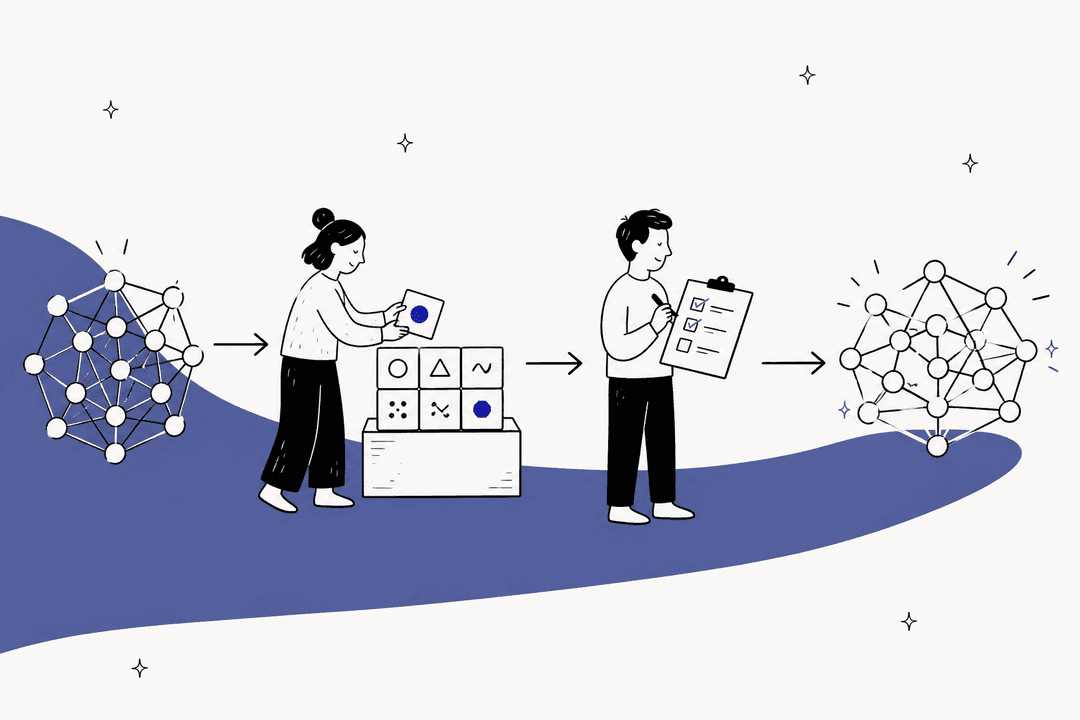
Evaluation and optimization: Learning from experience
This is the feedback loop. To be really useful, an AI agent needs to learn and get better. The Evaluation and Optimization component is a set of built-in tools that keeps an eye on how agents are performing.
This lets human managers (and even the agents themselves) see what’s working and what’s not. It's a key piece that helps an agent move from an "impressive demo to a dependable teammate." By learning from what happens in the real world, agents become more reliable and effective, adapting to new situations and improving their methods based on actual results.
Enterprise security and governance: Building trust and control
Of course, none of this works if it isn't secure. This part tackles the biggest concern for any large business: security, compliance, and control.
With Frontier, every AI agent gets its own identity with specific permissions, all managed through your company’s existing identity systems (IAM). This gives you fine-grained control over what each agent can access and do.
Every action an agent takes is logged and can be audited, so there’s always a clear record. The platform itself is built to meet top security standards like SOC 2 Type II and ISO 27001, so you can use these agents safely, even in industries with strict regulations.
Use cases and challenges of OpenAI Frontier
Let's be clear: OpenAI Frontier isn't a simple product you can buy off the shelf. It's a foundational platform designed to solve very specific, high-value problems within large companies.
Early users include huge names like HP, Intuit, and Uber, with pilot programs at companies like Cisco and T-Mobile. That tells you a lot about who it's for.
Who is OpenAI Frontier designed for?
The ideal customer for Frontier is a large enterprise. We're talking about companies with messy, disconnected data systems, complex internal processes, and, importantly, the budget and technical teams needed for a major AI project.
OpenAI has pointed to a few main uses:
- AI teammates: Building agents to help with data-heavy roles like financial forecasting, market analysis, or software engineering.
- Business processes: Automating entire workflows in areas like revenue operations, procurement, or customer support.
- Strategic projects: Using teams of agents for big, cross-departmental projects that involve pulling info and coordinating work across the whole company.
Frontier is for organizations that are ready to commit to building a long-term, foundational AI infrastructure.
What is the pricing for OpenAI Frontier?
The short answer is: OpenAI hasn't released any public pricing for Frontier.
From what we can tell, this is a custom, high-end solution, not a SaaS product with a pricing page. The cost is likely figured out through direct talks with OpenAI’s sales and engineering teams, based on a company's size, complexity, and what they want to achieve. In other words, if you have to ask, it’s probably a lot.
The practical challenges of implementation
This is where things get real. Frontier is a platform you build on, not a product you buy. That's a really important difference.
OpenAI has a team of "Forward Deployed Engineers (FDEs)" who work closely with customers. This points to a very complex, hands-on setup process that’s more like a deep partnership than a simple software installation. Adopting Frontier means you need significant internal engineering resources, a big budget, and a long-term commitment. It’s an approach that works for a Fortune 500 company but is out of reach for most teams.
My take is this is OpenAI Frontier is zero new tech, and all sales and service. Think Microsoft Fasttrack and AWS Proserve... My guess is Frontier is a paid service to send AI Geek Squad to your business to launch an internal AI program using best practices.
For companies looking for AI capabilities without an extensive build process, an alternative is the "hire" model.
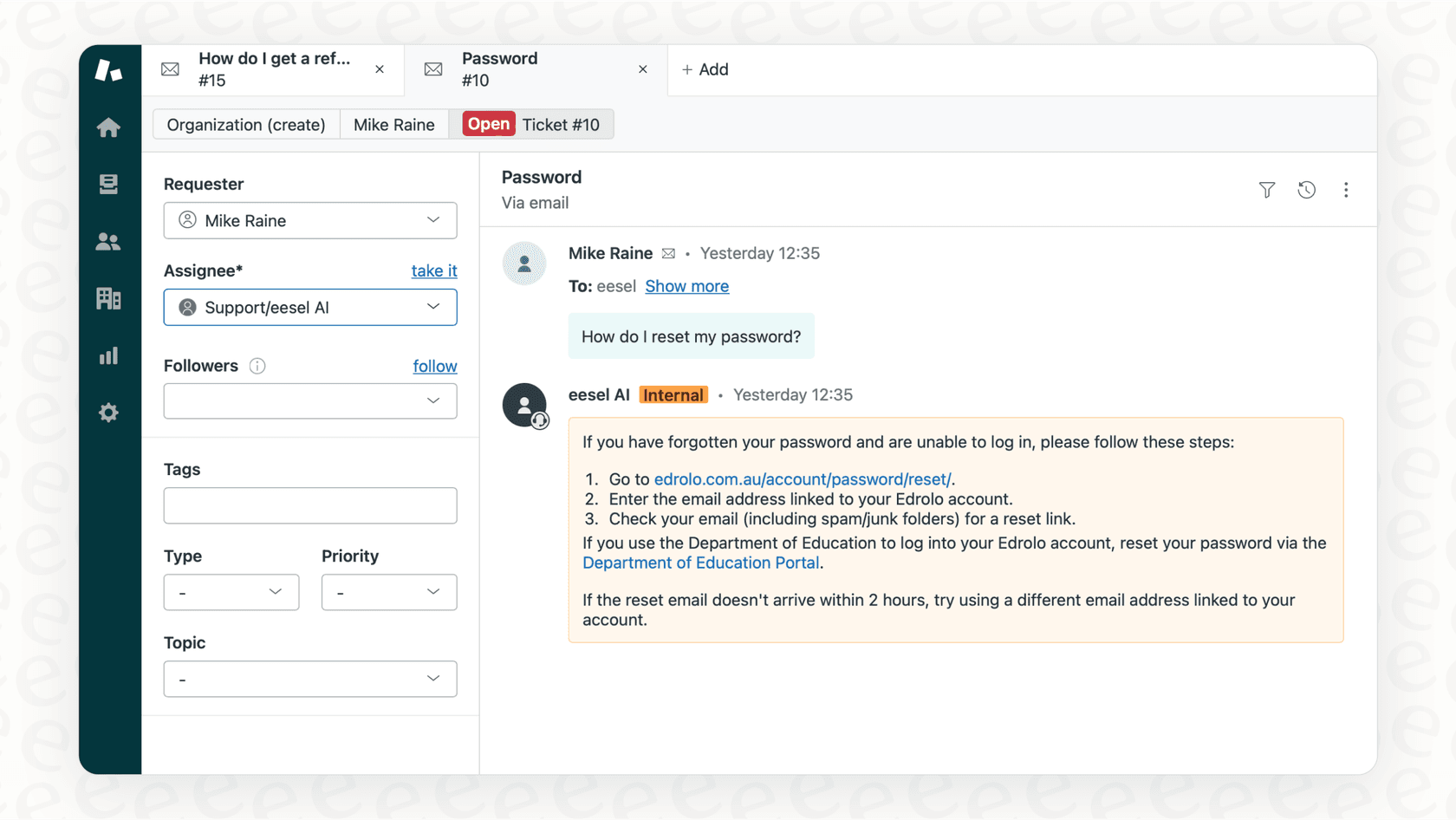
This is where a solution like eesel AI fits in. Instead of a platform for building agents, eesel provides an "AI teammate" that's ready to work. You don't build it; you hire it. It connects to the tools you already use, learns from your data in minutes, and gets to work right away.
Here’s a quick comparison of the two approaches:
| Factor | OpenAI Frontier (The 'Build' Approach) | eesel AI (The 'Hire' Approach) |
|---|---|---|
| Setup Time | Weeks or months with dedicated OpenAI engineers | Minutes, connects to your existing help desk |
| Resources | Requires internal AI/engineering teams and budget for a bespoke partnership | No technical team needed for setup |
| Control | Platform-level development and detailed configuration | Plain-English instructions and a guided, progressive rollout |
| Ideal User | Large enterprises building a foundational AI infrastructure from the ground up | Teams seeking ready-to-deploy autonomous agents |
For a deeper dive into what Frontier offers and how it's positioned for enterprise use, the following video provides a helpful overview.
Is OpenAI Frontier the right path for you?
OpenAI Frontier is a powerful and ambitious platform. It's a serious shot at solving the very real problem of making AI agents work at a large scale. For the massive global companies it's built for, it could be a huge deal, setting the stage for how they operate for years to come.
But it’s a marathon, not a sprint. Adopting Frontier is a major, long-term investment in technology, people, and how your organization works. It’s a platform for building a future with AI, not a quick fix for today's problems.
While platforms like Frontier outline a long-term vision for integrated AI, other solutions focus on providing the immediate benefits of an autonomous AI teammate.
Get an AI teammate that works today
For businesses seeking an autonomous AI agent for customer service or internal support, the 'AI teammate' model offers a practical solution.
Invite eesel to your team. It learns from your existing help desk data from tools like Zendesk or Intercom and can start resolving tickets on its own, working right alongside your human agents. You can see it in action or start a free trial to get going right away.
Frequently Asked Questions
What exactly is the OpenAI Frontier platform?
Who is the target audience for OpenAI Frontier?
What are the main components of OpenAI Frontier?
How does pricing work for OpenAI Frontier?
What are the biggest challenges when implementing OpenAI Frontier?


Article by
Rama Adi Nugraha
Rama is a software engineer at eesel AI with two years of experience writing about B2B SaaS, AI tools, and customer support technology. Based in Bali, Indonesia, he brings a developer's perspective to product comparisons — cutting through marketing copy to what the integrations and APIs actually do.