OpenAI just released GPT 5.3 Codex, its most capable agentic coding model yet. Here’s a full rundown of its new features, performance, and what you can expect to pay.
On February 5, 2026, OpenAI announced GPT 5.3 Codex, its most advanced agentic coding model, and it's a significant step forward. This model blends the powerful coding abilities of its predecessor, GPT-5.2-Codex, with the sharp reasoning of GPT-5.2. This combination makes it especially good at handling complex, long-running tasks that require it to find information and use different tools.
This article breaks down what makes GPT 5.3 Codex different, how it performs on key tests, and gives you a clear look at the current pricing and how to get access.
What is GPT 5.3 Codex?
GPT 5.3 Codex is best understood as a new teammate rather than just a tool. OpenAI describes it as an "agentic" model, which means it’s designed to handle long-term tasks that involve research, using tools like the command line, and following detailed instructions.
The biggest change is that it’s not just generating code anymore; it’s an interactive partner. You can guide the model while it’s working on a task without it losing its place. The whole process feels more like a collaboration and less like just giving orders to a machine.
On top of that, OpenAI has upgraded its infrastructure, making the new model a solid 25% faster. That means you get answers and results more quickly.
Early versions of GPT 5.3 Codex were used to help debug and launch the final version. It essentially helped speed up its own development, which is a notable achievement.
Key features of GPT 5.3 Codex
Let's get into the specific improvements that make GPT 5.3 Codex a significant upgrade for anyone who works on a computer all day.
Enhanced agentic capabilities for complex tasks
The model is excellent at what are known as "long-horizon" tasks. These are jobs that need it to maintain context and adapt its plan over multiple steps, which is much more than just writing a piece of code. It's better at interacting with real-world tools and environments, a fact reflected in its impressive benchmark scores for using a terminal and navigating an operating system.
But its abilities aren't limited to developers. It can assist with the entire software lifecycle, from drafting product requirement documents (PRDs) and analyzing spreadsheet data to building slide decks for presentations.
Interactive collaboration and steering
This is where it really starts to feel like working with another person. New interactive features allow you to guide the model as it works. Instead of just waiting for a final output, you can step in, ask questions, discuss different approaches, and nudge the agent in a new direction in real-time.
You can enable this in the Codex app by going to "Settings > General > Follow-up behavior". It makes the experience feel much more like a partnership.
Advanced cybersecurity and safety measures
GPT 5.3 Codex is the first model OpenAI has designated as "High capability" for cybersecurity under its Preparedness Framework.
OpenAI is being cautious here. They’re rolling out a complete safety stack that includes automated monitoring and trusted-access controls for more advanced applications. They've also started the Trusted Access for Cyber program, which aims to get these powerful tools to cyber defenders first. To support this, OpenAI is offering $10 million in API credits to accelerate this important work.
Performance benchmarks
Let's talk numbers. This is where you can see how the new model stacks up against its predecessors on tests that measure practical skills.
OpenAI uses a few key benchmarks to evaluate how well its models handle coding and agentic tasks, including SWE-Bench Pro, Terminal-Bench 2.0, and OSWorld-Verified. To visualize the improvements, here's a direct comparison based on official data from OpenAI.
| Benchmark | GPT-5.3-Codex | GPT-5.2-Codex | Delta |
|---|---|---|---|
| SWE-Bench Pro (Public) | 56.8% | 56.4% | +0.4% |
| Terminal-Bench 2.0 | 77.3% | 64.0% | +13.3% |
| OSWorld-Verified | 64.7% | 38.2% | +26.5% |
| Cybersecurity CTF Challenges | 77.6% | 67.4% | +10.2% |
5.3-Codex is amazing. It just fixed three issues that 5.2-Codex and regular 5.2 were running in circles around for days!

So what do these numbers really tell us? While the improvement on SWE-Bench Pro (a pure coding test) is minor, the jumps on Terminal-Bench and OSWorld-Verified are huge. These scores show a massive improvement in the model's ability to perform real tasks on a computer, like navigating files and using command-line tools.
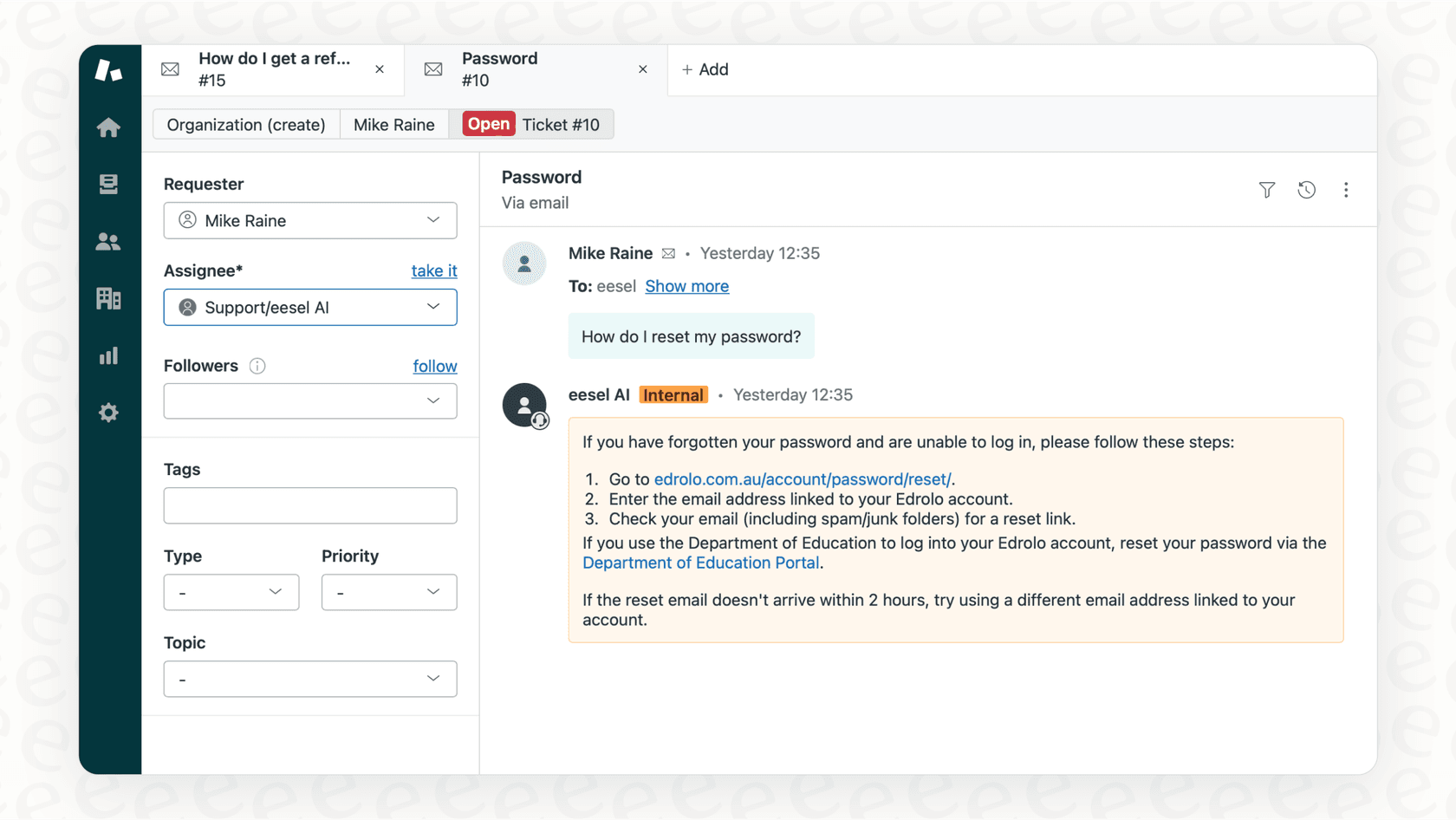
While these benchmarks are developer-focused, the core ability to navigate complex digital environments powers the next generation of AI teammates. For example, an AI agent for customer service from a company like eesel AI uses similar intelligence to operate within help desks, look up order details in Shopify, and process refunds entirely on its own.
GPT 5.3 Codex pricing and access
Now for the part you've been waiting for: how much does it cost, and how can you start using it? Here’s what you need to know about getting and paying for the new model.
How to access GPT 5.3 Codex right now
The good news is that you can get your hands on GPT 5.3 Codex today through any paid ChatGPT plan. It’s available everywhere you would typically use Codex, including the app, command-line interface (CLI), IDE extensions, and the web interface.
The plans that grant access are:
- ChatGPT Plus
- ChatGPT Pro
- ChatGPT Business
- ChatGPT Enterprise
yes, I have $20 plus plan and it shows up for me. think it only is for paid users atm
As an added bonus for a limited time, paid plans will also receive double the normal rate limits.
Subscription models and pricing
Let’s break down the subscription plans that give you access. The main differences are usage limits and features. To help you choose the right plan, here's a visual summary of the GPT 5.3 Codex pricing structure. You can find more details on the Codex pricing page.
| Plan | Monthly Price | Key Features & Usage Limits for Codex |
|---|---|---|
| ChatGPT Plus | $20/month | 45-225 local messages / 5h, 10-60 cloud tasks / 5h, 10-25 code reviews / week. |
| ChatGPT Pro | $200/month | 6x higher usage limits (300-1500 local messages), 10x more code reviews, and priority processing. |
| ChatGPT Business | $30/user/month ($25 if billed annually) | Same usage limits as Plus, but with a secure workspace, admin controls, and no training on business data. |
You might be wondering about "local messages vs. cloud tasks." These are just different ways OpenAI measures usage depending on the task's complexity. If you hit your limits on any paid plan, you can purchase more credits to continue working.
Upcoming API pricing
This is important: as of its launch, OpenAI has not released official API pricing for GPT 5.3 Codex.
They have stated that API access is "rolling out soon" and will be "coming in the following weeks," so we'll have to wait for more details.
To give you a rough idea of what to expect, here’s the current API pricing for the previous model, "gpt-5.2-codex". Keep in mind, this is just for reference, and the new model will likely have a different price point.
Table: GPT-5.2-Codex API Pricing (Standard Tier)
| Model | Input (per 1M tokens) | Output (per 1M tokens) |
|---|---|---|
| "gpt-5.2-codex" | $1.75 | $14.00 |
| Source: OpenAI API Pricing Page |
For businesses that prefer predictable costs over per-token billing, some platforms like eesel AI offer interaction-based pricing. This model provides a fixed cost per AI interaction, simplifying budget management for teams implementing AI teammates.
To see the new model in action and hear some first impressions from the developer community, check out this video from Prompt Engineering which covers the recent major AI releases, including GPT 5.3 Codex.
What's next
GPT 5.3 Codex is a big step toward AI that feels more like a partner than a simple tool. It’s designed to handle complex, real-world computer tasks, moving far beyond just writing code. Its true strength is its interactive nature and its ability to use other tools, which is confirmed by some very impressive benchmark scores.
For now, you can access it through a paid ChatGPT subscription, with API access coming soon. This makes it an excellent tool for individuals and developer teams. But for businesses that need a solution that’s already integrated and ready to deploy, it's worth keeping an eye on the API release.
While GPT 5.3 Codex is changing how developers work, the same type of agentic AI is also transforming business operations. For instance, eesel AI applies this technology to customer support, acting as an AI teammate that learns from existing business data to resolve customer issues.