It feels like just yesterday that AI coding assistants were basically fancy autocomplete. Now, we've got AI agents that can handle whole projects. It's a wild shift in how we build software, and it's all happening incredibly fast.
On February 2, 2026, OpenAI launched its new Codex app for macOS, marking another big step. It's already making waves, with over a million developers supposedly jumping on it in the last month. This isn't just some new plugin; it's a command center for your AI coding crew.
So, what's the deal with it? Let's get into it. We'll cover what the app is, its main features, the pricing and temporary rate limit bump, and some of the early drawbacks people have pointed out.
What is the OpenAI Codex app?
Basically, the OpenAI Codex app is a command center for your AI coding assistants. It's a desktop app that lets you run and manage several AI coding agents on different projects, all at once. Say goodbye to juggling chat windows and losing your train of thought in your IDE.
It's the newest piece in OpenAI's macOS puzzle, designed to tie everything together. It doesn't want to replace your favorite tools, just work with them. If you're already using the Codex CLI or IDE extensions in VSCode or Cursor, the app syncs up your history and settings, so you can get started right away.
The tricky part for developers in 2026 is figuring out how to work with AI on a larger scale. How do you keep track of an AI refactoring a service, another building a feature, and a third squashing bugs? This app is built to answer that question. It shifts your role from just coding with an AI to managing a small team of them.
Key features
The Codex app is more than just a pretty face; it changes how you work. You go from being a coder to being a supervisor for your AI agents, juggling tasks at the same time. Let's look at the features that make it happen.
Run multiple agents in parallel
To keep things from getting messy, the app uses "git worktrees". In simple terms, each agent gets its own separate copy of the repository to play in. They can experiment, make changes, and even break stuff without interfering with each other or your main branch. It's like giving each AI assistant its own private sandbox.
When an agent is done, you can review the changes right in the app. You can see a diff of the code, leave comments for the agent to revise, or open the code in your editor to get a better look. It makes for a smooth, all-in-one review process.
Extend capabilities with skills and automations
Skills are like reusable toolkits for your AI agents. They are pre-made sets of instructions, resources, and scripts that help Codex handle complex jobs reliably. Think of them as specializations for your agents. OpenAI has already included a bunch of built-in skills. For instance, you can use a skill to:
- Build a new UI component from a Figma design.
- Handle project tickets and updates in Linear.
- Deploy a web app to a service like Vercel.
- Create placeholder images and mockups with GPT Image.
- Generate formatted documents, like PDFs or spreadsheets, for reports.
Automations build on that. They're scheduled jobs that use instructions and skills to take care of repetitive tasks for you in the background. You could set up a daily automation to sort through new bug reports or a weekly one that writes release notes by summarizing recent commits.
Choose an agent personality that fits your style
It's a smaller feature, but still pretty neat: the app lets you choose the personality of the agent you're working with. You can opt for a short, to-the-point style or a more chatty one that walks you through its thought process.
You can swap between them with the "/personality" command. It doesn't affect the agent's technical abilities, but it does let you tailor the collaboration to your own preference, which helps make the whole experience feel a bit more natural.
Pricing and rate limits
Alright, what's the damage? If you already have a ChatGPT subscription, you're probably covered. The Codex app is available on several plans.
To get more people to try it out, OpenAI is running two limited-time deals with the launch, according to their official announcement:
- Expanded Access: For a short time, the Codex app is also open to users on the ChatGPT Free and Go plans. It's a solid way to test it out with no strings attached.
- Doubled Rate Limits: All paid subscribers temporarily get double their normal rate limits on all Codex interfaces, including the new app, the CLI, and any IDE extensions. <quote text="- Doubled Codex rate limits for all paid plans (2 months)
- Access for ChatGPT Free and Go Plans (1 month)" sourceIcon="https://www.iconpacks.net/icons/2/free-reddit-logo-icon-2436-thumb.png" sourceName="Reddit" sourceLink="https://www.reddit.com/r/codex/comments/1qu2vxt/comment/o37qlge/">
| ChatGPT Plan | Standard Codex Access | Limited-Time Launch Offer (Feb 2026) |
|---|---|---|
| Free / Go | Not included | Included for a limited time |
| Plus / Pro | Included | Included + 2x Rate Limits |
| Business / Edu | Included | Included + 2x Rate Limits |
| Enterprise | Included | Included + 2x Rate Limits |
Just keep in mind that you still pay for tokens used. The more complex your tasks are, the more tokens they'll consume.
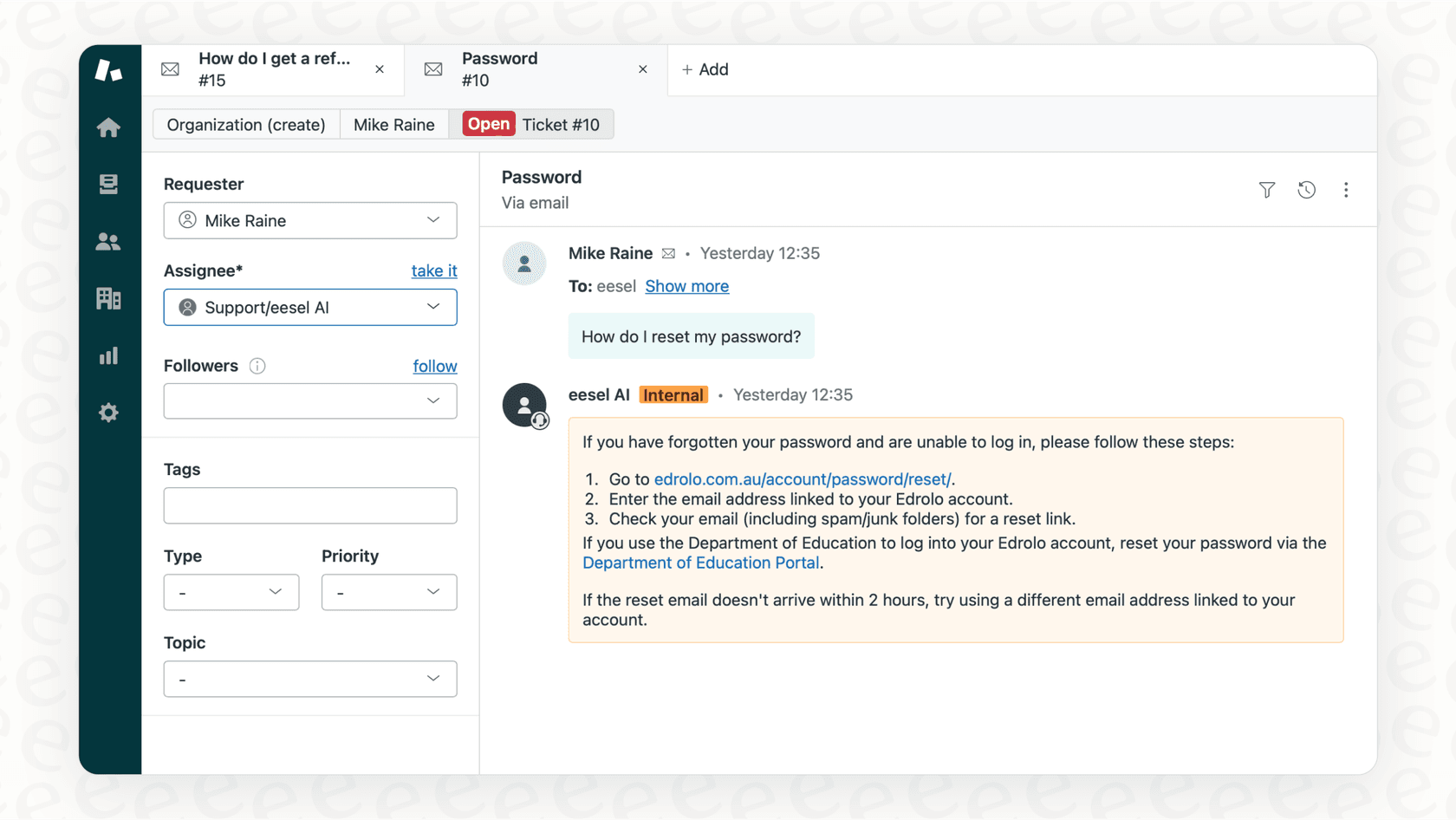
For any business, predictable pricing is a big deal. Codex rolls its usage into a subscription. Other models exist, such as the per-interaction pricing used by tools like eesel AI's AI Agent for customer service. This approach provides teams with a clear picture of their costs, making it easier to budget.
Current limitations and future plans
The app is impressive, but it's also brand new and has some rough edges. Let's look at the current downsides and what OpenAI has in store.
Current limitations to consider
- Platform availability: First off, the app is macOS only for now. If you're using Windows or Linux, you'll have to wait. OpenAI has mentioned a Windows version is on the way, and you can sign up for notifications to hear when it's ready.
- Steep learning curve: Shifting from a simple coding assistant to a manager of multiple agents is a big change. It adds a new layer of complexity to your workflow, and it'll take time to get comfortable thinking about agents, skills, and automations.
Zero steering, while having no idea what it is doing. While Claude was trying to hammer a nail with a few misses, Codex is hammering with an electric hammer with my eyes folded. Can't learn, can't understand if my question was correct, just need to wait for the final outcome.

* **Usage limit concerns:** Some early [user feedback](https://community.openai.com/t/usage-limits-of-codex-within-cursor/1356784) indicates that you can burn through your usage limits quicker than you'd think. This might happen if an agent gets stuck in a loop or a task is more complicated than it first appeared. Having your work stop cold because you [hit a cap is pretty disruptive](https://community.openai.com/t/pro-plan-hit-5-hour-limit-twice-in-2h-and-1-5h-and-nearly-exhausted-weekly-cap-in-1-day-after-today-s-update/1364782?page=3) is pretty disruptive.Let's hope this 2x temporary rate limit does not end up like how it did at Anthropic
What to expect in the future
According to their launch announcement, OpenAI is already planning its next moves. The roadmap includes:
- Releasing the awaited Windows version.
- Continuing to improve the multi-agent workflows based on what users are saying.
- Adding support for cloud-based triggers, which would let automations start based on external events (like a new GitHub commit or a new Jira ticket). This would make them much more powerful.
These plans show that there are different ways to work with AI. Developer tools like the Codex app are for direct management, where you call the shots. But for business tasks, some teams prefer a "hire and train" approach. That's where AI teammates like eesel AI fit in. Instead of needing constant direction, eesel learns from your company's knowledge to work on its own in areas like customer support, only looping in a human when it's truly necessary.
For a more detailed comparison of how different AI coding assistants stack up, including a look at their features, pricing, and overall performance, check out the video below.
A new chapter in AI-assisted coding
So, what's the takeaway? The OpenAI Codex app for macOS is a powerful tool that really changes how we approach AI-assisted coding. It moves us past basic code suggestions and into a world where developers are managing small teams of AI agents.
Its biggest advantages are clear: the ability to run multiple tasks at once without creating a mess, the power of reusable skills, and the convenience of background automations. With the current launch deals offering double rate limits and wider access, it's a great time to check it out and see how it fits into your workflow.
The growth of assistants like Codex points to a bigger trend: AI is becoming a real teammate. Developers have their AI agents, and now business teams can get in on the action too. If you're curious about how an AI teammate could manage your customer service, sales, or internal support, see how eesel AI works.