


Why I'm reading the price tag this carefully
I build and write about AI at eesel, and two years of doing SEO taught me that the number people search for ("Qwen3.8-Max pricing") and the number they actually pay are rarely the same. My day job is closer to the frontline of that gap: at eesel we've spent years putting frontier models on live support queues, and the recurring lesson is that the token price is almost never what determines the cost of running AI on real work.
So when a 2.4T model shows up at 10% off, my instinct isn't "cheap, ship it." It's: what's the unit I'm actually billed in, how fast does it drain, and what happens to the price when the party ends? That's the lens for this whole post. If you want the full spec and the "second only to Fable 5" claim, the Qwen3.8-Max explainer and the hands-on review cover those. Here we're following the money.
What you're actually paying for
Quick grounding, because pricing only makes sense once you know the tier. Qwen (Tongyi Qianwen) is Alibaba Cloud's model family, and "Max" is the proprietary flagship line, sitting above the cheaper Plus and Turbo tiers and above the open-weight Qwen3 checkpoints. Qwen3.8-Max is the newest Max model, previewed as Qwen3.8-Max-Preview and described as a 2.4-trillion-parameter Mixture-of-Experts model that takes text, images, video and documents.
The important pricing fact hides in that "Preview" suffix: this is a promotional launch, not a settled product. The 10% rate, the missing per-token price, and the "open weights soon" promise are all preview-state. That matters because it's the difference between a price you can plan a year around and a price that can change under you next month.
The Qwen3.8-Max preview deal, in one line
Here's the headline every dev repeated: during preview, Qwen3.8-Max runs at 10% of standard pricing, delivered through three surfaces:
- Token Plan, Alibaba's credit-based subscription (the main consumer route).
- Qoder, Alibaba's agentic coding product.
- QoderWork, the team/workspace version of the same.
There is no standalone per-token API rate published. For a Max-tier model that's unusual, and it's the single most important thing to understand about Qwen3.8-Max pricing: you're not buying tokens at a fixed rate, you're buying credits on a subscription and spending them at a preview discount.
Token Plan Personal tiers
The consumer entry point is the Token Plan (Personal Edition). It's a monthly subscription that grants a pool of credits, capped two ways: a 7-day quota and a rolling 5-hour quota (so you can't drain a month's credits in one afternoon).
| Tier | Monthly | 7-day credit quota | 5-hour credit quota |
|---|---|---|---|
| Lite | ~$6 (39 CNY) | 2,500 credits | 700 credits |
| Standard | ~$20 (139 CNY) | 10,000 credits | 3,000 credits |
| Pro | ~$70 (499 CNY) | 40,000 credits | 12,000 credits |
Source: Alibaba Cloud Token Plan. Dollar figures are approximate conversions from the CNY prices and move with the exchange rate.
The credit, not the dollar, is the real unit here. A "credit" maps to token consumption, and how many tokens a credit buys depends on the model and the discount stacked on top. Which brings us to the part that makes the sticker price look almost free.
The night discount that makes it look nearly free
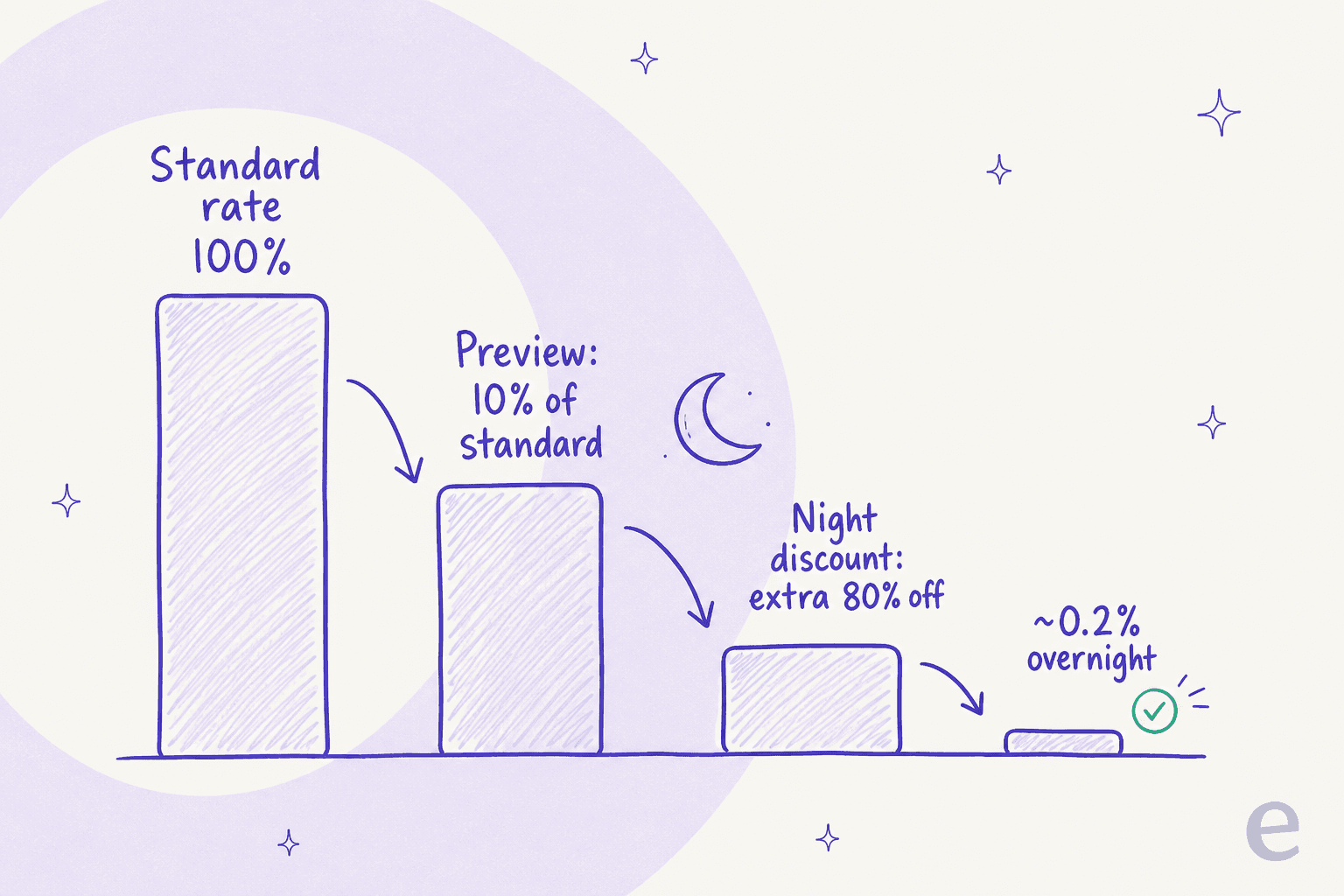
On top of the 10% preview rate, Alibaba stacks a night discount: an extra 80% off credit consumption between 22:00 and 08:00 (UTC+8). Compound the two and off-hours runs land at roughly 0.2% of the standard rate.
That's an aggressive, deliberate move. It's designed to get developers testing the preview cheaply, and if your workload is batchable (evals, dataset generation, overnight coding jobs), scheduling it into the UTC+8 night window is a real cost lever. If you're in the Americas, the UTC+8 night is roughly your working day, which is either convenient or useless depending on where you sit.
The catch is the same one every promotional rate carries: it's teaching you the cost of the discount, not the cost of the product. Prototype at 0.2%, but forecast at 100%.
The hidden cost nobody puts on the pricing page
This is the line I'd underline in any Qwen3.8-Max pricing conversation. The credit-subscription model is the exact thing Qwen users have complained about before.
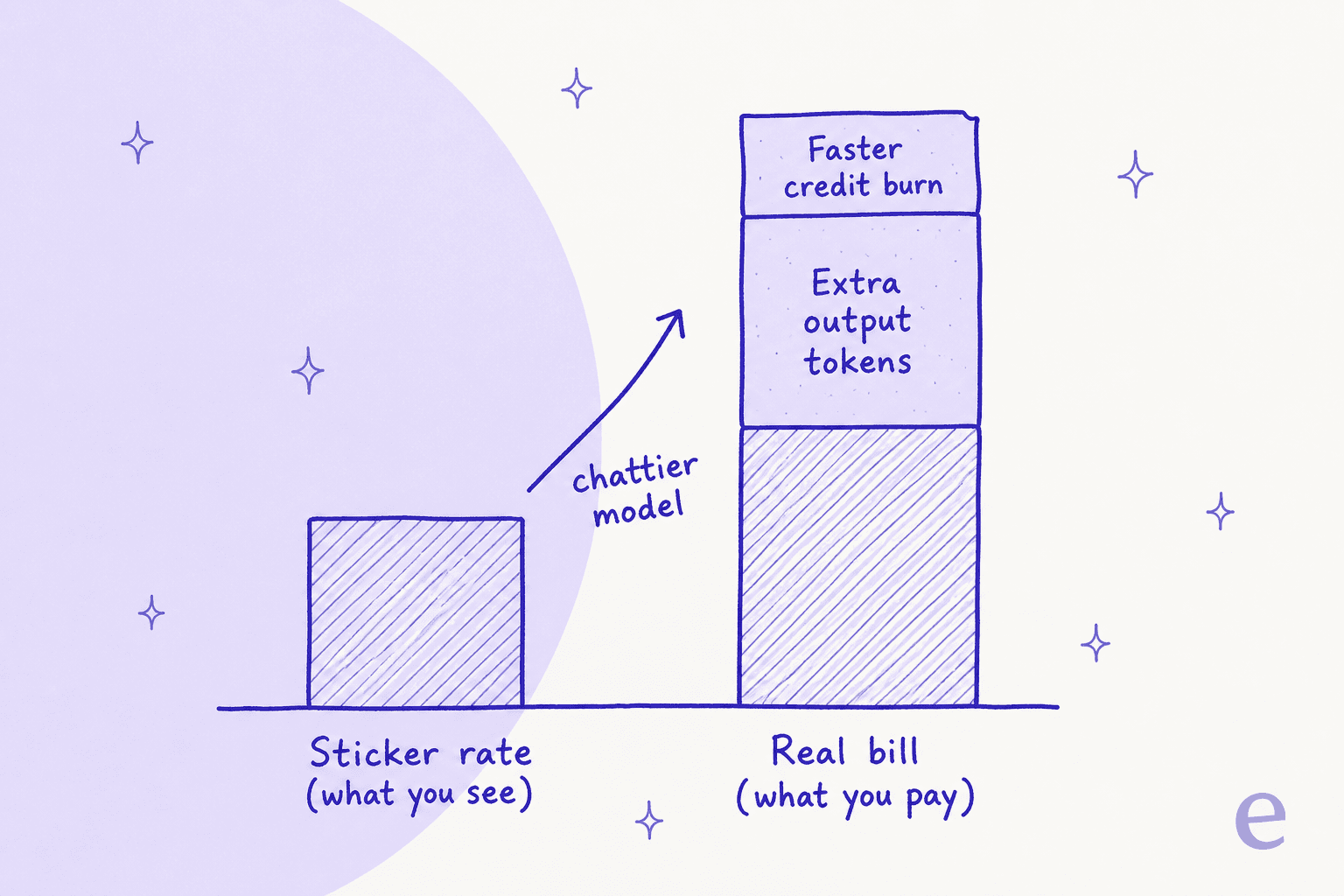
On the previous generation, Reddit users reported credits burning far faster than expected. And there's a structural reason it happens: Qwen models tend to generate more output tokens per task than peer models. Since output tokens usually cost more than input tokens and you're billed by consumption, a model that's "chattier" quietly inflates the real bill even when the headline rate looks low.
Put those together and the preview discount is papering over a metering model that historically surprises people. The 10% rate hides the burn. When the preview ends and the discount goes with it, that burn is what you'll actually feel. So the honest way to read Qwen3.8-Max pricing is: cheap to try, unpredictable to depend on, at least until Alibaba publishes a real per-token rate you can forecast against.
Estimate your own preview cost
Since there's no clean per-token rate, the most useful thing I can hand you is a way to feel the shape of the bill. Plug in a rough monthly credit consumption and see how the preview discount and the night window change what you'd pay, versus running at standard rates.
The point the widget makes better than a paragraph: the preview is stunningly cheap, but "your estimate" is built on a discount, not a price. Model the standard column too, because that's the one you'll live in later.
How the price compares
On raw access cost, the preview undercuts everyone, that's the whole design. But comparison is where the missing per-token rate bites, because you can't line Qwen3.8-Max up against a normal price sheet.
- Kimi K3, Moonshot's 2.8T flagship, priced at roughly $3/$15 per million input/output tokens. That's Sonnet-tier, not cheap-tier, and notably it's a published, forecastable rate. Kimi K3 landed days before Qwen3.8-Max, and the timing was clearly a response.
- Claude's top tier (Fable 5), the model Alibaba is measuring itself against, priced above Kimi K3, again with a clear published rate.
- Qwen3.8-Max, cheapest to try, least clear to budget. A credit subscription at a promo discount isn't the same kind of number as $3/$15 per million tokens.
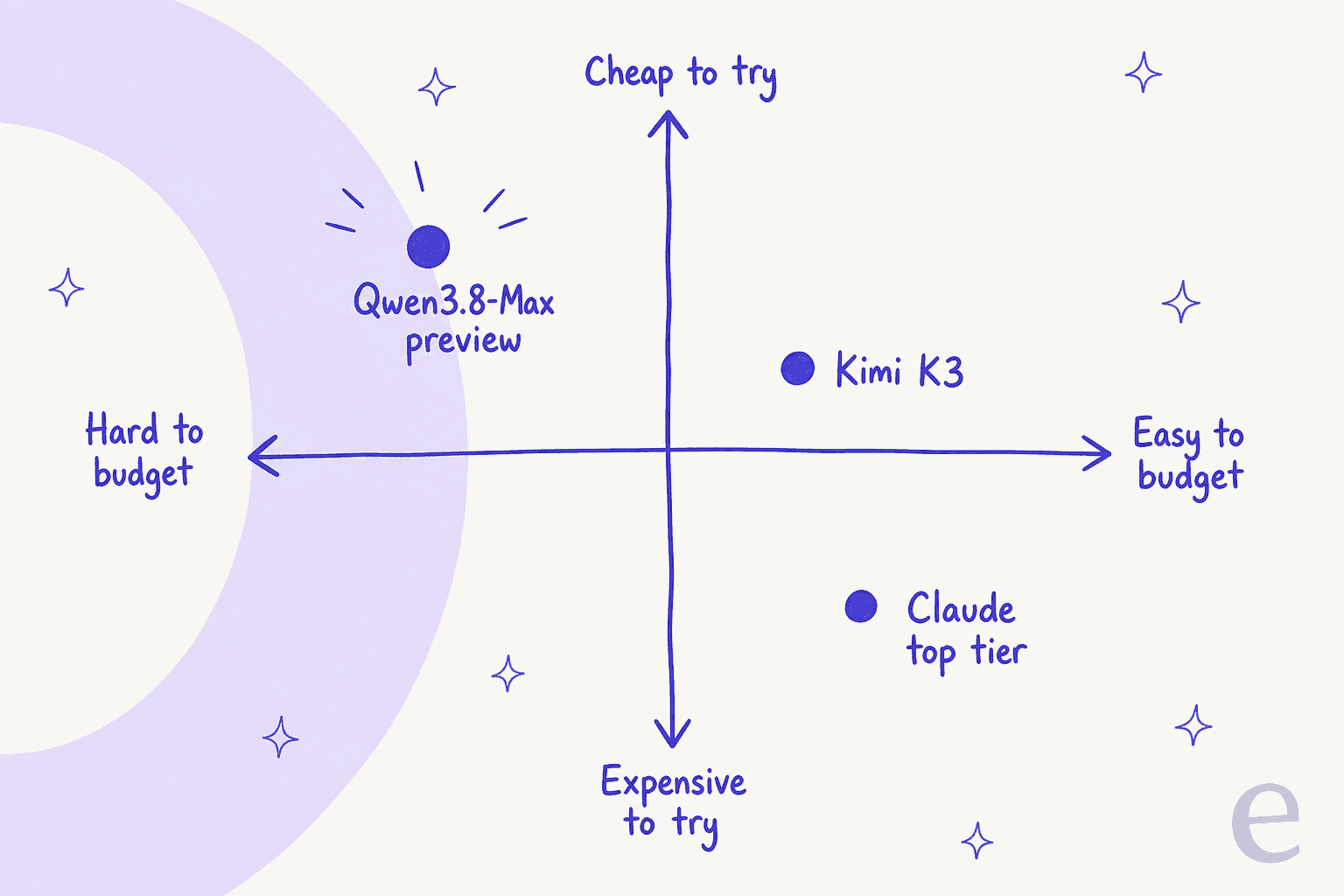
If your decision is "which is cheapest to experiment with this week," the preview wins easily. If it's "which can I forecast a year of production spend on," Qwen3.8-Max is currently the hardest to answer, precisely because the preview pricing is a moving target. For the wider field, the best AI models roundup and the Qwen alternatives guide are useful next reads.
Where model pricing stops mattering: real work
Here's the part I care about most, because it's the mistake I watch teams make with every new model. When the job is customer support, the model's price is the small number on the invoice.
A raw model, however cheap and however smart, has no memory of your tickets, no guardrails, and no connection to your helpdesk. To answer a real customer it needs your knowledge base, your policies, escalation rules, and a way to route to a human when it's unsure. Building and maintaining that layer is where the actual cost lives, not in the difference between 10% and 100% of a token rate. One eesel customer summed up the build-versus-buy call cleanly:
"We could try to write our own LLM application, but we didn't want to invest our time into that. We wanted something we wouldn't have to maintain."
a mid-market support lead evaluating build vs buy
That's the quietly good news about Qwen3.8-Max, Kimi K3, or whatever tops the size chart next month. A well-built AI for customer service inherits every frontier gain without you re-plumbing anything, and its price is a fixed monthly plan sized to ticket volume, not a preview credit balance you have to watch.
That's the gap eesel AI fills. It wraps a frontier model in your knowledge and guardrails, plugs into Zendesk, Freshdesk and more, and, the part that matters for cost, simulates on your historical tickets before anything goes live, so you see the resolution rate and the exact replies on real past conversations first.
Want an AI agent that turns any frontier model into real ticket resolution? Try eesel free, no credit card needed.
The bottom line on Qwen3.8-Max pricing
The preview is a cheap way to feel out a 2.4T multimodal model: 10% of standard, dropping to ~0.2% overnight. Treat that as a trial, not a plan. The two things to watch are the missing per-token rate (you can't forecast cleanly on a credit subscription) and the historical credit-burn problem the discount is currently hiding. Prototype now, budget for the real rate later, and if the job is support, remember the model price was never the number that mattered.