GLM-5.4 alternatives: 7 models to compare by job

Rama Adi

Katelin Teen
Last edited November 25, 2026

GLM-5.4 has no public API price and no independent benchmark score yet, so compare it by job instead of by hype. If you need an API today, start with Claude Sonnet 5.5 or GLM-5.3. For the hardest engineering, take Claude Opus 5.5. For the lowest run cost near the top of the board, take GPT-6.2 Sol, and for open weights, DeepSeek V4 or Kimi K3.1 Pro. Models are infrastructure; eesel's AI helpdesk teammate is the employee that wraps one with your help center, handoff rules, and a test on past tickets. With the eesel CLI, a coding agent running on whichever model you pick can upload approved help-center articles to an eesel agent and ask it test questions before anything goes live, though connecting the helpdesk itself still needs an admin to approve it.
What should you compare GLM-5.4 against?
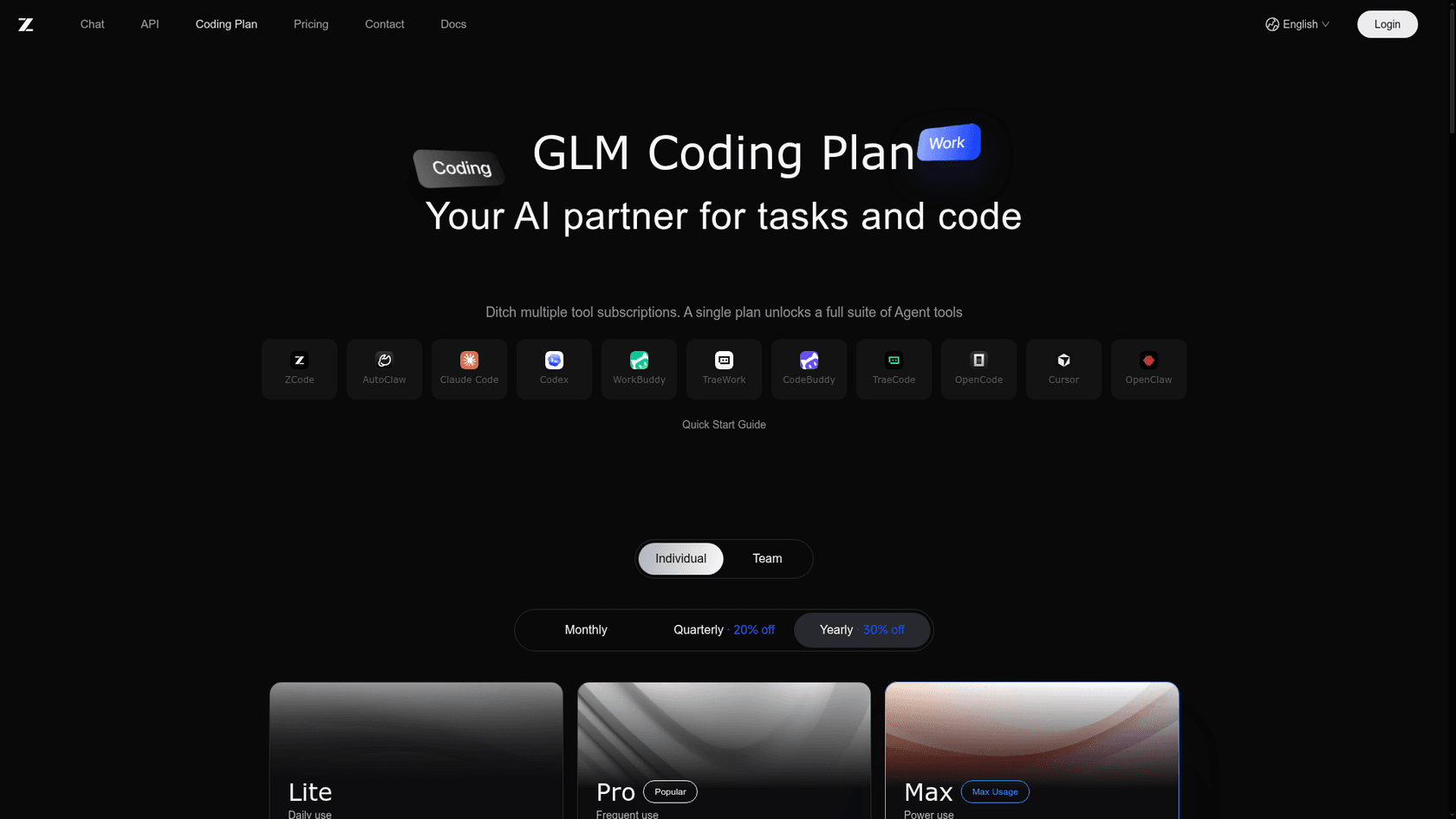
GLM-5.4 is the model people are trying right now, but you cannot buy it per token. Z.ai's launch post lists the API as coming soon and the weights as planned, and the model docs say the Model API arrives after a security assessment. What you can do today is use it inside the GLM Coding Plan, which Z.ai sells at $18, $80, and $168 a month for Lite, Pro, and Max.
The GLM-5.4 overview and my GLM-5.4 review cover the model itself.
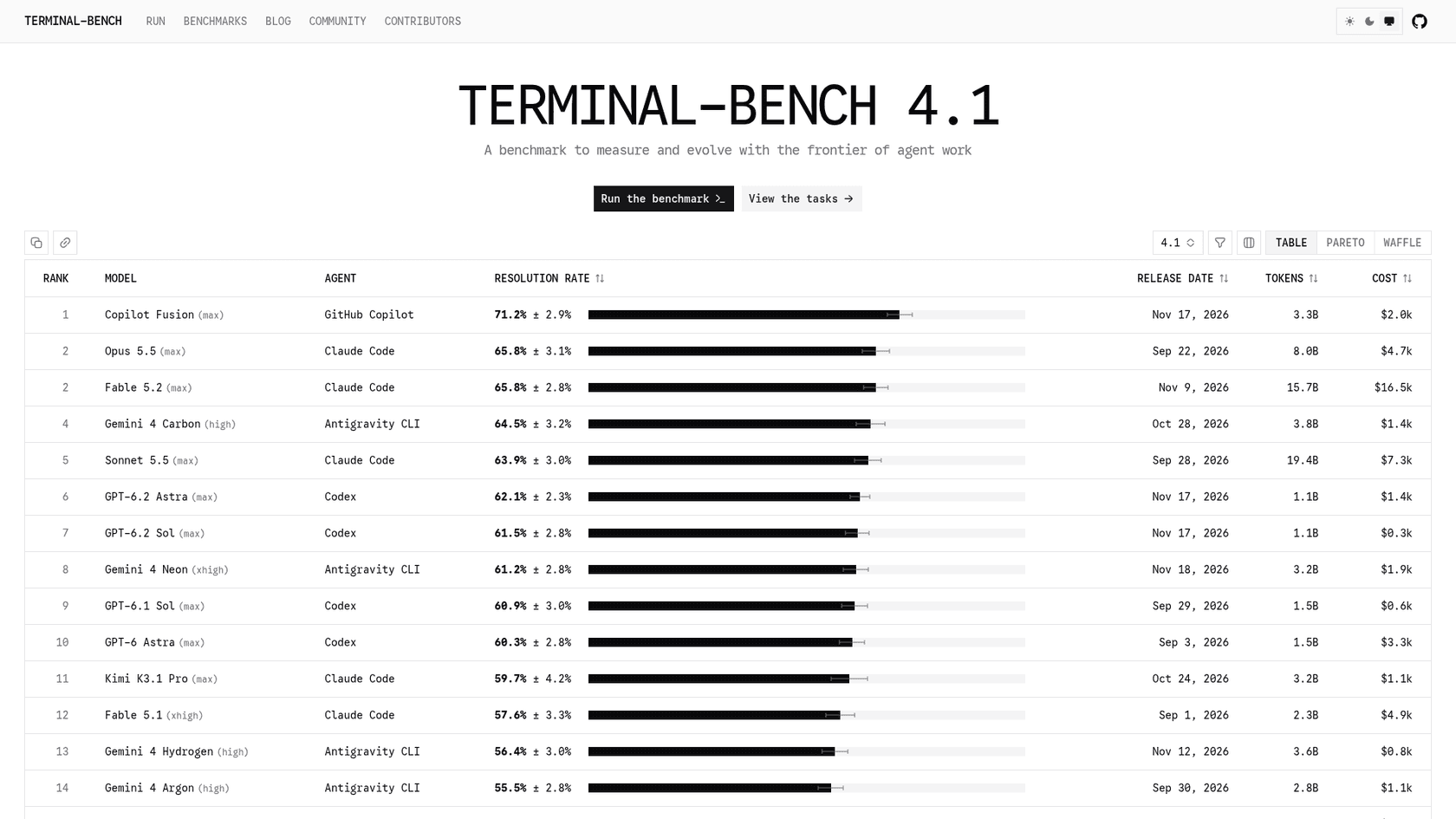
A normal alternatives post would rank models by one score. I can't do that fairly, because GLM-5.4 is missing from the independent board. So I sorted the alternatives by the job you are probably hiring a model for. I have not run these models myself. Everything below comes from each vendor's own pricing and docs pages, plus the Terminal-Bench leaderboard, which I read on 25 November 2026.
What is actually known about GLM-5.4?
Less than the launch buzz suggests. It is the first GLM built as a Loop Transformer, reusing 28 layers of the GLM-5 base for two passes, with a 1M-token context window and 128K maximum output. The only comparison Z.ai published is a win-rate chart: 51.1% wins against GLM-5.3, 41.8% against Kimi K3.1 Pro, and 36.6% against DeepSeek V4.1 Flash, with ties and losses making up the rest. The chart does not say which tasks it covers.
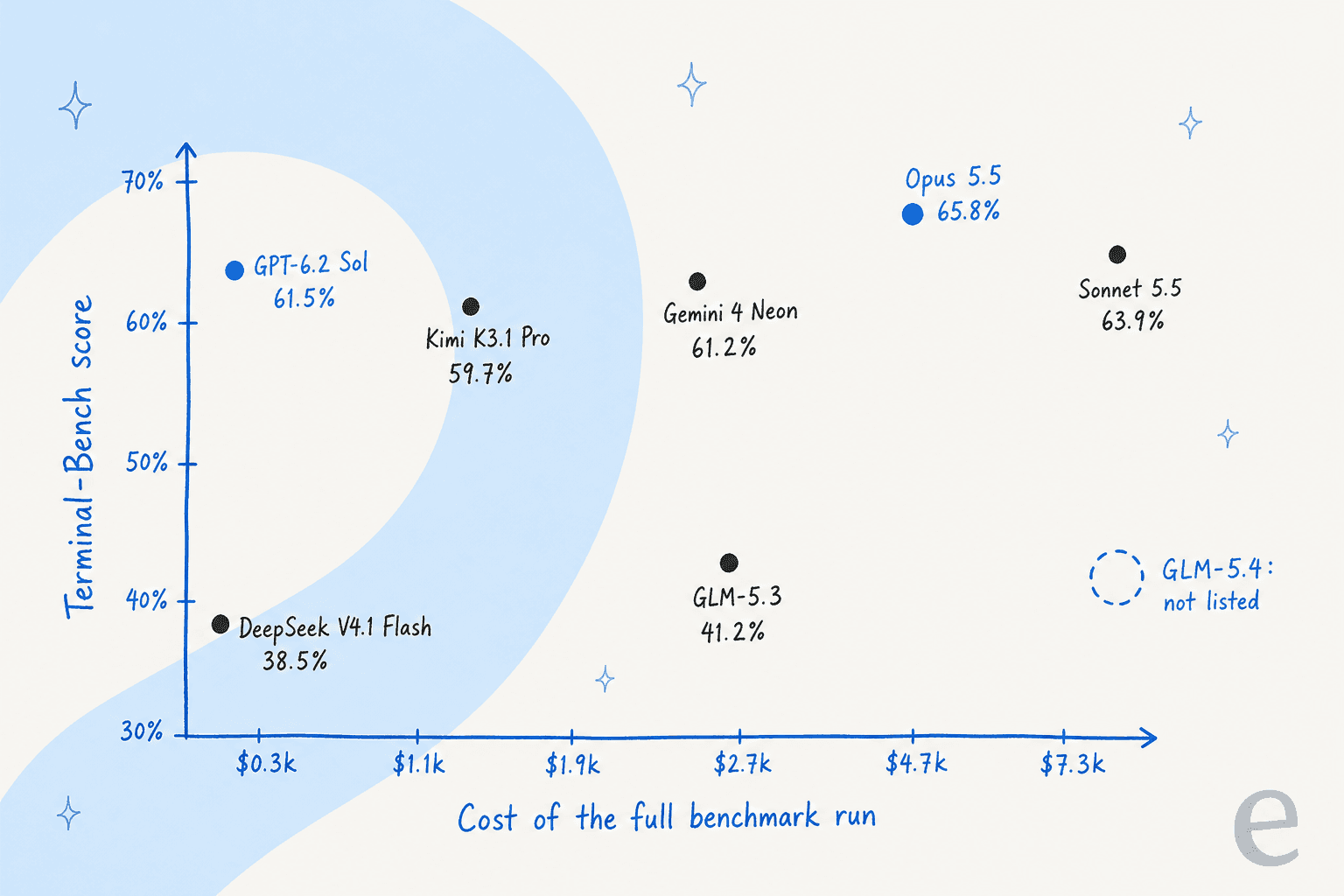
The independent board has no GLM-5.4 row at all. Its closest entry is GLM-5.3 at 41.2%, which is why I treat every number about the new model as a placeholder until someone else measures it. One early user did report a first impression on the launch thread:
"glm-54's first plan is excellent, as good as anything the fleet has produced."

That user runs Opus as the lead agent and pasted Opus's own review of GLM-5.4's first plan, so it is one task by one operator. It is a reason to test, not a score.
Which GLM-5.4 alternatives should you compare?
Here is the whole field in one table. Prices are per million tokens from each vendor's own page. The last two data columns use a workload I picked: 1,000 support-style requests with 3,000 input and 500 output tokens each, so 3M input and 0.5M output tokens at list price, before reasoning tokens. Terminal-Bench scores come from different agent harnesses, which I list.
| Model | Maker | API today | Input / output per 1M | Context | Open weights | Best for | Access route | 1,000-request workload | Terminal-Bench (harness) |
|---|---|---|---|---|---|---|---|---|---|
| GLM-5.4 | Z.ai | No | Not published | 1M | Planned, no date | Coding Plan users | Coding Plan, ZCode, Z.ai Chat | Unknown | Not listed |
| GLM-5.3 | Z.ai | Yes | $1.40 / $4.40 | 1M | Hugging Face repo | Cheap in-family API | Z.ai API, Coding Plan | $6.40 | 41.2% (Claude Code) |
| Claude Sonnet 5.5 | Anthropic | Yes | $2 / $10 | 1M | No | API today, general coding | Claude API, Claude Code | $11.00 | 63.9% (Claude Code) |
| Claude Opus 5.5 | Anthropic | Yes | $4 / $20 | 1M | No | Hardest engineering | Claude API, Claude Code | $22.00 | 65.8% (Claude Code) |
| GPT-6.2 Sol | OpenAI | Yes | $2 / $10 | 1.05M | No | Lowest run cost near top | OpenAI API, Codex | $11.00 | 61.5% (Codex) |
| Gemini 4 Neon | Yes | $3 / $15 | 1M | No | Very long outputs | Gemini API, Antigravity CLI | $16.50 | 61.2% (Antigravity CLI) | |
| Kimi K3.1 Pro | Moonshot | Yes | $2 / $10 | 1,048,576 | Hugging Face repo | Open weights, near-frontier | Kimi API, Claude Code | $11.00 | 59.7% (Claude Code) |
| DeepSeek V4 Pro | DeepSeek | Yes | $0.66 / $1.98 off-peak | 1M | MIT | Long output, low price | DeepSeek API | $2.97 off-peak | 6.7% (Claude Code) |
| DeepSeek V4.1 Flash | DeepSeek | Yes | $0.15 / $0.60 off-peak | 1M | MIT | High volume | DeepSeek API | $0.75 off-peak | 38.5% (Claude Code) |
Price sources, all vendor pages:
DeepSeek's peak-hour rates are double the off-peak ones shown. Gemini 4 Neon's price is the Standard tier. GPT-6.2 Sol's 1.05M context comes from OpenAI's model page.
Two things in that table surprised me. First, every model here takes about 1M tokens in, so context length stops being a reason to pick one. The real split is output length, which I come back to under Gemini and DeepSeek. Second, cost per request and cost per finished task are different numbers, and the Terminal-Bench board shows it.

Need an API today? Start with Claude Sonnet 5.5
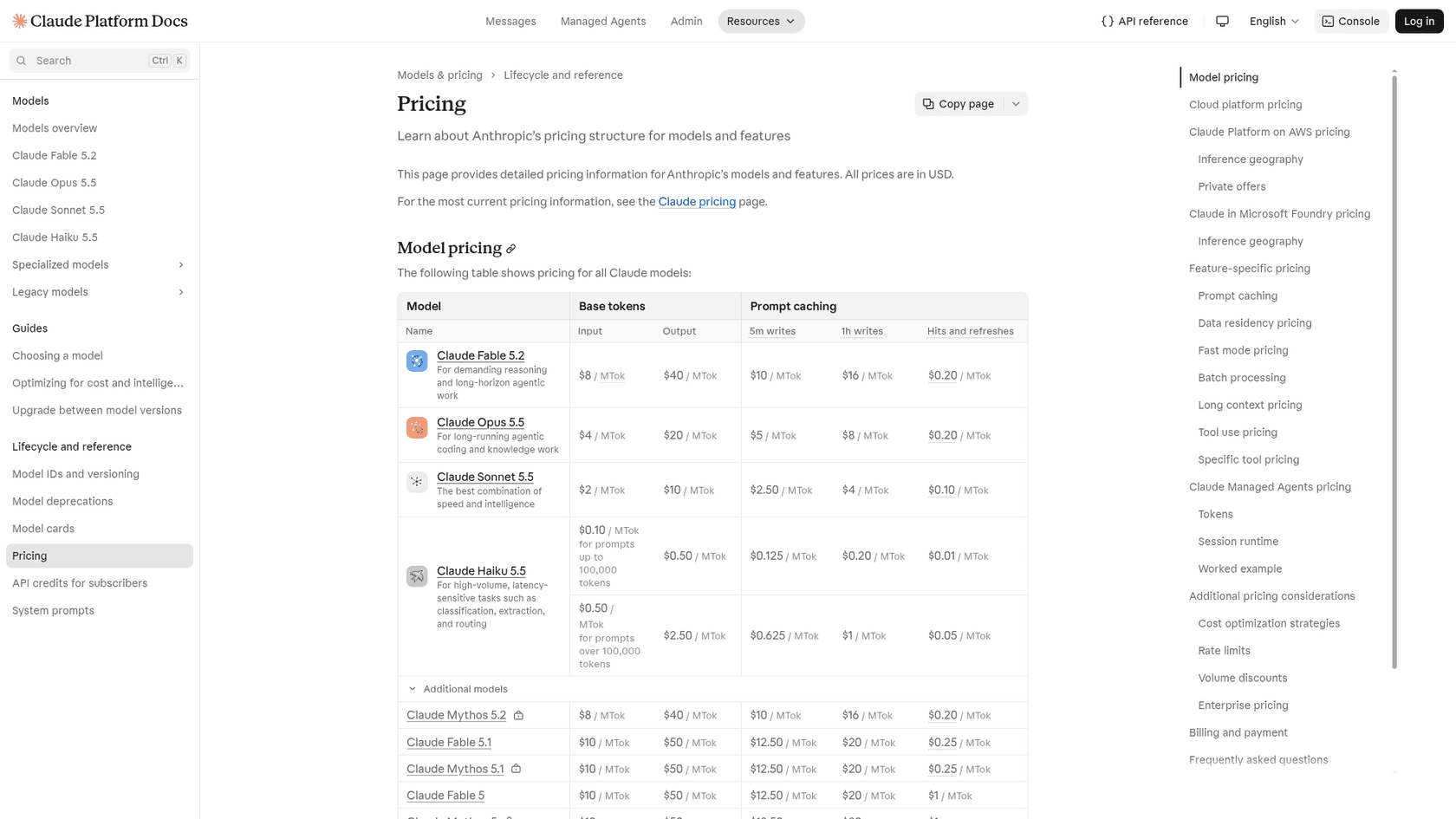
What it is. Claude Sonnet 5.5 is Anthropic's mid-tier model, listed at $2 input and $10 output with a 1M context window and 128K maximum output on Anthropic's models page.
Evidence. It scores 63.9% on Terminal-Bench running in Claude Code, only 1.9 points behind Opus 5.5. The catch is the bill for that run: 19.4B tokens and $7.3k, the highest run cost among the models I compared.
Where it fits. It is the default when GLM-5.4's missing API is the blocker, since you can call it today and it works inside Claude Code. Its pricing is the same as GPT-6.2 Sol and Kimi K3.1 Pro.
Where it falls short. It is closed-weight, and on agentic runs it burned more tokens than its price suggests.
Verdict. Pick it if you need a reliable API now and your team already lives in Claude Code. Skip it if token spend on long agent runs is the main constraint.
Cheaper in-family option: GLM-5.3
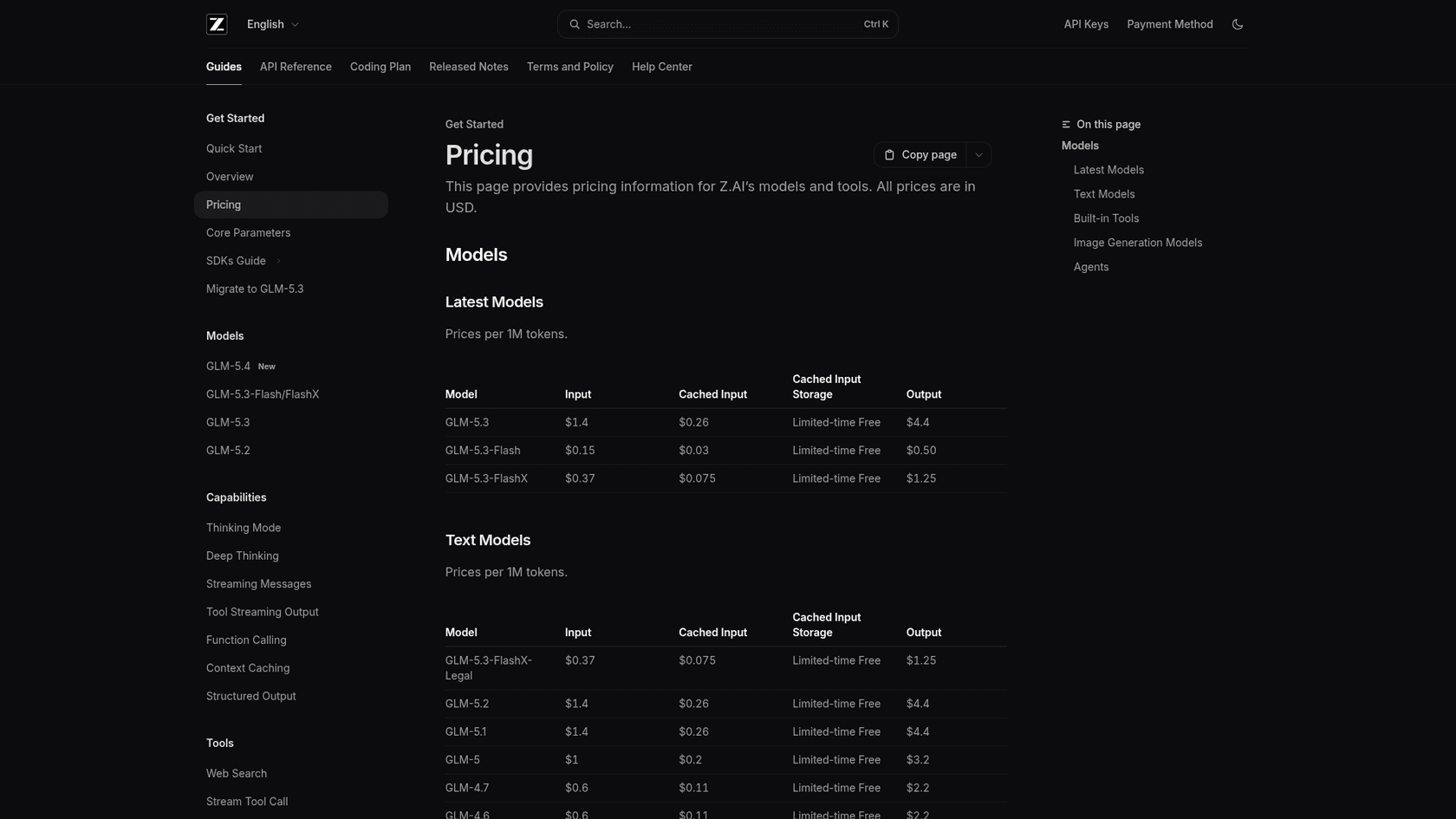
What it is. GLM-5.3 is the previous Z.ai flagship, text-only, with a 1M context window and 128K maximum output, per its model docs. It lists at $1.40 input and $4.40 output.
Evidence. It scores 41.2% on Terminal-Bench in Claude Code, at $2.7k for the run. That is 22.7 points under Sonnet 5.5 at about a third of its run cost.
Where it fits. It is the safest way to try Z.ai's models with an API while GLM-5.4 waits on its security assessment. Z.ai says GLM-5.4 beats it in 51.1% of comparisons, so treat it as the floor, not the target. The cheaper GLM-5.3 Flash pricing and GLM-5.3 Flash alternatives posts cover the smaller siblings.
Where it falls short. It is clearly behind the frontier models on the independent board.
Verdict. Pick it if you want Z.ai quality on a metered API at the lowest price in this table apart from DeepSeek. Skip it if you want the new Loop Transformer.
Quality ceiling: Claude Opus 5.5
What it is. Claude Opus 5.5 lists at $4 input and $20 output with a 1M context window and 128K maximum output, positioned by Anthropic for long-running agentic coding. It sits on the same pricing page shown above.
Evidence. It tops the models I compared on Terminal-Bench at 65.8% in Claude Code, and the run cost $4.7k against Sonnet 5.5's $7.3k, because it used 8.0B tokens to Sonnet's 19.4B. So the pricier model was the cheaper run.
Where it fits. Hard bugs, refactors across a big repo, and review. My Opus 5.5 alternatives and GPT-6 Sol versus Opus 5.5 posts go deeper on the head-to-head.
Where it falls short. At $4 and $20, simple tasks cost double Sonnet's rate for no gain.
Verdict. Pick it for the work where one wrong merge costs you a day. Skip it for routine edits.
Agent execution and lowest cost per task: GPT-6.2 Sol
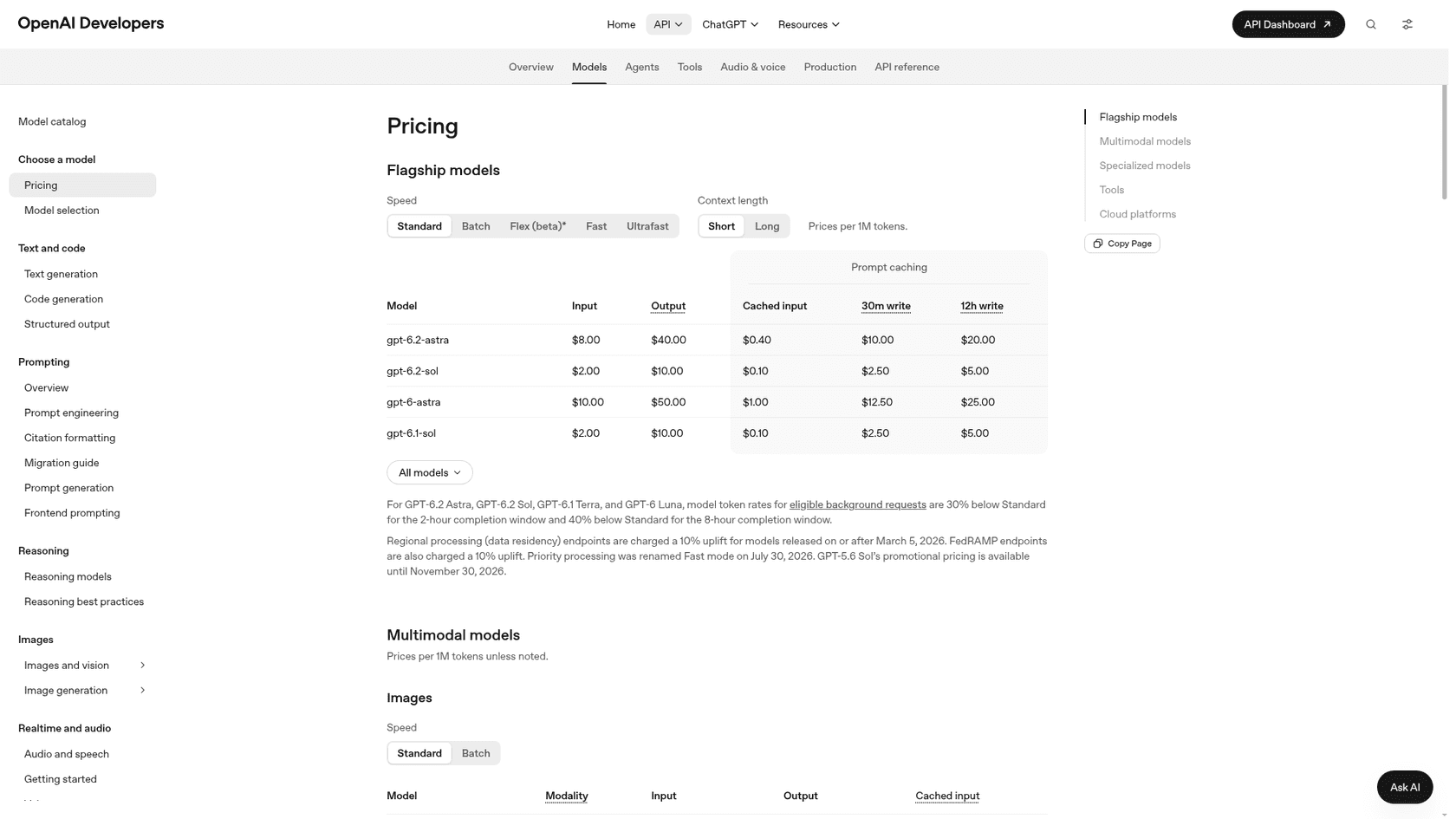
What it is. GPT-6.2 Sol lists at $2 input and $10 output with a 1.05M context window and 128K maximum output on OpenAI's model page. Its bigger sibling, GPT-6.2 Astra, lists at $8 and $40.
Evidence. In Codex, Sol scores 61.5% and Astra 62.1%, with run costs of $0.3k and $1.4k on 1.1B tokens each. Sol delivers within 0.6 points of Astra at roughly a fifth of the run cost. That token efficiency is the whole case for it. The Astra review and Sol pricing posts break down the gap.
Where it fits. Agent loops in Codex where you pay per finished task, not per token.
Where it falls short. It scores 4.3 points under Opus 5.5 on the same board, and the harness differs, so the comparison is loose.
Verdict. Pick it for high-volume agent work where run cost matters. Skip it if you need Opus-level hard-problem accuracy.
Longest output: Gemini 4 Neon
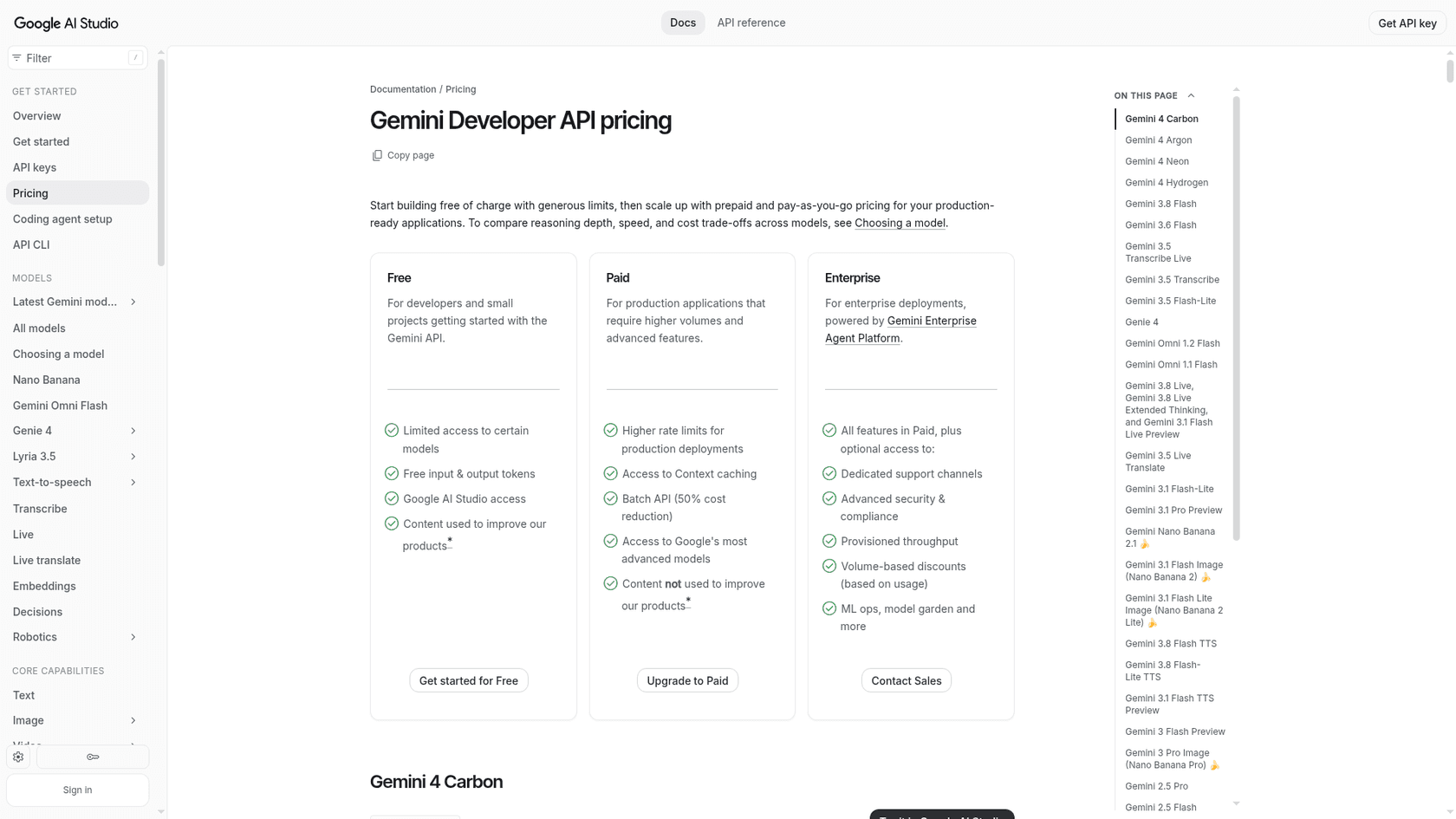
What it is. Gemini 4 Neon lists at $3 input and $15 output on the Standard tier, $1.50 and $7.50 on Batch. Google's page describes a unified 1M-token context and long-decode generation of up to 1M tokens. There is no free tier.
Evidence. It scores 61.2% on Terminal-Bench using the Antigravity CLI, with a $1.9k run cost.
Where it fits. Tasks where the answer itself is huge, like whole-codebase rewrites or long generated documents. Max output is where the field really splits.
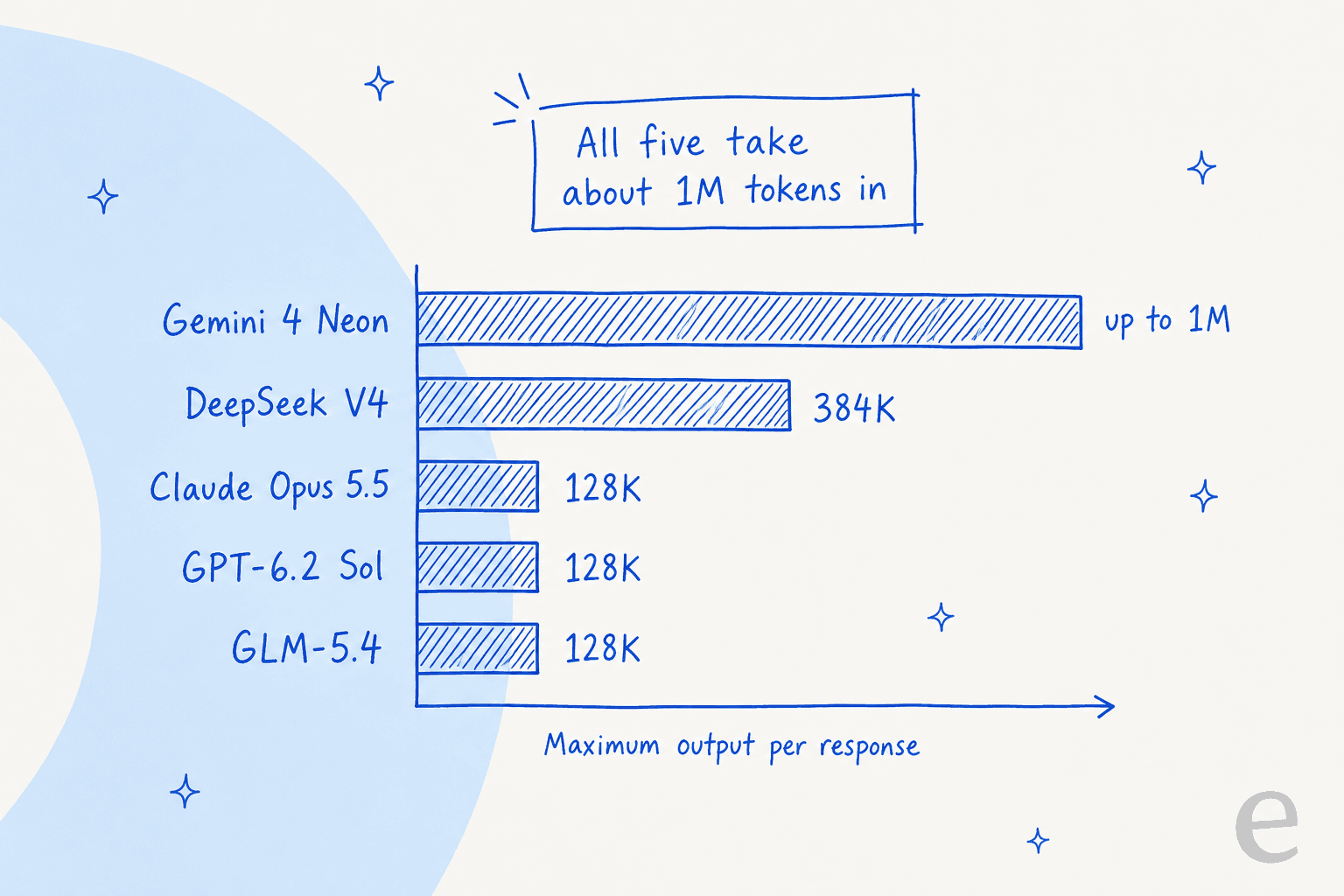
Where it falls short. At $3 and $15 it costs more per token than Sonnet and Sol, and its run cost was above Sol's. Gemini 3.8 Flash is the cheaper Google option at $0.75 and $3.75 until 31 December 2026, then $1.50 and $7.50, but the board lists it at 18.2% using a different harness (mini-SWE-agent), so the comparison is loose. See Gemini 4 Neon pricing, the Neon alternatives, and the Gemini 3.8 Flash overview.
Verdict. Pick it for output-heavy jobs. Skip it for token-sensitive loops.
Open weights near the frontier: Kimi K3.1 Pro
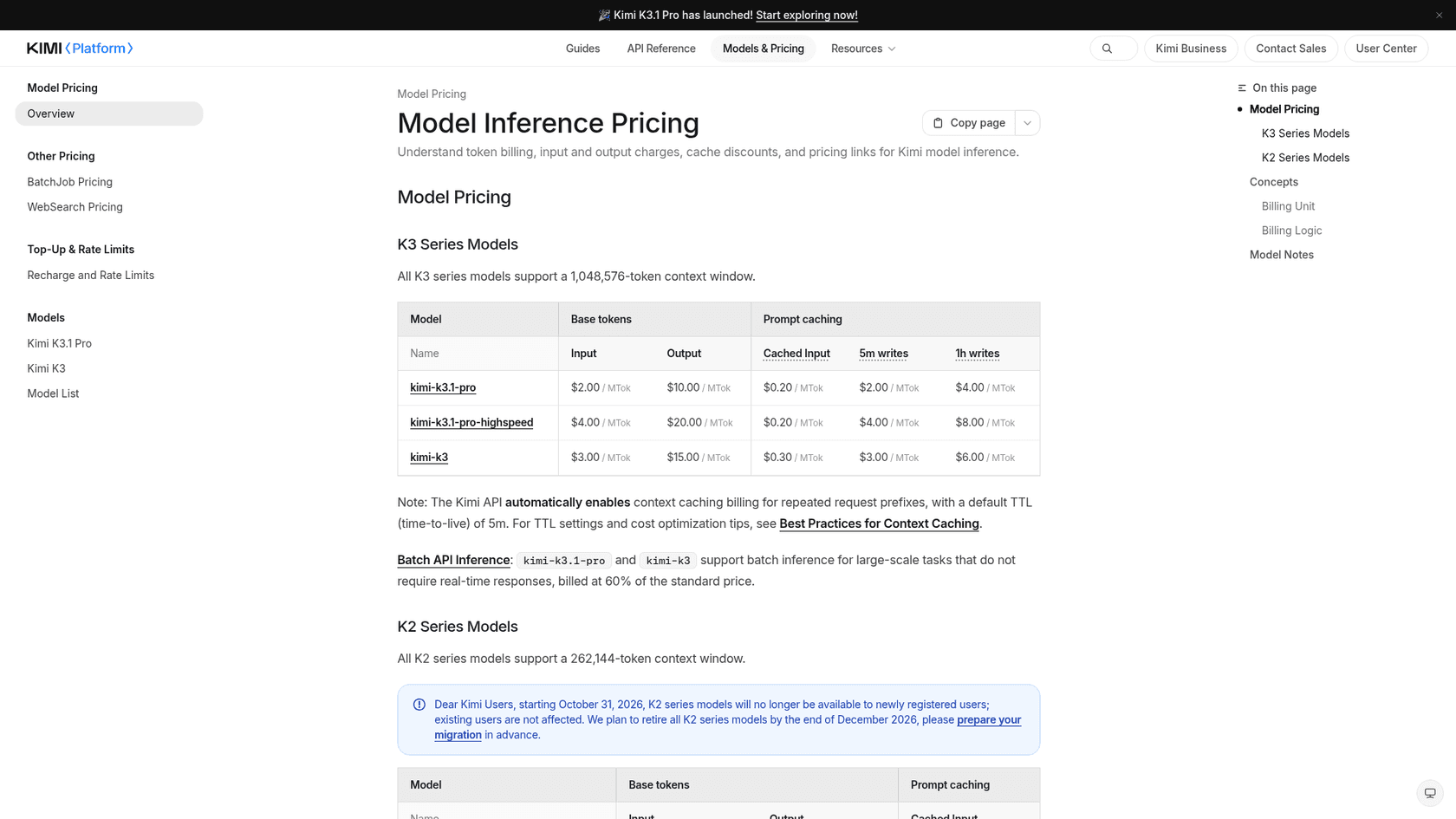
What it is. Kimi K3.1 Pro lists at $2 input and $10 output, with cached input at $0.20 and a faster tier at $4 and $20. Moonshot publishes a Hugging Face repo for the weights.
Evidence. It scores 59.7% in Claude Code with a $1.1k run. It is also the model Z.ai chose to compare GLM-5.4 against, where GLM-5.4 wins 41.8% of the time and loses 31.3%. If Z.ai's chart holds up, that is a modest edge, not a rout.
Where it fits. Teams that want a near-frontier model whose weights they can inspect. Read the Kimi K3.1 Pro pricing and Kimi K3.1 Pro alternatives posts for the cost angle.
Where it falls short. Hugging Face lists its license as "other" rather than a standard permissive one, so read it before building a product on it.
Verdict. Pick it for open weights at a mainstream price. Skip it if you need a permissive license.
Self-hosting and volume: DeepSeek V4 Pro and V4.1 Flash
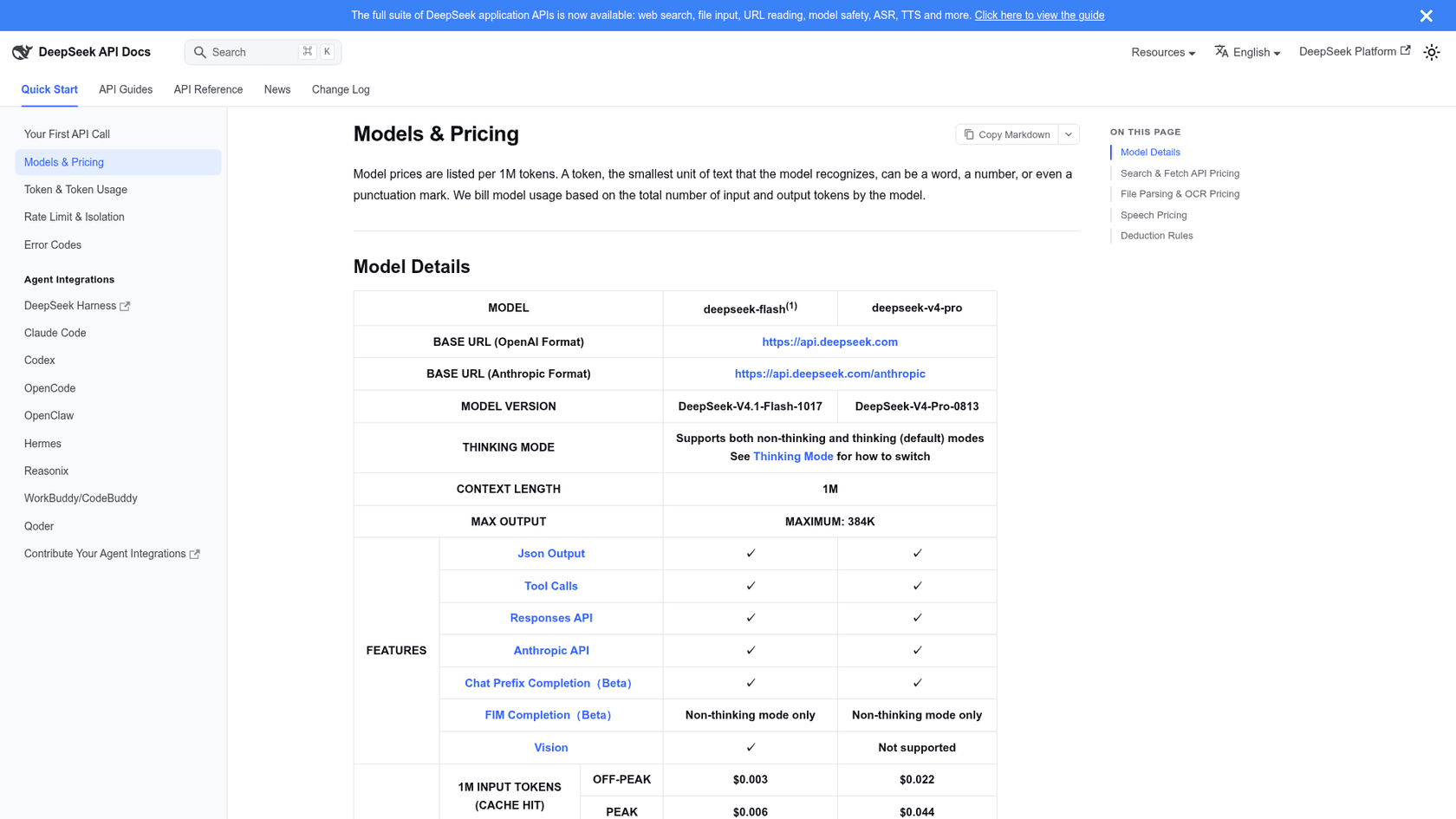
What it is. DeepSeek lists V4.1 Flash at $0.15 input and $0.60 output off-peak and V4 Pro at $0.66 and $1.98, with a 1M context and 384K maximum output for both. Peak hours double the rates. Both publish MIT-licensed weights on Hugging Face (Flash, Pro).
Evidence. Flash scores 38.5% on Terminal-Bench in Claude Code at a $0.2k run, close to GLM-5.3 at under a tenth of its run cost. V4 Pro 0813 is listed at 6.7% in that same harness, so I would not pick Pro for agent work from this board alone. I would test it in your own harness before ruling it out.
Where it fits. Flash for high-volume, low-stakes calls, and either model when you want to self-host. See Flash versus V4 Pro, the V4.1 Flash pricing, and the Flash review.
Where it falls short. Z.ai's chart has GLM-5.4 winning 36.6% against Flash with 33.2% losses, so the cheap model keeps pace in more comparisons than its price suggests, but the board shows it behind the closed frontier on agent work.
Verdict. Pick Flash for volume and self-hosting. Skip Pro for agent loops until you have tested it yourself.
How would I choose between them?
The hard part is not the table, it is deciding what to optimize.
- If the API is the blocker, take Sonnet 5.5, or GLM-5.3 if you want to stay in Z.ai's family.
- If one wrong answer is costly, take Opus 5.5.
- If you pay per finished task, test GPT-6.2 Sol first. See the AI support agent benchmarking guide for how to measure that fairly.
- If outputs are huge, test Gemini 4 Neon or DeepSeek.
- If you need weights, pick DeepSeek or Kimi, and read the licenses. My open-source AI agents guide covers the trade-offs.
- If you are waiting for GLM-5.4, keep a Coding Plan trial running and revisit once an API price and an independent score exist.
A note on data. Z.ai's privacy policy says it generally serves customers from Singapore. If you have EU or healthcare commitments, read my notes on AI support data residency before routing tickets to any hosted model.
What changes if the job is customer support?
Not much of the above, because a model is only the engine. I put it this way: this is infrastructure; eesel is the employee. eesel has spent years putting AI agents on live support queues, and the lesson that cost the most is that a confident wrong answer looks exactly like a right one until you test it. That is why every rollout is simulated against historical tickets first, and why a model swap is a test, not a switch. My AI teammates guide explains the idea, and AI support simulation testing shows the method.
SE Ranking shows how this plays out in practice. It runs one eesel agent per product, three in all, on Zendesk, and in one month (8 August to 8 September 2026) those agents handled 4,650 conversations, with about 2,100 live chats answered first by eesel. Refunds and requests for a person go to the team with the customer's name and email. The agents work from roughly 16,800 pages of knowledge. None of that depends on which model sits underneath, and the model can change.
If you want to compare models for your own queue, ask a coding agent to do the legwork through the eesel CLI, and keep the vendor-lock-in question in mind with AI support vendor lock-in.
"It's becoming reaally hard using chinese models with their 'marathon thinking' sessions... constantly second guessing themselves even when working with the simplest of things (conceptually) is very annoying and time to completion is dramatically higher compared to frontier unless you're dealing with ridiculus tps performance."

That complaint is the one I would put on any evaluation plan, whichever model you pick: measure time to a finished answer, not tokens per second.
Try eesel for support teams that don't want to pick a model
If your real goal is fewer tickets in the queue, you do not need to choose between GLM, Claude, and GPT. eesel's AI helpdesk teammate plugs into Zendesk or Freshdesk in minutes, learns from your help center and past tickets, and can be simulated on your own history before it replies to a real customer. Start from the eesel pricing page or book a demo.