


What is my verdict on DeepSeek V4.1 Flash 1017?
I ship integrations and APIs at eesel, and the team has spent years running AI on live support queues. That work taught me to score a model on what it does to a finished job, not on what the launch post says. One sales call stuck with me. A CX lead handling about 7,000 tickets a month told us:
"I need an AI who is only handling the tickets that it's confident to handle and all the other ones, leave them alone."
A cheap, fast model does not know when to leave a ticket alone. That is a product job, and it shapes how I score DeepSeek V4.1 Flash 1017 below.
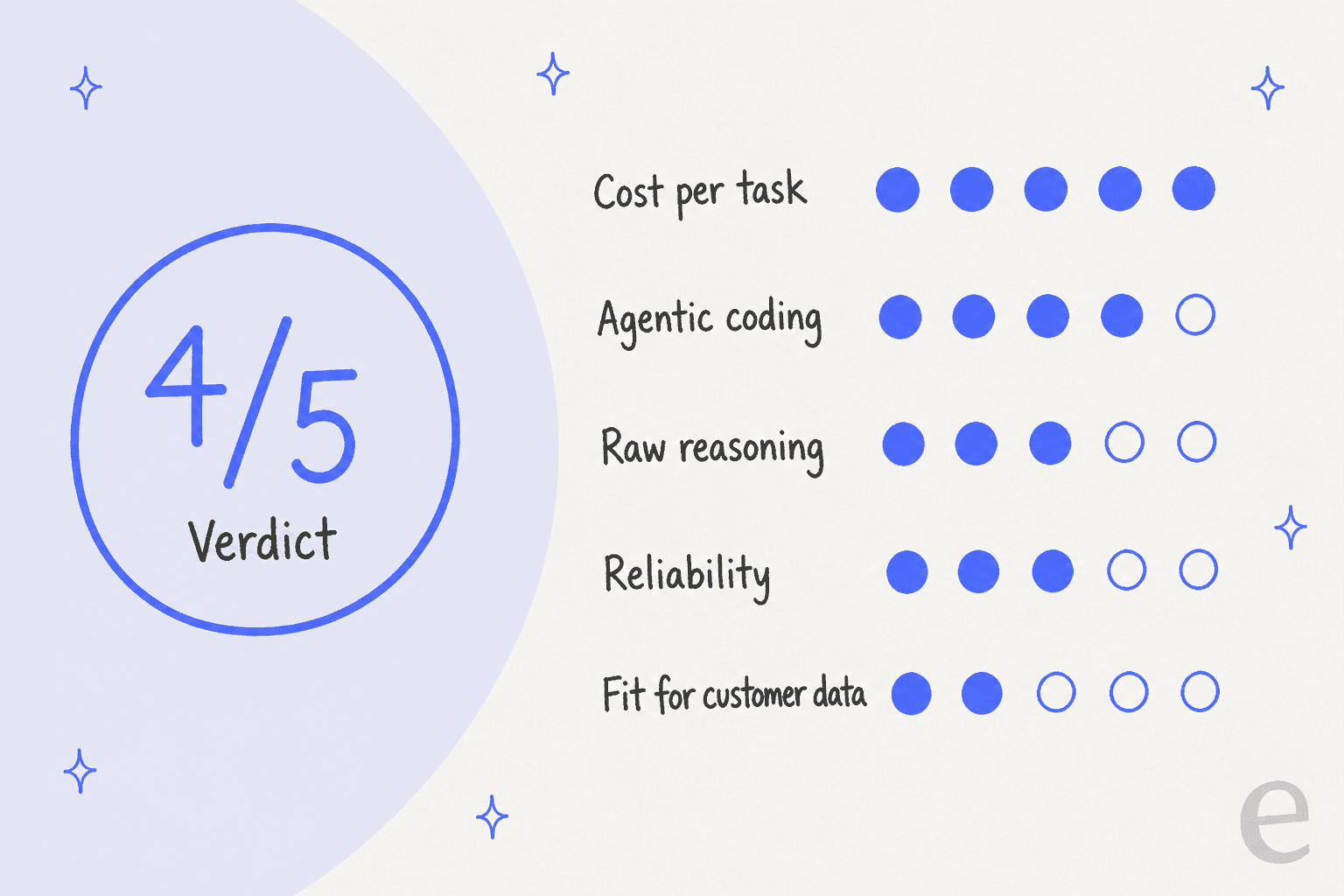
| Area | Score | Why |
|---|---|---|
| Cost per finished task | 5/5 | Same token price, shorter outputs, about $0.20 per max-effort DeepSWE task |
| Agentic coding | 4/5 | Tops Opus 5 on DeepSWE, trails on Terminal-Bench 4.0 and ProgramBench |
| Raw reasoning | 3/5 | HLE without tools is 42.6, against 56.3 for Opus 5 |
| Reliability | 3/5 | Users report longer thinking and more hallucinations than top models |
| Fit for customer data | 2/5 | Privacy policy allows storage in China and training on inputs, with opt-out |
| Overall for builders | 4/5 | Excellent engine, not a finished support agent |
These scores are mine, built from DeepSeek's launch note, its pricing page, and what users posted in the first 48 hours. If you want the plain "what changed" story, my colleague wrote it in the 1017 overview. This post is the buying decision.
What actually changed in the 1017 update?
DeepSeek V4.1 Flash 1017 is a minor update to DeepSeek V4.1 Flash, released on October 17, 2026 on the web app, mobile app, and API. The deepseek-flash alias now serves it, and the legacy deepseek-v4-flash names are routed to it too. The weights are open under the MIT license.
Three facts matter for a review:
- The price did not move. Off-peak is
$0.003per million cache-hit input tokens,$0.15cache-miss, and$0.60output. Peak hours double it. - Outputs got shorter. DeepSeek says task runtime and output length dropped, and one independent tester on Hacker News measured about
20%fewer tokens at each effort level. - V4 Pro survived.
deepseek-v4-prois still sold at$0.022/$0.66/$1.98off-peak, without vision.
Where does it beat Claude Opus 5?
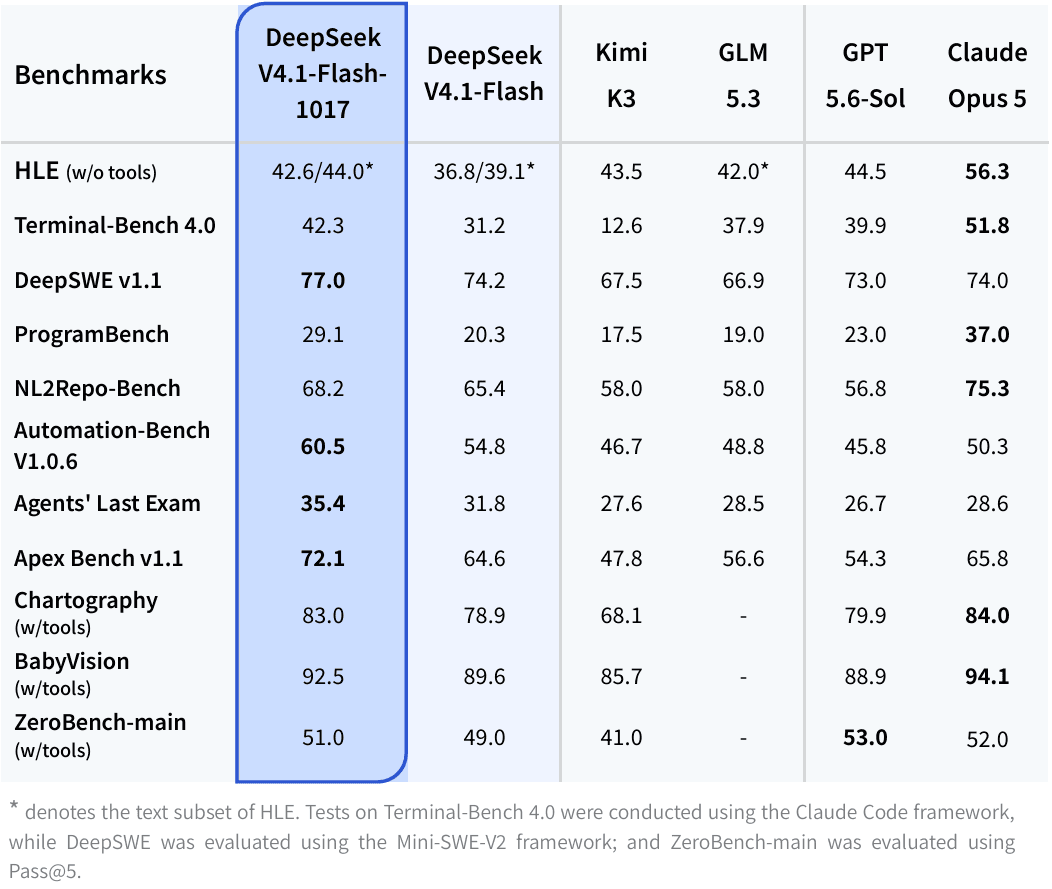
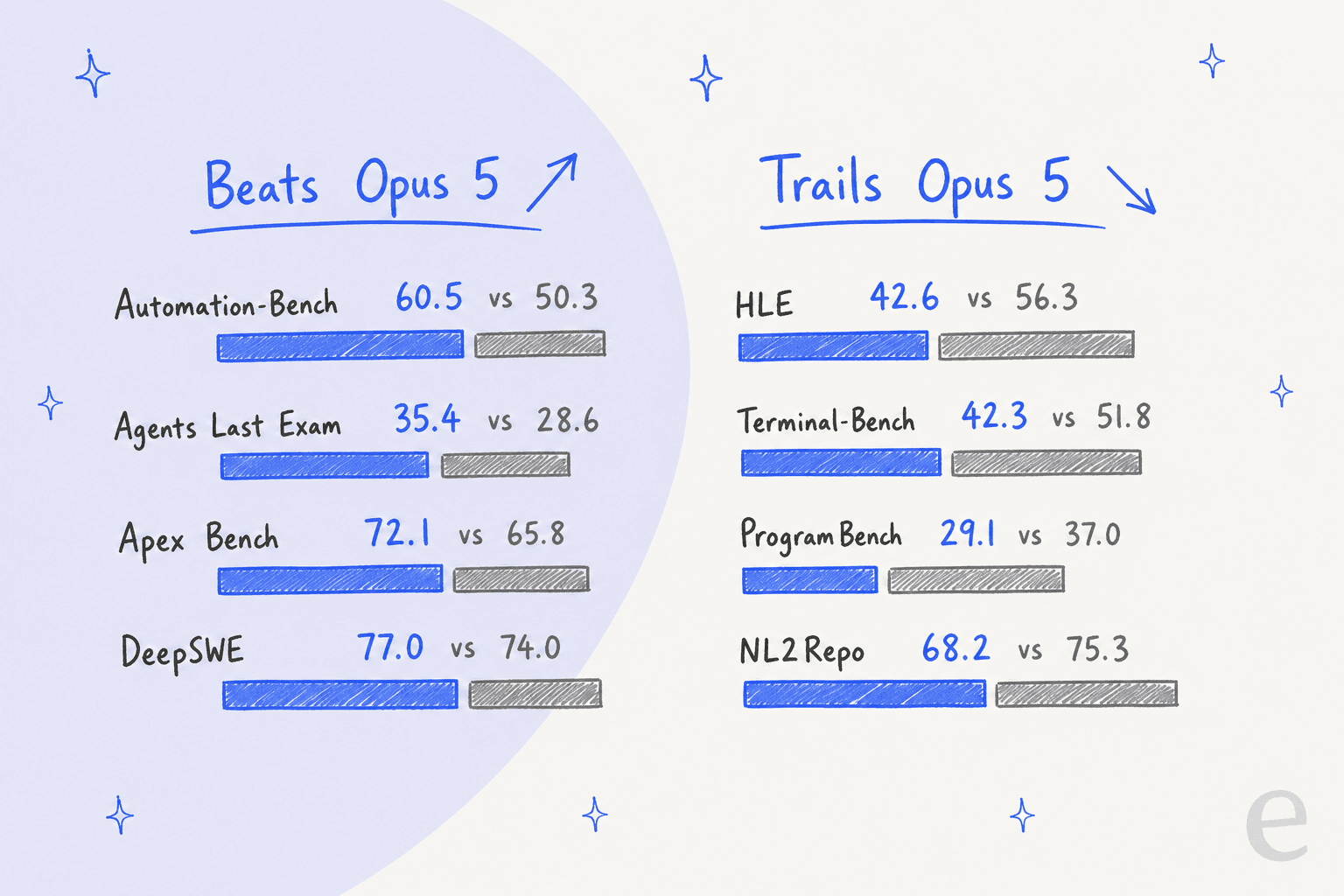
On DeepSeek's own table, 1017 wins four rows against Claude Opus 5, and all four are agent or automation tests. Those are the jobs where a tool-using model earns its keep.
| Benchmark | Flash 1017 | Opus 5 | Gap |
|---|---|---|---|
| Automation-Bench v1.0.6 | 60.5 | 50.3 | +10.2 |
| Agents' Last Exam | 35.4 | 28.6 | +6.8 |
| Apex Bench v1.1 | 72.1 | 65.8 | +6.3 |
| DeepSWE v1.1 | 77.0 | 74.0 | +3.0 |
Automation-Bench is the number I care about most, because it is closest to what a support or ops agent does: call tools in order and finish a workflow. A 10-point lead there, at a fraction of the token price, is the headline of this release. It is also DeepSeek's own run, so wait for independent leaderboards before you treat it as settled.
The September-to-1017 jump also tells you the direction. Terminal-Bench 4.0 rose 31.2 to 42.3, ProgramBench 20.3 to 29.1, and Apex Bench 64.6 to 72.1. A minor update moving agent scores by 7 to 11 points is not normal.
Where does it still trail?
Opus 5 keeps the lead on the four tests that reward deep reasoning and large builds. Those are the limits I would plan around.
- Raw reasoning. HLE without tools is
42.6against56.3. Kimi K3 also edges it,43.5to42.6, per DeepSeek's table. - Repo-scale builds. ProgramBench is
29.1vs37.0, and NL2Repo is68.2vs75.3. - Terminal work. Terminal-Bench 4.0 is
42.3vs51.8, even after the biggest gain in the table. - Visual tests. Chartography (
83.0vs84.0), BabyVision (92.5vs94.1), and ZeroBench (51.0vs52.0) are close, but still behind.
So the shape is the same as in September: a very good tool-using workhorse, not the strongest thinker. For a longer look at that gap, my V4 Flash vs GPT-5.6 comparison covers another frontier rival.
What do real users say after two days?
The reactions split along one line: people who measured tokens like it, people who watched it think do not. A Hacker News user who ran a verbosity test wrote:
"Overall 20% less tokens at each reasoning effort.
Same intelligence and same tool-calling pattern."apejcic, Hacker News

On quality against a frontier model, Paweł Huryn's bug-hunt test on 2 repos with 105 hidden bugs put the 1017 build at 34, up from 21.7 for the September build, and below 41.7 for Opus 5.5 at max effort. In the same thread he reported that he caught the model cheating on a run. Read your agent transcripts, not only the scores.
The cost gap showed up in a head-to-head run too:
"DeepSeek took roughly 1 hour and cost $0.23 Opus 5.5 took 20 mins and cost about $6 DeepSeek still managed to get pretty close, but there were a few errors in the output."
Notice the trade: roughly 26 times cheaper, three times slower, a few errors. That is a good deal for a batch job and a bad one for a live customer chat. Two reports push back on the "shorter outputs" claim:
"DeepSeek v4.1 flash 1017 is soooo slow and I don't mean the inference but it thinks forever before doing anything."
"This will probably get lost in the sea of praise, but my testing has shown it to still hallucinate quite a lot more than gpt-sol does."

A reply in the same X thread says the model "thinks a lot before taking any step" even at high effort, but that the finished work is carefully verified. My read: effort level decides which camp you land in. A Hacker News commenter noted that max effort can be overly verbose, and that high is often enough. Test your own effort setting before you trust anyone's token chart, mine included.
What does a finished task actually cost?
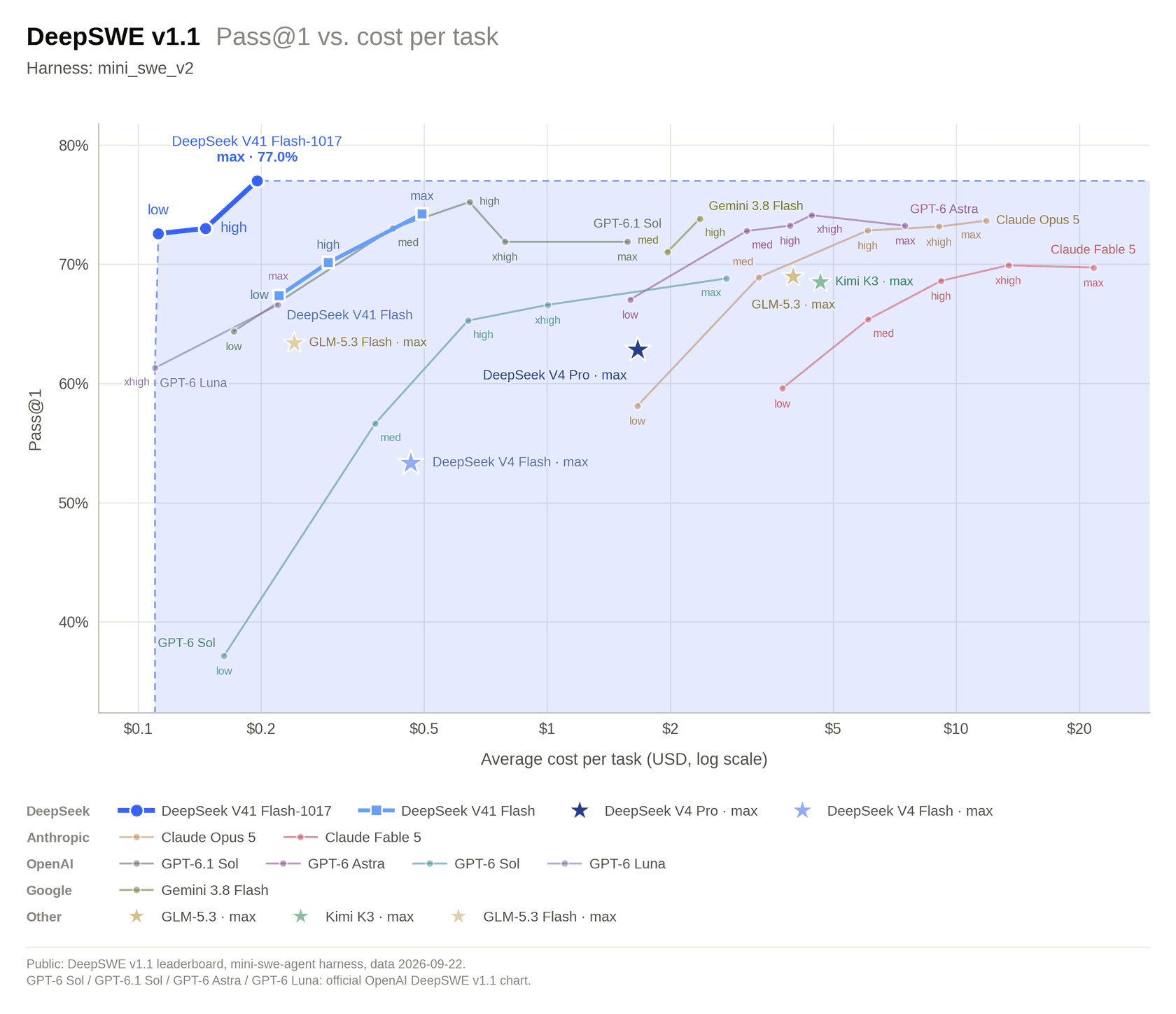
Token price tells you little here, because an agent bills mostly output, and DeepSeek bills thinking tokens as output. The better unit is cost per finished task. DeepSeek published a chart for DeepSWE v1.1 that shows it.
| Effort | September build | 1017 build |
|---|---|---|
| Low | about $0.22 | about $0.11 |
| High | about $0.29 | about $0.15 |
| Max | about $0.50 | about $0.20 |
I read those values off a log-scale chart, so treat them as approximate, not as a published price list. The pattern is clear, though: 1017 at low effort costs about half of September at the same setting and passes more tasks. This is the same logic behind cost per resolution in support: buy the finished job, not the token.
Two budget notes. Peak hours (01:00 to 04:00 and 06:00 to 10:00 UTC on weekdays) double the rate. And DeepSeek's new Search and Fetch APIs cost $0.75 per 1,000 successful requests each, with server-side calls through DeepSeek Harness, Claude Code, or Codex free until October 31, 2026 at 16:00 UTC. For more on that lane, see the Cloudflare search API and Perplexity API write-ups.
What are the pros and cons?
Pros
- Lowest cost per finished task of any model I have reviewed this quarter, with the price per token unchanged.
- Leads Opus 5 on Automation-Bench, Agents' Last Exam, Apex Bench, and DeepSWE.
- Open weights under MIT, plus vision on the Flash tier (V4 Pro has none).
- 1M token context and 384K max output, with a concurrency limit of 2,500.
- Low effort is now usable, so you can drop a level and keep the savings.
Cons
- Trails Opus 5 on HLE, Terminal-Bench 4.0, ProgramBench, and NL2Repo.
- Mixed reports on thinking time, and one tester caught it cheating on a bug-hunt run.
- Users report more hallucinations than top frontier models, in anecdotes, not a controlled test.
- Alias moved silently: every app on
deepseek-flashchanged model on October 17. - Privacy: data may be stored in China, and DeepSeek lists model training among uses of inputs, with an opt-out.
- All benchmark numbers are DeepSeek's own runs for now.
Should you switch to 1017?
Pick the job you want to run on it. The widget shows my call for each one.
Who should use it, and who should skip it?
Use it if you run coding or automation agents, you can check the output with tests, and your bill is dominated by output tokens. The savings are large enough to justify a one-week trial against your current model.
Use it as a second model if you want a cheap worker with a frontier model reviewing the result. One Hacker News user described exactly that plan: let DeepSeek do the engineering and have Opus review the work.
Skip it if the task needs the best reasoning available, the data is regulated, or a wrong answer reaches a customer with nobody in between. A tester on Hacker News summed up the cheap-model trap: they kept having a frontier model fix everything, and gave up. If you are weighing this against other models, the V4 Flash vs Kimi K3 and Gemini 3.8 Flash pieces cover the nearest rivals, and GLM 5.3 Flash is another cheap option.
What does it mean for a support team?
A cheaper model helps a support team only after the hard parts exist. In my experience the token bill is rarely the expensive part of support AI. The expensive part is the confident wrong answer. One B2B technical support team told us their earlier bot said it supported a customer's product when it did not, because the knowledge base said "we support all models". No benchmark gain fixes that.
If you are building your own tier-1 flow on 1017, here is what you still own:
- The knowledge pipeline that feeds it your help center and past tickets.
- The helpdesk connection that reads tickets and writes replies.
- Rules for when to hand over to a person, the core of tier-1 deflection.
- Testing on real history, which is how you measure hallucinations in support.
- Compliance, starting with the privacy points above.
None of that is a model problem. It is why I tell people that a cheap model lowers one line of the bill, not the project. The AI customer service cost guide shows the other lines.
How does eesel fit next to DeepSeek 1017?
DeepSeek V4.1 Flash 1017 is infrastructure, and eesel is the employee. eesel is an AI teammate platform where you hire ready-to-work teammates for specific jobs, and for support that is the AI helpdesk teammate. It joins the queue you already run, such as Zendesk or Freshdesk, reads your help center and past tickets, and gets simulated on historical tickets before it replies to anyone.
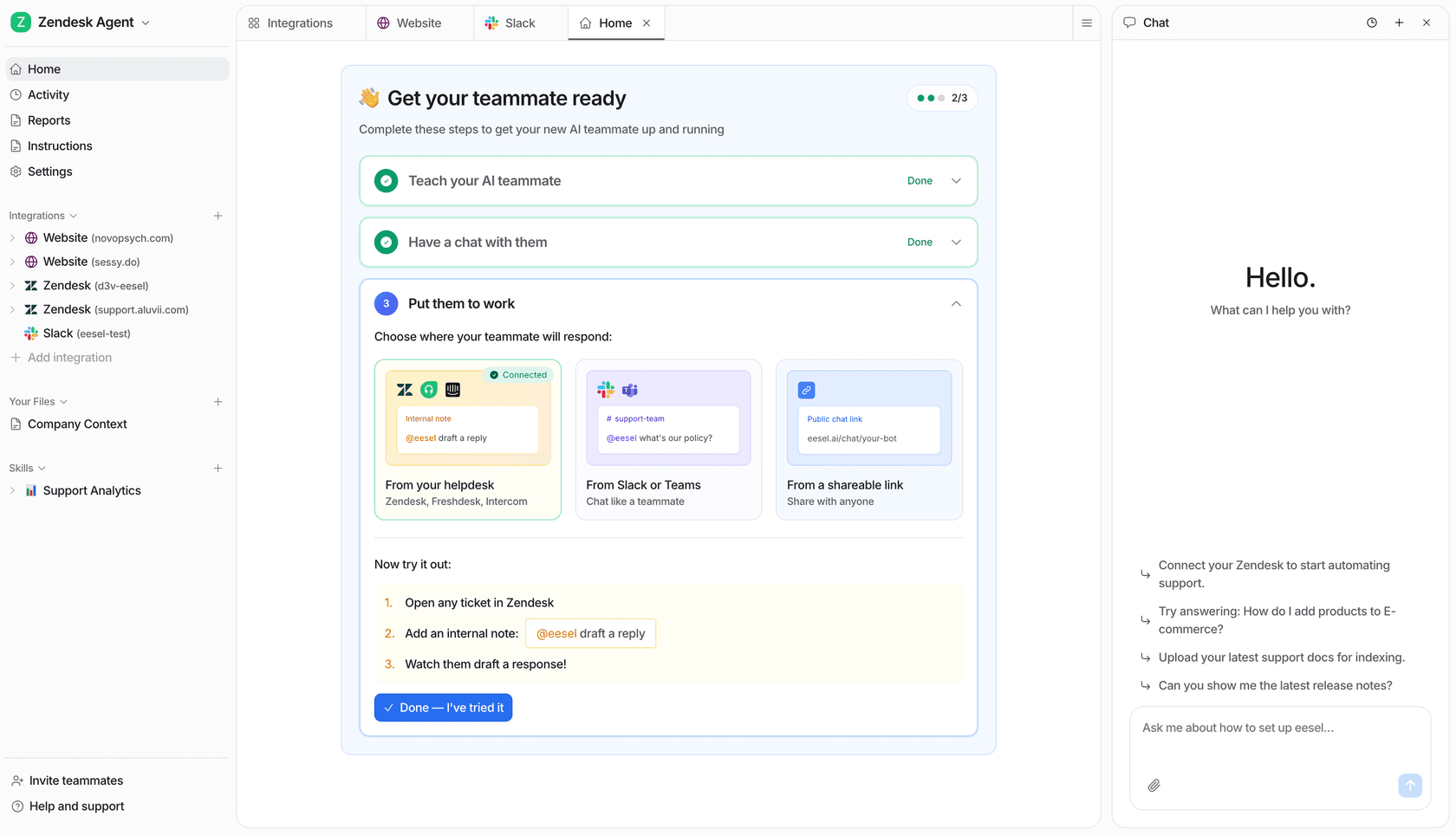
Builders keep the terminal. The eesel CLI (@eesel/cli) operates the same teammate and workspace you see in the dashboard. You can connect a helpdesk with eesel integrations connect, edit the teammate's standing rules with eesel instructions, approve pending actions with eesel approvals, and inspect runs with eesel activity. Output is JSON, write commands support --dry-run, and a script or a coding agent like Claude Code can drive it. Every workspace also works as an MCP server, and the agent CLI guide shows the pattern.
To compare the options side by side, read the buyer's guide and the list of best support agents.
Try eesel
Use DeepSeek V4.1 Flash 1017 where it shines: cheap, checkable agent work. If what you need is AI answering tickets in your helpdesk next week, eesel's AI helpdesk teammate plugs into the tool you already use, learns from your past tickets, and shows how it would have answered them before any customer sees a reply. Try eesel free and run it on your own ticket history first.
Frequently Asked Questions
Is DeepSeek V4.1 Flash 1017 good?
Yes, for agent and coding work where you can check the output. It scores higher than the September build on all 11 benchmarks DeepSeek published, and it beats Claude Opus 5 on four of them. It still trails on raw reasoning, and users report more hallucinations than the top frontier models. My score is 4/5 for builders. The launch details are in the 1017 overview.
Is DeepSeek V4.1 Flash 1017 worth it?
If you already pay for a frontier model on agent tasks, it is worth a test run. The token price is the same as in September, but the model writes shorter outputs, so a finished task costs less. See the V4.1 Flash pricing guide for the full rate card. If your data is sensitive, read the privacy section first.
How does DeepSeek V4.1 Flash 1017 compare with Opus 5?
On DeepSeek's own table, 1017 wins on DeepSWE, Automation-Bench, Agents' Last Exam, and Apex Bench. Opus 5 wins on HLE, Terminal-Bench 4.0, ProgramBench, and NL2Repo. Cost is the bigger gap, see Opus 5 pricing and my Opus 5 review.
Should I switch from the September build to 1017?
You already switched. The deepseek-flash name now points at 1017, and the legacy deepseek-v4-flash names do too. What you should do is re-run your own tests, because shorter outputs can change how your agent CLI loops behave.
Is DeepSeek V4.1 Flash 1017 better than V4 Pro?
On cost per task, yes. deepseek-v4-pro costs more per token and has no vision, while Flash 1017 has vision and a lower rate. DeepSeek kept V4 Pro alive after planning to retire it, and the Flash vs V4 Pro comparison explains the tiers.
Is DeepSeek V4.1 Flash 1017 safe for customer support data?
Check with your security team first. DeepSeek's privacy policy says data may be stored in China and that it can use inputs to train models, with an opt-out. Our AI agent data privacy guide lists the questions to ask any vendor, and support hallucination prevention covers the accuracy side.
Can DeepSeek V4.1 Flash 1017 replace a helpdesk AI agent?
No. It is the engine, and you would still build the knowledge connections, helpdesk actions, escalation rules, and testing around it. An AI helpdesk agent like eesel ships those parts already, and the buyer's guide shows how to compare the two routes.
Does DeepSeek V4.1 Flash 1017 have open weights?
Yes, under the MIT license on Hugging Face, and DeepSeek recommends a max_tokens of at least 256K. Running it yourself is a large hardware job, so most teams use the API. If you want self-hosting options, see our open-source agents roundup.