
What you're actually comparing
This is the part most "X vs Y" posts skip, and it changes everything.
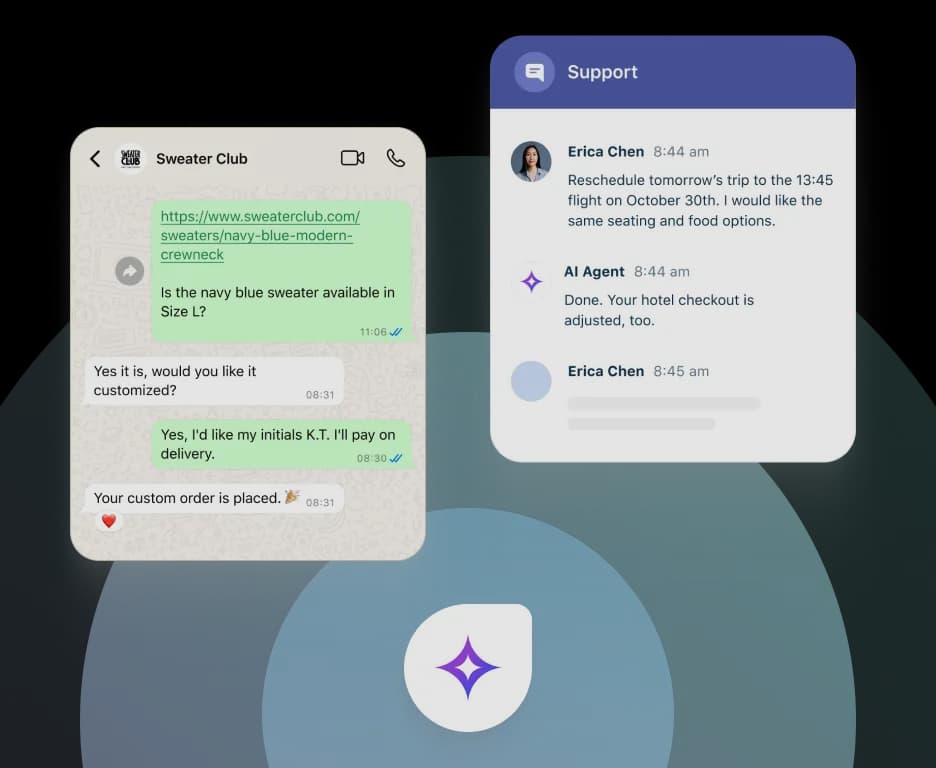
Freshdesk Freddy is not a standalone product. It's the AI suite baked into Freshworks' helpdesk, so it only exists if Freshdesk is your helpdesk. Freshworks splits it into three pieces: Freddy AI Agent (the customer-facing bot), Freddy AI Copilot (agent-side assist), and Freddy AI Insights (analytics for leaders). They market the Agent as resolving up to 80% of queries.
eesel is the opposite shape. It's a helpdesk-agnostic AI layer: you connect it to whatever you already run (Freshdesk, Zendesk, Gorgias, Front, HubSpot) and it handles tickets, drafts replies, and triages from inside that tool. So this isn't really "rip out Freshdesk for eesel." For most readers the honest question is "do I use Freshworks' own AI, or put a different AI on top of the Freshdesk I already pay for?" One eesel customer, Design.com, runs over 50,000 tickets a month on Freshdesk exactly that way.
That framing matters because it means the comparison is about the AI, not the ticketing. Both can read your knowledge, both can auto-reply, both can hand off to a human. The differences are in the details.
How Freshdesk Freddy works
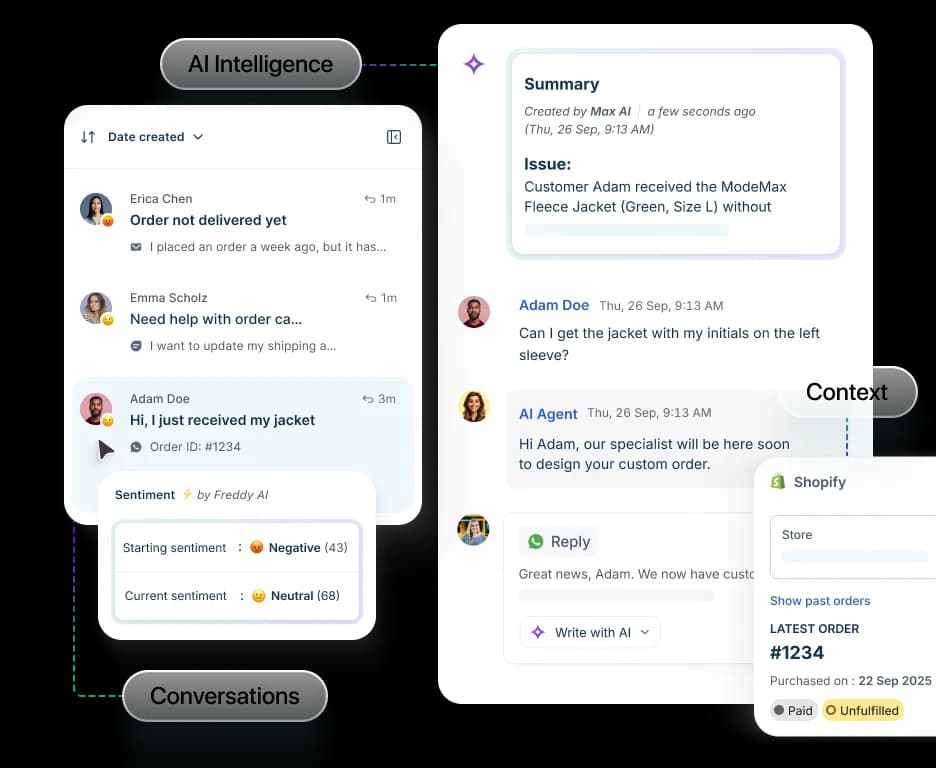
Freddy's biggest selling point is that it's already there. If you're on a paid Freshdesk plan, turning on the customer-facing bot is mostly a matter of buying a session pack and mapping an agent to your channels. The no-code AI Agent Studio lets you build a bot from natural-language prompts, and it ships with 50+ prebuilt "agentic workflows" for things like Shopify order updates and Stripe refunds. If you want the wider menu of options here, our roundup of the best AI apps for Freshdesk covers them.
On the agent side, Copilot lives right in the workspace: reply suggestions, conversation summaries, and live translation, with no context-switching.
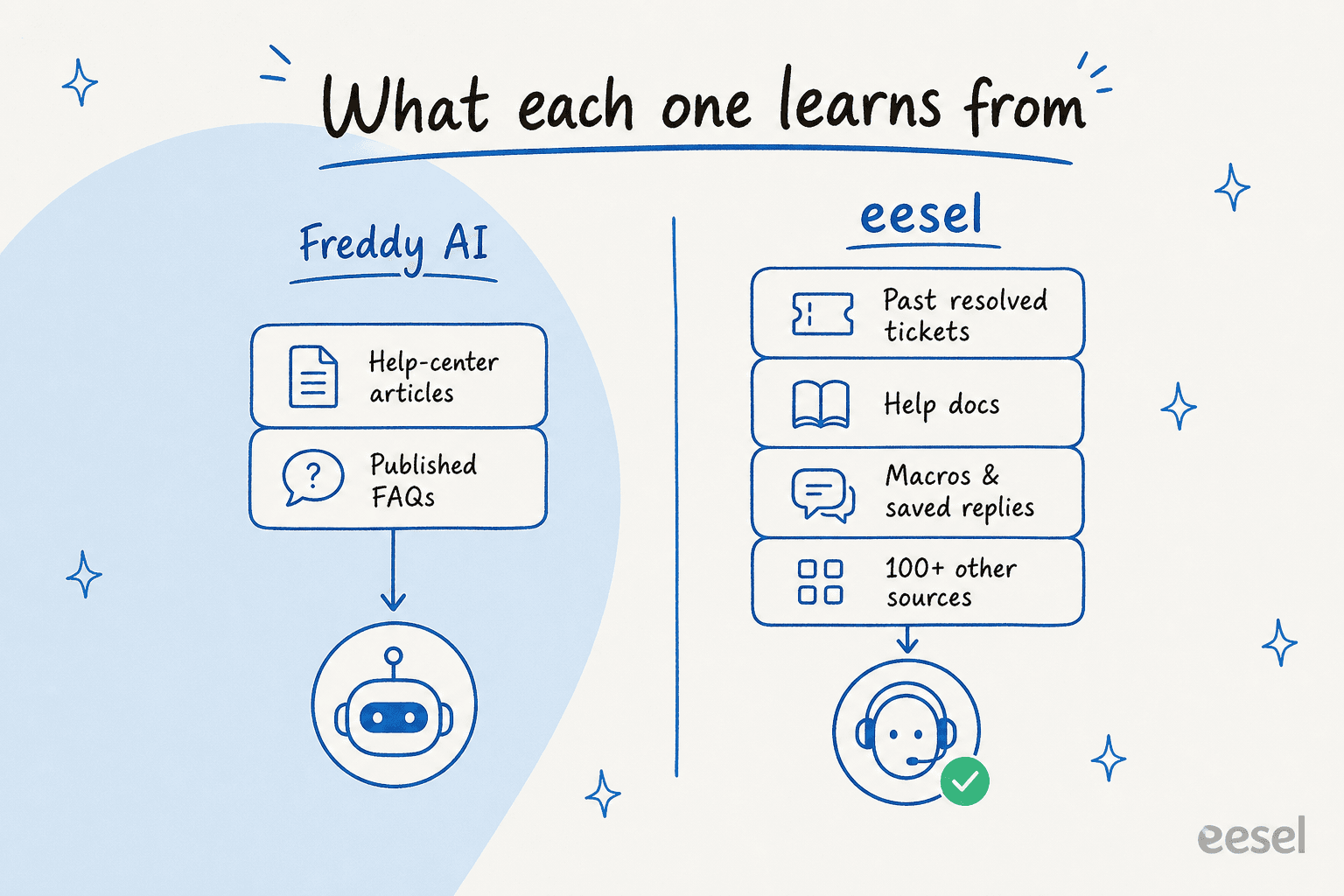
The catch is in what the bot learns from and how it goes live. Freddy AI Agents are trained primarily on your solution articles, web links, and FAQs. That's fine when your Freddy knowledge base is comprehensive and current. It's less fine when the real answer to a customer's question lives in how your team actually replied to the last 200 tickets like it, because that nuance was never written into an article. And enabling it is a four-stage admin flow (buy add-on, assign roles, flip feature toggles, build the agent) rather than a guided "test it first" path.
How eesel works
eesel starts from a different assumption: the best training data you have isn't your help center, it's your closed tickets. When you connect it, it learns from your past resolved tickets, help docs, macros, and 100+ other sources on day one, so it picks up the phrasing, edge cases, and "we actually do it this way" details your articles never captured.
The other big difference is how it goes live. Instead of flipping a switch, eesel makes you run a simulation against your historical tickets: you see exactly what it would have replied, your coverage by topic, and where the gaps are, before a single customer talks to it. Then you grant autonomy gradually, and confidence-based routing keeps it honest: low-confidence tickets become drafts for a human instead of a confident-but-wrong auto-reply.
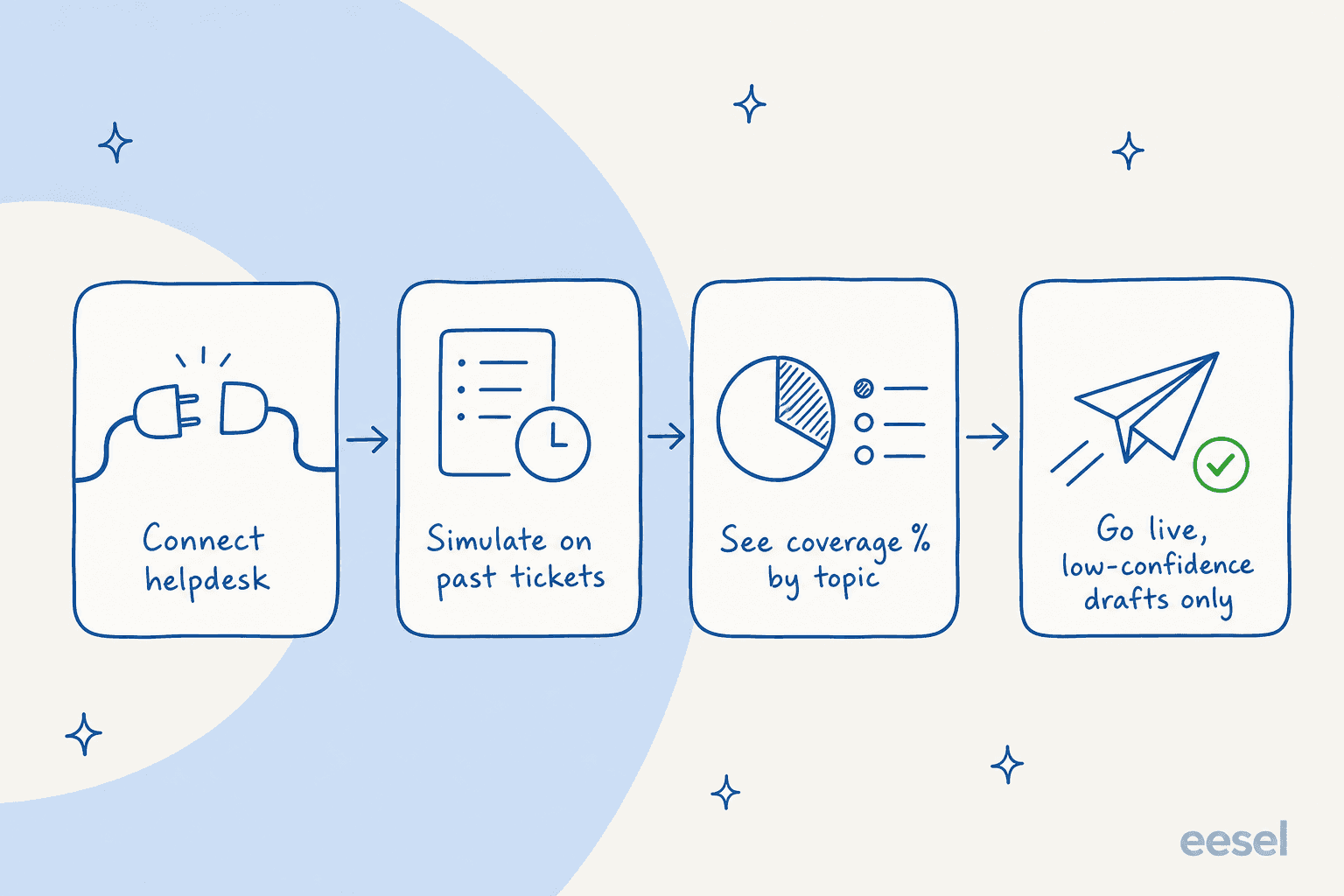
That gated rollout is the single biggest reason teams who've been burned by an over-eager bot tend to trust eesel faster. It's the difference between "we hope it's accurate" and "we measured it on our own tickets last Tuesday."
Where they actually differ
Strip away the marketing and four differences do most of the deciding.
| Dimension | Freshdesk Freddy | eesel |
|---|---|---|
| Lives where | Inside Freshdesk only | On top of any helpdesk (Freshdesk, Zendesk, Gorgias, Front, HubSpot) |
| Learns from | Help-center articles, FAQs, web links | Past resolved tickets + docs + macros + 100+ sources |
| Go-live control | Buy add-on, toggle on | Simulate on historical tickets first, then gradual autonomy |
| Pricing model | Per session, packs expire each cycle | Flat $0.40 per ticket, no seats, no expiry |
| Agent Studio | Freshdesk Omni only (not standalone) | Included for every helpdesk |
| Languages | 60+ | 80+ |
The two that bite hardest in practice are knowledge and lock-in. Freddy is genuinely good at the things that are already written down, and for a lot of tier-1 questions that's enough. But the moment a question needs the un-documented answer, a bot trained only on articles guesses, and a bot trained on your resolved tickets has usually seen it before. And because Freddy only exists inside Freshdesk, your AI quality is tied to staying on Freshdesk forever, whereas eesel lets you keep the helpdesk and change the brain.
Pricing: what each really costs
Here's where the two diverge most, and where I'd spend the most time before signing anything.
Freddy meters you per session. A session is all of one customer's interactions with the bot inside a 24-hour window (72 hours for email). You get 500 free sessions one time with a paid plan, then you buy packs, and those packs expire at the end of your billing cycle. Agent-assist (Copilot) is a separate per-seat add-on on top.
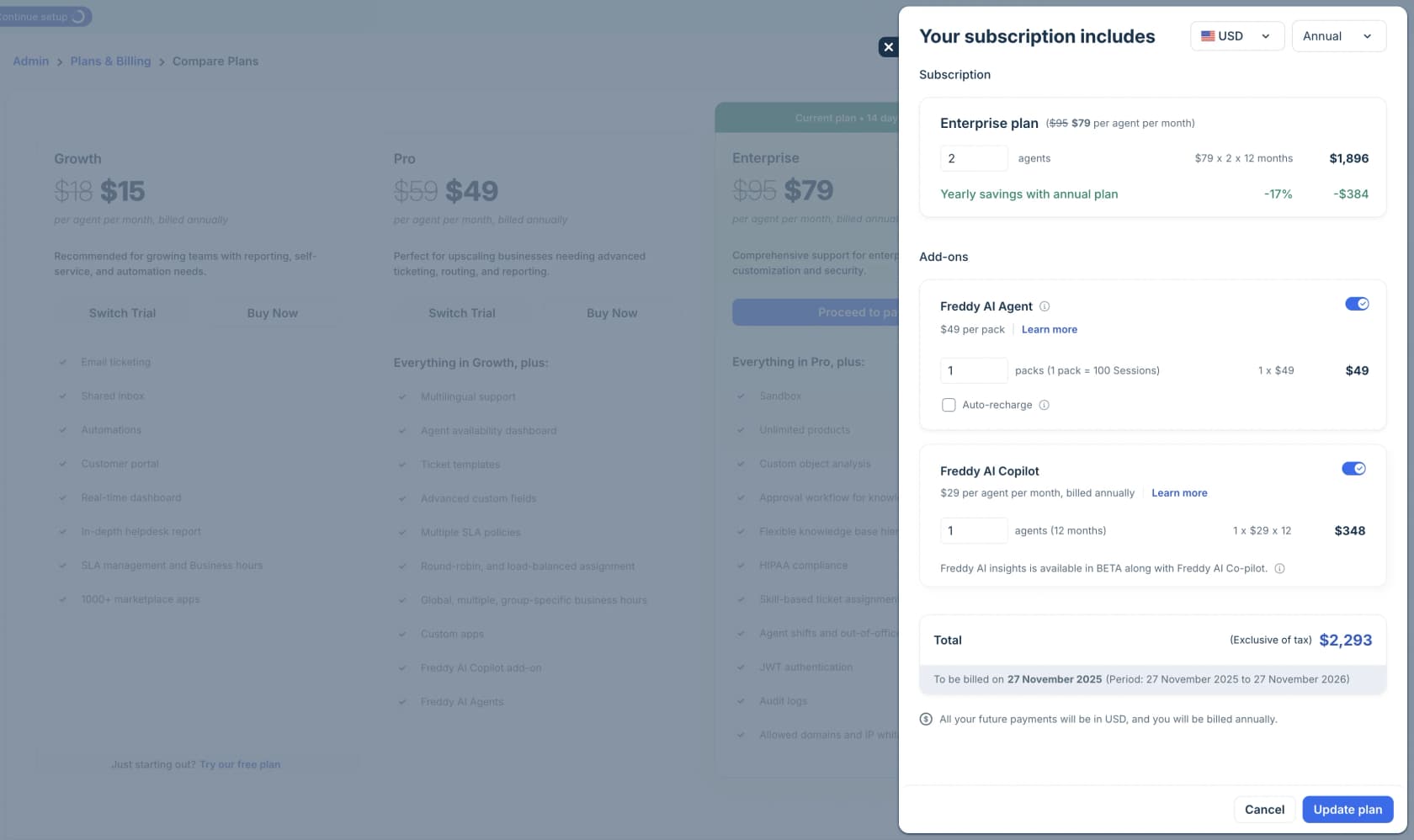
| Item | Freshdesk Freddy | eesel |
|---|---|---|
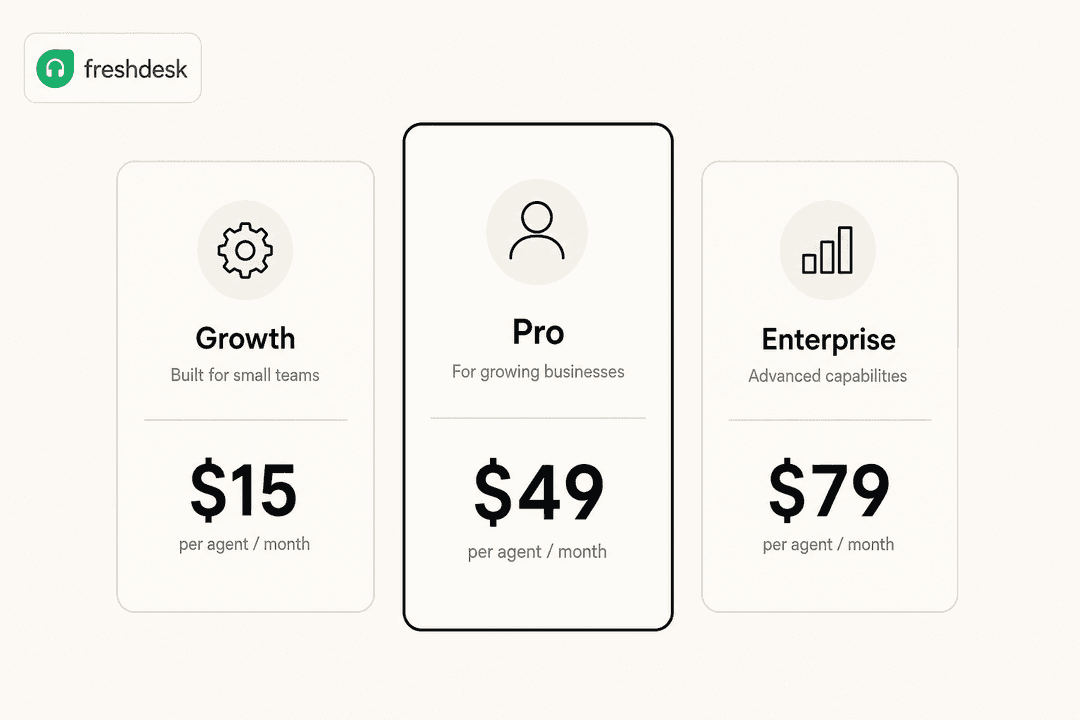
| Base plan | Growth $19 / Pro $55 / Enterprise $89 per agent/mo (standalone) | No platform fee, no per-seat fee |
| AI Agent (bot) | $0.49/session standalone; $0.10/session on Omni | $0.40 per ticket handled |
| Free allowance | 500 sessions, one-time | $50 in free usage (no card) |
| Agent assist (Copilot) | $29/agent/mo add-on (Pro/Enterprise only) | Included |
| Pack expiry | Unused sessions expire each cycle | No packs, no expiry |
| Spend control | Auto-recharge top-ups | $250/mo default cap, adjustable |
The session model has a real failure mode the Reddit threads keep flagging: a launch, a shipping delay, or a viral incident spikes your conversation volume, and your cost spikes with it, with no carryover for the months you under-use. eesel's flat per-ticket rate moves with actual volume in both directions, and you're never charged for tickets your humans handle.
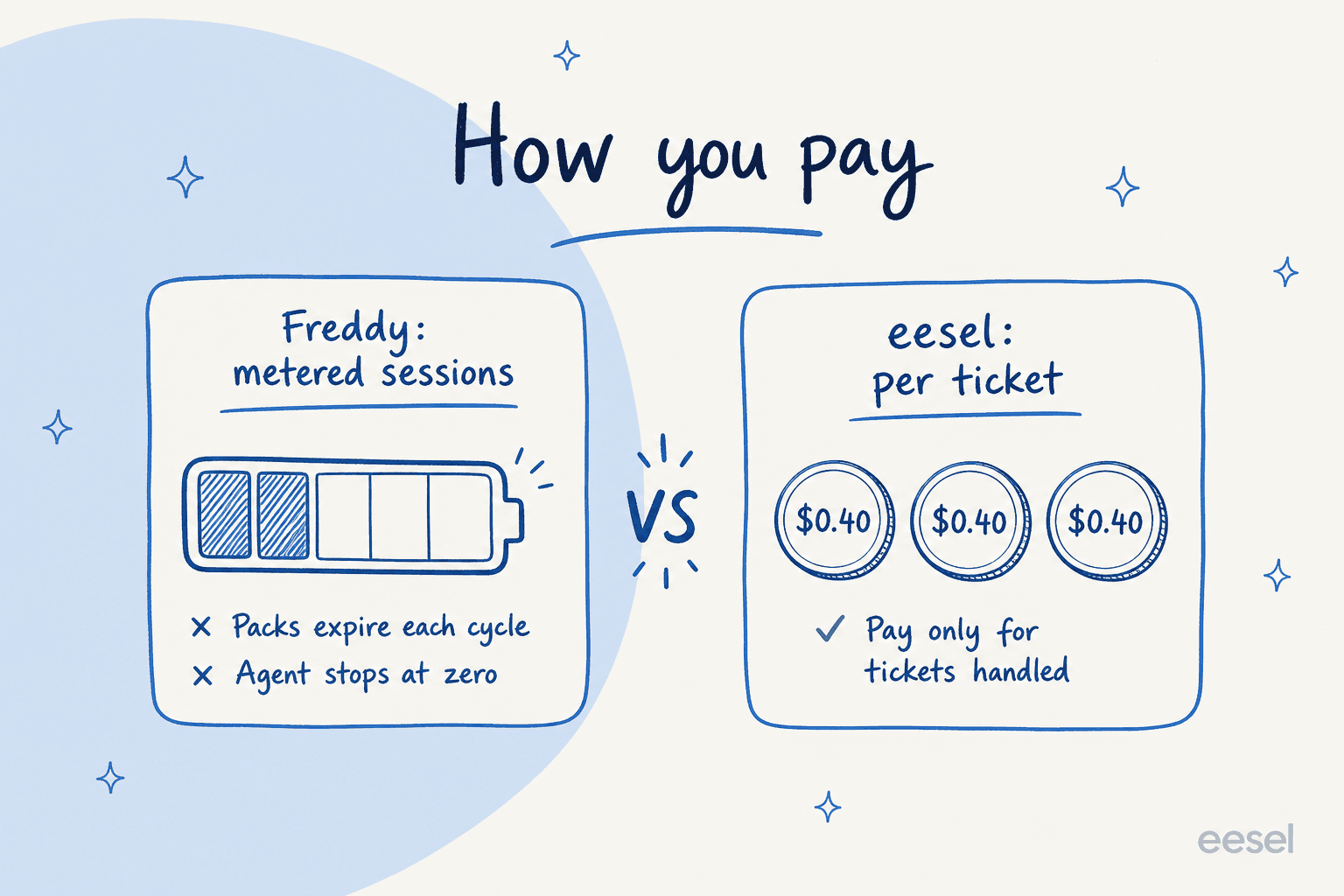
To be fair to Freddy: on Freshdesk Omni, the raw bot session at $0.10 is cheaper per unit than eesel's $0.40 ticket. The honest nuance is that the $0.10 buys a deflection bot only, while eesel's $0.40 covers full ticket handling (drafts, triage, auto-resolution) with no separate Copilot seats. Plug in your own numbers:
Type your monthly AI conversations and how many agents need Copilot to see each provider's itemized bill, with the eesel savings called out monthly and yearly.
For a deeper breakdown of the session math, our Freshdesk Freddy pricing guide and Freddy Copilot pricing posts go line by line, and the eesel pricing page shows the worked monthly examples.
What real users say
The sentiment online splits cleanly: people like the Freshdesk helpdesk, and they're skeptical of the AI specifically. The most common note is that Freddy is fine on simple stuff and wobbles on complex tickets.
"We tested an ai integration in freshdesk and had almost the exact same experience. it worked for very simple tickets but anything slightly complex got misclassified. agents ended up spending more time fixing errors than before, so we had to rethink our approach."
That's from a Reddit thread on AI in service tools, and it's the exact pattern I see most: the bot demos well, then real tickets arrive. A reply in the same thread put the fix bluntly:
"Auto-replies sounded great in theory, but once real tickets came in, it started giving confident but wrong answers. CSAT dipped quick. What worked better for us was using it as an agent assist, draft replies, summaries, tagging, not full auto mode."
That "confident but wrong" failure is exactly what simulation and confidence routing are built to catch. To be fair, plenty of smaller teams are happy with Freddy's basics. One support ops lead who tested a stack of tools landed here:
"Freshdesk Freddy: for early stage teams that want something simple, it covers the basics auto assignment, suggested replies, FAQ deflection. It's reliable and affordable, nothing crazy."
"Reliable and affordable, nothing crazy" is a fair one-line verdict on Freddy. Whether that's enough depends on how complex your tickets get. Freshdesk itself rates 4.4/5 on G2 across roughly 3,750 reviews, so the underlying helpdesk is well-liked; the reservations are about the AI add-on, not the ticketing.
Which should you pick
Here's where I'd land after all of it.
Pick Freshdesk Freddy if you're committed to Freshdesk, your help center is genuinely thorough, your ticket mix is mostly simple FAQ-style questions, and you'd rather flip on the bot that's already in your admin panel than connect a new tool. For basic ticket triage and deflection, it's a reasonable, low-effort default.
Pick eesel if your hardest tickets need the answers that live in your closed tickets rather than your articles, if you want to measure accuracy on your own history before going live, if predictable per-ticket pricing beats expiring session packs, or if you want the freedom to keep your helpdesk and change the AI later. It also fares well against the wider field in our best AI helpdesk software roundup. The deciding factor is usually trust: teams that have been burned by a confident-but-wrong bot want the simulation and confidence routing, and that's the gap Freddy doesn't fill.
And the two aren't mutually exclusive in the way the title implies, because eesel runs on top of Freshdesk. You can keep everything you like about Freshdesk and just swap the brain.
Try eesel on Freshdesk
If you're on Freshdesk and Freddy's answers feel thin or its session bill keeps climbing, eesel is the lowest-risk way to find out if a smarter AI helps: it plugs into Freshdesk in minutes, learns from the tickets you've already solved, and lets you simulate the whole thing against your history before it ever talks to a customer. You keep Freshdesk; you just upgrade the AI sitting on top of it.
It's free to try with $50 of usage and no credit card, so you can point it at your real tickets this afternoon. Try eesel or see the full pricing.
Frequently Asked Questions
What is the difference between eesel and Freshdesk Freddy?
How much does Freshdesk Freddy cost compared to eesel?
Can I use eesel on top of Freshdesk?
Is Freshdesk Freddy good for small teams?
Which is more accurate, eesel or Freddy AI?



Article by
Kurnia Kharisma Agung Samiadjie
Kurnia is a software engineer and writer at eesel AI with two years of SEO experience, writing about AI tools, helpdesk software, and customer support. He pairs a developer's understanding of how these products are built with search-driven research into what actually ranks and resonates with the people searching for them.