eesel vs Zendesk AI at a glance
Here is the head-to-head before we get into the detail. Prices and limits are from each vendor's own pages and from operator reports gathered during research.
| Dimension | eesel | Zendesk AI |
|---|---|---|
| Billing unit | Flat $0.40 per ticket (one ticket = one task, any number of replies) | Per automated resolution, on top of seats |
| Reported AI cost | $0.40 / ticket, fixed | ~$1.20 to $1.50 / resolution on plan; $2 on overage |
| Seat / platform fee | None | Suite from $55/agent/mo; AI needs Suite Team or higher |
| Free entry | $50 free usage, no card | Free version has no AI; 14-day Suite trial |
| Learns from | Past tickets, macros, help center, docs | Help center + connected knowledge |
| Pre-launch simulation | Yes, runs on past tickets with a forecast | No native simulation |
| Setup time | Under 30 minutes, no-code | Longer; flow builder and KB setup |
| Where it runs | Inside Zendesk, Freshdesk, Gorgias, Slack, more | Inside Zendesk (plus Forethought for other platforms) |
| Languages | 80+ out of the box | Multilingual, plan-dependent |
| Best for | Teams wanting predictable cost and oversight | Enterprises standardizing on the full Suite |
What Zendesk AI actually is
Zendesk is the incumbent. Its AI is positioned as the intelligence layer of what it now calls the Resolution Platform, with the tagline "AI that gets better with every resolution." In practice that breaks into a few products: autonomous AI agents that resolve conversations across channels, a per-role Copilot that drafts AI replies and suggests next actions for human agents, a knowledge layer, and automatic QA scoring across interactions. If you want the full feature catalogue, we mapped the Zendesk AI capabilities separately.
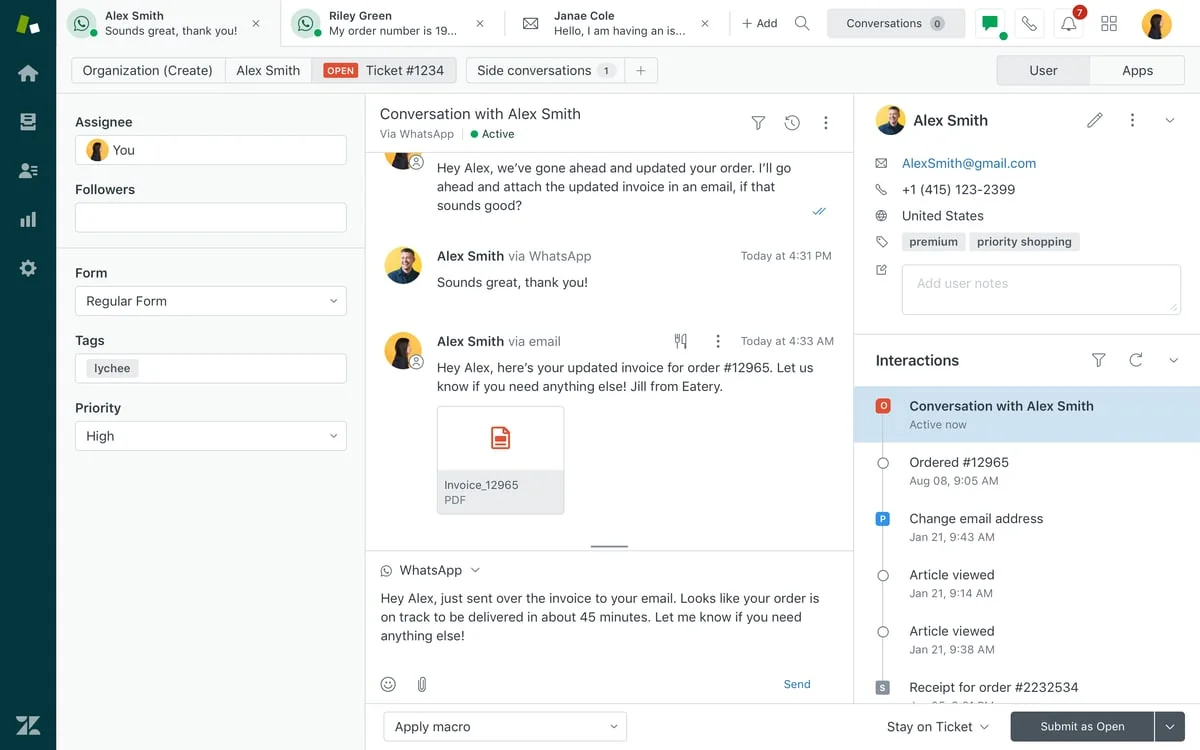
Credit where it is due. The core ticketing is mature, the omnichannel coverage is deep, and the marketplace runs to 1,800+ apps. Zendesk also has the proof points: it cites 4.8 billion resolutions delivered and a Leader spot in the 2025 Gartner Magic Quadrant for the CRM Customer Engagement Center. On the review sites the product is well-liked, with a 4.3/5 from 6,964 reviews on G2 and about 92% of those landing at 4 or 5 stars. The friction, as we will see, is almost never the core product. It is the bill.
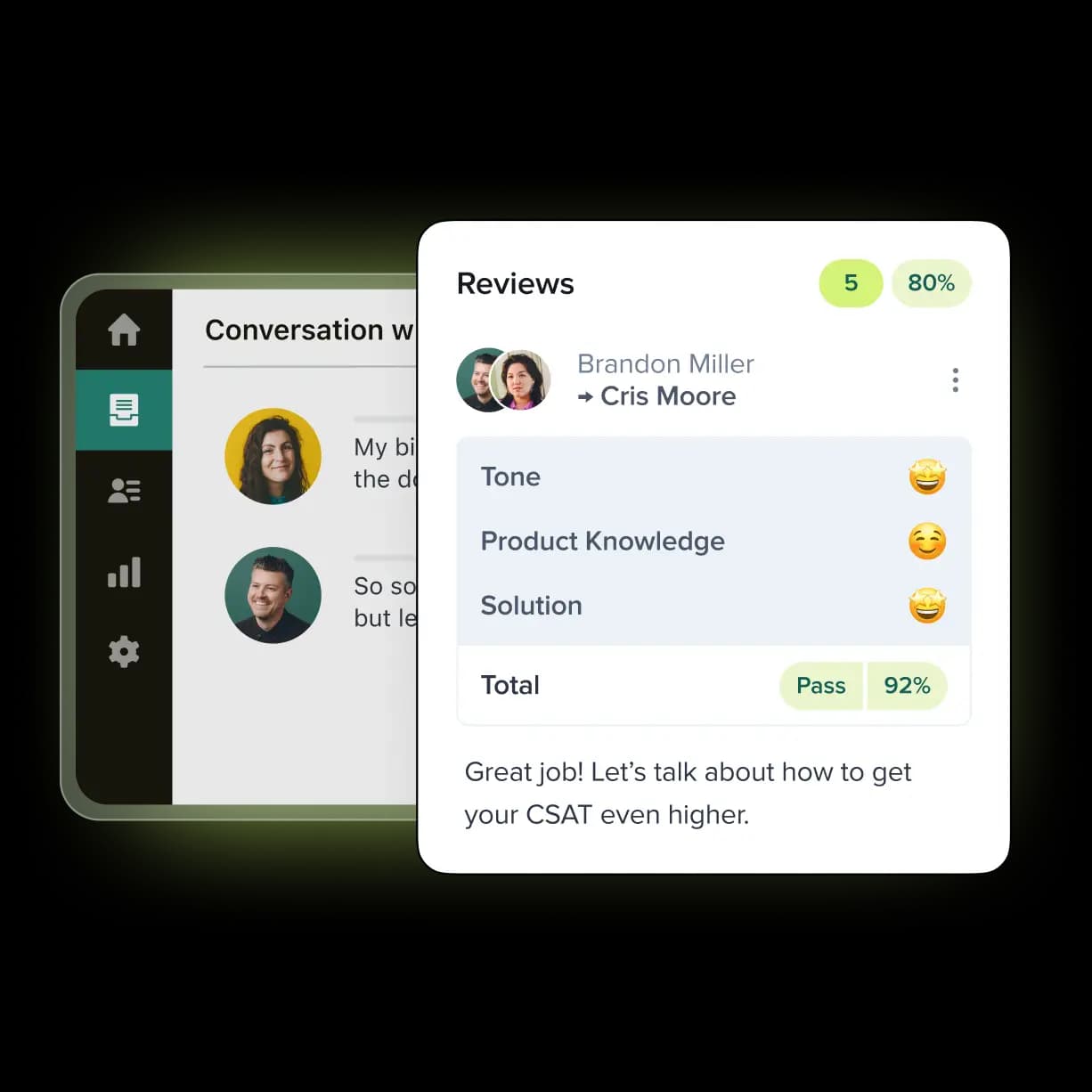
The AI itself is good at the copilot job. Its AutoQA scores conversations on tone, product knowledge, and solution across 100% of interactions rather than a sample, which is a genuinely useful governance feature most rivals do not match.
How Zendesk prices its AI
This is where it gets sharp. Zendesk's AI agents are billed per automated resolution: you pay for each customer request the AI resolves without escalating to a human. That sounds fair, "only pay for outcomes", until you read how operators describe it. The exact rate is not on the pricing page, but the reaction thread when Zendesk rolled it out lands on real numbers:
"From what I can see in regards to this new 'Automated Resolution' pricing model, we'll be paying about $1.50 ~ $1.20 per resolution. And what Zendesk counts as a resolution can be ... subjective... If you have 500 AR per week, the bill blows out to be $650, where there wasn't a charge before."
u/caledragonpunch, r/Zendesk on the AR pricing model

The "subjective" part is the real catch. A resolution is counted even when the customer gave up:
"who knows if the bot is just leaving the customer hanging and marking it as a resolution... they got agitated and abandoned the chat and it was considered a resolution"
u/Willing_Estimate6107, same thread
All of that sits on top of seat pricing. The AI agents only appear once you are on Suite Team at $55 per agent per month, the entry free version has no AI at all, and the Copilot add-on is a further $50 per agent per month.
What eesel AI is
eesel takes the opposite shape. It is an AI teammate that installs into the helpdesk you already run, learns from your history on day one, and bills per ticket. The thing I would flag first is what it learns from: not just your published help-center articles, but your past resolved tickets and your macros, which is where the real answers usually live.

Inside Zendesk specifically, eesel installs as a native agent in under 30 minutes: it imports help-center articles, past tickets, and macros automatically, then you configure behavior in plain language. It reads incoming tickets, drafts and sends replies in the customer's language, updates fields, respects your existing triggers and business hours, and escalates when it should. Ecosa, an eesel customer, reports it handles 75% of tier-1 Zendesk tickets and took under an hour to integrate.
The part with no Zendesk equivalent is simulation. Before eesel touches a live customer, you run it against thousands of your past tickets and it reports a forecast resolution rate, broken down by theme, so you can find and fill gaps first.
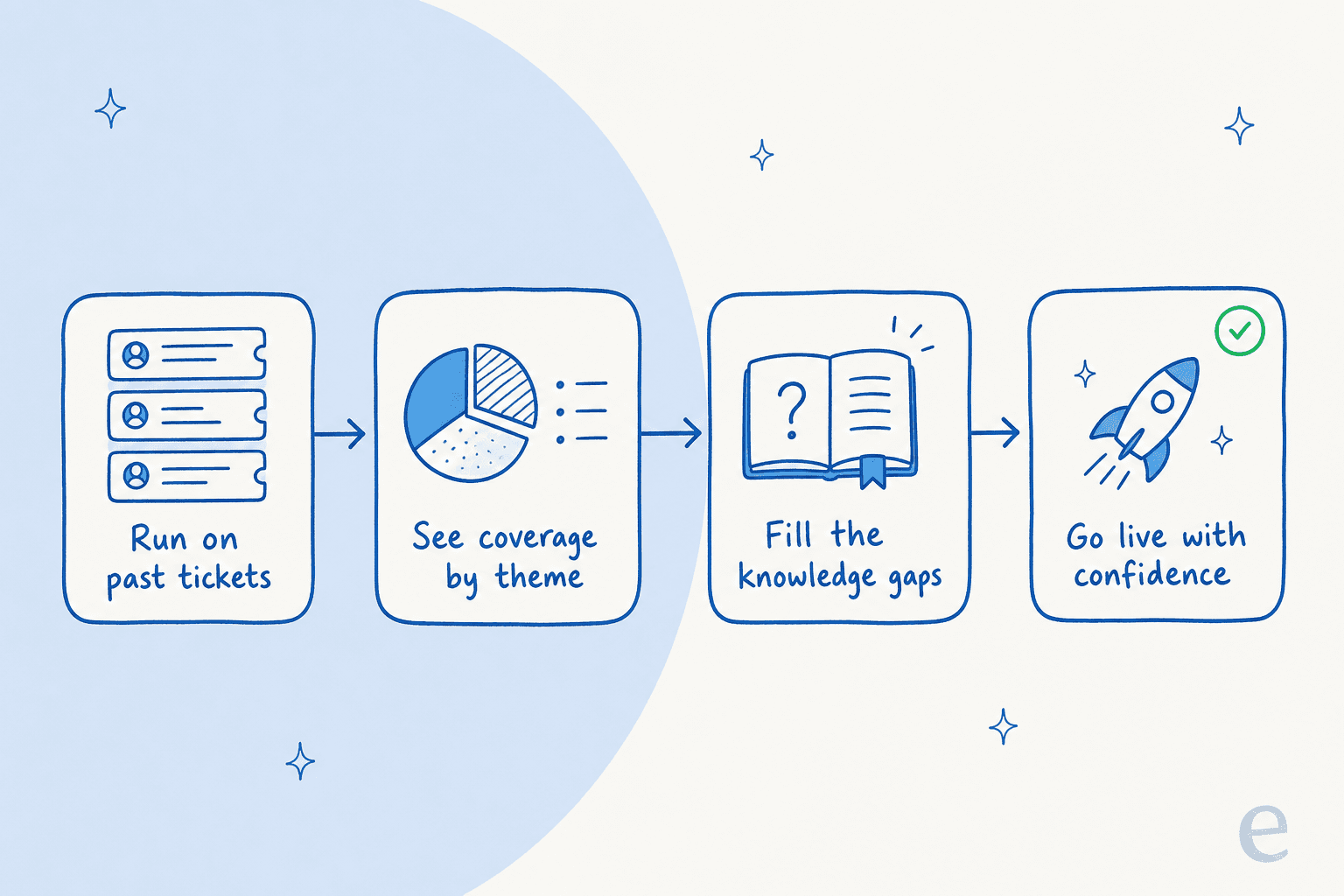
That is the scar tissue talking. We have watched a confident-sounding bot quietly give wrong answers, which is exactly why eesel simulates every rollout against historical tickets before going live, instead of asking you to find out in production.
The pricing difference that decides most of this
If you only weigh one thing, weigh this. Zendesk bills per resolution; eesel bills per ticket. The unit matters more than the rate.
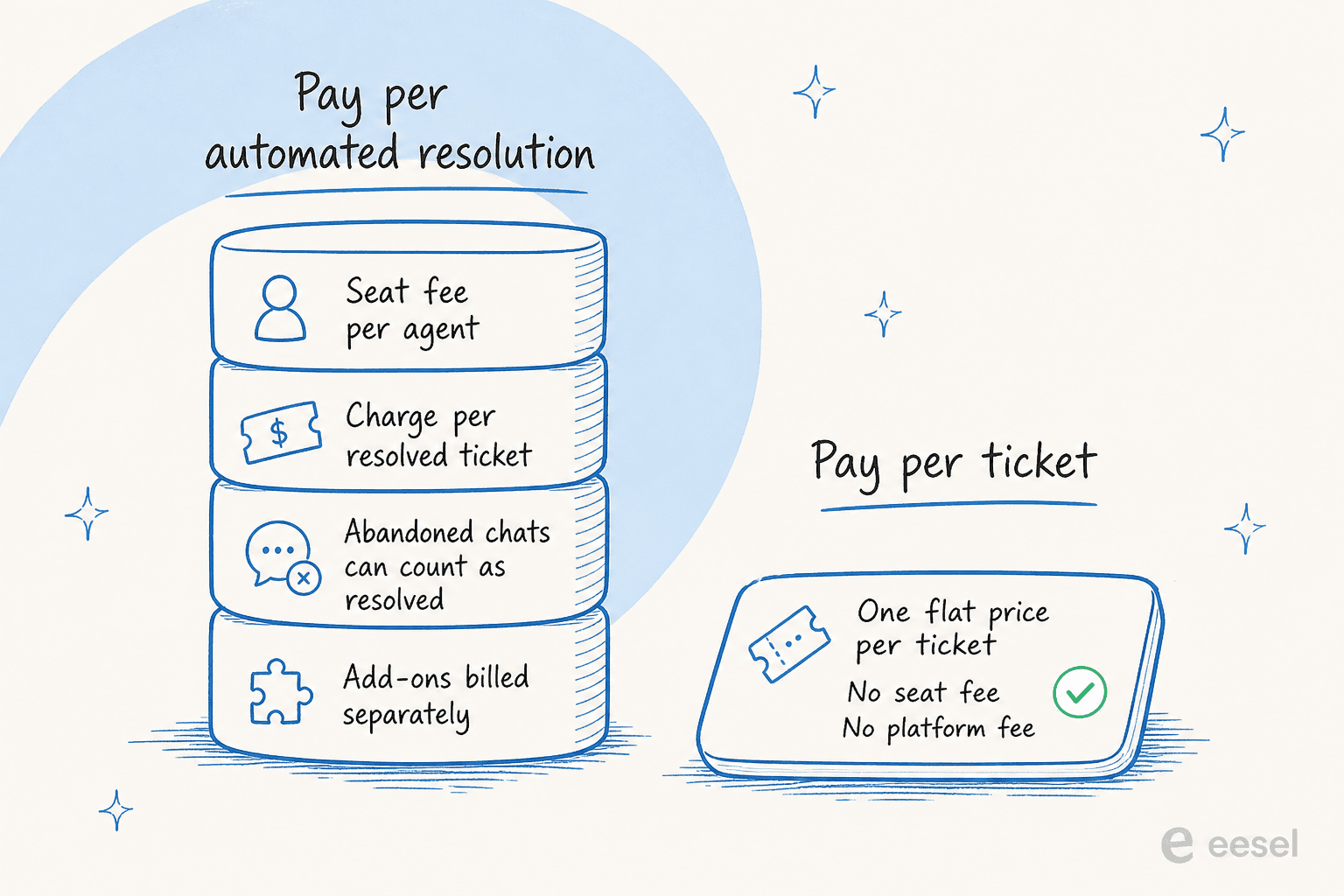
The complaint that recurs most on r/Zendesk is not that the AI is bad, it is that the bill scales the wrong way:
"Their pricing isn't transparent at all. Even if you spend a million dollars a year, they will still nickel and dime the shit out of you because it's their model... Want automation? That costs more. Want their latest AI feature? Cost more."
u/mallclerks, r/Zendesk on e-commerce pricing
Plug your own numbers in. The calculator below uses the operator-reported $1.50 per resolution as a default (change it to whatever your contract says) and assumes the AI resolves 70% of the conversations it handles. eesel's side is simply every ticket it touches at $0.40.
Type in your conversation volume, contract rate, and resolution rate to watch the two monthly bills draw to scale side by side. Per-resolution figures are operator-reported and exclude Zendesk seat fees.
A worked example makes it concrete. A team handling 2,000 AI conversations a month at a 70% resolution rate and $1.50 per resolution pays about $2,100 a month to Zendesk for the resolutions alone, before seats. The same volume on eesel is a flat $800. The gap widens as you grow, which is the opposite of what you want from an automation tool. And without a committed plan, Zendesk's overage rate climbs to $2 per resolution.
Setting it up: simulate, or go and hope
The second real difference is what happens before launch. With eesel, you connect Zendesk, let it ingest your history, and run a simulation across past tickets to see the forecast resolution rate by topic. You fix the weak spots, then go live in draft mode and switch to autonomous only on the ticket types you trust.
Zendesk's setup leans on its flow builder and on KB hygiene, and that is where the recurring gripe lives. The AI is only as good as a perfectly curated knowledge base:
"The Co-Pilot stuff is decent, but we found its effectiveness really depends on having a perfectly curated Zendesk knowledge base, which... ours isn't, lol."
u/ToastBix, r/Zendesk on AI agents
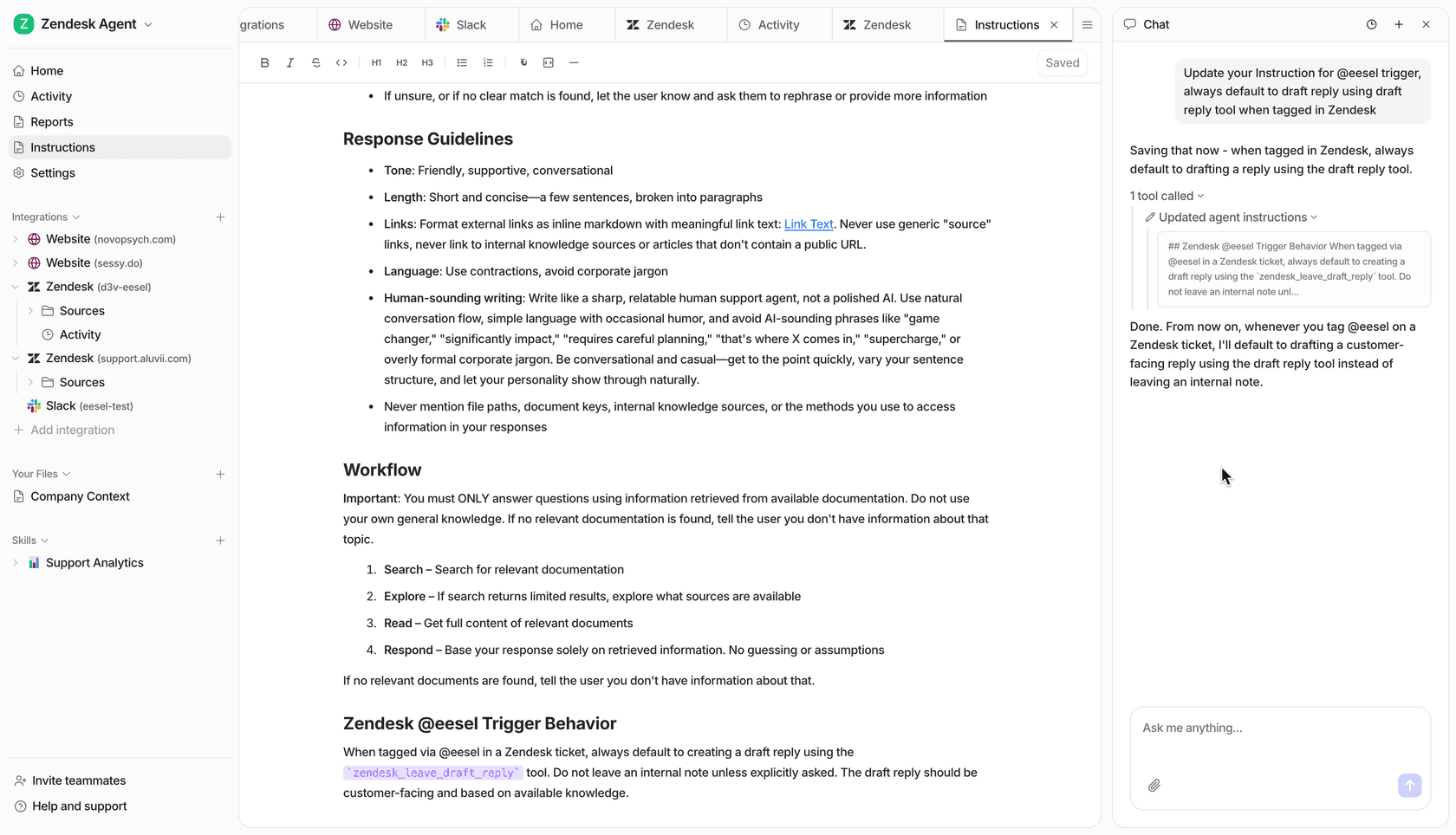
Because eesel also trains on solved tickets and macros, it has somewhere to find the answer even when the help center is thin, and its knowledge gap detection flags the topics you have not documented and drafts articles to fill them. You configure all of this by describing what you want in plain language rather than wiring a flow.
What users actually say
I try not to lean on a single source, so here is a spread. The pricing distrust is loudest on Reddit, but the answer-quality worry shows up on Capterra too, in a review of Zendesk's own support AI:
"First of all, you have to navigate the AI chat that never, and I mean NEVER gets what I'm asking... they don't ask clarifying questions and provide a link to an irrelevant article... As the leader of my support team, I would never pay for AI tools that provided this level of support."
Melony Y., Senior Director of Consumer Support, Capterra review

To be fair to Zendesk, that is one review inside a strongly positive distribution, and plenty of teams describe the AI as "boring and reliable" in the copilot role. The honest read is that Zendesk AI is a solid assistant for human agents and a riskier bet as a fully autonomous deflection engine, especially when the resolution definition is the same thing you are paying against. It is also worth checking the data privacy terms before you let any AI loose on your queue.
On the eesel side, the consistent theme is fast time-to-value on Zendesk specifically:
"In the first month, eesel is resolving 73% of our tier 1 requests... Our team implemented and achieved results quickly during our 7-day trial. The platform even includes automations for ticket tagging, assignment, and status updates."
Kim Simpson, Gridwise
You don't have to pick a side
Here is the part that reframes the whole question. eesel is not only a Zendesk alternative, it is a Zendesk add-on. It installs as a native agent inside your existing account, so you keep the Zendesk workspace, the triggers, the reporting, and the channels your team already knows, and you simply layer eesel's AI on top to handle the tier-1 volume.
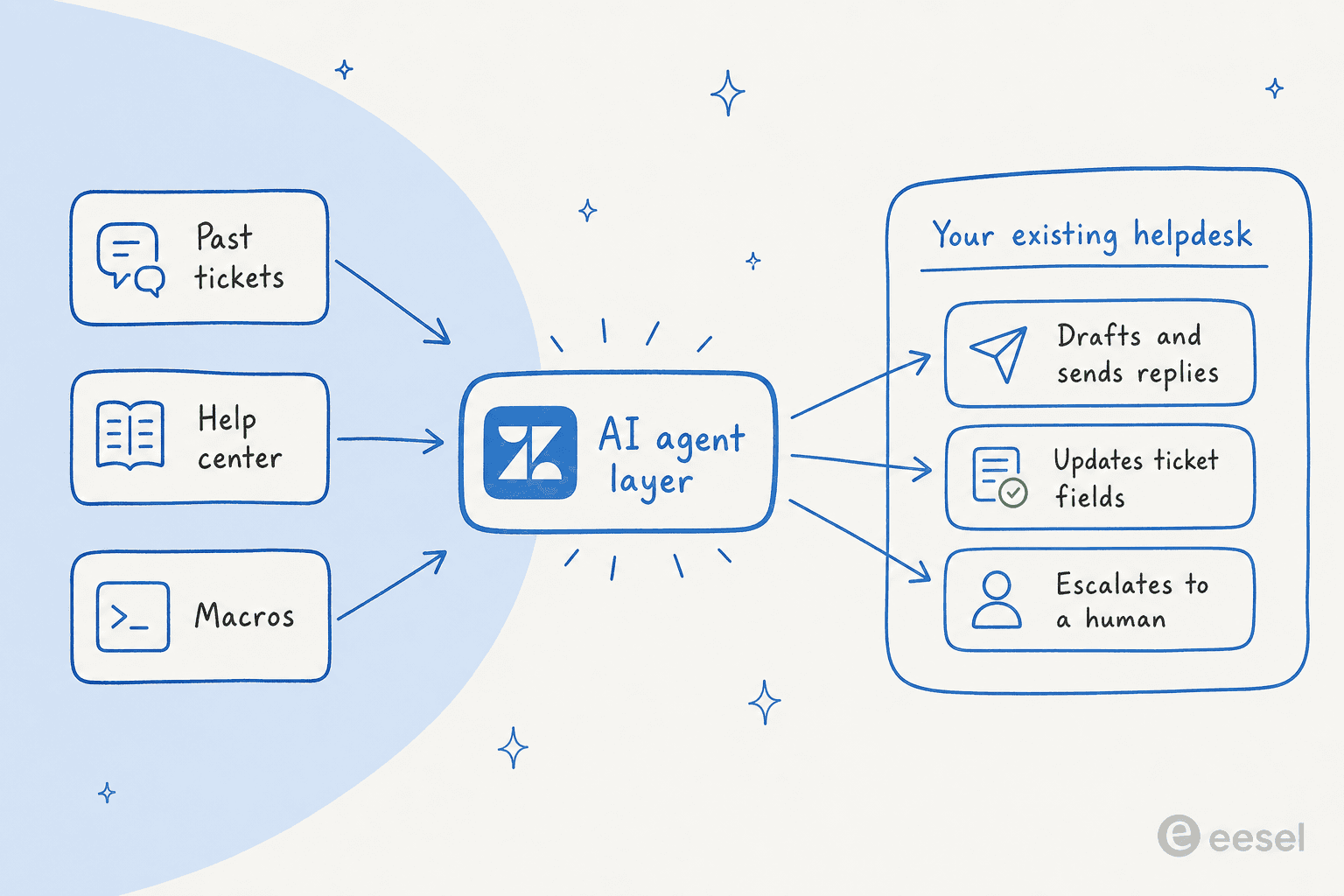
That means the choice is rarely "rip out Zendesk." It is "do I want Zendesk's native AI at per-resolution pricing, or a flat-rate AI agent sitting inside the same Zendesk." Here is eesel working inside a Zendesk ticket:
This is also why I would push back on the framing that you must commit before you know it works. With simulation plus a flat per-ticket rate, you can prove the resolution number on your own tickets first, then decide how much volume to route. One real eesel sales conversation that stuck with me was a CX lead at a US healthcare platform with a few thousand patients, who had already tried native Zendesk AI and described it as "inadequate and overpriced" before coming to look for something they could test and predict.
Try eesel on your Zendesk
If you are on Zendesk and weighing the native AI against the alternatives, the lowest-risk move is to put eesel for Zendesk next to it and run the simulation on your own ticket history. It connects in under 30 minutes, learns from your past tickets and macros rather than just the help center, and bills a flat $0.40 per ticket with no seat fee, no platform fee, and no per-resolution math to forecast. You get the resolution rate up front, and you keep your Zendesk exactly as it is.
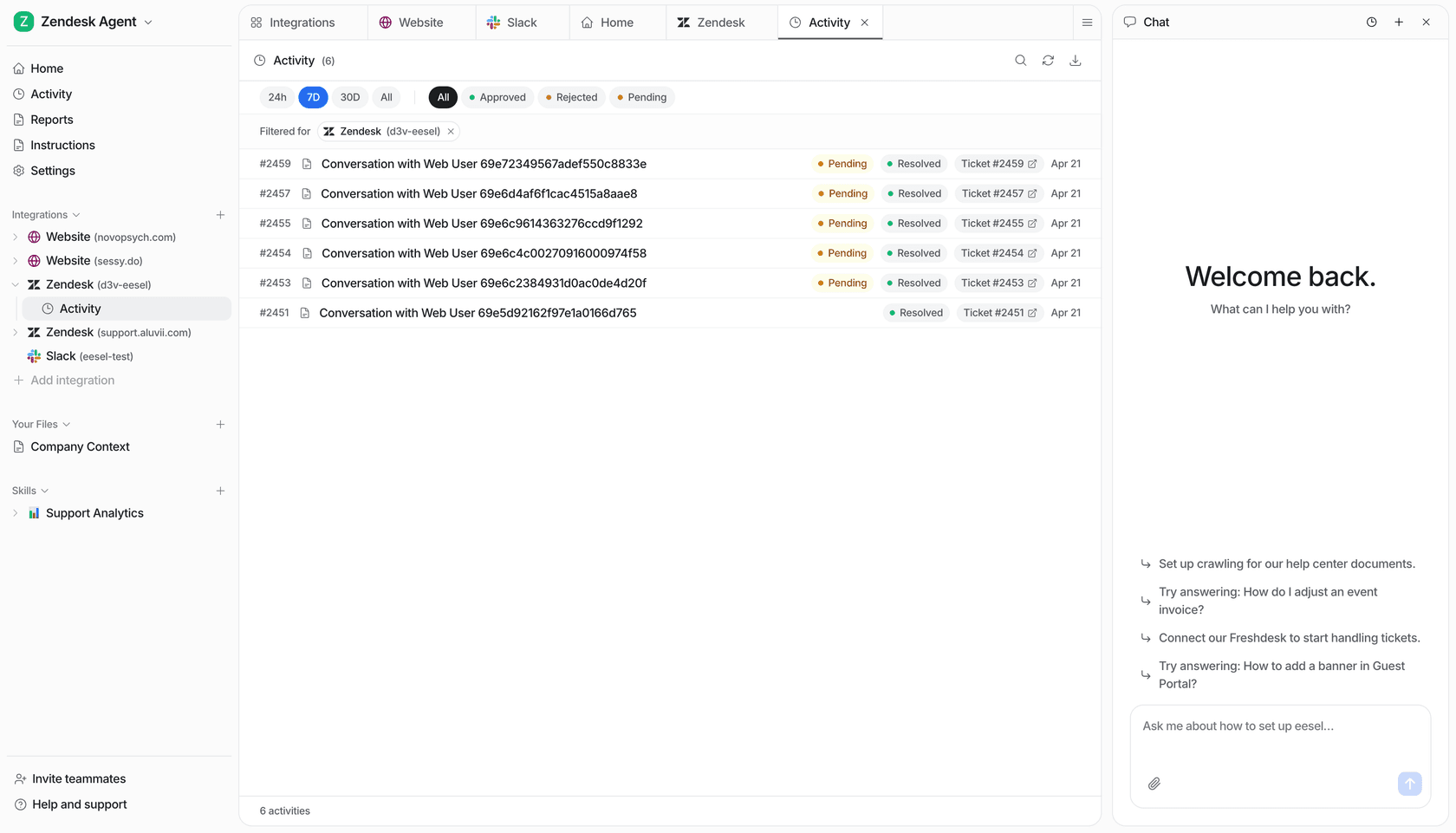
It is free to try with $50 of usage and no credit card, which is enough to run a real simulation and see your numbers before you decide anything.
Frequently Asked Questions
What is the difference between eesel and Zendesk AI?
How much does Zendesk AI cost per resolution?
Is eesel a Zendesk alternative or a Zendesk add-on?
Can I test eesel on my Zendesk tickets before going live?
Which is better for a small support team on a budget?



Article by
Kurnia Kharisma Agung Samiadjie
Kurnia is a software engineer and writer at eesel AI with two years of SEO experience, writing about AI tools, helpdesk software, and customer support. He pairs a developer's understanding of how these products are built with search-driven research into what actually ranks and resonates with the people searching for them.