


AI for jewelry brands works when it answers only what your product data already says: ring size charts, care, shipping and return windows. Custom orders, high-value orders and any claim about gold purity or stones not in the spec go to a person. Use the AI inside Gorgias or Zendesk, or add an AI helpdesk teammate like eesel on top. With the eesel CLI, a coding agent can upload your specs and sizing guide, then ask "is this solid gold?" and check the answer before anything goes live.
Why do jewelry inboxes feel different from other stores?
A jewelry inbox has the usual where-is-my-order traffic, and then a layer of questions where a wrong answer costs real money. "Will a size 7 fit me?" "Is this plated or solid?" "Can you engrave a date by the 14th?" Each one has a fixed answer somewhere in your catalogue, or it needs a craftsperson to decide.
I work on the support side at eesel, and the clearest picture I have comes from a trial on a real jewelry inbox. It was a German jewelry e-commerce brand on Zendesk and Shopify, about 1,000 tickets a month in eight languages. Roughly 22% of that inbox was spam, which the AI flagged with no false positives, and the AI sorted tickets into the right category 93% of the time. Drafts for product questions were useful every time, and warranty claims 96.4% of the time. But the factual error rate was still 7%, and agents sent only 12% of drafts as written, usually trimming them down. The lesson I took: the AI was good at reading and sorting, and the risk lived in the small share of answers that stated something the catalogue did not say.
That is the whole shape of this post. Pick the questions where your data gives the answer, make the AI refuse the rest, and keep a person on anything with a price or a promise attached. For the wider picture, see AI for customer service, or the sister guides for fashion brands and beauty brands.
What can AI answer, and what goes to a person?
I split a jewelry inbox into two piles. The first pile is anything a shopper could answer by reading your site carefully. The second is anything where you would want a person to look the customer in the eye, if you could.
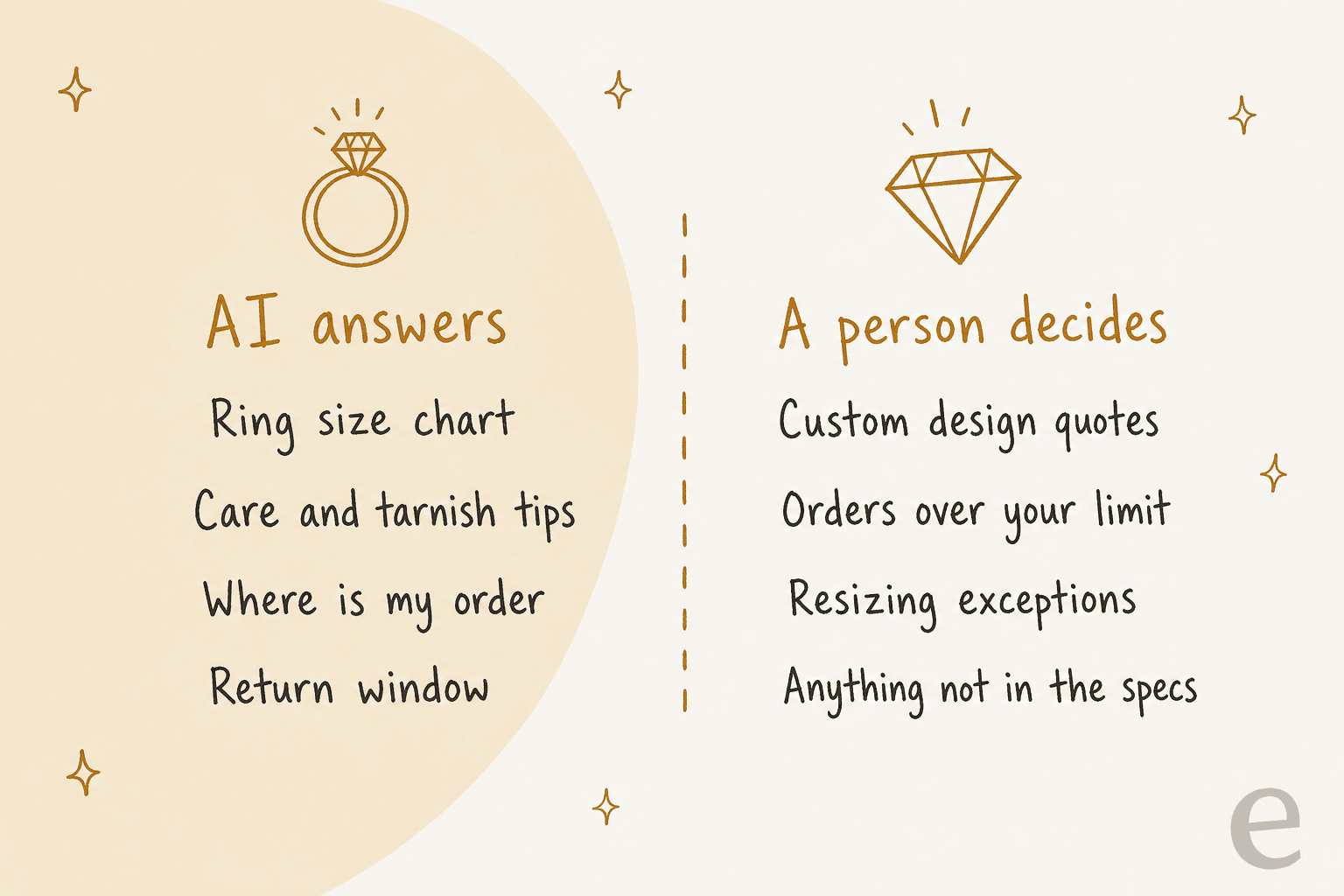
The table below is the sort I would start with. It follows the same jobs ChatGPT lists when you ask the question the way a store owner would: ring sizing, materials, custom orders, shipping and returns.
| Question type | Example | AI should | Hand to a person when |
|---|---|---|---|
| Ring sizing | "How do I measure my finger?" | Explain measuring, convert sizes, link your chart | The shopper has a wide band or fit concern |
| Materials | "Is this solid 14K gold?" | Quote the product spec exactly | The spec is silent or the claim is about stones |
| Care | "Will this tarnish?" | Give your care guide | Someone reports a reaction or damage |
| Custom and engraving | "Can you engrave a date?" | Collect size, metal, text and deadline | Always: price, design and timeline |
| Shipping | "Where is my parcel?" | Read tracking from the order | The parcel is late or lost |
| Returns and resizing | "Can I swap for a size up?" | Explain the window, collect order number | Refund outside policy, damaged piece |
| High-value orders | "Can you hold this ring?" | Acknowledge and tag it | Always, above your own order limit |
A deflection setup pays back fastest in the first four rows. The last rows are where I would write the rules down as hard handoff rules before switching anything on.
How do you stop AI from making claims about gold and gemstones?
This is the jewelry-specific problem, and it is the one I would spend the most time on. A support AI that sounds sure about "hypoallergenic" or "will not tarnish" is making a product claim on your behalf, and a shopper will quote it back to you.
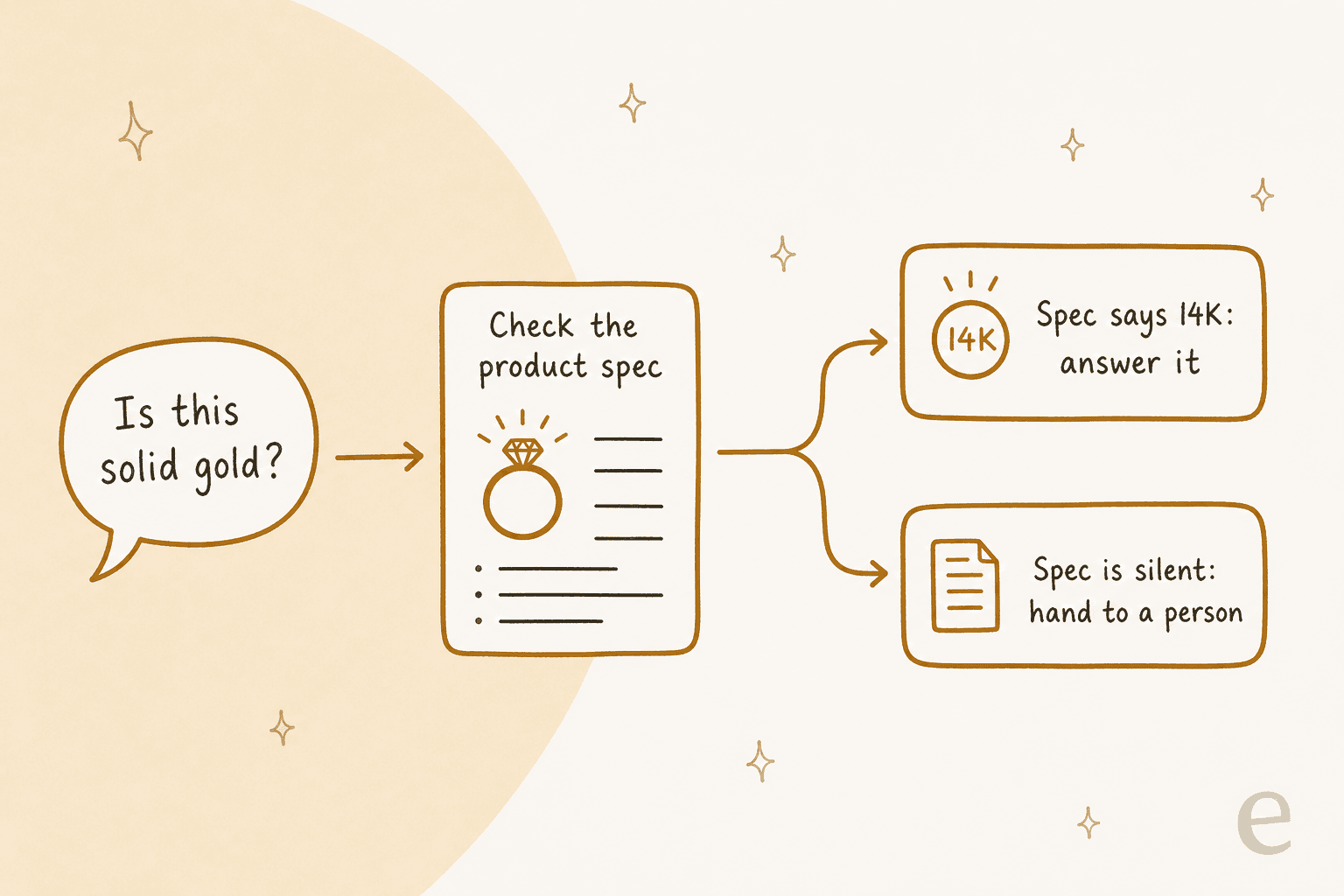
The rule that works: the AI repeats what the product spec says, word for word, and never fills a gap. If the spec says 14K solid gold, it can say that. If the spec says nothing about the stone's origin, it says it will check with the team and hands the ticket over.
A few things make this hold in practice:
- Put the facts in structured fields. Metal, purity, plating, stone type and care instructions belong in the product page, not buried in a story paragraph.
- Write the "I do not know" path first. A silent spec must lead to a handoff, never a guess. That is the core of hallucination prevention.
- Keep authenticity and certification questions with a person. Anything about a certificate, a lab report or where a stone came from should go to someone who can look at the paperwork.
- Test with the nasty questions. Ask "is this hypoallergenic?" on a product that does not say so, and check the AI declines.
For a similar high-ticket pattern outside jewelry, see AI for furniture retailers, where the same "answer from the spec, hand over the rest" rule applies.
Which jewelry question is safe to automate?
Tap the question type to see how I would treat it, and what the AI needs to answer it.
What is the shopper asking?
Pick the closest match.
How should AI handle ring sizing?
Ring sizing is the question that produces the most mail in a jewelry store, and the one where I would be most careful about wording. The AI should help the shopper measure, never guarantee the fit.
Here is the setup I would use:
- Publish one clear sizing page. Include how to measure a finger, how to measure an existing ring, and a conversion table between US, UK and EU sizes.
- Add fit notes per product. A wide band fits tighter than a thin one, and your team already knows which styles run small.
- Let the AI offer a size chart, not a size. "Based on your measurement, a US 7 is the closest match in our chart" is fine. "This will fit you" is not.
- Hand over anything unusual. Swollen knuckles, very wide bands and gift sizing guesses are better with a person.
Sizing also feeds returns. A ring that does not fit comes back, so every question the AI answers well here prevents a later exchange request. The AI for pre-purchase questions guide covers the same pattern before the sale.
How do custom orders and engraving work with AI?
Custom work is where I would keep a person firmly in charge, and let the AI do the paperwork. A shopper asking for an engraved date wants to know three things: can you do it, how much, and will it arrive in time. Only the first is a fact the AI can state.
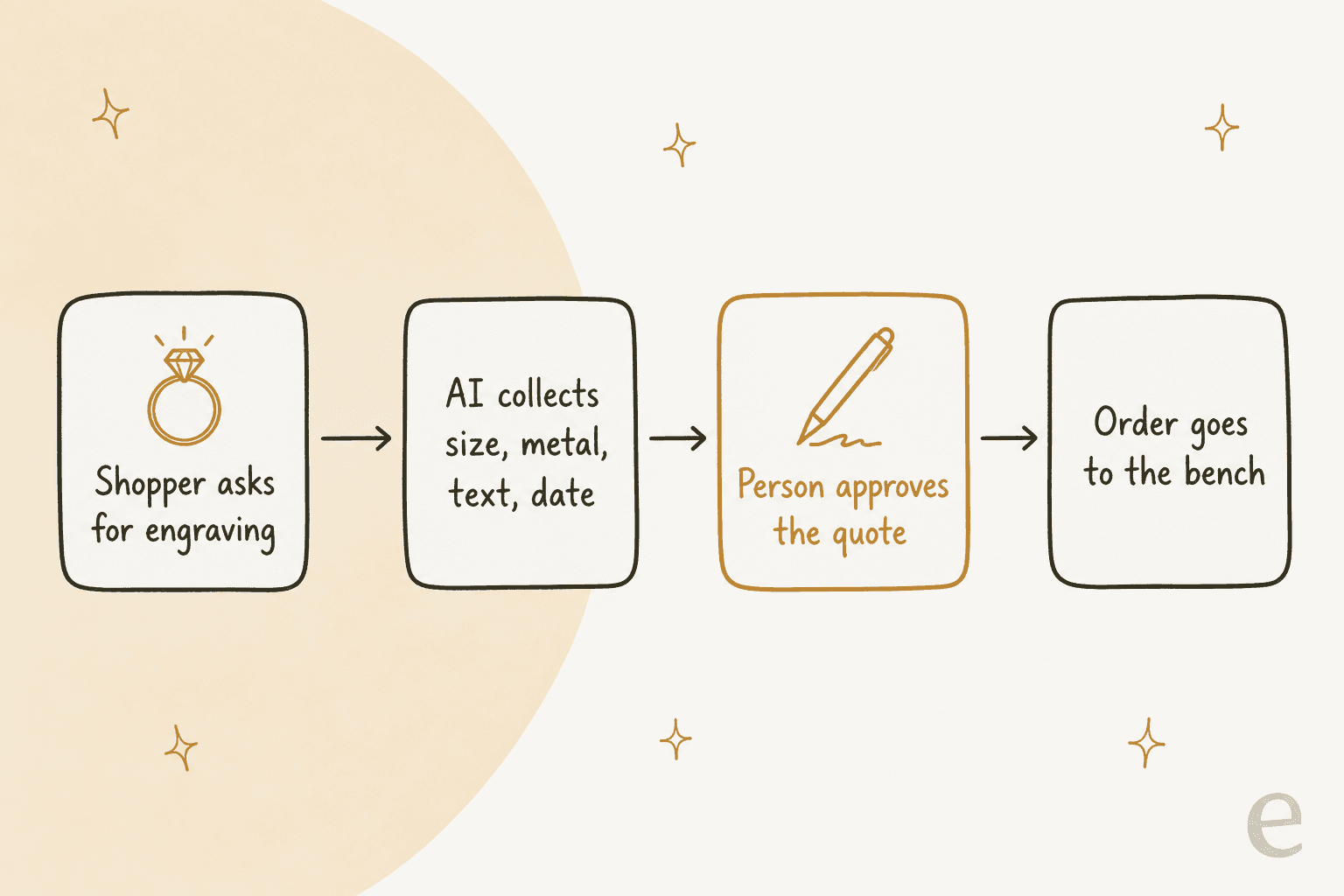
The AI's job is the intake. It asks for ring size, metal, the exact engraving text and the date the shopper needs it by, then passes a complete brief to your team. That saves the three back-and-forth emails that usually come before a quote. For quote-heavy sales, the same pattern shows up in wholesale and B2B orders.
A real example is STIL Classics, a planner and binder brand that offers monogramming. It runs eesel on Gorgias and Shopify, and in one month eesel prepared about 320 Gorgias tickets, left about 430 internal notes and looked up about 230 Shopify orders. The agent never states a fact it has not looked up, and every draft goes on the ticket as an internal note for a person to send. It is stationery, not jewelry, but a personalised, repeat-purchase product with detail-heavy tickets is the same shape of inbox.
What about shipping, insurance and returns?
Shipping questions are the easiest win. Where-is-my-order has a real answer in your order data, so the AI reads it and replies. The jewelry twist is value: a lost parcel with a high-value piece is a claim, not a tracking question. I would let the AI answer status, then route any "it never arrived" message to a person with the order attached. See AI for order tracking and AI for shipping delay notifications for the status side.
Returns split the same way. The AI explains your window and what counts as returnable, since personalised and resized pieces are often final sale. It collects the order number and any photos. A person approves refunds, and decides on damaged or disputed items. The AI refund guardrails guide shows how to enforce the line. Before gifting season, plan for the spike too: AI for seasonal support spikes and AI support for Black Friday cover it.
Which AI tools will a jewelry brand actually see?
When I ask ChatGPT the way a jewelry store owner would, it keeps returning the same short list: Gorgias for Shopify stores, Tidio's Lyro AI for smaller ones, and Zendesk for bigger teams. These are the prices on each vendor's own page today.
| Tool | Best for | Billing unit | Price |
|---|---|---|---|
| Gorgias | Shopify jewelry stores | Per automated interaction | Starter from $40/month with AI Agent (50 tickets, 30 automated interactions), then $1.00 on Starter, $0.90 on Basic and Pro, $0.85 on Advanced |
| Tidio | Small stores on website chat | Per AI + human conversation | Starter $33/month (50 conversations), Growth from $63/month (100 conversations), Plus from $300/month plus usage, billed annually |
| Zendesk | Larger teams | Per automated resolution | Suite Team $55 per agent/month paid yearly, then $1.50 committed or $2.00 pay-as-you-go per resolution |
| eesel | An AI teammate on top of your helpdesk | Credits, 1 per ticket or chat | Free 7-day trial (100 credits), then $299/month for 500 credits |
The billing units are not the same, so one worked example helps. Say 600 conversations arrive in a month and the AI resolves 300 of them. Gorgias at $0.90 is about $270 of AI charges on top of the helpdesk plan, ignoring any interactions bundled in your tier. Zendesk at $1.50 committed is $450. eesel counts every ticket, resolved or not: $299 for 500 credits plus 100 extra at $0.80 is $379 for the month. Each is right for a different shape of inbox.
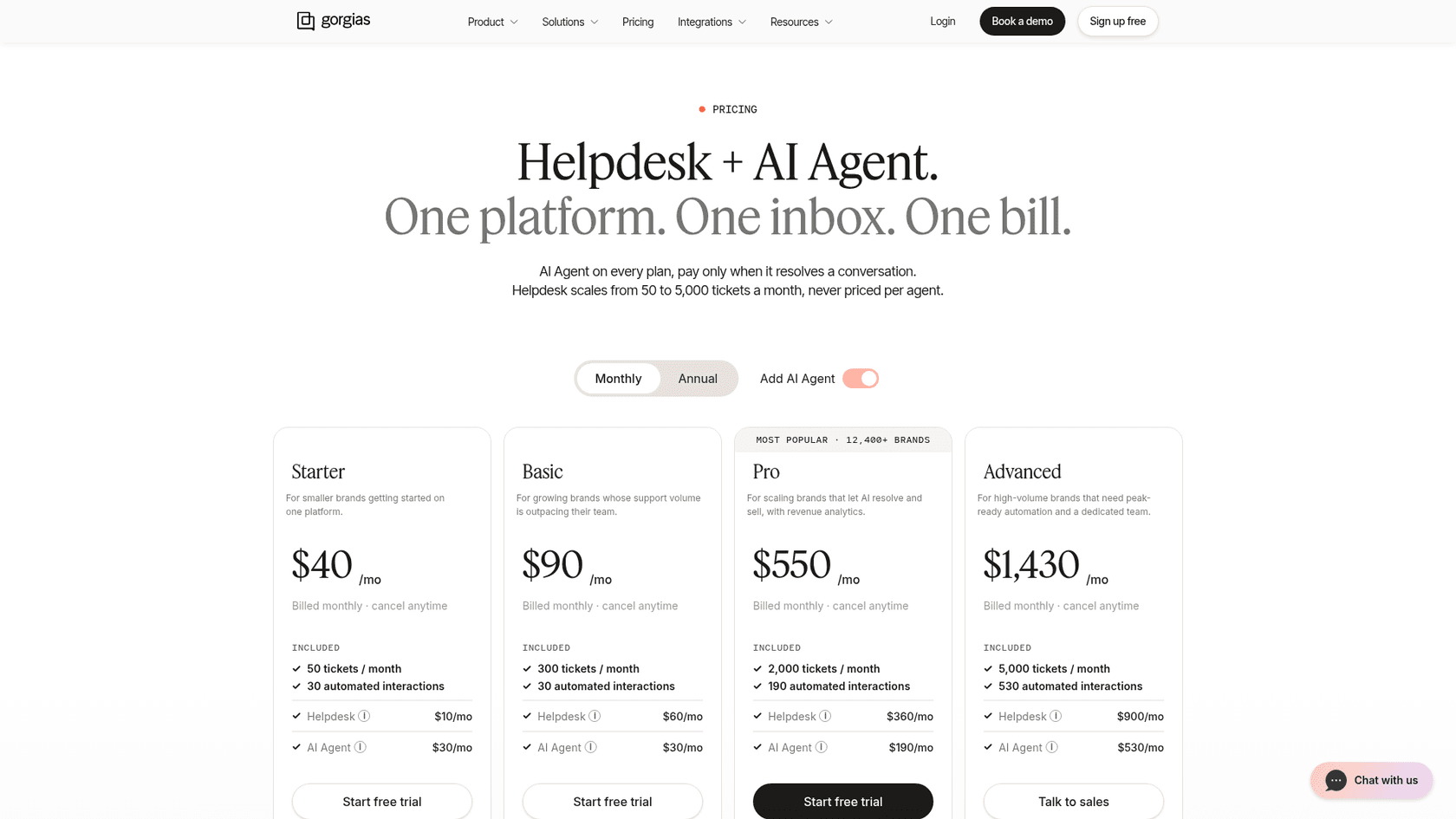
If you live in Shopify and Gorgias, the built-in AI is the shortest path, and I cover it in AI for Gorgias and the Gorgias review. The tradeoff is that you pay per automated interaction, so a busy gifting season raises the bill.
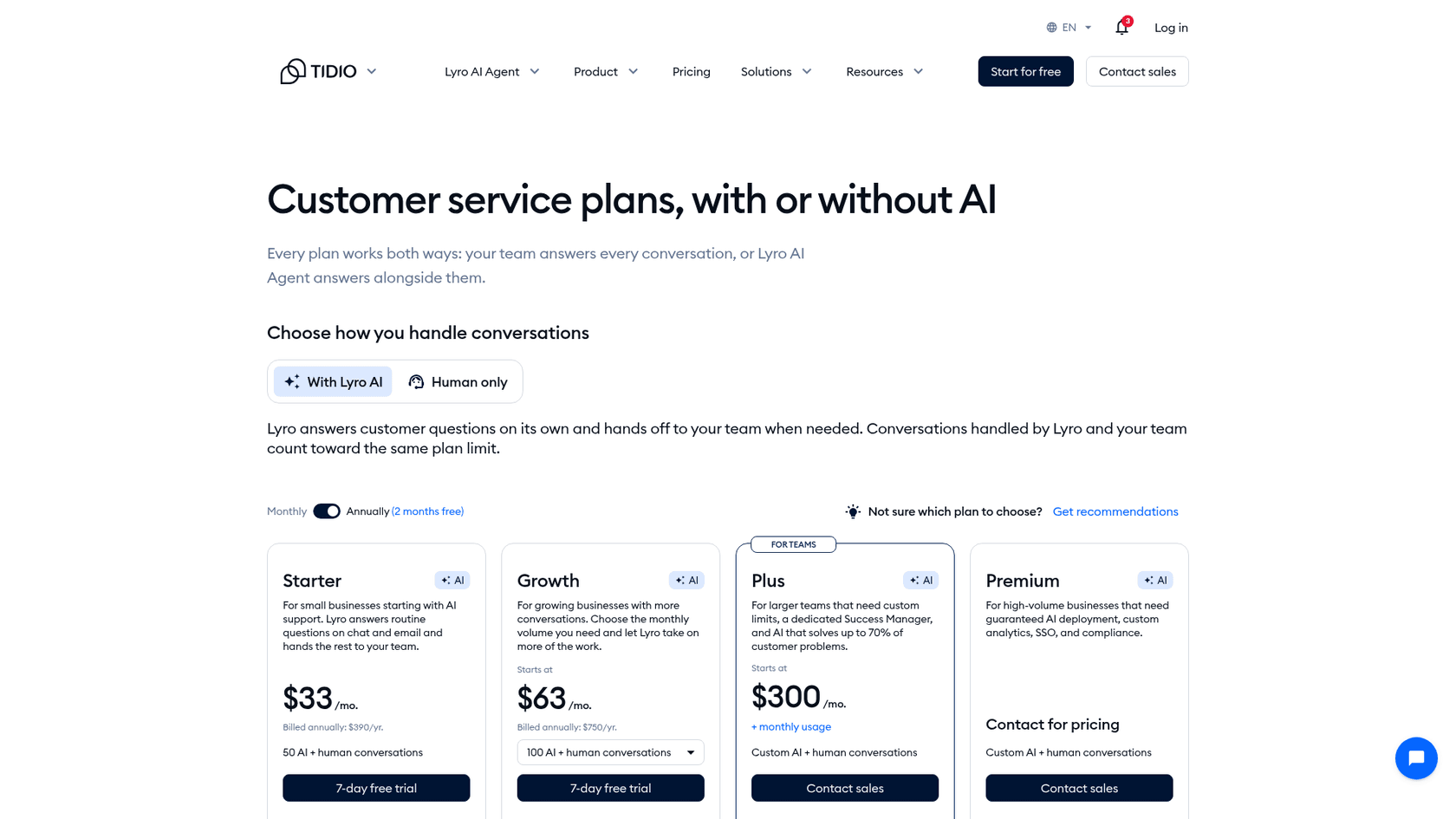
Tidio is the friendliest start for a small store that mostly talks to shoppers on the website. I covered the plans in my Tidio review, and the Tidio alternatives roundup is there if you outgrow it.
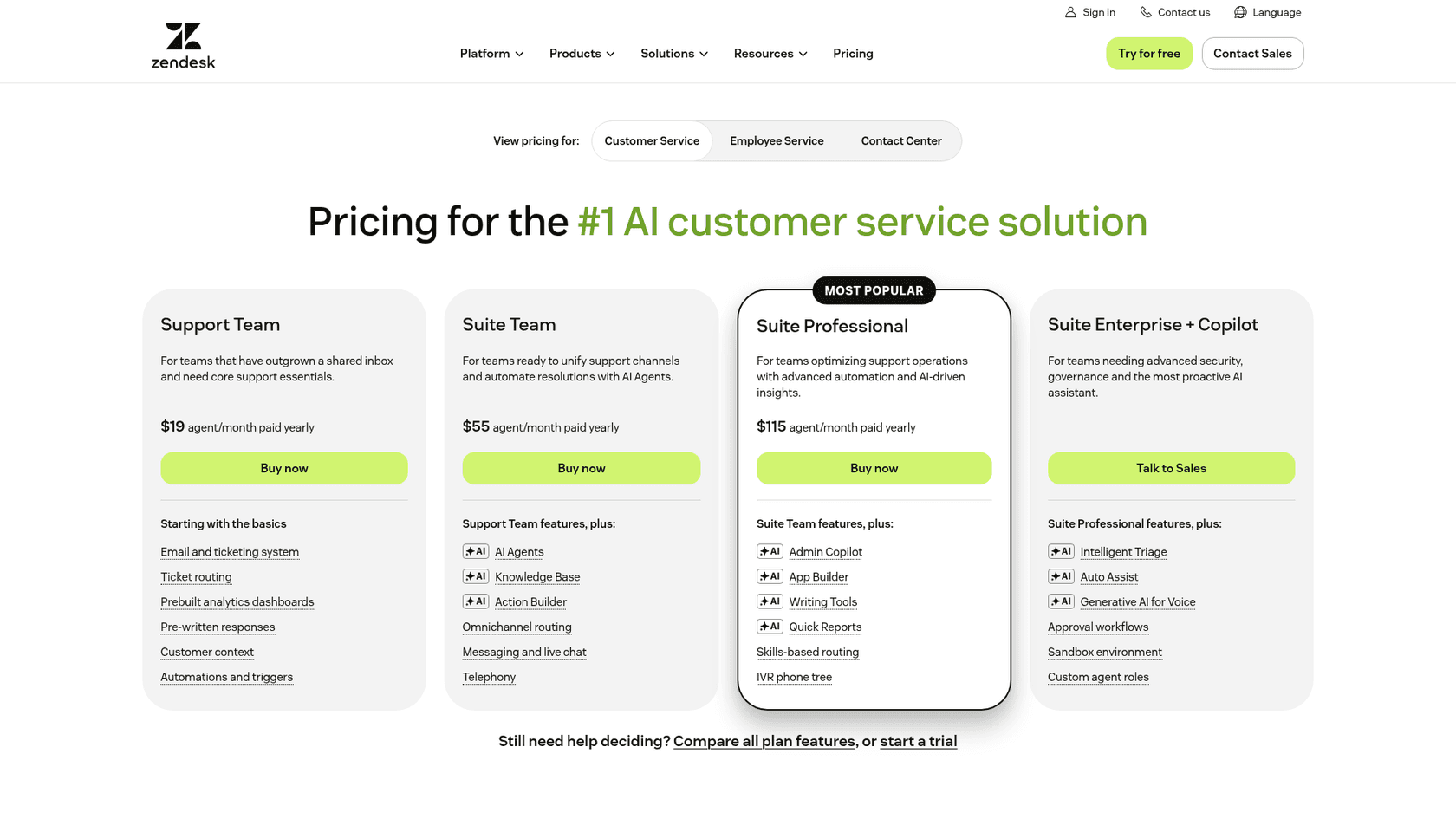
Zendesk fits larger or multi-brand teams, and its AI Agents start on Suite Team. Read Zendesk AI pricing before you commit, and AI for Zendesk for the setup.
Where does eesel fit for a jewelry brand?
eesel is an AI teammate you hire for a job, and here the job is the AI helpdesk teammate. It joins the helpdesk you already run, like Gorgias or Zendesk, and works the queue next to your team. It learns from your help center, macros and past tickets, and checks the order in Shopify.
The closest published example to a high-ticket product is SaunaSpace, which hand-builds infrared saunas and sells direct with a 100-day home trial. Its team uses eesel inside Gorgias, and in one month eesel drafted about 110 conversations and wrote about 180 draft replies from the help center, website and past tickets. A person always sends. That draft-first mode is what I would pick for jewelry: your team reads every reply for the first few weeks, then you let safe categories like tracking and care send themselves.
My honest limit: I have no published jewelry customer story yet, and eesel is not a returns portal or a sizing quiz. It answers and drafts. It will not measure a finger.
Pricing is on the eesel pricing page: a 7-day trial with 100 credits, then plans from $299 for 500 credits, where a ticket or chat is one credit. For social channels, see AI for Instagram DMs, and for tone, AI support agent brand voice.
How do you roll it out without risking a bad answer?
My order is tracking and policy first, sizing next, custom work and refunds last.
- Write the facts down. Sizing page, care guide, return and resize policy, and structured material fields on every product.
- Set your high-value limit. Pick the order value above which a person always replies.
- List the hard handoffs. Custom designs, certificates, damaged pieces and lost parcels.
- Replay old tickets. Run 50 to 100 through the AI and read each answer. A simulation test catches wrong claims early.
- Start with drafts, then let safe categories send themselves.
- Score it with a pilot scorecard before the gifting season.
Someone with admin access still approves the helpdesk connection, and uploaded files are not "ready" until tested. For security questions, see my security review checklist. Fraud and chargebacks also deserve their own rules: start from AI for fraud-related support and AI for chargeback inquiries.
Try eesel in your jewelry helpdesk
If your ring sizing, material and shipping messages land in Gorgias or Zendesk, eesel works like a new support hire: it learns your size guides and product specs, answers the repeatable messages, and hands custom orders and anything not in the spec to your team. Start with the free trial on drafts, and replay last month's tickets first.
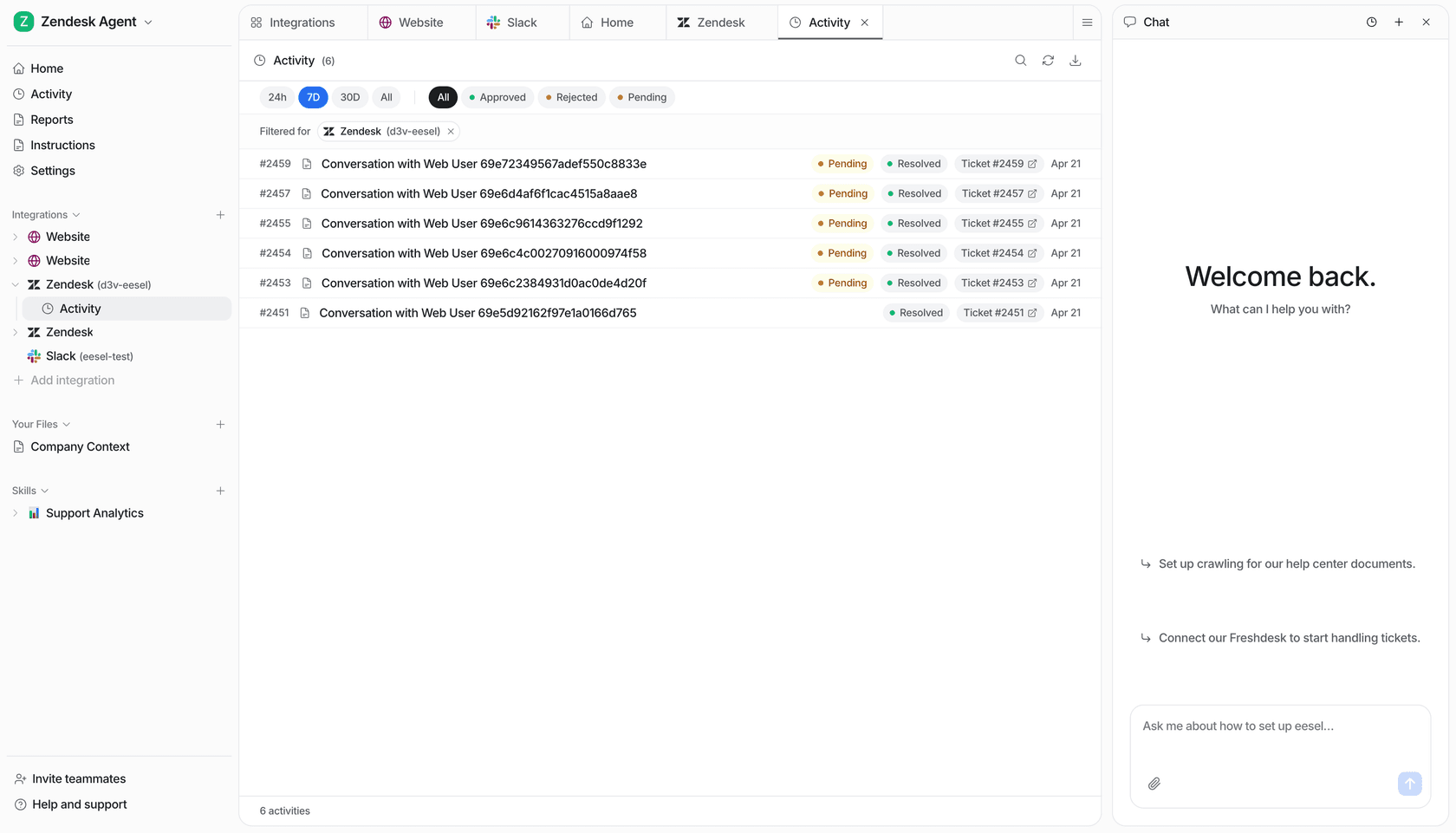
Try eesel free for 7 days, or read about AI for tier-1 deflection first.
Frequently Asked Questions
What is the best AI for jewelry brands?
Start with the AI that lives where your messages already land. If you run Gorgias or Zendesk, use the AI inside it or add an AI helpdesk agent on top. Tidio suits a smaller store on website chat. The best AI for ecommerce support list covers the wider field.
Can AI answer ring sizing questions accurately?
It can explain how to measure, convert between size systems and point to your chart. It should never promise that a ring will fit. A good setup answers from your sizing page and hands unusual cases, such as wide bands or swollen knuckles, to a person. See hallucination prevention for the guardrails.
Can an AI chatbot handle custom jewelry orders and engraving?
It can collect the details: ring size, metal, engraving text and deadline. A person should approve the quote and the design. That keeps the conversation fast without letting a bot commit your workshop to a price. This is the same approval pattern used in AI for pre-purchase questions.
Is it safe to let AI answer questions about gold purity or gemstones?
Only when the answer sits in your product data. If the spec says 14K solid gold, the AI can repeat it. If the spec is silent, the safe answer is a handoff. Test this before launch with an AI support agent test built from real questions.
How much does AI customer support cost for a small jewelry store?
It depends on the billing unit. Gorgias lists AI Agent at $0.85 to $1.00 per automated interaction, Zendesk $1.50 committed or $2.00 pay-as-you-go per automated resolution, and Tidio plans start at $33 a month for 50 conversations. eesel is a fixed monthly plan from $299 for 500 credits. Compare against your own cost per resolution.
Can AI handle returns, exchanges and resizing for jewelry?
It can explain the policy, check the return window and collect the order number and photos. Resizing exceptions, damaged pieces and refunds outside policy should go to a person. Read can AI handle refunds and returns for the split.
How do I automate where-is-my-order questions for a jewelry store?
Connect the AI to your store so it reads the real tracking status rather than quoting a policy. Set a delay rule so a late parcel goes to a person, and treat a lost parcel as a claim. The WISMO automation guide and AI for lost package claims cover both.