

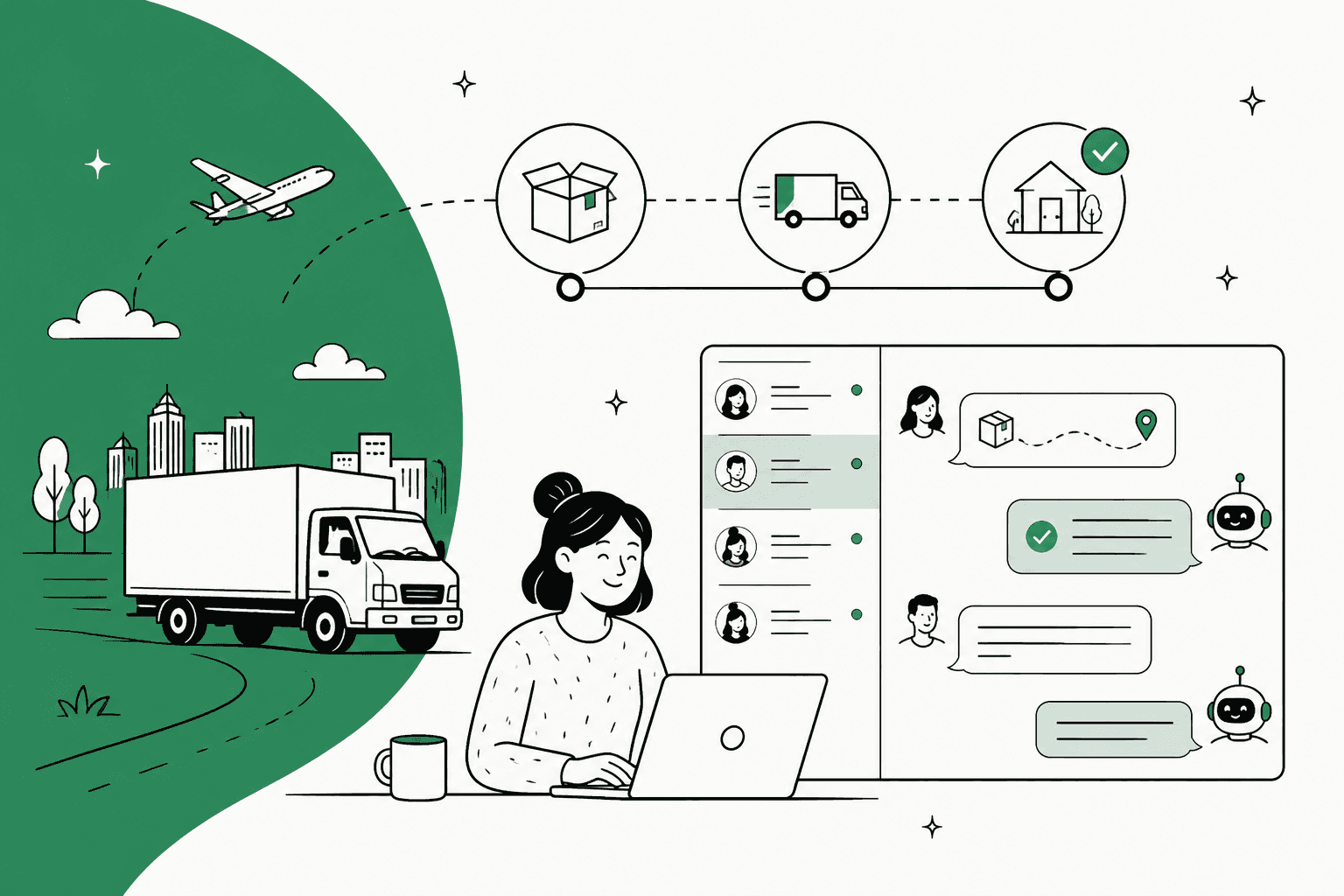
What WISMO automation actually means
WISMO is support shorthand for "where is my order?", the order-status question every online store gets more of than it wants. I work eesel's support queue, and when an ecommerce team first talks to eesel, it is the first job they want an AI to take. One ops lead at a DTC supplements brand doing about 7,000 Gorgias tickets a month said his team could not keep up and needed an agent to resolve at least half of their email, with WISMO at the top of that list.
The trouble is that "automate WISMO" gets read as "put a chatbot on it", and that skips the two layers that decide whether the chatbot helps or hurts. A WISMO ticket has three possible fates:
- It never gets sent, because the customer already got a shipping email or checked a tracking page.
- An AI answers it, because the order and the carrier scan say something clear and on schedule.
- A person handles it, because the parcel is stuck, lost, late or marked delivered and not received.
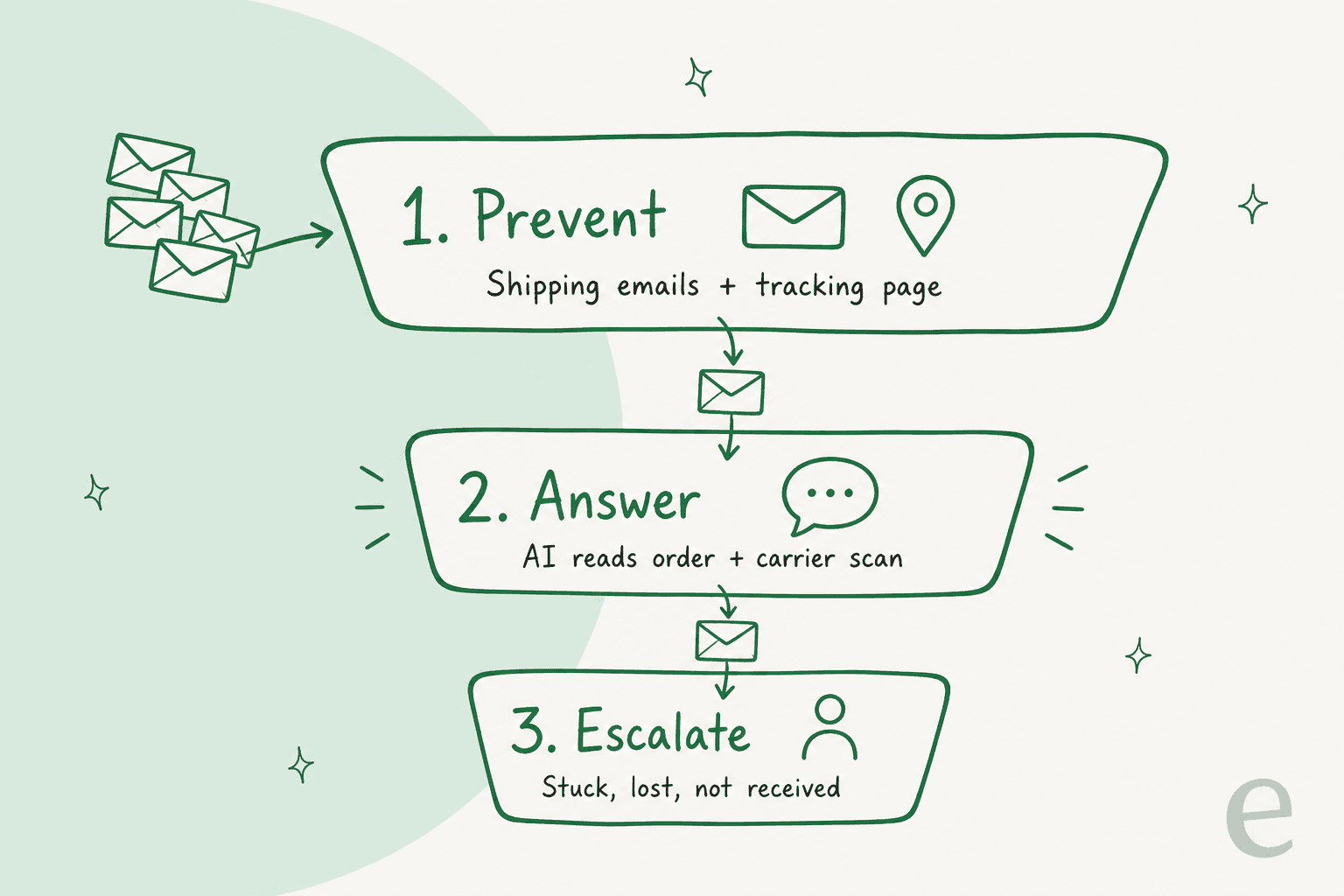
Most vendor pages that rank for this topic only talk about layer two. Layer one is the cheaper one though, and layer three is where an AI can lose you a customer, which is why the rest of this guide goes through all of them. If you want the wider picture first, my colleagues have a primer on AI order tracking and a step-by-step guide to automate order tracking.
Why "fulfilled" is not an answer
Here is the gap that most WISMO bots fall into. In Shopify, an order is marked Fulfilled "when you fulfill and ship all of the items in an order", per Shopify's order status docs. That is a warehouse fact. It says nothing on whether the carrier has scanned the box or whether the parcel is now sitting in customs.
Shopify can send "Out for delivery" and "Delivered" notifications, but only when a tracking event comes back from the carrier or fulfillment app, and Shopify's own notification docs say "tracking event sources, accuracy, and timing vary by carrier." So an AI that reads only the Shopify order can say "it shipped, here is your link" and nothing more.
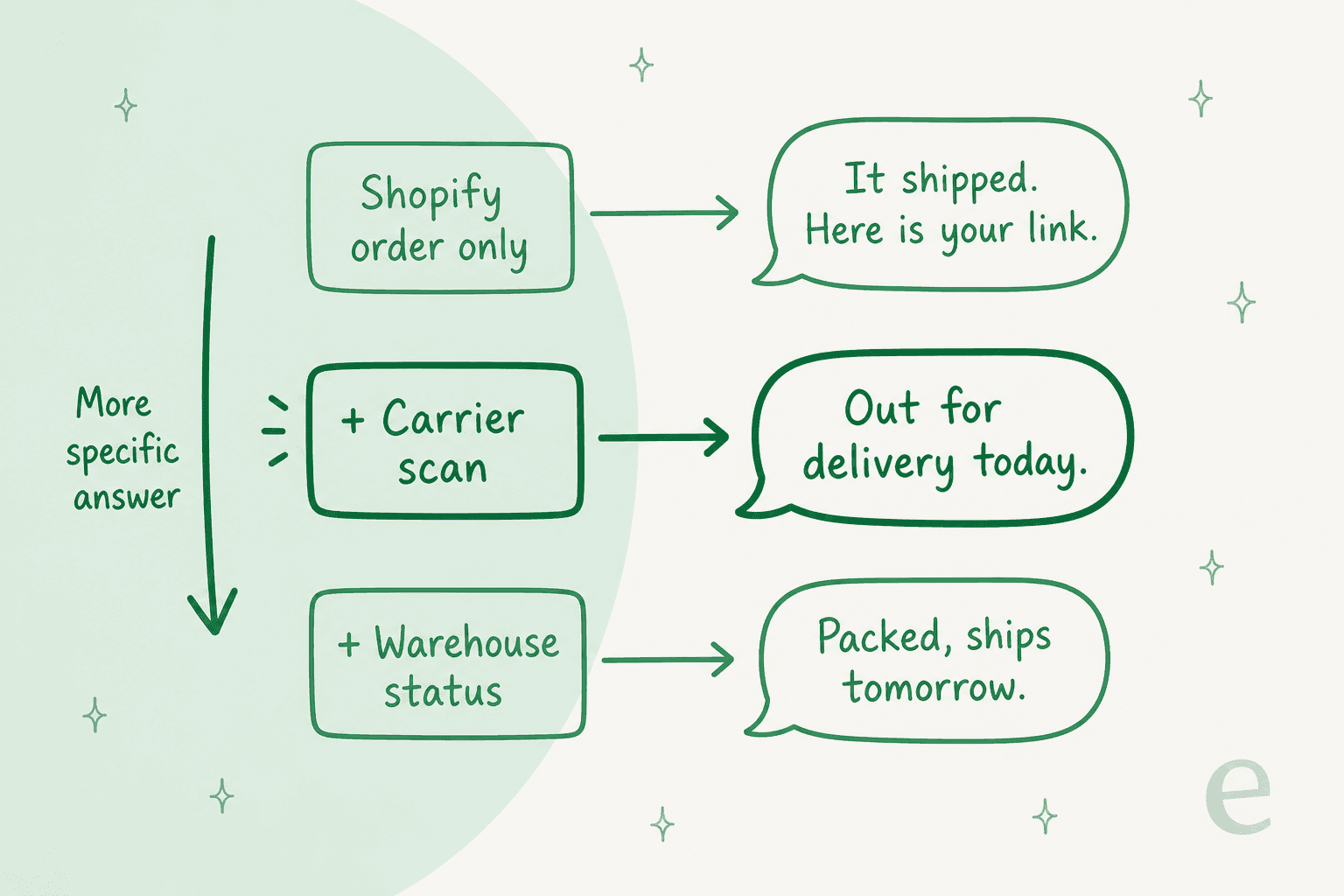
The window between "label created" and the first carrier scan is where the angry tickets come from. A store owner described it in r/ecommerce this week:
"a package sits on "label created" for 3 days and i've got the same customer in my inbox twice asking if we scammed them, and nothing i've tried has really fixed it"

That customer does not need a tracking link. They already have it, and it shows nothing. What they need is an honest "the label is printed, the carrier has not picked it up yet, here is what we are doing about it", and that needs the scan history, not the order status.
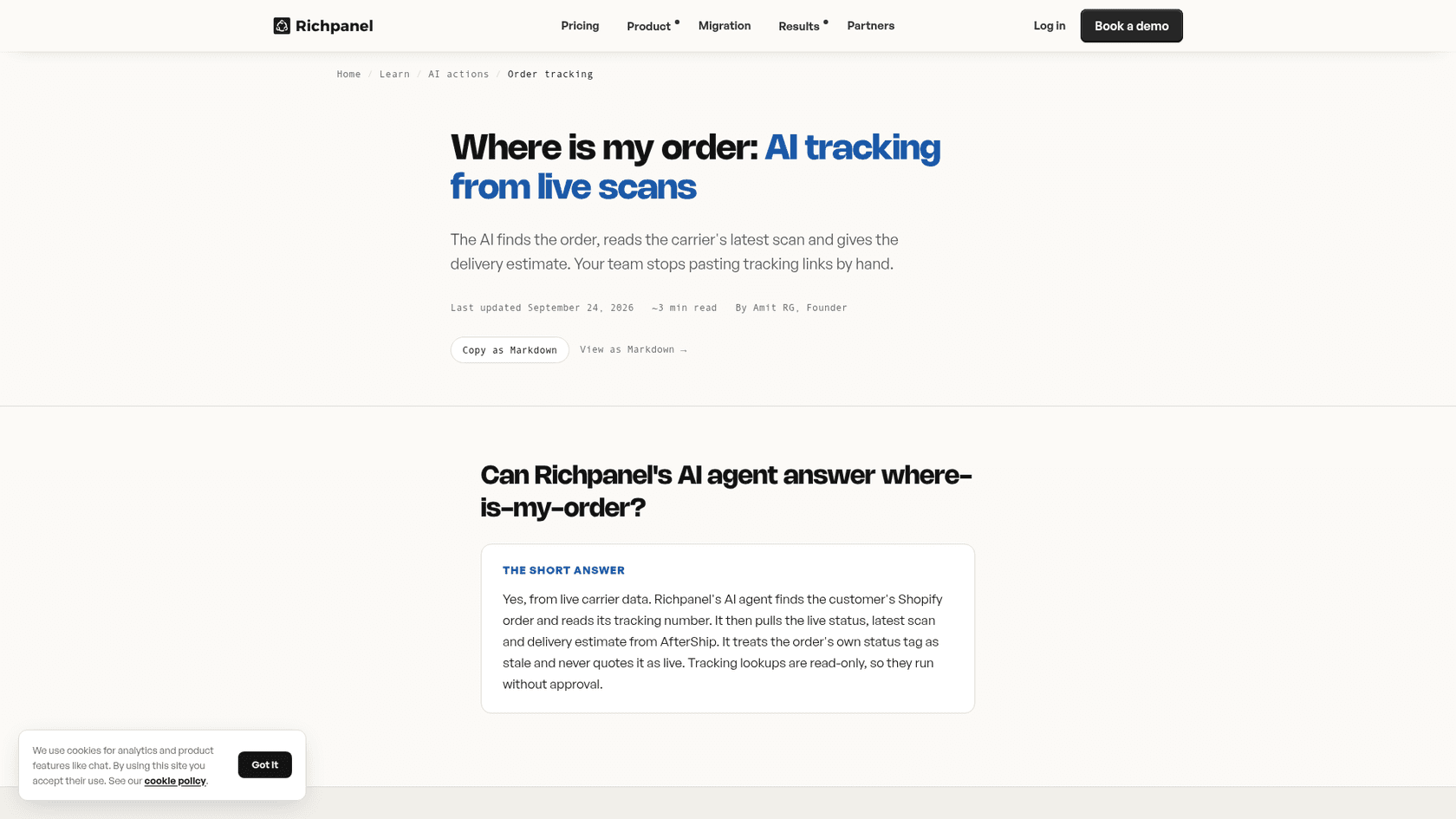
The tools that do this well say so plainly. Richpanel's order tracking page explains that its AI pulls the live status, latest scan and delivery estimate from AfterShip, and "treats the order's own status tag as stale and never quotes it as live." Gorgias makes a similar point in its ShipStation action docs: ShipStation "may have more up-to-date fulfillment info than is available in Shopify."
Step 1: prevent the ticket before it is written
The cheapest WISMO ticket is the one nobody sends. So before buying any AI, it is worth to check what your customers already receive after checkout.
Shopify sends four shipping notifications on its own: Shipping confirmation when an order is fulfilled, Shipping update when tracking changes, and Out for delivery and Delivered when the carrier reports those events, per the customer notifications guide. If you switched any of those off at some point, switch them back on. And if your tracking emails only link to a carrier page in another language, that link is generating tickets for you.
A branded tracking page is the next step up. One DTC store owner switched to a tracking page with four plain statuses (ordered, shipped, out for delivery, delivered) plus estimated delivery dates, and reported:
"WISMO tickets dropped like 20% almost overnight."
Another store owner, on Magento, described a dedicated tracking page that "cut down our wismo tickets by like twenty percent" in a separate r/Magento thread. Those are two anecdotes, not a study, but the direction lines up.
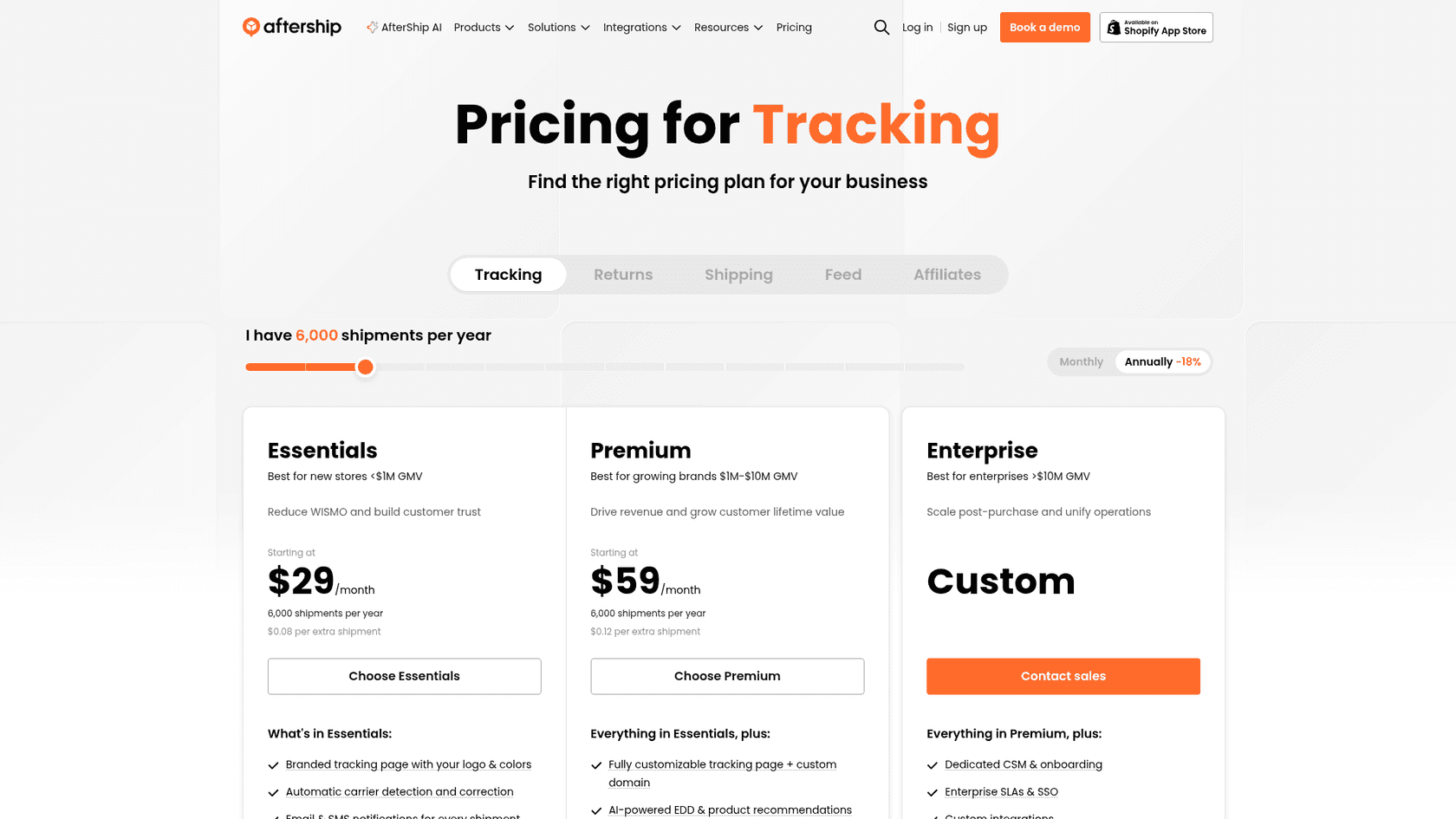
Tracking apps sell this layer. AfterShip's tracking pricing starts at $29 a month on annual billing for 6,000 shipments a year, with $0.08 per extra shipment, and its Essentials plan includes a branded tracking page plus email and SMS alerts when a shipment's sub-status or estimated delivery date shifts. Premium starts at $59 a month and adds AI-predicted delivery dates and an API. The "your order is running late" email is the one I would set up first, since the same Reddit post found that customers "don't get mad about delays as much as they get mad about not knowing." This is the proactive side of WISMO, and it shrinks the pile before any AI sees it.
There is a fair warning from the r/Magento thread too:
"Trying to solve this by automating WISMO inquiries instead of making sure there is no need for client to do wismo can backfire and just increase their frustration."
Shopify merchants can also wire their own nudges, like sending tracking updates once a label is created, so the quiet days between label and first scan stop feeling like silence.
Step 2: let AI answer the plain cases
Once prevention is in place, the WISMO tickets that still arrive are the ones where the customer wants a person-shaped answer: "my order number is 4471, is it coming before Friday?" This is where an AI agent beats a chatbot. A rule-based bot replies with a link. An agent looks up the order, reads the tracking, and writes a reply about this customer's parcel.
For that to work, the AI needs four things:
- The order, found by order number or by the email on the ticket. This one bit eesel early on: an ecommerce prospect worth about $800 a month was blocked because the Shopify lookup by order number did not work without the email to cross-reference, and "where is my order #1234" is the single most common ecommerce question in my queue. Test order-number lookup on day one with any tool.
- The fulfillment and tracking number, so it knows whether anything has shipped, and what shipped if the order was split.
- The carrier's latest scan, ideally through a tracking app, so it can say "out for delivery" instead of "shipped".
- Your shipping policy in writing: processing times, carriers per region, what counts as late, what you do about lost parcels. Without it, the AI fills gaps with guesses, which is how AI hallucinations in support start.
Identity matters as well. Order details are personal, and Richpanel's docs note that identity is "confirmed first when your store requires it." On email, the sender's address usually does that job. On chat, ask for the email or order number before reading anything back. Gorgias does a version of this for self-service: its order management portal sends a 6-digit code by email or SMS before showing order status and tracking.
Community feedback matches with what I see in tickets. People who ran these agents tend to say WISMO is the easy win, and the trouble starts somewhere else:
"the only AI feature that moves the needle for ecom is order status / tracking lookup tied to live shopify data, everything else is faster typing."
The same goes for channels. A WISMO question looks the same in email, chat, Instagram DMs or WhatsApp, and in whatever language the customer writes. Whatever you pick should answer all of them from the same order data, ideally in the customer's language too, which matters a lot for multilingual ecommerce stores shipping across borders.
Which order states the AI should answer
This is the part most WISMO guides skip, and it is the one I would print and stick on the wall. Every WISMO ticket maps to an order state, and each state has a right owner. Pick a state below to see what the AI can safely say, what it needs to read, and when it should step back.
Pick a state to see whether the AI answers it, drafts it, or hands it to your team. Example wording is illustrative; your policy sets the real numbers.
The states marked "AI answers" are on time, the AI is only reading facts back. Everything marked "Person owns it" involves an apology or a decision, and often money too. The middle one, where the AI drafts and a person sends, is how I would start any team that does not yet trust the agent.
Step 3: hand off the exceptions, with the facts attached
A WISMO bot that answers fast and wrong is worse than having no bot. One Shopify store owner put it well:
"A bot that answers "where is my order?" fast but confidently guesses on delivery exceptions burns trust. I'd start with a narrow FAQ set, hard handoff for refunds, edits, or angry customers, then review transcripts weekly."
Three rules cover most of it. Never let the AI state a delivery date the carrier did not give. Never let it answer a second contact about the same parcel as if it were the first. And never let it handle "delivered but not received" on its own, because that ticket is a claim, not a question. Richpanel's docs list the same set as hand-off triggers: carrier exceptions your policy does not cover, delivered-but-not-received claims, and repeat contacts on the same parcel.
A good hand-off does three things: it tells the customer what happens next in one line, it leaves an internal note with the order, the scans and the reason, and it stops the AI from replying again. My colleagues wrote a fuller guide to AI agent hand-offs if you want to go deeper. For routing rules beyond WISMO, see the piece on AI escalation.
The quiet failure is the stuck "out for delivery" scan. A chat agent explained it from the other side of the queue:
"If you have seen your tracking is out for delivery three days in a row and chat us on the fourth day with an update on that day you're reaching out, our time frame of when we can help starts at that report since we're not actively watching your tracking like you are."
An AI that reads scan history can spot that pattern on the first contact and route it straight to a person, instead of cheerfully repeating "out for delivery" for the fourth day in a row. In terms of value, that alone is worth more than shaving a minute off the easy tickets.
What WISMO automation looks like in a real store
Here is how one eesel customer runs it. Rúngne is a Norwegian climbing apparel brand selling worldwide through Shopify, with US orders shipped from a US warehouse and everything else from Norway. Support runs through Gorgias, worked by a team in Manila.
They split the work across three eesel agents with one job each:
- A triage agent acknowledges every new ticket in the customer's language and tags it from a fixed list, including ORDER-STATUS.
- A draft agent finds the order in Shopify by number or email, checks why it has not shipped and checks stock per size at the right warehouse, then leaves a reply as an internal note for a person to send. It never states an unconfirmed delivery date.
- A helpdesk agent answers publicly, but only on topics the team chose: shipping and return policy, where is my order, stock and pre-orders. Lost parcels, damaged items, cancellations and customs disputes never reach it.
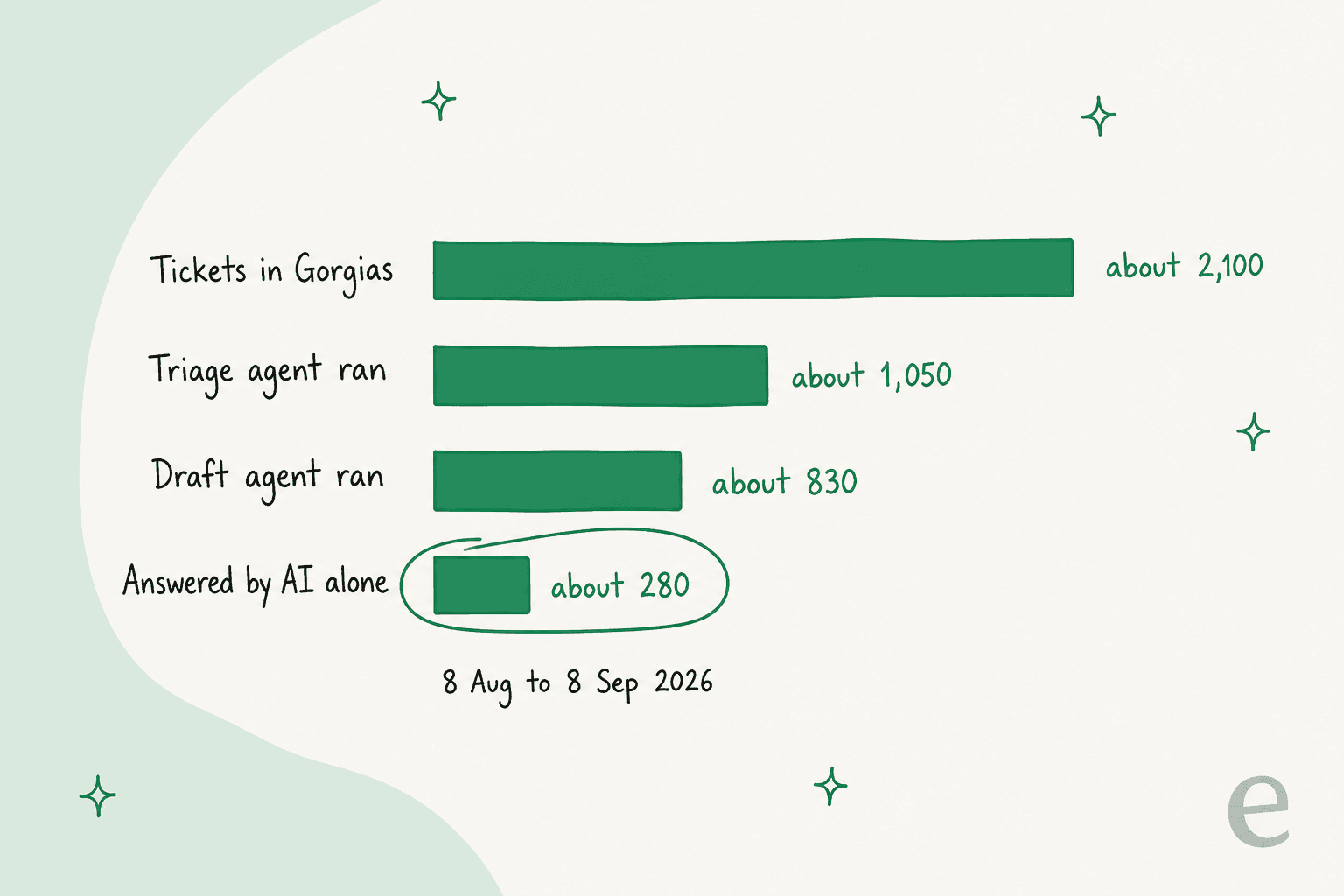
Between 8 August and 8 September 2026, eesel handled about 2,100 Gorgias tickets for Rúngne and looked up about 150 orders in Shopify. Around one ticket in seven got a direct AI answer, and that is by design. The team decides which topics go to the direct-answer agent, and moving a topic across is a list edit, not a project. That is the shape I would copy: narrow on day one, wider once you have read the transcripts.
Two more stores show the same pattern. Question Beauty, a cosmetics brand on Gorgias, has eesel check the customer, the recent order, its fulfillment status and tracking in Shopify before answering any delivery question, and looked up about 290 Shopify orders in a month. STIL Classics, a planner brand on Gorgias, has every ticket arrive with the order already checked, and its agent never invents ship dates or delivery estimates. If it cannot find the order, it flags that for the team instead of telling the customer.
Tools that automate WISMO, and what they bill for
Gorgias, Zendesk and Richpanel are the names that come up most when store owners ask about WISMO automation, and Yuma sells it as a headline use case. Here is how they compare on the things that matter for WISMO, using each vendor's own pages. The billing unit matters as much as the price: a WISMO reply that the customer answers with "thanks!" can count differently from tool to tool.
| Tool | Where it lives | Reads the order | Reads live carrier scans | Billing unit | Published price |
|---|---|---|---|---|---|
| Gorgias AI Agent | Gorgias helpdesk | Shopify, plus ShipStation and other fulfillment apps through Actions | Through fulfillment-app actions | Automated interaction | $1.00 (Starter), $0.90 (Basic, Pro), $0.85 (Advanced) per interaction |
| Zendesk AI agents | Zendesk | Through configured actions and the Shopify integration | Through actions you set up | Automated resolution | Plans include an allowance; extra resolutions sold committed or pay-as-you-go |
| Richpanel | Richpanel helpdesk | Shopify | Yes, with AfterShip connected | Plans by monthly order volume | See vendor pricing page |
| Yuma | Plugs into Gorgias, Zendesk and others | Shopify | Yes, "real-time carrier data" per Yuma | Full resolution | Starter $14,400/yr for 12,000 resolutions (about $1.20 each), 12-month commitment |
| AfterShip | Tracking page and emails | Shopify orders | Yes | Shipments | From $29/month (annual) for 6,000 shipments a year |
| eesel | Inside Gorgias, Zendesk, Freshdesk, chat | Shopify orders, fulfillment and tracking | Tracking number and link from Shopify | Credit (1 ticket or chat = 1 credit) | $299/month for 500 credits, up to $1,749/month for 5,000 |
A few things stand out once you read past the headline numbers, mostly in the billing small print.
Gorgias prices AI by the automated interaction on top of its helpdesk plans, and its pricing page shows Actions (cancel, discount, apply) are not on the Starter plan. Its old autoresponder rule that emailed tracking links for WISMO tickets stopped working for remaining accounts on January 30, 2026, per its deprecation note, and Gorgias now points Shopify brands to AI Agent.
The full math is in my colleagues' breakdown of Gorgias AI Agent pricing. What the agent can actually do in Shopify and your fulfillment apps is covered in Gorgias AI actions.
Zendesk counts automated resolutions, and since May 18, 2026 it groups them into tiers: an assisted escalation or a contained resolution does not count against your allowance, while a resolution that passes Zendesk's LLM check does, per its resolution tiers article. On email, Zendesk treats a conversation as ended 72 hours after the first message. The Zendesk Shopify integration is the starting point for order data, and the Zendesk AI pricing guide has the plan detail.
Yuma uses WISMO as its own example of a billable outcome on its pricing page: an answered where-is-my-order question that the customer never replies to counts as one full resolution. It is sold on annual commitments, so it fits brands with steady, high volume. The Yuma alternatives roundup covers the rest of that category.
Richpanel is the most explicit about live carrier data, and it is a full helpdesk, so it suits stores ready to switch. If you would rather keep your current helpdesk, the Richpanel alternatives list is a better starting point.
eesel works inside the helpdesk you already have. Its limit for WISMO is the same as any Shopify-reading agent: it reads the order, fulfillment and tracking from Shopify, so for live scan-by-scan status you still want a tracking app feeding your customers and your notes. I would pair the two rather than expect one tool to do both layers.
How to roll out WISMO automation without burning trust
This is the order I would follow on a real store. It is also roughly how the Rúngne setup grew over its first weeks.
- Pull 100 recent WISMO tickets and sort them by the order states in the router above. You will usually find most are on-time orders, and a small group of stuck or lost parcels causes most of the angry replies.
- Fix prevention first. Turn on every Shopify shipping notification, add a tracking page, and send a late-delivery email. Re-count a month later.
- Write the shipping policy the AI will read: processing times, carrier per region, what "late" means, what you do for lost parcels. If it is not written down, the AI should not say it.
- Test on past tickets before going live. At eesel, every new agent gets run against a store's historical tickets first, because the team has watched confident bots give wrong answers on live queues. Check order-number lookup, split shipments and a few exception scans.
- Start in draft mode or with a narrow topic list, then move "AI answers" states across once a week of transcripts reads clean.
- Review handed-off tickets weekly. Every hand-off is either a correct escalation or a policy gap you can write down.
Once WISMO is stable, the same playbook carries over to the next ticket types. I'd move to refund requests next, since they start from the same order lookup, and then to pre-purchase questions, which need your catalog instead of your orders.
If WISMO is part of a wider repeat ticket problem, that guide covers the rest of the pile.
Try eesel for WISMO on your Shopify store
If "where is my order" fills your Gorgias queue, or your Zendesk or Freshdesk one, eesel's AI helpdesk teammate joins that queue like a new hire who already knows your Shopify orders. It finds the order by number or email, reads the fulfillment and tracking, answers the on-time cases in the customer's language, and leaves stuck or lost parcels for your team with the facts in an internal note. That is how Rúngne runs it on Gorgias today.
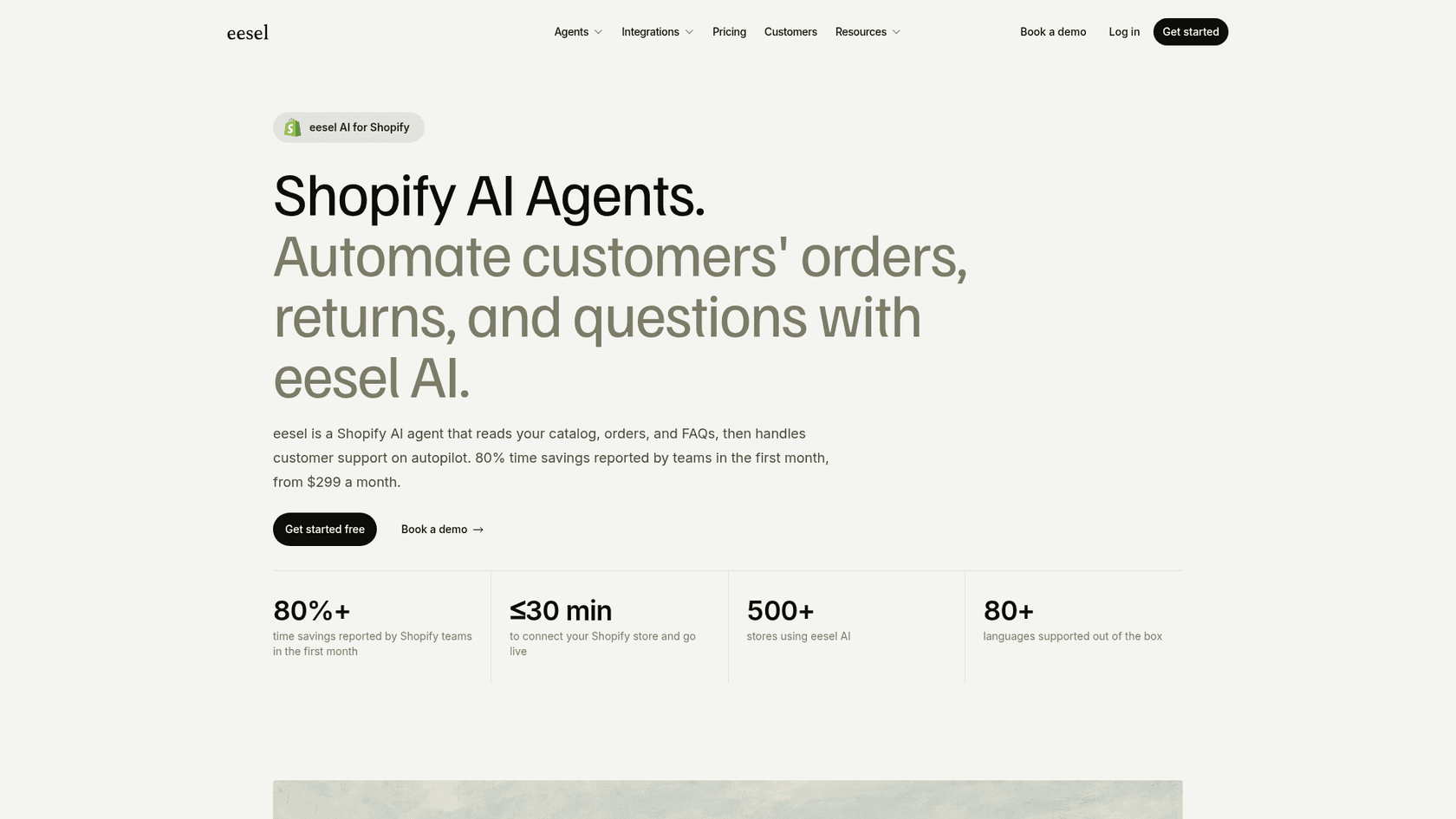
Connect your Shopify store and your helpdesk, test it on last month's WISMO tickets, and decide which order states it answers. The free plan includes 100 credits, and paid plans start at $299 a month for 500 tickets or chats. Try eesel.