

What counts as a pre-purchase question?
I work eesel's support queue every day, and the questions that sting the most are the ones which arrive before any order even exist. A shopper asks "does this run small?" at 11pm, nobody answers until morning, and the cart is gone. There is no ticket to escalate and no order for looking up, just a sale that quietly didn't happen.
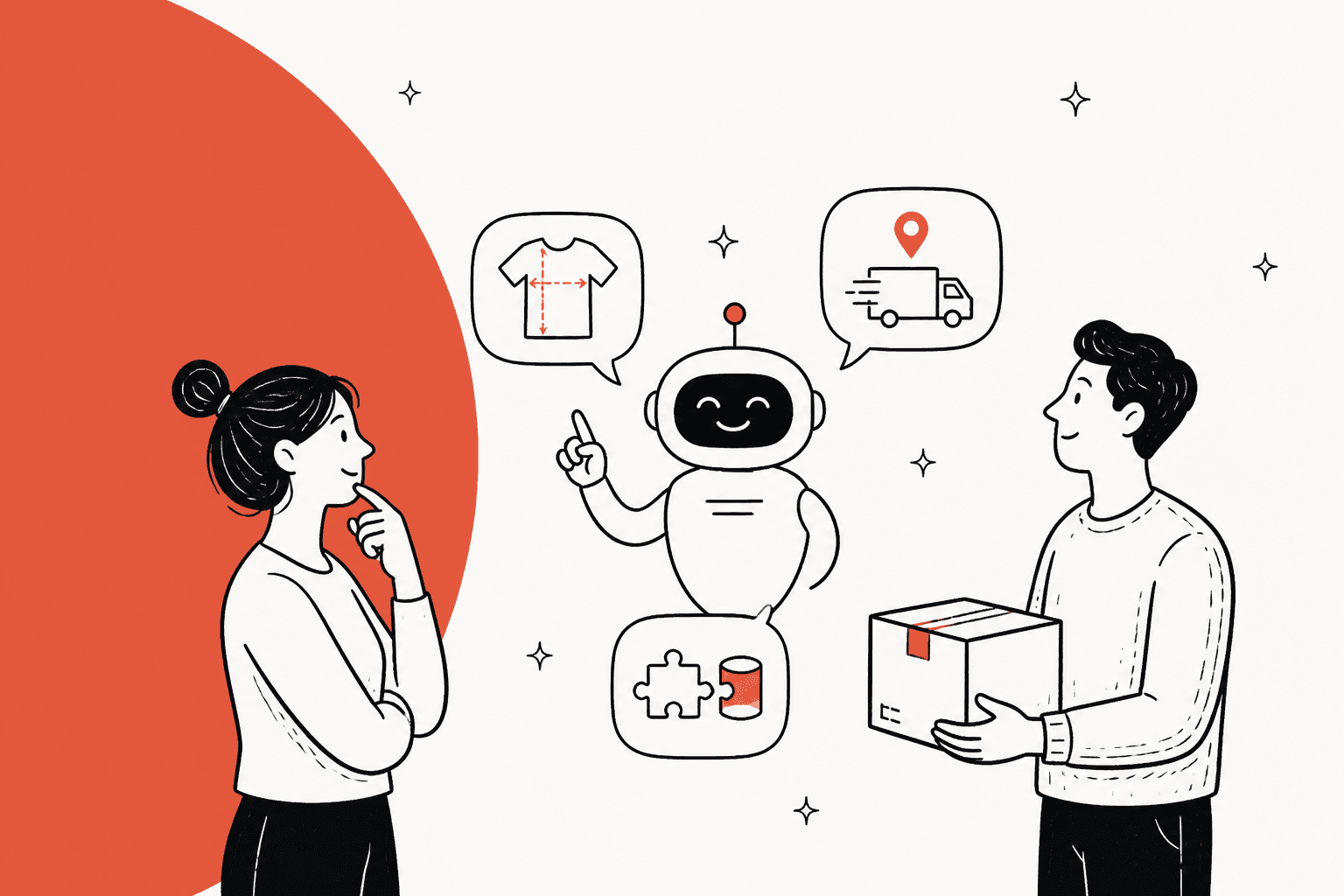
Pre-purchase questions are everything a shopper asks while deciding: sizing and fit, delivery time to their address, whether a part fits the thing they already own, whether the blue one is in stock, how two products differ, and what happens if it doesn't work out. They look like support tickets, but in terms of behavior they are more like a sales conversations. Speed matters more, and a wrong answer costs more, because it turns into a return.
"It's a great way to immediately answer your customers questions to not lose the sale."

This is the part that most of guides skip. A slow answer loses one sale. A confident wrong answer about size or compatibility loses the sale and creates a return, a reshipment and sometimes a one-star review. A clothing store owner on Reddit summed up where the time actually goes:
"Shipping and returns are easy enough, but sizing and product questions take way more time."

So the question isn't "can AI answer this?", it's "where would the AI read the answer from?"
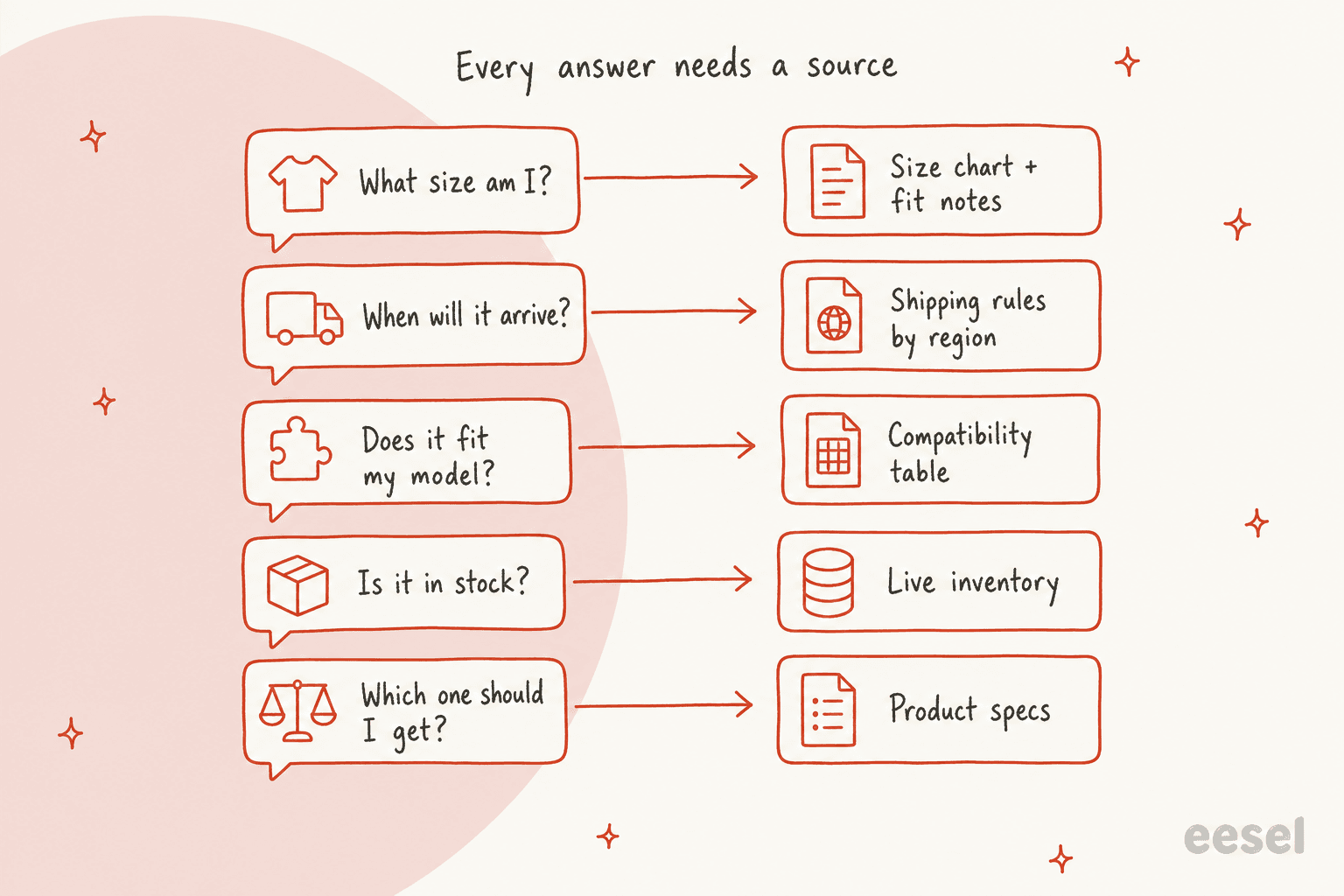
Every pre-purchase answer maps back to one source. If the source exist and the AI is connected to it, then the answer is easy. If it doesn't, no model is good enough to invent it, and you shouldn't want it to try. This is also why pre-sale chat is a different job from order tracking support, where the answer always lives in one place: the order.
Which pre-purchase questions can AI answer safely?
I sorted the six questions shoppers ask the most, by what AI needs and by what a wrong answer is costing you. Click through the question types to see where each one lands.
Pick a question type to see what the AI needs to answer it, what a wrong answer costs, and whether to automate it.
The pattern is simple once you see it laid out like this. Comparison, stock and policy questions are lookups, so automate them on day one. Post-purchase returns automation is a separate job; here we only need the policy quoted. Sizing, delivery and compatibility are lookups plus judgment, so automate the lookup and route the judgment. That split is where most AI chatbot problems in ecommerce come from: teams switch the bot on for everything at once.
Where should pre-purchase answers live?
Not every pre-purchase question should reach a chat at all. The cheapest answer is the one a shopper reads on product page before they even think for asking. A size chart under the size picker, a delivery estimate next to the price, a three-line FAQ on the product page. That kind of ecommerce self-service handles a big share of questions with zero AI involved.
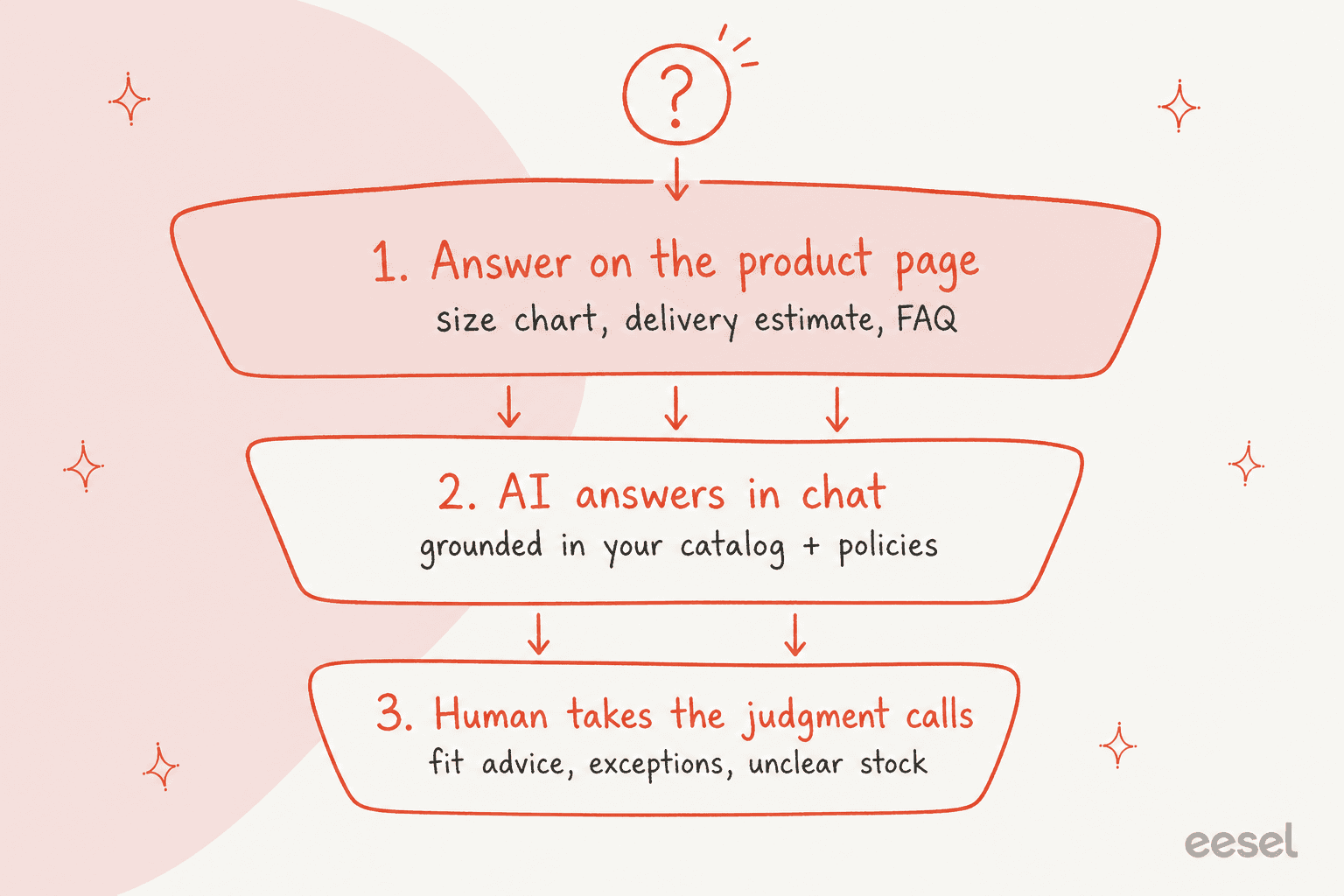
I think of it as three layers:
- The product page answers first. If a question shows up in chat ten times a week, it belongs on the page. Some tools now do this for you: Gorgias generates AI FAQs on product pages from shopper questions.
- AI answers in chat. Anything the page didn't cover, answered from the same catalog, policies and stock data. This is where an AI chatbot for ecommerce earns its keep, especially after hours.
- A person takes the judgment calls. Fit advice between two sizes, exceptions to policy, a model that isn't in the compatibility table. The hand-off should carry the whole conversation so the shopper doesn't repeat themselves. I wrote up what makes a clean one in AI agent handoff best practices.
Treat chat questions as a to-do list for layer one, the same loop that drives FAQ deflection. Every repeat question the AI answers is a sign the product page is missing a line.
The rule that stops AI from guessing
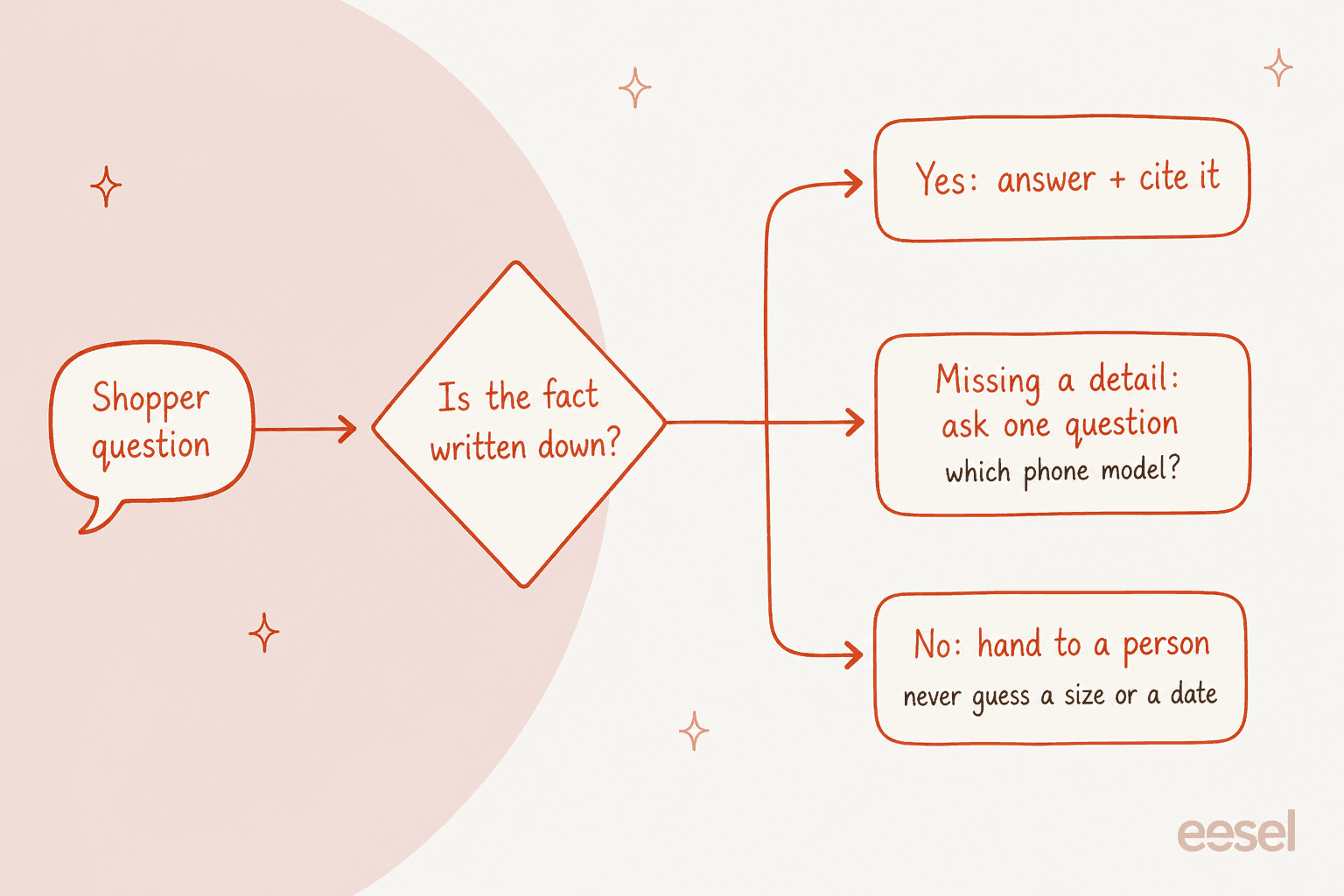
Here's the one rule I'd set before anything else: the AI answers only when the fact is written down, asks one question when a detail is missing, and hands off when it isn't written down at all.
This is the thing buyers asks me about most, and honestly it's a fair worry. One ecommerce CX lead we spoke with this year, handling around 7,000 tickets a month at a DTC supplements brand, put it better than I can:
"The AI will never be able to answer 100% of the questions, but if it tries and just answers 'sorry I don't know this,' I cannot go and check all my 7,000 tickets to see if the AI actually made a good answer. I need an AI who is only handling the tickets that it's confident to handle and all the other ones, leave them alone."
The good news is that product questions are where AI is strongest when the data is there. When a German jewelry brand (around 1,000 tickets a month across eight languages, on Zendesk and Shopify) ran eesel against its real inbox, the drafts for product inquiries came back useful 100% of the time, while the hardest misses across the whole inbox came from data the AI simply couldn't see, like logistics details living in another system. That's the pattern I keep seeing over and over, the model is rarely the weak link, the missing data is. If you want the longer version, I covered the mechanics in preventing AI hallucinations.
Store owners running these tools say the same thing in plainer words:
"I just finished training my bot a few day ago after I noticed it gave a wrong answer to a customer that used the chat. ... Now that I’ve updated it with practice questions and answers, it’s been working well."
"It saved time because it answered instantly and routed the weird cases to me. It sucked when it tried to be too clever, gave a confident wrong answer."
Both of the fixes was the same thing: better source material, and a clear line for what goes to a person.
The AI options for pre-purchase questions
When I asked ChatGPT this exact question as a store owner would, every search it ran paired a vendor with "Shopify", "product catalog" and "pre sales". So that's how I've laid these out, as a pre-sale cut of my wider Shopify support roundup: what each tool reads, what it costs according to its own pricing page, and who it fits.
| Tool | Best for | Reads your catalog | Live stock | Hand-off to a person | Works outside Shopify | Pre-sale and post-sale | Starting price (vendor page) |
|---|---|---|---|---|---|---|---|
| Shopify Inbox | Free starting point | Yes | Yes | Yes, to staff in Inbox | No | Mostly pre-sale | Free |
| Gorgias Shopping Assistant | Shopify brands already on Gorgias | Yes | Region-aware in chat | Yes, in Gorgias | Shopping Assistant is Shopify-only | Both | AI Agent from $1.00 per automated interaction, plus a helpdesk plan from $40/mo |
| Tidio Lyro | Small stores wanting product cards in chat | Yes, Shopify or product feed | Yes | Yes, to live chat | Yes | Both | Starter $24.17/mo billed annually |
| Zendesk ecommerce AI agents | Teams already on Zendesk | Yes, approved product info | Via connected systems | Yes, in Zendesk | Yes | Both | Contact sales |
| Yuma | High-volume DTC brands | Yes | Yes | Yes, in your helpdesk | Yes | Both | $14,400/yr, 12-month commitment |
| True Fit | Apparel and footwear sizing only | Fit data, not chat | No | Not a chat tool | Shopify app plus enterprise | Sizing only | Free to install on Shopify |
| eesel | One AI teammate for pre-sale chat and the helpdesk queue | Yes, catalog, policies, orders | Yes | Yes, to your helpdesk or email | Yes | Both | Free 100 credits, then $299/mo for 500 |
Every price above is from the vendor's own pricing page as of October 2026, and per-conversation units differ between tools, so compare like with like.
Shopify Inbox
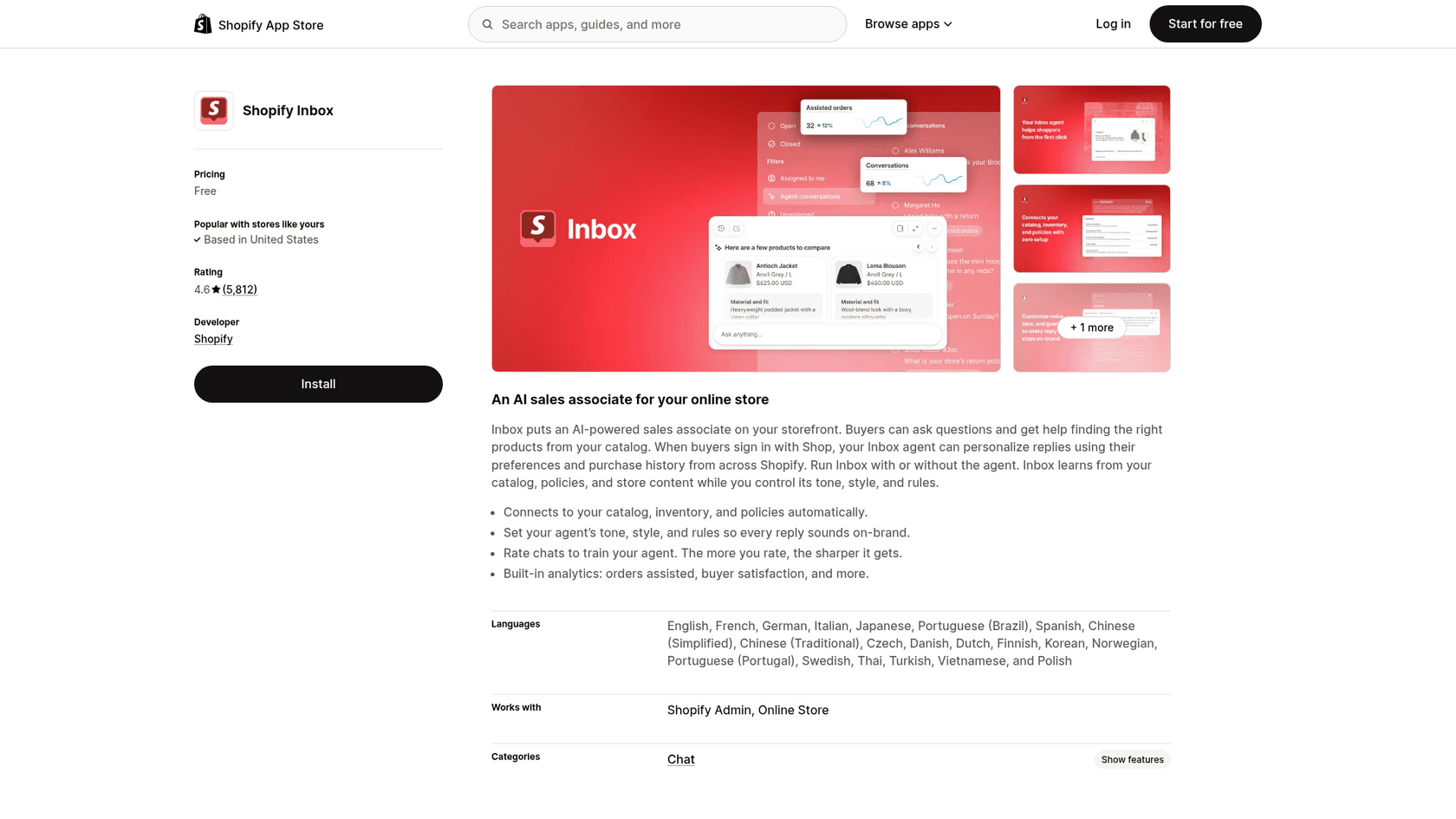
What it answers: Shopify describes Inbox as an "AI sales associate" that connects to your catalog, inventory and policies automatically. With the Inbox agent off, shoppers click through up to 100 instant answers you write yourself.
What to watch: AI-generated instant answer suggestions and suggested replies are English-only, and suggested replies need an English store with 200,000 products or fewer. Suggested replies are a composing aid for your staff, not the agent's automatic answers.
Pricing: Free, rated 4.6 from 5,812 reviews on the App Store.
My take: If you're on Shopify and haven't tried anything yet, start here. It's free and it reads your catalog. You'll outgrow it when you need the same AI working your email queue in a separate helpdesk, or more control over when it hands off. More detail in my Shopify AI chatbot breakdown.
Gorgias Shopping Assistant
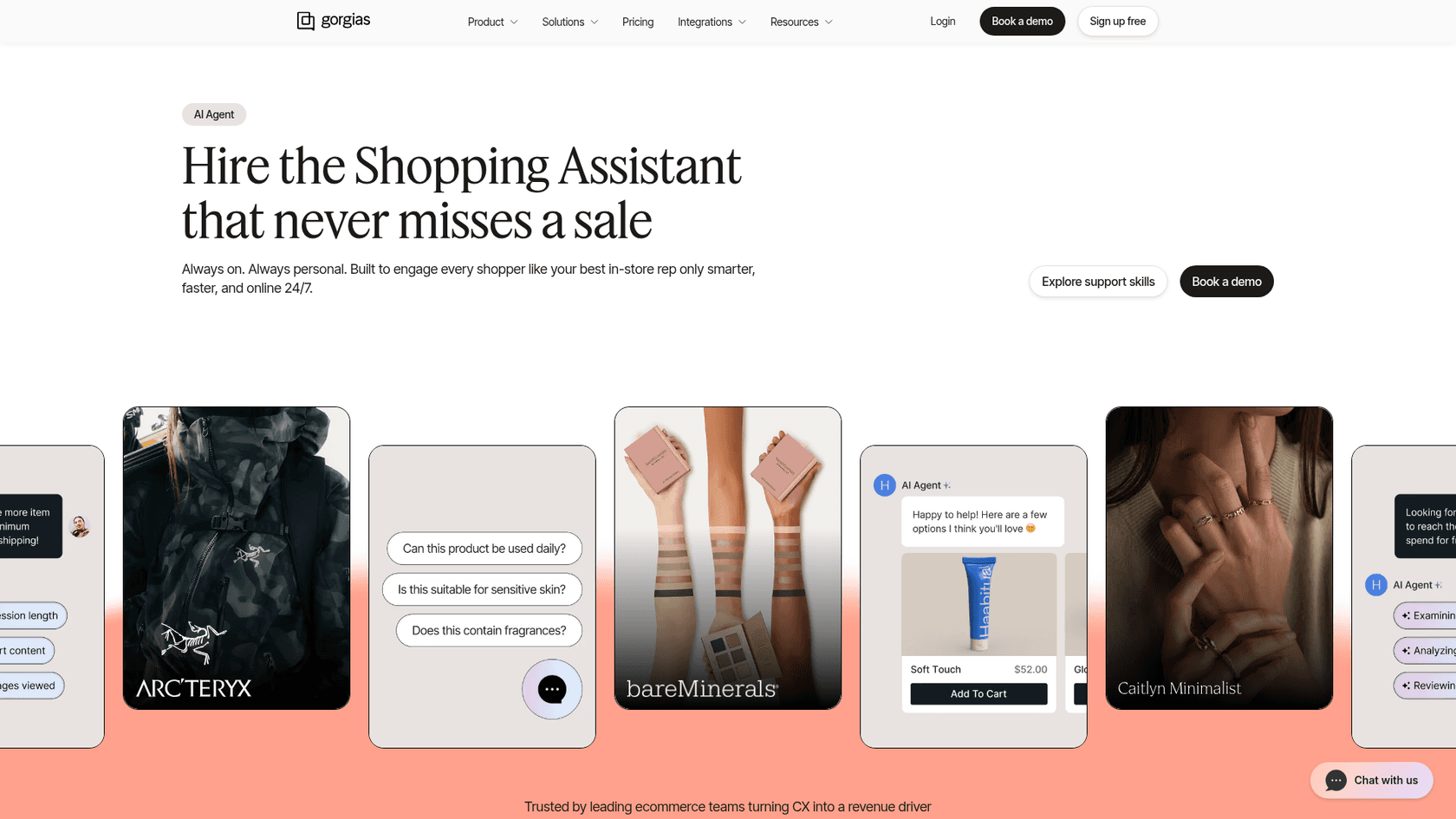
What it answers: Gorgias calls Shopping Assistant AI Agent's "sales capability", built for the pre-purchase experience. It answers sizing, availability and compatibility questions, recommends products, and can generate discount codes. It reads your Shopify catalog, your store website and custom product information you add in Gorgias, and it adjusts by buying intent (discovery, interested, ready to buy).
"The AI Agent has been especially valuable in handling product inquiries and shopping assistance, providing personalized recommendations, linking directly to products, and maintaining strong CSAT performance without manual intervention."
What to watch: It works with Shopify stores only. On stock, Gorgias is candid that it may still discuss an out-of-stock product over email or SMS, or when the shopper's location isn't known. Stores that subscribed to AI Agent before May 28, 2025 may need to upgrade to get it.
Pricing: Per Gorgias pricing, AI Agent costs $1.00 per automated interaction on Starter, $0.90 on Basic and Pro, and $0.85 on Advanced, on top of a helpdesk plan from $40/mo (Starter, 50 tickets). Shopping Assistant is included with AI Agent.
My take: The strongest sales-first option if you already run Gorgias on Shopify. The per-interaction bill is the thing to model before you turn on a "promotional" selling style. My Gorgias AI Agent pricing post runs the numbers.
Tidio Lyro
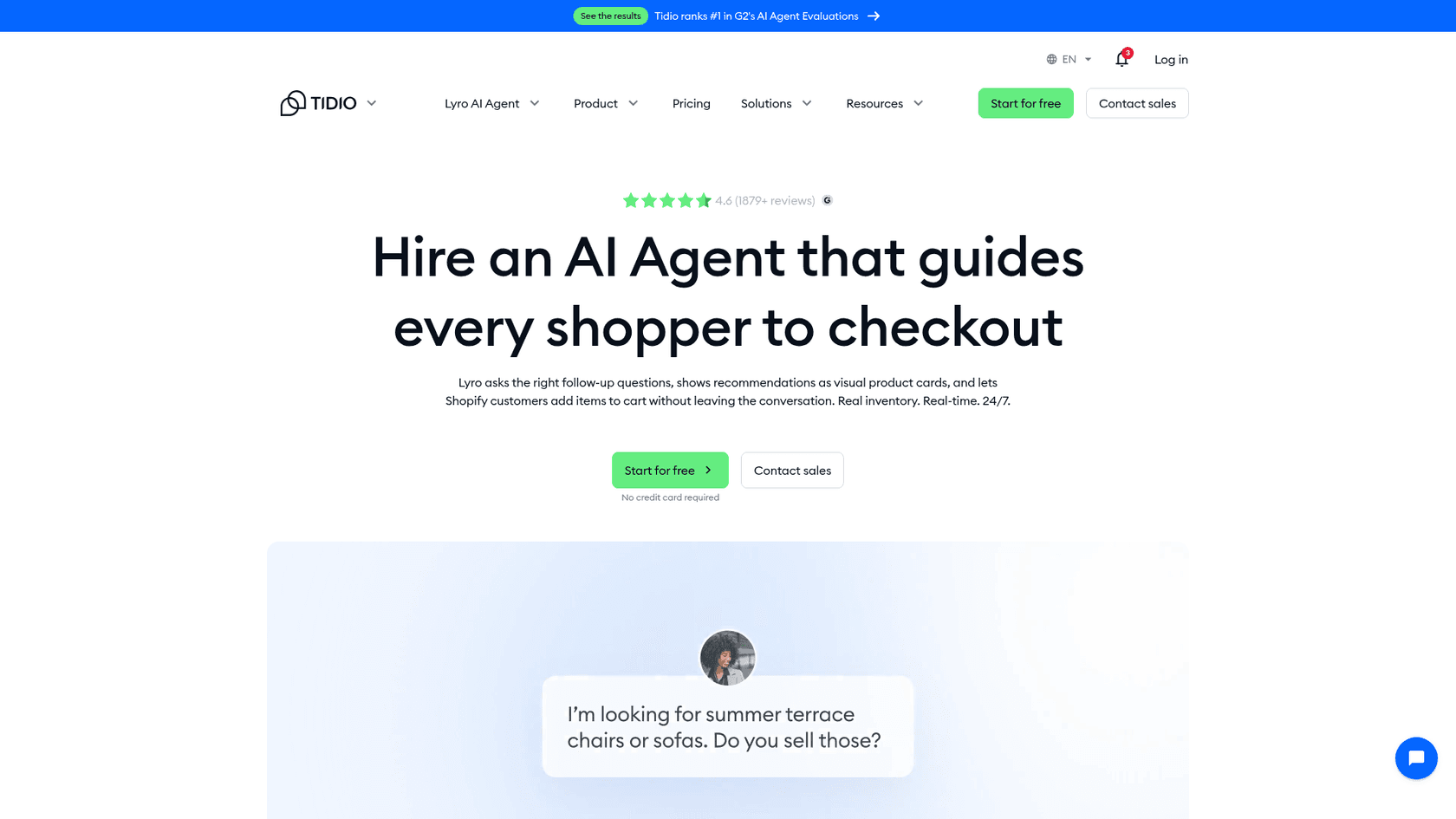
What it answers: Lyro's shopping assistant asks follow-up questions, shows recommendations as visual product cards, and lets Shopify shoppers add items to their cart inside the chat, using real inventory. Tidio says its customers average a 75% resolution rate with Lyro.
What to watch: Lyro conversations and human "billable conversations" are counted separately, so check both limits against your chat volume. My Tidio pricing breakdown walks through them.
Pricing: On Tidio's pricing page, Starter is $24.17/mo billed annually with 100 billable conversations and 50 one-off Lyro conversations, Growth starts at $49.17/mo billed annually, and Plus starts at $300/mo plus usage.
My take: A good fit for a small store that wants product cards and a live chat in one widget without much setup. If you're weighing it, my Lyro AI post goes deeper.
Zendesk ecommerce AI agents
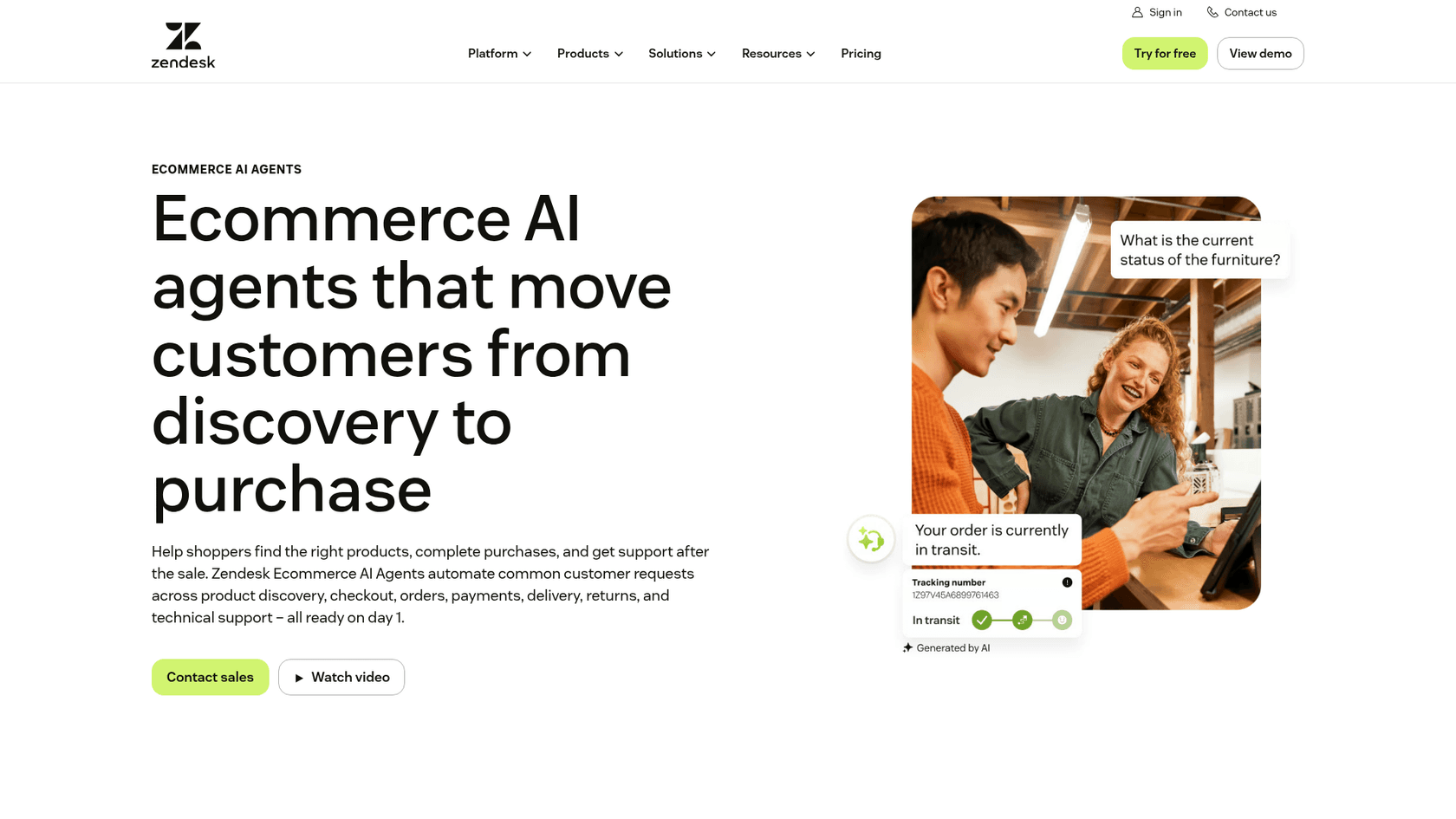
What it answers: Zendesk's ecommerce AI agents are pre-built agents for product discovery, checkout, orders, delivery, returns and technical support. Commerce agents help shoppers find and compare products, and the agents use "approved product information, customer data, policies, and order details" to answer.
What to watch: The page sends you to sales rather than listing a price, so budget time for a sales cycle.
Pricing: Contact sales.
My take: Makes sense if your team already lives in Zendesk and you want pre-sale and post-sale in the same place. The Zendesk Shopify integration is the piece to get right first, since product answers are only as good as the catalog data Zendesk can see.
Yuma
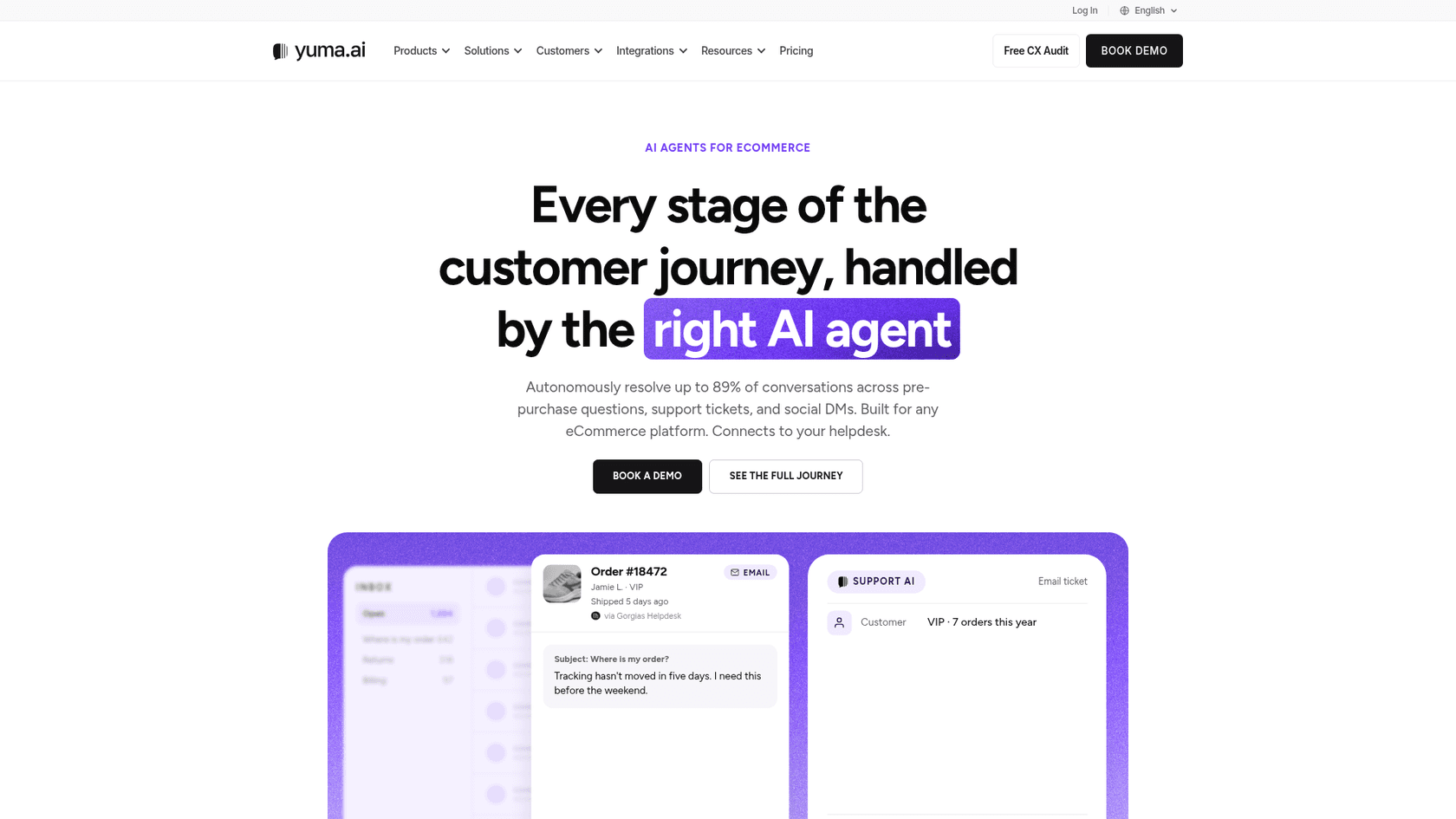
What it answers: Yuma runs separate AI agents for support, sales and social, covering pre-purchase questions alongside support tickets and DMs. It connects to your existing helpdesk and works on any ecommerce platform. Yuma claims it resolves "up to 89%" of conversations.
What to watch: Every plan carries a 12-month commitment, and Yuma only bills for tickets it resolves with no human involved.
Pricing: According to Yuma pricing, Starter is $14,400/yr for 12,000 resolutions (about $1.20 each), Growth is $40,000/yr, and Scale is $90,000/yr.
My take: Built for high-volume DTC brands that want one vendor across the journey and can commit to a year. I covered it more fully in my Yuma AI review, and if the commitment is the blocker, see Yuma AI alternatives.
True Fit (sizing only)
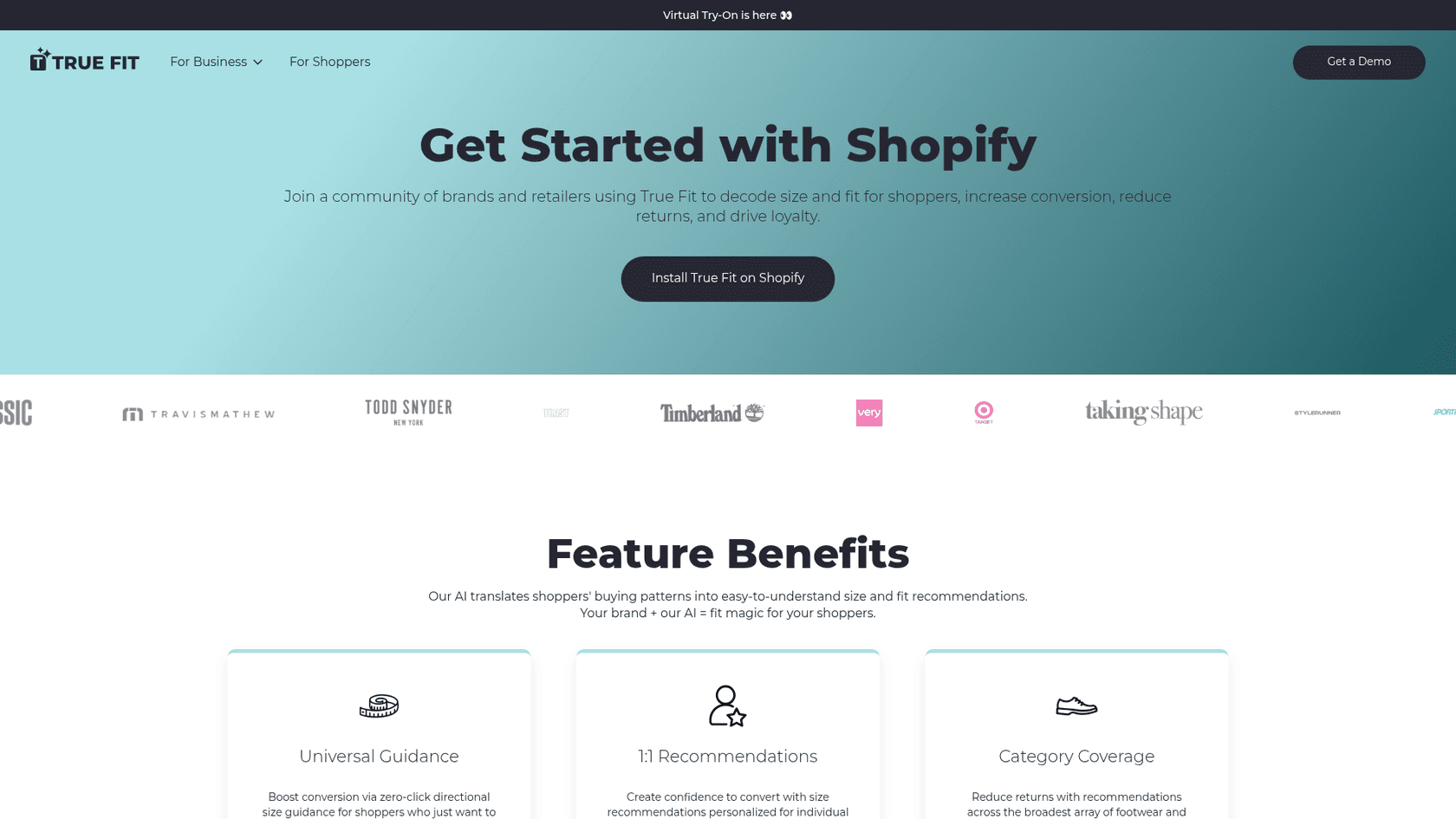
What it answers: True Fit isn't a chatbot. It turns shoppers' buying patterns into size and fit recommendations on the product page, across apparel and footwear categories, in more than 45 countries.
What to watch: It covers sizing only. You still need something for shipping, stock and compatibility questions.
Pricing: Free to install on Shopify, with font and color configuration options at +$5 per month. True Fit reports brands see up to a 40% reduction in size-bracketing returns.
My take: If sizing is most of your pre-purchase volume, this is the "layer one" fix: answer fit before the shopper opens chat. Pair it with any of the chat tools above.
How eesel handles pre-purchase questions
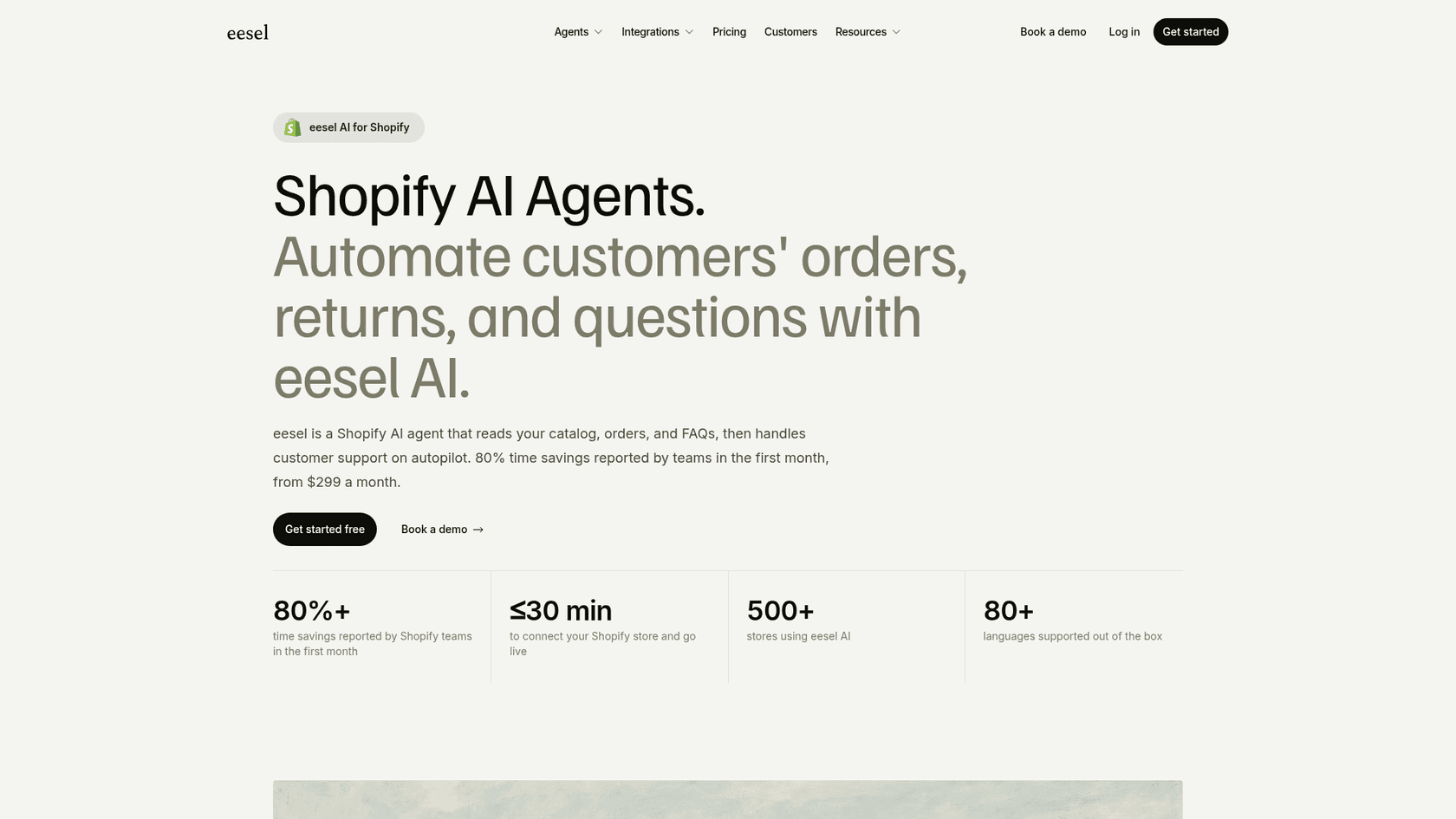
Full disclosure, this is my team's own product. eesel is an AI helpdesk teammate. For a store, that means one teammate that answers pre-sale chat on your site and also works the post-purchase queue in the helpdesk you already use.
Here's what it does for pre-purchase questions specifically:
- Reads what your answers depend on. Connect eesel for Shopify and it syncs your catalog, policies, order data and FAQs, so a "do you have the puffer in black, size M?" gets answered from live stock.
- Sits where shoppers ask. The chat bubble is one script tag on your store, and it works on Shopify, WooCommerce or a custom site. Hand-offs can go to email or into the helpdesk you already run, for example Gorgias or Zendesk.
- Takes rules in plain English. "Only answer sizing from the size chart. Always hand off if someone asks about a model that isn't listed." You tell it in a sentence, no flow builder.
- Can be tested before it goes live. You can ask it real shopper questions first, and run it against your past tickets to see where your docs have gaps.
Two stores show what this looks like day to day. IC Intracom runs one eesel chat per brand on its Intellinet and Manhattan web stores. Each answers spec, stock and compatibility questions from about 2,100 Shopify product records, and passes quote requests and technical questions to the right team with the chat transcript attached. ClutchLoop, a phone tether brand on Gorgias, has its agent answer questions like "which model has the metal anchor?" with prices, variants and stock checked in Shopify at the moment of asking, 76 live product lookups in one month, and it stays out of any thread a teammate is already replying in.
On price, eesel pricing is a fixed monthly batch: a ticket or a chat is 1 credit however long it runs, starting at $299/mo for 500 credits, with every feature and unlimited seats. There's a free plan with 100 credits and no card, which is enough to point it at your store and throw your ten hardest pre-sale questions at it.
Worth to say where eesel isn't the right fit: if you want an AI that pushes discount codes and runs an aggressive "promotional" selling style, a sales-first tool like Gorgias Shopping Assistant is built for that. eesel answers like a good support teammate, not a closer.
How I'd roll out AI for pre-purchase questions
This is the order I would do it in, if I joined your team on a Monday.
- Pull 100 real pre-purchase questions. Export a month of chat and pre-order emails, then sort them into the six types from the sorter above. You'll usually find two or three types make up most of the volume.
- Fix the sources before the AI. For each top type, check the source exists: a size chart on every product that needs one, shipping ranges by region in your policy, a compatibility table if you sell parts or accessories. Write the missing ones first. This step does more for the accuracy than any tool choice will do.
- Move repeat answers onto the product page. If one question shows up weekly, add it to the page. That's layer one, and it's free.
- Set the hand-off rules. Write down what the AI must never do: promise a delivery date, guess between two sizes, confirm a fit that isn't in the table, approve a policy exception.
- Test on your 100 questions. Before going live, run every question through the tool and mark each answer right, wrong or "should have handed off". Fix sources, not prompts, when it's wrong.
- Go live on chat first, after hours first. Night and weekend chat is where unanswered pre-sale questions hurt most and where an AI has the least competition from your team. Once that works, consider proactive support prompts on your busiest product pages.
- Review weekly. Read every handed-off conversation for a month. Each one is either a missing source to write or a rule to adjust.
If your shoppers write in more than one language, check that early, since several built-in tools are English-only for parts of their AI. My guide to multilingual ecommerce support covers what to test.
What to measure
Resolution rate alone is going to flatter you on pre-purchase questions, because a shopper who get an answer and leaves without buying still counts as "resolved". I'd track four numbers instead:
| Metric | What it tells you | Where to get it |
|---|---|---|
| Answer accuracy on a weekly sample | Whether the AI is quoting your sources correctly | Read 20 conversations a week |
| Hand-off rate by question type | Which sources are missing or thin | Your AI tool's reports |
| Conversion after a chat | Whether answers lead to orders | Shopify or your chat tool's assisted-orders report |
| Returns tagged "wrong size" or "not compatible" | Whether AI answers are causing returns | Your returns app or helpdesk tags |
The last one is the number nobody checks, which is also the one that matter most. If AI-answered sizing questions lead to more size exchanges, your size chart is the problem, not the chat. For the wider set of numbers, see my ecommerce chatbot metrics guide.
Try eesel for pre-purchase questions
If your shoppers are asking about size, stock and shipping after your team has logged off, eesel can sit in your store's chat, answer from your Shopify catalog and policies, and hand the fit calls and exceptions to your team with the full conversation attached. The same teammate then picks up the "where is my order" and returns tickets in your helpdesk, so pre-sale and post-sale stay in one place.
Start with the free 100 credits, connect your store, and ask it the ten pre-sale questions your team answers most. Try eesel and see which ones it gets right before a single shopper does.