

Manifest AI is a good fit for a Shopify store that wants one chat to recommend products and answer order questions, with the vendor's own team building the agents. It holds 4.3 from 62 Shopify reviews and 4.5 from 6 on G2, mostly praising setup help. The catches are a $500 monthly minimum, a pricing page that is only a demo form, and thin independent evidence. If your backlog lives in Gorgias or Zendesk tickets, eesel checks the Shopify order before it replies, and the eesel CLI lets a coding agent upload and test knowledge first.
What is Manifest AI?
Manifest AI is an AI shopping assistant and support agent for Shopify and other ecommerce stores, made by BIK and backed by Y Combinator. G2's Manifest AI profile says it recommends products, answers pre-purchase questions and handles order tracking, returns, exchanges and refunds over web chat, email, Instagram and WhatsApp. It reports 500+ brands, and I have taken that number from the vendor, not verified it.
I build integrations at eesel, so I read tools like this by what they connect to and what they can do once connected. Manifest connects to Shopify, BigCommerce and WooCommerce on the store side, and to Zendesk, Gorgias, Kustomer, Freshchat and Shopify Inbox for handoff, per its integrations page. I checked its homepage, Shopify listing, G2 page and pricing post on 17 November 2026.
Two things changed recently. The homepage now calls it "the #1 agentic engine for enterprise commerce" and shows LEGO and Durex logos. And the pricing page is a "Book a demo" form, so the only public rate sits in Manifest's pricing post. I covered that rate in Manifest AI pricing, so here I will judge how well it works and who it suits.
How does Manifest AI work?
You install it from the Shopify App Store, it imports your catalog and policies, and the Manifest team helps build the agents. The listing says the install is free with a 7-day trial, and the vendor's own post says most brands go live in about 2 weeks.
The part I find most interesting is Agent Studio. You write an agent the way you would write a standard operating procedure, and it calls tools such as order lookup or a Shopify refund. The listing's example is an order cancellation agent that checks the order is unfulfilled and under 24 hours old, confirms with the customer, then triggers the refund.
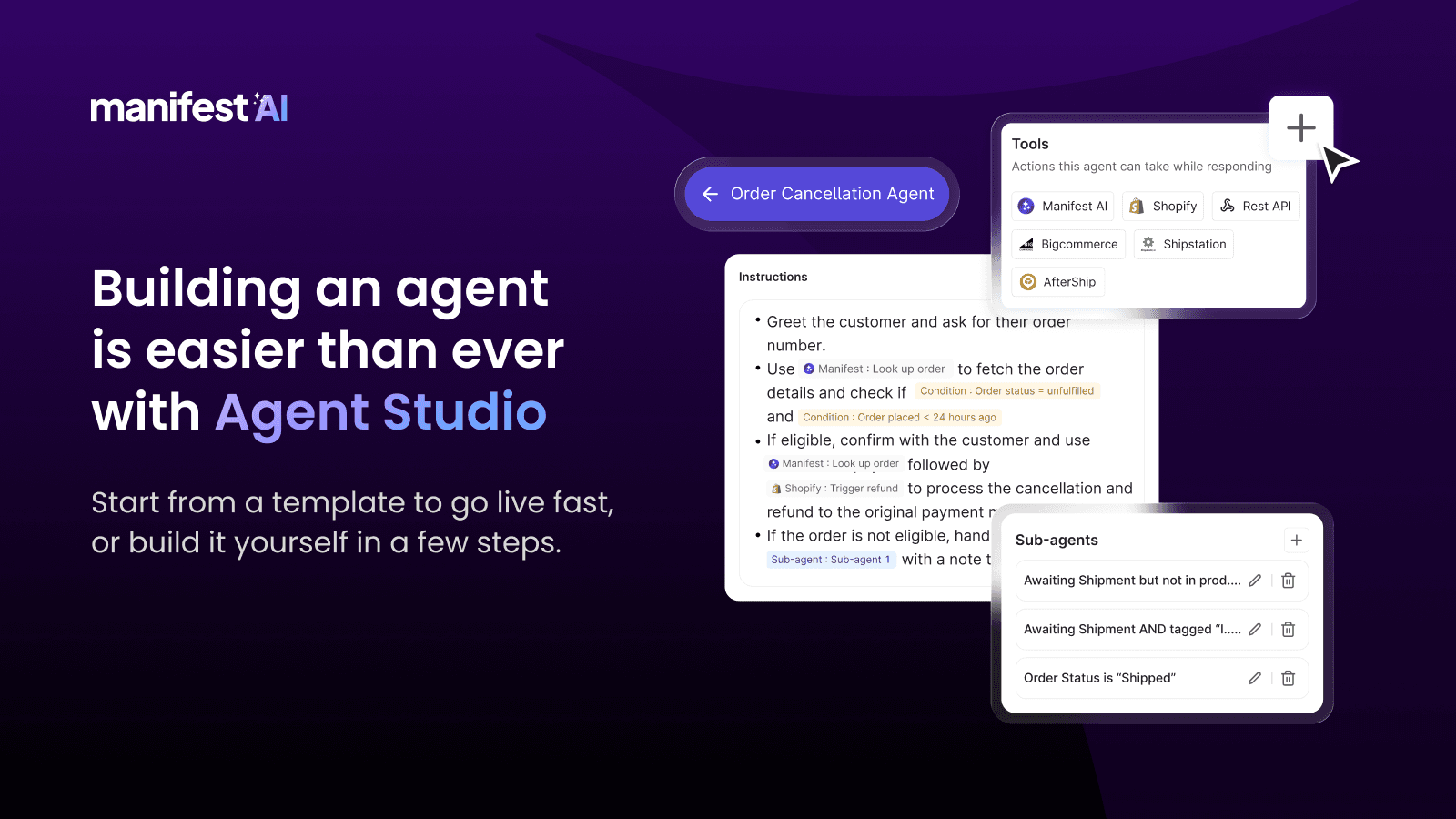
Behind that sit a few named pieces from the homepage:
- Discovery: a product search that asks about occasion, budget and size, then treats budget and availability as hard limits.
- Artifacts: fixed experiences inside the chat, such as size guides, return flows and order tracking.
- Auditor: scores every conversation, flags poor answers, and proposes fixes your team approves.
- Governance: versioned and approved changes, role-based access, and SOC 2, ISO 27001 and GDPR badges.
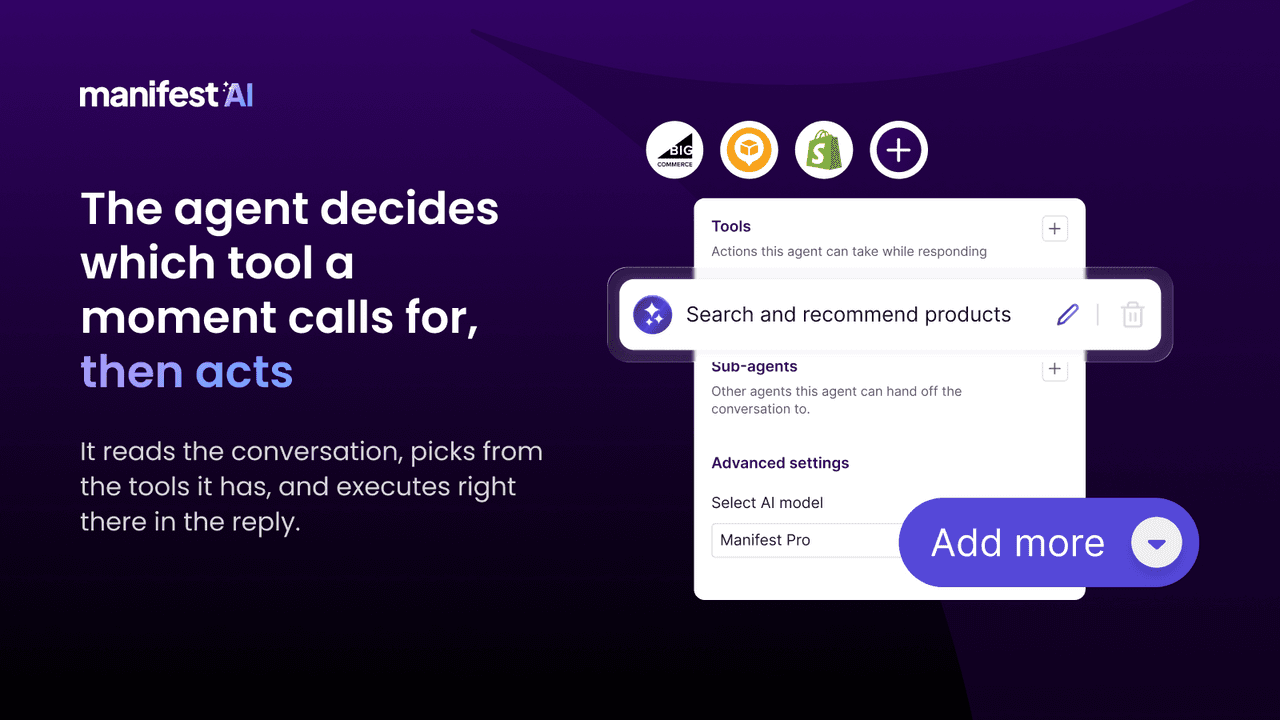
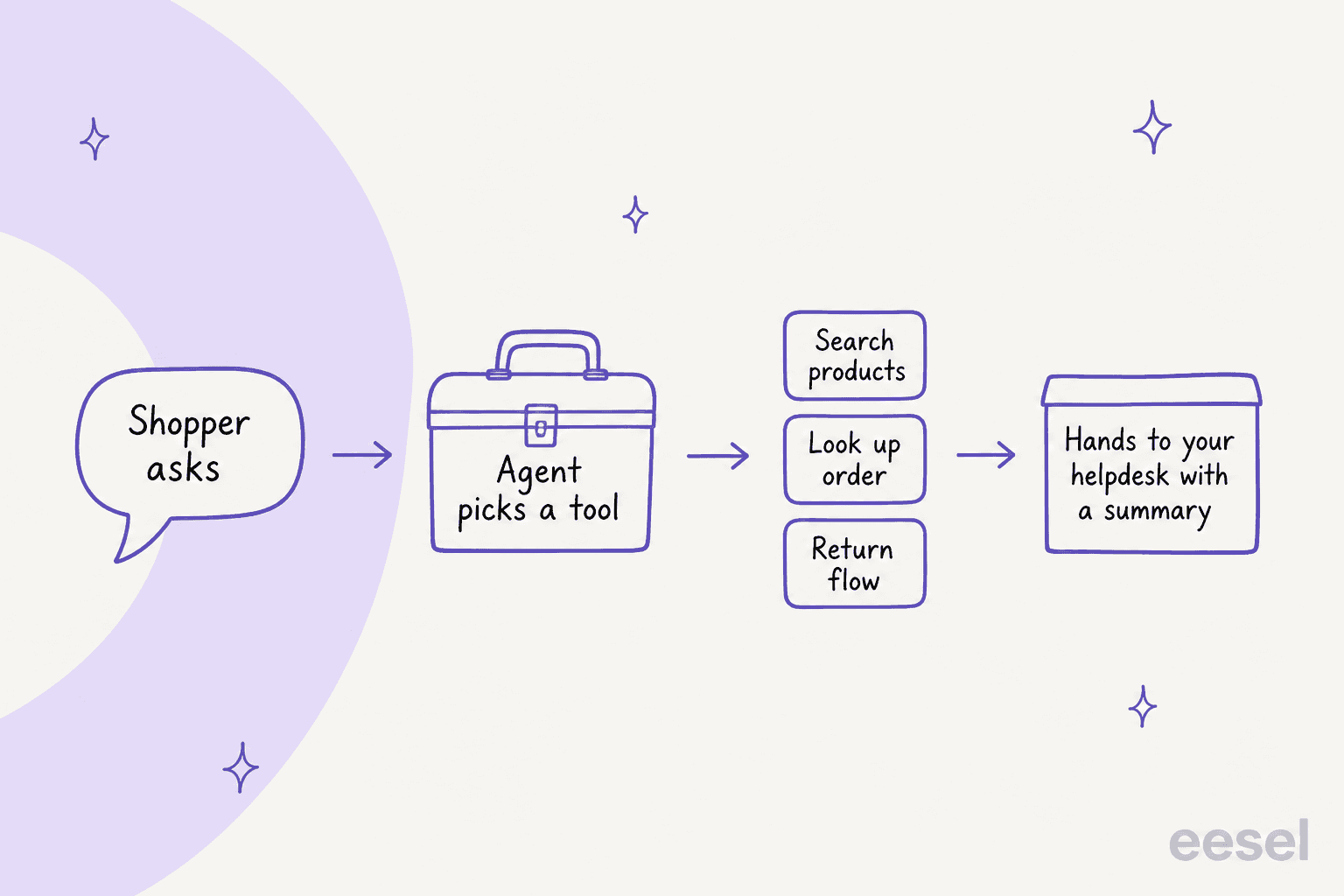
In practice a chat runs like this. The shopper asks, the agent picks the tool the moment calls for, and anything it should not decide goes to your helpdesk with a summary. That handoff matters more than any single answer, and I wrote about what good looks like in AI agent handoff best practices.
What do Shopify merchants say about Manifest AI?
On the Shopify App Store, Manifest AI shows 4.3 from 62 reviews: 49 five-star, 4 four-star, 2 three-star, none at two stars and 7 one-star. That is a split, not a gentle slope, so the average hides two groups of stores. A free Shopify Inbox chat is the baseline most of these stores were comparing against.
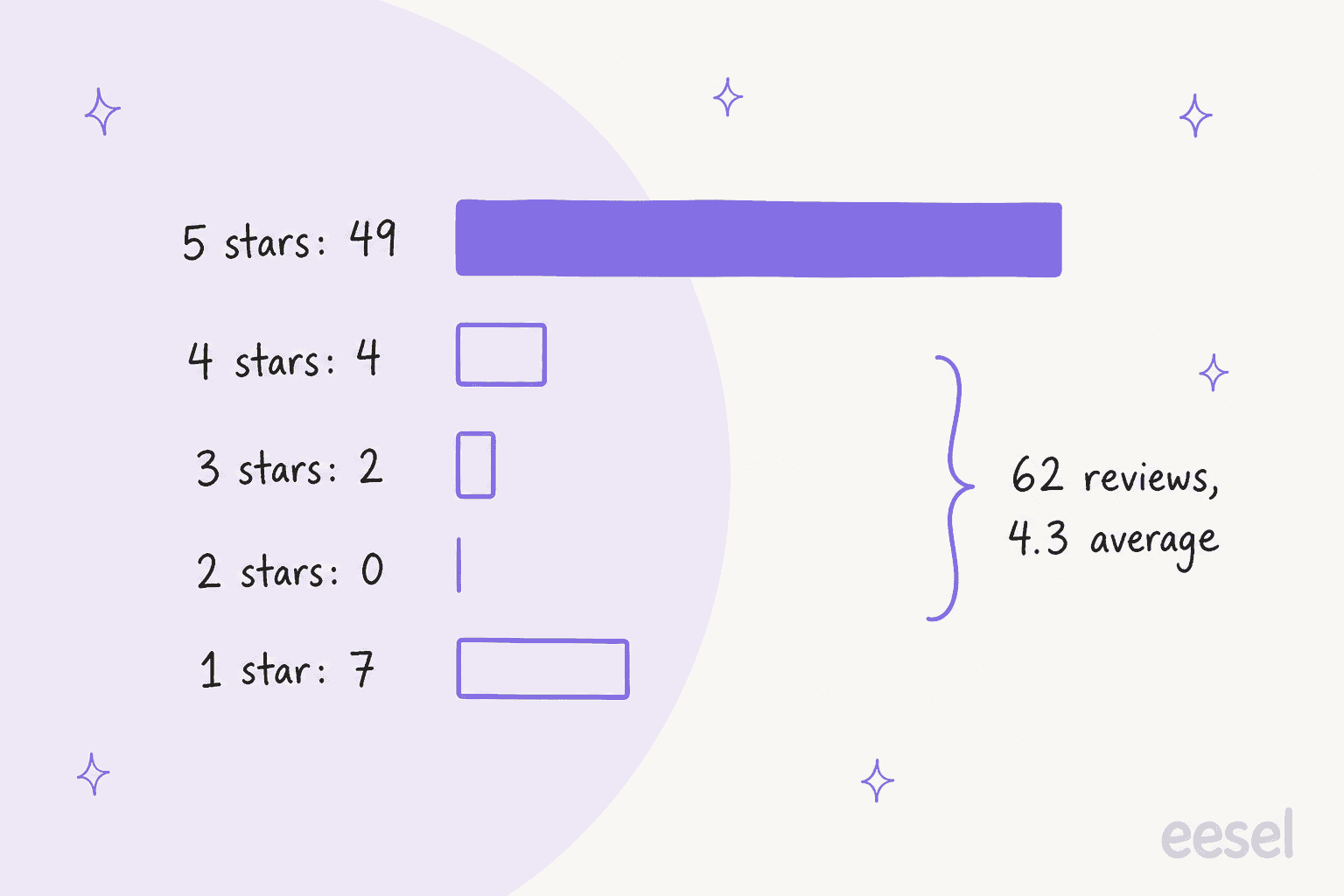
I read the newest reviews on the listing. The positive ones agree on three things:
- Setup help. LA SIESTA (February 2026) said the setup was clear and its Shopify information was imported, so it went live faster than expected. Fitness Outlet (March 2026) praised the team for working through custom logic requests.
- Tuning is part of the job. Juice Beauty (November 2026, five months in) described initial hurdles with responses, then said the team worked with them and ticket volume dropped as the bot handled more routine questions.
- Editable answers. HealthAid (UK, over a year in) said it was easy to amend chat responses and train the AI.
One merchant, Door Supplies Online, reported 30k in sales in its first 30 days. That is a self-reported number on a review, so treat it as an anecdote.
The negative side is thinner but sharper. Seven reviews are one-star, and the most recent, from Talk To Crystals in October 2026 after two days of use, says the vendor withdrew service after the contract was signed and paid. I cannot verify that, and it is one review out of 62, but it is the reason I would put onboarding terms in writing. Shopify reviews are the listing's own data, so I cite them as figures and not as quotes.
What do G2 reviewers say about Manifest AI?
G2 lists 4.5 from 6 reviews, four at five stars and two at four, which is a sample too small to lean on. The common themes are support, customer engagement and ease of use, and the common dislikes are navigation and testing.
The best-reasoned review is from an e-commerce manager at a mid-market company, who reports a big drop in support load:
"Manifest AI is helping us handle a high volume of customer inquiries instantly, 24/7, without overloading our support team. ... This has reduced our support workload by up to 90%, improved conversion rates, and boosted average order value."

The same reviewer names the limit that shows up elsewhere: "Sometimes the chatbot can be a bit too concise in its responses." Another G2 reviewer, a customer support associate who used it as a shopper in April 2026, names the other limit, complex questions:
"If a query is a little complex, it gets confused. It depends too much on data, so if the data is not good, then the result is also not good."
That second quote is the honest caveat for any AI agent that answers from your store: it is only as good as your catalog data, which is also how AI hallucination starts. I would clean up product titles, sizes and metafields before the trial, not during it. Manifest's G2 profile also carries a vendor example, Brabar, with a 1.49% conversion rate for chatters against 0.25%, and 87% of queries resolved by AI. It is a vendor-supplied number, and a conversion lift is not the same as a deflection rate, so ask for the same measurement on your store.
Where does Manifest AI fall short?
None of these is a reason to avoid it. They are the things I would check before signing.
- Price is not visible. The pricing page is a demo form, the Shopify listing says "Free to install" and the pricing post says $0.05 per AI reply with a $500 monthly minimum. Below about 3,300 AI conversations a month you pay the $500 floor, as I worked through in the Manifest AI pricing post.
- It is pitched at larger brands. The homepage talks about forward-deployed specialists and a Labs team. That suits a brand that wants a vendor to build with it, and is less natural for a three-person shop that wants to change a setting itself.
- Languages are unclear. The Shopify listing says English, while its G2 profile lists Arabic, German, English, French, Hindi and Spanish. Test your own languages in the trial, and see AI multilingual support for ecommerce for what to look for.
- Independent evidence is small. Six G2 reviews and 62 Shopify reviews, many of them collected during vendor-led onboarding. I found no independent accuracy benchmark, and I could not reach Reddit threads on it for this review, so community feedback beyond G2 and the app store is thin.
- The guarantee has a definition inside it. The pricing post promises 80% or more automation within 30 days, or your money back. What counts as an eligible conversation decides whether that is easy, so read it in the contract, and compare it with first contact resolution on your own queue.
Who is Manifest AI a good fit for?
| Your situation | Fit | Why |
|---|---|---|
| Shopify brand with 1,000+ AI chats a month that wants selling and support in one chat | Strong | The agent recommends products, tracks orders and runs return flows, and the vendor builds the setup |
| Team that wants a vendor to own agent building and tuning | Strong | Reviews repeatedly praise named support staff, and the vendor says building is included |
| Brand on BIK's helpdesk | Strong | The pricing post says the BIK helpdesk is free with Manifest |
| Store with under about 1,000 AI chats a month | Weak | The $500 floor outweighs the usage |
| Team that wants to configure everything itself, quickly | Mixed | The model is vendor-led, though Agent Studio is editable |
| Support team whose pain is tickets in Gorgias, Zendesk or Freshdesk | Mixed | Manifest hands off to them, but it does not replace working the queue |
If your chats are mostly sizing and "which one?" questions, Manifest is built for that, much like the conversational commerce pattern. If they are mostly "where is my order?", you may be paying for a discovery engine you do not use, and the tools in my order tracking chatbot roundup are closer, and AI order tracking explains why.
How would I test Manifest AI before paying?
I would use the free trial the way I use any AI agent before launch, on real conversations and not a demo store. The steps I would run:
- Tag 50 recent chats as selling or support, and run those same questions through the agent. My AI agent testing guide has the method.
- Read the handoffs, not just the answers. Check the summary your team sees, and how quickly a person can take over.
- Try a refund and a cancellation. Decide what it may do alone, using refund guardrails as the checklist, with agent permissions in a separate pass.
- Count replies per conversation. Billing is per AI reply, and your own average may not be Manifest's 3. Cost per resolution shows how to price it against today's cost.
- Review a week of transcripts. The routine in how to review AI conversations catches the confidently wrong answer that a rating never will, and preventing hallucinations is the fix that follows.
How does eesel compare with Manifest AI?
They overlap less than the labels suggest. Manifest is a storefront assistant and support agent, run with a vendor team. eesel is the AI helpdesk teammate: it joins Gorgias, Zendesk or Freshdesk, looks up the Shopify order and policy, then drafts or sends the reply. It does not do product quizzes or storefront search, so a store that wants those should use Manifest or one of its alternatives.
For a Shopify store the useful detail is what it does before it writes. STIL Classics runs eesel on Gorgias and Shopify. In a month it prepared about 320 tickets, left about 430 draft notes and looked up about 230 Shopify orders before drafting, and a person checks and sends every reply. Question Beauty lets eesel reply itself: about 990 Gorgias tickets in a month, about 960 replies sent and about 290 Shopify orders looked up. Both figures come from the customer stories, covering 8 August to 8 September 2026.
On price, eesel uses fixed credit plans, from $299 for 500 credits, and a ticket or chat is one credit however long it runs. See eesel's pricing for the current list. I compared the two shapes in Manifest AI pricing.
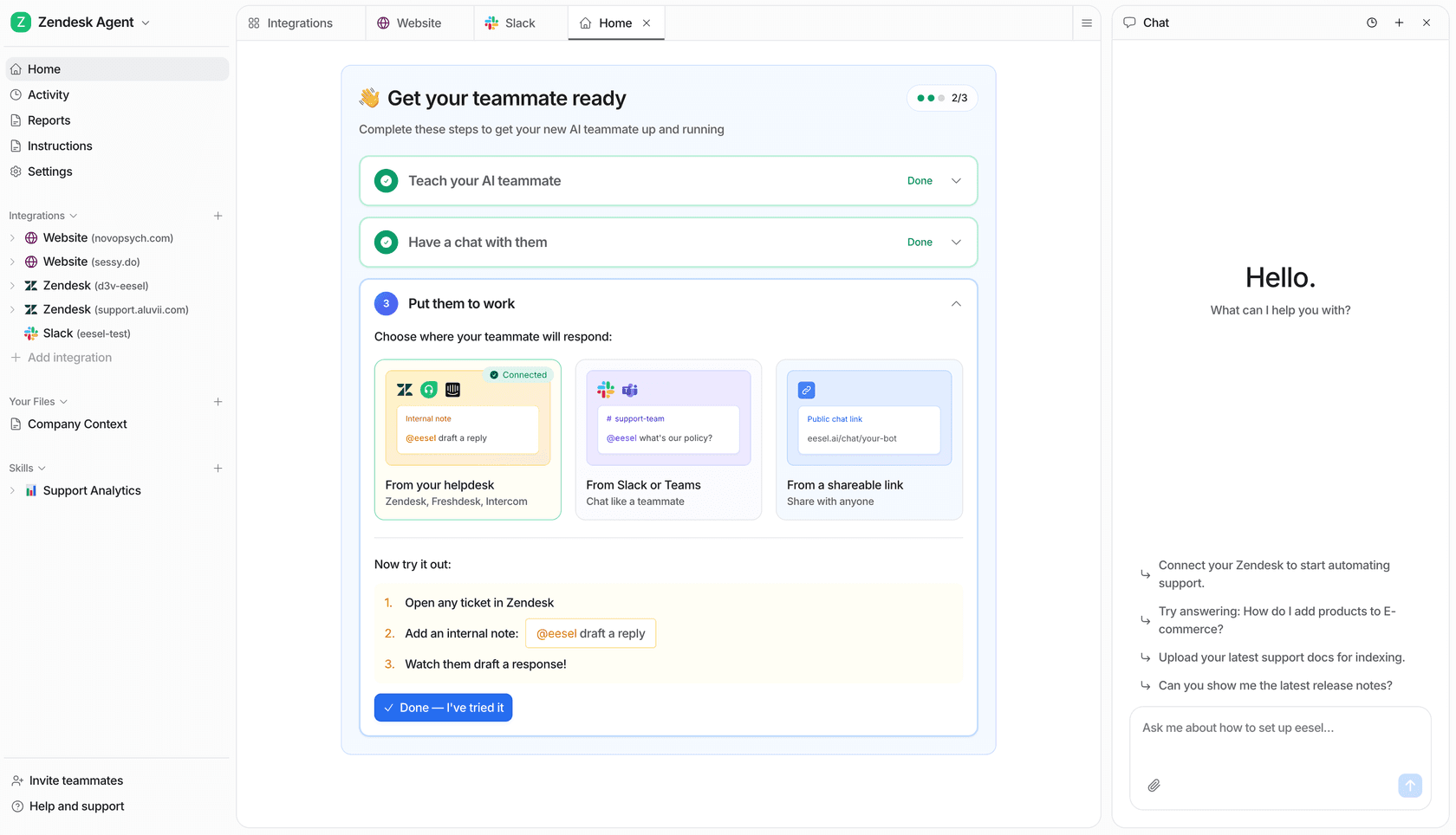
With the eesel CLI, an AI coding agent can upload approved knowledge, like your returns policy and exported help articles, then ask it test questions and check the answers before anything goes live. Connecting Shopify and the helpdesk still needs someone with admin access to approve it.
What is my verdict on Manifest AI?
Manifest AI works, for the right store. A Shopify brand with real chat volume, clean catalog data and appetite for a vendor-led setup will likely find the product capable, and the reviews back up the support. A small store, or one whose problem is the ticket queue, gets less from it than the rating suggests. If you are weighing it against other chat tools, start with my roundup of Shopify chatbots, then AI for Shopify support. Two close neighbours have their own write-ups: my Rep AI review and Zipchat review.
For setup, my guide to AI agents for Shopify walks through the steps, and the ecommerce helpdesk guide covers the desk underneath.
Try eesel for Shopify support
If the aim is fewer tickets for your team to type out, eesel connects to Shopify and your helpdesk, looks up the order first, and works the queue under rules you set, like a new hire who already knows your returns policy. It has a free 7-day trial, so you can run a week of your own Shopify tickets through it. Try eesel and see how it compares on your own queue.