


Why teams leave Richpanel in the first place
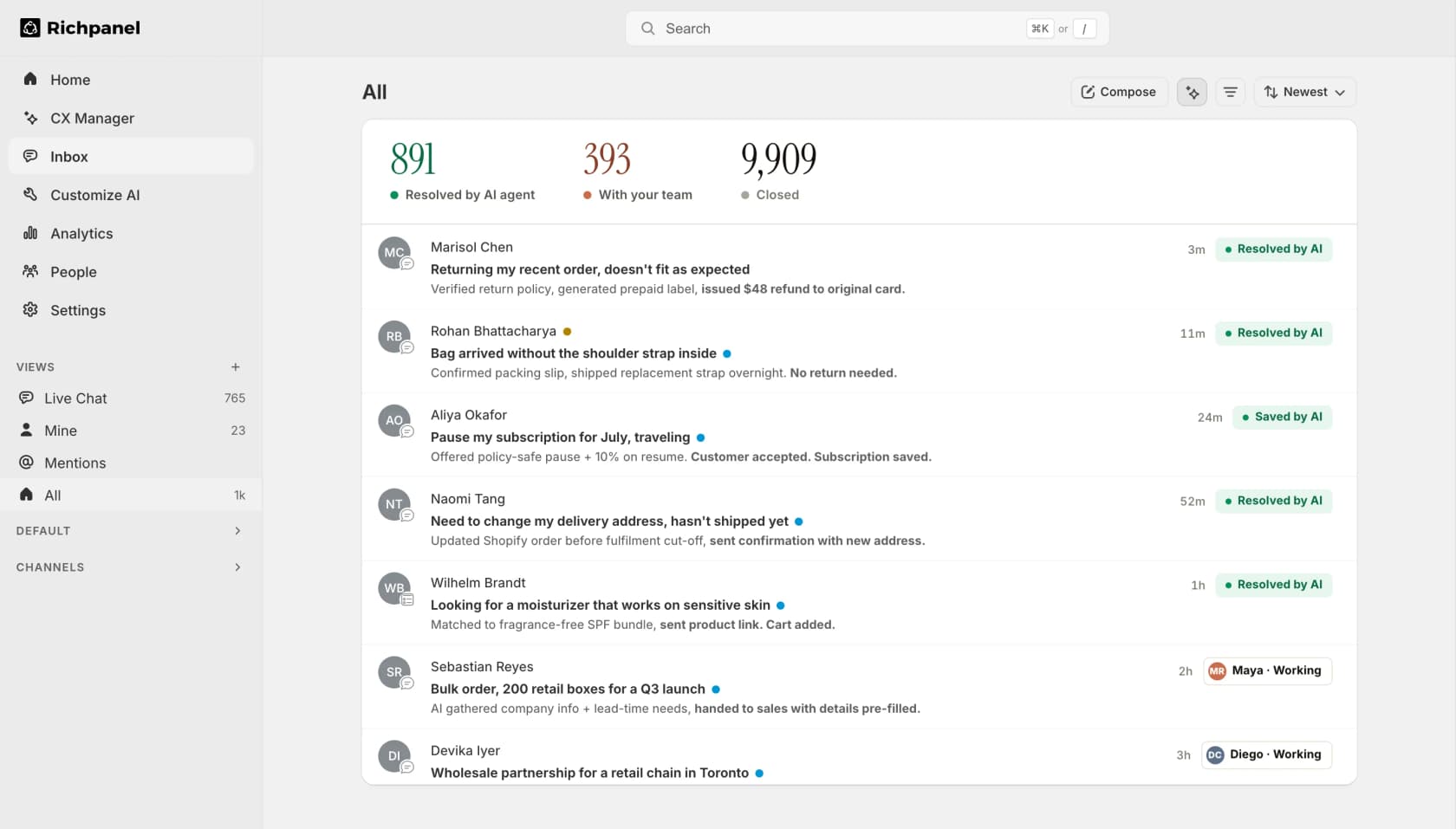
First, credit where it's due. Richpanel reinvented itself well. The homepage now leads with "hire an AI support team," and the product is built around four AI roles (a frontline agent, an agent copilot, a QA reviewer, and a CX manager) that resolve order tracking, refunds, and subscription cancellations end to end. It claims 70 to 80% autonomous resolution at maturity and backs new accounts with a 50%-in-30-days-or-your-money-back guarantee. For a Shopify brand starting from scratch, that's a real offer.
So why do people still go looking? Three reasons keep coming up:
- It's a rip-and-replace. Richpanel is a whole helpdesk. To get its AI, you migrate your tickets, macros, tags, and routing rules off Zendesk or Gorgias and onto Richpanel. The company is good at this (it advertises moving 30 to 50 brands a month), but a migration is still a migration: retraining, re-integrating, and a team that has to relearn its daily tool.
- The floor is high for small teams. The self-serve plan starts at $500/month plus $0.25 per conversation, with human seats at $100 each. A two-agent, three-seat setup runs $800/month before volume. That's fine at scale and steep if you do a few hundred tickets a month.
- It's tightly Shopify-shaped. Richpanel's whole gravity is ecommerce. If you're B2B, SaaS, or a generalist support team, a lot of that ecommerce DNA is weight you carry but don't use.
Here's the reframe I'd push on anyone in this spot: switching helpdesks and adding AI are two different decisions, and most "alternatives" lists smush them together.
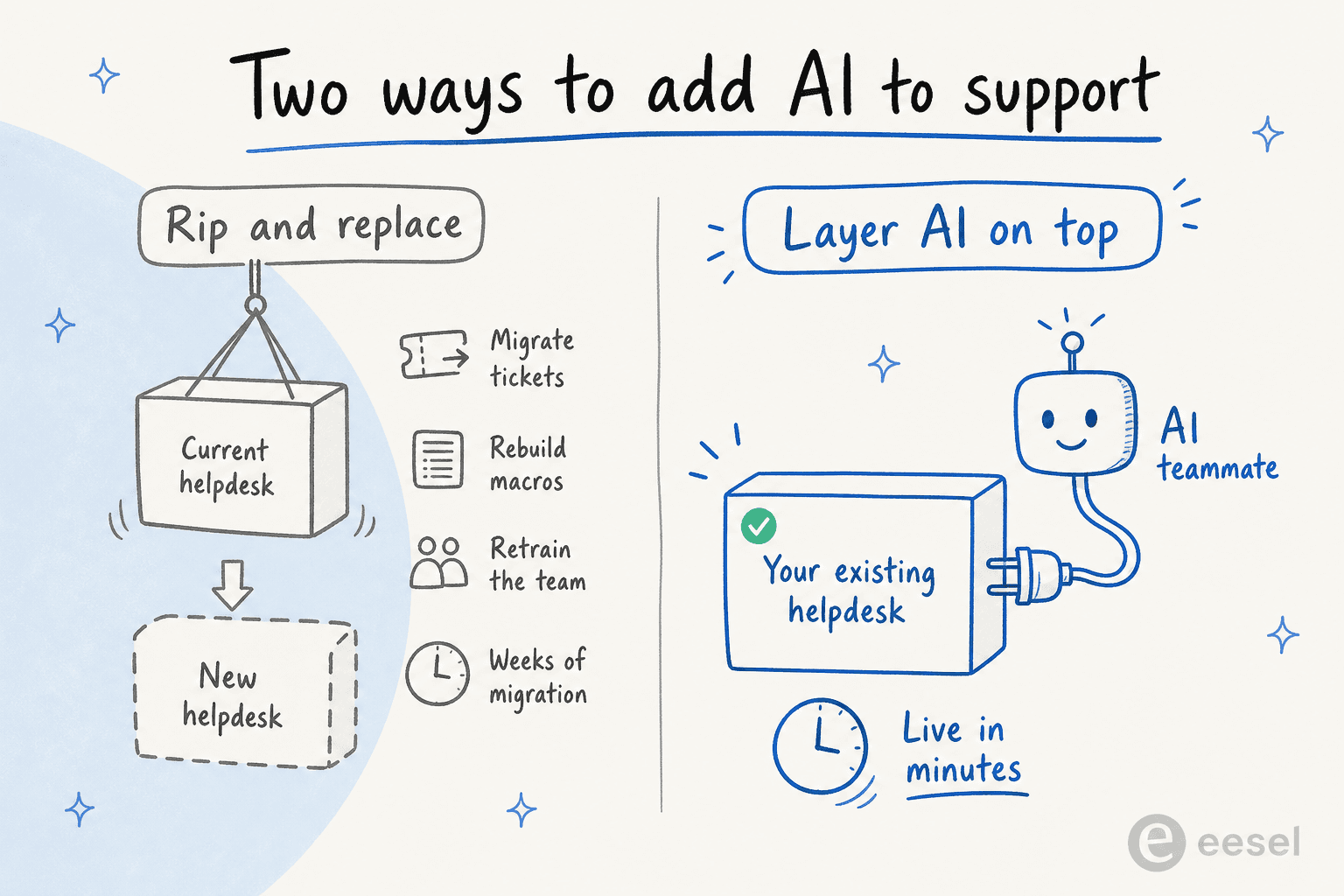
If your helpdesk is fine and you just want better automation, you don't need to move. If your helpdesk itself is the problem, then yes, pick a new one. The list below is sorted with that in mind.
The best Richpanel alternatives at a glance
| Tool | Best for | Starting price | AI pricing | Billable unit | Ecommerce-native | Keeps your helpdesk | Free tier |
|---|---|---|---|---|---|---|---|
| eesel AI | Adding AI to your current helpdesk | from $0.40/ticket | 40¢ per ticket | Ticket / chat session | Works on any | Yes | $50 free usage |
| Gorgias | Shopify brands wanting store actions | $10/mo | $0.90–$1.00/resolution | Ticket | Yes | No | No (trial) |
| Gladly | Premium retail, heavy voice | ~$180/seat/mo | $1.50/resolution | Seat + resolution | Yes | No | Shopify trial |
| Re:amaze | All-in-one chat + helpdesk on a budget | $29/seat/mo | $0.85/resolution | Seat | Yes | No | 14-day trial |
| Zendesk | Scaling generalist / omnichannel | $19/agent/mo | ~$1.20–$1.50/resolution | Seat + resolution | Via apps | No | Trial |
| Freshdesk | Teams wanting a free on-ramp | $0 | $49 per 100 sessions | Seat | Via apps | No | Free ≤2 agents |
| Tidio | Small stores wanting chat + AI | $0 | ~$0.50/Lyro convo | Conversation | Yes | No | Free plan |
| Help Scout | Small teams wanting the simplest inbox | $0 | $0.75/resolution | Seat | No | No | Free ≤5 users |
A note on that "AI pricing" column, because it's the one that bites: almost everyone here charges per AI resolution, and the numbers cluster between roughly 75 cents and a dollar fifty. That sounds cheap per ticket. It isn't always, and I'll show you why in the eesel section.
1. eesel AI: best for adding AI to the helpdesk you already run

I'll be upfront that this is our product, so weigh the verdict accordingly. But the reason eesel AI opens the list is that it answers the question most Richpanel shoppers are actually asking: can I get the AI without the migration?
eesel is an AI helpdesk agent that sits on top of the helpdesk you already use. It connects to Zendesk, Gorgias, Freshdesk, Front, and Help Scout, learns from your past tickets and help docs on day one, then drafts, triages, and resolves tier-1 tickets in the tool your team already lives in.
Features
- Plugs into your existing helpdesk and ecommerce stack, including Shopify and WooCommerce, so order lookups and WISMO answers work without a rebuild.
- Learns from your historical tickets, not just help-center articles, which is the single most-requested capability I hear on sales calls.
- A simulation mode that runs the agent against your past tickets so you can see resolution rate by topic before it ever replies to a real customer.
- Confidence-based routing: low-confidence tickets get left for a human instead of guessed at.
- 80+ languages out of the box, handled without separate setup.
Pros
- No migration. You keep your helpdesk, your tickets, and your macros.
- Pricing is flat and predictable: 40¢ per ticket, no platform fee, no per-seat fee, no minimum.
- You can roll it out partially (route 200 of 1,000 tickets) and only pay for what it handles.
Cons
- It's an AI layer, not a helpdesk. If you don't have a helpdesk at all, you still need one (it does support email as a channel, but it isn't a full ticketing suite on its own).
- SOC 2 is in progress rather than certified; enterprise security buyers should check the current state on the pricing page.
Pricing
| Plan | Price | Notes |
|---|---|---|
| Free trial | $0 | $50 of usage, no credit card |
| Pay-as-you-go | from $0.40/ticket | No platform fee, no seat fee, no minimum |
| Annual commit | 25% off | Commit to ≥$300/month for the year |
| Enterprise | $1,000/month + usage | SSO, HIPAA, BAA, dedicated engineer |
Now, that per-resolution warning I promised. Most tools on this list bill per AI resolution, and they also count each AI resolution as a billable ticket. The trap is seasonal: your bill spikes hardest exactly when you're busiest.
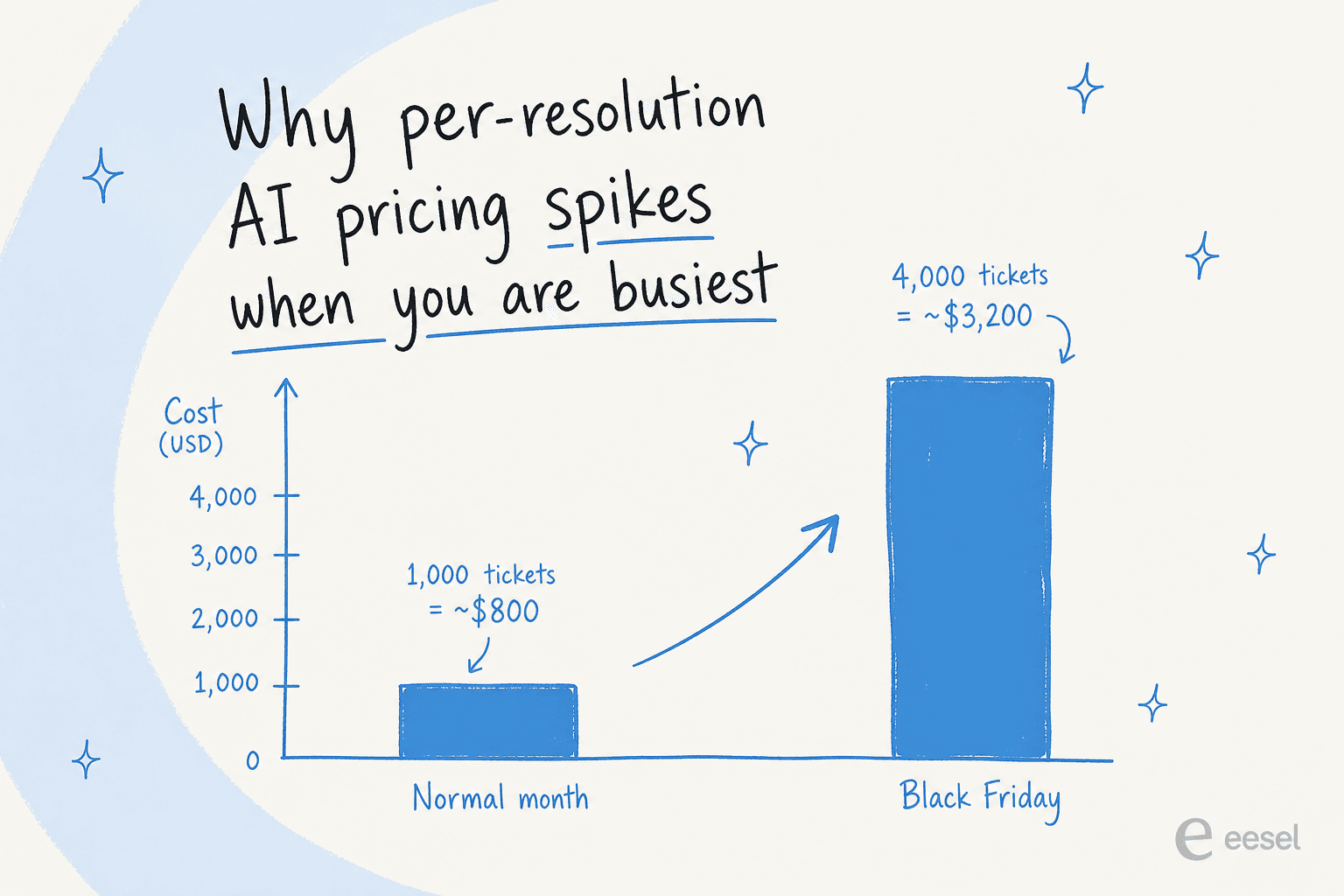
A store doing 1,000 tickets a month at 80% resolution pays around $800 on a dollar-a-resolution plan. Hit Black Friday and do 4,000, and that same plan bills roughly $3,200. We ran exactly this analysis for a 1,000-ticket-a-month jewelry brand weighing per-resolution vendors, and the punchline was simple: per-resolution pricing penalizes you for resolving more and for being busy. (Worth asking any vendor whether their quoted "resolution rate" counts auto-closed spam, too. For that brand, 22% of the inbox was spam.)
Verdict: If the helpdesk you have is working and you just want AI on top of it without a migration or a seat-based bill, eesel is the most direct answer on this list. If you're shopping for a brand-new helpdesk, read on, because the next few are built for exactly that.
2. Gorgias: best for Shopify brands that want AI to take store actions
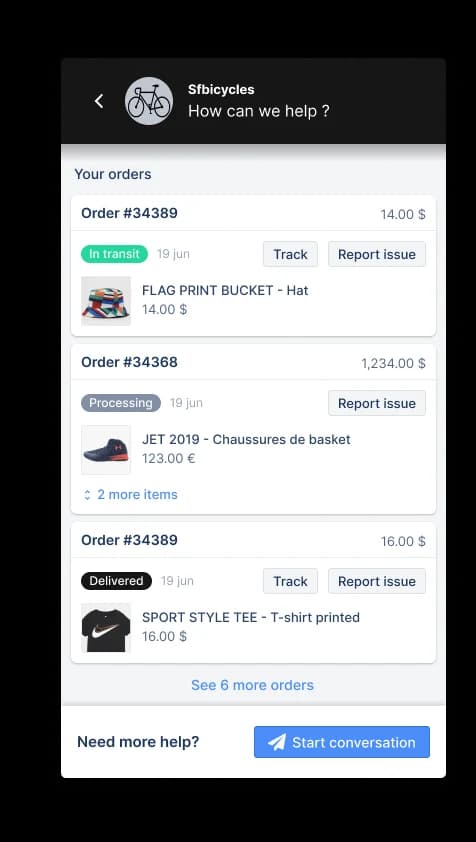
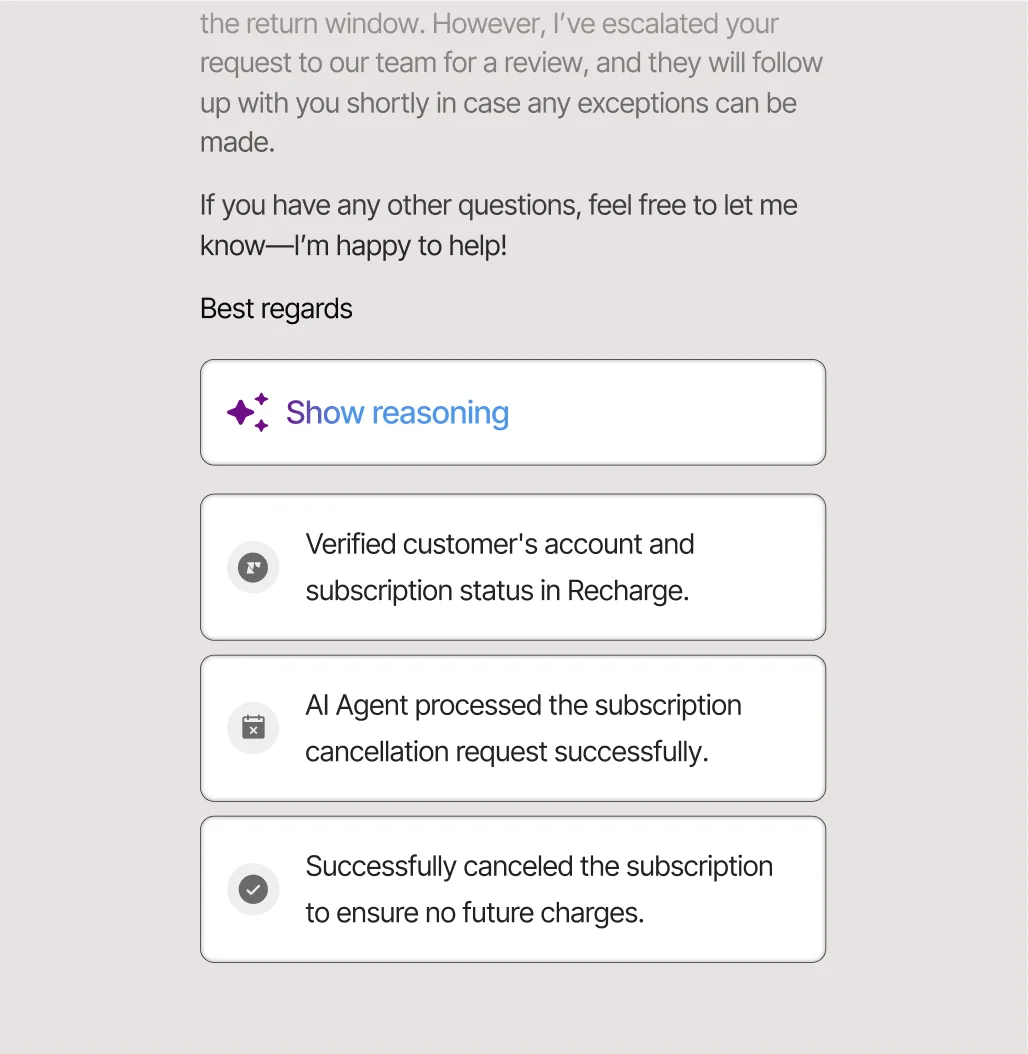
If Richpanel's biggest direct rival has a name, it's Gorgias. It's the ecommerce helpdesk built around Shopify, and nobody pulls store data into the conversation as cleanly. Orders, refunds, subscriptions, and tracking all live right in the ticket, and its AI Agent is trained on a huge corpus of ecommerce conversations.
Features
- Native Shopify integration with in-conversation actions: refunds, order edits, cancellations.
- AI Agent that resolves returns, WISMO, and subscription changes end to end.
- Omnichannel inbox: email, chat, Instagram, Facebook, TikTok, WhatsApp.
- Macros, rules, and flows for automating the repetitive stuff.
Pros
- Best-in-class Shopify depth; the order context is right there.
- AI is pre-trained on ecommerce, so it ramps fast on store questions.
- Strong ratings (4.6/5 across 560+ G2 reviews).
Cons
- Price is the recurring complaint, and the AI billing compounds it: the AI Agent is $0.90 per resolved conversation on annual ($1.00 monthly), and each AI resolution also counts as a billable ticket.
- That double-count is where the sticker shock lives. I've watched a trial user run a dozen flawless test chats, love the agent, then open a cancellation request the moment the billing page loaded. The product worked; the math spooked them.
Pricing
| Plan | Price | Tickets/mo |
|---|---|---|
| Starter | $10/mo | 50 |
| Basic | $50/mo | 300 |
| Pro | $300/mo | 2,000 |
| Advanced | $750/mo | 5,000 |
| AI Agent | +$0.90–$1.00/resolution | also counts as a ticket |
Verdict: For a Shopify-first brand that wants the helpdesk and the AI from one vendor, Gorgias is the strongest Richpanel rival, full stop. Just model the AI Agent cost at your real volume before you sign. If you already run Gorgias and only want better automation, you can also add eesel on top of it and skip the per-resolution surcharge. For the deeper cost picture, see our Gorgias AI pricing breakdown.
3. Gladly: best for premium retail and heavy voice support
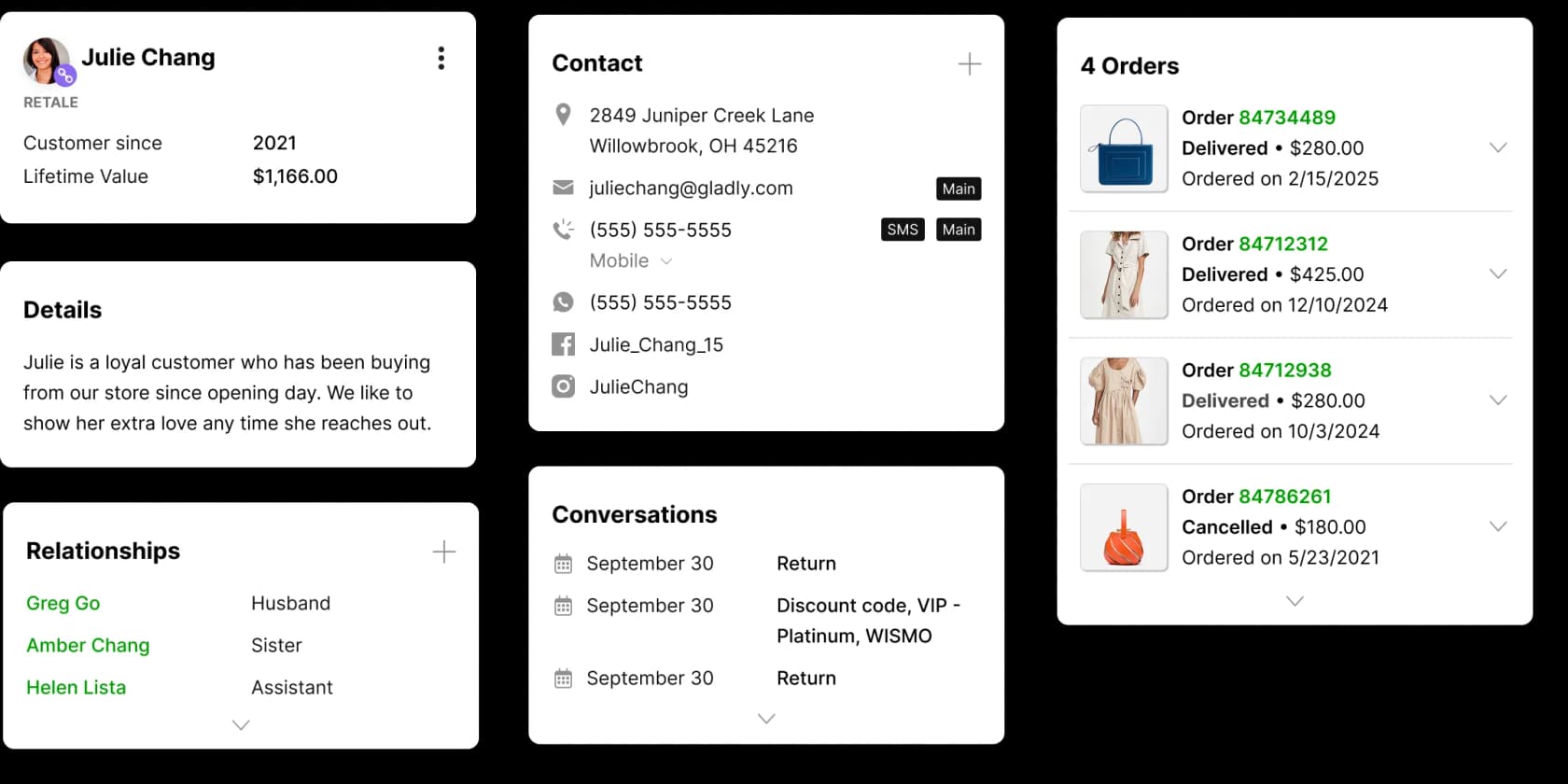
Gladly takes the opposite philosophy to ticket-based tools. It's built around people, not tickets: one lifelong conversation per customer across chat, email, voice, and social, with a single unified profile that follows them everywhere. Premium DTC and retail brands (think TUMI, UGG, Crate & Barrel) lean on it for high-touch, relationship-driven support.
Features
- Unified 360-degree customer profile, no duplicate threads.
- Sidekick AI agent that resolves and takes real actions (cancel, return, price adjustment), including on voice.
- Guides, a no-code workflow layer.
- Omnichannel as one continuous conversation rather than separate ticket queues.
Pros
- The unified profile is the standout. Here's a verified Capterra reviewer on it:
"Gladly has completely eliminated duplicate conversations for our team... Now, because Gladly unifies every interaction under a single customer profile, we're able to serve customers more efficiently and consistently meet our SLAs."
Jennifer R., Director of Ecommerce, on Capterra

- Voice is a first-class channel, which is rare in this category.
- Strong overall sentiment (4.7/5 across 1,100+ G2 reviews).
Cons
- It's the most expensive option here. The platform runs roughly $180 per seat per month on a 10-seat minimum, and the pay-as-you-go Shopify plan charges $1.50 per AI resolution plus $0.25 per AI assist.
- Reporting is the recurring product gripe; several reviewers mention exporting to spreadsheets for the analysis they want.
Pricing
| Plan | Price | Notes |
|---|---|---|
| Shopify (free to install) | $0 | 30 days, 100 AI interactions |
| Shopify pay-as-you-go | $250/mo cap | $1.50/AI resolution, $120/mo per member |
| Hero | ~$180/seat/mo | 10-seat minimum, annual |
| Superhero | ~$210/seat/mo | 45-seat minimum, annual |
Verdict: If you're a premium brand where voice and lifetime relationships matter more than raw deflection, Gladly is worth the premium. For a lean team chasing ticket automation, it's overkill, and the per-resolution-plus-seat billing stacks up fast.
4. Re:amaze: best for an all-in-one chat and helpdesk on a budget
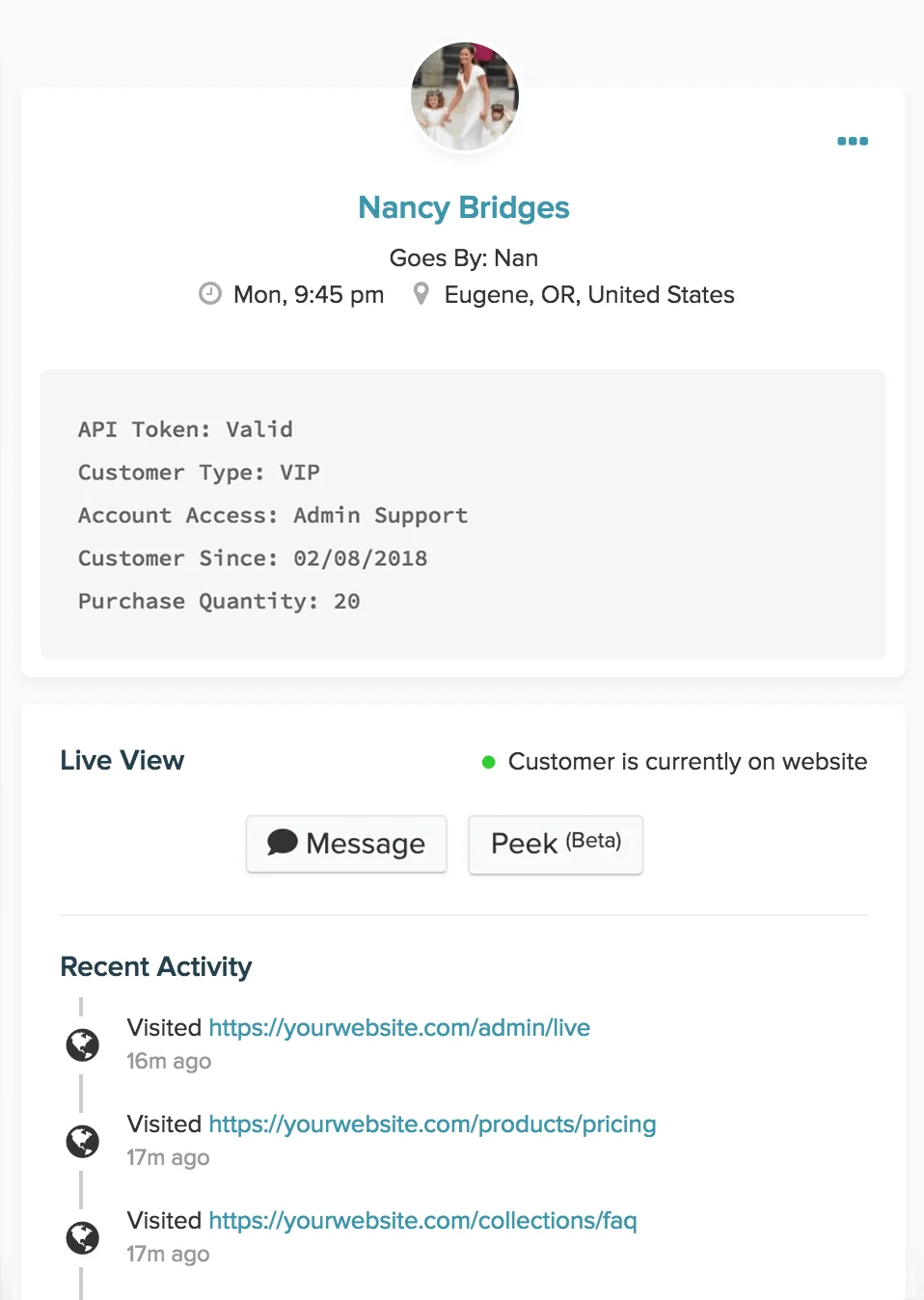
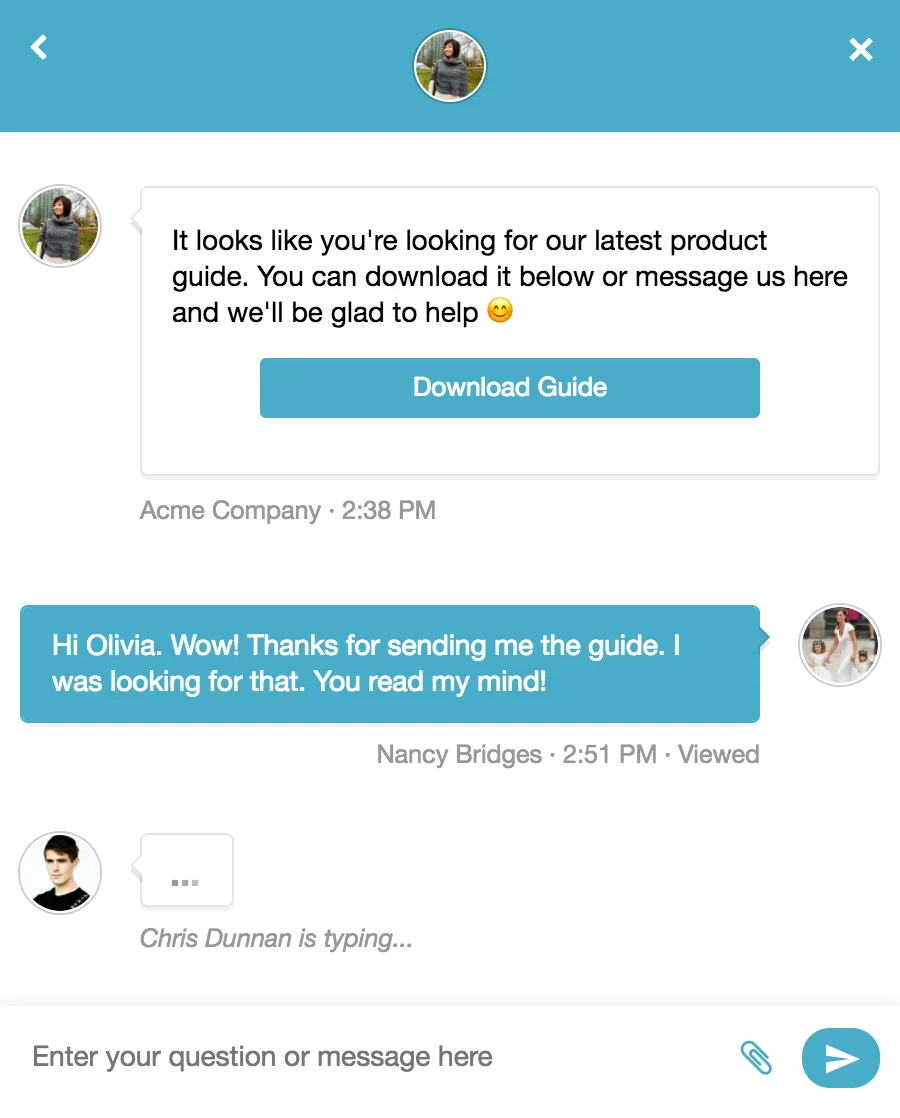
Re:amaze is the value pick. It bundles a shared inbox, native live chat, chatbots, proactive messaging, and a real-time customer activity dashboard into one tool, at a per-seat price well below most of this list. It's GoDaddy-owned but runs as a standalone product, and it's a natural fit for small-to-mid ecommerce teams.
Features
- Shared inbox across email, social, SMS, VoIP, and chat.
- Chatbots (a Welcome Bot, an Order Bot, plus custom ones) included, not sold separately.
- Cues: proactive messages triggered by behavior.
- Live View: a real-time dashboard of who's browsing and what they're shopping.
Pros
- Bundles chat, chatbots, proactive engagement, and order context as first-party features instead of paid add-ons.
- Genuinely affordable, starting at $29 per seat per month.
- The shopping-aware Live View is unusual at this price.
Cons
- The AI Agent is still in beta, so it's less proven than Gorgias's or Richpanel's.
- Public, verifiable review signal is thin; most social proof is vendor testimonials, so trial it yourself rather than trusting the marketing page.
Pricing
| Plan | Price | Notes |
|---|---|---|
| Basic | $29/seat/mo | 5 AI resolutions/user/mo |
| Pro | $49/seat/mo | unlimited brands |
| Plus | $69/seat/mo | 20 AI resolutions/user/mo |
| Starter | $59 flat/mo | capped at 500 conversations |
| AI overage | $0.85/resolution | all plans |
Verdict: For a small store that wants chat, helpdesk, and proactive messaging in one affordable tool, Re:amaze punches above its price. Just treat the AI as promising-but-early, and lean on the chatbots and live chat as the core value today. Our Re:amaze AI alternatives guide digs into the AI gap.
5. Zendesk: best for scaling, generalist, and omnichannel support
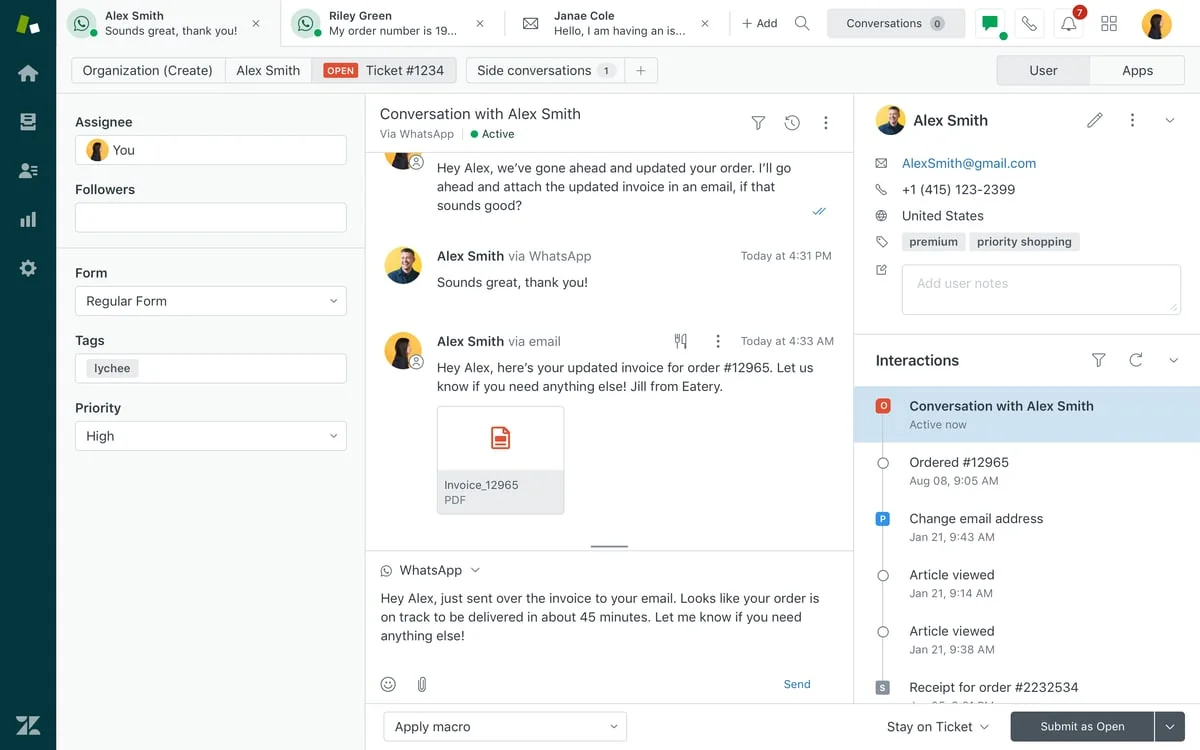
If you're outgrowing an ecommerce-only tool, Zendesk is the mature generalist. It's a full resolution platform: ticketing, omnichannel messaging, voice, AI agents, and a 1,800+ app marketplace. It's not commerce-native the way Gorgias is, but for a support org spanning more than just a storefront, the breadth is the point.
Features
- Industrial-strength ticketing and routing.
- AI agents and a per-role Copilot.
- AutoQA that scores 100% of interactions.
- The deepest marketplace and integration ecosystem in the category.
Pros
- Reliable, scalable core that very large teams trust.
- Omnichannel done properly, including voice.
- Roughly 92% of G2 reviewers rate it 4 or 5 stars.
Cons
- The cost model is the dominant complaint: seat pricing, plus $50/agent add-ons, plus per-resolution AI on top. Here's a Zendesk user on Reddit, unfiltered:
"Their pricing isn't transparent at all. Even if you spend a million dollars a year, they will still nickel and dime the shit out of you because it's their model... I would never suggest any company get stuck in the zendesk pricing trap."
u/mallclerks, r/Zendesk

- Native AI resolutions are reported by users to run around $1.20 to $1.50 each, which stacks on top of seats.
Pricing
| Plan | Price (per agent/mo) | Notes |
|---|---|---|
| Support Team | $19 | ticketing only, no AI |
| Suite Team | $55 | adds AI agents, omnichannel |
| Suite Professional | $115 | most popular |
| Suite Enterprise | Custom | talk to sales |
Verdict: Zendesk is the right call when you've outgrown a storefront-only helpdesk and need real scale and omnichannel depth. Watch the total cost, and note you can keep Zendesk and add a cheaper AI layer like eesel rather than paying Zendesk's per-resolution rate. We also keep a list of free Zendesk AI alternatives.
6. Freshdesk: best for teams that want a free on-ramp
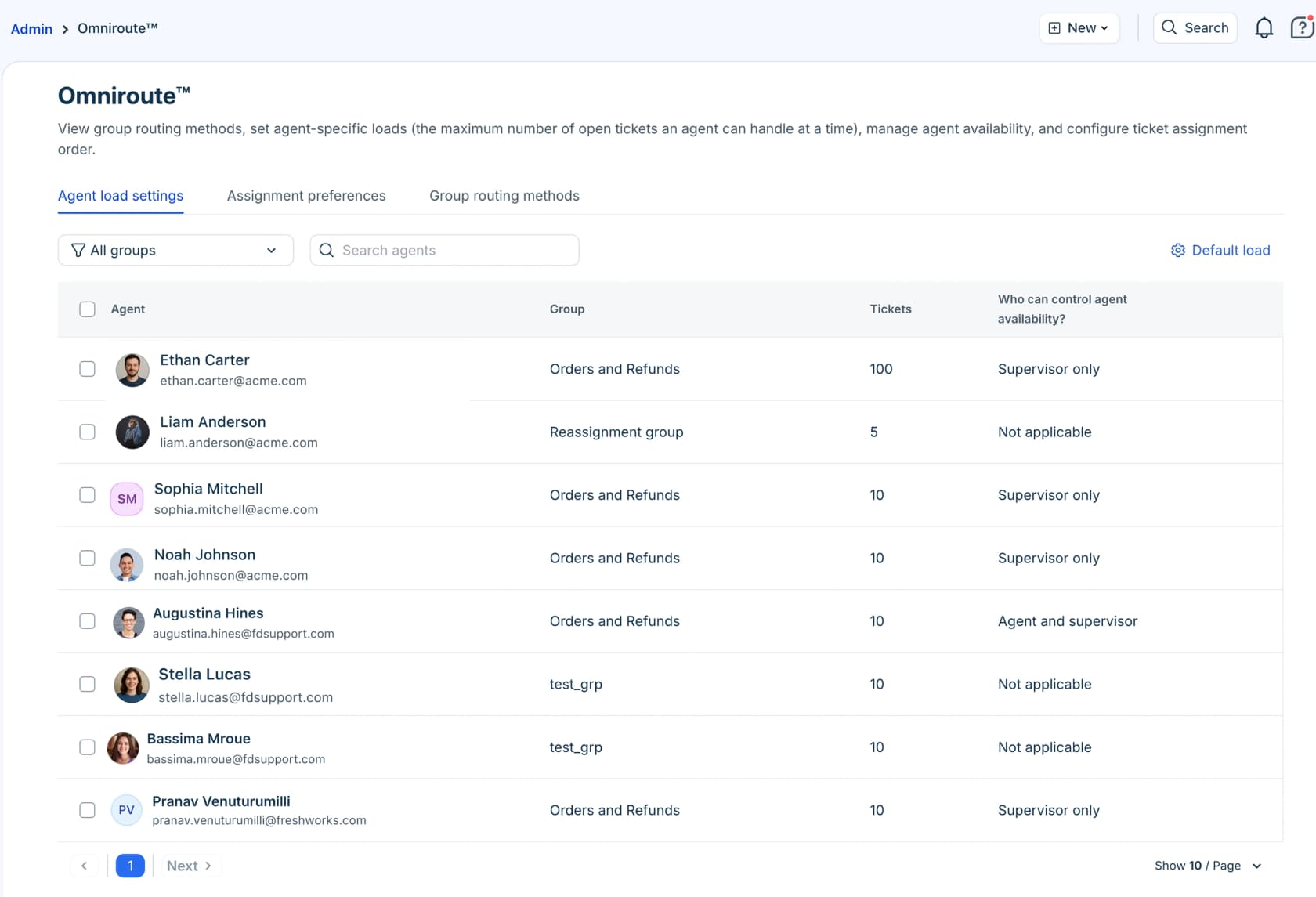
Freshdesk is the budget-friendly generalist and the most common "natural switch" from Zendesk. Freshworks built it around a clean ticketing workspace, and its free tier and low entry price make it the default for cost-conscious SMB teams. It connects to Shopify and Stripe, though it's not commerce-native.
Features
- Advanced ticketing and a shared inbox.
- Freddy AI Agent with 50+ prebuilt agentic workflows and a no-code studio.
- Freddy Copilot: summaries, translations, reply suggestions.
- Workflow automation for routing and SLAs.
Pros
- A real free tier (up to two agents) and a cheap Growth plan at $19.
- Approachable for teams without a dedicated admin.
- Strong ratings (4.4/5 across ~3,750 G2 reviews).
Cons
- Freddy AI is the weak link. The session pricing ($49 per 100 sessions after the first 500) is seen as steep for what it does, and resolution quality drops on complex tickets. A Reddit user put it plainly:
"We tested an ai integration in freshdesk and had almost the exact same experience. it worked for very simple tickets but anything slightly complex got misclassified. agents ended up spending more time fixing errors than before, so we had to rethink our approach."
Timely_Aside_2383, r/AiAutomations
Pricing
| Plan | Price (per agent/mo) | Notes |
|---|---|---|
| Free | $0 | up to 2 agents |
| Growth | $19 | |
| Pro | $55 | |
| Enterprise | $89 | |
| Freddy AI Agent | $49 per 100 sessions | first 500 free |
Verdict: Freshdesk is the safe budget pick for a generalist team, and the free tier makes it easy to start. If Freddy's resolution quality disappoints (a common story), this is another case where keeping the helpdesk and swapping in a stronger AI layer beats switching tools. One Freshdesk customer we worked with tested Freddy and found our agent more precise on the same inbox. See the full Freshdesk alternatives list for more.
7. Tidio: best for small stores wanting live chat plus AI
Tidio is the small-business sweet spot: live chat, ticketing, automation flows, and a well-regarded AI agent called Lyro, sold as a suite or as standalone modules. Lyro is powered by Anthropic's Claude, and Tidio scores 4.8/5 on the Shopify App Store, so it's a real contender for smaller storefronts on a budget.
Features
- Lyro AI Agent that scrapes your FAQ and site, with a claimed ~67% resolution rate.
- Lyro Connect, which can layer onto Zendesk or Salesforce.
- Flows: no-code proactive automation.
- Native Shopify actions on the Growth plan and up.
Pros
- Lyro is well-grounded and praised for staying on-script, helped by its Claude foundation.
- Unusually generous free tier and sub-hour setup.
Cons
- Pricing is the number-one complaint, because it meters three separate things (conversations, Lyro chats, and Flows visitors), and costs can spike unpredictably:
"Just had a conversation with tidio, their pricing is so off and hidden, 'free tier' is just a trap includes most services that are billed separatedly once you want to scale... tidio is a NO-GO for me they need to be more transparent"
Leaf-dude-, r/AIAssisted
- The jump from Growth to the $749 Plus plan is steep.
Pricing
| Plan | Price | Notes |
|---|---|---|
| Free | $0 | 50 conversations, 50 Lyro chats lifetime |
| Starter | $24.17/mo | 100 conversations |
| Growth | from $49.17/mo | from 250 conversations |
| Plus | from $749/mo | adds Lyro Connect, departments |
| Lyro AI (standalone) | from $32.50/mo | 50 conversations |
Verdict: For a small store that wants live chat with a solid AI agent attached, Tidio is a strong, affordable start, and Lyro is better than most budget bots. Map your costs across all three meters before you scale, and compare against our Tidio Lyro alternatives if the bill climbs.
8. Help Scout: best for small teams wanting the simplest inbox
Help Scout is the anti-helpdesk helpdesk: an email-first shared inbox that feels like a clean team mailbox rather than a ticketing system. It pairs that with a Docs knowledge base, the Beacon widget, live chat, and an AI layer. It's not built for ecommerce actions, but for a small, relationship-driven team it's the easiest tool here to adopt.
Features
- Shared inbox with collision detection and saved replies.
- Docs knowledge base and the embeddable Beacon widget.
- AI Answers, an autonomous agent claiming ~73% resolution in 50+ languages.
- Inbox Assistant: AI drafts, summaries, and assist.
Pros
- The cleanest, fastest-to-learn UX in the roundup; "up and running in under an hour" is the recurring praise.
- A real free tier (up to five users) and approachable per-seat pricing.
Cons
- Pricing whiplash hurt its reputation. Help Scout switched from per-seat to per-interaction billing, churned customers, then reverted:
"HelpScout changed back to user-based pricing. Guess too many people cancelled including me... Helpscout lost all trust with this flip-flopping on pricing."
u/manu_8487, r/SaaS
- Thinner advanced features and reporting, and the AI Answers cost stacks at scale.
Pricing
| Plan | Price (per user/mo) | Notes |
|---|---|---|
| Free | $0 | up to 5 users |
| Standard | $25 | |
| Plus | $45 | |
| Pro | $75 | min 10 users |
| AI Answers | $0.75/resolution | usage-based add-on |
Verdict: For a small team that values a simple, human inbox over ecommerce muscle, Help Scout is a lovely tool. It's the weakest fit if you need order actions or heavy automation, in which case Gorgias or an AI layer on top serves you better. More options in our Help Scout alternatives roundup.
How to actually choose
The fastest way to narrow this down is to stop comparing feature lists and start with your own situation. Here's the shortcut I'd use.
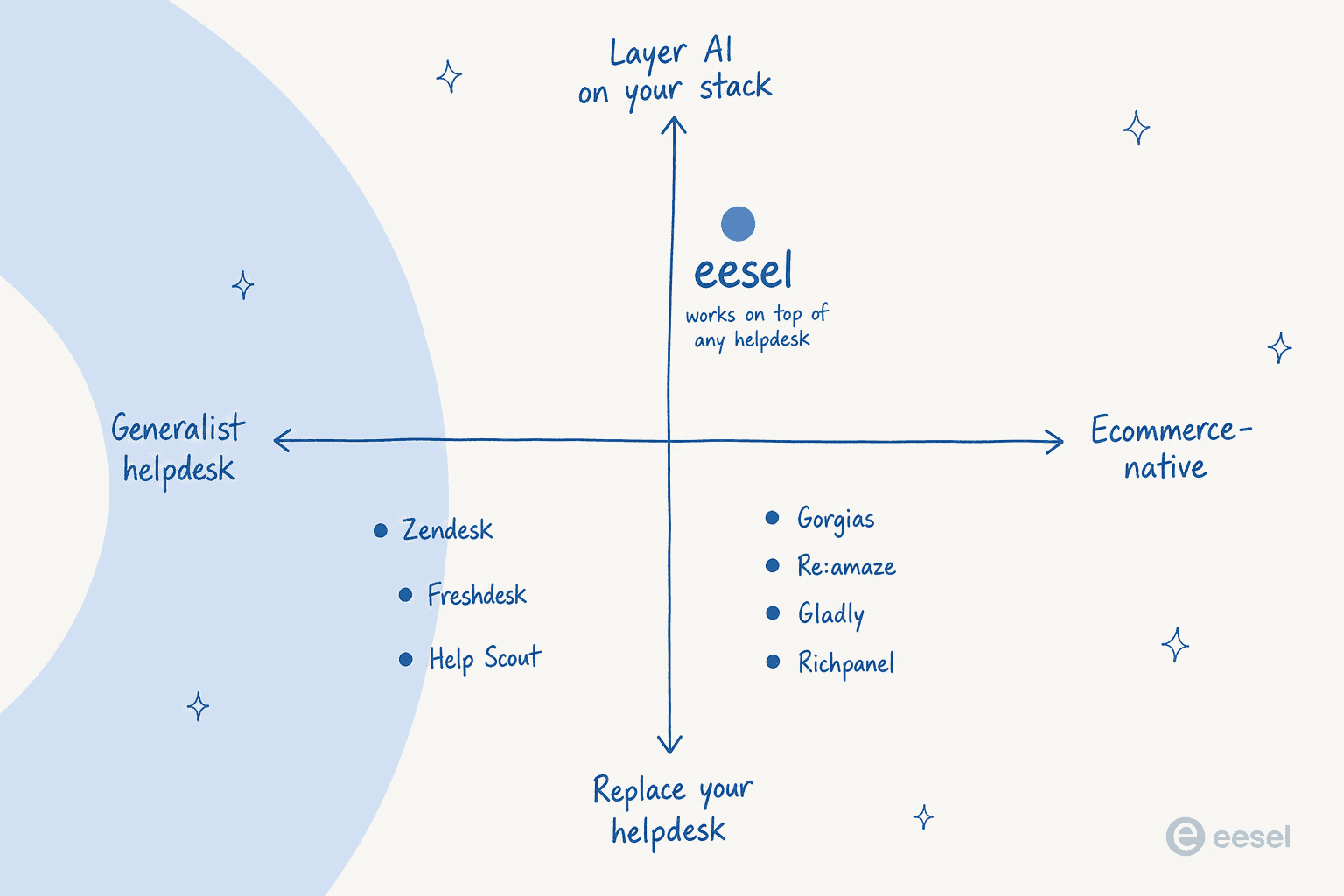
The map sorts everything on two axes. Left to right is generalist versus ecommerce-native. Bottom to top is the decision most lists ignore: do you replace your helpdesk, or layer AI onto the one you have? Almost every option lives in the bottom row (they're helpdesks you migrate into). eesel is the one sitting up top, because it doesn't ask you to move.
If you'd rather just answer a couple of questions, this picker does the same job:
The thing I'd leave you with: every tool above except eesel is a helpdesk you migrate into. If your current helpdesk is the problem, that migration is worth it, and Gorgias is the strongest ecommerce pick. But if your helpdesk is fine and the AI is what you're really after, you can get there without uprooting your team.
Try eesel for AI on your existing helpdesk
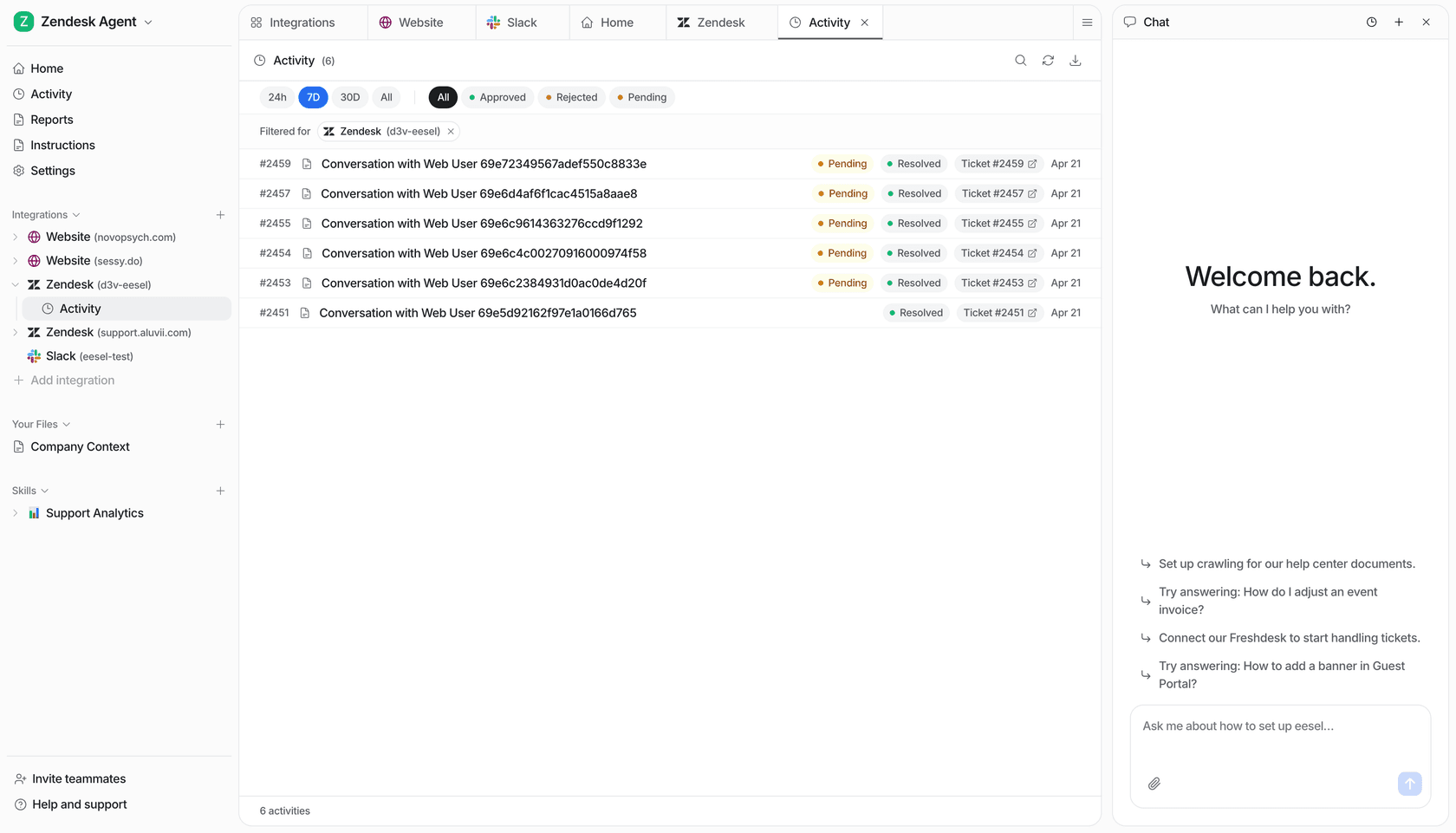
If the reason you're shopping is "I want Richpanel's AI without ripping out my helpdesk," that's exactly the gap eesel AI fills. It plugs into Gorgias, Zendesk, Freshdesk, Shopify, and more, learns from your past tickets on day one, and lets you simulate the whole rollout against your historical tickets before a single customer sees it. Pricing is a flat 40¢ per ticket with no seat fees and no per-resolution surcharge, so your Black Friday bill doesn't ambush you. You can start free with $50 of usage and no credit card.
Frequently Asked Questions
Why do ecommerce teams look for Richpanel alternatives?
How much does Richpanel cost?
Can I add AI to my existing helpdesk instead of switching to Richpanel?
Is there a free Richpanel alternative?
Which Richpanel alternative is best for Shopify stores?
Do Richpanel alternatives charge per resolution or per ticket?


Article by
Kurnia Kharisma Agung Samiadjie
Kurnia is a software engineer and writer at eesel AI with two years of SEO experience, writing about AI tools, helpdesk software, and customer support. He pairs a developer's understanding of how these products are built with search-driven research into what actually ranks and resonates with the people searching for them.