
If you're running an online store, you've probably felt the pain of juggling customer messages across email, social media, live chat, and SMS. Re:amaze promises to bring all those channels into one unified inbox, with built-in AI features and deep ecommerce integrations. But does it actually deliver?
Here's the short version: Re:amaze is a solid choice for small-to-mid-sized ecommerce businesses, especially those on Shopify, BigCommerce, or WooCommerce. It combines multichannel support, live chat, and automation at a competitive price point. But it's not perfect. The per-agent pricing model gets expensive as you scale, and some features feel dated compared to newer AI-native alternatives like eesel AI.
This review cuts through the marketing speak to give you an honest assessment of what Re:amaze does well, where it falls short, and whether it's the right fit for your business in 2026.
What is Re:amaze?
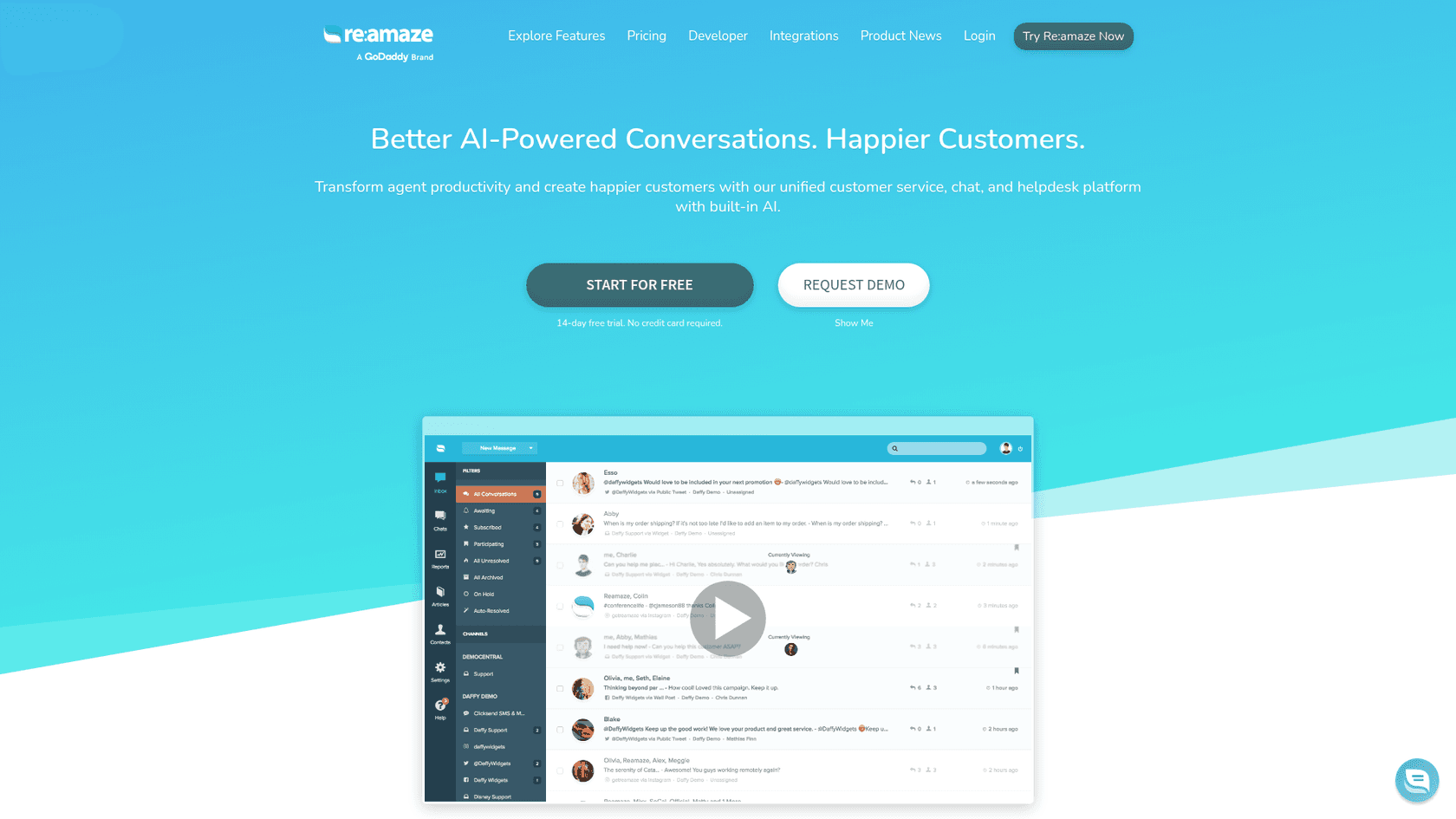
Re:amaze is a customer service platform that combines helpdesk ticketing, live chat, and automation tools into a single dashboard. The company was acquired by GoDaddy in June 2023, which gives it the backing of a major web services provider while maintaining its focus on ecommerce support.
The platform's core pitch is simple: instead of switching between Gmail, Facebook Messenger, Instagram DMs, and a separate chat widget, you handle everything from one place. Re:amaze pulls in conversations from email, social media, SMS, and live chat, then gives your team collaboration tools like internal notes, assignments, and shared views to resolve issues faster.
What sets Re:amaze apart from generic helpdesks is its ecommerce focus. Native integrations with Shopify, BigCommerce, and WooCommerce let you see customer order data, process refunds, and even create draft orders without leaving the conversation. For online stores, this context is invaluable. You can see what a customer bought, when it shipped, and their entire order history while you're chatting with them.
Re:amaze also includes a growing suite of AI features, currently in beta, that help draft responses, summarize conversations, and power chatbots. While not as advanced as some dedicated AI support platforms, these tools can reduce response times and handle routine inquiries automatically.
Re:amaze pricing and plans
Re:amaze uses a per-agent pricing model with three main tiers, plus a starter option for very small teams. Here's the breakdown:
| Plan | Monthly Price | Annual Price | Best For |
|---|---|---|---|
| Basic | $29/agent/month | $26.10/agent/month | Small teams needing core multichannel support |
| Pro | $49/agent/month | $44.10/agent/month | Growing teams with multiple brands |
| Plus | $69/agent/month | $62.10/agent/month | Larger teams needing advanced features |
| Starter | $59 flat/month | N/A | Unlimited agents, limited to 500 conversations/month |
Source: Re:amaze pricing page
The Basic plan covers the essentials: unlimited email inboxes, live chat, social media channels, workflow automation, chatbots, and basic reporting. For most small ecommerce stores, this is enough to get started.
Pro adds multi-brand support (manage multiple stores from one account), live visitor tracking, advanced reporting, SMS/voice channels, and a custom domain for your help center. This is Re:amaze's most popular plan and makes sense once you're managing more than one brand or need deeper analytics.
Plus unlocks the premium features: live screensharing (Peek), staff performance reporting, customizable roles, satisfaction surveys, and in-chat video calls. These are genuinely useful for teams that need to troubleshoot complex issues or want detailed metrics on agent performance.
The Starter plan is an interesting option for very small operations. At $59 flat per month for unlimited agents, it's cheaper than Basic if you have more than two team members. The catch? You're limited to 500 responded conversations per month. Go over that, and you'll need to upgrade.
All plans include a 14-day free trial with access to Plus features, and you can pay monthly or annually (annual saves 10%). No credit card is required to start the trial.
Key features breakdown
Unified multichannel inbox
Re:amaze's shared inbox is the heart of the platform. It brings together email, live chat, Facebook messages, Instagram comments, Twitter/X mentions, SMS, and even VoIP calls into a single view. You can tag conversations, assign them to specific agents, and leave internal notes that customers never see.
The interface is clean and modern. Conversations are threaded, so you can see the full history with a customer across all channels. This prevents the awkward "I already told the other agent..." moments that frustrate customers.
For teams, the collision detection is useful. You can see when another agent is viewing or typing a response, which prevents duplicate replies.
Live chat and visitor tracking
The live chat widget is customizable and includes some sophisticated features. The "Cues" system lets you send proactive messages based on triggers. For example, you can automatically offer help when someone lingers on the checkout page or display a discount code to returning customers.
The Live Dashboard shows you who's currently browsing your site, what pages they're viewing, and their geolocation. On higher-tier plans, the "Peek" feature lets you see what a visitor is typing before they hit send. This gives agents a head start on crafting a response.
For ecommerce specifically, agents can see cart contents and order history directly in the chat interface. This context makes support conversations much more efficient.
Chatbots and automation
Re:amaze includes built-in chatbots on all plans, which is a nice touch. Many competitors gate this behind higher tiers. You get pre-built bots for common ecommerce scenarios (welcome messages, order status lookups) plus the ability to build custom bots with a visual flow builder.
The bots are rule-based rather than conversational AI, meaning they follow predefined paths rather than understanding natural language. This is fine for simple tasks like "Where's my order?" but won't handle complex inquiries.
Workflow automation lets you create triggers for common tasks: auto-tagging messages based on keywords, routing specific issues to specialized agents, or sending follow-up messages after a conversation closes.
Ecommerce integrations
This is where Re:amaze shines. The Shopify integration is particularly deep. You can view customer orders, process refunds, create draft orders, and see fulfillment status without leaving Re:amaze. The integration also pulls in customer data like lifetime value and order history.
Similar functionality exists for BigCommerce and WooCommerce. Plus, Re:amaze connects to tools like ShipStation for shipping data, Recharge for subscription management, and Loop Returns for handling exchanges and refunds.
For marketplace sellers, the ChannelReply integration brings in Amazon, eBay, Walmart, and Etsy messages alongside your direct store support.
Knowledge base limitations
The FAQ/help center feature lets you create self-service articles for customers. Articles can be organized into topics, embedded on your site, or displayed within the chat widget.
However, this is one area where Re:amaze shows its age. The knowledge base editor doesn't support direct image uploads. You have to host images elsewhere and link to them via URL. The customization options are also limited compared to dedicated knowledge base tools. You can change basic colors and branding, but you won't get the design flexibility of something like Help Scout Docs or Notion.
What users actually say: pros and cons
The positives
Re:amaze scores well on business software review sites. It holds a 4.8/5 rating on Capterra and 4.8/5 on Software Advice, with users praising its ease of use and ecommerce focus.
Here's what actual users like:
- Strong multichannel unification: Users consistently mention how Re:amaze brings all their communication channels into one place, eliminating the need to check multiple platforms.
- Ecommerce integration depth: Shopify and BigCommerce users appreciate seeing order data directly in support conversations.
- Modern interface: The clean, intuitive design gets frequent praise, especially from teams switching from older helpdesks.
- Responsive support: Re:amaze's own customer support team is described as helpful and quick to respond.
- Good value for smaller teams: At $29-49 per agent, users feel they're getting solid features without enterprise-level pricing.
Reamaze is one of those products that you wish you started using years ago. This product has definitely evolved over the years. Customer service is spectacular. Reach out and you'll always hear back from someone.
Capterra
The negatives
No tool is perfect, and Re:amaze has its share of criticism:
- Limited search functionality: Users report that finding old conversations or specific messages can be frustrating. The search doesn't support advanced filters or fuzzy matching.
- Restricted help center customization: The knowledge base works functionally but offers limited design flexibility. You can't match it closely to your brand without custom CSS workarounds.
- Clunky settings layout: Some users find the admin panel disorganized, with related settings scattered across different sections.
- Per-agent pricing scales poorly: A team of 10 agents on the Plus plan pays $690/month. That's competitive for small teams but gets expensive fast.
- Some integrations feel dated: The ShipStation integration, in particular, has been criticized for showing orders oldest-first with no option to change the sort order.
Customer support is very poor. The front line customer service team gate keep proper technical support and make it impossible to even be heard by someone who can actually help resolve the problem.
G2
Addressing the Trustpilot controversy
You might notice Re:amaze has a dismal 1.5/5 rating on Trustpilot. Here's the context: most of those reviews aren't from Re:amaze customers. They're from consumers who interacted with scam ecommerce sites that happened to use Re:amaze for support.
These reviewers are angry about being scammed, and they're lashing out at any company associated with the fraudulent store. It's not a reflection of Re:amaze as a product. The actual user sentiment from Capterra, G2, and the Shopify App Store (where Re:amaze holds 4.4/5) is much more representative of the customer experience.
Re:amaze vs the competition
Re:amaze occupies an interesting position in the helpdesk market. It's more affordable and ecommerce-focused than enterprise tools like Zendesk, but more robust than simple live chat widgets.
Compared to Zendesk
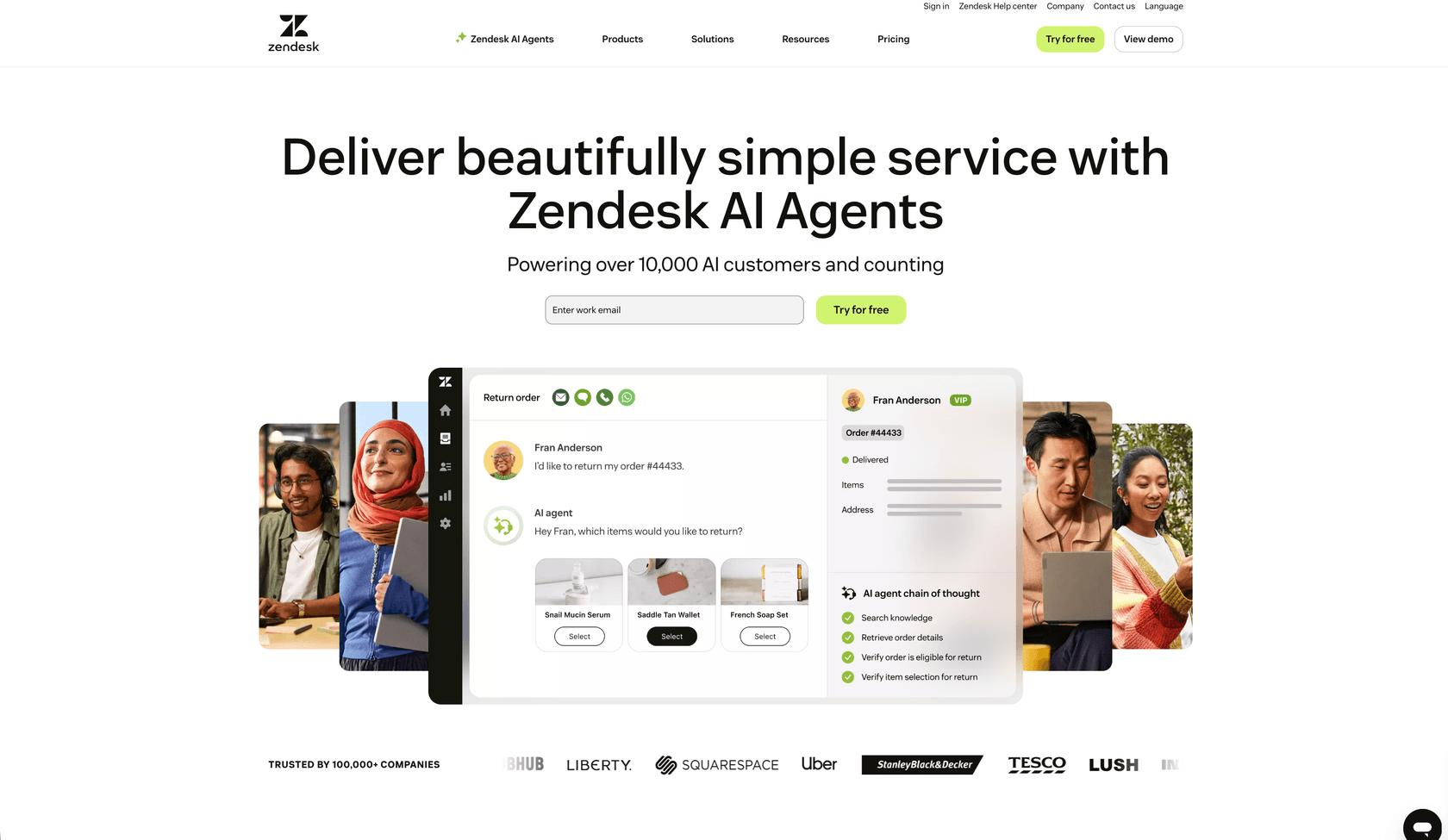
Zendesk is the 800-pound gorilla of helpdesk software. It offers more enterprise features, better reporting, and a massive app ecosystem. But it's also more expensive and complex. Zendesk's entry-level plan starts at $19/agent but lacks many features included in Re:amaze Basic. To get comparable functionality, you're looking at Zendesk Team ($55/agent) or higher.
Re:amaze wins on ease of use and ecommerce-specific features. Zendesk wins on scalability and enterprise capabilities.
Compared to Gorgias
Gorgias is Re:amaze's closest competitor. Both target ecommerce, offer similar pricing ($25-65/agent), and have deep Shopify integrations. Gorgias has stronger AI features and a more modern interface, while Re:amaze offers better value on lower-tier plans and includes features like status pages that Gorgias charges extra for.
AI-native alternatives like eesel AI
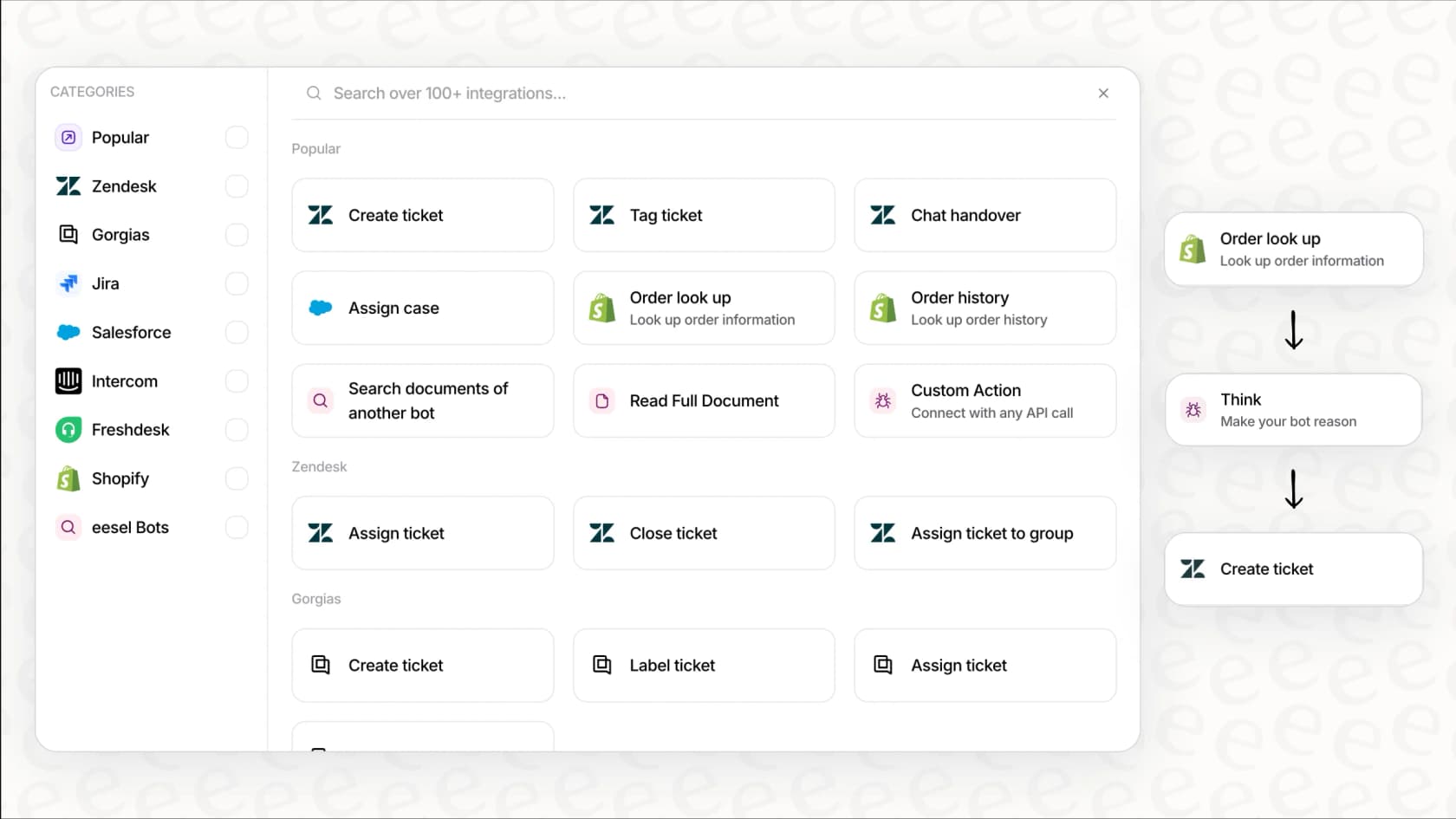
Traditional helpdesks like Re:amaze are increasingly competing with AI-native platforms like eesel AI. These tools take a different approach: instead of organizing tickets for humans to handle, they use AI to resolve issues directly.
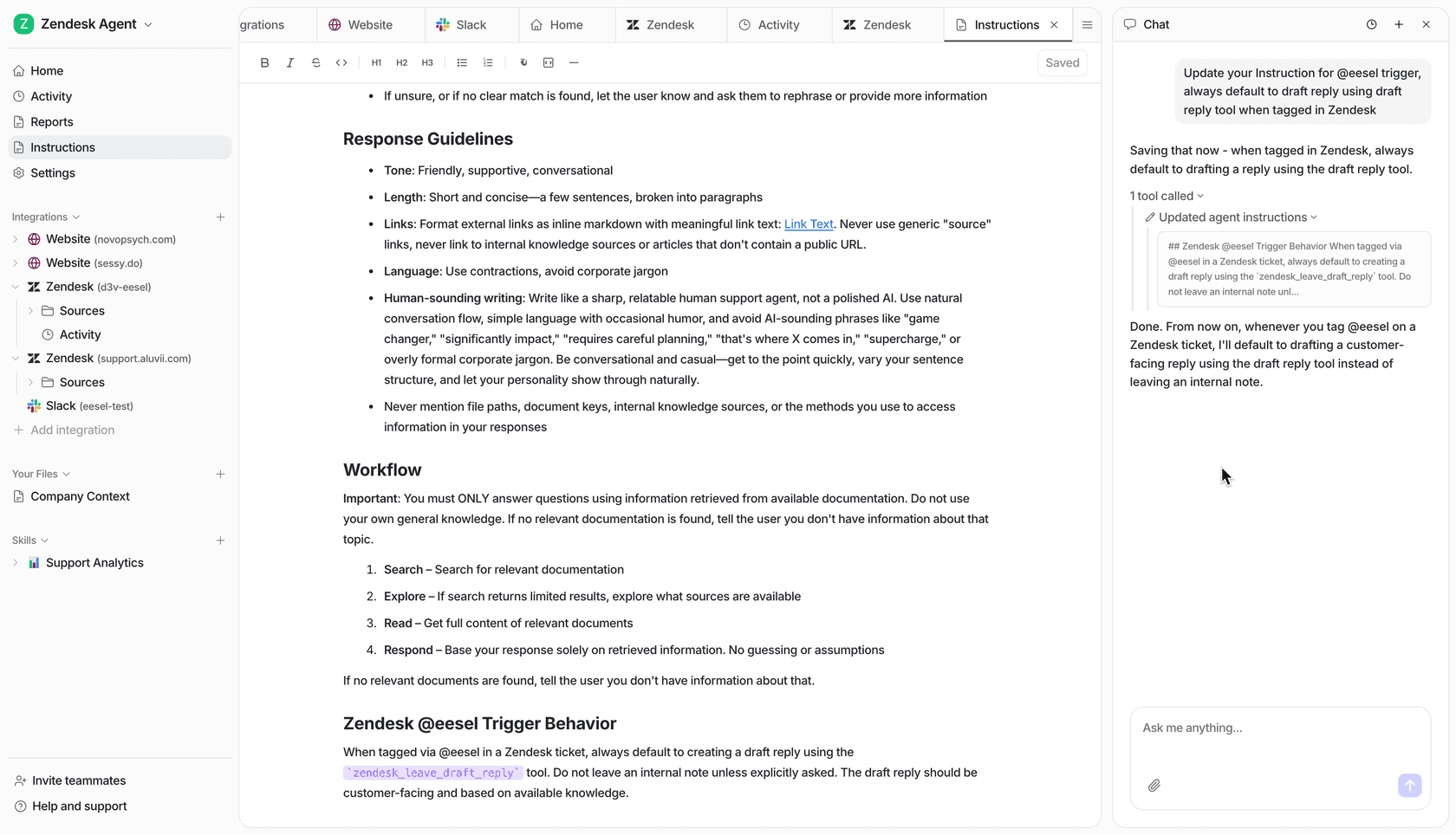
With eesel AI, for example, you connect your helpdesk and the AI learns from your past tickets and help center. It can then draft responses, handle routine inquiries autonomously, and escalate only complex issues to humans. The pricing model is also different: eesel AI charges fixed monthly credit plans (1 credit per ticket or chat) rather than per agent, which can be more cost-effective for high-volume support.
If you're evaluating Re:amaze primarily for its AI features, it's worth comparing against these newer alternatives. Re:amaze's AI is helpful but still in beta. Dedicated AI platforms may offer more sophisticated automation.
Who should use Re:amaze?
Re:amaze is a good fit for:
- Small-to-mid ecommerce businesses using Shopify, BigCommerce, or WooCommerce who want unified multichannel support without enterprise complexity
- Multi-brand retailers who need to manage support for several stores from one account (Pro and Plus plans)
- Teams of 2-15 agents who find per-agent pricing reasonable at their scale
- Businesses wanting automation on a budget since chatbots and workflows are included on all plans
Re:amaze is not ideal for:
- Large enterprises with 50+ agents where per-seat pricing becomes prohibitive
- Teams needing heavy customization of their help center or workflows
- Businesses wanting cutting-edge AI that can handle complex conversations autonomously
- Non-ecommerce businesses who won't benefit from the platform's retail-focused features
Is Re:amaze worth it in 2026?
The honest answer: it depends on your situation.
For small ecommerce stores, Re:amaze offers excellent value. The $29 Basic plan includes features that competitors charge more for, and the ecommerce integrations genuinely save time. If you're currently juggling Gmail, Facebook, and a basic chat widget, Re:amaze will streamline your workflow significantly.
The post-GoDaddy acquisition is worth considering. So far, GoDaddy appears to be letting Re:amaze operate independently, but acquisitions can lead to product changes down the road. There's some risk here, though GoDaddy's backing also provides stability.
Where Re:amaze becomes harder to justify is at scale. A 20-person support team pays $1,380/month on the Plus plan. At that point, you should evaluate whether an AI-native solution like eesel AI might handle a significant portion of those tickets autonomously, potentially reducing your headcount needs.
Bottom line? Re:amaze is a solid, workhorse helpdesk for ecommerce businesses. It's not flashy, but it gets the job done. Just be realistic about the pricing as you grow, and don't expect its AI features to replace human agents anytime soon.