Gorgias competitors in 2026: 10 rivals and what they cost

Kurnia Kharisma Agung Samiadjie

Katelin Teen
Last edited July 31, 2026

Why I stopped comparing features and started comparing meters
A few months back I sat in on a call with an ops lead at a DTC supplements brand running about 7,000 Gorgias tickets a month against roughly 30,000 orders. His team could not keep up. He had come in asking about a copilot for his agents, and about ten minutes into the conversation he worked out he did not want a copilot at all, he wanted something autonomous that could take at least half of the email volume off the queue. Then he said the thing that has stuck with me since:
"The AI will never be able to answer 100% of the questions, but if it tries and just answers 'sorry I don't know this,' I cannot go and check all my 7,000 tickets to see if the AI actually made a good answer. I need an AI who is only handling the tickets that it's confident to handle and all the other ones, leave them alone."
That is a real quote from an eesel sales call, anonymized. It is also the whole problem with feature-grid comparisons of Gorgias competitors. Every vendor in this post has a feature called AI. What separates them is what gets billed when the AI does not fully solve the thing, and how much control you have over when it tries.
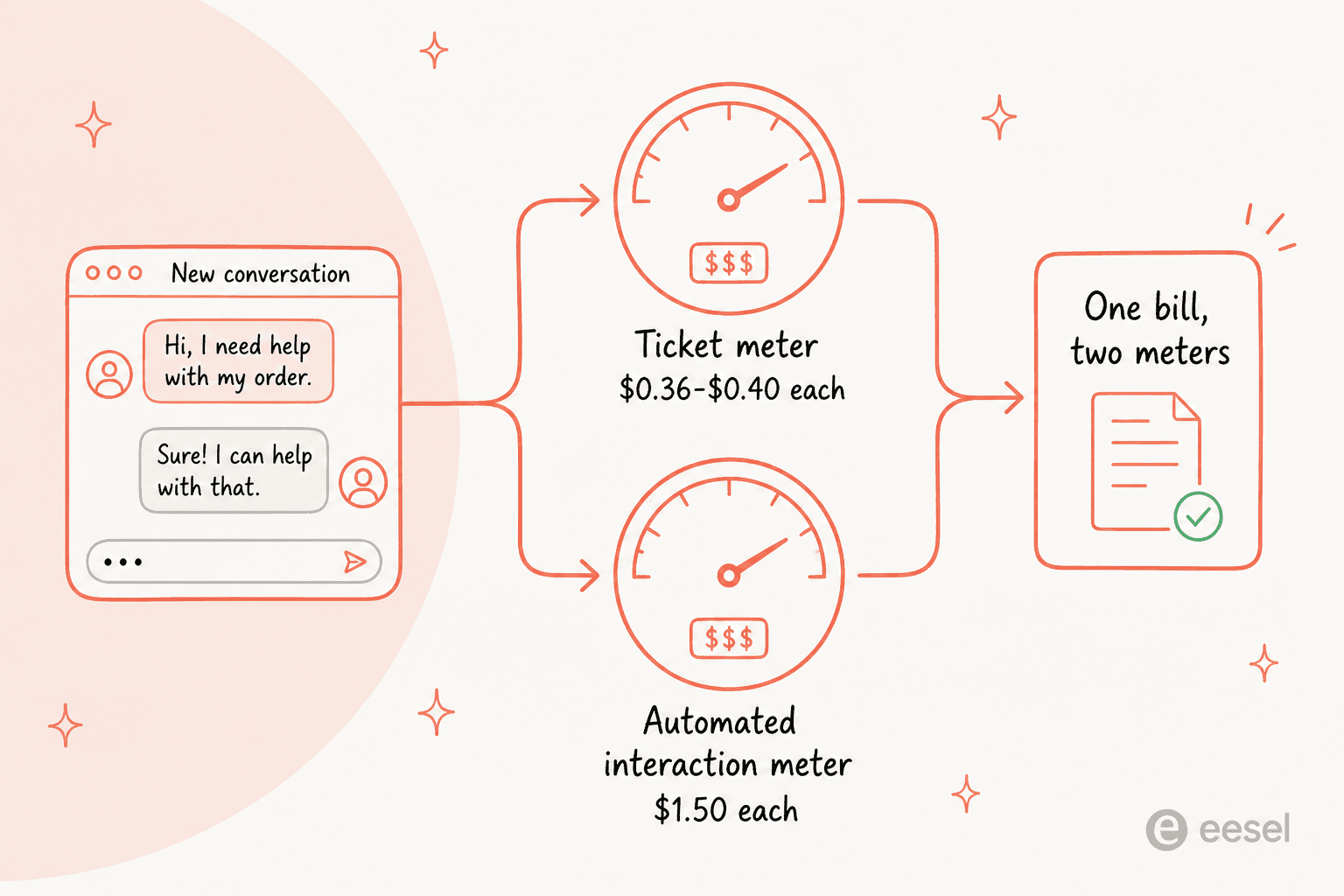
Here is what that looks like on a Gorgias bill specifically. Every plan bundles two allowances, tickets and automated interactions, and each one has its own overage rate. Past the bundle, tickets cost $0.36-$0.40 and automated interactions cost a flat $1.50 each on every published plan. That $1.50 is higher than the effective rate inside the bundle, which works out to $0.90-$1.00 depending on plan, so a spike month is punished at roughly 1.5x. The pricing page headline says you pay only when the AI resolves a conversation, but the unit printed on every plan card is the automated interaction, not the resolution.
None of that makes Gorgias a bad product. Its ecommerce helpdesk is the best Shopify-native inbox on the market and I would not argue otherwise. It just means the honest comparison is a pricing comparison, and that is what the rest of this post is.
The three camps of Gorgias competitors
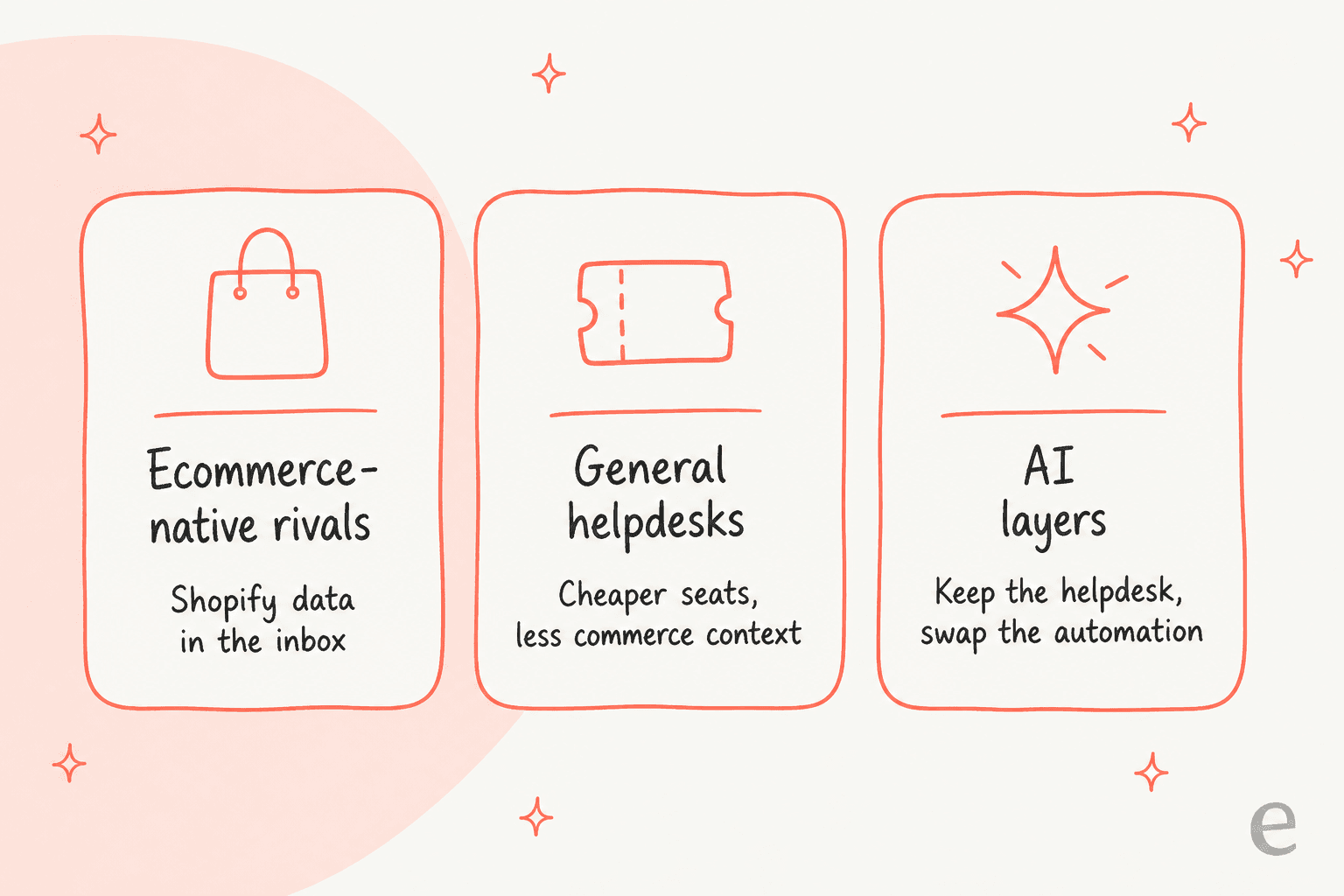
Ecommerce-native rivals compete with Gorgias on its home turf: order data inside the ticket, refunds and cancellations without leaving the inbox, Shopify as a first-class citizen. Richpanel and Re:amaze are the two that actually target Gorgias by name.
General helpdesks are the volume competitors. Zendesk, Freshdesk, Help Scout, Tidio, Kustomer, Gladly and Zoho Desk all serve retail brands, most of them for less money per seat, and all of them with less commerce context out of the box. The trade is real: cheaper inbox, more clicking between tabs.
AI layers are the camp that did not exist in a serious way three years ago. They do not replace the helpdesk. They read your help centre, past tickets and macros, then answer tickets inside the tool you already run. If your complaint about Gorgias is the automation bill rather than the inbox, this camp is the cheapest fix because it deletes the migration entirely.
One Reddit commenter in an r/ecommerce helpdesk thread put the underlying point better than any vendor page:
"What's usually overlooked is that most teams optimize for handling tickets faster, not for reducing them."

The summary table
Every price below is the vendor's own published rate, checked between 27 and 31 July 2026. Where a vendor publishes no price, I have said so rather than guessing.
| Tool | Best for | Seat pricing | Entry price | AI billing unit | AI rate | Ecommerce depth | Free tier | Published uptime SLA |
|---|---|---|---|---|---|---|---|---|
| eesel AI | Keeping your helpdesk, changing the automation | None | $0.40 / ticket | Ticket | $0.40 | Layers onto Gorgias + Shopify tools | Free trial | Not published |
| Gorgias | Shopify-first brands doing order actions in-ticket | None (500 users on Basic+) | $40/mo | Automated interaction | $1.50 over bundle | Native, best in class | Trial only | Not published |
| Richpanel | Cutting the Gorgias bill without leaving ecommerce | $99 / seat | $299/mo example | AI handled conversation | ~$0.20 | Native, Gorgias migration in one click | No | Not published |
| Re:amaze | Small ecommerce teams that want a flat option | $29-$69 / member | $29/member | Resolution | $0.85 over bundle | Strong | No | Not published |
| Zendesk | Enterprise process, deep customisation | $19-$115 / agent | $19/agent | Automated resolution | Not published | General | No | 99.9%, Premier only |
| Freshdesk | Mid-market teams wanting bundled AI | $19-$89 / agent | $19/agent | 24-hour session | $0.49 | General | No | Not published |
| Help Scout | Small teams that want the simplest inbox | $25-$75 / user | $25/user | Resolution | $0.75 | General | Yes, 1 seat | Not published |
| Tidio | Chat-first stores | Seats bundled | Free | Lyro conversation | ~$0.70-$0.78 | General, retail-heavy | Yes, 50 convos | Not published |
| Kustomer | Large CX orgs that want an SLA in writing | Quote only | Quote only | Engaged conversation | $0.60 | General | No | 99.9% with credits |
| Gladly | Conversation-first, people-not-tickets teams | Quote only | Quote only | Not published | Not published | General | No | Not published |
| Zoho Desk | The cheapest credible seat | $7-$40 / user | Free | Bundled | No separate rate | General | Yes | Not published |
Two things jump out of that table. First, the industry has inverted its own buying motion: Kustomer and Gladly now hide the seat price and publish (or refuse to publish) the AI meter instead. Second, the AI rates are not comparable to each other even when they look it, because $0.60 for an engaged conversation covers a much wider set of events than $0.75 for a resolution.
1. eesel AI
I work on this one, so read it with that in mind. I have kept it first because it is the only entry that answers a different question than the other nine.
Features
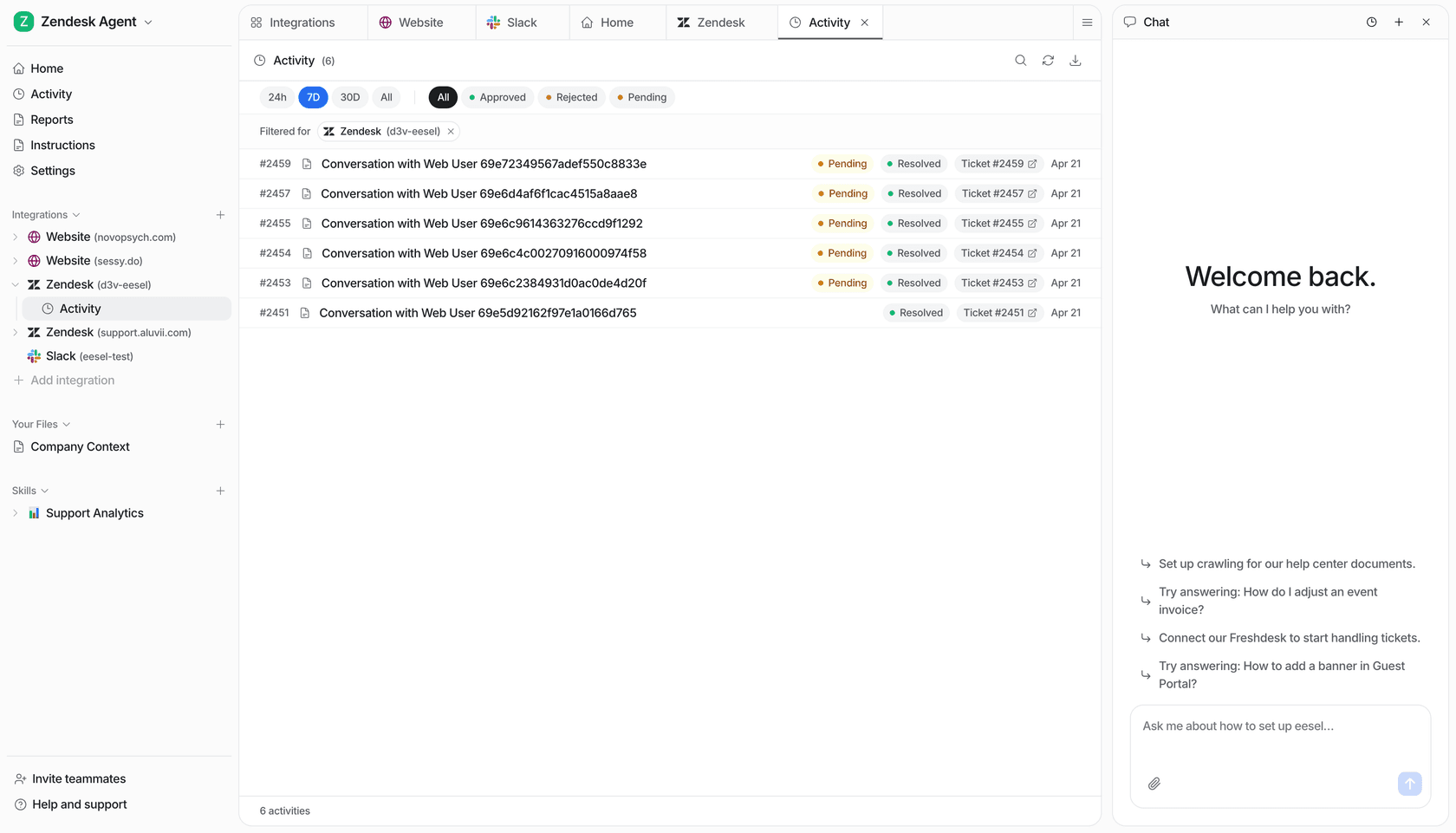
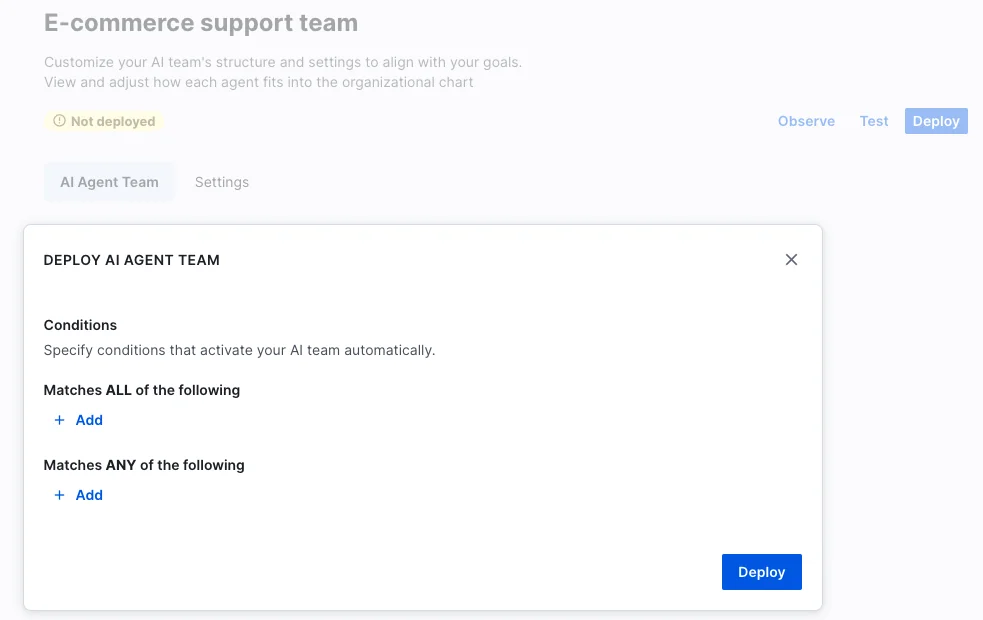
eesel is an AI support agent that sits on top of the helpdesk you already have, including Gorgias. It trains on your help centre, your past tickets and your macros, then either drafts replies for agents or answers autonomously with a confidence threshold you set. The part that matters for the objection in that sales call: you can scope it to specific ticket types and let it stay silent on everything else, and you can simulate the whole thing against historical tickets before it touches a live customer.
Where it beats Gorgias
No migration, no seats and a single meter. You keep Gorgias automation, views and macros exactly as they are. And the billing unit is the ticket, so a reopened or escalated conversation does not bill a second time, which is the opposite of how a session or interaction meter behaves.
Where it falls short
It is not a helpdesk. If your problem with Gorgias is the inbox itself, the agent seats or the reporting, an AI layer does not fix that and you want one of the nine below.
Pricing
$0.40 per ticket, no per-seat fee, with a $1,000/mo platform fee at the Enterprise tier. On 2,000 conversations a month at a 40% automation rate that is 800 tickets, or $320.
Verdict
The right first move if the automation bill is what pushed you into researching Gorgias competitors in the first place. The wrong move if you want out of the inbox.
"In the first month, eesel is resolving 73% of our tier 1 requests."
Kim Simpson, Gridwise on G2

2. Richpanel
Features
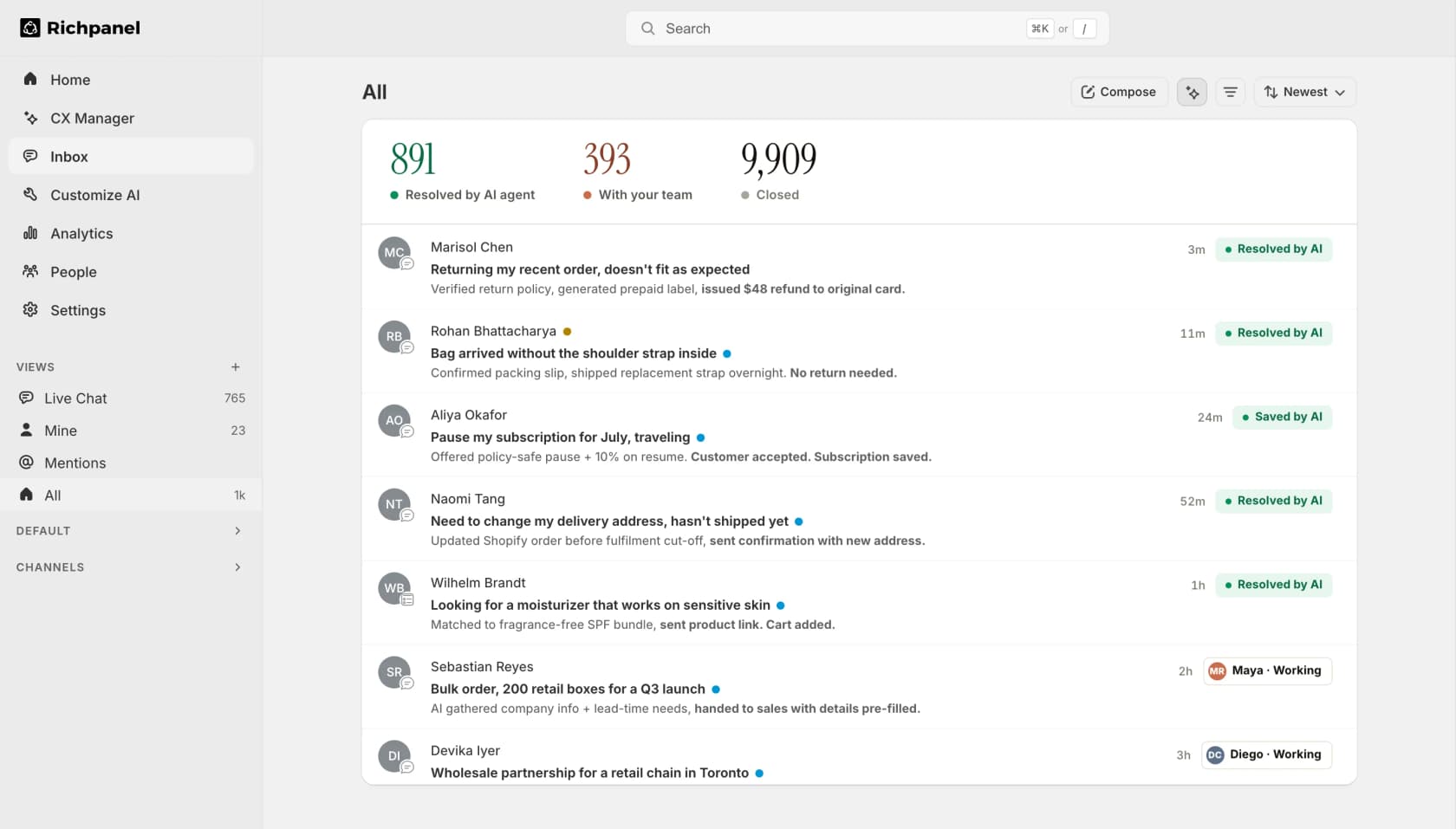
Richpanel is an AI-first ecommerce helpdesk that names Gorgias on its own pricing page and prices against it directly. Every channel is included on every plan (email, chat, social, SMS, WhatsApp, voice), the AI trains on your policies and escalates when it is stuck, and migration from Gorgias is advertised as one-click and done for you.
Where it beats Gorgias
The meter. Richpanel bills AI handled conversations on actual token use, which it audits and reports as an average of $0.20 per conversation (last audited June 2026). Against a $1.50 Gorgias interaction overage, that is a different order of magnitude. It also backs it with a guarantee: 50% of tickets resolved by AI in 30 days or a full refund, no proration even on an annual contract.
Where it falls short
There is no self-serve checkout. The pricing page dropped its named tiers and is now a slider plus a "Book a demo" button, so you cannot swipe a card and start. Human seats are $99 each, which is the most expensive seat in this roundup by a distance, so a large team with modest AI volume can end up paying more than they would on Gorgias's seat-free model.
Pricing
$99 per helpdesk seat per month, plus a usage tier for AI handled conversations starting at $200 for 1,000. The example bill on their own page is $299/mo for 1,000 AI conversations and one seat. Annual saves 17%.
Verdict
The closest like-for-like swap if you want to stay in ecommerce-native territory and your AI volume is high relative to headcount. Run the seat maths first.
3. Re:amaze
Features
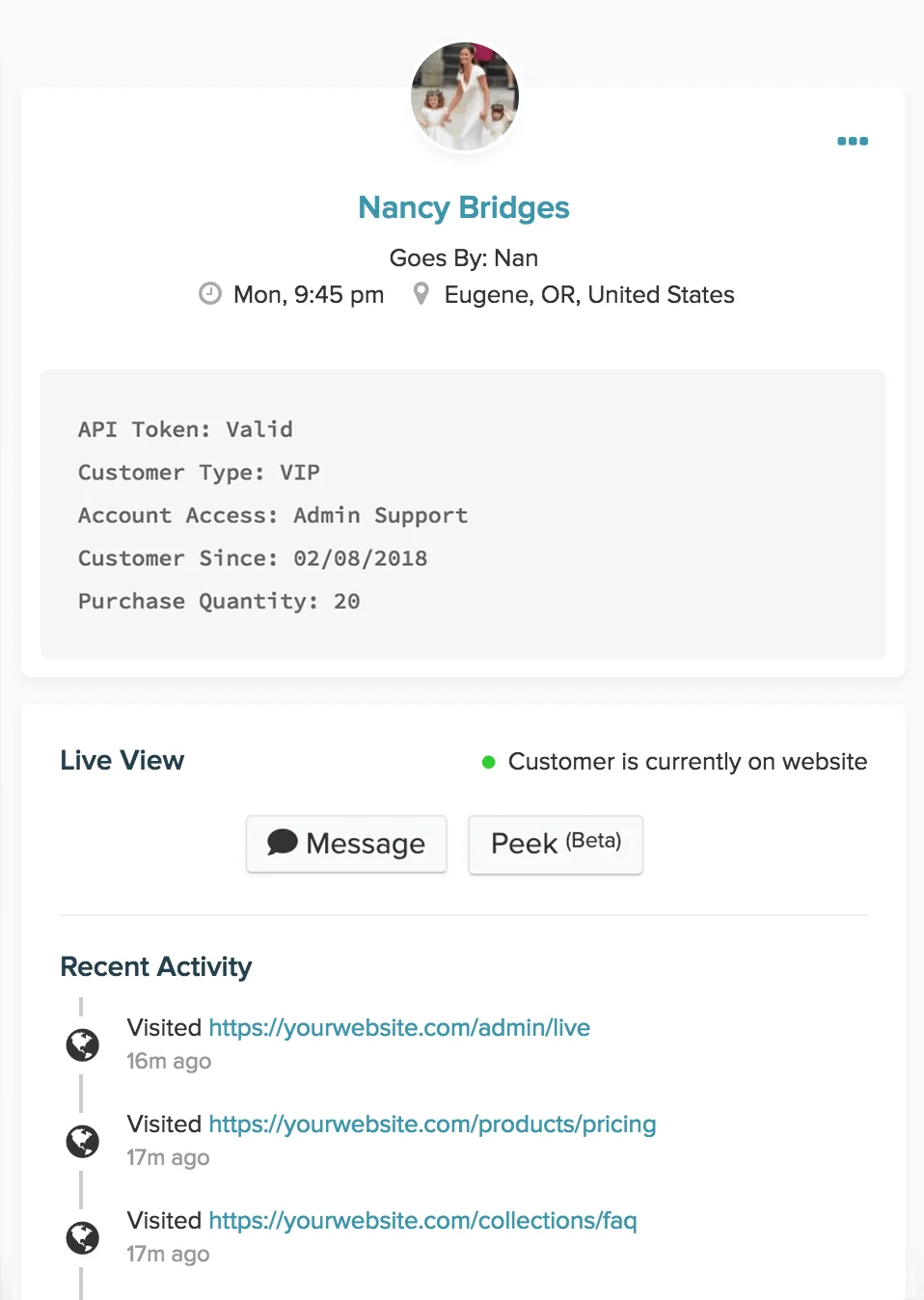
Re:amaze is a GoDaddy-owned shared inbox with a strong ecommerce lean, covering email, chat, social and SMS with a built-in help centre. Its AI Agent is bundled rather than sold as a separate SKU, and it is still labelled BETA on the pricing page.
Where it beats Gorgias
It is the only tool here with a flat option worth taking seriously: Starter at $59/mo with unlimited members, capped at 500 responded conversations a month. For a small team drowning in seats-per-agent maths, that is a clean answer. Per-member plans are also cheap by comparison, and there is a full breakdown in our Re:amaze cost guide.
Where it falls short
The AI allowance scales with seat count, not ticket volume: 5, 10 and 20 included resolutions per user per month on Basic, Pro and Plus. A three-person team handling 4,000 conversations burns its entire AI allowance in the first afternoon and then pays $0.85 for each one after. That is exactly backwards from how support volume actually behaves.
Pricing
Basic $29, Pro $49, Plus $69 per member per month, with a flat 10% off annually. Starter $59 flat. AI resolutions $0.85 over the included count.
Verdict
Good value for small ecommerce teams with low automation ambitions. The per-seat AI allowance makes it a poor fit the moment automation becomes the point.
4. Zendesk
Features
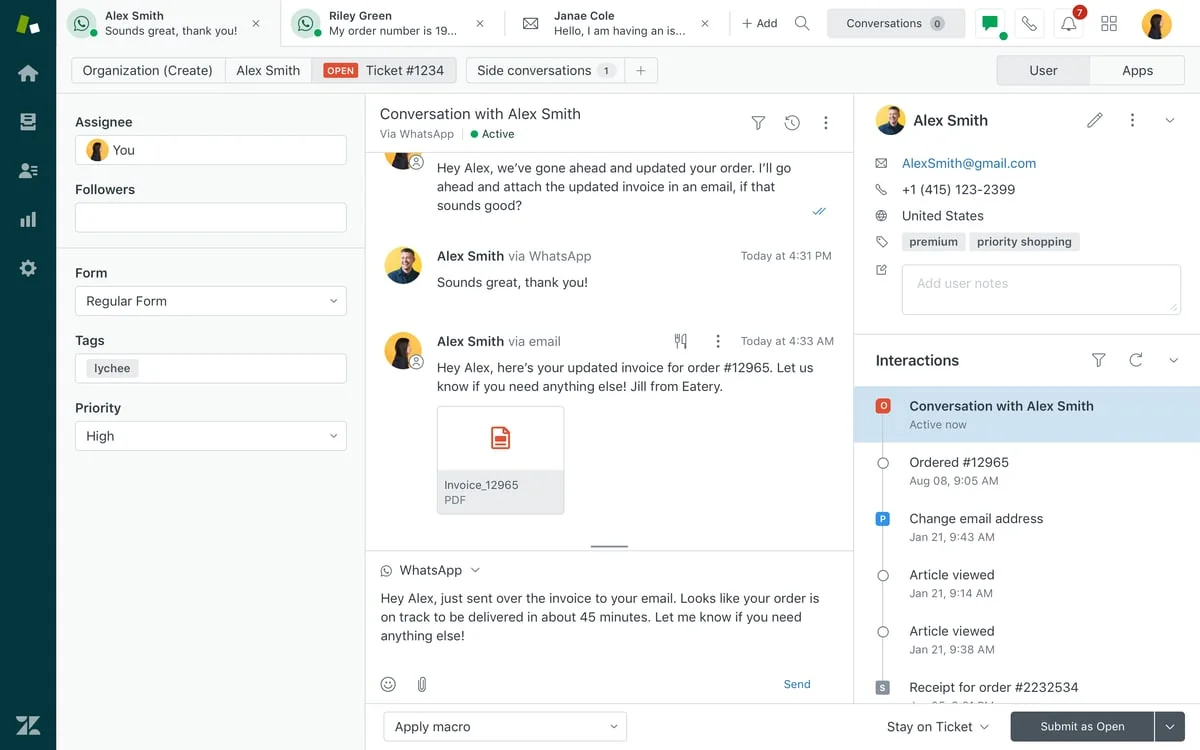
The default enterprise answer. Deep customisation, mature Zendesk automations, the biggest app marketplace in support software, and reporting that will outlast whatever team you have now. It is also the tool most Gorgias comparisons are actually against.
Where it beats Gorgias
Cost per seat and breadth. At $19 for Support Team and $55 for Suite Team it is roughly a third of Gorgias for comparable ticket volumes, which is the recurring Reddit finding. It also handles non-commerce support (B2B, technical, internal) that Gorgias was never built for.
Where it falls short
Two things. Commerce context is an app, not a native surface, so agents click more. And Zendesk now publishes no dollar rate for an automated resolution at all since the mid-2026 tier changes, which makes it the hardest bill in this roundup to forecast. The Copilot add-on is $50/agent on top. Our Zendesk pricing guide tracks the current tiers.
Pricing
Support Team $19, Suite Team $55, Suite Professional $115 per agent per month. Suite Enterprise with Copilot is talk-to-sales. The 99.9% uptime SLA is Premier-support only.
Verdict
Right call if you are outgrowing ecommerce-only workflows or need enterprise governance. Budget for the AI separately, because you cannot model it from the public pages. If you want the automation without the platform switch, our Zendesk AI alternatives post covers the layer approach.
5. Freshdesk
Features
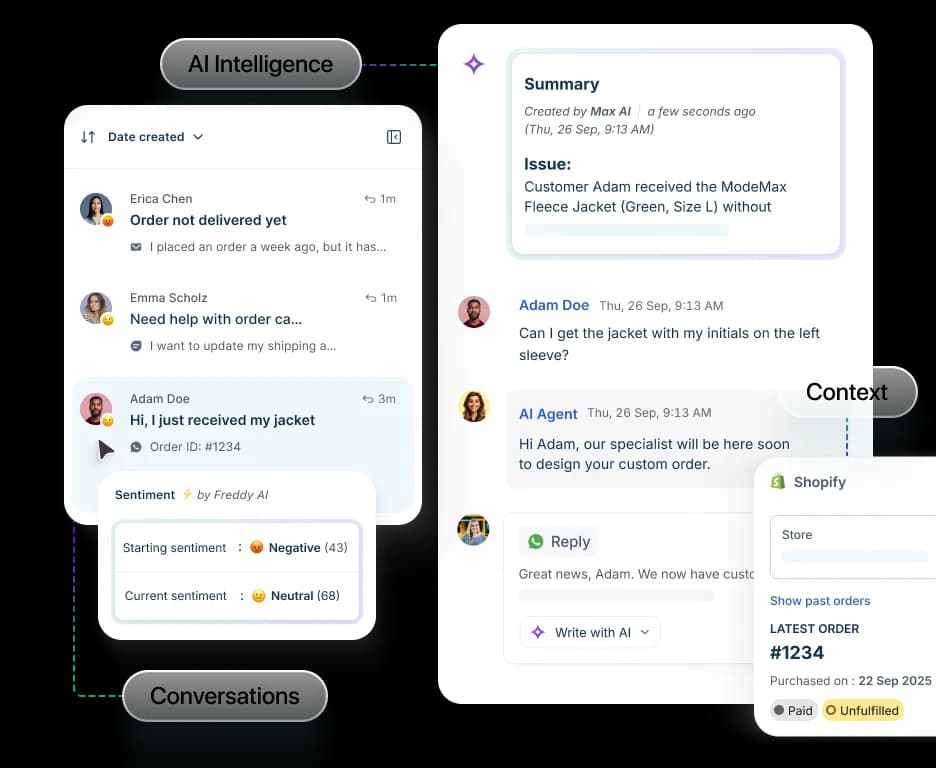
Freshdesk is the value play in general helpdesks: solid ticketing, a decent knowledge base, and Freddy AI Agent included on every paid plan rather than gated to the top tier.
Where it beats Gorgias
The included allowance is the most generous published number in this roundup. The first 500 Freddy sessions per month are free on every plan, including the $19 Growth tier. Nobody else gives you meaningful automation at the entry price. Full mechanics in our Freshdesk AI pricing breakdown.
Where it falls short
The billable unit is a 24-hour session, so a conversation that reopens the next day bills twice, and a session bills even when the AI fails and hands off. There is also no free plan any more. And commerce context is app-level, same trade as Zendesk.
Pricing
Growth $19, Pro $55, Enterprise $89 per agent per month. Freddy AI Agent overage $49 per 100 sessions ($0.49 each). Freddy Copilot is $29/agent and Pro-and-above only.
Verdict
The best deal here if your automation volume sits under 500 sessions a month. Above that, the session meter starts to punish reopens in a way a per-ticket meter does not.
6. Help Scout
Features
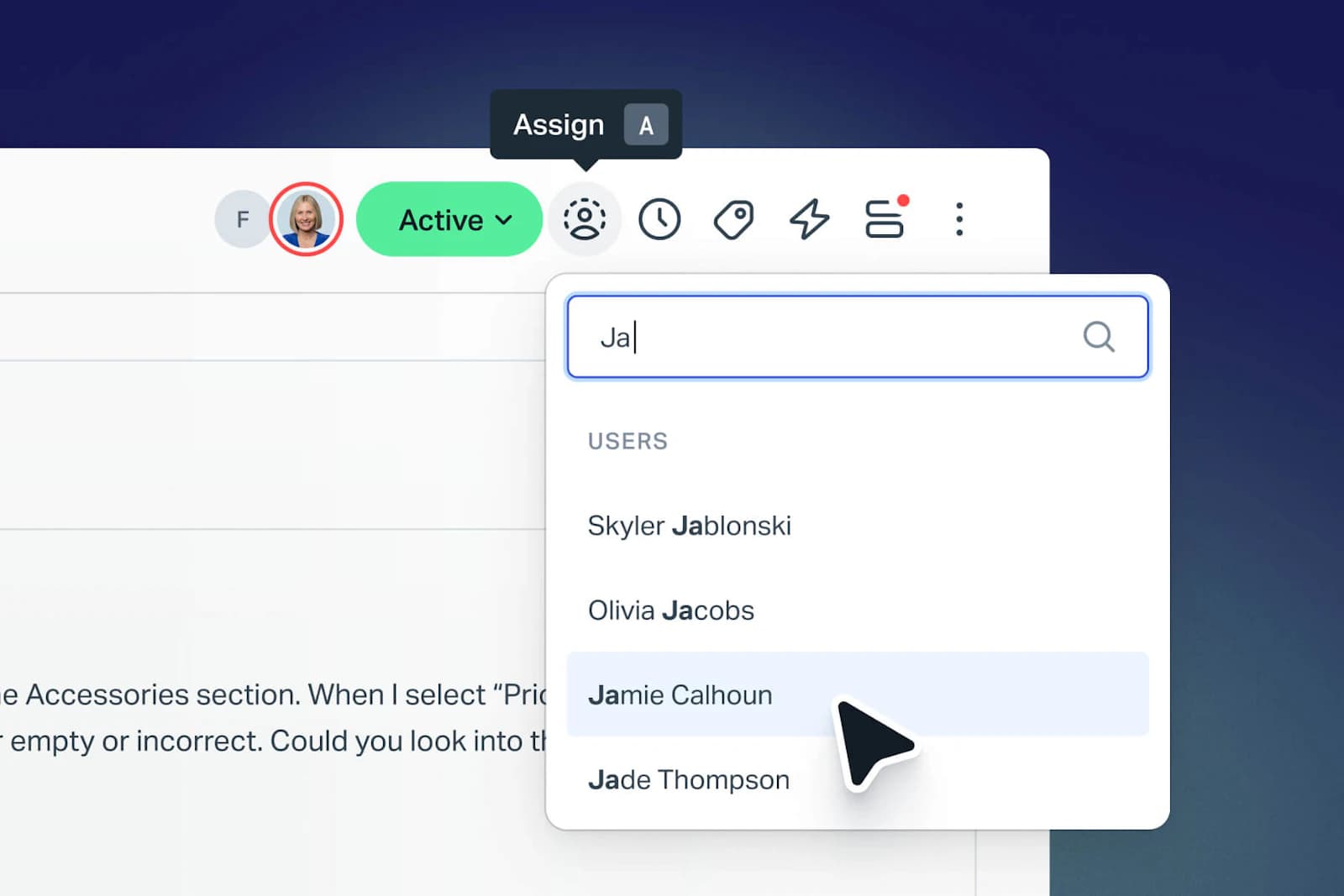
Help Scout is the anti-helpdesk helpdesk: conversations look like email, there is almost nothing to configure, and small teams get productive in an afternoon. AI Drafts are unlimited from the Plus tier, and AI Answers is an autonomous agent that resolves without human involvement.
Where it beats Gorgias
Clarity of the meter. Help Scout tried per-customer-interaction pricing in 2025 and reverted to seats in November of that year, and the unit it settled on is the cleanest in this list: you are charged for one resolution per conversation even if the AI answers multiple questions in it. The published average resolution rate on their own calculator is 73%.
Where it falls short
Almost no ecommerce depth. There is no order panel, no refund action, no commerce-aware routing worth the name, so a WISMO-heavy store will be tab-switching all day. Our Help Scout ecommerce alternatives post exists for exactly this reason, and how Help Scout approaches AI covers the product philosophy.
Pricing
Standard $25, Plus $45, Pro $75 per user per month. AI Answers $0.75 per resolution. There is a free plan capped at one seat.
Verdict
Great for a small brand where support is mostly conversational. Wrong tool if 40% of your tickets need a Shopify action.
7. Tidio
Features
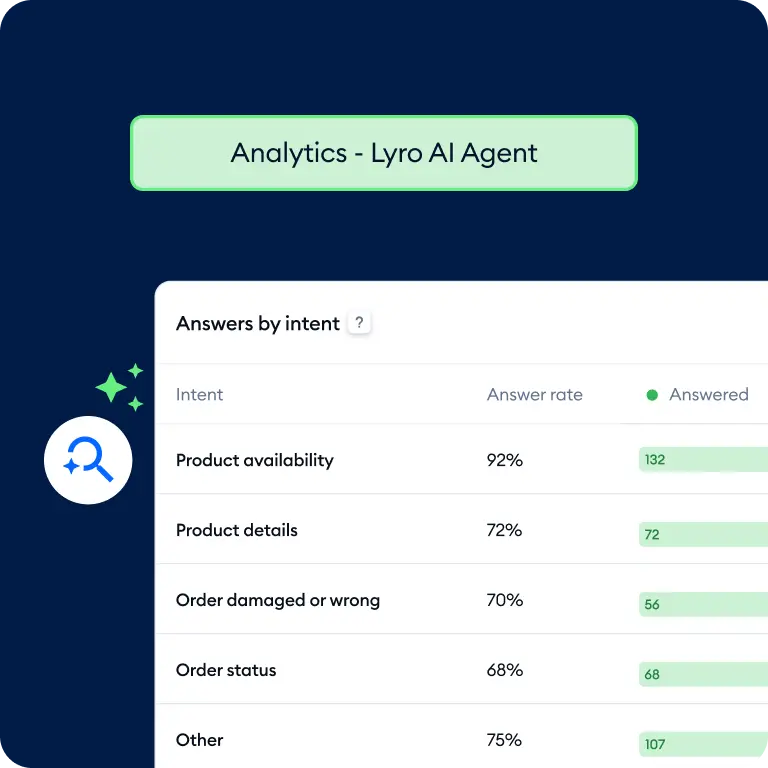
Tidio is chat-first rather than ticket-first, with Lyro as its AI agent. It is the most common starting point for small Shopify stores and the most common thing people scale off, which is why Gorgias vs Tidio is such a well-worn comparison.
Where it beats Gorgias
The billing rule is unusually favourable and almost nobody notices it: a conversation only becomes billable when a human agent replies. Replies from Flows and from Lyro are explicitly not counted as agent replies, so a chat the bot fully handles costs you nothing on the conversation meter. There is also a real free tier.
Where it falls short
Two meters again, and the Lyro one is expensive at scale, laddering to around $0.70-$0.78 per conversation. The 50 free Lyro conversations are one-off and lifetime, not monthly, which trips up a lot of people evaluating it. Depth of ecommerce workflow is well short of Gorgias. See our Tidio pricing and Lyro AI pricing breakdowns for the full ladder.
Pricing
Free (50 conversations), Starter $29 (100), Growth $59 to $349 (250 to 2,000), Plus from $300 plus usage. Lyro from $39/mo monthly list ($32.50 annual) for 50 conversations, up to $700 for 1,000.
Verdict
A fine first helpdesk and a poor final one. If you are on Tidio and hitting the ceiling, the choice is Gorgias or a cheaper AI layer, not another chat widget.
8. Kustomer
Features
Kustomer is a CRM-shaped support platform: it models the customer, not the ticket, which is a real advantage for repeat-purchase brands where the whole history matters more than the current issue. Our Kustomer auto-reply guide goes deeper on the automation side.
Where it beats Gorgias
It contracts an SLA. 99.9% uptime with service credits is rare in this category, where almost nobody commits to uptime in writing at all. It also publishes its usage rates even though it hides plan prices.
Where it falls short
The meter is the widest in this roundup. Kustomer bills $0.60 per engaged conversation, and engaged means the AI took part, solved or not. That is cheaper per unit than Help Scout's $0.75 resolution, but it bills events Help Scout does not bill at all, so the two numbers should never be compared side by side. Plan pricing is quote-only, and add-ons stack: AI for reps $40/user/mo, HIPAA $25/user/mo, storage $50/GB/mo, WhatsApp at Meta's fee plus a 20% markup.
Pricing
Enterprise and Ultimate plans, both quote-only. AI Agents for Customers $0.60 per engaged conversation.
Verdict
Worth a conversation if you are large enough to need contractual uptime and a customer-centric data model. Too opaque to evaluate quickly.
9. Gladly
Features
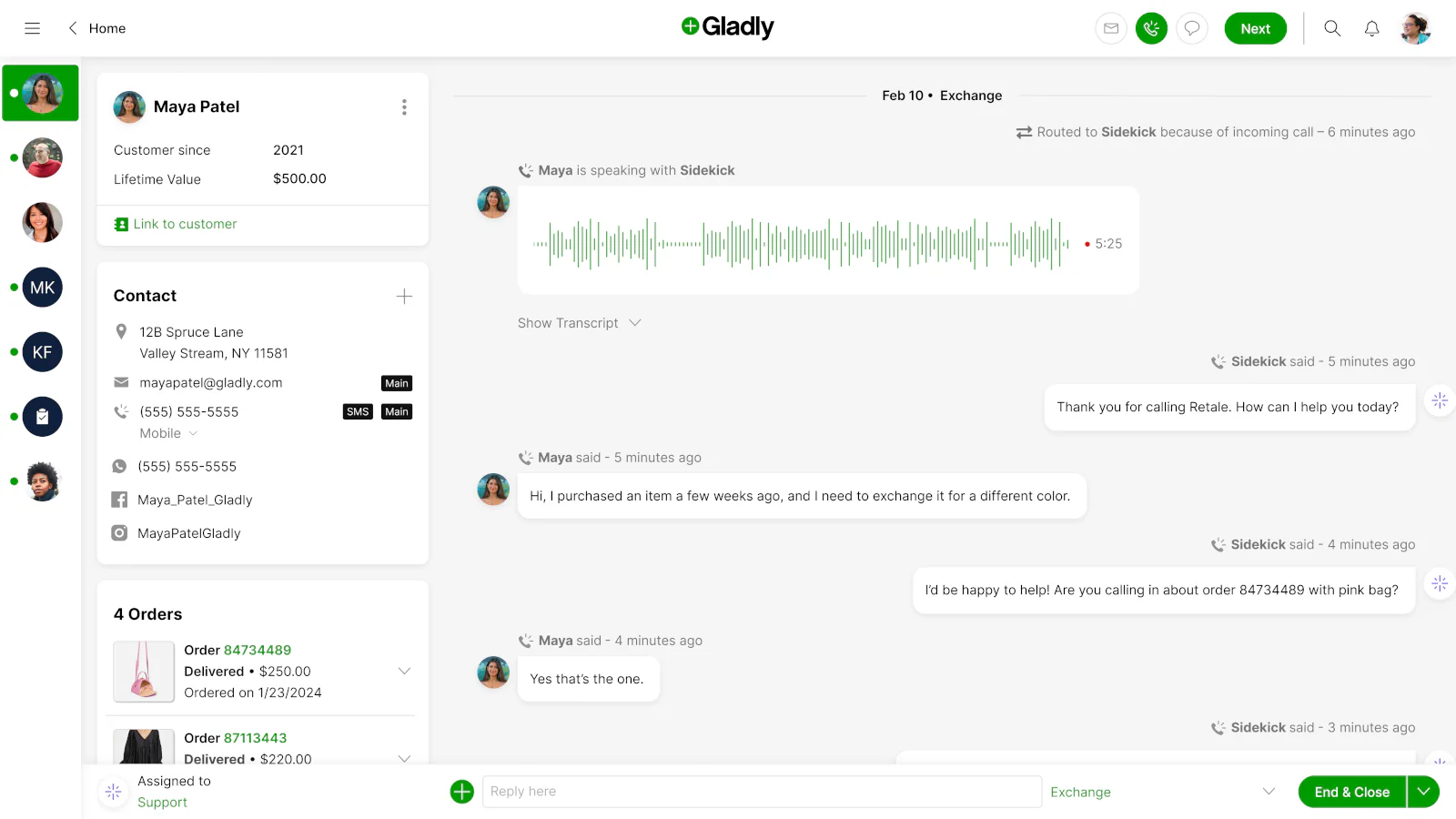
Gladly's premise is people, not tickets: one lifelong conversation thread per customer across every channel, with voice as a first-class citizen rather than a bolt-on. Retail and travel brands with high-touch service are its natural home, and our Gladly deflection write-up covers the AI side.
Where it beats Gorgias
Voice and the conversation-first model. If your customers phone you and expect the agent to know the last four things that happened, this is the architecture built for it. Its published outcome claims are strong: 76% of conversations fully resolved by AI.
Where it falls short
You cannot price it. As of 30 July 2026 Gladly has no pricing page at all — the pricing URL redirects to a page that is byte-for-byte identical to the homepage, and the plans URL 404s. No plan names, no rates, demo form only. That is a hard stop for anyone who needs a number this quarter. On Reddit it also carries a reputation for sitting at the expensive end:
"Gorgias is very Shopify-native and easy to get value from but pricing and ticket volume can creep up fast. Gladly works well if you really want a conversation-first experience though it's usually on the pricier side."
Pricing
Not published in any form. Demo only.
Verdict
A real point of difference for high-touch retail. Budget several weeks for procurement, because discovery is the only way to get a number.
10. Zoho Desk
Features
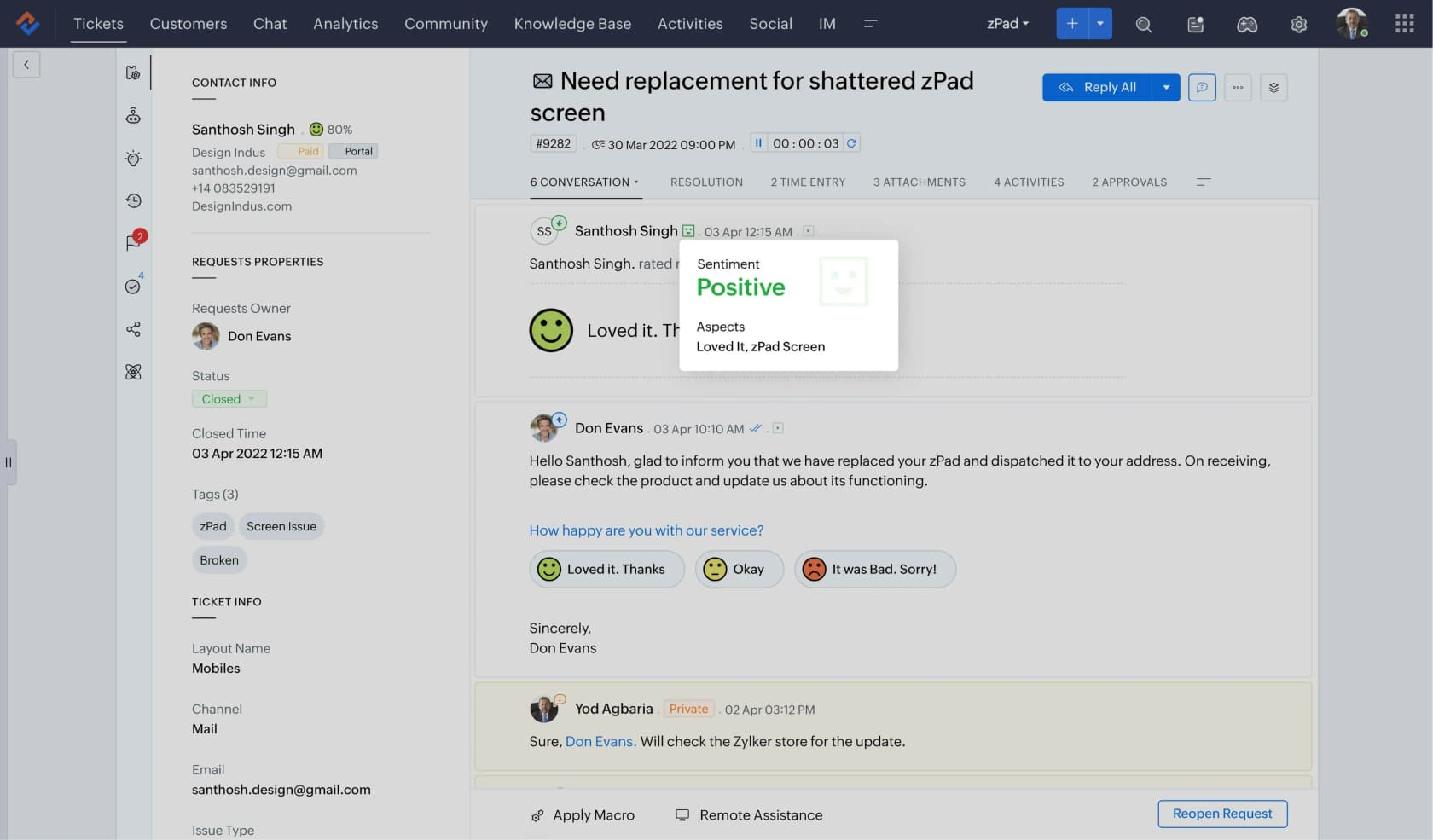
The cheapest credible helpdesk in the category, with a full Zoho ticketing system, a knowledge base, multi-department routing and Zia as the built-in AI. It is also the only tool here where AI does not have its own meter.
Where it beats Gorgias
Price, by an order of magnitude, and a free tier that actually exists. Zia moved down to the Professional tier in 2026 (it used to be Enterprise-only) and the answer bot starts at Standard, so you get AI at $14-$23 per user rather than as a usage line. Our Zoho Desk AI review and the Gorgias vs Zoho Desk comparison have the detail.
Where it falls short
Ecommerce depth is thin, the UI carries the usual Zoho density, and there is no published per-prediction rate or add-on SKU for Zia, which sounds good until you need to know what happens at high volume. Nothing is contractually guaranteed on throughput.
Pricing
Free, Express $7, Standard $14, Professional $23, Enterprise $40 per user per month. Zia is bundled from Professional.
Verdict
If budget is the binding constraint and Shopify actions are not, this is the most defensible cheap answer in the list.
How to actually choose
The Reddit consensus on this question is better than most vendor guidance, and it has been stable for two years. From an r/CRM thread comparing Zendesk and Gorgias directly:
"I've been around ecommerce for 10+ years and this is honestly how I'd choose: 40%+ tickets need Shopify actions → I'd lean Gorgias. Mostly conversational support → Zendesk is fine."
That is the first fork and it still holds. Here is the second one, which the threads mostly miss.
Count how many of your tickets need a Shopify action. Refunds, cancellations, order edits, address changes. If that is over 40%, an ecommerce-native tool earns its premium and you are choosing between Gorgias, Richpanel and Re:amaze. Under 40%, the general helpdesks are live options and you should be looking hard at Zendesk pricing and Freshdesk.
Then ask what you are actually trying to fix. If the answer is "the inbox is wrong for us," migrate. If the answer is "the automation costs too much and does not do enough," that is a different problem and migrating is an expensive way to not solve it. On the same Reddit thread, one operator summed up the Gorgias objection as pricing creep rather than product failure:
"Gorgias is awesome if you're super deep into Shopify workflows... The downside is the price adds up quick once your volume grows."
Finally, model the meter, not the plan. Run your own numbers through the calculator at the top of this post. A team at 2,000 conversations with 40% automation sees a very different ranking than the same team at 8,000 conversations with 60% automation, because the plan boundaries and the overage rates move in different directions.
Want AI on Gorgias without leaving Gorgias?
If the honest answer to "why am I researching Gorgias competitors" is the $1.50 interaction meter rather than the inbox, you do not need to migrate anything. eesel connects to Gorgias in a few minutes, trains on your help centre, your past tickets and your existing macros, and answers only the ticket types you scope it to — the rest stay untouched for your team, exactly like that supplements ops lead asked for. It bills $0.40 per ticket with no seat fee, and you can simulate it against your own ticket history before it replies to a single customer. Free to try.
The Gorgias objection that has nothing to do with price
One last thing worth flagging, because it does not appear in a pricing table. Gorgias publishes no named SOC 2 or ISO 27001 certification. The pricing FAQ confirms GDPR and CCPA compliance, encryption at rest and in transit, SSO via Google and Microsoft, audit logs and Google Cloud hosting in the US, EU and AU, but there is no named audit cert on the public pages. Audit logs are also Pro-and-above only.
If you are selling into anyone who runs a vendor security review, that is a question you will have to answer, and it is worth asking each competitor on this list the same one before you commit. Kustomer's contractual 99.9% uptime with credits looks a lot more interesting in that light than it does next to a $0.60 rate.
For the rest of the operational detail on the incumbent, our guides on Gorgias assignment rules, Gorgias macros, Gorgias views, Gorgias tags, Gorgias webhooks and the Gorgias API cover what you would be leaving behind, and Gorgias plans compared covers what you would keep paying for.
The short version
Gorgias is still the best Shopify-native inbox, and nothing in this post changes that. What has changed is that the automation on top of it is now a separate purchase decision with its own meter, and once you look at it that way the list of real competitors gets both longer and stranger: Richpanel at ~$0.20 a conversation, Freshdesk giving away 500 sessions a month, Help Scout charging once per conversation no matter how many questions the AI answers, and a whole camp of AI support layers that do not want your inbox at all.
Work out which meter fits your volume shape, then pick the tool. Doing it the other way round is how brands end up migrating twice.
Frequently Asked Questions
Who are Gorgias's biggest competitors in 2026?
Which Gorgias competitor is cheapest?
How much does Gorgias cost compared to competitors?
What is the best Gorgias alternative for Shopify brands?
Can I switch from Gorgias without losing tickets and macros?
Do Gorgias competitors charge per resolution or per ticket?
Is Gorgias AI worth it versus a third-party AI agent?
What is the Gorgias ticket limit and what happens if I exceed it?



Article by
Kurnia Kharisma Agung Samiadjie
Kurnia is a software engineer and writer at eesel AI with two years of SEO experience, writing about AI tools, helpdesk software, and customer support. He pairs a developer's understanding of how these products are built with search-driven research into what actually ranks and resonates with the people searching for them.