

AI for beauty brands works best as two separate jobs: a support AI that answers product, shipping and order questions and hands over anything sensitive, and an optional shade or skin analysis tool on the product page. Automate the questions with a written answer: price, stock, tracking, how to use, return policy. Keep reactions, allergies, refunds and wholesale with a person. At Question Beauty, eesel handled about 990 Gorgias tickets in a month and left the rest to staff with a note. The eesel CLI lets a coding agent upload approved ingredient lists and test questions before go-live.
What does AI for beauty brands cover?
I look at beauty support as two different jobs that people tend to lump together. One is discovery: which shade, which routine, what suits my skin. The other is support: where is my order, can I return this, is this in stock, does it ship to my country. Tools for each exist, and they are built by different companies.
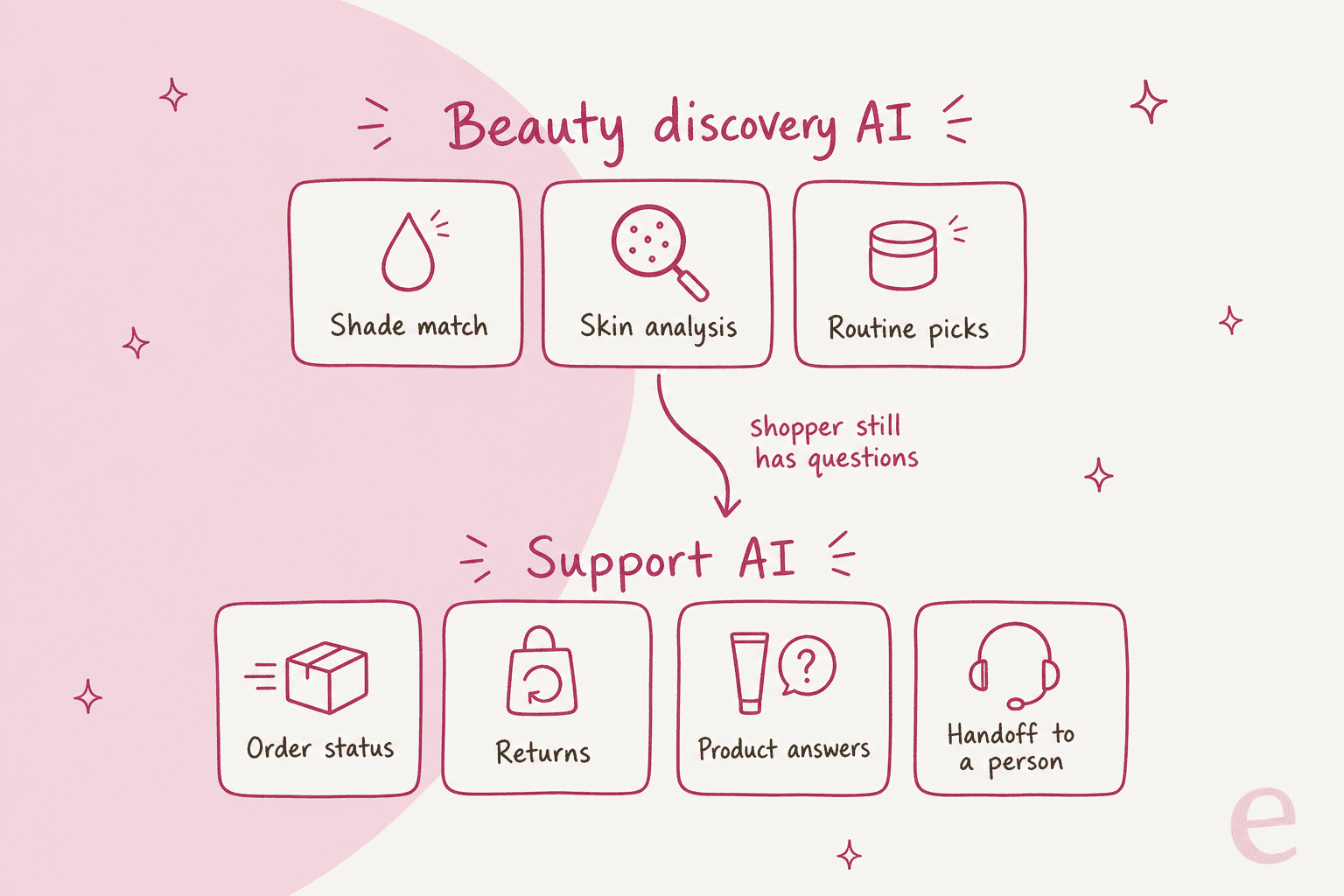
When a shopper finishes a shade quiz and still has a question, they land in your inbox. That is where AI customer service takes over. A small team usually gets the biggest relief from the support lane first, because it is the one filled with repeat questions. The discovery lane is worth adding later, once the inbox is calm.
Most of the volume is not long emails. Question Beauty, a vegan cosmetics brand, describes its volume as mostly short messages from social and chat: how much is this, do you ship to my country, where is my order. They arrive at all hours and in many languages. That shape, short and repetitive and urgent, is what AI handles well.
I heard the same wish from a DTC brand on a sales call (anonymized): they wanted to auto-resolve half their "where is my order", subscription and basic product questions, but their knowledge sat in scattered SOP docs and untranscribed videos. The AI was never the hard part. Getting the answers into one place was.
Which beauty questions can AI answer, and which go to a person?
Here is the sort I would start with. It follows the same priorities ChatGPT surfaces when you ask the question as a buyer would, and it matches what I have seen on live queues.
| Question type | Example | AI should | Hand to a person when |
|---|---|---|---|
| Where is my order | "Has my serum shipped?" | Check the order and tracking, then answer | Tracking is stuck or the parcel is lost |
| Price, stock, shipping | "price?", "do you ship to Canada?" | Answer from the product page, share the link | The answer is not on your site |
| How to use | "Can I use this at night?" | Quote your own usage instructions | The question is about a medical condition |
| Shade help | "Which shade is closest to NC30?" | Share your shade guide and product link | The shopper wants a personal match |
| Ingredients | "Does this contain fragrance?" | Quote the ingredient list exactly | Anything about allergies or reactions |
| Returns | "Can I return an opened lipstick?" | Explain the policy, collect order details | Any refund or exception decision |
| Complaints, chargebacks | "My skin broke out" | Reply briefly, assign, add a note | Always |
| Wholesale, creator and PR | "I'd like to stock your range" | Route to the right person | Always |
If your own team keeps arguing about the bottom rows, read how handoff rules are written and use the same logic. A good handoff includes what the customer asked, what the AI found, and why a person is needed.
To make this concrete for your inbox, try the picker below. It is a sorting aid, not a promise: your policies decide the final answer.
What should AI do with this message?
How did Question Beauty automate its beauty support?
Question Beauty sells vegan, cruelty-free colour cosmetics from a Shopify store and has used eesel on Gorgias since March 2026. CEO Alexander Gregory's team covers support around the clock, so the goal was answering the repeat questions on the spot and keeping people for decisions.
The setup is the useful part. eesel reads about 270 product pages from Shopify, 230 pages from the brand's site and 120 past tickets and macros. It wakes on every new Gorgias message from Messenger, email or chat, tags the ticket by topic, and answers in the language the customer wrote in. For order and delivery questions it checks Shopify first: the order, fulfilment status and tracking.
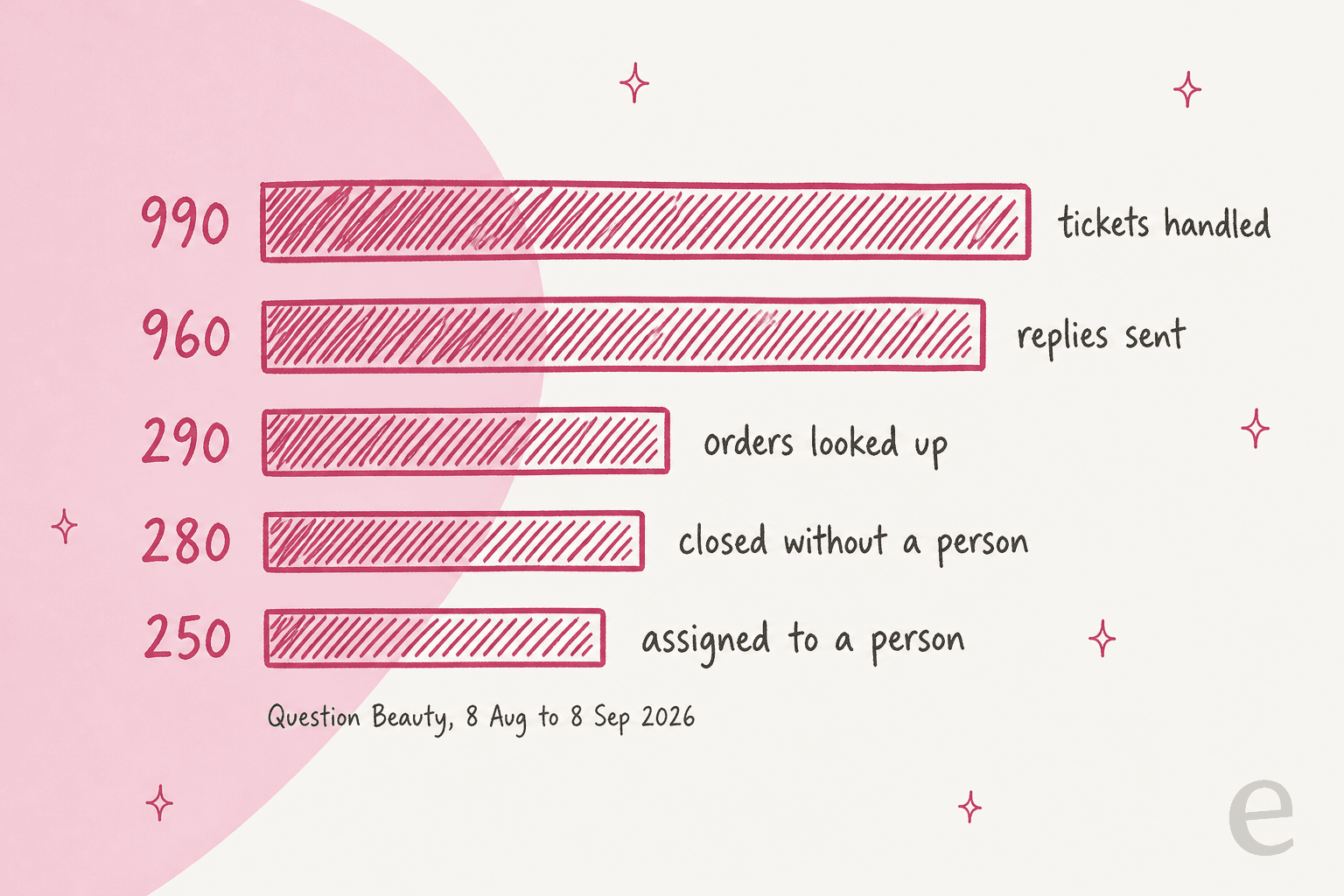
Between 8 August and 8 September 2026 eesel handled about 990 Gorgias tickets, sent about 960 replies directly, looked up about 290 Shopify orders, closed about 280 tickets without a person and assigned about 250 to staff, leaving about 370 internal notes. The rule that mattered most: it answers only from what it can find, and does not add claims about products the customer did not ask about. A price comes from the current product page, or it shares the link.
Refunds, returns, complaints, chargebacks, reactions to a product, wholesale and creator or PR requests all go to a person. eesel replies briefly, assigns the ticket and leaves a note with what the customer asked and what it found in Shopify. That sort order is the whole idea of this post, in one real store.
How do shade matching and skin analysis tools fit in?
Support AI does not look at a face. Shade finders and skin analysis tools do, and they sit on your product page or app, not in your inbox. I checked the vendors' own pages, and three show up again and again.
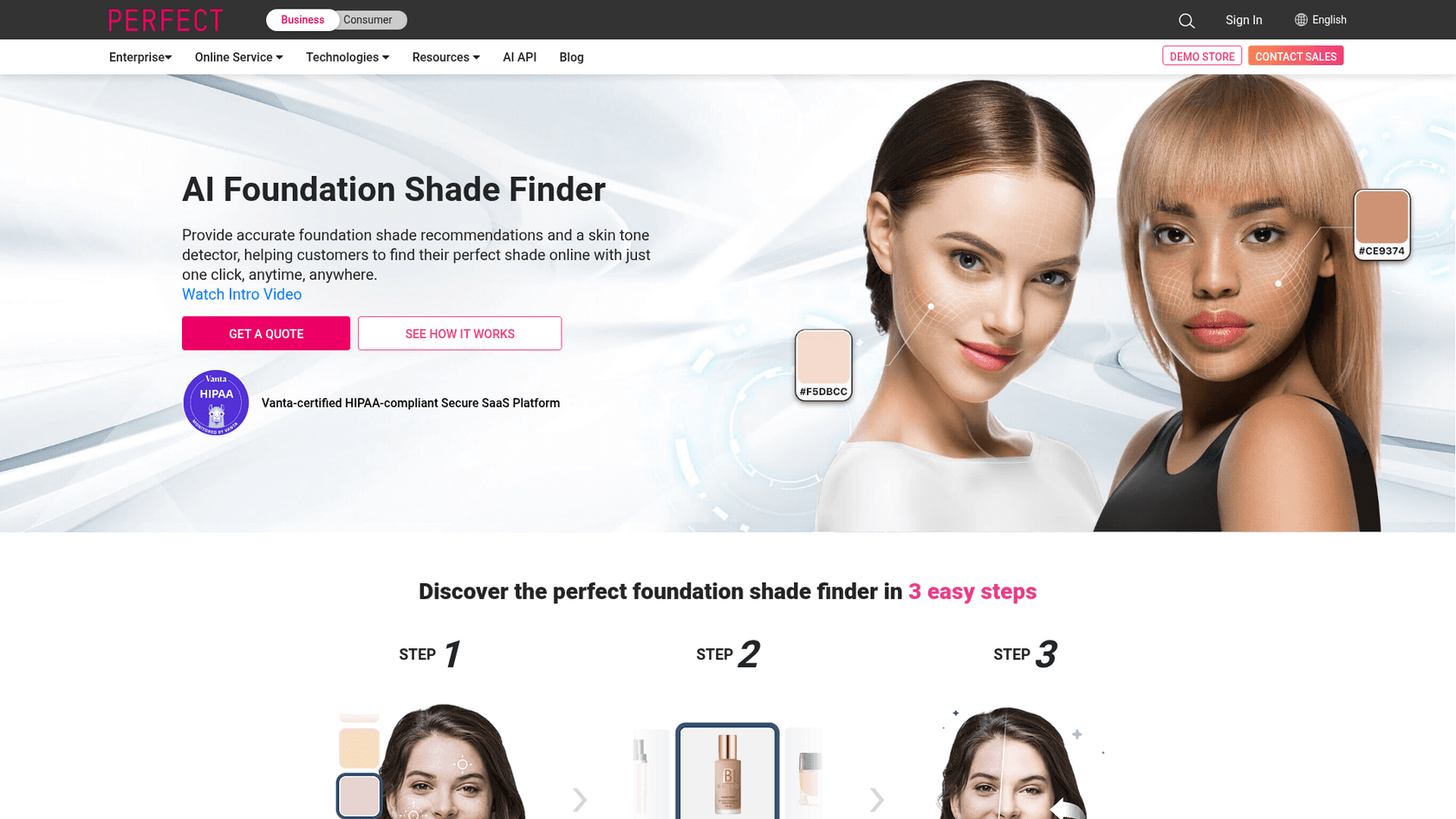
Perfect Corp sells an AI Foundation Shade Finder that gives shade recommendations and a skin tone detector, plus a Perfect Beauty Agent, AR makeup try-on and AI skin analysis. It is aimed at brands and retailers, with a quote-based "Get a quote" flow rather than public pricing.
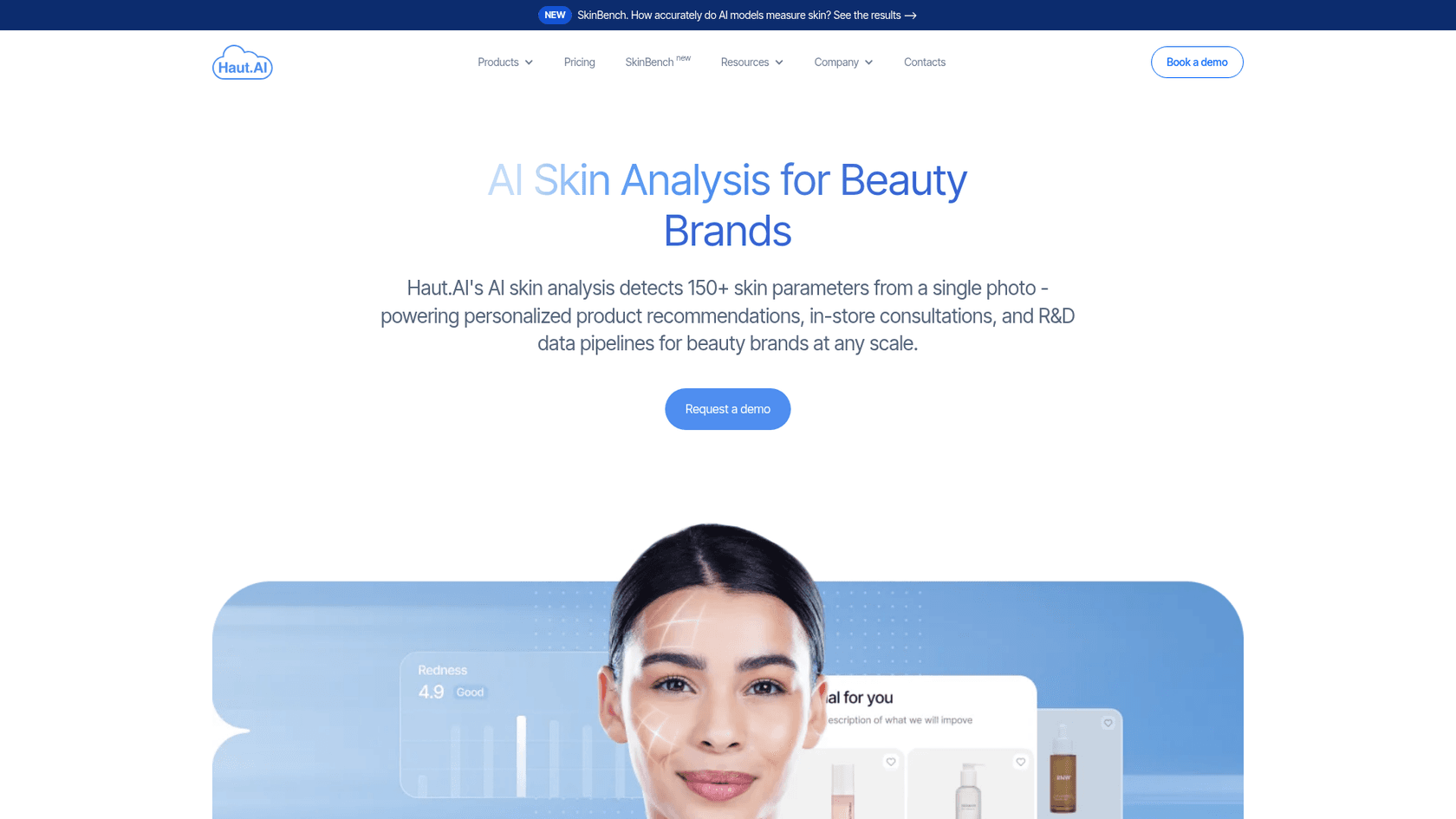
Haut.AI says its analysis detects 150+ skin parameters from a single photo. It offers a no-code Skin Consultant App delivered as an iframe or link, or an API your own site or app calls server-to-server. Its page lists Beiersdorf and Ulta Beauty among 100+ brands.
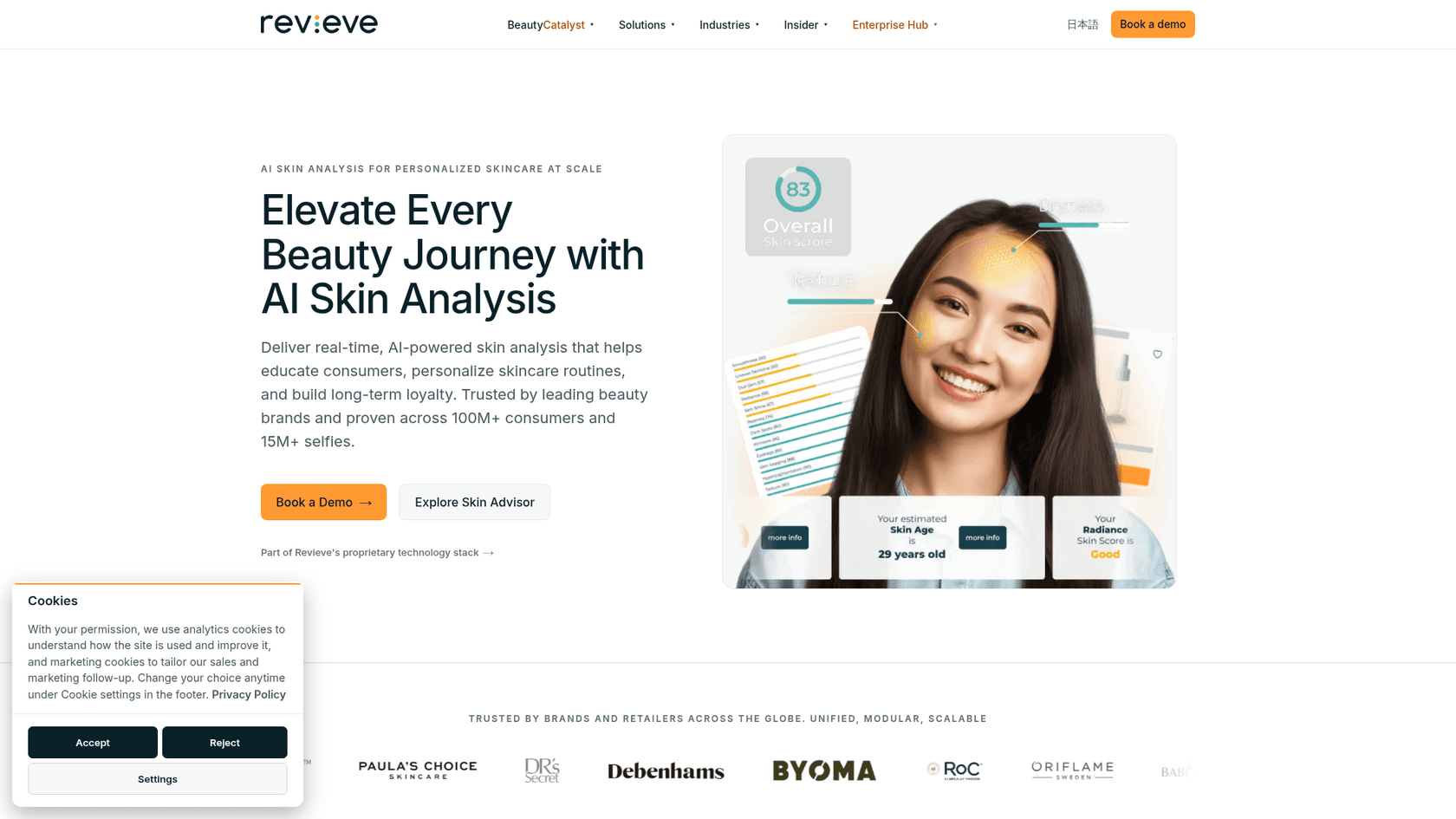
Revieve describes AI skin analysis across 200+ facial and skin health metrics, drawn from what it says is over 100M consumers and 15M selfies. Shoppers take a selfie and get guidance on skin type, hydration and sensitivity, with a skin advisor on top.
My view: these are conversion tools, not inbox tools. They help a shopper pick before checkout. They do not answer "where is my order", and they should not replace a person on a skin reaction. For a small team I would fix the inbox first. If you add a shade tool later, link its results page in your support answers so the two stay consistent.
How do I keep ingredient and skin answers safe?
The rule I give every beauty brand: the AI quotes, it does not advise. ChatGPT's own answer to this question lands in the same place: don't diagnose skin conditions, don't promise an ingredient is safe for everyone, use verified product information, and refer medical questions to a human.
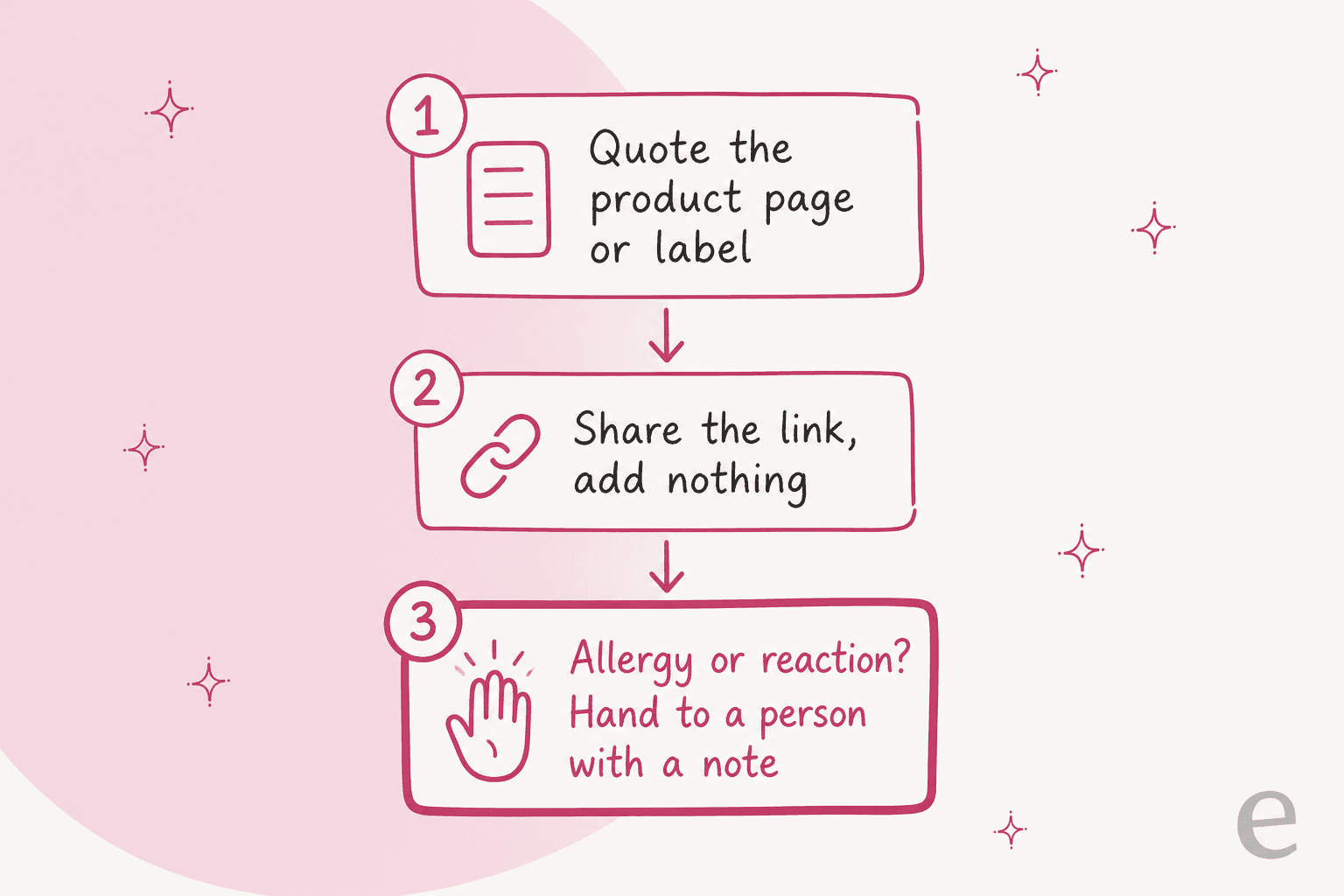
In practice that means three things. First, the AI answers ingredient questions by copying your ingredient list, exactly as written on the product page. Second, if a customer mentions a reaction, an allergy, pregnancy or a skin condition, the AI stops, replies briefly and assigns a person with a note. Third, it never adds a claim you did not publish. Question Beauty's setup does exactly this: no extra claims, and reactions go to staff.
You can test this before it is live. Simulation testing against your own past tickets shows how the AI answers the awkward ones. And a knowledge base audit catches the page that still says "paraben-free" after a reformulation. For a deeper look at stopping an AI from making things up, see hallucination prevention.
Which helpdesk AI fits a beauty brand?
Most beauty brands on Shopify already run a helpdesk, and the lowest-friction move is adding AI there. I checked the vendors' own pricing pages.
| Option | AI offer | Price shape (vendor pages) | Fits when |
|---|---|---|---|
| Gorgias | AI Agent on every plan, pay when it resolves | Helpdesk from $10/mo for 50 tickets, $0.40 per extra ticket; $1.50 per automated interaction past the included amount | You are on Shopify and want helpdesk and AI on one bill |
| Zendesk | AI agents billed per automated resolution | Per automated resolution, with included, committed or pay-as-you-go amounts | You want a large, configurable platform |
| Tidio | Lyro AI Agent in chat | Free plan with 50 billable conversations and 50 one-off Lyro conversations; Growth starts at $300/mo plus usage | You want website chat first |
| eesel | AI teammate inside your helpdesk | $299/mo for 500 credits, a ticket or chat is 1 credit, extra credits $0.80 | You want it to join the existing helpdesk and queue |
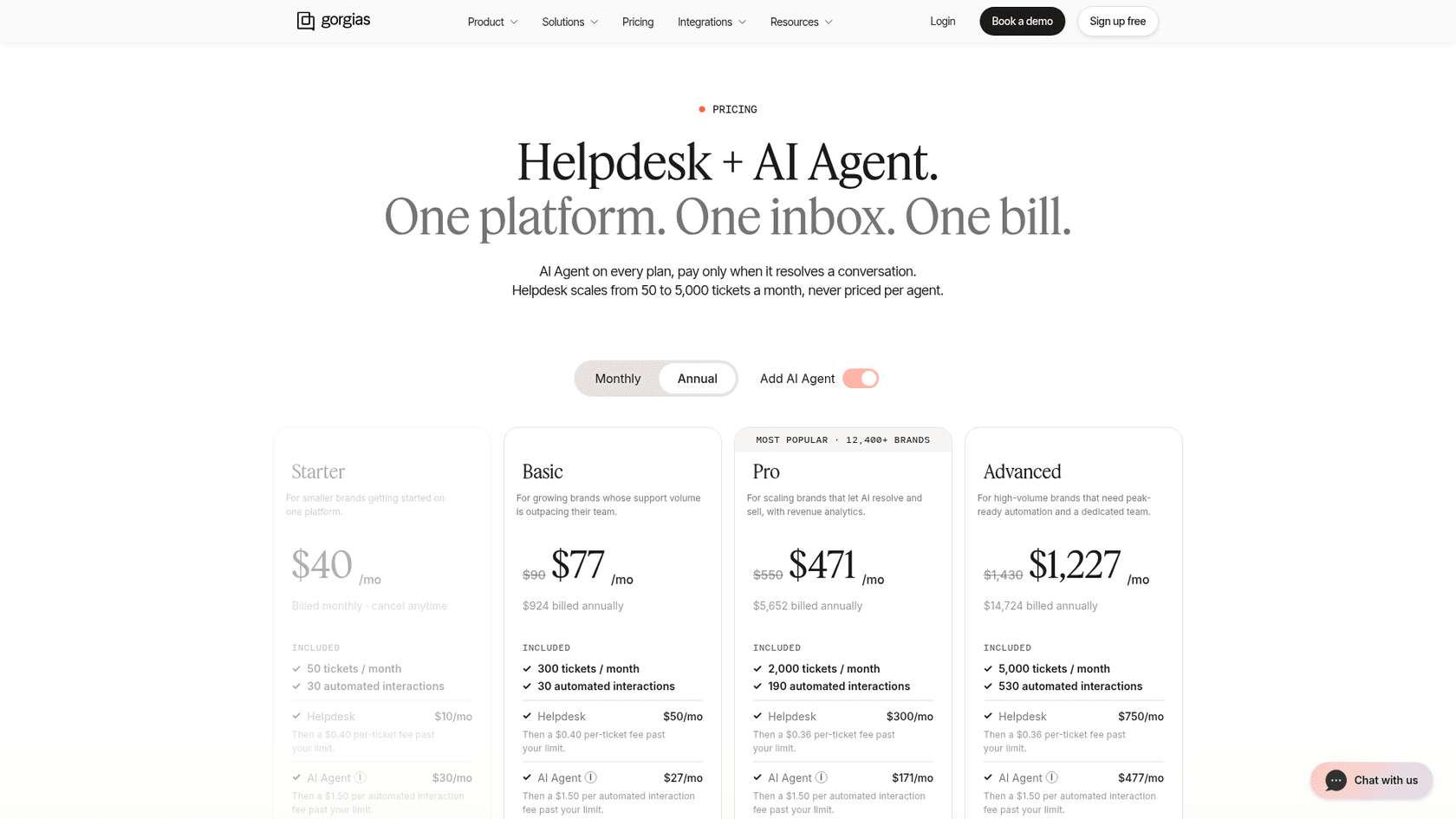
Gorgias is the native choice for Shopify brands: its AI Agent is on every plan and, per its pricing page, you pay when it resolves a conversation. That is attractive at low volume. At higher volume the per-interaction fee is something to model, so I would compare it with Gorgias alternatives for Shopify and a look at Gorgias AI Agent pricing before committing.
Zendesk suits teams that need deep configuration across channels. It defines an automated resolution as a request the AI fully resolves without escalation, and bills on that. Its AI pricing is worth a read before you scale, and the Gorgias versus Zendesk comparison covers the ecommerce side.
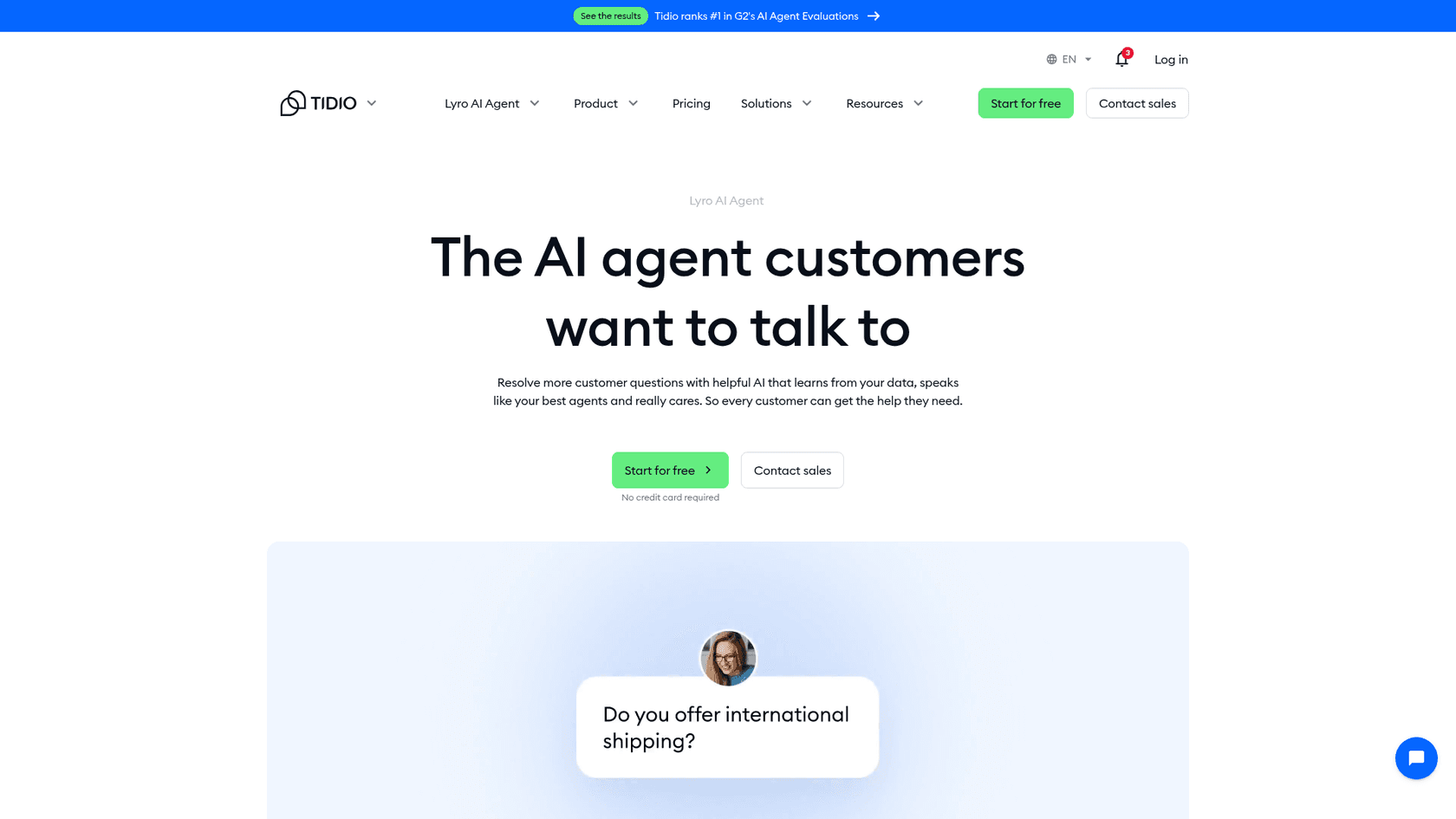
Tidio is the easiest way to put an AI on a website chat. Its Lyro page highlights handoff and escalation rules, so you can send sensitive topics to a person. See Tidio pricing and Gorgias versus Tidio if chat is your main channel.
eesel is where I would send a brand that already has a helpdesk and wants the AI to behave like a new hire in the existing queue. It joins Gorgias or Zendesk, reads your product pages, past tickets and macros, checks Shopify, and hands over with a note. At Question Beauty that meant 990 tickets in a month. It is not a shade finder, and it does not diagnose skin.
What about Instagram, TikTok, WhatsApp and email?
Shoppers ask beauty questions where they found the product: under a TikTok, in an Instagram DM, on WhatsApp. ChatGPT's channel list for this question is website, Instagram, WhatsApp, email, live chat, TikTok and Facebook Messenger.
The practical question is whether the channel feeds your helpdesk. If a DM becomes a ticket, the AI can answer it like any other. Question Beauty runs Messenger, email and website chat into Gorgias. For WhatsApp, see WhatsApp support automation and the WhatsApp AI chatbot guide. Treat any social channel your helpdesk cannot ingest as a manual queue and plan staffing for it.
Two habits matter here. Read short messages as buying intent: "price?" or "link" deserves a direct answer and a product link, not a clarifying question. And answer in the language of the customer. Question Beauty's tickets arrive in many languages, and multilingual support is a standing feature of how its agent replies.
What about a B2B beauty supplier?
If you sell to salons and studios, the questions get more specific, and the stakes are bigger per order. Beautek, a German supplier of equipment for beauty, hair, tattoo and medical studios, has been in business since 2006 and has used eesel since May 2026.
On its website chat, eesel answers product and order questions live, in German. After an identity check it reads order status, tracking and open payment from Beautek's own order system. Quote and consultation requests become Zendesk tickets tagged as sales leads. On Zendesk tickets it drafts the reply and a person sends it, which suits a team that gives real advice by phone from 8:30 to 16:30 on weekdays.
Between 8 August and 8 September 2026, eesel drafted about 110 Zendesk tickets, answered 77 website chats live and created 20 Zendesk tickets from chat, mostly sales leads. It answers from about 6,700 pages and documents across beautek.de, supplier brand sites, Zendesk, Google Drive and Notion. The lesson for B2B: drafts for a person to send are a good first step, and chat that creates a qualified ticket is a good second.
How do I roll this out in a week?
Here is the order I would use on a small beauty team. It takes roughly a week of part-time effort, mostly spent on step one.
- Collect the answers. Gather product pages, ingredient lists, shade guides, shipping and return policy, and your best macros. Fix anything outdated.
- Connect the helpdesk and store. Link Gorgias or Zendesk and Shopify, so order lookups use real data. Someone with admin access has to approve this.
- Write the handoff rules. Use the table above: reactions, refunds, complaints, wholesale and creator requests always go to a person with a note.
- Test on past tickets. Run old questions through and check every ingredient and returns answer.
- Go live on one channel. Start with the one that has the shortest messages, often social or chat. Review the notes daily for two weeks.
For teams who like working from a terminal, the eesel CLI lets an AI coding agent upload approved knowledge, such as ingredient lists, shade guides, the return policy and macros, and then ask test questions and check the answers before anything goes live. Connecting the helpdesk itself still needs someone with admin access to approve it.
Seasonal peaks deserve a plan too: launches, Black Friday and gifting season tend to flood the inbox. Weekend coverage and first response time are the two numbers I would watch. If your support runs multiple brands, multi-brand support shows how to keep each one's answers separate.
Try eesel for beauty brands
If your beauty inbox lives in Gorgias or Zendesk, eesel works like a new hire that reads your product pages and past tickets, checks the order in Shopify before it answers, and hands reactions, refunds and wholesale to your team with a note. Question Beauty runs it on Gorgias and Shopify; Beautek runs it on Zendesk and its website chat. There is a free 7-day trial with no card, and plans start at $299 a month. Try eesel.