

AI for consumer electronics brands works when it answers only from your own specs and manuals, and prepares cases instead of deciding them. Start with compatibility, setup and order tracking questions, then add returns and warranty intake. A wrong compatibility answer becomes a return, so every answer should trace to a spec sheet, and anything unlisted should go to a person with a note. At Innr, a smart lighting maker, eesel prepared about 190 Freshdesk tickets in a month and left warranty claims to staff.
Why do electronics brands need a different support AI?
I work in the support queue every day, and hardware inboxes have a shape I recognise. The questions are specific: does this work with my phone, why will it not pair, where is my order, can I return it, is it still under warranty. Each one has a right answer that sits in a spec sheet or manual, and a wrong answer costs a shipped parcel coming back.
That is why I would not treat this as a generic chatbot job. AI customer service for a headphone, speaker or smart home brand has two rules. It answers from your documents, not from general knowledge, and it hands over with the case prepared when the documents do not cover the question. ChatGPT, asked how a buyer would approach this, landed on the same design: one agent connected to product knowledge, the store, the warranty process and a human team.
With the eesel CLI, an AI coding agent can upload approved knowledge, such as exported manuals, compatibility tables and return policy pages, then ask test questions and check the answers before anything goes live. Connecting the helpdesk itself still needs someone with admin access to approve it.
Which electronics questions can AI answer, and which go to a person?
This is the sort I would start with. It follows the job list ChatGPT surfaced for this question and the way hardware queues tend to split.
| Question type | Example | AI should | Hand to a person when |
|---|---|---|---|
| Compatibility | "Does it work with my phone and Alexa?" | Quote the model's spec sheet | The model or setup is not listed |
| Pairing and setup | "It will not connect to Bluetooth" | Walk through your own setup guide | Steps fail, or it looks like a hardware fault |
| Order tracking | "Where is my order?" | Check the order and carrier, then answer | Tracking is stuck or the parcel is lost |
| Accessory questions | "Which charger fits this?" | Answer from the product page | The pairing is not documented |
| Returns | "Can I send it back?" | Explain the window, collect the order number | Any refund or exception decision |
| Warranty claims | "It stopped working after four months" | Collect serial, proof of purchase, photos, fault | Always: eligibility is a person's call |
| Complaints, chargebacks | "This is the second faulty unit" | Reply briefly, assign, add a note | Always |
The picker below is a sorting aid, not a promise: your own policies decide the final answer.
What should AI do with this message?
How should AI answer compatibility questions?
Compatibility is the question that costs most when it is wrong. Buyers ask about phone models, Android and iOS versions, Bluetooth versions, Wi-Fi bands and smart home ecosystems such as Alexa, Google Home, Apple Home and Matter. If the AI guesses "yes" and the unit does not work, you have a return, a refund and an annoyed customer.
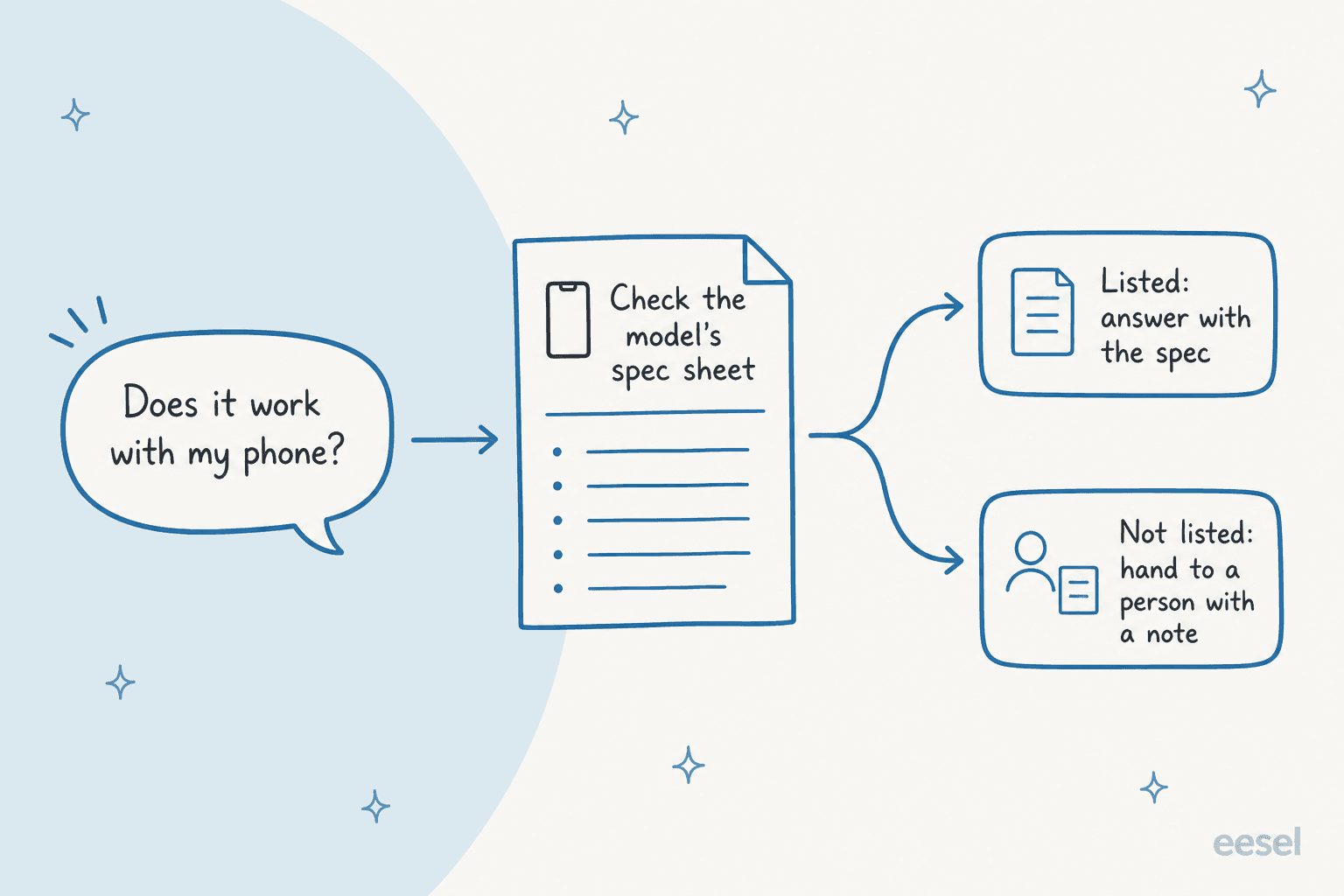
The rule I would set is simple: the AI answers a compatibility question only if the model and the claim are written in your own documents. If the spec sheet lists the phone or ecosystem, it quotes it. If not, it says it cannot confirm and hands over with the model, the phone and the question in the note. That is the same idea ChatGPT gave for an "electronics support specialist": retrieve answers rather than guess.
A technical evaluator at a hardware company asked this on a sales call (paraphrased, anonymized): does the AI fall back on general ChatGPT knowledge when it does not know, and can that be turned off? That is the right worry. A knowledge base audit matters here, because an old spec page that still lists last year's firmware is a wrong answer waiting to happen.
How do I automate pairing and setup help?
Setup questions are where an electronics inbox fills up, and the answers are usually already written. Innr makes Zigbee smart bulbs, strips and plugs in the Netherlands. Its customers write in Dutch, German, English and French with questions such as which bridge they need, why a bulb will not pair, and why lamps drop off.
eesel runs on Innr's Freshdesk. It reads about 1,500 help center articles and past tickets, skips marketplace, courier and sales-pitch mail, and drafts the reply as an internal note in the customer's language. A person reads and sends it. Between 8 August and 8 September 2026 it prepared about 190 tickets, left about 450 internal notes and wrote about 180 drafts.
Two details are worth copying. First, it searches the help center before drafting, and if the help center does not cover the question, it says so and hands over rather than guessing. Second, a lamp that stops working after days or weeks is treated as a hardware issue: one quick test, then the return process, asking for the order number as proof of purchase. Warranty claims, billing, order status and bulk orders go to a person with a note saying why.
Setup answers are also where ticket classification pays off, because "will not pair" and "arrived broken" look similar in the first line and need different handling.
How does warranty claim intake work?
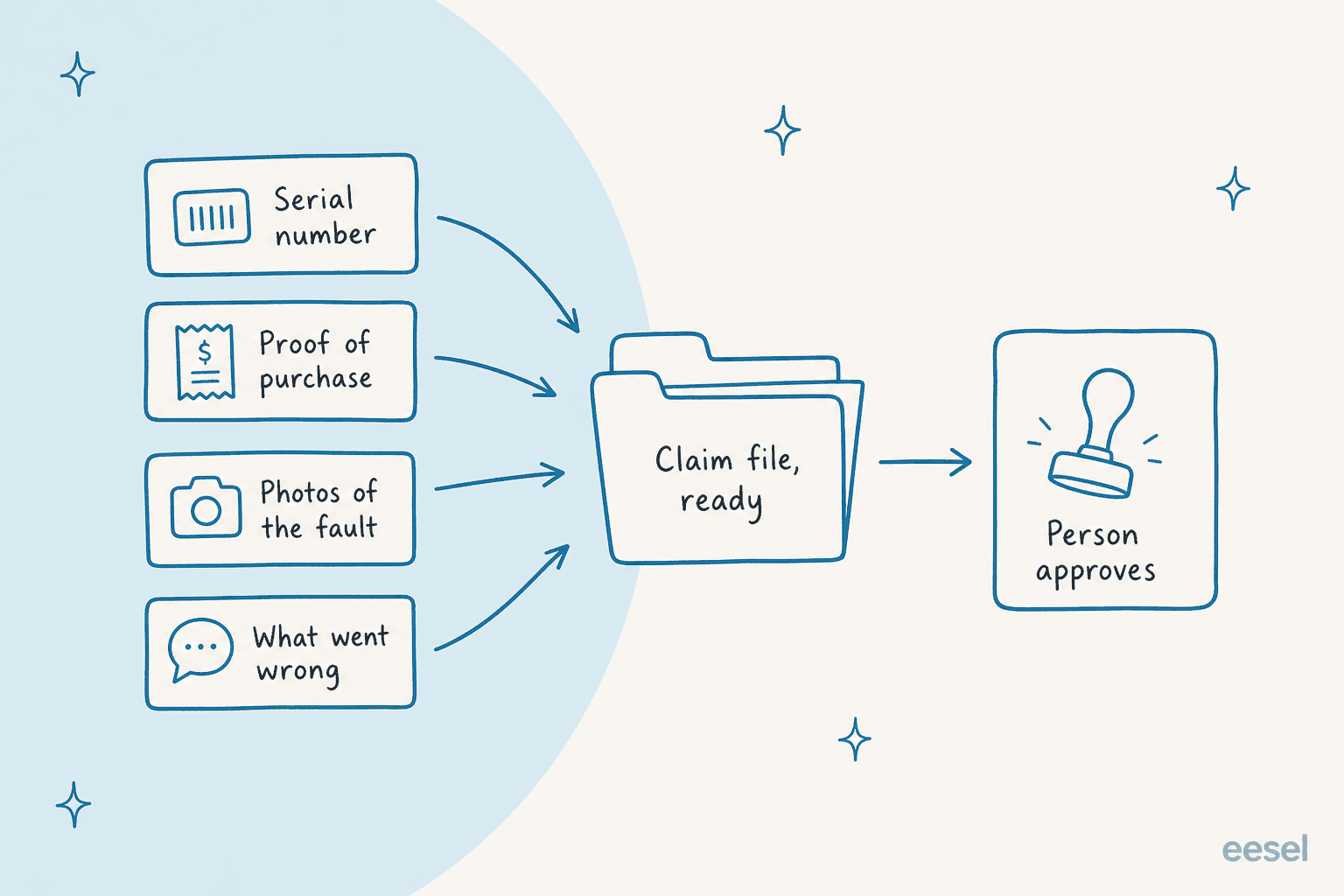
Warranty is the job to prepare, not to decide. The AI asks for what a person needs to decide quickly: the serial number, the date and proof of purchase, photos of the fault and a short description of what went wrong. Then it hands over a complete case.
Photos matter more than people expect. Koffer.ch, a Swiss luggage shop on Freshdesk, gets damage claims where a person has to look at pictures and the order. Its eesel setup drafts a reply for every claim that tells the customer what was received and what happens next, and the team takes it from there. Gorgias documents that its AI Agent reads images customers share, such as photos of damaged items, which suits this intake step.
In an anonymized trial on a Zendesk and Shopify inbox for a jewelry store, warranty-claim drafts were useful 96.4% of the time, but the trial also found a 7% factual error rate. I read that as the reason for the approval step: the draft saves time, the person catches the error. See AI for warranty claims for the wider pattern.
What about order tracking and returns?
These are the easiest wins. "Where is my order" needs an order lookup and a carrier status, not judgement. AI for order tracking covers the lookup, and shipping delay messages let you answer before the customer asks.
Returns are a half step further. The AI can explain your window, ask for the order number and the reason, and start the return form. For electronics I would keep one rule: if the reason is "stopped working", route it through the warranty path, not the standard return path. AI for returns management and AI for refund requests show the approval pattern. Before a launch or a holiday peak, plan for seasonal spikes too.
Which AI platforms fit an electronics brand?
I checked each vendor's own pages. Prices below are what those pages list.
| Option | What the vendor says | Price shape (vendor pages) | Fits when |
|---|---|---|---|
| Gorgias | AI Agent on every plan, email, chat, SMS, Instagram, Messenger, WhatsApp, Shopify-based | AI Agent from $30/mo on Starter, $1.50 per extra automated interaction | You are on Shopify and want helpdesk and AI on one bill |
| Zendesk AI agents | Chatbots on messaging, email and voice, acting in authorized systems | $1.50 per committed automated resolution, $2.00 pay-as-you-go | You want a large, configurable platform |
| Ada | Enterprise platform, voice, email, chat, WhatsApp, SMS, Instagram | Quote-based, custom demo | You have high volume and many languages |
| Siena | "AI CX operating system for consumer brands" | $750/mo platform fee plus $0.90 per ticket in the Automation Pack | You are a consumer brand wanting a managed AI |
| Yuma | Ecommerce agents, billed only for full resolutions | Starter $14,400/yr (about $1.20 per resolution), 12-month commitment | You want to pay only when a ticket is fully resolved |
| eesel | AI helpdesk teammate inside your existing helpdesk | $299/mo for 500 credits, a ticket or chat is 1 credit | You want it to join your current queue and hand over with notes |
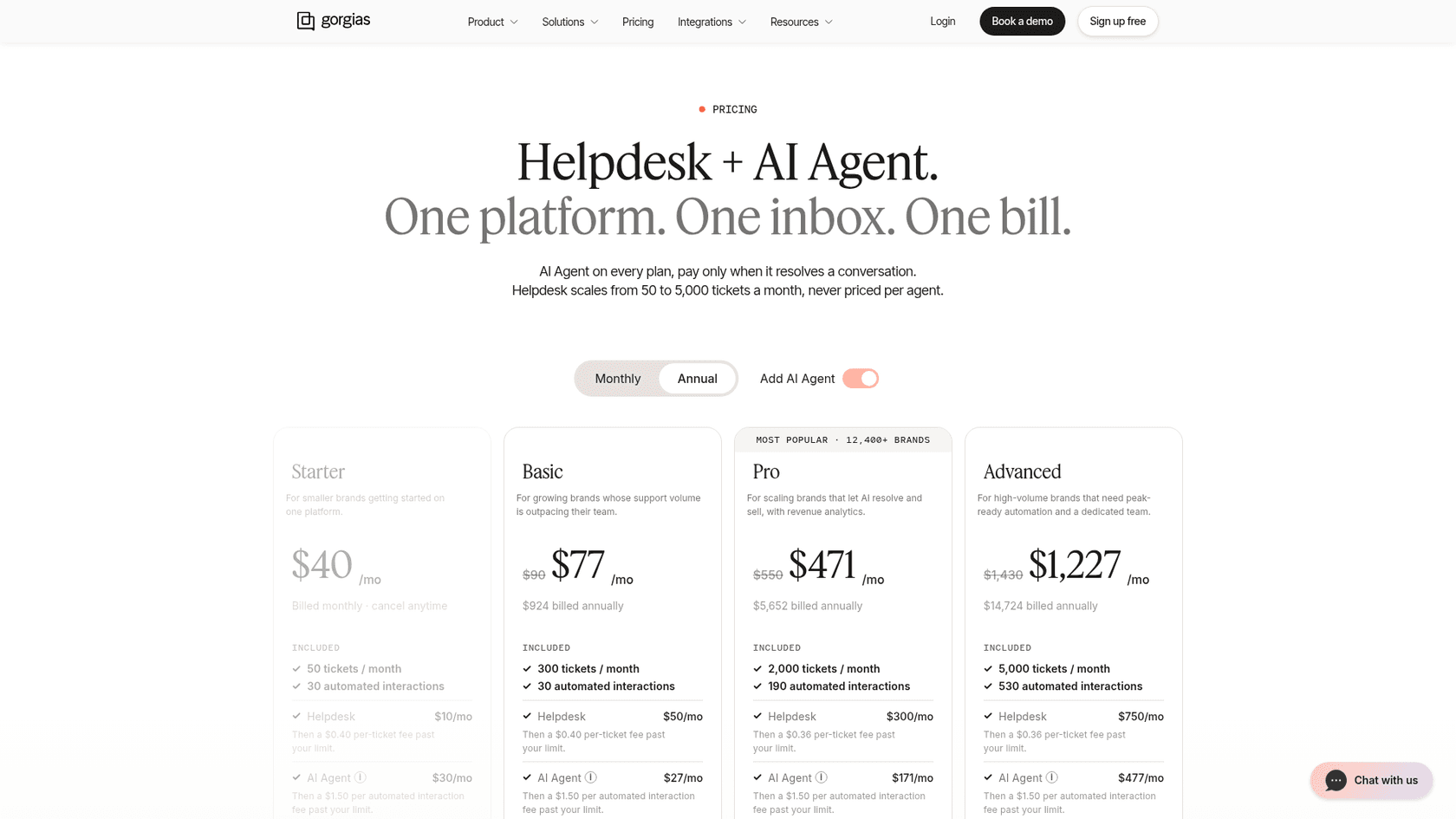
Gorgias is the native choice for Shopify brands. Its docs describe skills, knowledge and opt-in actions such as processing a return, plus handover when it cannot confidently respond. See Gorgias AI pricing and Gorgias versus Siena.
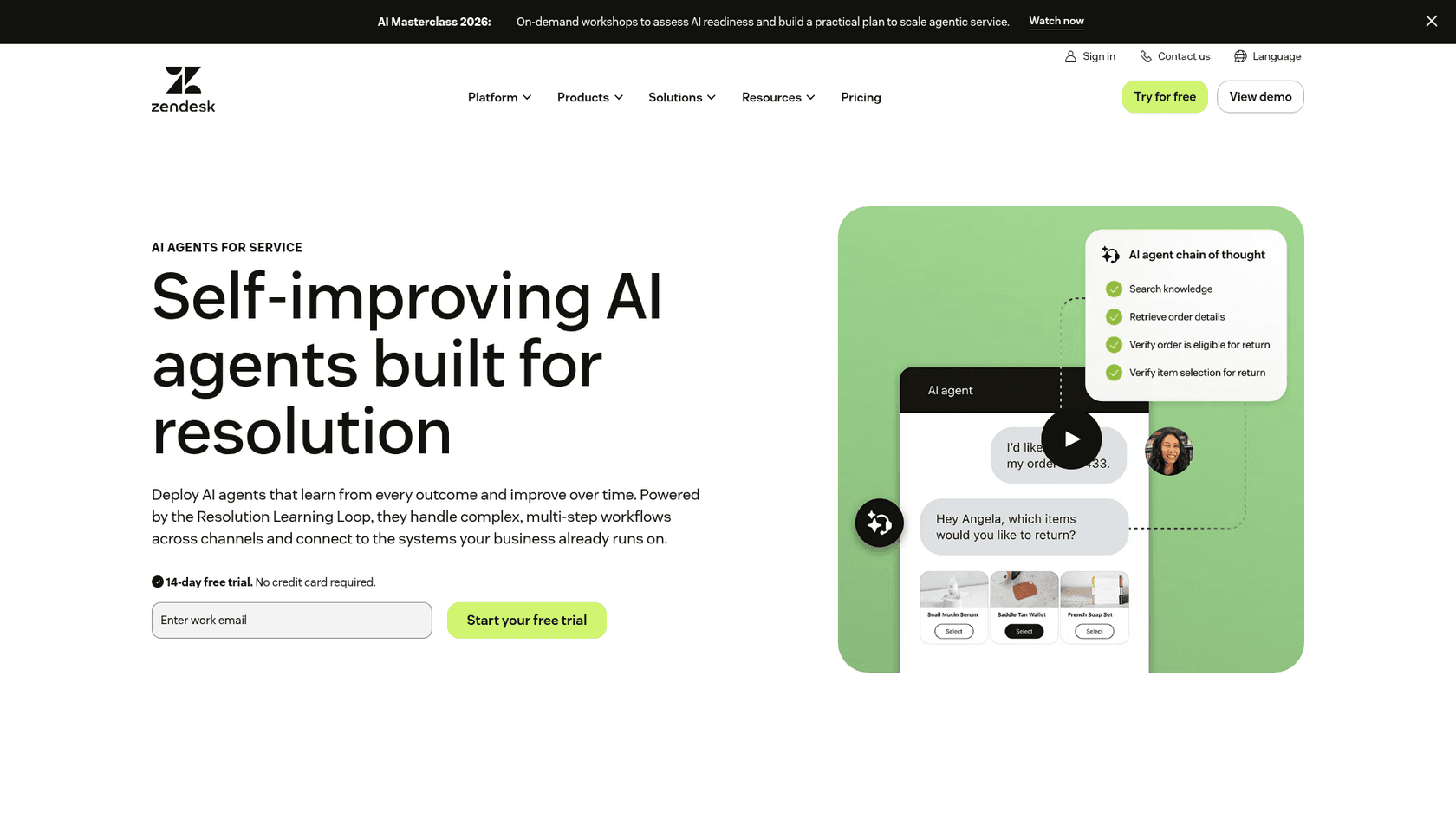
Zendesk defines an automated resolution as a request the AI resolves without escalation, and bills on that. Its AI pricing is worth modelling before you scale. Ada sells on a demo, so see Ada pricing and Ada alternatives when you compare.
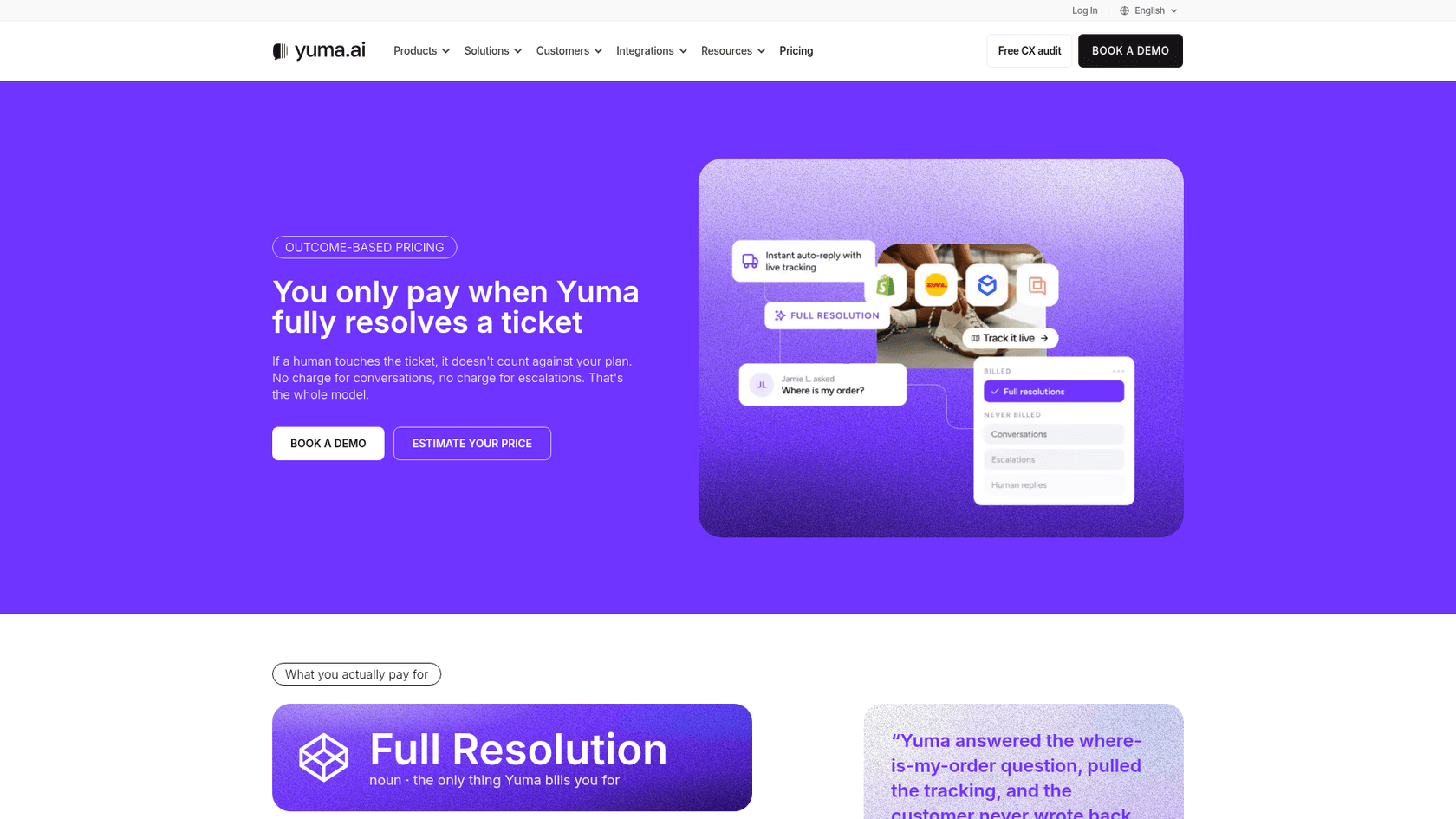
Yuma and Siena both focus on consumer and ecommerce brands. Yuma also lists an on-product-page question widget that covers compatibility. For detail, see the Yuma review and Siena review, plus Gorgias versus Yuma.
eesel is where I would send a brand that already runs a helpdesk and wants an AI teammate that reads its manuals and past tickets, checks the order, drafts or replies, and hands over with a note. It is not a product-page recommendation engine, and it does not approve warranties.
What should I automate first?
Here is the order I would use. It follows the phased roadmap ChatGPT proposed and matches how risk grows.
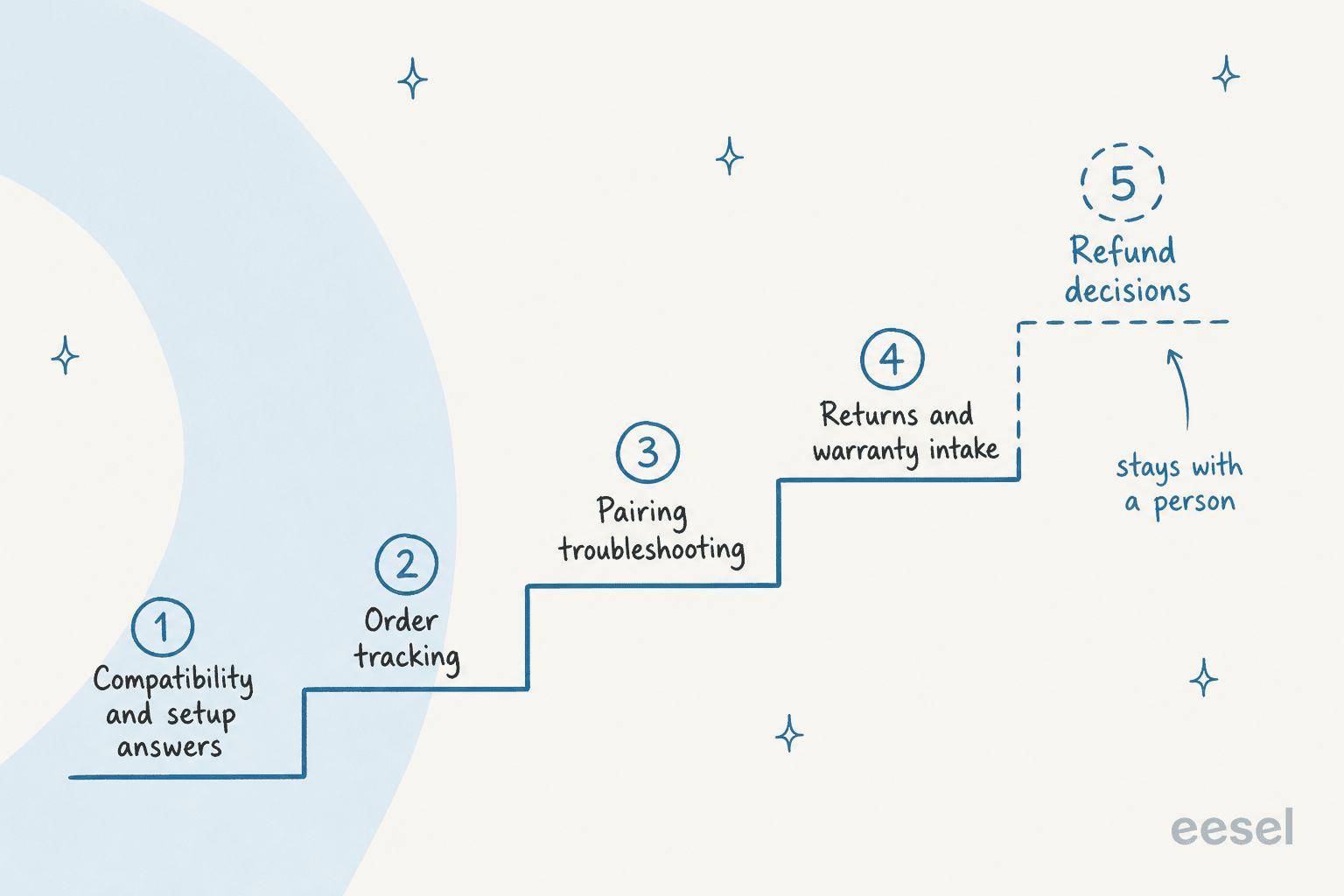
- Collect the answers. Gather manuals, spec sheets, compatibility tables, setup guides and return and warranty terms. Fix anything outdated.
- Connect the helpdesk and store. Someone with admin access approves this.
- Write the handoff rules. Warranty decisions, refunds and repeat faults always go to a person. See handoff practice.
- Test on past tickets. Run old compatibility and pairing questions through and read every answer.
- Go live on one channel, review the notes daily for two weeks, then add the next job.
If you serve several countries, multilingual support and weekend coverage are usually the next gaps.
What should I measure?
Keep it to a few numbers. ChatGPT's list is a fair start, with one addition for hardware.
- Resolved without a person. See AI resolution rate. Treat any "60 to 80%" figure as a pilot target to validate, not a promise.
- Compatibility accuracy. Sample answers weekly against the spec sheet. This is the one that predicts returns.
- Wrong escalations, both too many and too few.
- First response and resolution time. See first response time and support metrics.
- Cost per resolved conversation, and customer satisfaction on the AI-handled tickets.
Try eesel for consumer electronics brands
If your inbox lives in Gorgias, Zendesk or Freshdesk, eesel works like a new hire that reads your manuals and past tickets, checks the order before it answers, and hands warranty claims to your team with the case prepared. Innr runs it on Freshdesk for smart lighting and Koffer.ch on Freshdesk for luggage. There is a free 7-day trial with no card, and plans start at $299 a month. Try eesel.