
What is Ago AI?
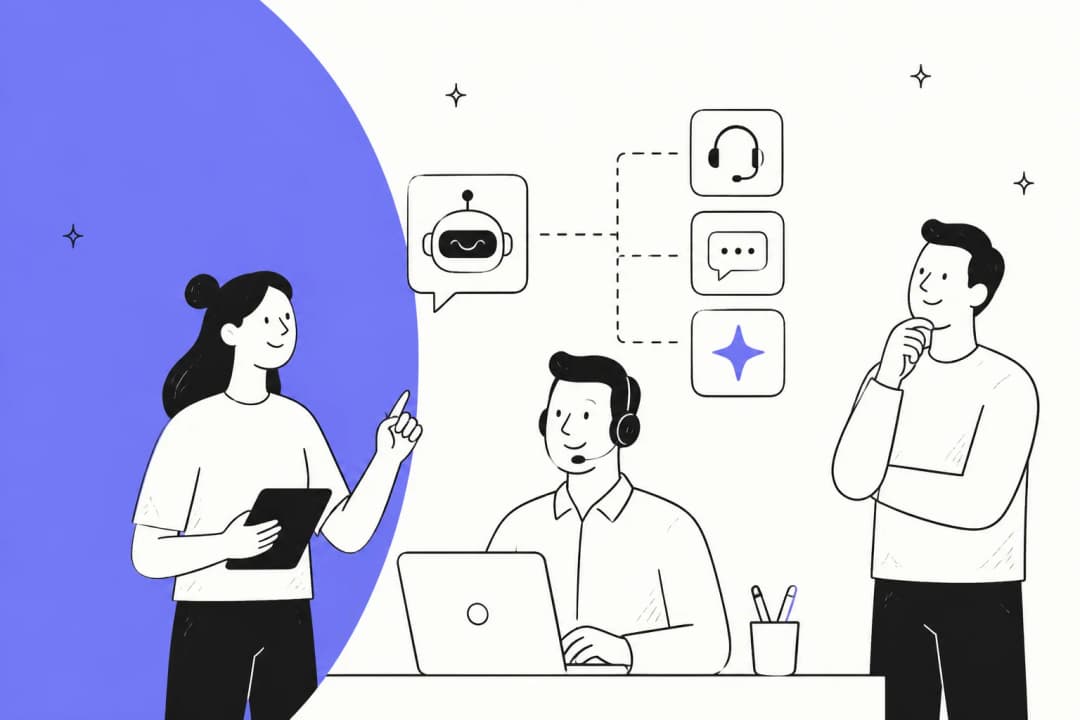
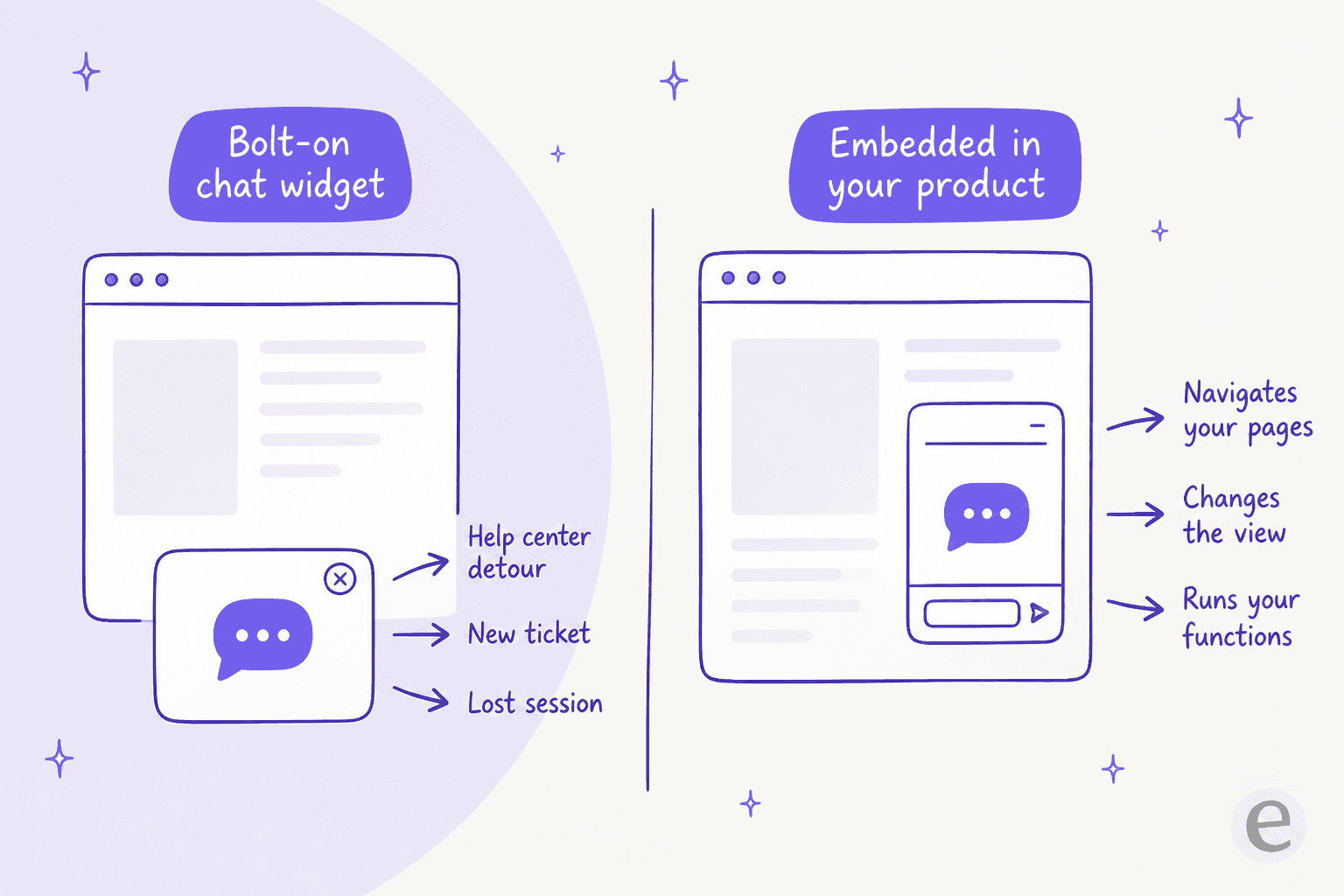
Ago bills itself as "The Customer Agent OS." The core idea, straight from the Ago homepage, is that your customers already live inside your product, so your support agent should live there too. A question becomes a resolved action on the page the customer is already on, with no help-center detour, no ticket, and no lost session.
It was built by two industry veterans, with co-founder Damien Mourot posting regularly about the "resolve, don't reply" angle. The headline claims are strong: a 96% CSAT figure from Mirakl, 800k+ conversations handled, and 70% of tickets resolved by AI. Its Mirakl work was written up by OpenAI, which is a real credibility signal that most tools this size do not have.
Two things separate Ago from the crowd of AI customer support agents. First, it embeds through an SDK rather than a widget. Second, it comes with a service layer: dedicated engineers who build and tune your agent instead of leaving you a dashboard and good luck. I will dig into both, plus the pricing and the gaps.
The pitch: an agent inside your product, not next to it
This is the part that made me sit up. Most AI chatbots are a bubble in the corner. When they cannot answer, they hand you a help article or open a ticket, and you leave the flow you were in. Ago's developer SDK puts the agent inside your app, where it can do three things a normal widget cannot.
- Navigate your routes. Ask "show me my invoices" and the agent actually navigates there, calling your own
navigatefunction so route guards and auth keep working. - Change the page state. "Only the overdue ones, newest first" updates the filters and sort on the screen you are on.
- Run your JavaScript functions. You describe a function with a JSON schema, and when the agent calls it, your handler runs in the browser and the result flows back into the conversation.
The picture below is the cleanest way to see why that matters:
The SDK ships bindings for React, Vue 3, and Angular, plus a plain script-tag option for any site, and it is published on npm as @useago/sdk under an Apache 2.0 license. There is even a coding-agent install path: point Claude Code, Codex, or Cursor at Ago's llms-full.txt file and it wires the chat panel in for you. As someone who ships integrations, I liked this a lot. It is a genuinely modern developer story.
The honest flip side: this is real front-end work. A basic chat panel is a two-minute drop-in, but wiring navigation, page state, and your first functions is, by Ago's own estimate, an afternoon of engineering per surface. That is fine if you have developers. It is a blocker if support is meant to own this without eng time, which is the situation most support leaders I talk to are actually in.
How Ago actually works
Under the embedded layer, the request flow is what you would expect from a modern RAG-based agent: retrieve the right context, call live data, then answer with sources.
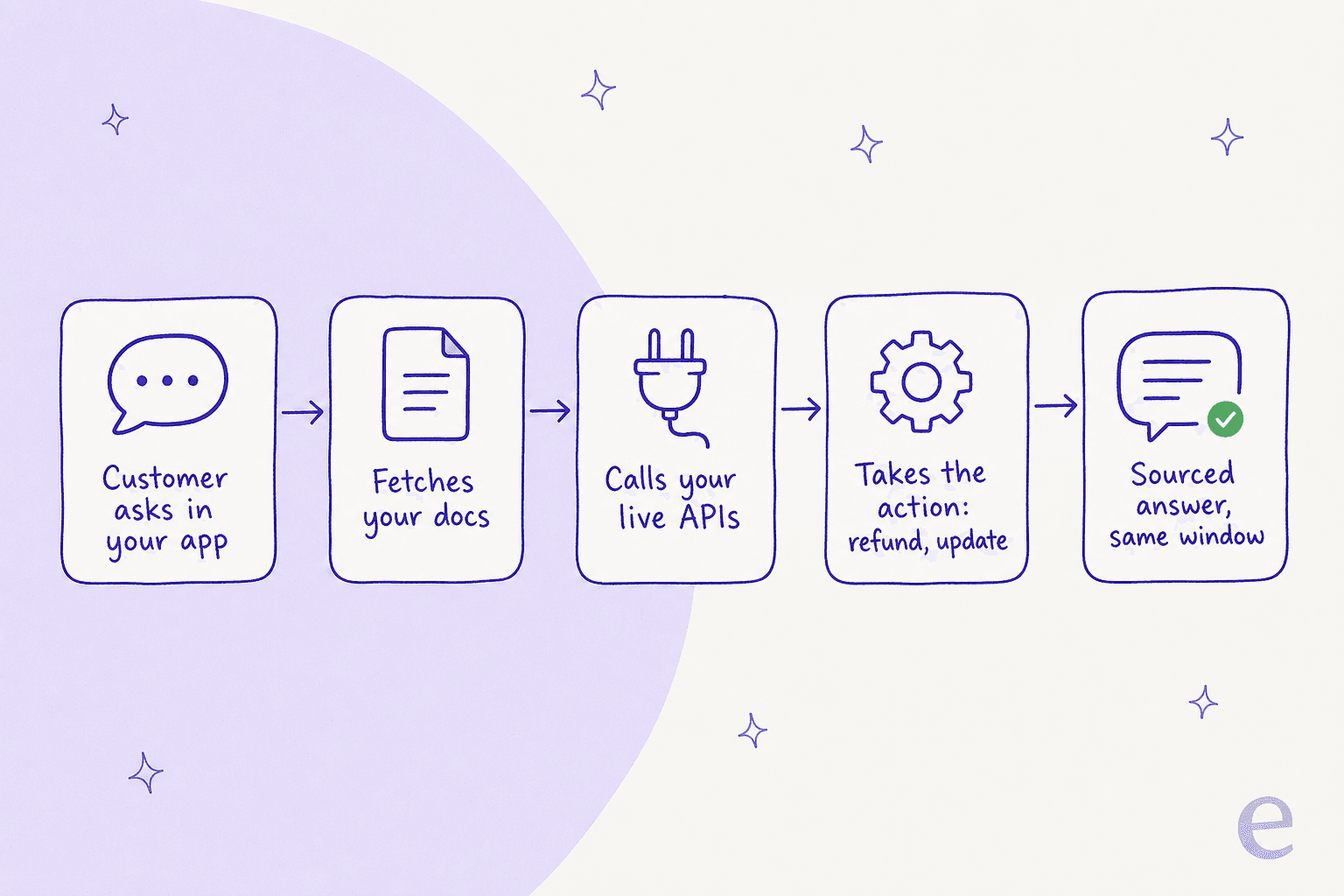
The difference from a plain FAQ bot is the fourth step. Ago's platform is built around agents that take action in your back office: processing orders and refunds through your order-management system, updating customer records in your CRM, and triggering workflows or escalations. That is the "resolve instead of reply" promise, and it is the right promise. A deflection number means nothing if the customer still has to open a ticket to actually get their refund.
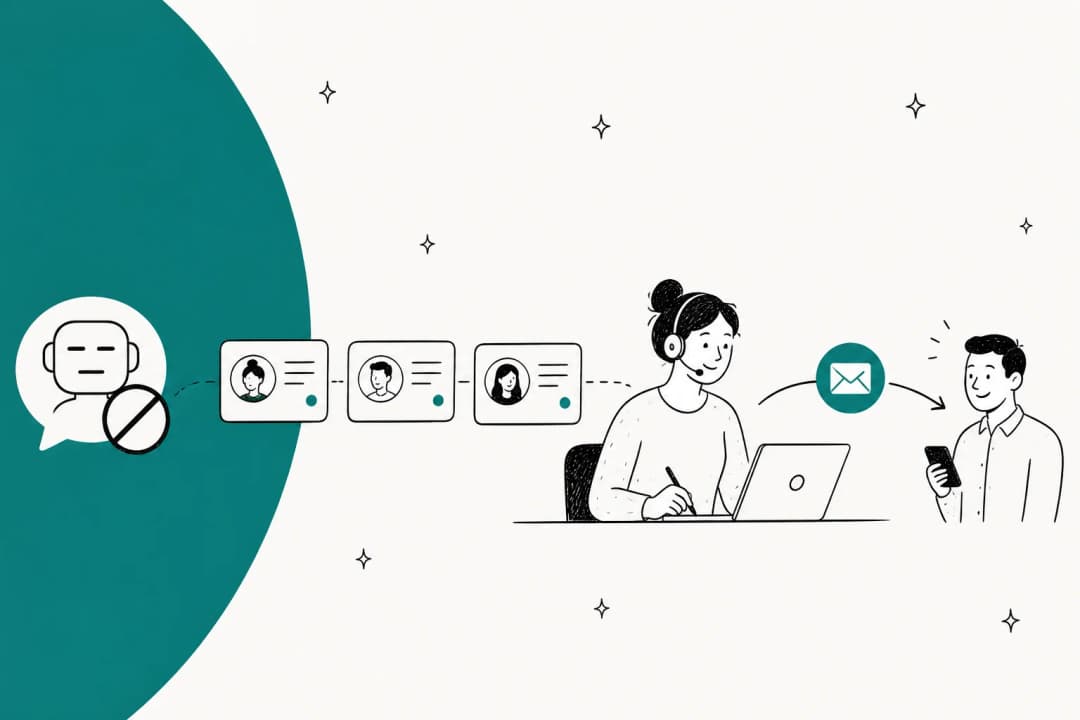
When a question genuinely needs a human, Ago checks routing rules and creates a rich ticket in the right system, so escalation carries full context into Zendesk or Jira instead of dumping a cold transcript on an agent. This is the correct instinct. Having spent years watching AI on live support queues, the thing that breaks trust fastest is not a bot that says "I don't know," it is a bot that confidently gives a wrong answer or escalates with no context. Ago clearly knows this.
Ago AI pricing, and what you actually pay
Ago's pricing page is one of the more transparent I have seen for a tool that still gates signup behind sales. There are two tiers.
| Plan | Price | Billable unit | Minimum | Best for |
|---|---|---|---|---|
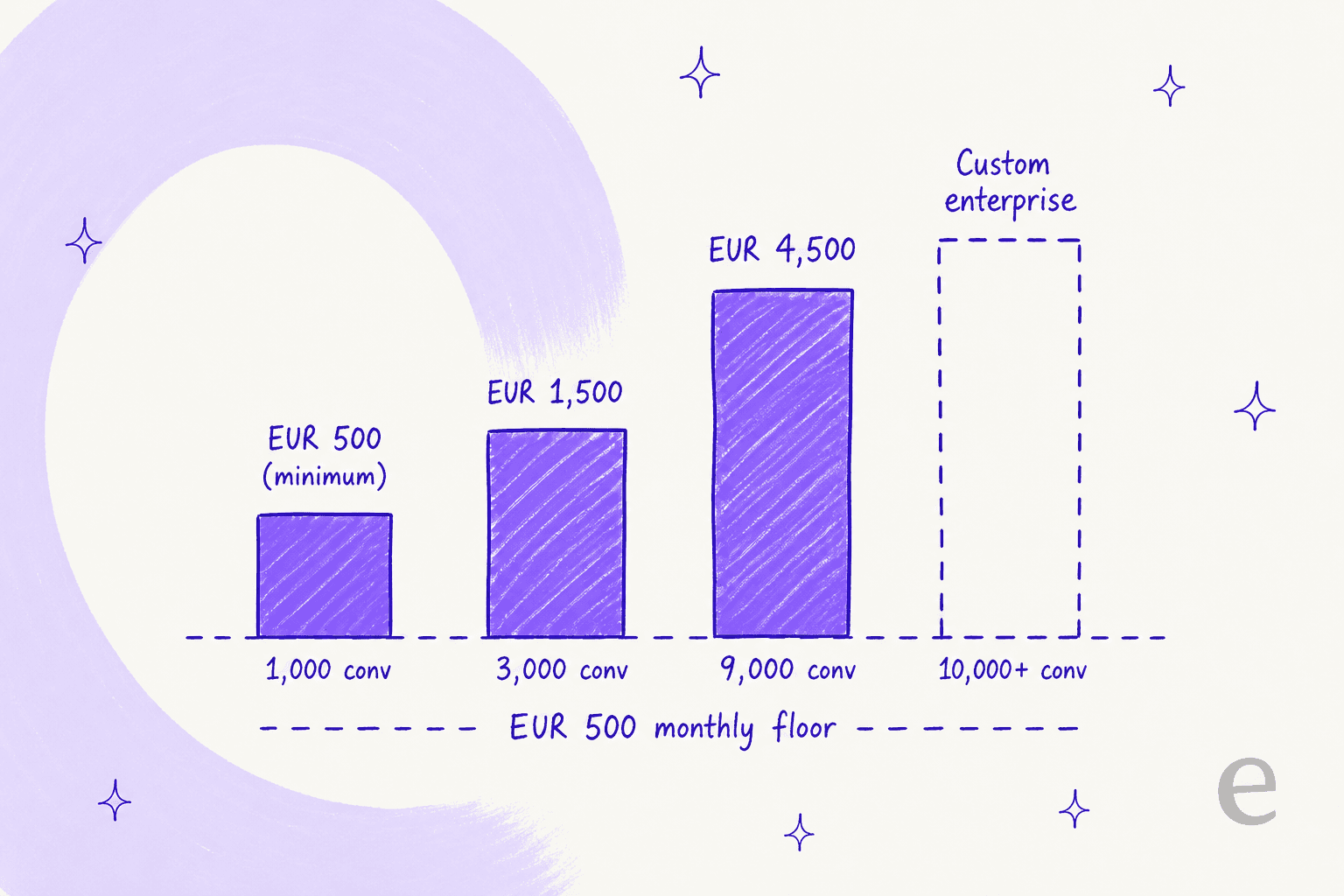
| Pay per conversation | €0.50 / conversation | Conversation, counted when a customer starts an interaction | €500 / month | Teams under ~10,000 conversations/month |
| High volume | Custom ("Let's talk") | Conversation, volume discounts | Quote-only | 10,000+ conversations/month |
A few things I appreciate here. Ago bills on conversations, not resolutions, so there is no fuzzy math about what counts as "resolved." Seats are unlimited, so your whole team using the platform costs nothing extra. And the number is a real number, not a "contact us for a quote" black box.
The €500 monthly minimum is the part to model carefully. At €0.50 each, the minimum covers your first 1,000 conversations, and everything above that bills incrementally. Here is roughly what a month looks like at different volumes:
If you want to plug in your own numbers, this calculator does the math on the published rate:
The gotcha to watch is the same one every per-conversation model has: cost scales with volume, not with value delivered. If your conversations are cheap FAQ questions, €0.50 each is fine. If a big chunk are low-intent or repeat pings, you are paying for interactions that were never going to become revenue or churn risk. Worth modelling against your real ticket mix, the same way you would weigh AI agent versus human agent cost.
The co-construction model: engineers who build with you
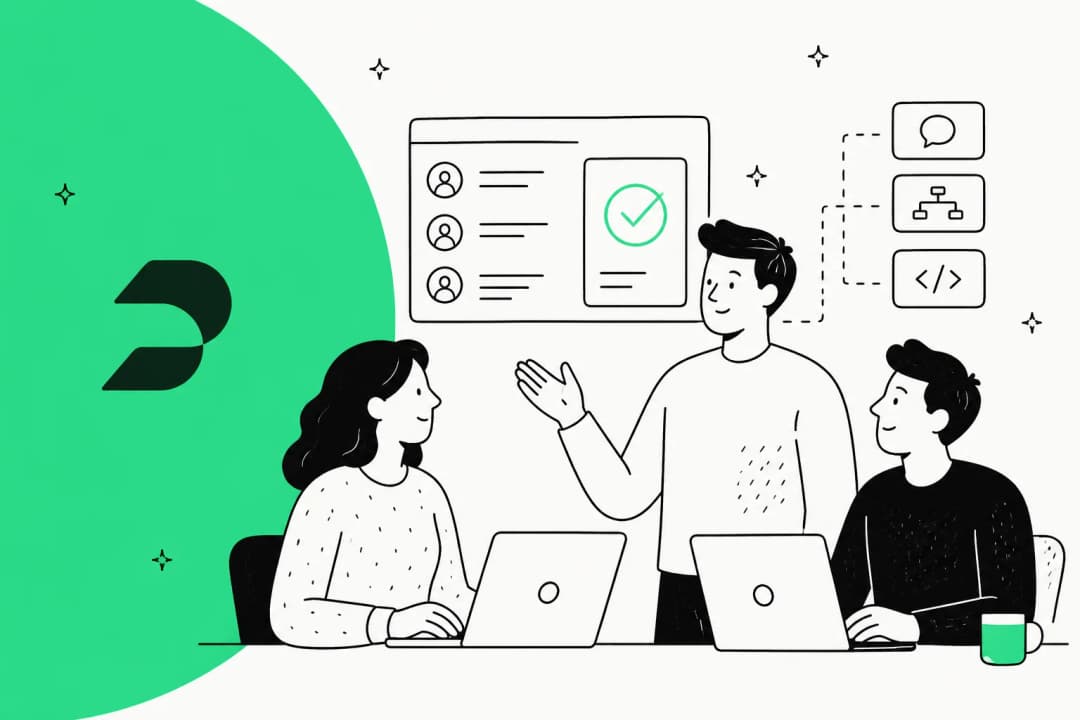
This is the second thing that makes Ago unusual, and it is a real differentiator. Ago's own FAQ framing puts it bluntly: most AI customer service software stops at FAQ deflection, while Ago ships forward-deployed engineers who build and tune your agents so resolution rates climb every week.
In practice that means a dedicated AI Engineer reviews your failed conversations, ships prompt and tool changes, and reports on quality KPIs on a weekly rhythm. If a flow or behaviour does not exist yet, they build it rather than adding it to a roadmap. The Silae case study is the proof point Ago leans on, going from 40% to 75-85% of conversations deflected.
For a team without ML or prompt-engineering muscle, this is genuinely valuable, and it is the honest reason a smaller vendor can post enterprise-grade resolution numbers. The trade-off is dependency: your agent's improvement is tied to a services relationship, not something your own team fully owns day to day. Whether that is a feature or a risk depends entirely on how much in-house capacity you have.
AI-ready docs: fixing the knowledge before the AI
Ago also sells an AI-ready docs service, and I want to give it credit because it names a problem most vendors quietly ignore: your AI is only as good as the knowledge behind it.
The pitch is that documentation lives in ten different places, half of it is outdated or duplicated, and poorly structured content leads straight to hallucinations. So Ago's team audits, deduplicates, and restructures your docs for retrieval, with your subject-matter experts validating the cleaned content. It is a consulting engagement, not an automated import.
This maps exactly onto a pattern I hear constantly. One support manager I spoke with had a knowledge base written entirely for administrators, while the actual tickets came from end-users, a fundamental audience mismatch that produced confusing answers no matter how good the model was. Cleaning the knowledge base is often the highest-leverage thing you can do, and Ago is right to sell it. Just budget for it as a project, because a done-for-you docs cleanup is not instant.
Security: attacking the agent on purpose
One area where Ago punches above its size is security. It is SOC 2 Type II certified, GDPR compliant, and hosted in Europe with EU model providers available for data-sovereignty requirements.
The standout is Ago's "Security Lab," which runs adversarial attacks through the real chat pipeline against the live system prompt, tools, and knowledge. It scores on impact, whether protected data was exposed or a forbidden tool was actually called, and maps everything to the OWASP Top 10 for Agentic Applications. Attack types include prompt injection, knowledge-base exfiltration, and unauthorized tool calls, and it runs like a test suite on every change. For a team about to let an agent issue refunds autonomously, that kind of testing is exactly what security review will ask for, and "passes on the first round" is a claim their buyers will care about.
What real users say about Ago AI
Here I have to be straight with you, because it matters more than any feature list. Ago has essentially no independent public review footprint yet.
Its G2 profile is unclaimed and sits at 0 reviews. There are no Capterra or Trustpilot listings, no Reddit threads that name it, and no Product Hunt or Hacker News discussion (the "Agent OS" name collides with several unrelated tools, which does not help discoverability). The only public voices tied to Ago are the founders and the customer testimonials on Ago's own site. Those testimonials read well and are specific, but they are vendor-published, not independent.
That is not a knock on the product, it is a fact about its stage: Ago is early. But it does change how you should buy. With no third-party reviews to sanity-check the marketing, you are relying on your own pilot and the sales relationship, so make the trial rigorous.
The broader sentiment from support practitioners is worth listening to here, because it is exactly the bar Ago has to clear. On what actually works with AI support:
"No one has fully solved support with AI, but parts of it are very solvable. The biggest win I've seen is AI drafting replies that agents review before sending. It removes the repetitive typing without giving up control... The draft and approve model feels like the safest long term approach."

And on why some rollouts succeed while others fail:
"The ones who say AI actually worked for them almost always have the same two things: the AI handles a narrow set of questions really well instead of trying to cover everything, and when it escalates, the human gets context... The ones who say it failed? Usually thought 70-90% deflection rate was a successful metric when it's unrealistic without proper training, knowledge resources, testing, continuous improvement."
That second quote is the whole ballgame. Narrow scope, clean knowledge, real escalation context, and continuous auditing beat chasing a headline deflection number. Ago's design (action-taking, rich escalation, weekly tuning, docs cleanup) is aimed squarely at those fundamentals, which is encouraging. The open question is whether it holds up outside the flagship case studies, and only your own pilot will answer that.
Where Ago AI fits, and where it doesn't
Pick Ago if: you build a SaaS product with real user-facing surfaces, you have front-end developers, and you want an agent that lives inside your app, navigates it, and takes action, not a bubble bolted to the side. The forward-deployed engineering model is a strong fit if you lack in-house AI expertise and want someone else driving the resolution curve. The transparent €0.50-per-conversation pricing and serious security posture make it credible for European teams especially.
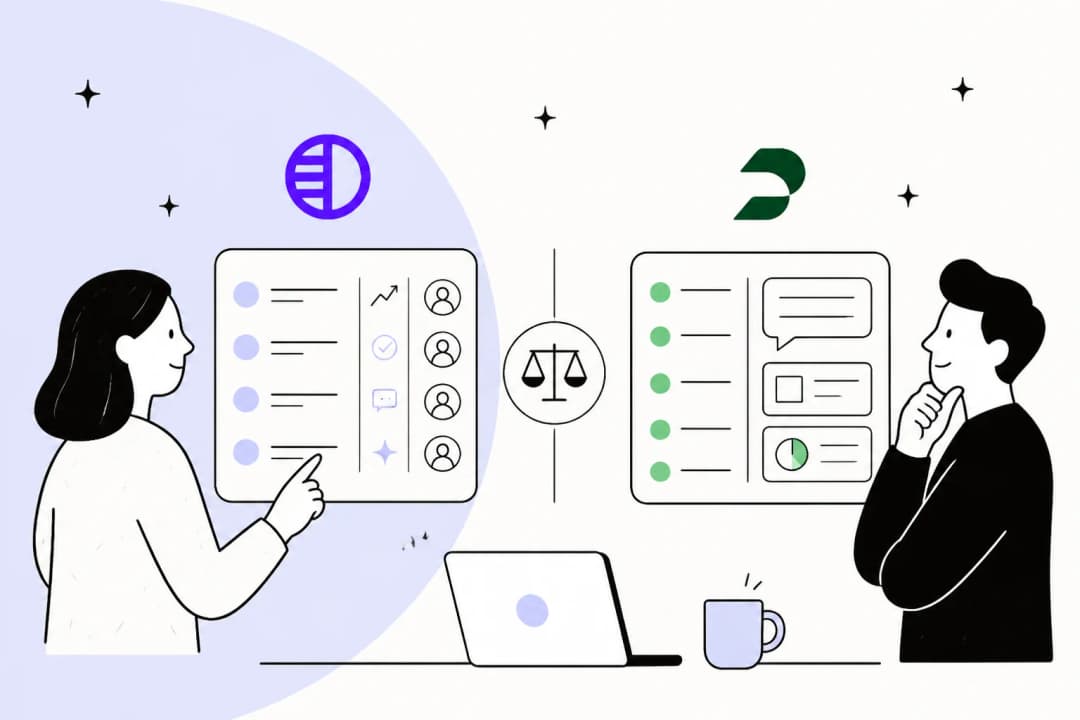
Look elsewhere if: you want to add AI to an existing helpdesk queue without a build project, you need to self-serve and go live this week without a sales call, or you want to test the agent on your own historical tickets before trusting it. Those are different needs, and they are where an AI teammate that installs on your existing stack has the edge.
Try eesel on your existing helpdesk
If Ago's "resolve, don't reply" promise is what you want but the embedded SDK is more engineering than you have, eesel is worth a look. It is an AI teammate platform: instead of you building an agent, you hire a ready-to-work AI helpdesk teammate that joins your existing Zendesk, Freshdesk, Help Scout, or Slack, learns from your past tickets and docs, and starts drafting or resolving on your real queue.
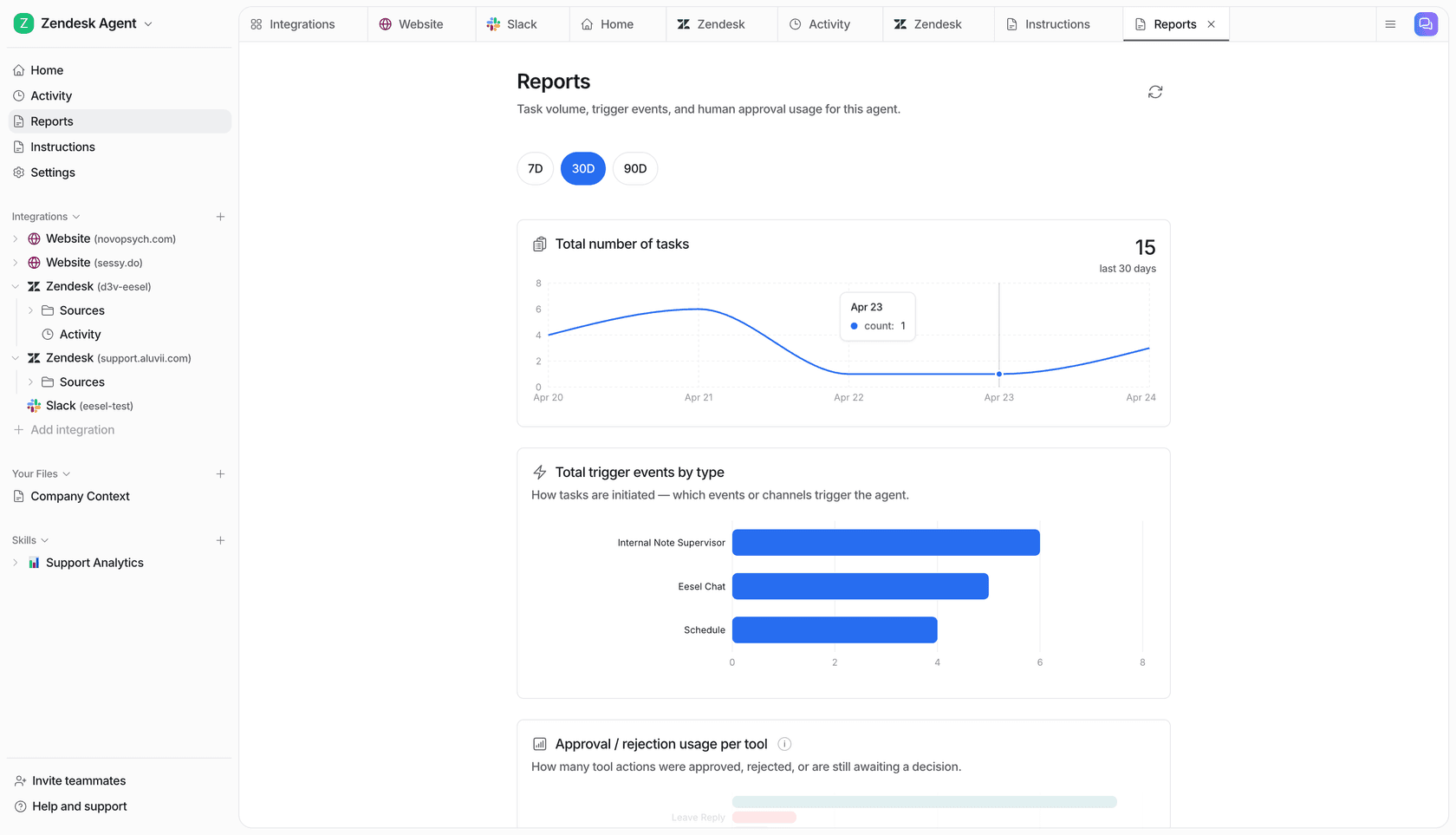
Two differences matter for the reader comparing these tools. First, setup is self-serve and fast: you connect a helpdesk and go, no forward-deployed engineering engagement required. Second, before eesel ever answers a live customer, it runs a simulation over thousands of your historical tickets and shows you the forecast resolution rate, so you are not flipping a switch and hoping. That habit came from years of watching confident bots give wrong answers on real queues, and it is the single thing I would not deploy support AGI without.
And if you liked Ago's developer story, eesel has one too. The eesel CLI (@eesel/cli on npm) lets you drive the same teammate and workspace from a terminal: connect integrations, edit standing instructions, manage human-in-the-loop approvals, and read run-by-run activity, all as JSON with a --dry-run flag that prints the exact call a write would make before sending it. Every workspace is also an MCP server, so a coding agent like Claude Code, Codex, or Cursor can operate it directly. It is the agent-friendly surface for engineers who would rather script support than click through a dashboard, and it is free to start.
Frequently Asked Questions
What is Ago AI?
How much does Ago AI cost?
Does Ago AI replace Zendesk or Freshdesk?
Is Ago AI good for teams without developers?
How do I test an AI support agent before going live?


Article by
Rama Adi Nugraha
Rama is a software engineer at eesel AI with two years of experience writing about B2B SaaS, AI tools, and customer support technology. Based in Bali, Indonesia, he brings a developer's perspective to product comparisons — cutting through marketing copy to what the integrations and APIs actually do.