


For a pet food brand, AI should take the repeatable messages (orders, subscription changes, feeding-guide and ingredient questions) and hand every sick-pet message to a person. If you run Gorgias, start with its built-in AI Agent, which documents actions for Recharge, Loop and Skio. If you want one AI across helpdesks, an AI teammate like eesel answers from your feeding guides and past tickets, and you can replay old tickets before it goes live. With the eesel CLI, a coding agent can upload your approved feeding guides and ingredient lists, then ask test questions and check the answers; connecting the helpdesk itself still needs someone with admin access.
Why do pet food brands get so many repeat messages?
I work on the support side at eesel, and a pet food inbox looks the same from brand to brand. Which food suits my dog, does it contain chicken, how do I switch without upsetting her stomach, skip my next box, where is my order, the bag arrived torn. ChatGPT, asked what AI could handle a pet food brand's inbox, split it into the same six buckets, and I agree with them.
That makes it a strong fit for AI customer service, with one catch that most ecommerce guides skip. A customer writing "she has been sick since the new bag" is not a ticket, it is a worried owner with a sick animal. So the useful question is not "which chatbot?" but "where does the AI stop?"
What can AI answer, and what needs a person?
Think of it as three groups. The first is answered from a page you already own: feeding guides, ingredient lists, transition schedules. The second needs a live look-up or action: order tracking, skip or pause a subscription. The third is judgment: damaged deliveries that need a reship or refund, and anything about a pet's health. The AI answers from your pages and never diagnoses.
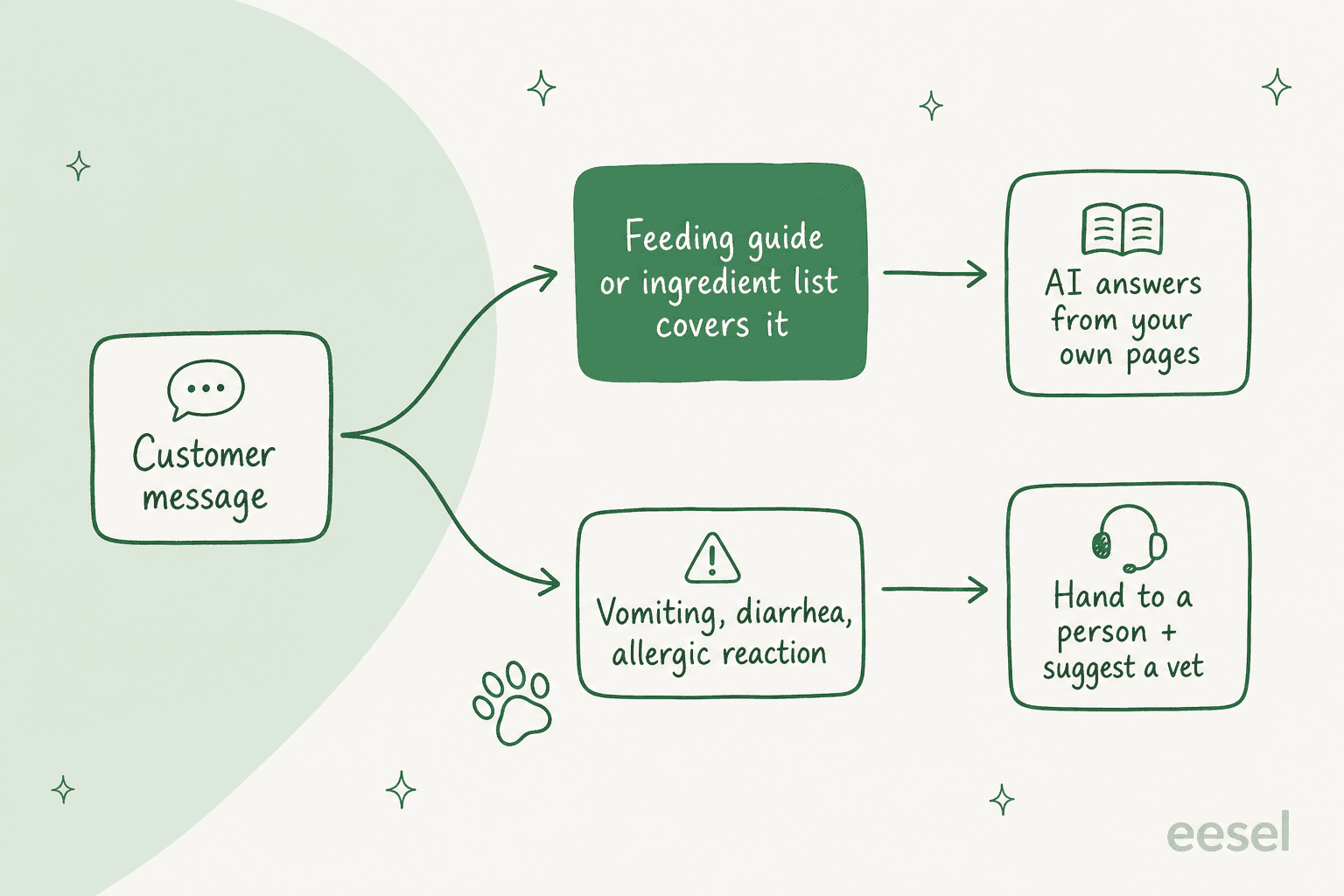
Tap a message below to see how I would split it.
What did the pet owner send?
Tap a message to see who should handle it.
The rule I use: anything the owner could answer by reading your website is safe to automate. Anything that moves money or touches an animal's health needs a person. That is the same line most teams draw for handoff rules in any support AI.
"The AI will never be able to answer 100% of the questions, but if it tries and just answers 'sorry I don't know this,' I cannot go and check all my 7,000 tickets to see if the AI actually made a good answer. I need an AI who is only handling the tickets that it's confident to handle and all the other ones, leave them alone."
Said by a CX lead at a DTC supplements brand on Gorgias, about 7,000 tickets a month, in an eesel sales call.
That is the buyer's version of the same rule, and it is why I care more about handoff behaviour than about a headline automation rate.
Why does a dog plus a cat break subscription automation?
Subscriptions are the pet-food-specific part of this. A customer wants to skip, pause, change frequency or cancel, and the AI needs to reach Recharge, Loop or Skio to do it. Gorgias is the clearest about limits, and its docs matter here because pet owners often have more than one subscription.
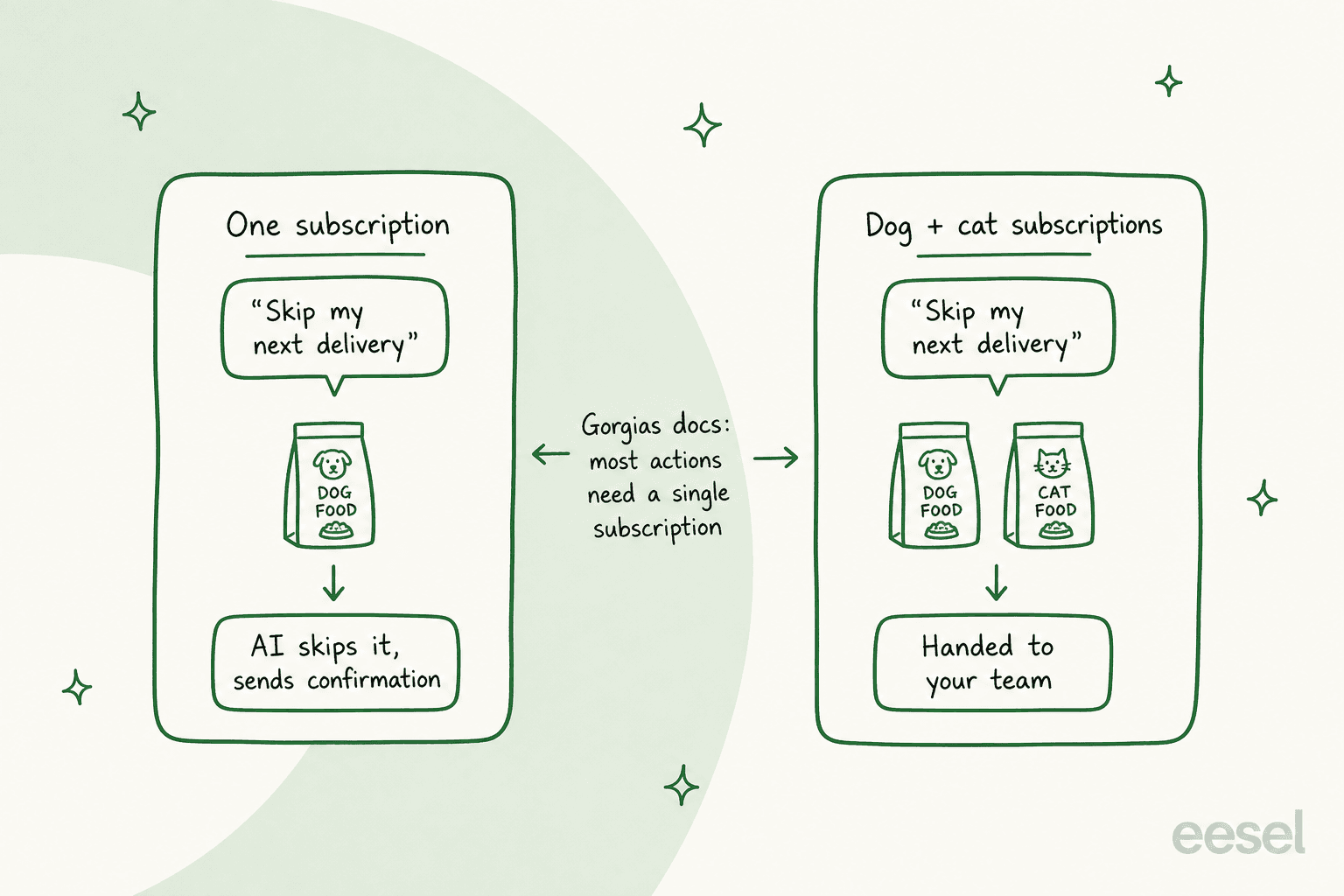
In the Gorgias Recharge actions article, most actions only run if the shopper has a single active subscription, and otherwise the ticket goes to your team. The Loop and Skio articles say the same. A household with a dog plan and a cat plan is the common case for a pet brand, so test it before you sign. For the wider picture, see AI for subscription box support.
What do Gorgias, Yuma AI, Zendesk and eesel offer?
All facts below come from each vendor's own pages as of November 2026. The deciding difference is how each one charges and which subscription apps it can act in.
| Tool | Pricing signal | Subscription apps | Worth knowing |
|---|---|---|---|
| Gorgias AI Agent | Basic with AI Agent $90/month monthly, then $1.50 per extra automated interaction | Recharge, Loop, Skio actions | Helpdesk and AI on one bill; single-subscription limit |
| Yuma AI | Starter about $14,400 a year (~$1.20 per resolution), 12-month commitment | Recharge, Loop Subscriptions, Skio listed | Pays only for fully resolved tickets; works on top of Gorgias or Zendesk |
| Zendesk AI agents | Suite Team $55 per agent a month (annual), $1.50 committed or $2.00 pay-as-you-go per resolution | Not named on the pricing page | Action builder for third-party systems; check the marketplace for your app |
| eesel | From $299 a month for 500 credits, a ticket or chat is one credit | Recharge documented | Joins your existing helpdesk; Loop and Skio are not in the docs |
Gorgias: the AI built into the helpdesk
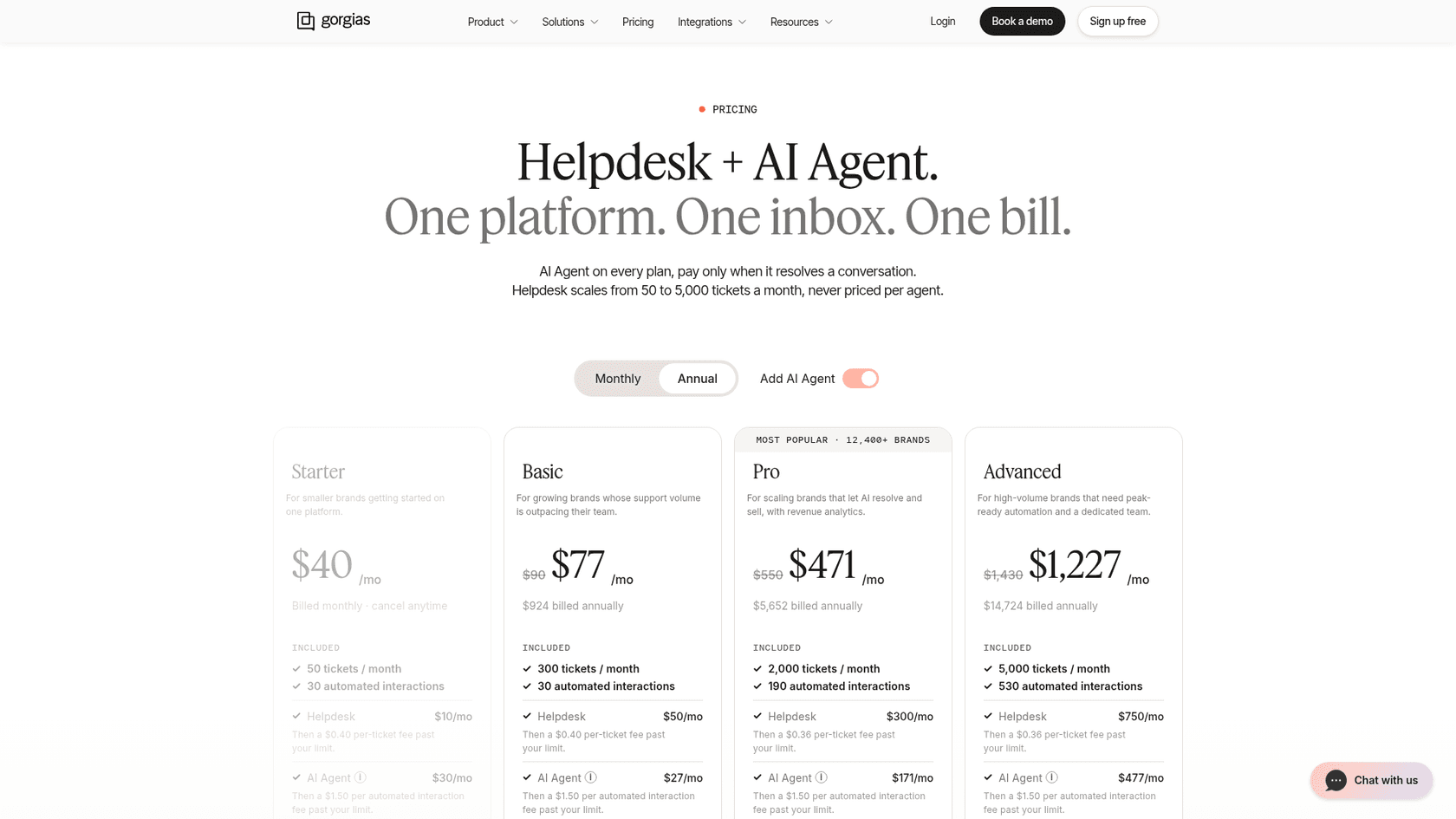
Gorgias prices the helpdesk and the AI together. On the monthly view, Basic with AI Agent is $90 a month for 300 tickets and 30 automated interactions, and Pro is $550 for 2,000 tickets and 190 interactions. Past the included amount an automated interaction costs $1.50. If you already run Gorgias, AI Agent actions on Recharge, Loop and Skio are the shortest path to automating skips and cancels.
G2 reviewers like the Shopify depth and flag the pricing model. One wrote:
"The main frustration with Gorgias is the pricing model, which is based on ticket volume rather than a flat monthly fee. As our order volume grows and customer inquiries increase, the cost scales up quickly in ways that can be difficult to predict and budget for."

Another reviewer saw the other side: charging per ticket instead of per seat let nearly everyone use it freely.
"The pricing model fits a collaborative business environment, because charging per ticket instead of per user allowed nearly everyone in our company to use it freely without worrying about seat limits."

For a brand with seasonal spikes, the per-ticket and per-interaction meter matters, so read Gorgias AI Agent pricing before you commit. See also best AI for Gorgias.
Yuma AI: outcome pricing for DTC brands
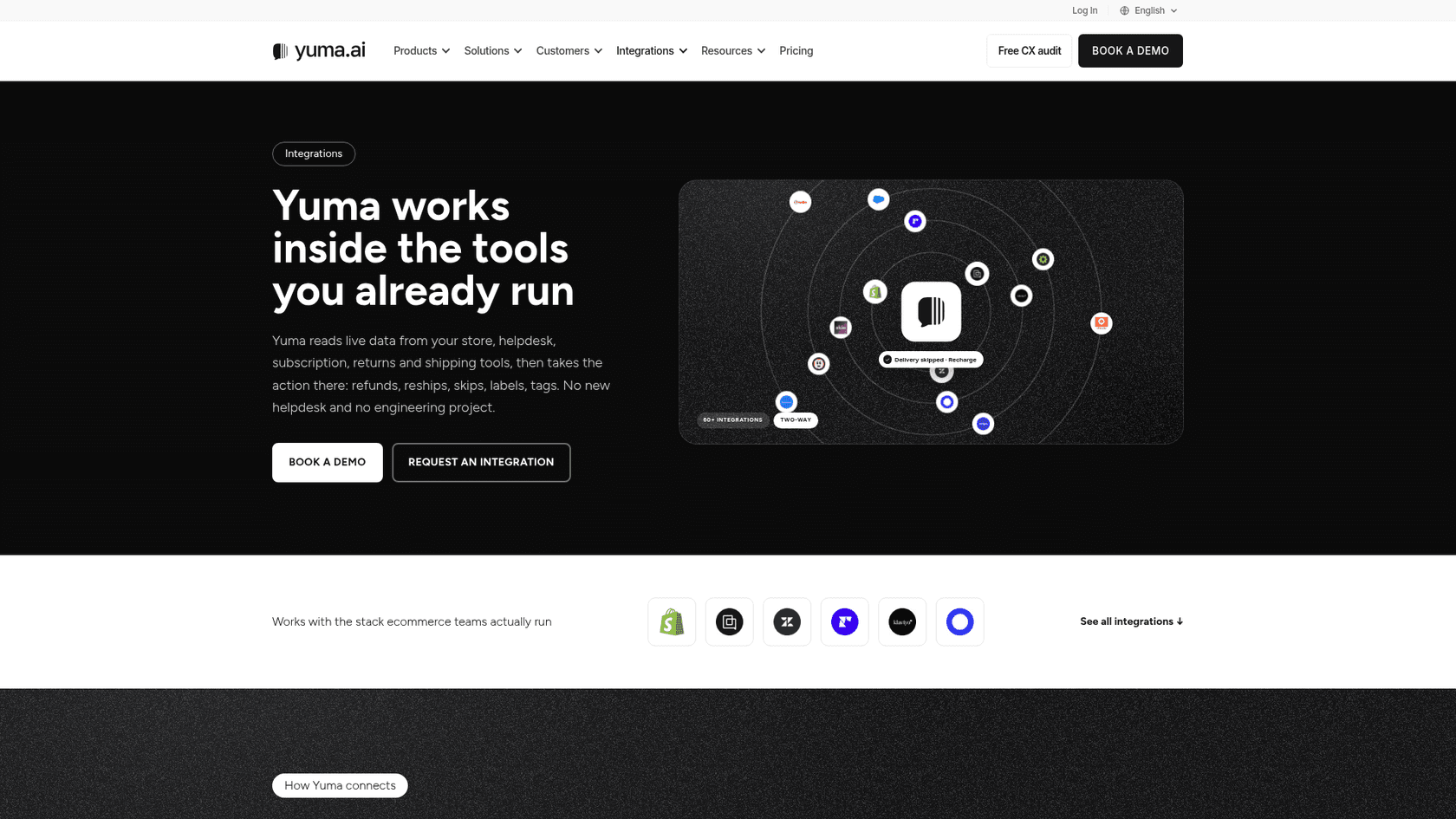
Yuma AI bills only for a full resolution, meaning a ticket handled end to end with no human involved. Its illustrative Starter plan is $14,400 a year for 12,000 resolutions (about $1.20 each) on a 12-month commitment, and Growth is $40,000 for roughly 48,000. Its integrations page lists Recharge, Loop Subscriptions and Skio next to Gorgias and Zendesk, and says it works on top of the helpdesk you have. Yuma claims it can resolve up to 89% of conversations, which is a vendor figure you should test on your own tickets. More in my Yuma AI pricing and Yuma AI review pages, or the Yuma alternatives list.
Zendesk AI: the pick if you are already on Zendesk
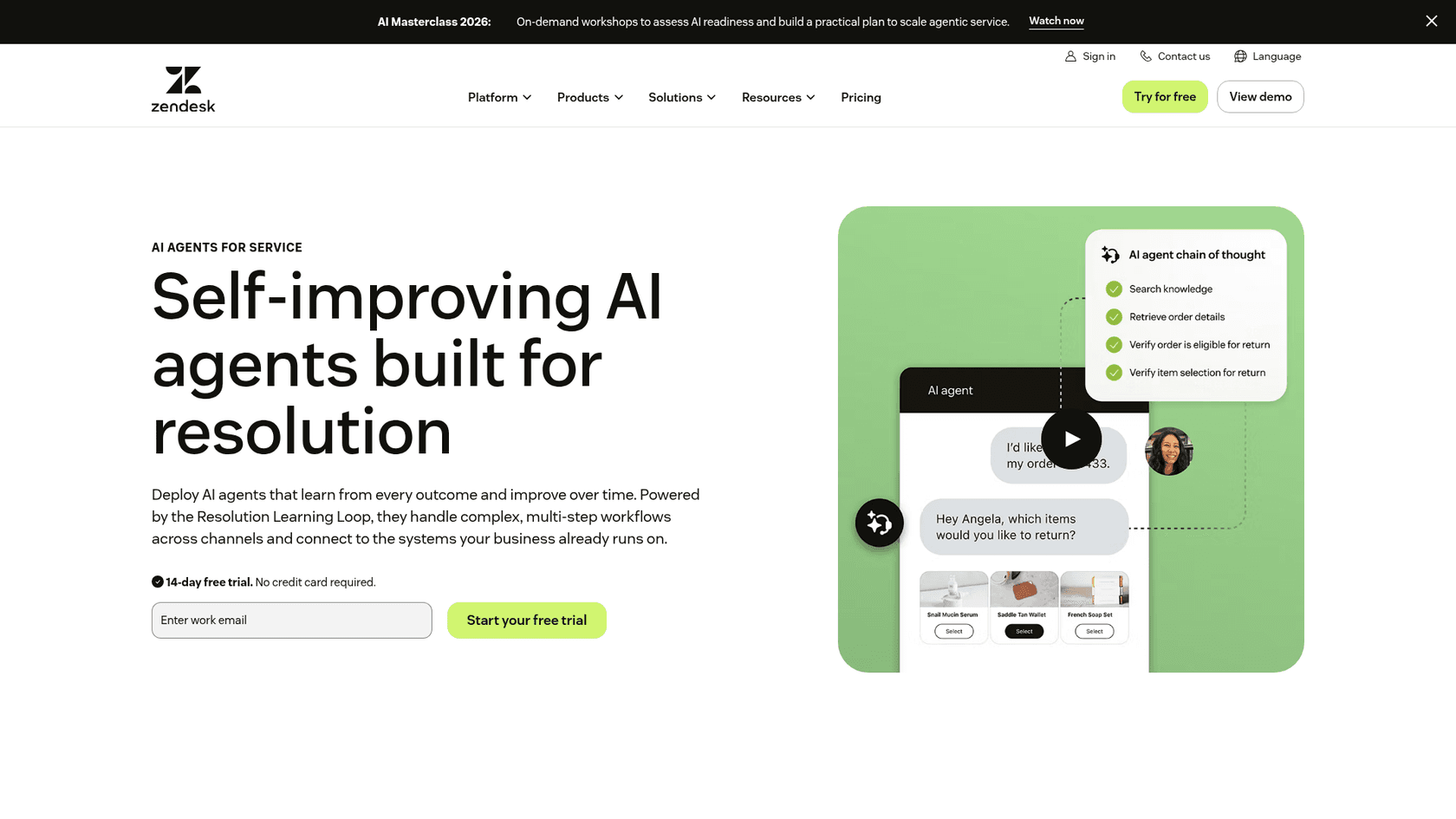
Zendesk's AI agents take actions across connected systems, and the pricing page bills per automated resolution: $1.50 committed or $2.00 pay-as-you-go, on top of Suite Team at $55 per agent a month (billed yearly). The pricing page does not name Recharge, Loop or Skio, so ask for your subscription app before you buy. The long version is in my guide to Zendesk AI agents and AI for Zendesk.
Where does eesel fit for a pet food brand?
eesel is an AI teammate you hire for a job. For a pet food brand that job is the AI helpdesk teammate: it joins the helpdesk you already use, such as Gorgias, Zendesk or Freshdesk, learns from your help center, macros, feeding guides and past tickets, and drafts or sends replies. In the helpdesk docs, a person stays in the loop with a draft ticket reply or an internal note.
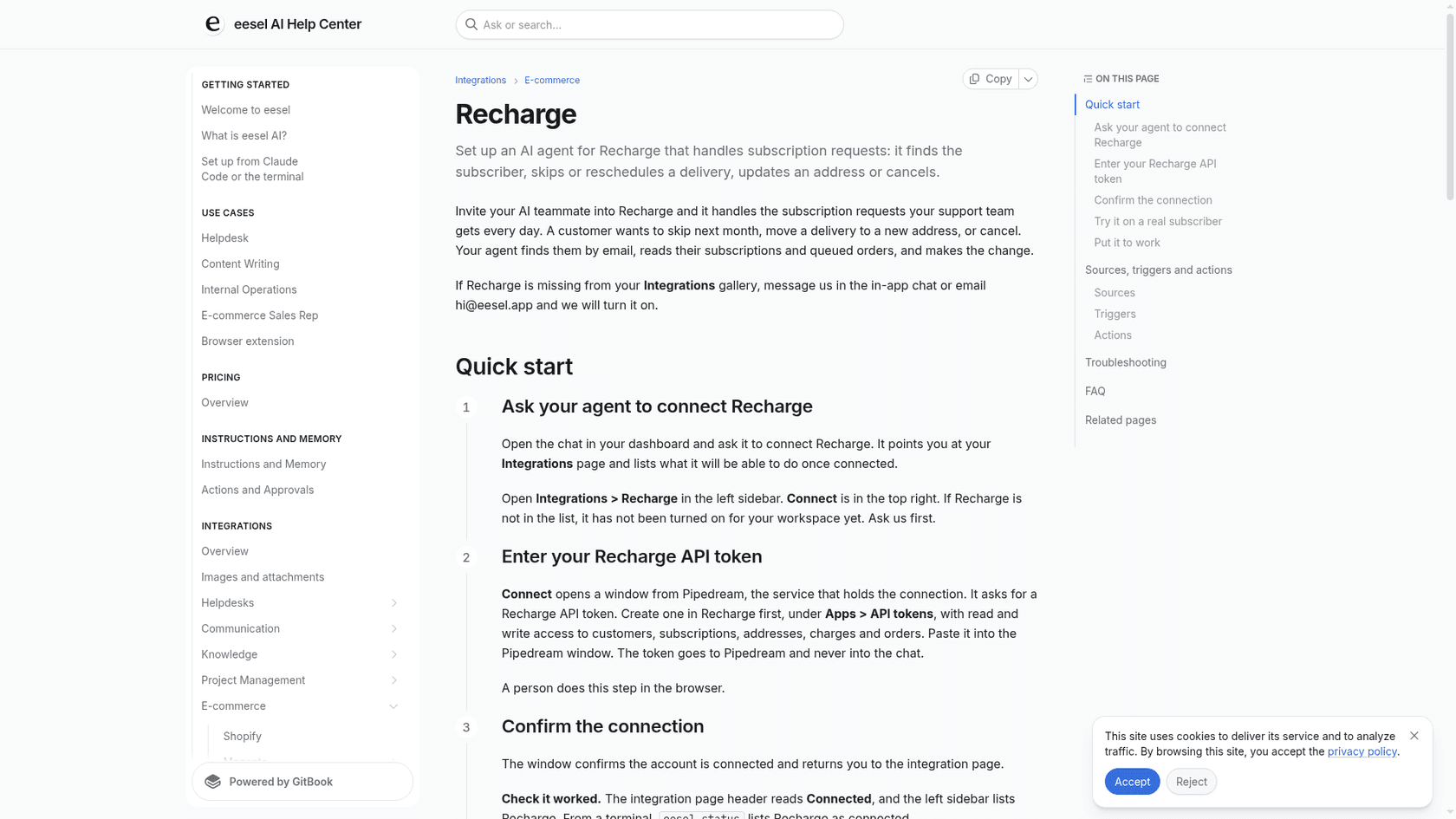
I should be plain about the limits. The Recharge docs list skip charge, change frequency or quantity, cancel, update address and look-ups, but not pause or a date change, which it hands to your team. Recharge may need to be switched on for your workspace by the eesel team. Loop and Skio are not in the e-commerce integrations list, so on those apps the order and subscription step goes to a person. Each action can be set to run on its own, ask first, or stay off, per Actions and Approvals.
eesel has run AI on live support queues for years, so I never roll one out blind. A confident wrong answer about food is the failure that hurts, so I replay historical tickets through the agent first and read the answers. A skill in eesel does exactly that, and it is the step I would not skip for a brand where one reply can touch a pet's health. See simulation testing.
Two published customer stories show the shape of it. Poseidon Animal Health makes gut health supplements for horses and answers owners in three countries from one Gorgias inbox. In a month the team drafted about 610 conversations, eesel wrote about 1,000 draft replies from roughly 1,200 past tickets plus 29 uploaded guides, and a person reads and sends every draft. Serving amounts, auto-ship changes and product choices are checked by someone who knows horses, which is the same split I recommend for pet food. ClutchLoop runs eesel on Gorgias, Shopify and website chat, where about seven in ten of 230 tickets in a month got a reply without a person, with 76 live Shopify look-ups for prices and stock.
Pricing is on the eesel pricing page: a 7-day free trial with 100 credits, then monthly plans from $299 for 500 credits, with extra credits at $0.80. A small brand sits at the bottom of that range. For a side-by-side with the helpdesk-native AI, see eesel vs Gorgias AI and eesel vs Zendesk AI.
How do I roll AI out without risking a sick pet?
The order I would use:
- Write the source pages first. Feeding guides, ingredient lists, transition schedule, damage policy. If the AI has nothing written to quote, it will guess.
- Write the hard handoffs. Vomiting, diarrhea, allergic reaction, "not eating", any named condition. Put them in the instructions as rules, with the line "suggest a vet" built in.
- Replay old tickets. Run a few hundred real messages through it and read every answer, using a pilot scorecard.
- Start with drafts. Let your team approve for a week, like Poseidon does, then switch the safe groups to automatic.
- Set a damage threshold. Under a dollar limit the team approves in a click, above it a person decides, as in AI for refund requests.
- Watch the holidays. Volume jumps when a price or recipe changes, so plan for seasonal spikes.
With the CLI, a coding agent can run the test questions and flag any answer that differs from your guide, which suits step three. For security questions from larger retailers, my security review checklist covers what to ask any vendor. Channel-wise, the same teammate can sit behind SMS, Instagram DMs and after-hours chat, and a nearby example is AI for beauty brands.
Try eesel for your pet food inbox
If your messages land in Gorgias, Zendesk or Freshdesk, eesel works like a new support hire: it learns your feeding guides, ingredient lists and past replies, answers the repeatable questions, and hands sick-pet messages and damage claims to your team. Start with the free trial on one mailbox and replay last month's tickets before you go live.
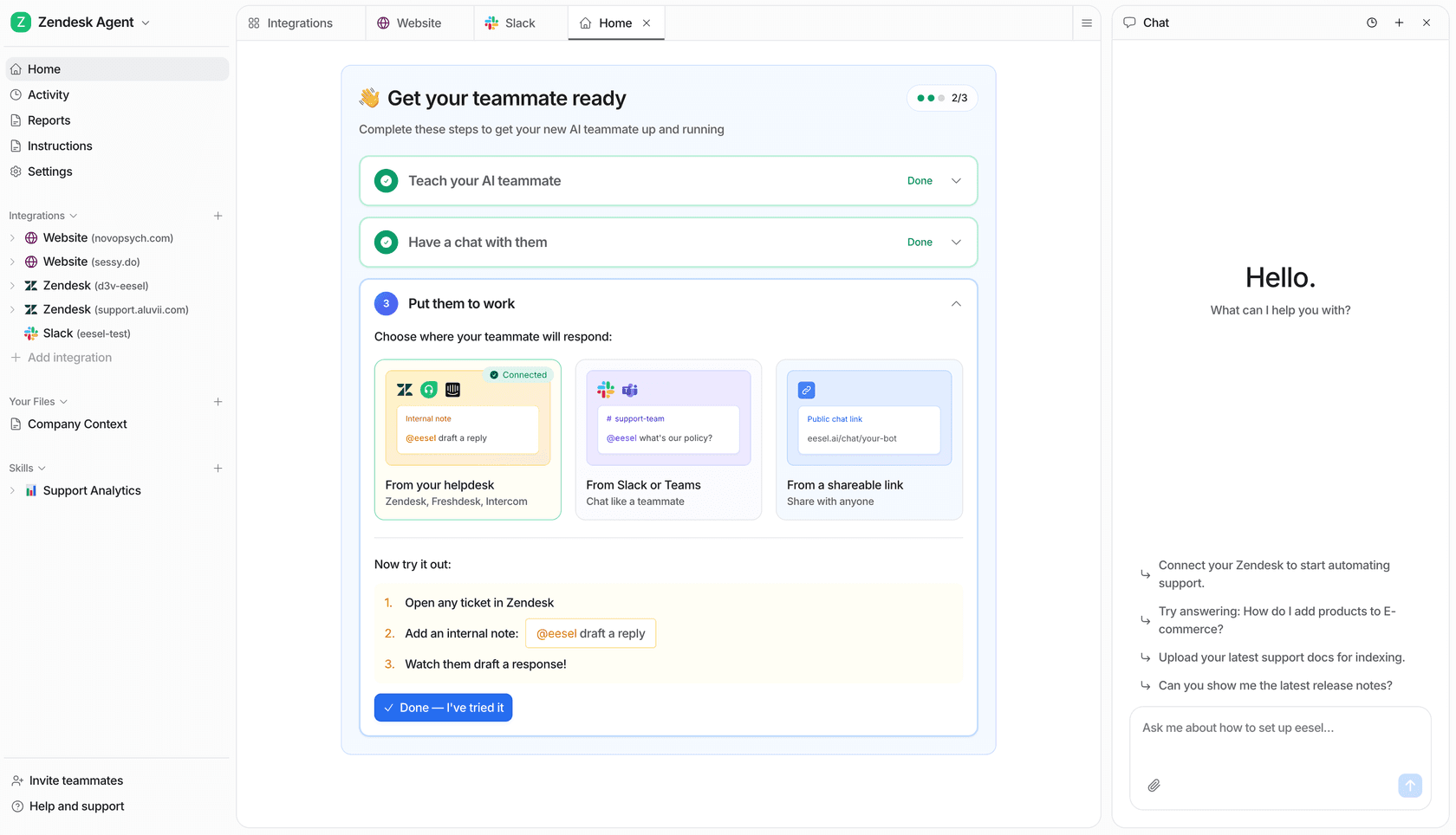
Try eesel free for 7 days, or compare it first in the best AI helpdesk for ecommerce roundup.
Frequently Asked Questions
What is the best AI for pet food brands?
If you already run Gorgias, start with its built-in AI Agent, because it can act in Recharge, Loop and Skio. If you use another helpdesk, or want one AI across several, an AI helpdesk agent like eesel joins the inbox you have and answers from your own feeding guides.
Can AI answer which food suits my dog or cat?
It can answer from your own feeding guides, life-stage charts and ingredient lists. It should not judge a pet's health. Treat these as pre-purchase questions with a written source, and hand anything about a medical condition to a person.
Can AI skip, pause or cancel a pet food subscription?
Yes, if it is connected to your subscription app. Gorgias documents skip, pause and cancel actions for Recharge, Loop and Skio, and eesel documents skip, frequency change and cancel for Recharge. See how teams handle cancellation requests with AI without losing the save attempt.
What should an AI never handle for a pet food brand?
Vomiting, diarrhea, allergic reactions and any message about a sick pet. Write them as hard handoff rules, and use simulation tests on old tickets to confirm the AI follows them.
How much does AI for a pet food brand cost?
Gorgias Basic with AI Agent is $90 a month billed monthly, Zendesk charges $1.50 to $2.00 per automated resolution, Yuma AI starts around $14,400 a year, and eesel is a flat monthly plan from $299 for 500 credits. Compare that with your cost per ticket today.
How does AI handle damaged or missing pet food deliveries?
It can collect the order number and a photo, then pass the case to a person with the facts already gathered. Reship and refund decisions should stay with your team, as in any refund request workflow.
What if a customer has a dog and a cat subscription?
Gorgias's own docs say most Recharge, Loop and Skio actions only run when the shopper has one subscription, and otherwise hand over to your team. Ask any vendor how it behaves with multiple subscriptions before you buy.
How do I test AI before it talks to pet owners?
Replay a few months of real tickets through it and read every answer, then start with drafts a person approves. A simple pilot scorecard tells you when the safe categories can go automatic.