Most companies treat live chat deflection as a way to avoid customers, but 2026 benchmarks show that 80% of routine inquiries can be solved autonomously without sacrificing satisfaction. The secret isn't a better bot; it's hiring an AI teammate that actually takes action.
The difference between deflection and resolution matters more than ever. Deflection pushes customers toward self-service, often by shoving FAQ links in their face. Resolution actually solves their problem. In this guide, we'll break down what's changed, what the top platforms offer, and how to measure whether your investment is paying off.
What is live chat deflection in 2026?
Live chat deflection traditionally meant diverting customers away from human agents toward cheaper channels like self-service portals or chatbots. The goal was simple: reduce ticket volume and agent workload.
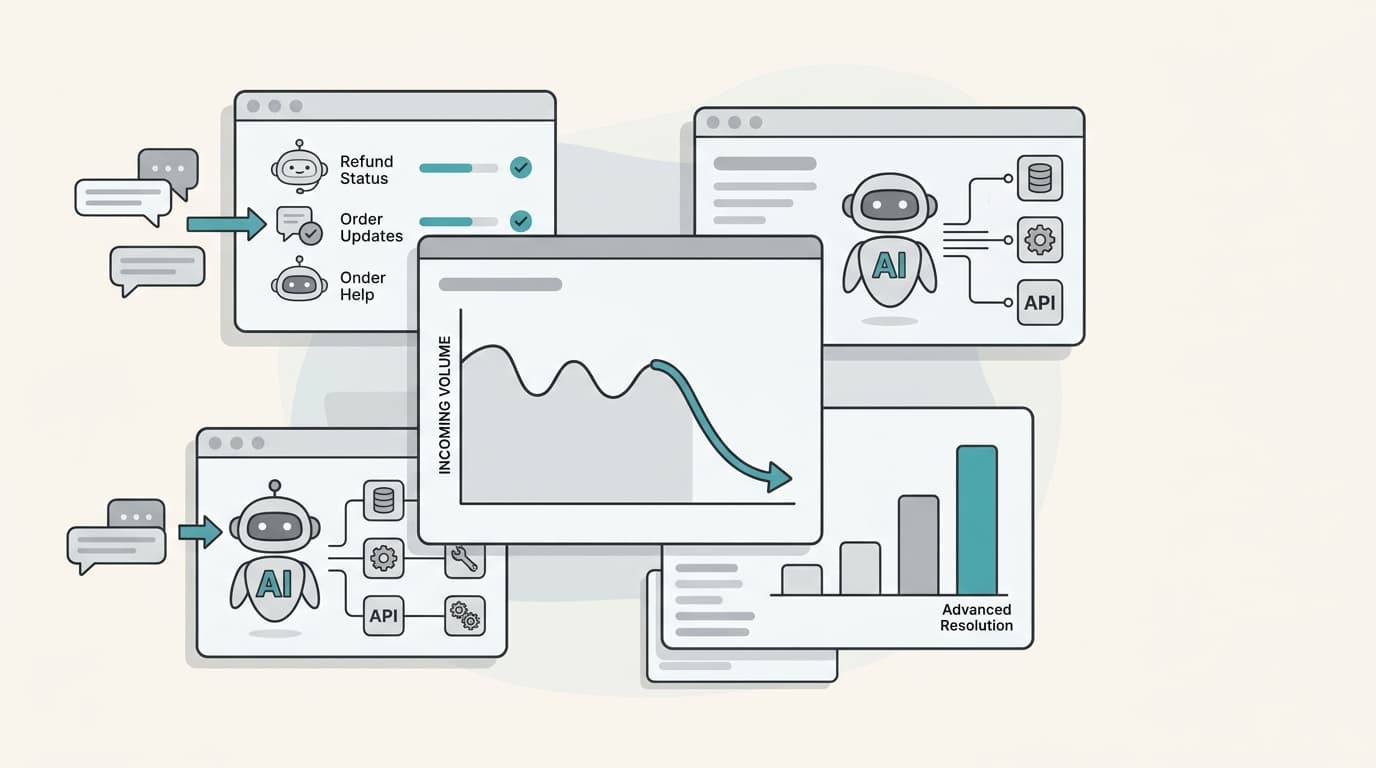
But the math has shifted. According to industry benchmarks, standard deflection setups hit 20-50%, while advanced AI teammates now reach 80%+ resolution rates. The difference isn't incremental; it's the gap between a chatbot that irritates customers and one that actually helps them.
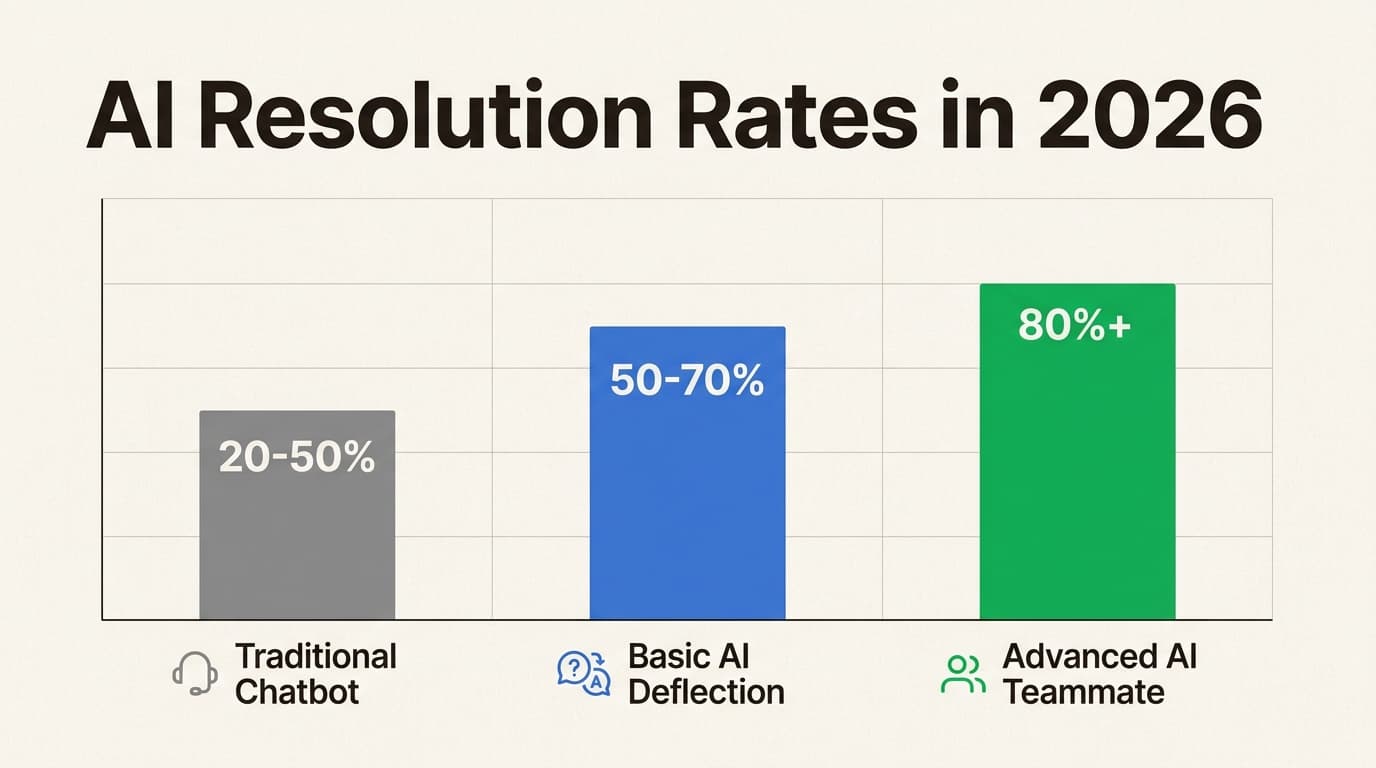
The key distinction for 2026 is deflection versus containment. Deflection moves the conversation somewhere else (usually a knowledge base article). Containment keeps it in-channel but resolves it without human escalation. The industry is shifting focus from "how do we avoid this ticket?" to "how do we solve this ticket without a human?"
Chasing deflection without resolution backfires. When customers feel pushed away rather than helped, satisfaction drops and churn increases. The goal isn't to deflect; it's to resolve autonomously while making the customer feel heard.
How AI transforms the deflection landscape
The jump from static FAQ bots to generative AI agents changed everything. Old chatbots matched keywords to pre-written responses. They worked for "What are your hours?" and failed for anything that required context, nuance, or multiple steps.
Modern AI teammates do three things that legacy bots couldn't:
They understand context. Instead of keyword matching, they comprehend the full conversation, including follow-up questions and implied meaning. A customer asking "Where's my refund?" after an earlier message about an exchange gets a relevant answer, not a generic "Check our return policy" response.
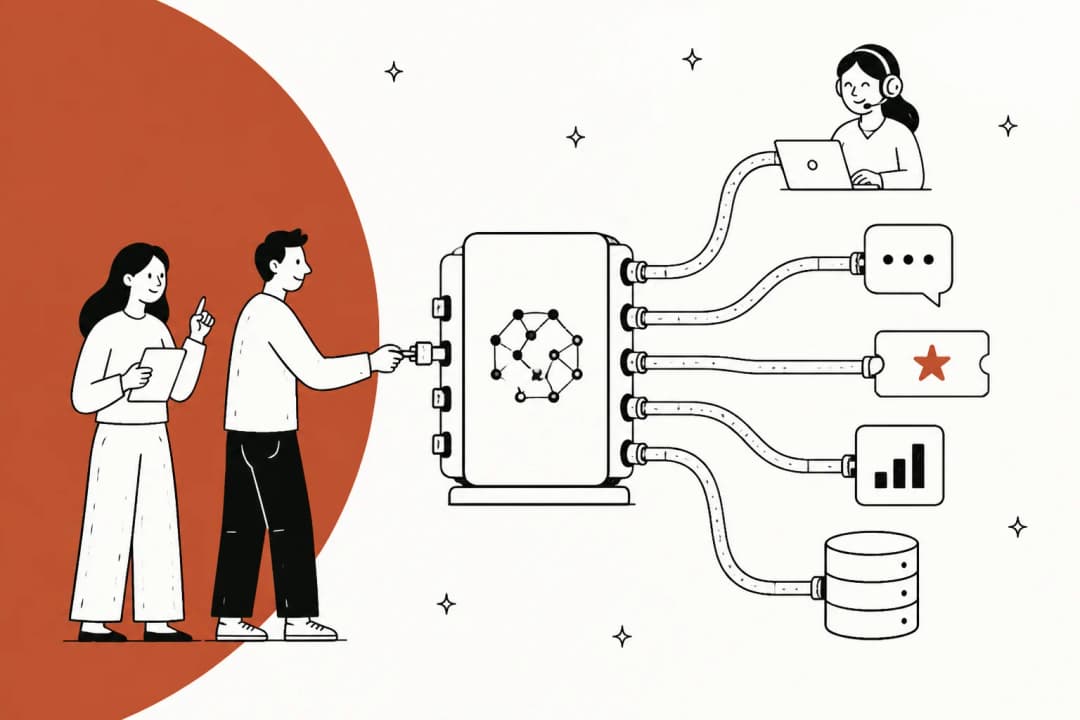
They take action. This is the agentic shift. AI can now connect to backend systems via APIs and MCP integrations to process refunds, check order status, update subscriptions, or schedule callbacks. The Emma App case study from Crisp shows this in practice: their AI resolved payment disputes autonomously by connecting directly to payment systems, not just pointing customers at documentation.
They learn continuously. When a human agent corrects an AI response, that correction becomes training data. The system improves without manual updates or workflow rebuilds.
Technical documentation ingestion has become critical for SaaS companies. AI teammates that can parse developer docs, API references, and internal wikis resolve questions that would otherwise require escalation to tier 2 or engineering teams.
eesel AI: The resolution-first teammate
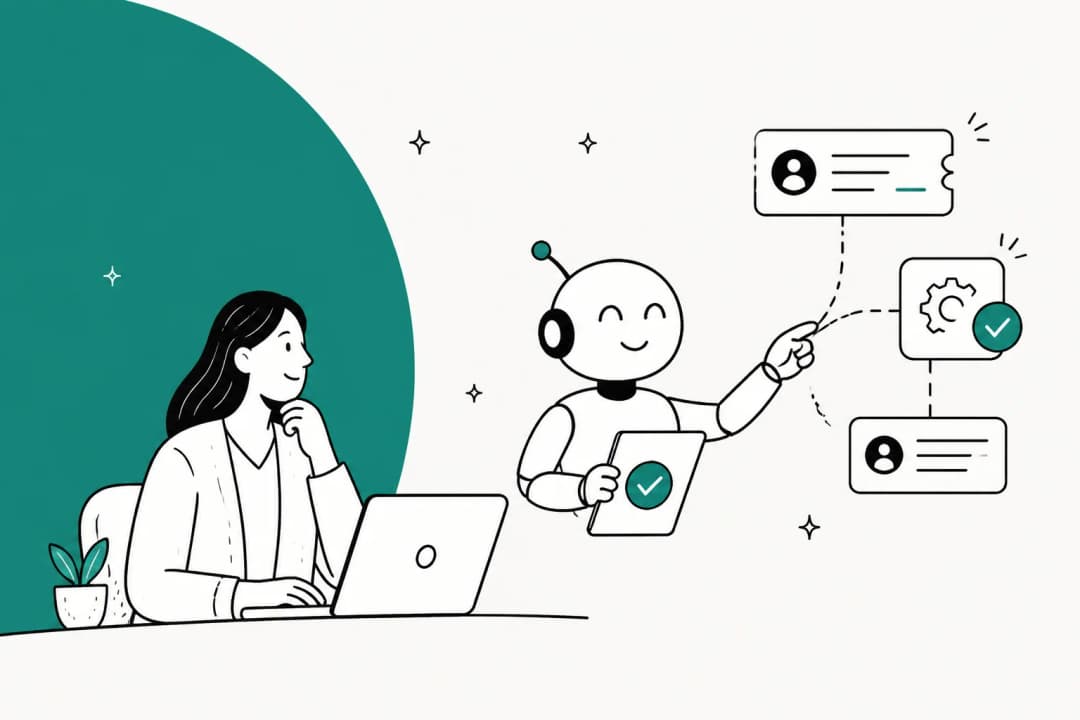
We built eesel around a simple idea: you don't configure a tool, you hire a teammate. Like any new hire, eesel starts with oversight, learns your business, and levels up to autonomous work over time.
Onboarding takes minutes. Connect eesel to your helpdesk (Zendesk, Freshdesk, Intercom, Gorgias, HubSpot, Help Scout) and it immediately absorbs your past tickets, macros, help center articles, and connected docs. No manual training, no uploading knowledge bases one article at a time.
Progressive rollout is built in. Start with eesel drafting replies for human review. Expand to specific ticket types. Eventually, let eesel handle full frontline support while humans focus on edge cases. You decide when to promote based on actual performance.
Results scale with trust. Mature deployments achieve up to 81% autonomous resolution. The typical payback period is under 2 months. Customers like Gridwise saw 73% tier-1 resolution in the first month, and Smava fully automated 100,000+ monthly tickets in German.
The teammate model matters because it's transparent. You see exactly how eesel performs before it touches customers. Run simulations on past tickets. Check accuracy scores. Identify knowledge gaps. Trust is earned, not configured.
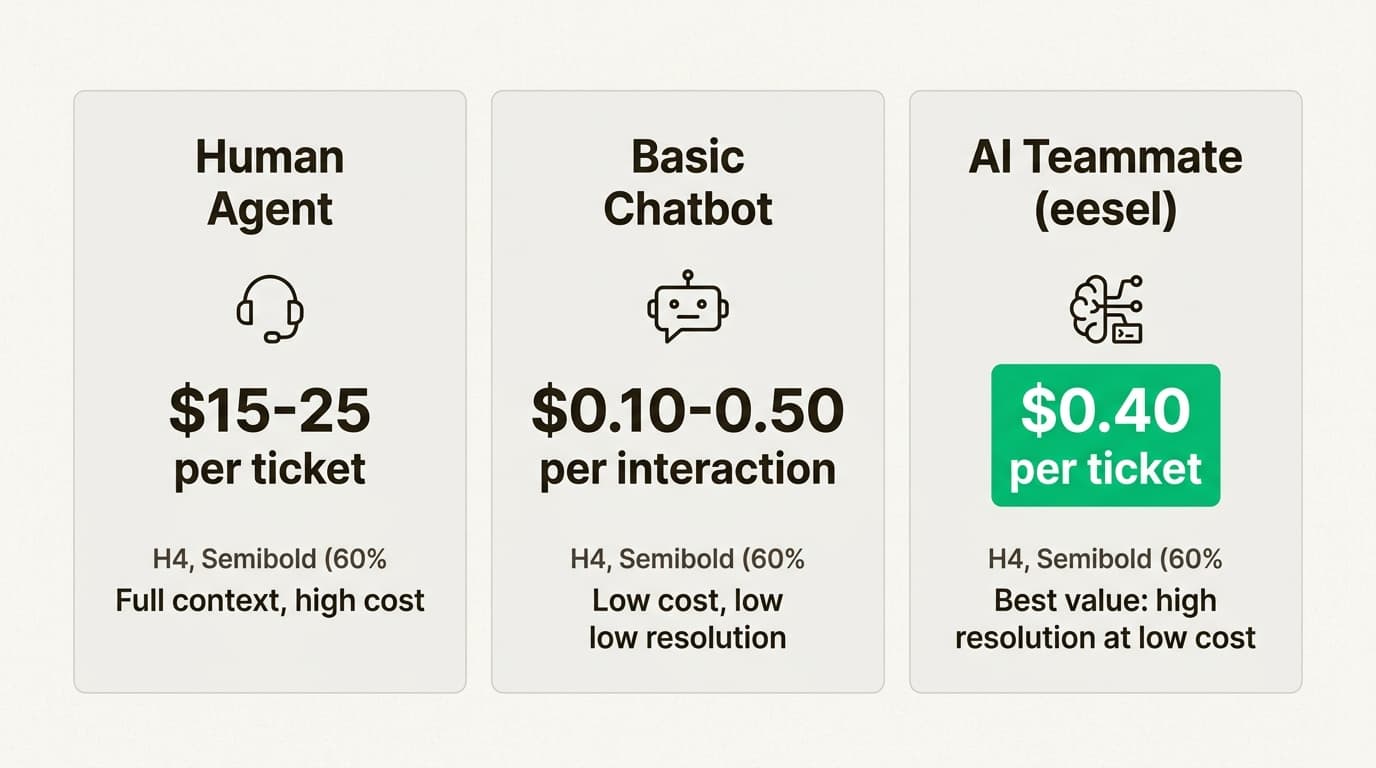
Our pricing reflects this outcome focus: $0.40 per ticket or chat session, $4.00 per blog post. No platform fees, no per-seat charges, no monthly minimums. You pay for what eesel actually does.
Strategies for maximizing your resolution rate
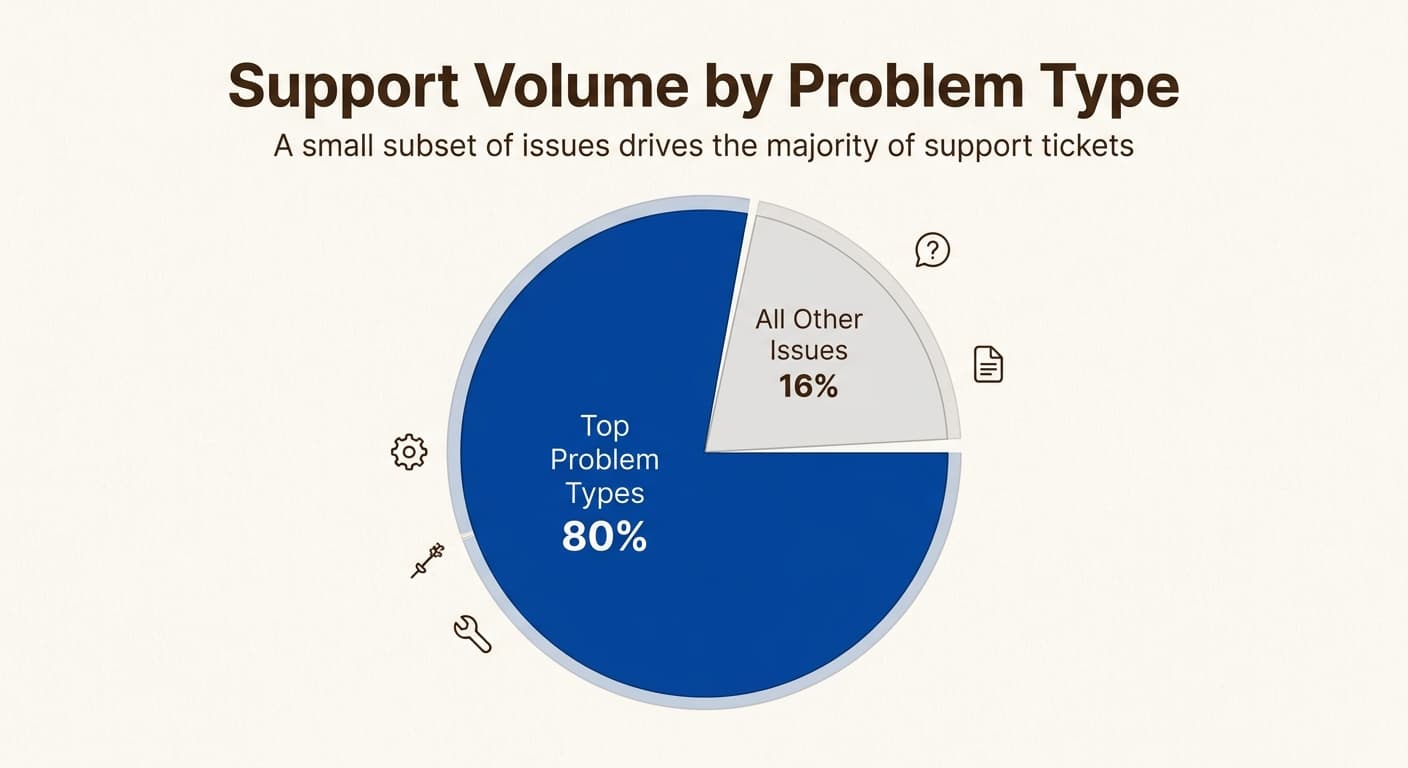
Getting to 80%+ resolution isn't about buying the fanciest AI. It's about identifying what your customers actually ask and building systems to handle it.
Audit your call types. Research shows that 3% of problem types drive 65% of support volume. Find those three or four issues, automate them completely, and you've solved the majority of your ticket load. Look at your macros and tags: which ones appear most often?
Proactive deflection beats reactive. Instead of waiting for customers to contact you, push relevant updates before they ask. Order shipped? Send tracking. Subscription renewing? Send a reminder with management links. Webex notes that proactive notifications reduce inbound volume by addressing issues before they become tickets.
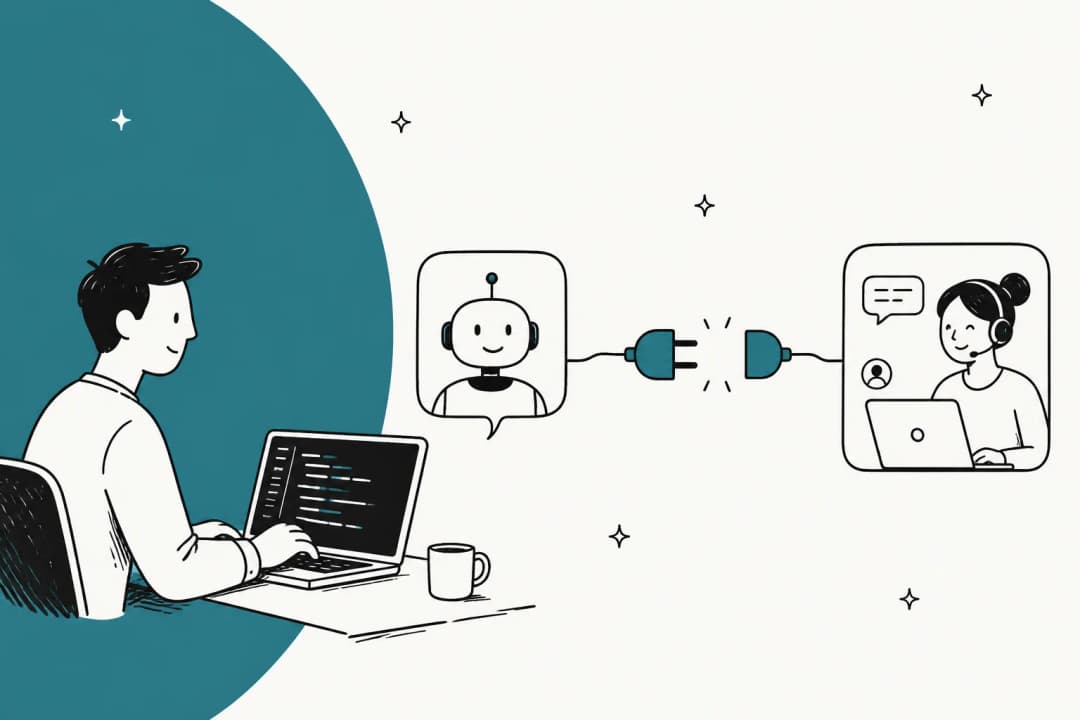
Design seamless handoffs. When AI can't solve something, it should escalate to a human with full context. The customer shouldn't repeat their story. Leading platforms like Zendesk AI emphasize context preservation during escalation; it's table stakes for modern support.
Enable continuous learning. Every time a human corrects an AI response, that correction should improve future answers. We built this into eesel: agent edits train the system automatically. No retraining cycles, no model updates to schedule.
Use the right tool for the ticket type. A billing dispute might need human judgment. A "where's my order" query should be fully automated. Define these boundaries clearly in plain English instructions: "If the refund request is over 30 days, politely decline and offer store credit."
The economics of AI resolution
The cost gap between human and AI support has never been wider. Human agents cost $15 to $25 per ticket when you factor in salary, benefits, training, and overhead. AI interactions cost $0.40 to $2.00 depending on the platform.
Here's how the numbers stack up:
| Channel | Cost per Interaction | Resolution Quality | Best For |
|---|---|---|---|
| Human agent | $15 to $25 | Highest, handles edge cases | Complex issues, VIP customers, escalations |
| Basic chatbot | $0.10 to $0.50 | Low, FAQ only | Simple questions, routing |
| AI teammate | $0.40 to $2.00 | High, resolves most tier-1 | Frontline support, 24/7 coverage |
eesel sits at $0.40 per ticket, making it one of the most affordable options for teams that want genuine resolution, not just deflection.
Calculating your return starts with the deflection rate formula:
Deflection Rate = (Tickets resolved without human) / (Total tickets) x 100
But resolution rate tells you more. A chatbot that deflects everyone to a knowledge base might have high deflection but low resolution. Customers who find their own answers count as resolved. Customers who give up in frustration don't.
Hiring your first AI teammate
Start with a free trial. We offer $50 in free usage with all features unlocked, no credit card required. That's enough to process real tickets and see actual resolution rates before committing.
Connect to your existing helpdesk. eesel integrates with Zendesk, Freshdesk, Intercom, HubSpot, Gorgias, and Help Scout. We also connect to knowledge sources like Google Drive, Confluence, Notion, and SharePoint. The setup is intentionally simple: authorize the connection, and eesel starts learning.
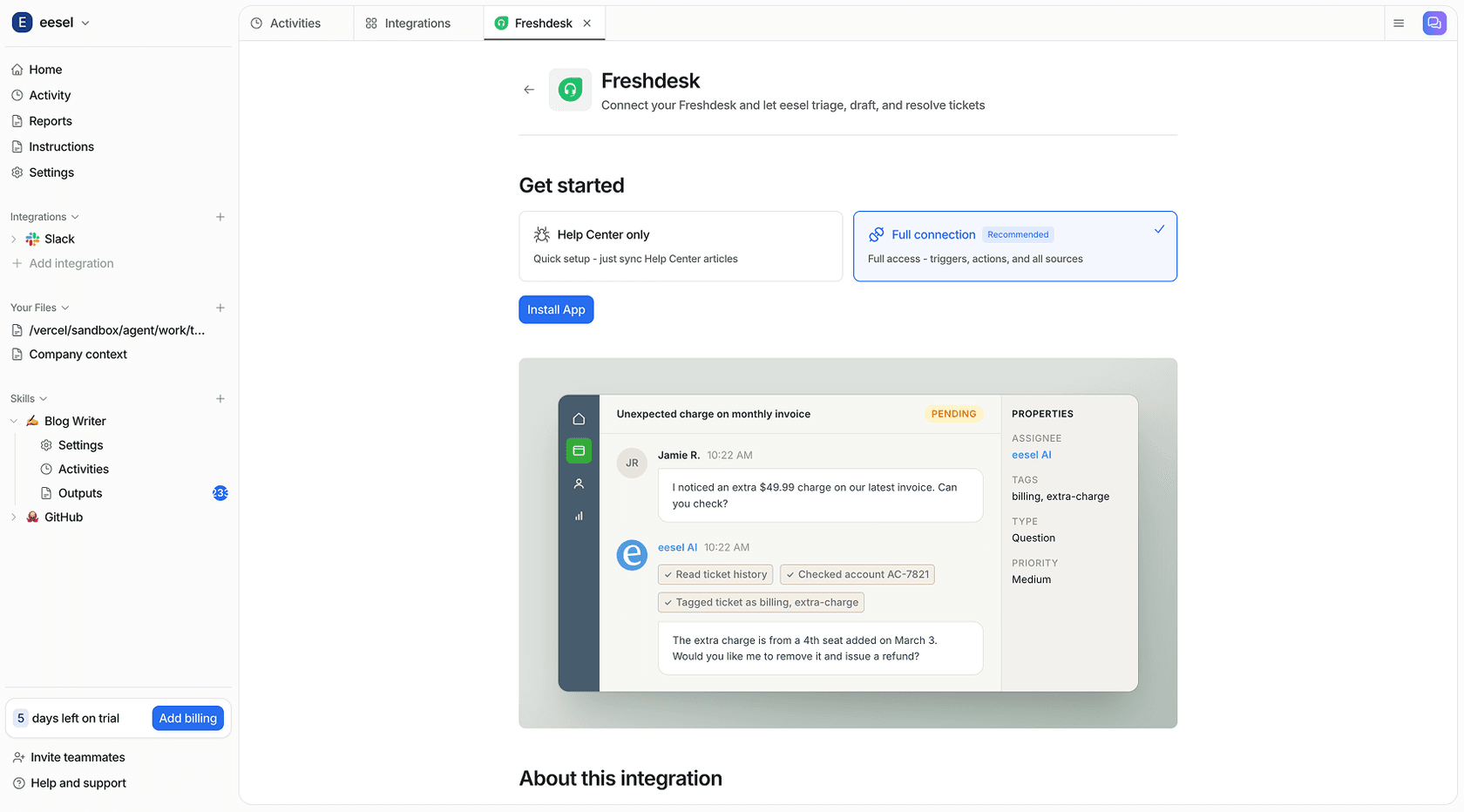
Run simulations first. Before letting AI respond to customers, test it on past tickets. See exactly what it would have said. Measure accuracy. Identify knowledge gaps. This is how you verify the teammate is ready for the job.
In 2026, outcomes matter more than platforms. The question isn't "which chatbot vendor has the most features?" It's "which AI teammate will actually resolve my tickets and improve over time?" Hire accordingly.