


AI can answer furniture delivery, assembly and showroom questions from your own documents, and it should only collect damage claims, returns and compensation requests for a person to decide. Run it inside the helpdesk you already use, and connect it to real order and delivery data so it never invents a date. If you are on Gorgias, Zendesk or Freshdesk, an AI teammate like eesel can do that, and with the eesel CLI a coding agent can upload your assembly guides and policies and run test questions before anything goes live.
Why are furniture support inboxes different from other retail?
I work the eesel support queue, and the furniture-shaped questions I see from stores come at predictable moments. A shirt arrives in three days. A sofa arrives in weeks, in a delivery window, on a truck, and it needs two people and a screwdriver. Each of those stages produces its own message.
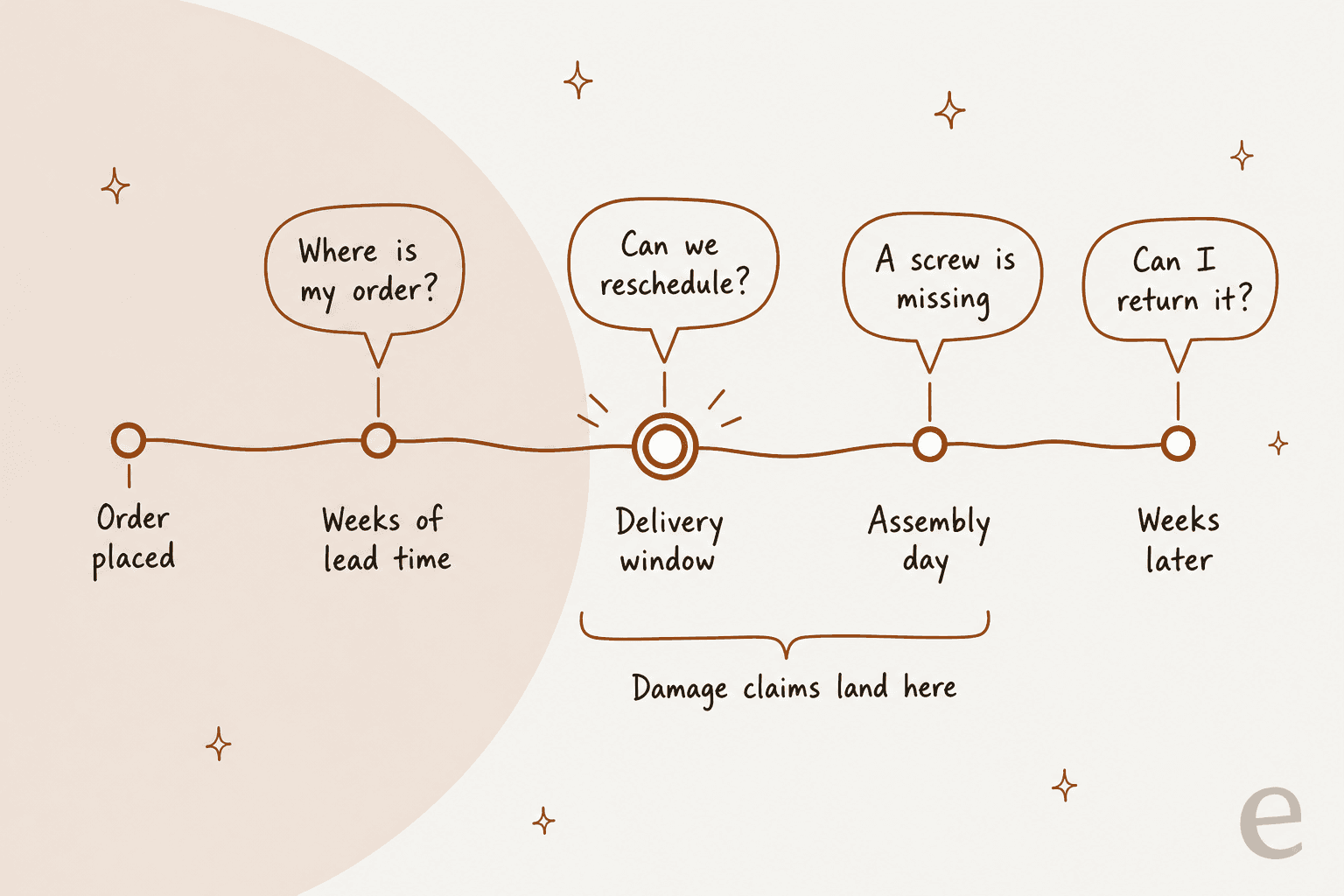
The same customer writes four different kinds of message over one order, and each one needs different data. "Where is my order?" needs the lead time and carrier status. "Can we reschedule?" needs the delivery schedule. "A screw is missing" needs the assembly guide and a part code. "Can I return it?" needs your policy and any restocking fee. That is why a generic chatbot with a FAQ only covers the first half of the inbox, and why I would split the work by who decides, the way AI for customer service does in general.
Which furniture messages can AI answer, and which need a person?
Think in three lanes. In the first, AI answers from information you have already published. In the second, it collects facts and prepares a case. In the third, a person decides because money, goods or goodwill are on the line. Tap a message type to see where I would put it.
Where does this furniture message belong?
Pick a message type.
Pick a message type to see which lane it sits in and what the AI needs to read.
The rule I use is simple: anything a customer could look up on your site is safe to automate, anything that moves money or a heavy product needs a person. Write the third lane down as hard handoff rules before you switch anything on.
How should AI handle a damaged furniture claim?
Collect, do not decide. Furniture retailers already publish what a good claim contains. Wayfair's help center says a damaged item can be reported within 30 days of delivery, or within 3 days when it came with its Full Delivery Service, and asks for photos of the entire item, the packaging and close-ups of the damage. It may also require the original item to be returned.
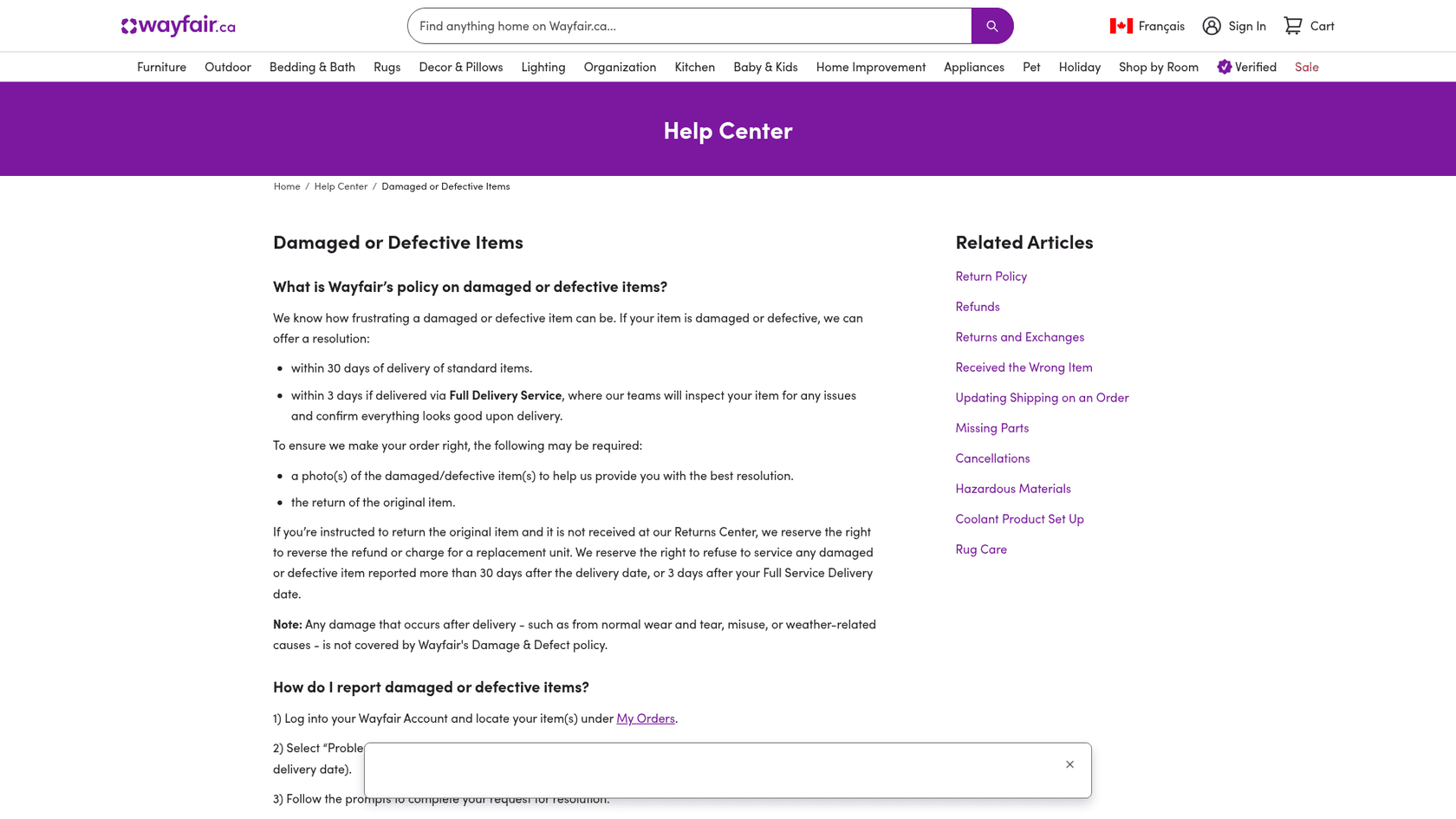
That list is a ready-made intake script. An AI can ask for the same things in the same order, and most teams type that list out by hand on every damage ticket.
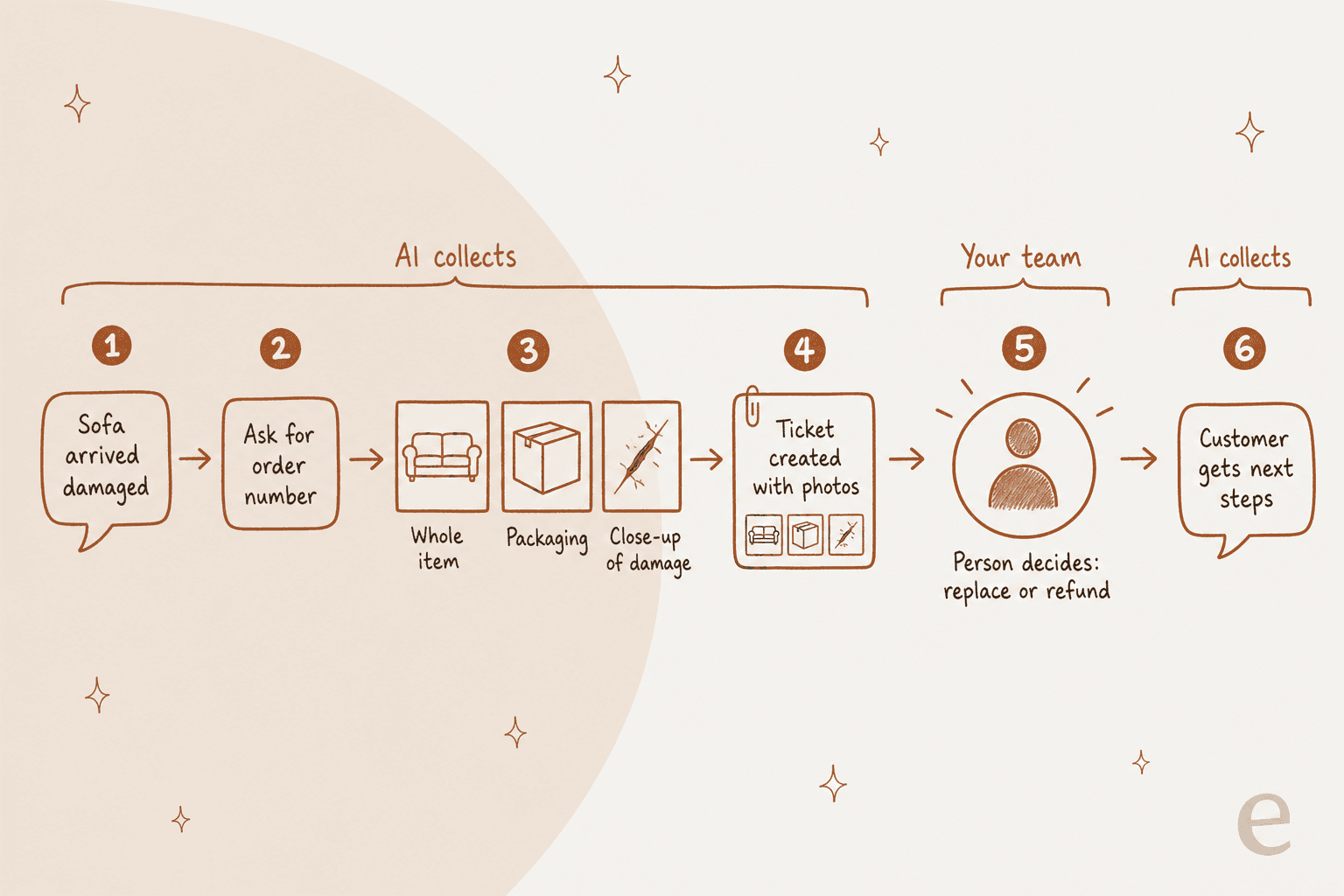
Here is what I would put in the script:
- Ask for the order number and match it to the order and delivery date, so the claim window is known.
- Ask for three photos: the whole item, the packaging, and a close-up of the damage.
- Create the ticket with the photos attached and the claim window noted.
- Tell the customer what happens next, without promising a replacement or a refund.
- Leave the decision to a person, who knows the freight claim rules and whether the item is in stock.
Missing parts are a different shape of problem. IKEA's German missing parts page says a part with a 6- or 8-digit spare part code can be ordered free of charge and arrives by post in three to five working days, and a part without a code goes through customer service with proof of purchase. That split, code or no code, is exactly the question an AI can ask first. For the wider picture, see AI for warranty claims.
What data does AI need so it never invents a delivery date?
It needs to read the real thing, or say it cannot. A support manager testing eesel on an ecommerce queue put the worry bluntly:
"stop promising customer things we cant do. we cannot guarantee this customer's order to them by friday"
an eCommerce support admin, in an eesel setup chat
That is the failure I would test first. Furniture gives it more ways to be wrong than most shops, since dates move with production, freight and crews. Give the AI four sources:
- The order record, so it can read what was bought and when.
- Delivery status or schedule, from your carrier or dispatch tool, not from a policy page.
- Your lead-time and backorder rules, written down per product line.
- Assembly guides, care guides and the returns policy, as documents it can quote.
When it cannot find the date, the right answer is a handoff, not a guess. This is the core of hallucination prevention, and the delay side is covered in shipping delay notifications and Gorgias delivery status checks.
Which AI tools fit a furniture store?
I found no tool built only for furniture, so the real choice is the helpdesk your messages already land in. Prices below are from each vendor's own pages as of November 2026.
Gorgias AI Agent
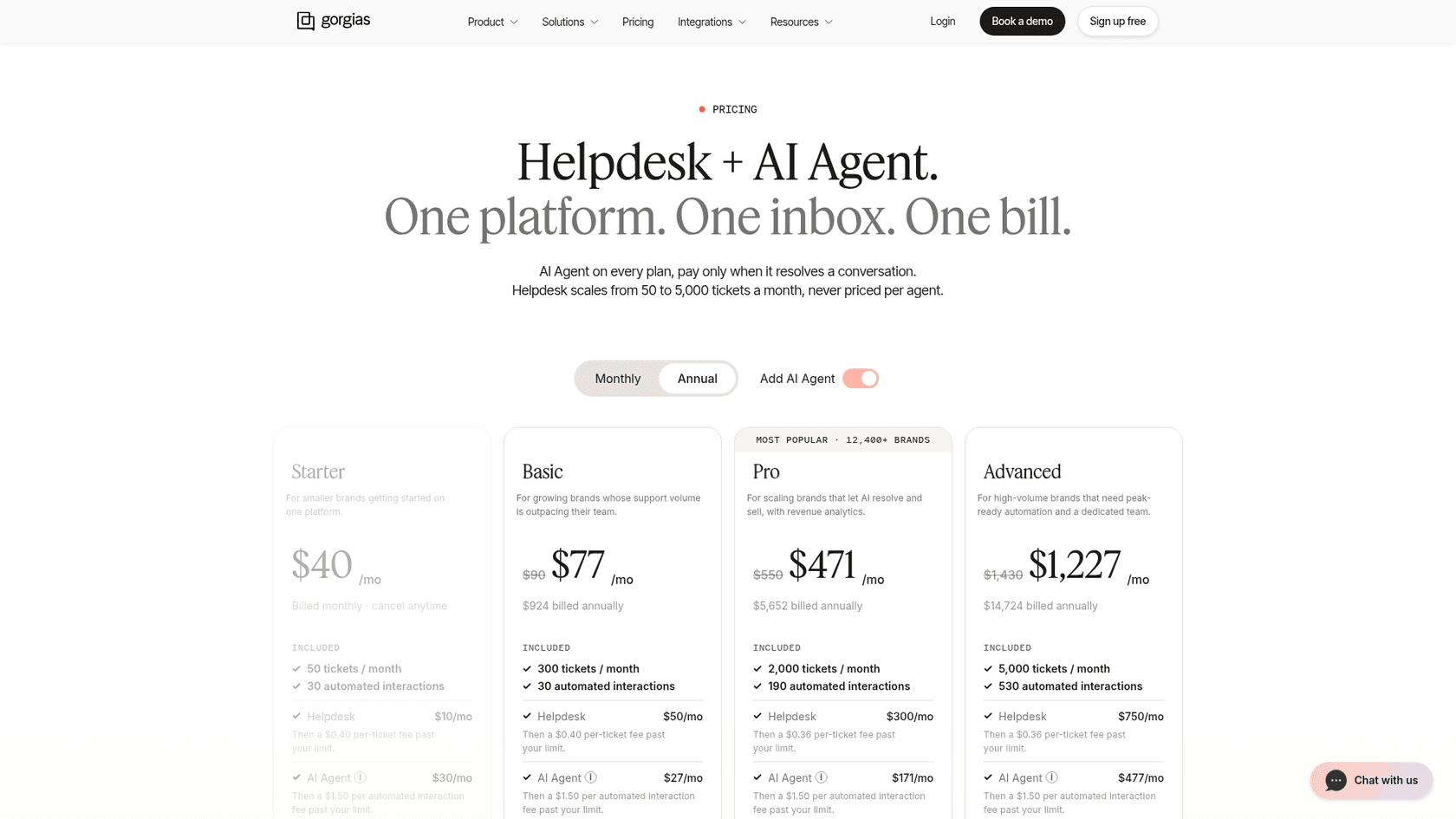
Gorgias is the natural fit if you sell on Shopify. Its pricing page shows the Basic plan with AI Agent at $77 a month billed annually ($90 monthly) for 300 tickets and 30 automated interactions, then $1.50 per automated interaction past the limit.
Its docs list Shopify actions: cancel an order that is still unfulfilled, edit the shipping address, remove or replace an item, and reship an order for free when it arrives damaged or is lost. For a $25 shirt that is fine. For a $1,800 sofa I would keep reship switched off and let a person approve it. See Gorgias AI Agent actions and Gorgias AI Agent pricing.
Zendesk AI agents
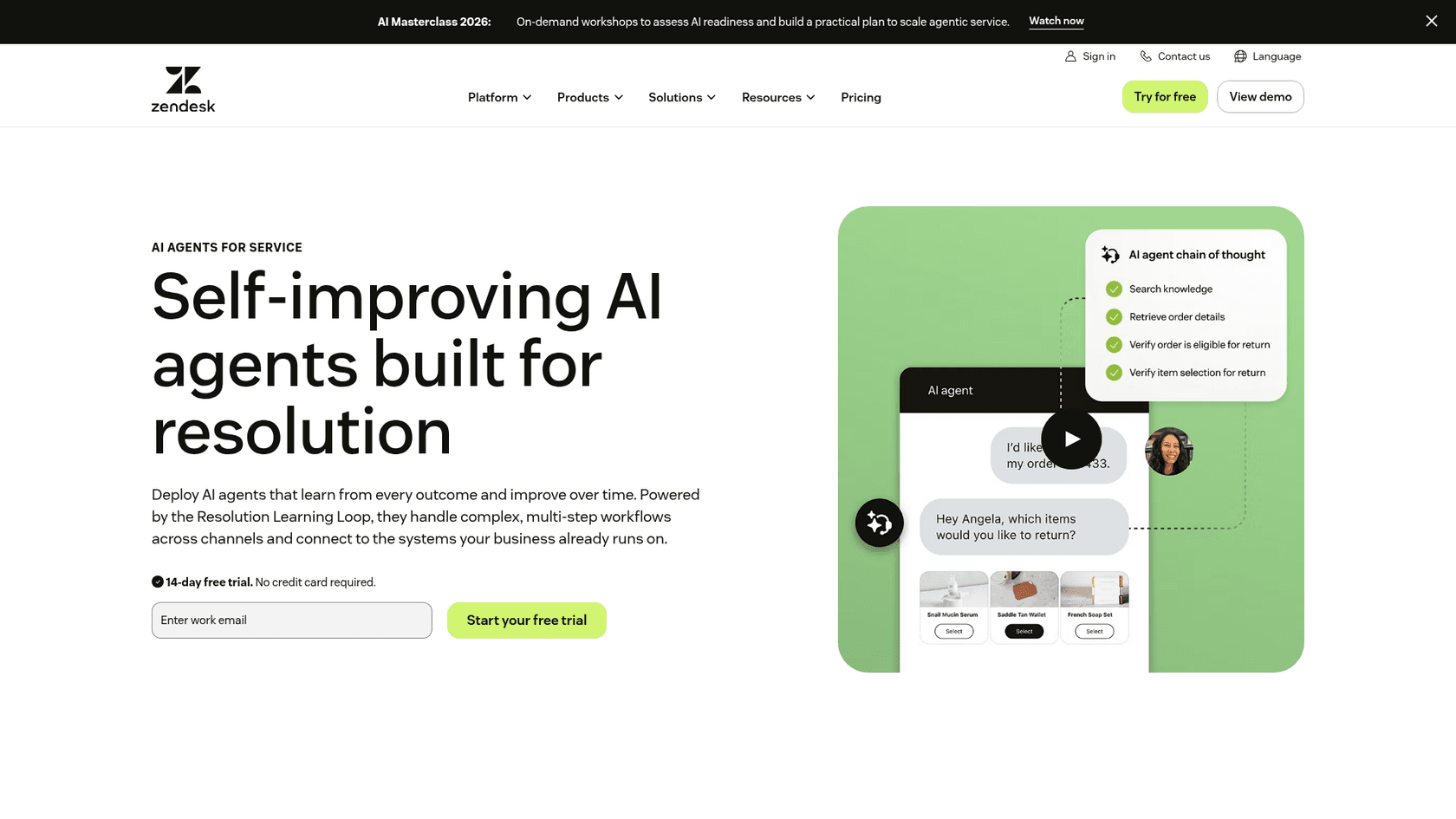
Zendesk includes AI agents in its plans and bills per automated resolution: $1.50 committed or $2.00 pay-as-you-go. Its AI agents page lists social, web, mobile, voice and email channels and 80 languages, which suits a retailer with several showrooms and regions. See Zendesk pricing.
Freshdesk Freddy AI Agent
Freshdesk lists Freddy AI Agent on Growth ($19), Pro ($55) and Enterprise ($89) per agent per month billed annually, with the first 500 sessions included and extra sessions at $49 per 100.
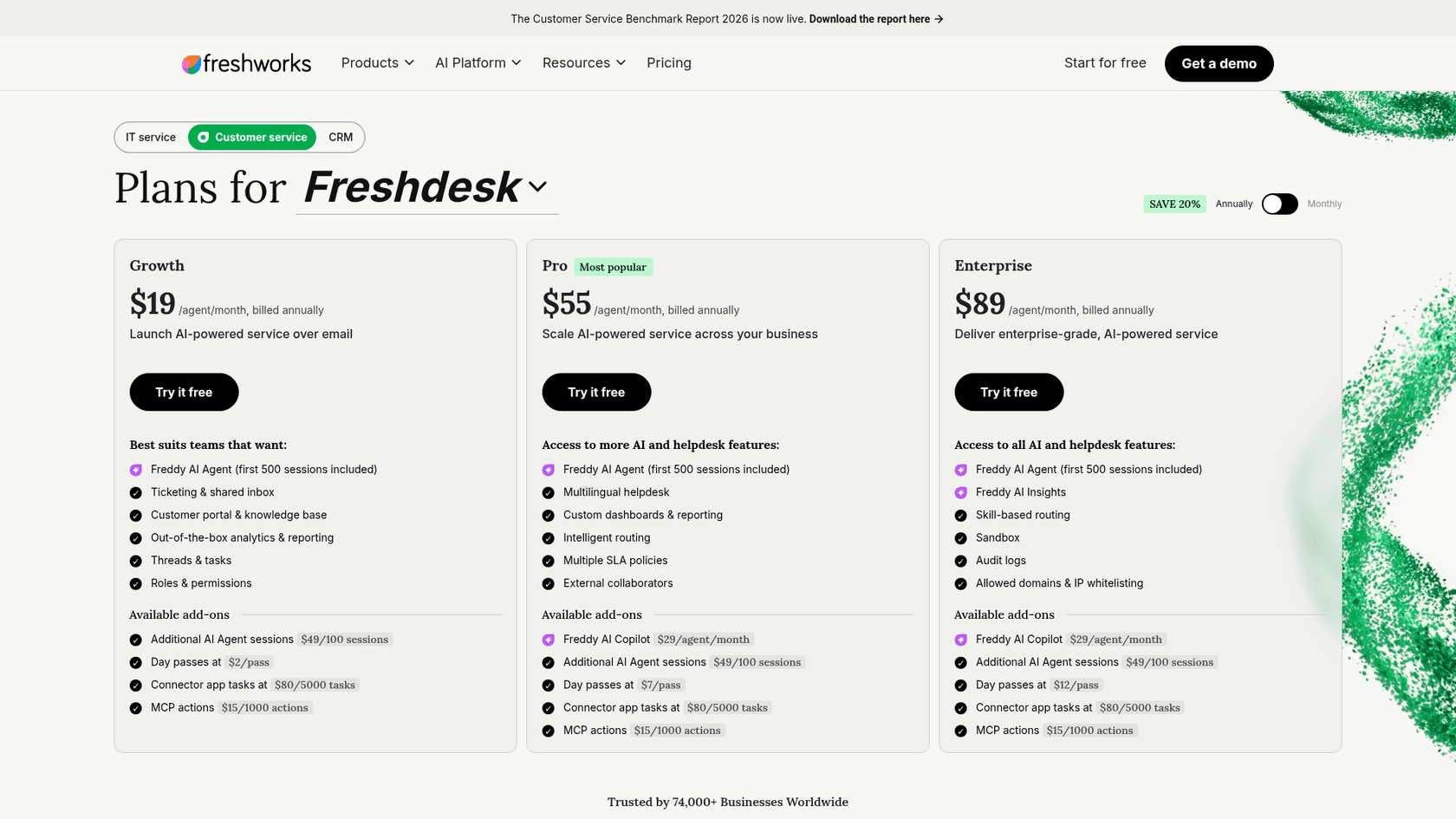
An email session counts as a 72-hour window from the first email, so one long delivery thread is one session. See AI for Freshdesk.
respond.io for chat-app inboxes
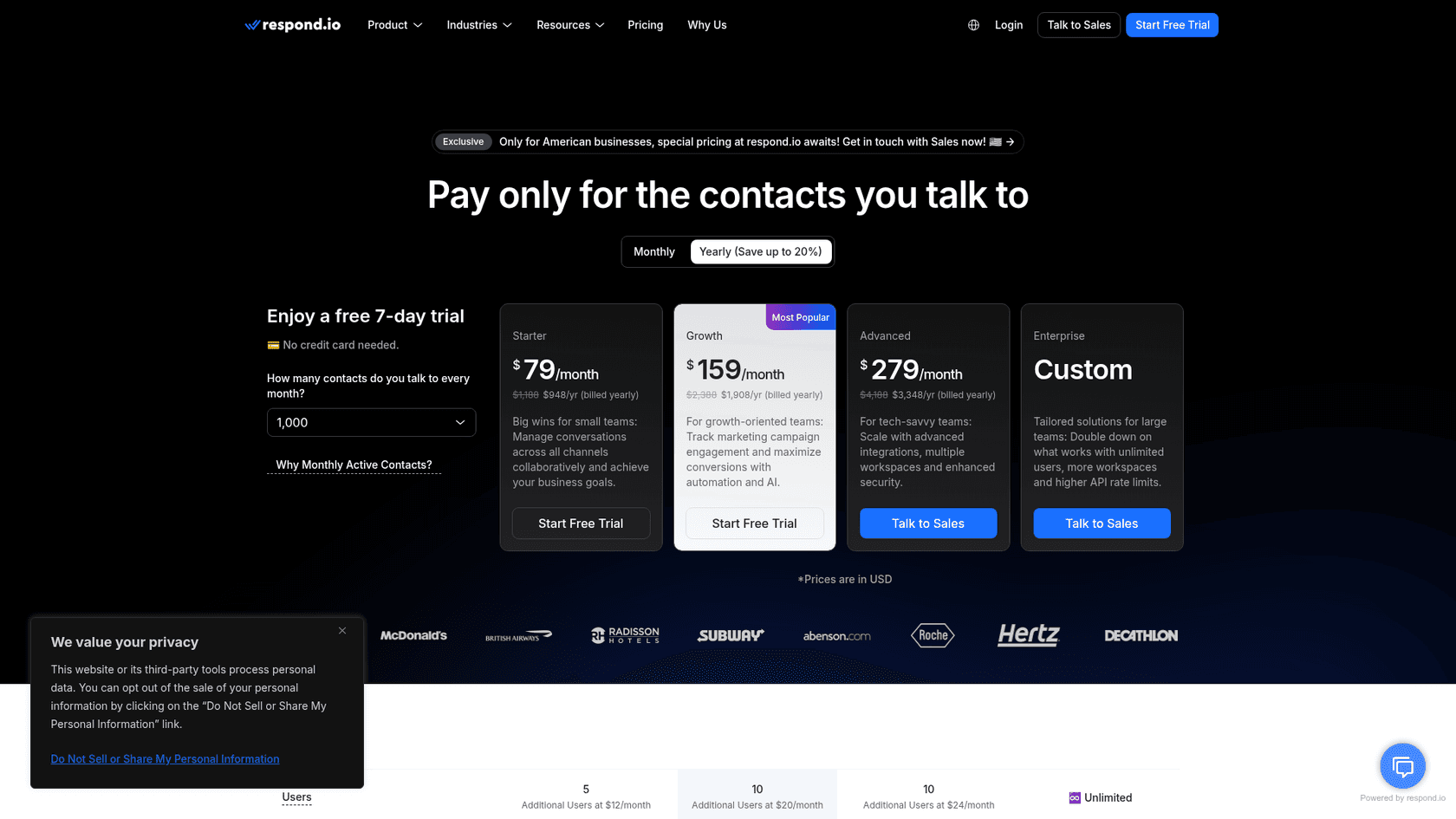
If your customers mostly write on WhatsApp and similar apps, respond.io is built around that. Its pricing is by monthly active contacts, and AI Agents appear on Growth from $159 a month on monthly billing.
Compare it in respond.io alternatives.
| Option | Best at | Price signal |
|---|---|---|
| Gorgias AI Agent | Shopify order edits | $1.50 per interaction past limit |
| Zendesk AI agents | Many channels and languages | $1.50 or $2.00 per resolution |
| Freshdesk Freddy | Email-heavy teams | $49 per 100 extra sessions |
| respond.io | WhatsApp-first inboxes | Growth from $159 a month |
| eesel | AI on the helpdesk you run | From $299 for 500 credits |
Where does eesel fit for a furniture store?
eesel is an AI teammate you hire for a job, and here that job is the AI helpdesk teammate. It joins the helpdesk you already run, like Gorgias, Zendesk or Freshdesk, learns from your help center, macros and past tickets, and works the queue next to your team. I do not have a published furniture story, so here are three from bulky or damage-prone goods.
Koffer.ch sells luggage online on Freshdesk. In one month eesel drafted about 100 replies on about 60 tickets, and for damage and warranty claims the draft asks for photos and order details while the team decides. Nordbutiker sells e-bikes and mobility scooters across four countries on Zendesk, with a bot per brand, and spare parts and warranty cases go to a person. SaunaSpace ships handcrafted infrared saunas and has eesel draft Gorgias replies on shipping, warranty and setup from its help center, with a person sending each one.
Pricing is on the eesel pricing page: a 7-day trial with 100 credits, then plans from $299 for 500 credits, where a ticket or chat is one credit. Someone with admin access still approves the helpdesk connection.
How do you roll it out without upsetting customers?
I would go in this order and stop at any step where the answers are still weak.
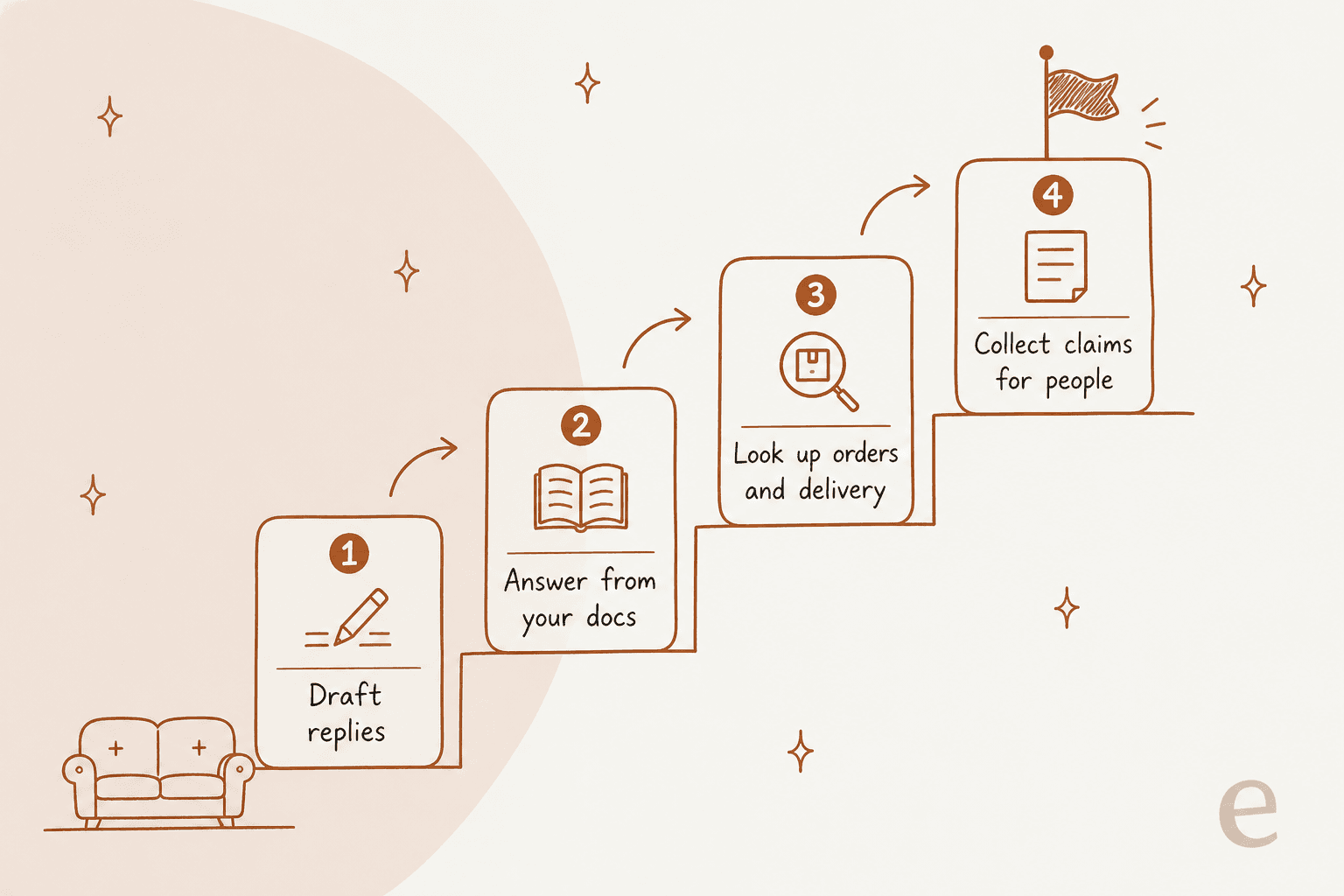
- Start with drafts. Your team reads every reply for the first weeks.
- Load your documents. Assembly guides, delivery and returns policies, showroom hours, financing terms.
- Connect order and delivery data, so date answers are real.
- Add damage intake, with the photo script above and a person deciding.
- Replay old tickets. Run 50 to 100 through it, as in simulation testing, and score it with a pilot scorecard.
Track deflection rate, first response time and escalations, and check AI support security before you connect order data.
Try eesel in your furniture helpdesk
If delivery, assembly and damage messages land in Gorgias, Zendesk or Freshdesk, eesel works like a new support hire: it learns your assembly guides and delivery policy, answers the repeatable messages, and collects photos and order numbers for your team to decide. Start on drafts and replay last month's tickets first.
Try eesel free for 7 days, or read about AI for tier-1 deflection first.
Frequently Asked Questions
What is the best AI for furniture retailers?
There is no furniture-only tool I can point to, so the best pick is the AI that sits inside the helpdesk you already use. On Gorgias or Zendesk, start with their built-in AI or add an AI helpdesk agent on top. See the best AI for ecommerce support for a wider list.
Can AI handle damaged furniture claims?
It can collect the claim, not decide it. Have it ask for the order number and photos of the whole item, the packaging and the damage, then pass a complete ticket to a person. Replacements and refunds stay with your team, as covered in can AI handle refunds and returns.
Can AI give accurate delivery dates for furniture?
Only if it can read the real order and delivery schedule. Without that connection it should quote your published lead times and hand the exact date to a person. Read about AI order tracking and WISMO automation.
How can AI help with furniture assembly questions?
Load your assembly manuals, parts lists and care guides into the AI knowledge base, and it can answer step and part questions from them. When a part is missing, it should collect the product, the part code and a photo, then hand over.
How much does AI customer support cost for a furniture store?
Gorgias lists AI Agent at $1.50 per automated interaction past the plan limit, and Zendesk at $1.50 committed or $2.00 pay-as-you-go per automated resolution. Freshdesk sells extra Freddy AI Agent sessions at $49 per 100. eesel is a flat monthly plan from $299 for 500 credits. Compare with your cost per resolution.
Should AI process returns with restocking fees?
It should explain the fee and the window from your policy, then send the request to your returns process or a person. Money decisions are the line I would not let it cross. See how to automate returns.
Can AI answer showroom and WhatsApp messages?
Yes, if the tool covers the channel. Showroom hours, directions and stock are fixed facts it can answer from your site. For chat apps, see AI WhatsApp support for ecommerce and the best AI for WhatsApp support.
How do I test an AI before it talks to furniture customers?
Replay 50 to 100 old tickets and read every answer, especially delivery and damage ones. A simulation test and a pilot scorecard show which categories are safe to switch on.