AI for lost package claims: what to automate, and the deadlines it has to know

Rama Adi

Katelin Teen
Last edited November 25, 2026

AI for lost package claims works when it does the customer side of the claim: it reads the order and its tracking, works out which of four cases the parcel is in, and lines up a refund or reship for a person to approve. It can't make a carrier pay, and the deadlines it has to respect differ a lot: USPS takes a lost-package claim on Priority Mail or Ground Advantage only from day 15 to day 60 after mailing, Shopify's shipping insurance from 24 hours to 120 days, and Route within 30 days of the last tracking update.
The case that costs stores the most is "tracking says delivered, but it never came". USPS doesn't pay for a loss after delivery, so that one is your policy, or your shipping protection's, not a carrier claim.
My take, as someone who builds eesel's integrations: let an AI answer every "where's my package" message from the real tracking, tag the lost ones so your claim gets filed inside its window, and keep the money step with a person. That's how eesel runs it: it checks the Shopify order and fulfilment before it replies, and a refund waits for your team's yes. If you work with a coding agent such as Claude Code, it can use the eesel CLI to load your lost-parcel policy and macros and run test questions before anything goes live; connecting your helpdesk still needs an admin's approval.
What is a lost package claim for an online store?
A lost package claim is two claims that run on different clocks. The first is the shopper's claim to you: "my order never arrived", which lands in your helpdesk as a WISMO ticket with a worried tone. The second is your claim to whoever carries the risk: the carrier, the insurer behind your shipping labels, or a shipping protection app the customer paid for at checkout.
The shopper wants an answer today. The carrier won't take your claim until the parcel has been missing long enough, and stops taking it a few weeks later. The usual mess comes from mixing the two: a team refunds on day 3, forgets the claim, and the window closes with the money gone. Or the team tells the shopper to "wait for the carrier's investigation" for two weeks, and the shopper files a chargeback instead.
An AI agent is good at the first claim and at keeping the second one on schedule. It can't sign a carrier claim form for you, and I wouldn't want it to.
Which of the four cases is it?
"My package never came" covers four different situations, and tracking tells you which one you're in. Shopify's own fulfilment event statuses include IN_TRANSIT, DELAYED, ATTEMPTED_DELIVERY, DELIVERED and FAILURE, and tracking tools such as AfterShip use similar ones, plus Expired for a shipment with no tracking information for 30 days.
| What tracking shows | What it usually means | What the shopper should hear | Is there a claim? |
|---|---|---|---|
| Recent scans, not yet past the expected date | Still moving | The expected date, and when to write back | Not yet |
| No new scan for about a week | Stalled, possibly lost | You're on it, and what happens on which date | Soon, once the carrier or protection window opens |
| Marked delivered, shopper says no | Delivered not received: misdelivery, theft or an early scan | Check neighbours, mailroom and safe spots; you'll follow up in two days | Rarely with the carrier; often with shipping protection |
| Exception, failed attempt or returning to sender | Address problem, failed delivery or held parcel | What went wrong and the next step | Depends on why |
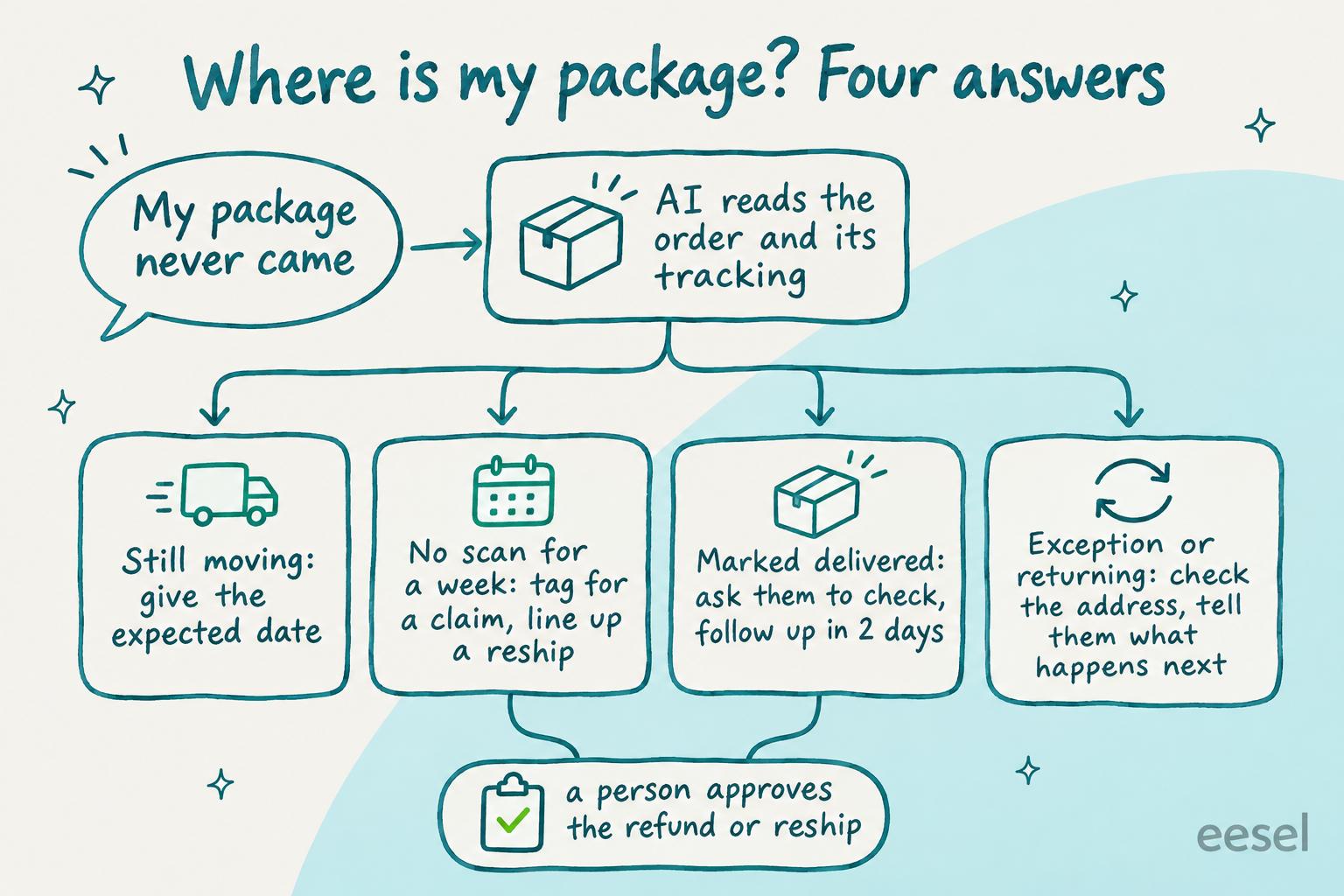
The first and last cases are where an AI earns its keep, much like a good order tracking chatbot: they're most of the volume, and the answer is in the data. Question Beauty runs it this way. For a delivery question eesel finds the customer by email, checks the order and its fulfilment status, and answers with the tracking details. If tracking already answers the question, eesel says so and closes the ticket; refunds and complaints go to a person with a note. In a month it looked up about 290 Shopify orders and closed about 280 tickets without a person.
The middle two cases are where the claim clocks start, and where money moves.
Which claim clock is the parcel on?
Each party that might pay has its own rule for when a parcel counts as lost and how long you have to claim. Here's what each one's own terms say for a domestic US parcel, checked on 25 November 2026:
| Who pays | When it counts as lost | Filing window | Worth knowing |
|---|---|---|---|
| USPS Priority Mail, Ground Advantage | You can claim from 15 days after mailing | Up to 60 days after mailing | Only insured mail; Ground Advantage includes up to $100 |
| USPS Priority Mail Express | From 7 days after mailing | Up to 60 days after mailing | On any insured USPS parcel, sender or recipient can file |
| UPS | Not stated as a day count | Start within 60 days of the scheduled delivery | Payment goes to the shipper |
| FedEx | Not stated as a day count | Within nine months of the shipment date | Damaged or missing contents: 60 days |
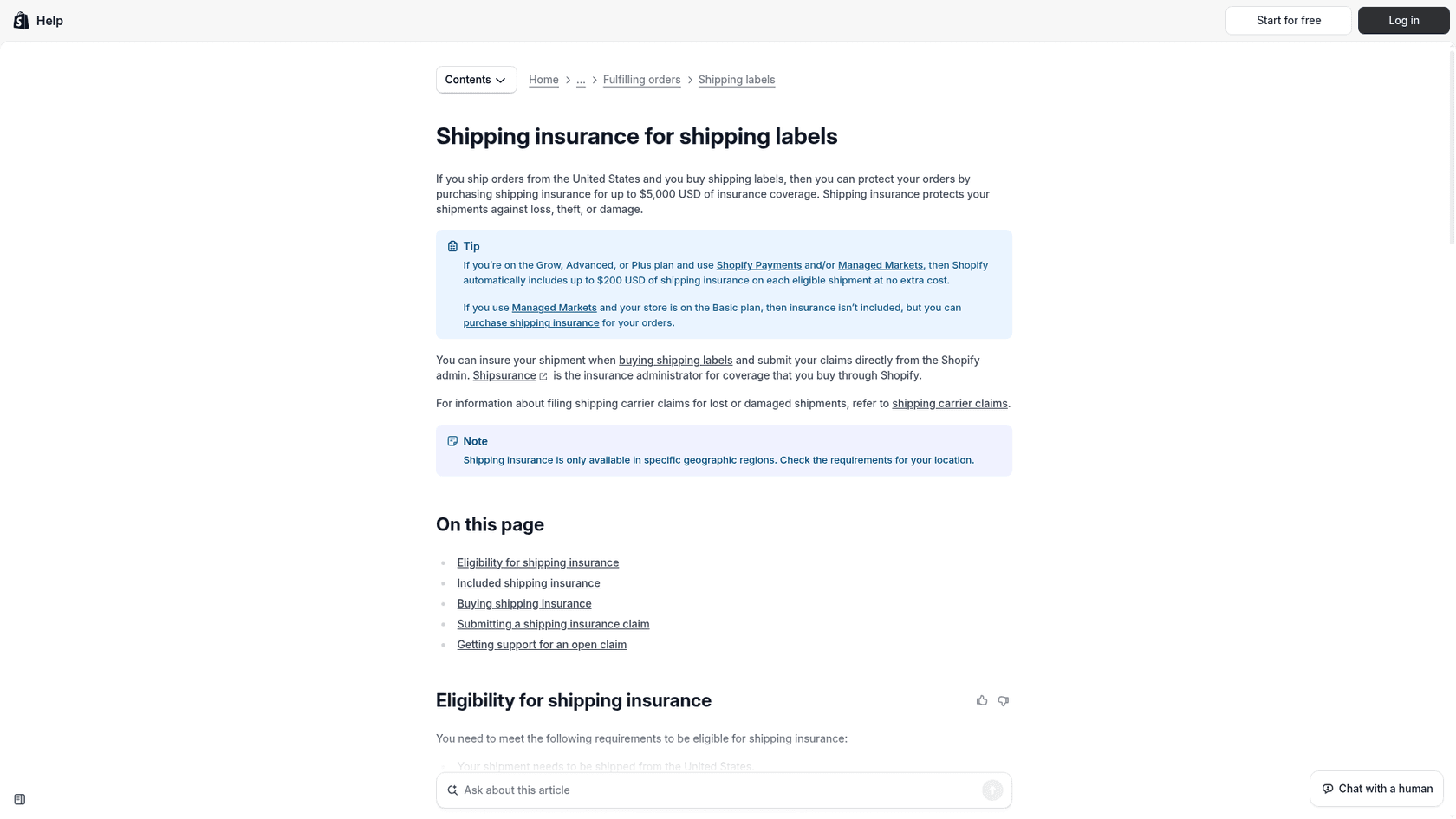
| Shopify Shipping insurance (Shipsurance) | Claim from 24 hours after shipping | Up to 120 days from the shipping date | Up to $200 included on Grow, Advanced and Plus with Shopify Payments |
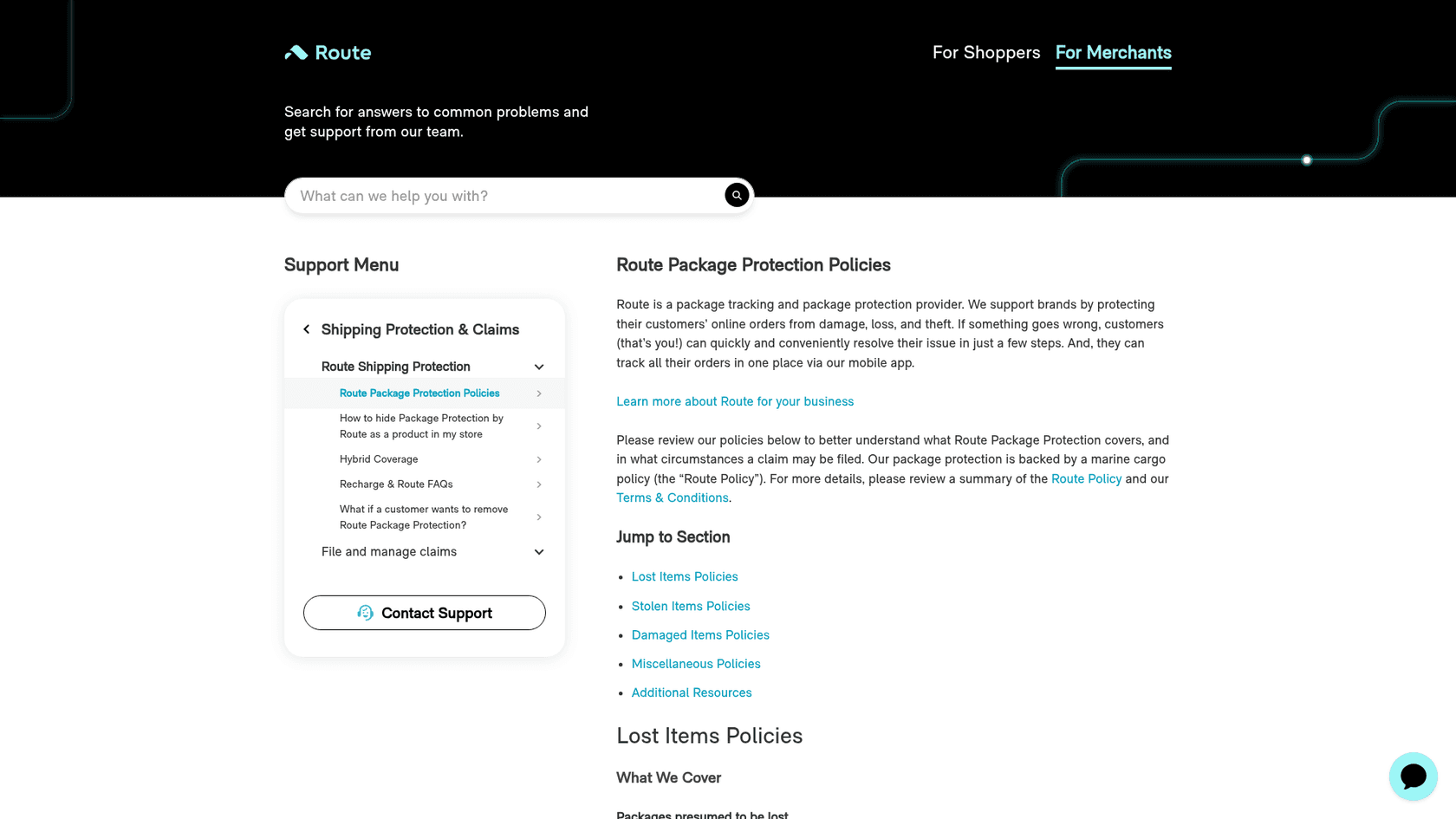
| Route | 7 days with no tracking update, or 48 hours past the carrier's estimated date | Within 30 days of the last tracking update | Delivered-but-missing: 5 to 30 days after the delivery date |
| Seel Worry-Free Purchase | Not delivered 30 days after fulfilment | Within 90 days of the order date | Delivered-but-missing: within 7 days of the delivered scan |

Two things in that table catch teams out.
First, the clocks start from different events. USPS counts from the mailing date, UPS from the scheduled delivery, Route from the last tracking update and Seel from fulfilment. "We wait 14 days and then file" is a rule that's early for USPS and on time for Route. An AI reading the order can hold all of these at once; a macro can't.
Second, insurance changes who you claim from. Shopify's help centre says that if a label carries Shopify's shipping insurance, a lost, damaged or stolen claim goes to Shipsurance, not the carrier, and that "Shopify doesn't support insurance claims", so open claims go to Shipsurance directly. It's filed from the order in the Shopify admin with File claim.
For USPS the filing periods sit under "Step 1" on its claims page, and the rules behind them are in DMM 609. USPS says it usually decides a claim in 5 to 10 days. Uninsured mail can't be claimed at all; USPS points you to a Missing Mail search instead.

Why is "delivered but not received" the hard case?
Because the carrier's own record says the job is done. USPS's rules list "Loss, damage, or have missing contents, that occurred after delivery by the USPS" among the claims it doesn't pay (DMM 609, 4.3). So when the scan says delivered, the money usually comes from you or from shipping protection, and the shopper's patience is the thing you're managing.
Shopify merchants run into it all the time:
"I have had a few customers saying they didn't get their package even though USPS says delivered?? I have one customer threatening charge back. I have never won a charge back appeal."

Shipping protection apps are built for this case, with tight windows. Route treats delivered-but-missing as "stolen" and wants the claim "no sooner than 5 days" after the delivery date, "to account for the possibility that the package may be found on the premises or has been marked “delivered” prematurely by the carrier", and within 30 days. Seel's window is the opposite shape: a porch-piracy claim has to be reported within 7 days of the delivered scan.
This is where the first reply matters most. A calm message that gives the delivered date, asks the shopper to check with neighbours and the mailroom, and promises a follow-up on a named date keeps the conversation with you. Then the follow-up has to happen, and that's the part an AI is better at than a busy team: it doesn't forget the second message. The refund and shipping macros post has wording you can adapt for both.
What I'd leave with a person: the decision to refund or reship a delivered order, and anything that looks like a repeat claim. The fraud-related support guide covers how to spot those without accusing an honest customer.
What should an AI do on a lost package ticket?
Here's the workflow I'd set up, in order. It works the same whether the AI is eesel, your helpdesk's own agent or something you've built.
- Find the order and check it belongs to the person asking. Match the email to the order before sharing any tracking. eesel's Shopify order lookup returns tracking only when the email matches the order.
- Read the fulfilment's tracking events, not the order status. Shopify's fulfilment events include "label purchased" and "label printed", which come before "carrier picked up", so "fulfilled" alone doesn't say the parcel moved. The events say whether it's moving, stalled, delivered or in trouble.
- Place it in one of the four cases and reply with the matching answer and a date. "Your parcel last scanned in Memphis on Tuesday; if it hasn't moved by Friday we'll replace it" beats "we've escalated this".
- For a stalled parcel, start the claim clock. Tag the order (for example
lost-claim) so your team, or a Shopify Flow on that tag, files the carrier or insurer claim inside its window. Leave an internal note with the tracking number, carrier, last scan and the earliest and latest filing dates. - Line up the fix, and let a person approve it. A reship can be a draft order for your team to confirm; a refund waits for a yes, the same split covered in AI refund automation. eesel's approval rules let the support lead approve from Slack, email or the dashboard, with the reason shown.
- Come back when you said you would. Delivered-but-missing needs the second message two days later, with the claim or refund outcome.
Steps 1 to 4 are where the time goes in most queues, and none of them need a person's judgement. Step 5 does, which makes it a natural place for human-in-the-loop review, and that's the line I'd draw. The refund guardrails post goes deeper on setting it, and customer support approval workflows covers the approval side.
If you'd rather have the protection app do steps 4 and 5, that's what Route's claims process is for. Route says it screens each claim and, if it qualifies, triggers the refund through your store or a replacement order that shows $0 paid in Shopify, then reimburses you. The shopper files on Route's site; your AI's job is to send them there with the right expectations, and to answer the shoppers who wrote to you anyway.
Check your parcel's claim clocks
Pick what tracking shows, the carrier and any protection, and the days so far. It works out which windows are open today, for a domestic US parcel, from the rules in the table above.
Change the tracking state, carrier and days to see which claim windows are open for your parcel today.
Two caveats on the widget. It treats days since shipping as days since mailing, which is close but not exact for USPS. And Seel's 90-day limit runs from the order date, which I've left out to keep it to two inputs, so check that one yourself on an old order.
What are the common mistakes with lost package claims?
These are the ones I'd check a support setup for first, AI or not:
- Refunding before the claim is filed. Once the shopper has their money, nobody chases the claim, and the window closes. Tag first, refund second, or let the protection app do both.
- One waiting period for every carrier. "Wait 14 days" is a day early for USPS Priority Mail, a week after Route would already treat a stalled parcel as lost, and far too early for Seel's 30 days.
- Telling a delivered-but-missing shopper to "contact the carrier". USPS won't pay on it, and the shopper hears "not my problem". Give them the checks to do and a date you'll come back.
- Claiming on a label with no insurance. USPS only pays on insured mail, and Shopify's own help centre says USPS First Class Mail labels aren't eligible for its insurance. Know which of your shipping methods carry cover.
- Answering from the order status. "Fulfilled" can mean a label exists and nothing has moved yet. Read the tracking events.
- No second message. The follow-up on the promised date is what keeps a "delivered" case from turning into a dispute. The proactive support guide covers outbound messages, and shipping delay notifications covers telling shoppers before they ask.
If lost parcels are a big share of your tickets, and they will be after Black Friday, start upstream: tracking on every fulfilment and notifications switched on cut the "where is it" messages before any AI is involved. How to scale ecommerce support puts those fixes in order, and the order tracking guide covers the first message.
Try eesel on your "where's my package" tickets
If lost parcels and delivery questions fill your queue, eesel is what I'd test first. It joins the helpdesk you already use (Gorgias, Zendesk, Freshdesk and others) with your Shopify store connected, reads the order and its fulfilment before it replies, and answers in the same queue, nights and weekends included.
What it may do depends on who's asking. A verified customer can get their tracking straight away; a reship is created as a draft order for your team to confirm; a refund waits for your support lead's yes, set in actions and approvals. It can tag the order for your claim workflow and leave a note with the tracking evidence, so whoever files the claim has everything. Filing the claim with USPS, Route or Shipsurance stays with your team or the protection app; eesel doesn't do that part.
Pricing is from $299 a month for 500 credits, where a ticket or chat is 1 credit however many replies it takes, and the trial is 7 days with 100 credits and no card. That's enough to connect your helpdesk and Shopify, read eesel's drafts on last week's lost-parcel tickets, and see where your claim deadlines were slipping. Try eesel, or compare it with Gorgias's AI if you're on Gorgias already.