
What "Meta Muse for ServiceNow" actually means
Meta's 2026 naming takes a minute to untangle, and I read a lot of API docs for a living. Three Meta products carry the Muse name or sit close to it, but only one of them talks to your customers:
- Muse, the personal AI agent Meta launched in September for consumer errands. It isn't built to answer a business's customers.
- Muse Spark 1.3, the model, sold through the Meta Model API. You can build a ServiceNow bot on it, which I get to further down. The Muse Spark 1.3 overview has the model detail.
- Meta Business Agent, which Meta launched in June as the AI that answers your customers on WhatsApp, Messenger and Instagram. This is the product a ServiceNow team is really weighing.
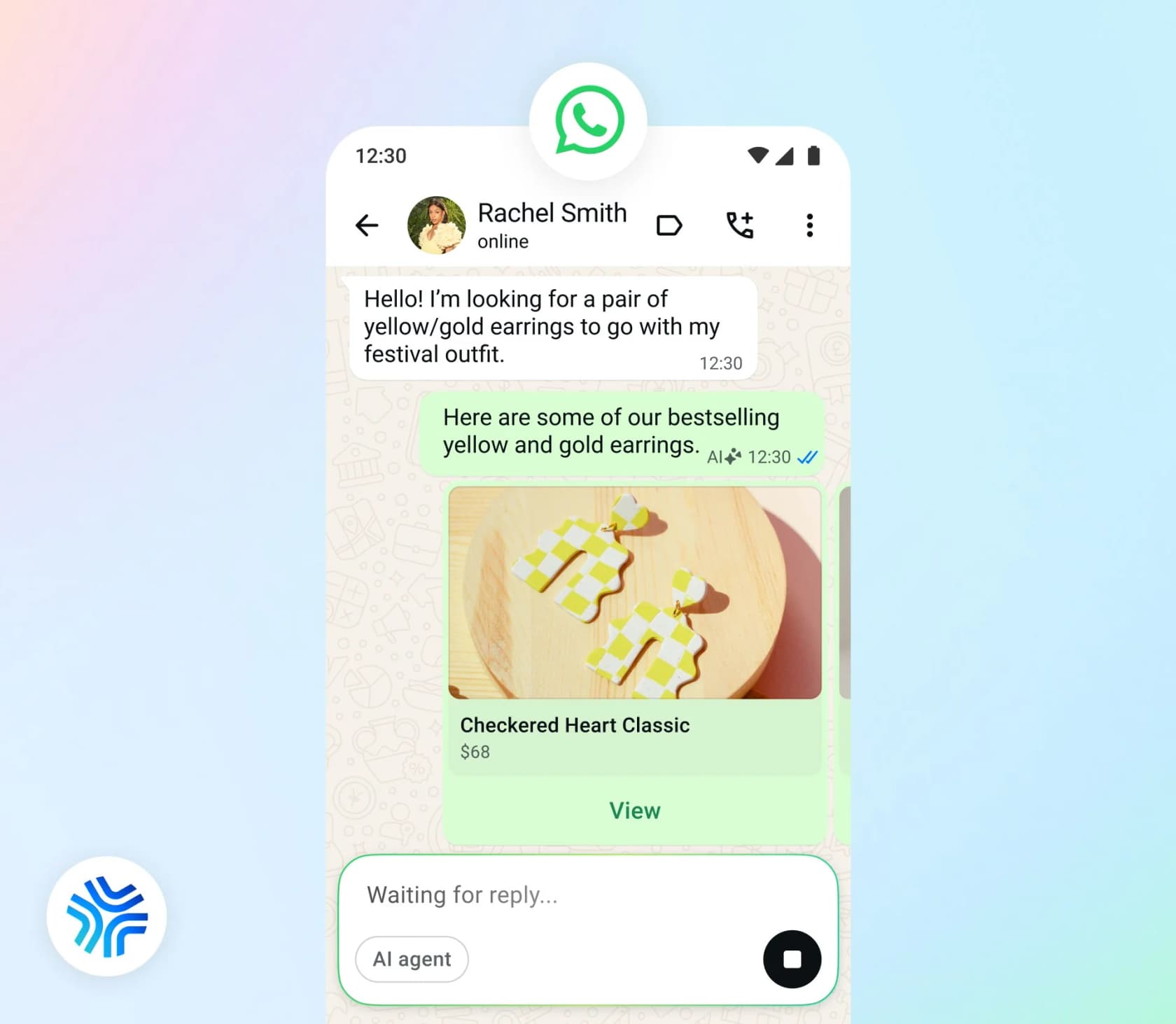
The three-way breakdown is in my Meta Muse for customer support guide. This post stays on the ServiceNow side, so it covers how WhatsApp gets into ServiceNow today, what happens once Meta's agent takes the number, how the auth fits and what the whole stack costs.
On a different helpdesk? The Salesforce and Jira Service Management versions are the closest to this one.
There are Zendesk and Freshdesk versions too.
Before the plumbing, one honest filter. Most ServiceNow instances run IT service management for employees, who raise requests in the portal, by email or in Teams and Slack. If that describes your instance, your requesters aren't messaging you on WhatsApp and this post is mostly a curiosity. The Meta question only gets real for Customer Service Management (CSM) teams whose customers already live in WhatsApp.
How WhatsApp reaches ServiceNow today
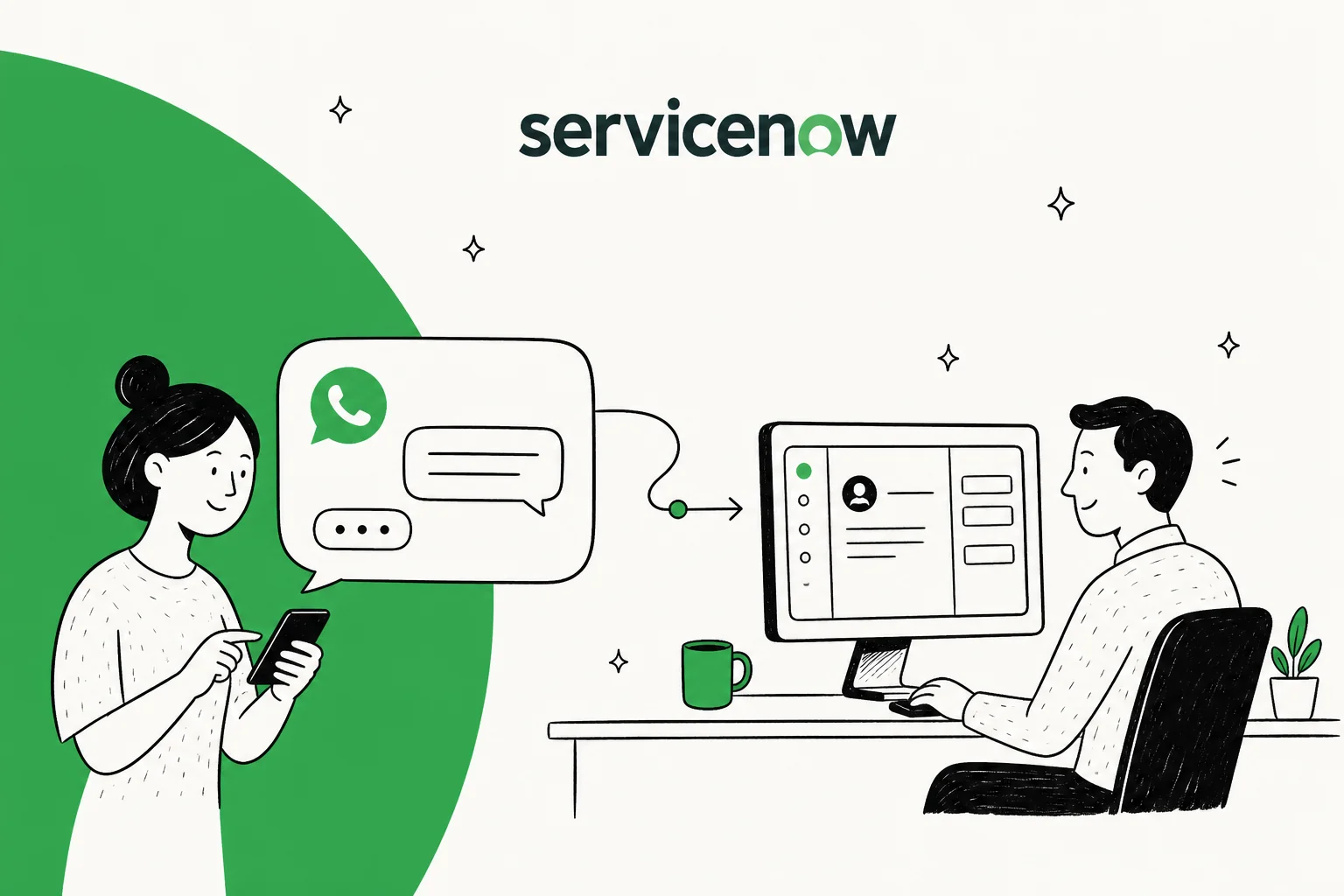
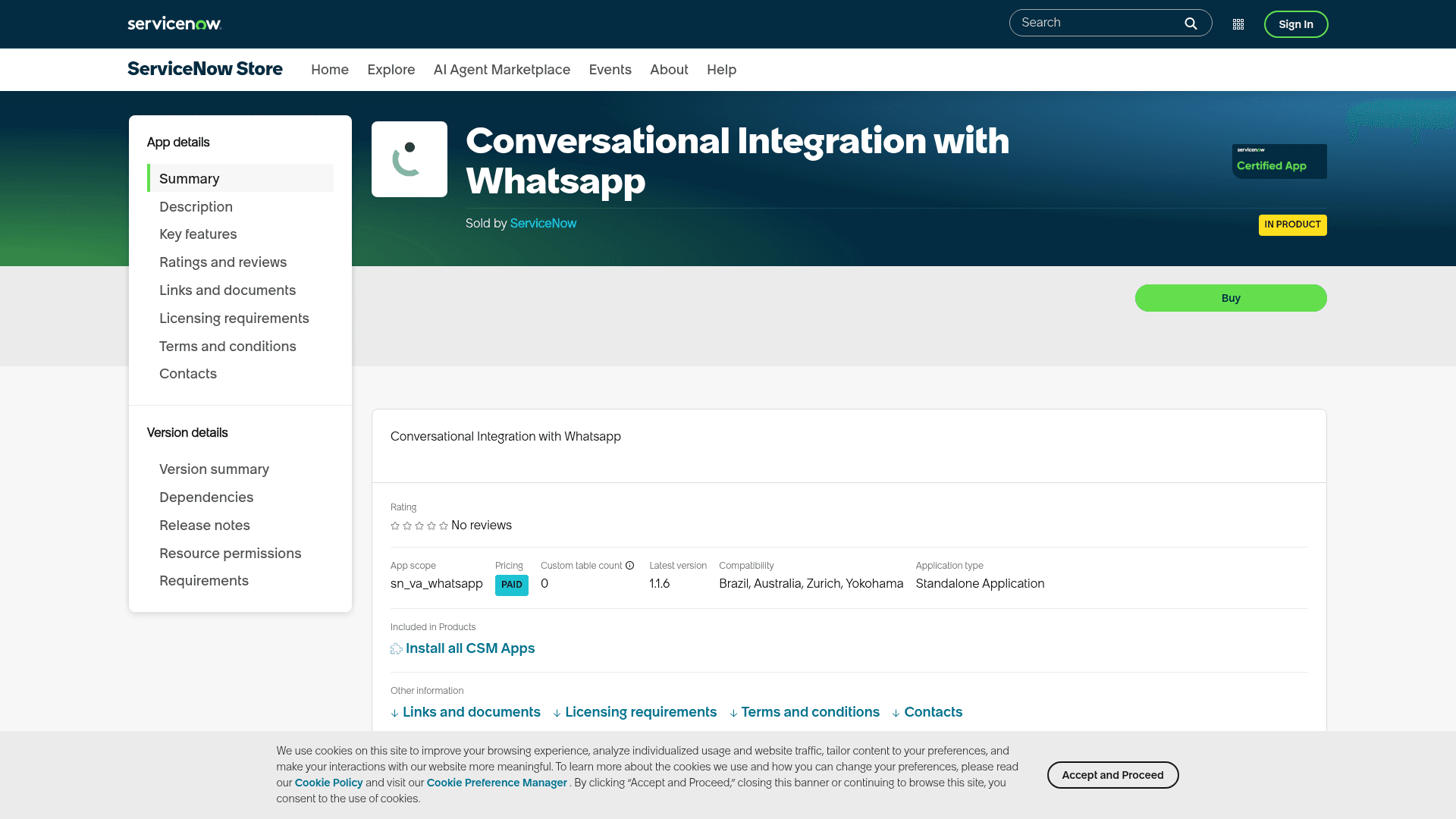
Unlike JSM, ServiceNow has a native WhatsApp channel, and it goes straight to Meta. The Store app is called Conversational Integration with WhatsApp, sold by ServiceNow itself. Its Store listing says it "delivers a native WhatsApp adapter for direct integration with the WhatsApp Cloud API, replacing the current third-party-based solution." Version 1.1.6 shipped on September 10, 2026, for the Brazil, Australia, Zurich and Yokohama releases.
Most of the setup happens on Meta's side. Per ServiceNow's Conversational Interfaces docs, you create a Meta developer app, copy its App Secret and phone number ID, then make a system user access token in Meta Business Manager. After that you point Meta's webhook at your instance's /api/sn_va_whatsapp/va_whatsapp_adapter endpoint. The CSM docs put the account model simply: "Customers must maintain two separate accounts: a Meta account and a ServiceNow instance."
Here's how the options compare, all from ServiceNow Store listings checked on September 29, 2026:
| Route | Built by | Price on the Store | How it reaches WhatsApp | Notes |
|---|---|---|---|---|
| Conversational Integration with WhatsApp | ServiceNow | Paid, no figure shown | Direct to Meta's Cloud API | Needs Integration Hub; lists, typing indicators, media |
| WhatsApp powered by Twilio | ServiceNow | Paid, no figure shown | Through a Twilio number | "A Twilio subscription is required" |
| Infobip Omnichannel Conversational Messaging | Infobip | Free app, messaging billed by Infobip | Through Infobip | Yokohama only; transcript lands on the Case |
| Infobip Notify | Infobip | Free app | Through Infobip | Outbound status updates and surveys only |
ServiceNow itself now treats Twilio as the weaker route. Its CSM docs say the Twilio integration "offers more limited functionality than the Cloud API," with no list pickers or typing indicators, and it leaves you managing three accounts (Twilio, Meta and ServiceNow) instead of two. Admins spotted the licensing stack years ago:
"Also, it requires licensing for integration hub, twilio, whatsapp etc"

When a chat arrives, there are two things that can answer it. Otto (ServiceNow's rebrand of Virtual Agent and Now Assist) can reply as the bot, and if a person is needed the chat drops into the Agent WhatsApp Queue and agents accept it from their Agent Workspace inbox. One detail from the Brazil docs will matter later: WhatsApp supports Otto but is marked "No" for synthesized responses, where Teams and Slack are "Yes."
CSM also has a second mode, and this is the one that matters here. The CSM docs describe a direct integration that "routes messaging conversations directly to live agents without virtual agent deflection," and they add: "This approach is available for WhatsApp." Hold on to that one.
What happens when Meta Business Agent joins that number
Meta's docs got a lot more detailed in September. Here is what changes when your WhatsApp number already feeds ServiceNow and you then switch on Business Agent.
It answers first, and ServiceNow's app moves to standby
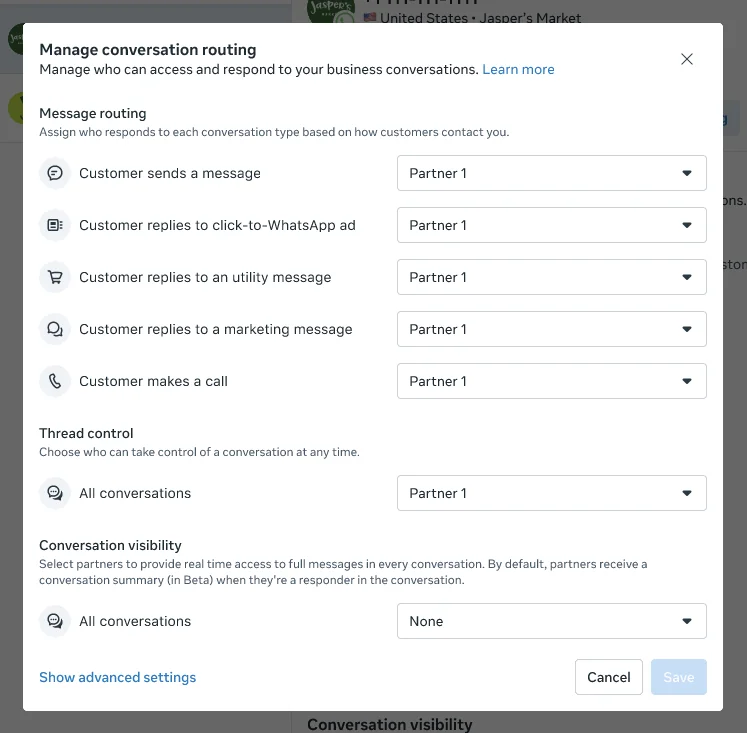
Meta's Conversation Routing decides which connected app answers each message, and ServiceNow's WhatsApp adapter is one of those apps. When you switch on Business Agent, "The agent becomes the sole primary for messaging entry points" and "Previous primary destinations move to standby so they retain context," per Meta's routing setup guide.
In plain terms, new WhatsApp messages reach Meta's agent first and not your Agent WhatsApp Queue. You can split things by entry point, say ServiceNow staying primary for direct messages while the AI takes click-to-WhatsApp ads. That setup lives only in Meta Business Suite: "There is no public API for configuring Conversation Routing."
One AI per number, so Otto has to step back
Here is the actual decision in a ServiceNow setup. Meta's Platform overview requires a number "Not already running another AI agent on that number," because "an active authorized-agent integration blocks Meta Business Agent."
Meta doesn't spell out exactly what counts, though, and ServiceNow's docs never mention Business Agent. The reading I'd plan around is that Otto answering on the number counts as another AI agent. So you'd run ServiceNow's WhatsApp app in the direct mode from the section above, with chats going straight to live agents and no bot step, which leaves Meta's agent as the only AI on the number.
That's a real trade. Otto knows your knowledge base, your catalog items and your topics, while Meta's agent knows only what you load into it. Community opinion on Virtual Agent is mixed, for what it's worth:
"I think people expect it to be a mini ChatGPT/copilot, but it's far from that from my experience. It heavily relies on knowledge article, catalog items, and virtual agent topics."
There's a fair counterpoint from a knowledge team that made it work: "we are hitting about 70-80% deflection rate from knowledge," per u/Suspicious-Movie4993. If your Otto numbers look like that, handing the WhatsApp seat to Meta is a step backwards.
ServiceNow is a named partner, but nobody has shipped the handoff docs
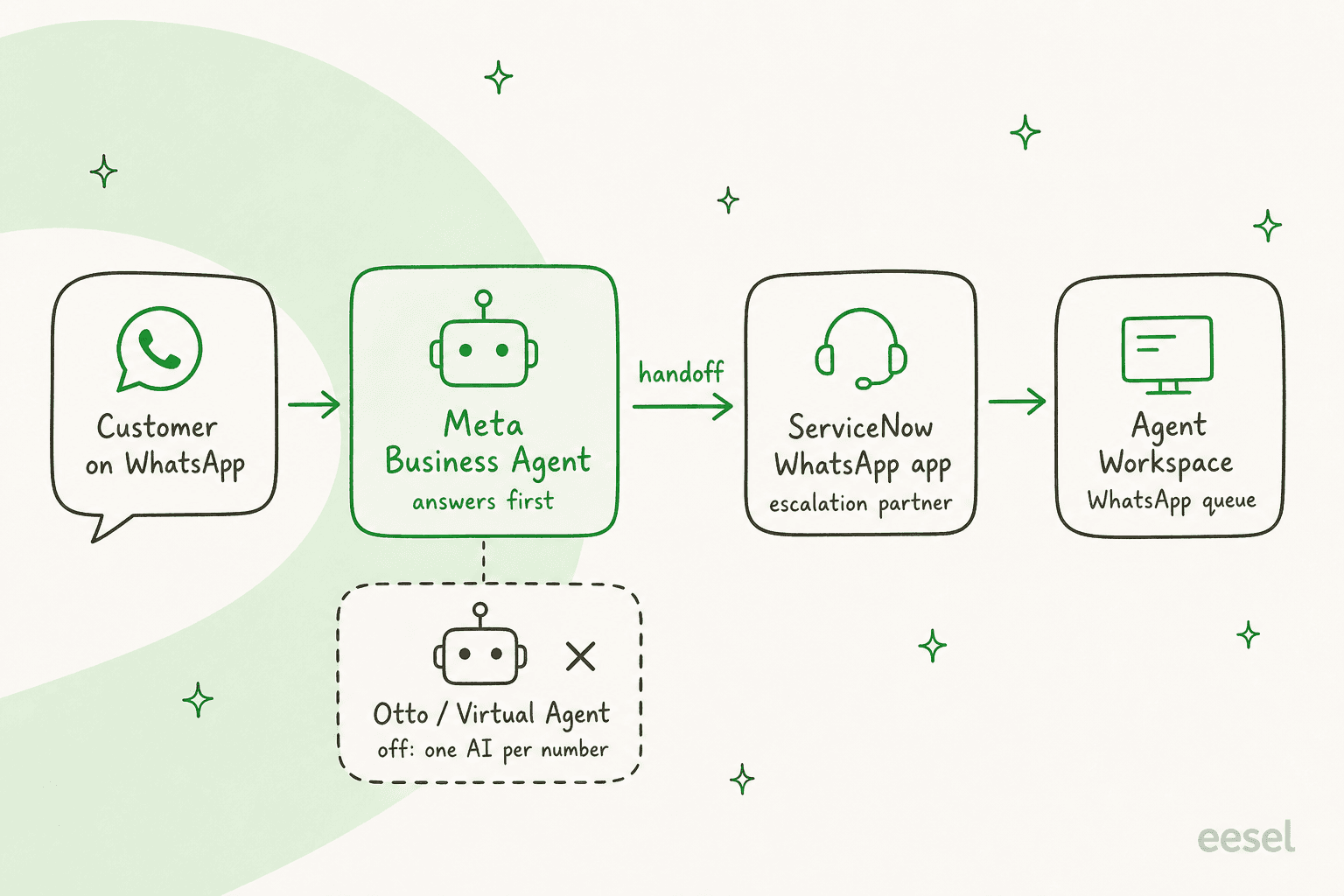
When Business Agent hands off, the chat stays in the same WhatsApp thread, and only ownership passes to another app on the number. Meta's customer support guide lists "A staffed destination for handed-off conversations" as a prerequisite, and a plain handoff goes to the app you set as the "escalation partner," per the thread control docs.
ServiceNow has a head start here. When Meta introduced Business AI in October 2025 (the earlier name for Business Agent), it wrote that it was "actively partnering with leading platforms including Salesforce, Microsoft Dynamics 365 Contact Center, ServiceNow, Zendesk, Gorgias and Klaviyo Service" for handoffs. That's more than Atlassian or Freshworks got.
But the trail goes cold after that. The June launch post names "Shopify, Zendesk, and Shopee," not ServiceNow, and ServiceNow's docs don't mention Business Agent, handover or conversation routing at all. Its setup maps one WhatsApp phone number ID to one channel identity, and says nothing about sharing the number. Going by Meta's routing docs, a handoff should land in the ServiceNow adapter as a normal inbound conversation, but I'd still test it on a spare number before any customer sees it.
Oddly enough, the ServiceNow link at Meta is a person. Meta's new Enterprise Platform, announced on September 28, is led by CJ Desai, who "spent nearly eight years at ServiceNow, including as President and COO."
A few more handoff details are worth knowing:
- Context travels in a 2,000-character note. The handoff event carries a free-text
metadatafield that Meta suggests using "to carry the ticket or order reference." Nothing in ServiceNow's docs says the adapter reads it. - You don't control the triggers. Handoff fires on low confidence, integrity issues or a customer asking for a person, and "You do not configure the triggers," per Meta's capabilities page. My AI agent handoff guide covers what a good one looks like.
- The 24-hour window still applies. ServiceNow's CSM docs say agent-initiated messages must be "within 24 hours of customer's last message." A handoff at 2am that sits until 10am the next day is fine, but one picked up two days later is a dead thread.
- Customer contacts don't get notifications. The docs say "Consumers and customer contacts are considered as guests and can't receive notifications in messaging channels." So a CSM customer won't get a WhatsApp ping when their case updates. Only employees with user accounts will.
Connecting Meta's agent to ServiceNow's API: the auth fits, the MCP server doesn't
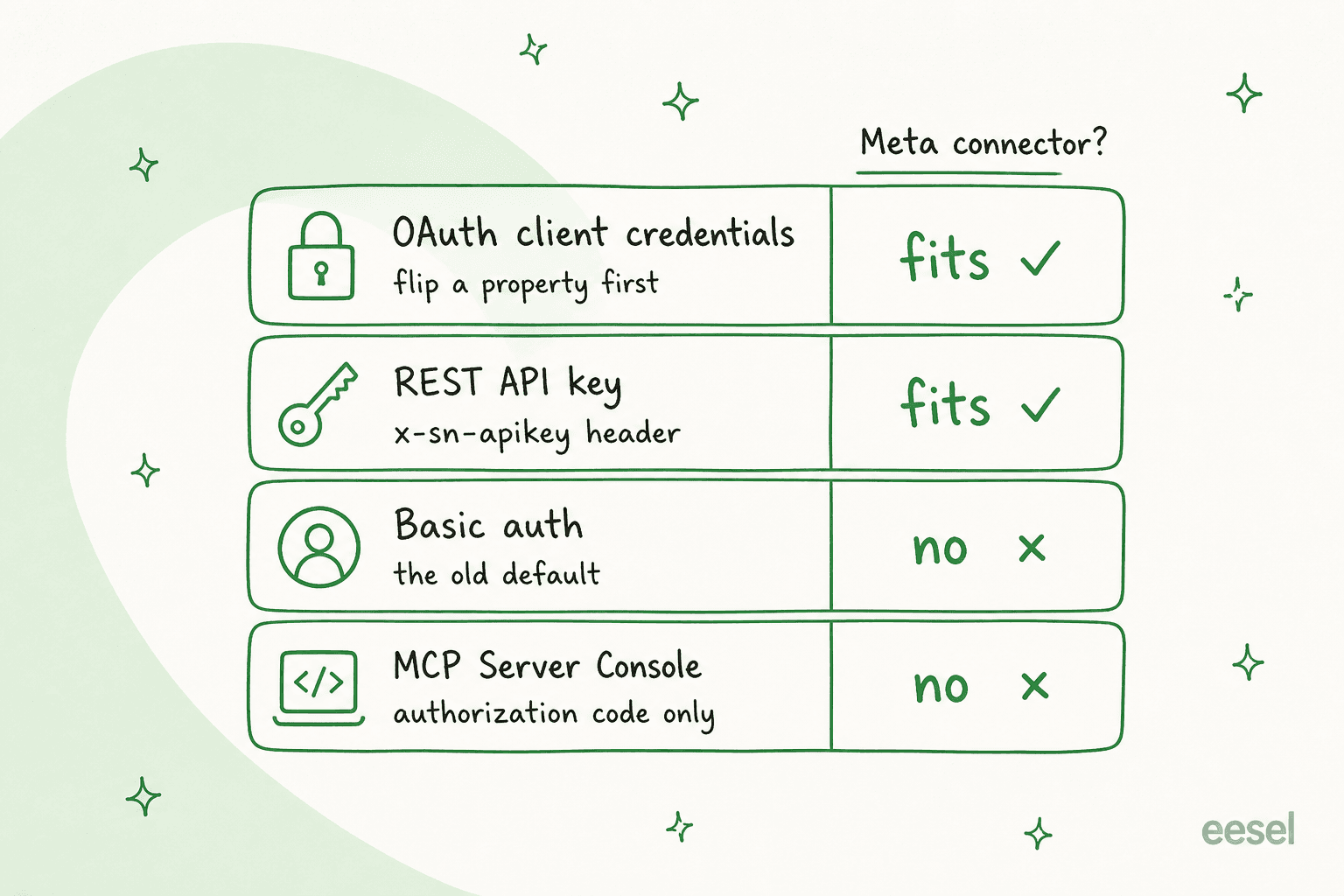
Business Agent takes actions through connectors, meaning HTTP APIs or remote MCP servers that you define yourself. Meta's connectors reference says: "Currently, only OAUTH2_CLIENT_CREDENTIALS, API_KEY, and NONE are supported." That line is exactly where the Freshdesk and Gorgias versions of this setup broke, because both want Basic auth.
ServiceNow gives you two clean ways in, and both arrived in the Washington DC release:
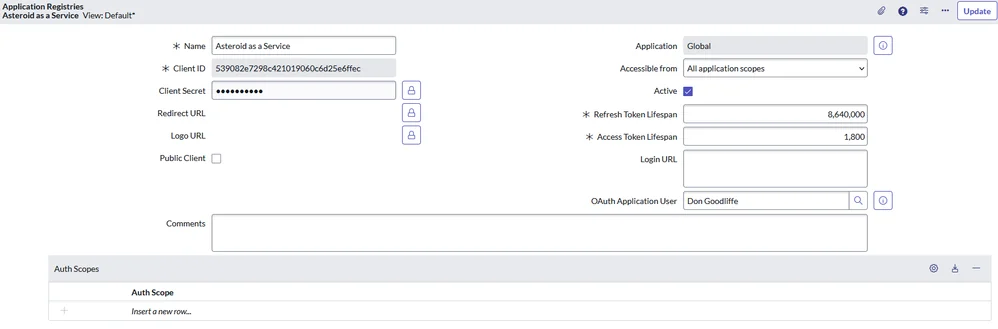
- OAuth client credentials. ServiceNow's KB1645212 says: "Beginning with the Washington DC release, ServiceNow supports the Client Credentials grant type for inbound OAuth requests." It "is disabled by default," so an admin creates the system property
glide.oauth.inbound.client.credential.grant_type.enabledand sets it totrue. Every app using it "must be mapped to an integration user" in the OAuth Application User field, and the token comes from/oauth_token.do. That matches what Meta'sOAUTH2_CLIENT_CREDENTIALStype expects. - REST API keys. ServiceNow Developer Advocate Chuck Tomasi announced inbound API keys in the same release. The key goes in an
x-sn-apikeyheader and runs as the user you pick. Meta'sAPI_KEYconfig lets you name the header field, so that one maps across as well.
Two routes don't fit. Basic auth, the long-standing default, is what Meta marks unsupported, and ServiceNow's MCP Server can't be a Meta connector today. ServiceNow's MCP Server Console FAQ says it "uses OAuth 2.0 with Authorization Code Grant to authenticate all connections" and that client credentials "is not currently supported for MCP Server Console connections. It is on the product roadmap." Meta's connector can't complete an authorization code flow, so the newer AI door into ServiceNow stays shut for now. My ServiceNow MCP integration post covers what that server does for clients like Claude.
The tools you'd define, and three catches
Once auth is sorted, the connector comes down to a handful of REST calls. Meta's own example is a create_support_ticket tool whose summary the agent fills from the chat, and its macros can bind the WhatsApp phone number and conversation ID into fields so the agent doesn't guess them. For ServiceNow, that maps to:
- Create the record.
POST /api/now/table/incidenton the Table API for an IT desk, orPOST /api/sn_customerservice/caseon the CSM Case API for customer service. - Look up status. A GET on the case, so the agent can answer "any update on my repair?" without a handoff.
- Add a customer-visible update. Write to
comments, notwork_notes. Per the Case API reference, external customer roles "can only set the comments and state fields" by default, and work notes are the internal field.
The catches all come from ServiceNow's own pages:
- The Case API won't tell you when you're wrong. It "does not perform parameter validation," so a misspelled field name is silently dropped. Use Meta's tool test run endpoint and check the record, not just the 200.
- There's no WhatsApp channel value. The Case API's
contact_typeaccepts chat, email, phone, social and web. Pick one and tag the source somewhere else, otherwise your reporting will lump WhatsApp in with web chat. - Rate limits hit as 429s. KB3046852 lists admin-defined rate limit rules, node overload and a 300-second per-transaction cap. A connector that retries blindly during a Monday morning spike only makes it worse.
Meta flags the silent-failure risk in its own guide: "A failed ticket is invisible: the agent has already said a colleague will be in touch, the shopper waits, and nobody finds out until they message again angrier." With a Case API that ignores bad fields, that warning counts twice over.
What it costs: Meta Business Agent vs ServiceNow's own AI
The comparison gets awkward here, since ServiceNow doesn't publish dollar figures for any of it.
| Cost line | Meta Business Agent | ServiceNow Otto on WhatsApp |
|---|---|---|
| Unit | Tokens, $2.00 per 1M (Meta pricing) | Assists (Now Assist overview) |
| Per conversation | About 16 to 20 cents simple, 40 to 50 cents complex (Meta's examples) | 10 assists per Now Assist Virtual Agent topic; 25 to 150 per agentic workflow |
| Dollar rate | Published | Not published; assists pool by contract |
| Channel app | None extra | WhatsApp Store app, Paid, quoted |
| Other entitlements | WhatsApp Business Platform number | Integration Hub, plus Otto for CSM on customer service |
| WhatsApp fee on its replies | None extra, billed once as tokens | Service messages after 1,000 free per month from October 1 |
One figure does favour ServiceNow. A ServiceNow Community article on the April 2026 licensing change says Virtual Agent "now has unlimited conversations" in the new ITSM tiers. So the classic topic-based bot is covered, and it's only the LLM-backed Now Assist topics that draw down assists.
Meta's agent is the only line here with a price you can put in a spreadsheet today, though early Business Agent users noticed how fast that price adds up:
"My concern is that the per-message cost is insanely high at approximately 5 cents per message."
On the ServiceNow side, the pain is the bundle rather than the unit. One CSM admin described their renewal: "We had an AI starter pack with 25 CSM Pro Plus Seats. We upped that to 50 -seats. We maintain 900 seats overall on CSM pro. Their new model? All seats gotta be the same type," per u/12_barrelmonkeys. My ServiceNow AI pricing breakdown and the license types guide go deeper on that.
October 1 hits your agents' replies, not the AI
Most ServiceNow teams on WhatsApp will feel a different change than the AI price. From October 1, 2026, Meta charges service messages per message after 1,000 free per phone number per month. Meta's pricing page says each message is billed "either as a Meta Business Agent message or as a service message, never both."
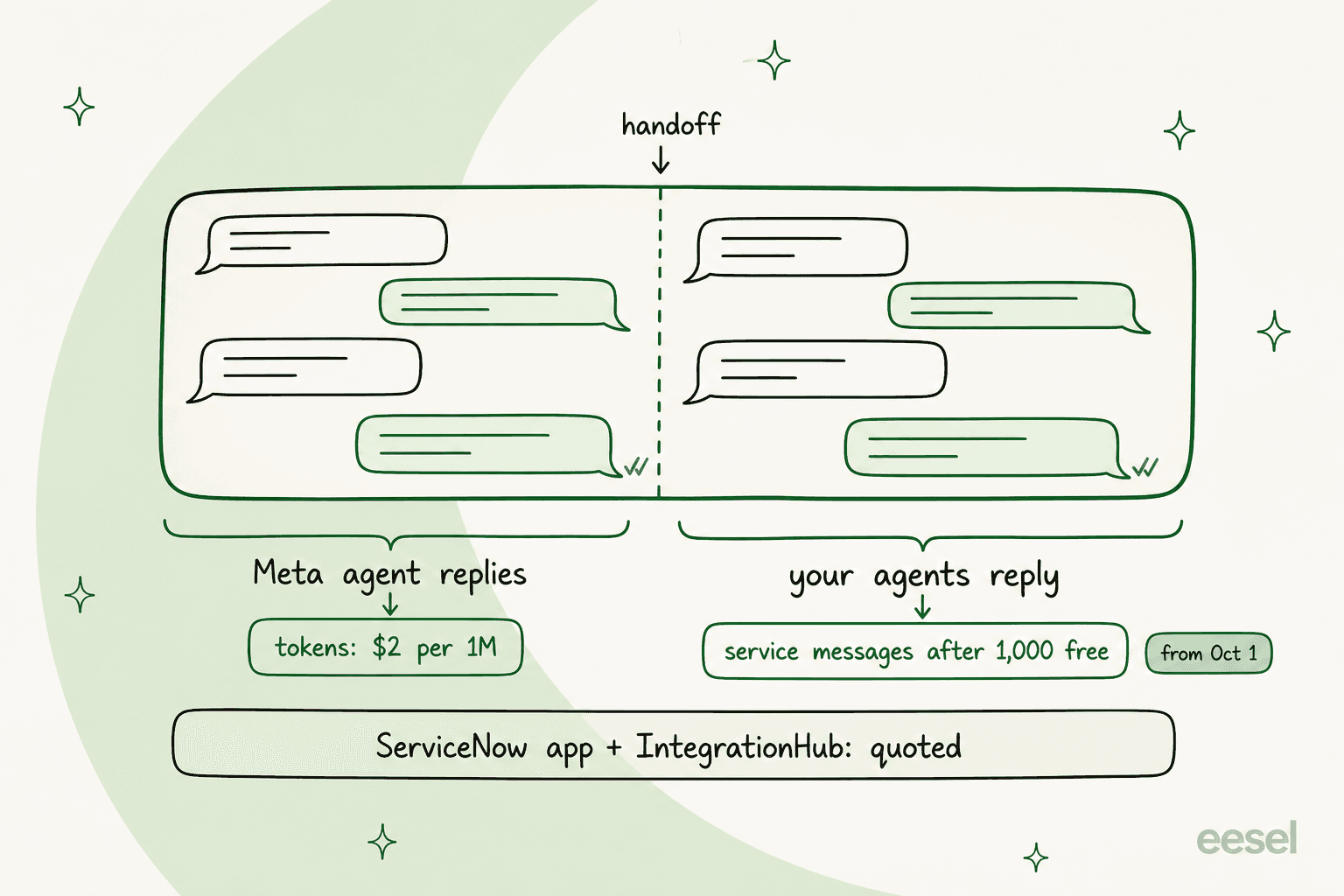
ServiceNow's native app runs on your own Meta account, so those service-message fees land on your Meta bill directly, with no BSP in the middle to absorb or mark them up. Every reply an agent sends from Agent Workspace after the handoff counts as one. Picking Meta's agent doesn't dodge that, it only changes who writes the first few replies. My WhatsApp API pricing explainer has the full rate history, and the Meta policy changes post covers what Meta did to third-party bots.
Building your own ServiceNow bot on Muse Spark
The third route skips Business Agent and builds straight on the model. It's the closest one to my day job, so here is what it involves in practice.
On the model side, Muse Spark 1.3 costs $1.25 input and $4.25 output per 1M tokens on the standard tier (Meta Model API docs). The cheaper contributor tier is off the table for support, because Meta's terms say "You must not submit sensitive, confidential, or personal information to the Discounted Services." A ServiceNow case holds names and emails, plus account numbers. My Muse Spark 1.3 review covers where the model is strong.
On the ServiceNow side, the rest is all on you:
- The WhatsApp side. ServiceNow's adapter owns the number's webhook, so a custom bot either replaces it or sits behind a Custom Chat Integration. Neither is a weekend job.
- Auth. Client credentials with a dedicated integration user and scoped API authentication scopes, refreshed every 30 minutes. Honestly the easy part.
- Knowledge. Knowledge articles, catalog items and resolved cases, kept in sync with the Table API.
- The loop. Read the case, draft a comment or a work note, set the category and assignment group. For a first version I'd ship it writing work notes only, which means nothing reaches a customer without a person.
- Escalation and testing. Your own confidence threshold, plus a replay of real cases before anything goes live. My build vs buy guide lays out the full list.
A 2026 thread shows the kind of bug you'd be signing up for, even inside ServiceNow's own stack. An admin's custom agent ran fine in AI Agent Studio and broke only on the WhatsApp channel:
"The AI Agent works correctly when tested directly in AI Agent Studio . An execution plan is created and the Work Order Agent can run. However, when I invoke the same AI Agent from WhatsApp, it does not execute correctly."
The likely cause, per replies in the thread, is that the WhatsApp channel runs under a different user context than your admin session, without the roles the agent needs. The same user-context question applies to any bot you build. Other models get the same treatment in ChatGPT for ServiceNow, Claude for ServiceNow and Grok for ServiceNow.
Where Meta's agent stops for a ServiceNow team
None of this is hidden and all of it sits in Meta's own docs, but it lands harder on a ServiceNow team:
- It only answers in Meta's apps. Your instance also takes the portal, email, Teams and Slack. Business Agent covers none of those, so you'd end up running two AIs with two sets of rules. My ServiceNow chatbot post covers those channels.
- Your case history isn't a knowledge source. Meta's support guide tells you to "export the top drivers from your helpdesk for the last quarter" and write FAQ entries by hand. Your knowledge base and years of resolved cases stay out of reach.
- It doesn't know your structure. ServiceNow's value is structure: categories, assignment groups, SLAs, approvals, the CMDB. Meta's agent sees a chat, not a case, unless your connector teaches it.
- Regulated industries are excluded. Businesses in finance, health, government, alcohol or gambling can't use the Platform.
- Accuracy still needs grounding. Meta's help center warns "Some AI messages may be inaccurate or inappropriate."
One commenter in r/WhatsappBusinessAPI put the boundary well:
"If you look at the current AI agent closely, it can only do things inside Meta, but nothing outside it."
That's the reframe I'd leave a ServiceNow team with: Meta's agent is a front door for WhatsApp, while ServiceNow is where the work lives, and the AI that earns its keep is the one that can read and write there.
Which setup fits your ServiceNow team
This is how I'd pick, going by who writes in and how your team works.
| Your situation | Best fit | Why |
|---|---|---|
| Internal IT or HR desk, employees on Teams or the portal | Not Meta at all | Your requesters aren't on WhatsApp; look at Virtual Agent or an AI on your incidents |
| CSM team, Otto already deflecting well on WhatsApp | Keep Otto | Giving the seat to Meta means losing your topics and knowledge on that channel |
| CSM team, WhatsApp-heavy, simple product questions, no Otto licence | Meta Business Agent plus ServiceNow's app in direct mode | Only option here with a published per-conversation price |
| Customers on WhatsApp plus portal and email | An AI that works your ServiceNow cases | One set of rules and one history across every channel |
| Finance, health or another regulated vertical | Not Business Agent | Excluded from the Platform |
Most ServiceNow teams sit in the first row, and the WhatsApp question never comes up for them. For CSM teams, I'd spend the time on the second and fourth rows. If you're comparing AI tools for the instance itself, my best AI for ServiceNow roundup and the adding AI to ServiceNow guide are good next reads.
The ServiceNow Virtual Agent alternatives list helps if Otto is the thing you're rethinking, and best AI for WhatsApp support covers WhatsApp across helpdesks.
Try eesel for WhatsApp on ServiceNow
Straight answer first: eesel doesn't have a native ServiceNow integration, and I'd rather you hear that from me than find out on a setup screen. What it does have is the two pieces this setup actually needs.
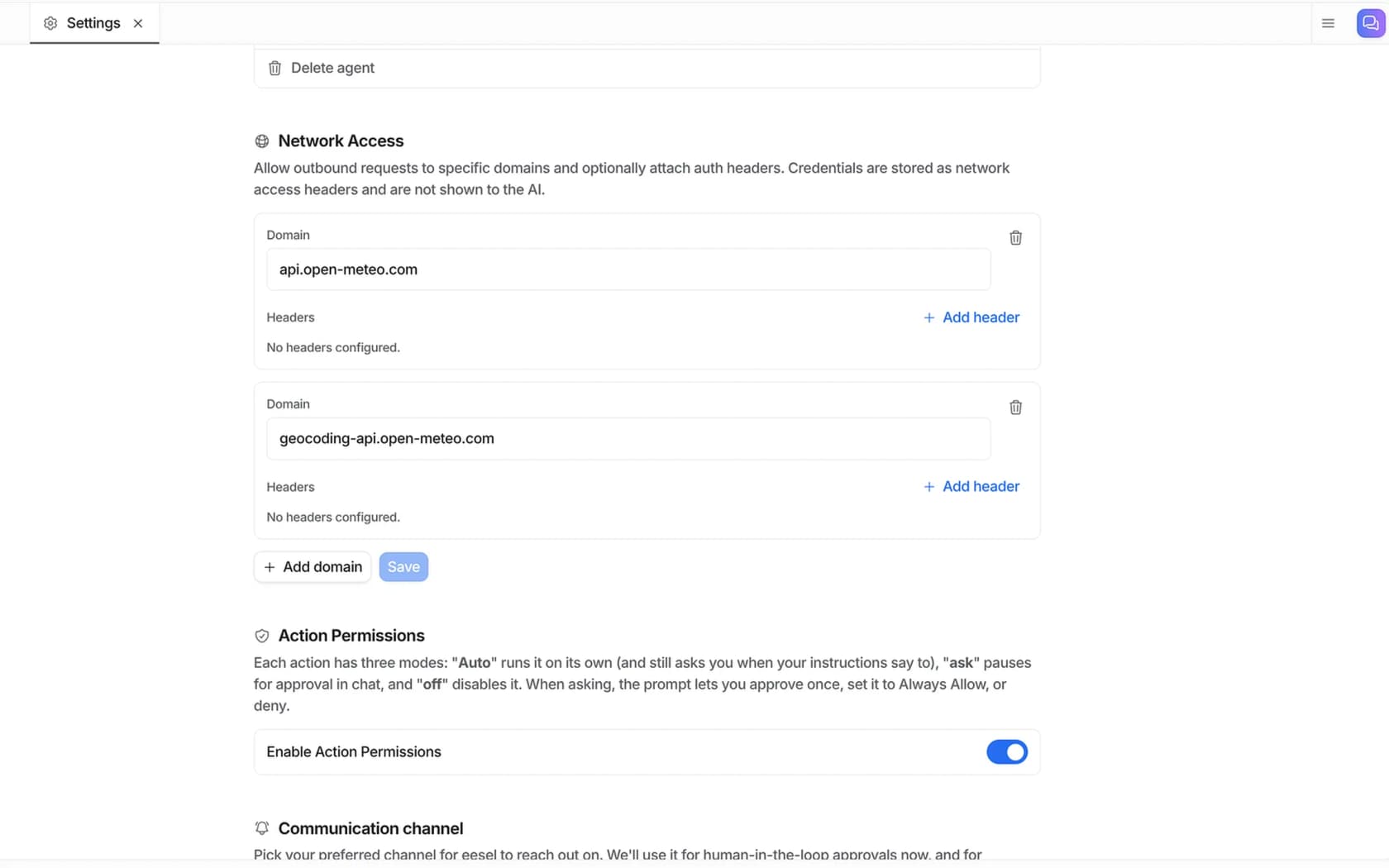
eesel is an AI helpdesk teammate that answers on WhatsApp itself, so it can take the number's one AI seat instead of Meta's agent or Otto. It reaches ServiceNow through Network Access: you allow your instance's domain, add the x-sn-apikey header for a ServiceNow API key, and the agent can create cases, read their status and post comments over the REST API. The credential is stored as a header and never shown to the AI, and Action Permissions let you set each write to "ask" so a person approves it first.
It learns from your help center and past conversations, and it follows plain-language instructions about which requests it may touch. Pricing is a fixed monthly credit plan, where a chat counts as one credit however many replies it takes, so there's no assist maths.
If you'd rather script it, the eesel CLI lets you, or a coding agent like Claude Code or Cursor, check eesel status, read eesel activity and clear eesel approvals from a terminal, against the same teammate you'd set up in the dashboard. A webhook from a ServiceNow flow can wake it when a case changes.
Try eesel free with 100 credits and no card, and see how it handles your WhatsApp conversations before the October 1 pricing change lands.
Frequently Asked Questions
Can I use Meta Muse with ServiceNow?
Does ServiceNow support WhatsApp natively?
Is ServiceNow a Meta Business Agent partner?
Can Meta Business Agent and ServiceNow Otto answer on the same WhatsApp number?
How does Meta's agent create ServiceNow incidents or cases?
How much does Meta Business Agent cost compared with ServiceNow's AI?
What changes for WhatsApp support costs on October 1, 2026?
What is the best AI for ServiceNow if WhatsApp is only one channel?


Article by
Rama Adi
Rama is a software engineer at eesel AI with two years of experience writing about B2B SaaS, AI tools, and customer support technology. Based in Bali, Indonesia, he brings a developer's perspective to product comparisons — cutting through marketing copy to what the integrations and APIs actually do.