

Why "Grok Bot for ServiceNow" is even a search
When xAI launched Grok Bot on 2026-08-11, the product page shipped an example prompt aimed straight at support: "Sign in to Zendesk so I can work the support queue." There's nothing Zendesk-specific about that mechanism, an agent that signs in and drives a browser doesn't care what's behind the login screen, so the same question comes up for ServiceNow, and it's a bigger question here than for a lighter helpdesk, because a ServiceNow instance is usually the system of record for IT, HR, and facilities work all at once.
I ship the integrations, APIs, and MCP surface that let eesel's own AI agent join a real queue, so my first instinct with any "just sign it in" pitch is to go find the seam between the demo and production. Here's the honest version up front: I've watched a confident-sounding bot quietly give a wrong answer when the knowledge base came back empty, which is exactly why every eesel rollout gets rehearsed against real historical tickets before it ever touches a live customer. So when a brand-new agent tells me it'll work my ServiceNow queue, my first question isn't "can it click." It's "what happens the first time it's confidently wrong on a regulated case, and who finds out."
That's the lens for the rest of this piece. Grok Bot is a capable general-purpose worker. Let's look at how you'd actually point it at ServiceNow, what it's good at, and where the seams show for a live support and IT queue specifically.
The two ways to connect Grok to ServiceNow
There's no official Grok-to-ServiceNow integration and no ServiceNow Store listing. "Grok Bot for ServiceNow" really means one of two very different setups.
Route A: Grok Bot drives the screen. This is the headline feature. Grok Bot spins up a managed cloud computer, you tell it to sign in to ServiceNow, and you type your credentials in a screen handoff. From then on it works Agent Workspace like a logged-in fulfiller: opening incidents and cases, reading the thread, updating fields, and for catalog-driven work, moving a request through its life cycle from REQ to the RITMs underneath it to the individual SCTASKs a fulfiller closes out. Nothing on the ServiceNow side needs configuring, because as far as your instance is concerned, a human is using the seat. That's the whole appeal, and I'll come back to why it's also the whole problem.
One thing worth knowing before you even try this: ServiceNow licenses by the fulfiller seat, not by the ticket. Requesters are free, but employee-facing products like HR Service Delivery bill an "Unrestricted User" rate that effectively counts every active person in the company, and licensing is per instance. Grok Bot occupying a seat is occupying a real, billed license, not a free API caller.
Route B: call the Grok API and wire it to ServiceNow's own MCP route. The more controllable path treats Grok as a model rather than a screen-driving worker. You call grok-4.6 from your own middleware and write results back through the Table API, a Flow, or, increasingly, ServiceNow's own MCP Server Console. That console ships a Quickstart server with exactly four tools: looking up incident records, looking up case records, incident summarization, and case summarization. It's read-and-summarize only today, there's no write or act tool out of the box, and it's bundled into Now Assist and AI Native SKUs, not the plain ITSM tier.
The MCP route also carries a cost quirk worth knowing before you build on it: a ServiceNow employee confirmed on the platform's own community forum that a Now Assist skill invoked as an MCP tool consumes its usual assist cost plus a flat extra assist, meaning a one-assist incident summary effectively doubles in price the moment it's called through MCP instead of the native UI. And by default, the data behind those calls leaves your instance for a centralized ServiceNow environment that may sit in a different region or on a third-party cloud, with inputs and outputs feeding ServiceNow's own model development unless you opt out.
For most teams evaluating this, Route A is what "Grok Bot for ServiceNow" actually means in practice, so that's where I'll spend the most time.
What Grok Bot is good at
Credit where it's due, because the design is clever. Grok Bot reaches tools that have no clean API by driving the UI the way a person does, which is the honest descendant of RPA. If your ServiceNow instance is a maze of custom UI Builder pages, scoped apps, and a workflow nobody has touched since a consultant left, an agent that just uses the screen sidesteps all of it. There's no integration project to scope.
It's also good at the long-tail, ad-hoc task. "Pull every open incident tagged VPN from the last week and summarise the pattern" is the kind of job it handles well as a research and triage assistant for one power user, because it can move between ServiceNow and a doc or a Slack channel in one session without you wiring anything together.
And the model underneath is strong. Grok 4.6 is a capable reasoning model, so the drafts and summaries it writes read well. The catch, as always, is that "reads well" and "is correct" are different tests, and a live queue only rewards the second one.
Where it gets risky for a live queue
Here's where "just use the screen" turns from a feature into a liability, and none of it is about Grok the model being weak. It's that a general-purpose worker with a shared browser session is the wrong shape for a production queue, and ServiceNow's enterprise, regulated nature makes that mismatch bigger, not smaller.
There is no dry run. xAI's own docs say it plainly: "A test run performs real work. It can navigate websites, change files, and call connected tools." So there's no way to point Grok Bot at your last few hundred closed incidents and see how it would have handled them before it touches a live one. For a helpdesk copilot working ITSM specifically, this is the single biggest gap. Rehearsal against real history is the whole discipline of a safe rollout, and this route skips straight to opening night.
One shared computer, one reused login. All of a user's bots share a single cloud computer, and once you've signed into ServiceNow, that session persists and every other bot can reuse it. xAI says it twice in its docs: "Do not use separate Bots as a security boundary." Deleting a bot leaves its files and sign-ins behind.
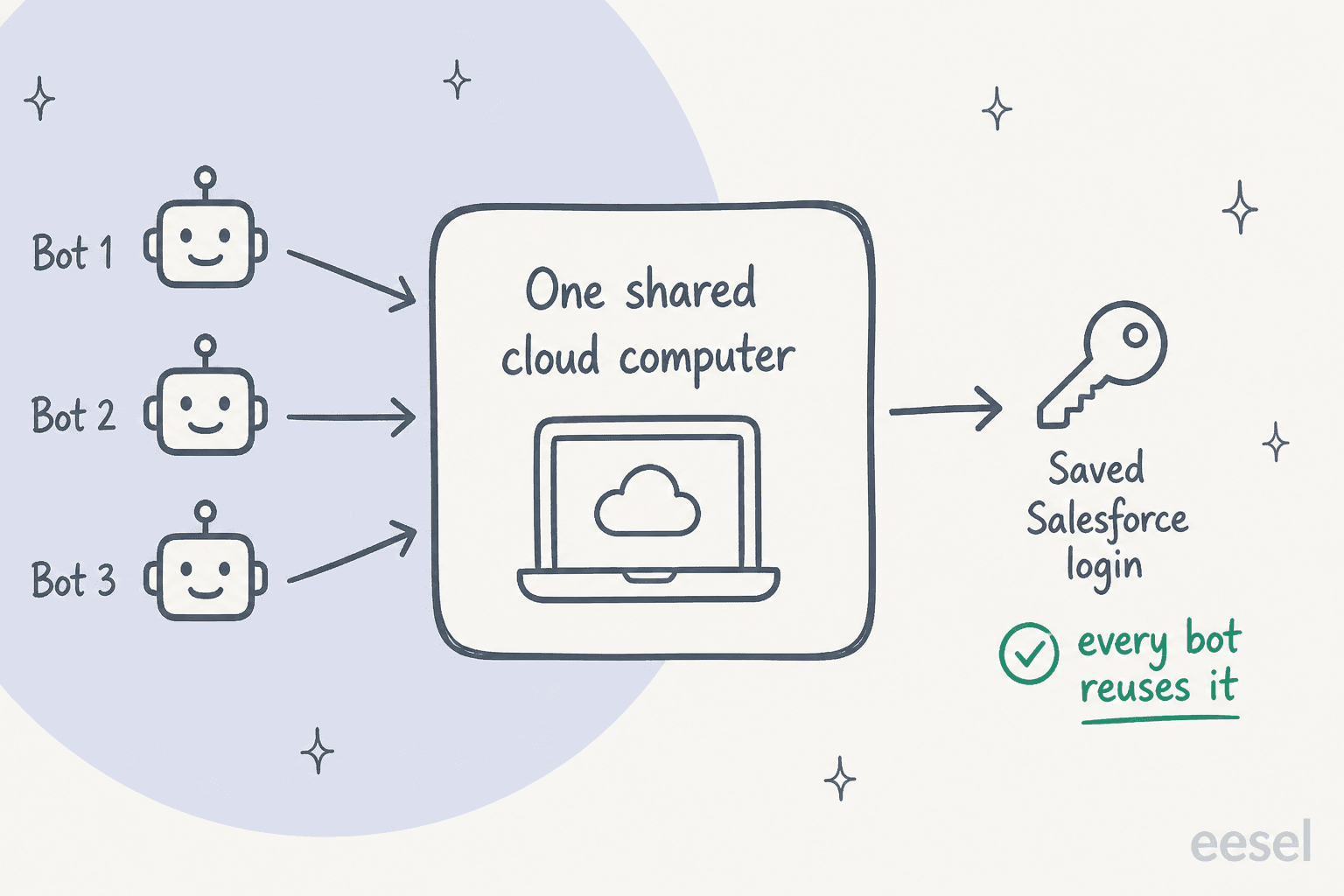
Now picture what a ServiceNow fulfiller seat actually touches. Incidents and HR cases carry employee records, device details, sometimes health or payroll references, and a persisted login to that instance is a standing key to all of it. This is exactly the surface a serious security review is designed to catch, and it matters more on ServiceNow than on a lighter tool, because the whole platform exists to be the single regulated system of record.
No per-response audit, and no scoping. Grok Bot's docs say "An audit view of Bot actions is coming," in the future tense. So today there's no per-response record of why it acted the way it did, and because it's signed in as a human working the whole seat, there's no clean way to say "only touch incidents of this type" or "only act when I explicitly ask." One support lead I've heard from put the autonomy problem better than I can:
"The AI will never be able to answer 100% of the questions, but if it tries and just answers 'sorry I don't know this,' I cannot go and check all my 7,000 tickets to see if the AI actually made a good answer, then the point is a little bit gone. I need an AI who is only handling the tickets that it's confident to handle and all the other ones, leave them alone."
A CX lead at a DTC brand running ~7,000 tickets/month
A logged-in worker has one mode: it works the queue. Approvals don't fully close that gap either, because xAI's docs note an approval "controls the proposed action. It does not reverse work already completed." Once an SCTASK is closed or a case note is sent, there's no calling it back.
No compliance certifications. Grok Bot claims no SOC 2, ISO 27001, GDPR, or HIPAA, publishes no retention period, and defers to Cursor's terms. If your ServiceNow instance touches HR, payroll, or any regulated employee data, which most enterprise instances do somewhere, that alone ends the conversation for a live rollout.
The cost picture nobody screenshots
Route A looks cheap on the sticker: $200/month on Cursor Ultra or $120/seat/month on Cursor Premium Teams, per x.ai/bot. But that's a seat price, it buys access to a worker, not work done, and on top of it you pay a weekly AI-token allowance with overage billed at model and token cost. There's no Grok Bot-specific spend cap yet, which for an autonomous agent working a live queue is its own risk.
Route B stacks two meters that are both hard to pin down. You pay Grok's API directly, grok-4.6 lists at $2.00 in and $6.00 out per million tokens, and you separately keep paying ServiceNow's own Now Assist consumption. ServiceNow's public rate card puts an incident summary at one assist, a ticket action at ten, work notes analysis at 250, and a multi-tool agentic workflow anywhere from 25 to 150 depending on how many tools it touches, and assists pool at the account level with overage invoiced at a rate ServiceNow doesn't publish. Call any of that through MCP and each Now Assist skill adds its flat one-assist surcharge on top.
None of that comes with a dollar figure, because ServiceNow retired its published legacy tiers on 2026-07-01 and the current Foundation, Advanced, and Prime tiers are quote-only, one "Get Custom Quote" button and nothing else. Seat price, plus an uncapped token allowance, plus a consumption meter with no public rate card, is a hard number to forecast, which is the opposite of what you want when you're measuring support ROI.
The alternative: an AI layer built for support in front of ServiceNow
Here's what the two Grok routes have in common: both leave the safety layer to you, and neither gives you a way to rehearse first. That's the exact gap eesel exists to close.
eesel is an AI teammate platform, and for support you hire the AI helpdesk teammate. eesel doesn't have a native ServiceNow plugin the way it does for Zendesk or Freshdesk, so instead of pretending otherwise, you run it as a customer-facing AI chatbot for ServiceNow: a chat bubble, inline embed, or public chat link that sits in front of your desk, trained on the material your team already trusts, your help center articles and your past ticket history. Anything it can't resolve is handed off by email, which lands cleanly as a ServiceNow incident or ticket for a fulfiller to pick up.
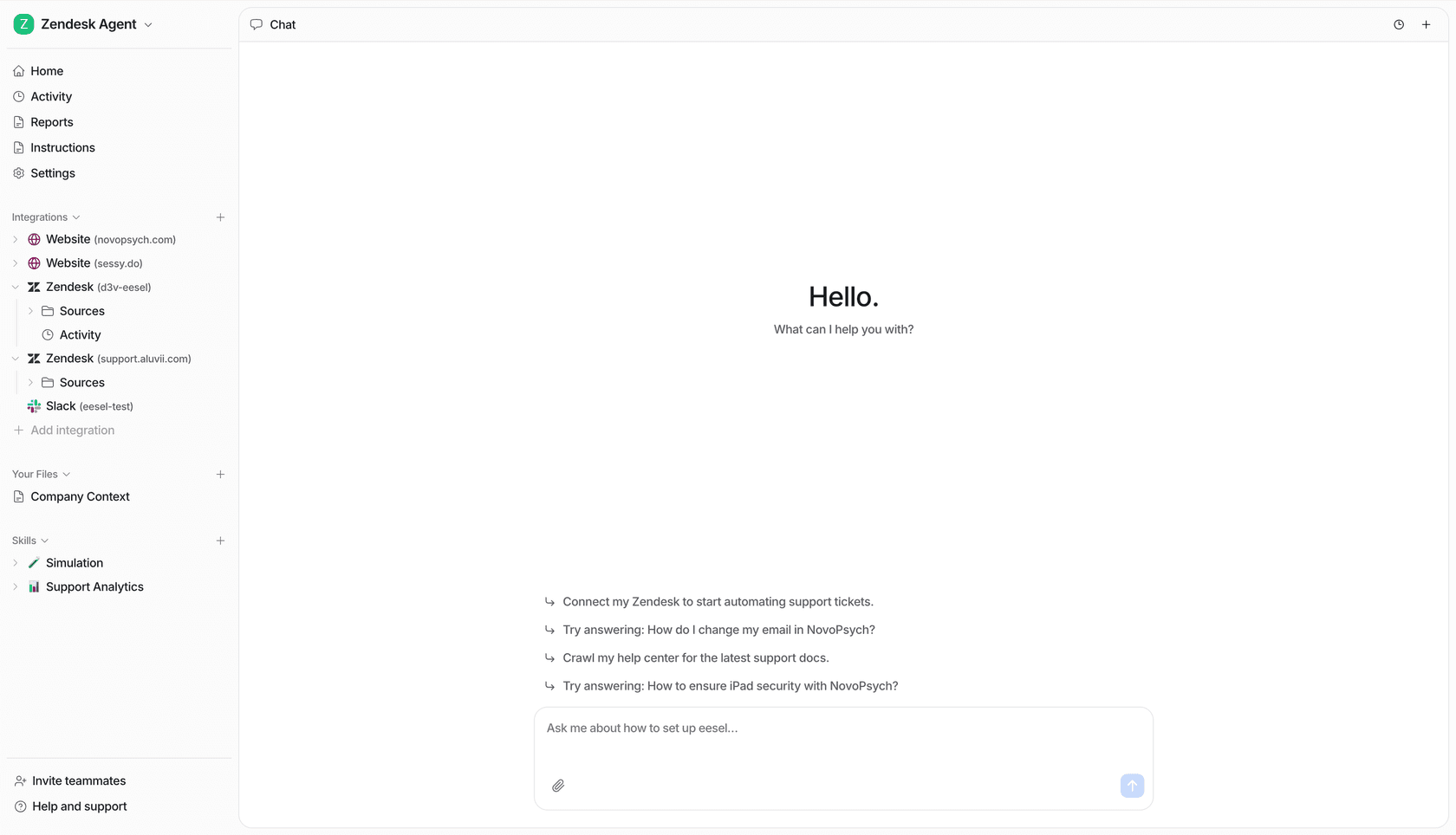
The difference that matters most is the one neither Grok route has: you can simulate the agent against hundreds of your real historical tickets before it answers a live customer. It replays past conversations, scores its answers against what your team actually sent, and hands back the gaps plus suggested instruction changes, so you get a real accuracy read before a customer is involved, not after. You also get controls a live queue actually needs. Start in triage-only mode that just tags and routes, add public replies once you trust the numbers, and let it hand off to a human whenever confidence is low.
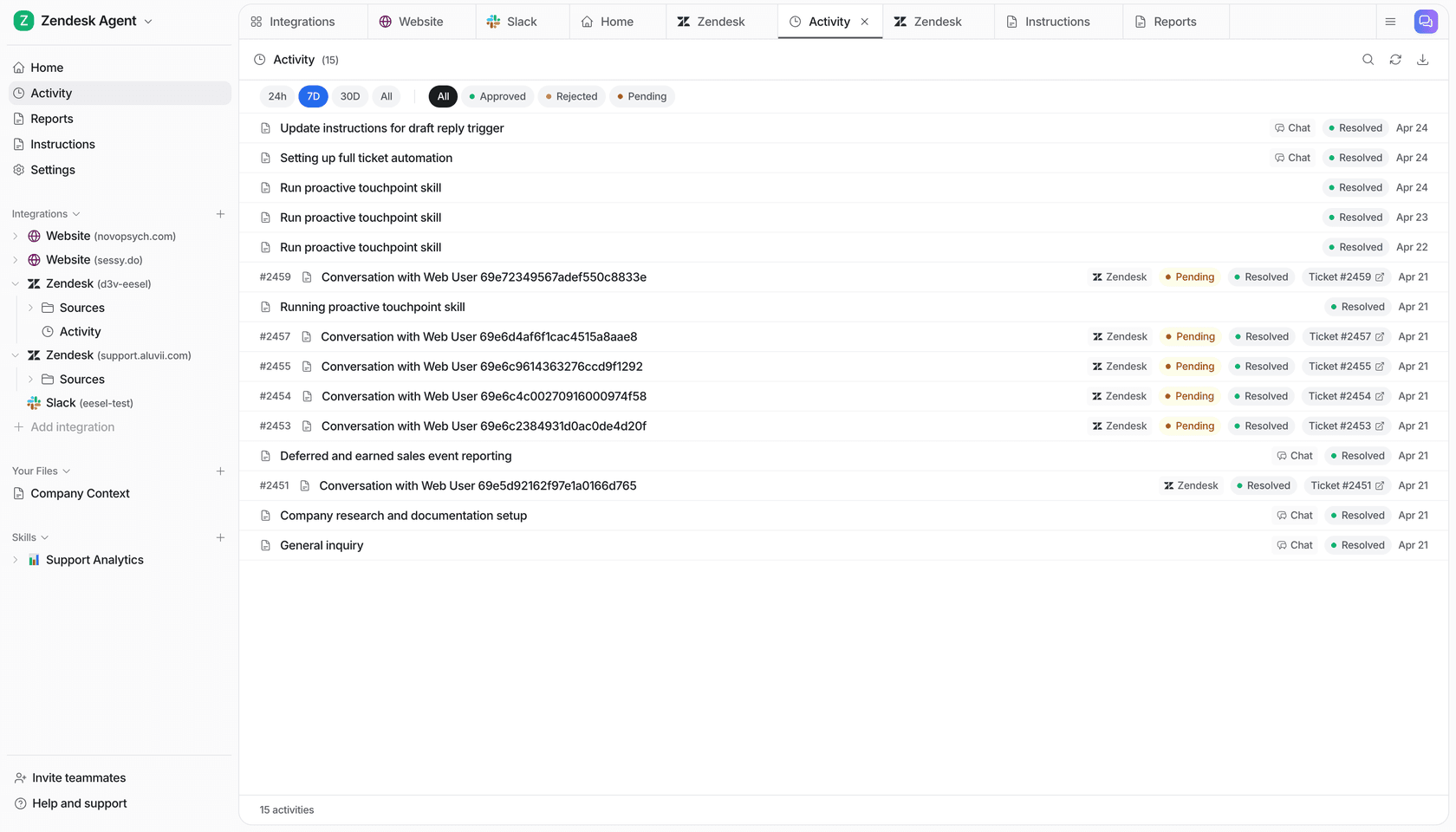
You also get the audit trail that's still "coming" on the Grok side. Every run shows up in an activity log with the reasoning and the sources it used, so ticket classification and every reply stay reviewable instead of a black box.
And if the reason you were drawn to the API or MCP route was programmability, you don't lose it. eesel ships a real terminal surface: a CLI (@eesel/cli) where the docs literally say "everything on this site can be done from the terminal," an MCP server so a coding agent like Claude Code or Cursor can drive the same workspace, plus webhooks and Network Access for calling your own systems. Every command prints JSON, and --dry-run previews a write before it runs, the exact rehearsal step that's missing from Grok Bot's own MCP calls today.
On cost, it's a flat $0.40 per ticket handled, billed regardless of outcome, with no per-seat fee and an optional hard monthly spend cap, so there's no uncapped token allowance or unpublished assist rate to babysit. On security, eesel redacts PII at ingestion, never trains models on your data, is GDPR compliant with EU residency on request, has SOC 2 Type II underway, and offers HIPAA with a BAA on its Enterprise plan.
Try eesel for ServiceNow
If you came here wanting a reliable AI agent in front of ServiceNow, that's what eesel is for, and it goes live in a few minutes. It works like a new hire that already knows your help center and ticket history, and the first thing it does is show you how it would have handled your last few hundred conversations, so you're never flipping a switch and hoping.

Flat $0.40 per ticket, no per-seat cost, and a free trial with $50 of usage and two blog generations, no credit card required.
If you want to see the wider field first, our roundups of the best AI for ServiceNow and adding AI to ServiceNow are good next reads, alongside our look at ServiceNow's own AI and how it compares.
Frequently Asked Questions
Can Grok Bot work my ServiceNow queue?
How much does Grok Bot cost for ServiceNow automation?
Is Grok Bot secure enough for ServiceNow's regulated data?
What's the difference between Grok Bot and ServiceNow's own Now Assist?
Can I connect Grok to ServiceNow through MCP?
Does ServiceNow publish its own AI pricing?
What's the easiest way to add a reliable AI agent to ServiceNow?
Does Grok Bot replace ServiceNow Virtual Agent?


Article by
Rama Adi Nugraha
Rama is a software engineer at eesel AI with two years of experience writing about B2B SaaS, AI tools, and customer support technology. Based in Bali, Indonesia, he brings a developer's perspective to product comparisons — cutting through marketing copy to what the integrations and APIs actually do.