

Disclosure: This article is published by eesel AI, a competitor of ServiceNow. We encourage you to read ServiceNow's own materials for their perspective.
Support teams running ITSM at scale often ask a practical question about the ServiceNow Virtual Agent: does it actually reduce ticket volume, or does it require a larger investment than expected to deliver? This guide walks through what the Virtual Agent does, how it sources knowledge, what real users say, and where its constraints are, with an honest look at how alternatives like eesel AI fit into the picture.
What is the ServiceNow Virtual Agent?
ServiceNow describes the Virtual Agent as a "GenAI-powered, conversational chatbot" that makes it easy for employees and customers to resolve issues without waiting in a queue. At its core, it handles structured, repeatable requests: ticket status checks, service catalog orders, and knowledge base lookups, available around the clock.
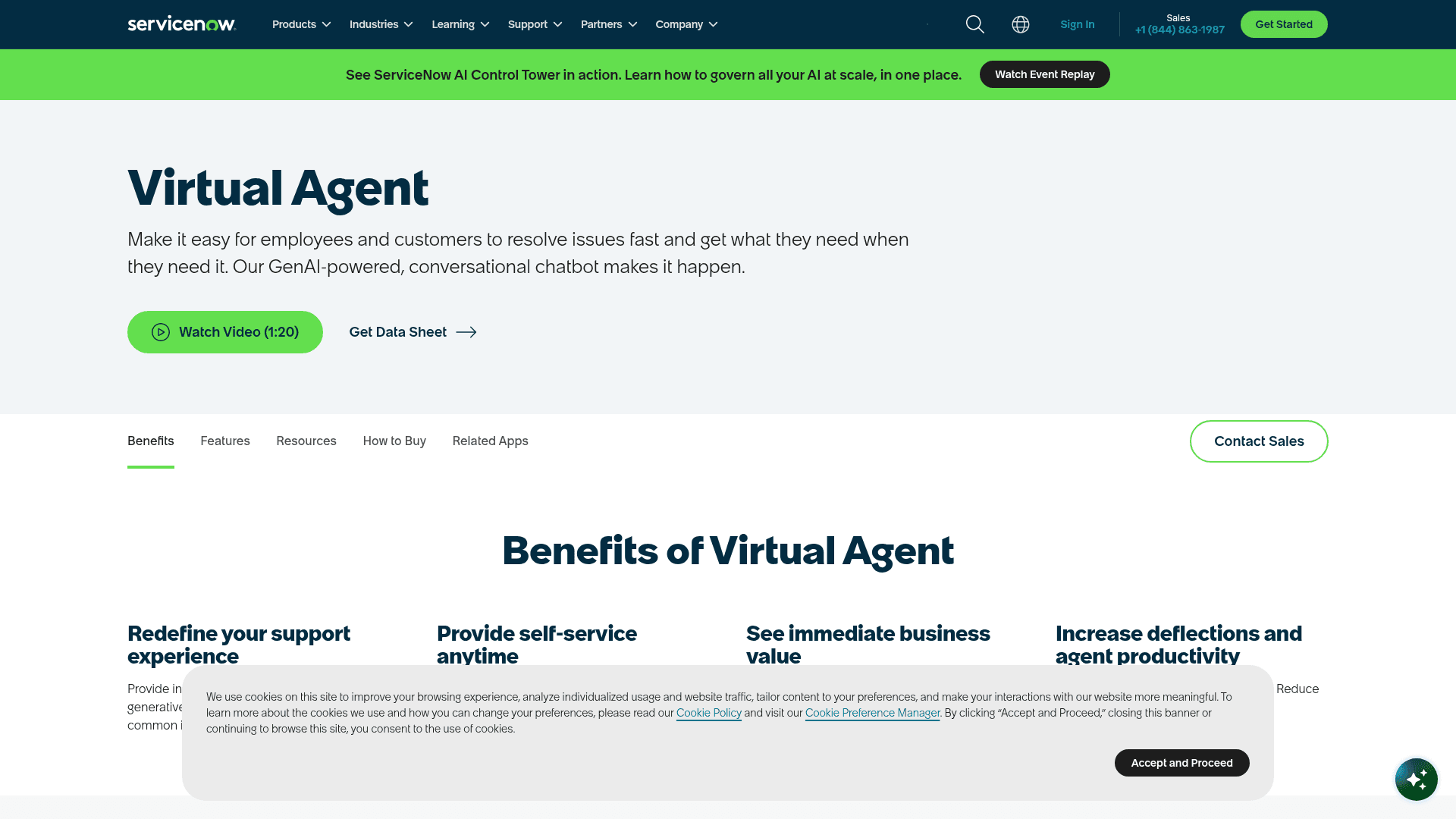
Two layers extend the basic chatbot. NLU capabilities let users type in plain language rather than specific keywords. Now Assist, ServiceNow's GenAI brand, builds on that: it generates synthesized answers from multiple knowledge articles, handles conversations that do not follow a linear path, and supports summarization, content creation, and code generation across the broader platform.
In February 2026, ServiceNow also launched the Autonomous Workforce, including an L1 Service Desk AI Specialist that autonomously resolves common IT requests using historical incident data. That capability sits at the ITSM Prime tier.
Key features of the ServiceNow Virtual Agent
ServiceNow has built a range of tools for building and managing automated conversations. Here is what each main feature actually does.
Conversation designer
Conversation designer is ServiceNow's visual tool for building chat workflows, called "topics." It includes drag-and-drop authoring, pre-built conversation templates for IT, HR, and customer service, and an in-designer test and preview mode. ServiceNow describes it as "create your own conversations using an intuitive designer that works with any use case." (source) Customizing templates to non-standard use cases increases complexity quickly, particularly for teams without a ServiceNow developer on staff.
GenAI and NLU capabilities
Now Assist powers the GenAI layer across the full platform: text summarization for cases and incidents, multi-turn conversational exchanges, synthesized responses that pull from multiple articles, voice support, and code generation. It supports third-party models including Microsoft Copilot, Azure OpenAI, IBM WatsonX, OpenAI, and Google Gemini, alongside ServiceNow's own domain-tuned LLMs.
For multilingual teams: Now Assist translates incoming queries to English for processing, retrieves the most relevant knowledge articles, then translates the response back to the user's language before delivery.
Channels and integrations
The Virtual Agent deploys in the ServiceNow Service Portal, Employee Center, and native mobile apps. It also connects with Microsoft Teams and Slack so users can interact where they already work. Live agent handoff passes the full conversation history to a human agent when escalation is needed, so the user does not need to repeat themselves.
Conversational analytics
The Conversational Analytics dashboard tracks containment rates, topic usage, and user behavior trends. ServiceNow describes it as helping admins "understand user behavior and trends to help make quick, informed decisions." (source) You can use this to identify which topics to add next and where the bot is failing to contain.
How the ServiceNow Virtual Agent sources knowledge
A chatbot is only as useful as the information it can access. The Virtual Agent's default source is the ServiceNow Knowledge Management module. AI Search finds and surfaces relevant articles, which means the quality of the bot's answers depends directly on the quality and freshness of those articles. Outdated or thin articles produce unhelpful responses.
Documents stored outside ServiceNow, including Confluence spaces, SharePoint sites, and Google Docs, require Workflow Data Fabric external content connectors. ServiceNow bundles Workflow Data Fabric across all ITSM tiers and claims data connections can be made up to 6x faster, slashing integration costs up to 70% (source), versus custom integration work. Configuring those connectors still involves technical effort to map, test, and maintain the connections.
One area worth clarifying: the standard Virtual Agent draws from Knowledge Management articles rather than closed ticket history. At the ITSM Prime tier, the L1 Service Desk AI Specialist explicitly uses historical incident data to diagnose and resolve requests autonomously. That capability is not available on Foundation or Advanced tiers.
What users say
ServiceNow ITSM holds a 4.5/5 on G2 across 1,952 reviews. The most consistent praise focuses on workflow automation and the structure it brings to IT operations:
"It doesn't just manage tickets, it creates a sense of order, making it easier to trust the process and focus on solving problems rather than chasing them."
The most common criticisms in the G2 tag aggregation are Learning Curve (72 mentions), Expensive (60), and Complexity (56). One reviewer put the tradeoff plainly:
"The AI and intelligence features are promising as well, but they can feel limited unless they are properly configured and licensed. Overall, ServiceNow is very capable, but its complexity and cost can be real barriers."
Source: G2 ServiceNow ITSM reviews
Limitations and considerations
Tiered licensing
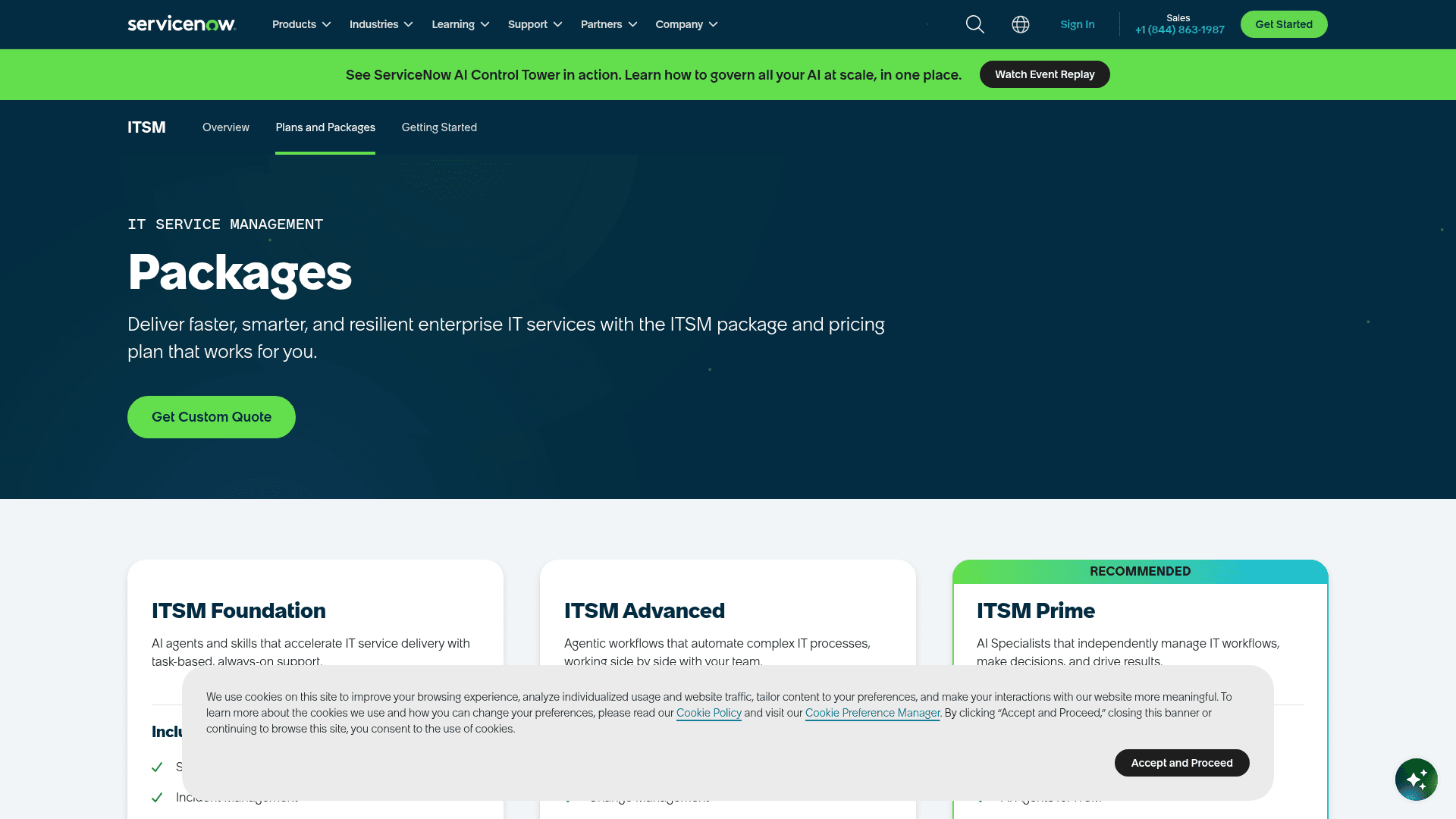
The ITSM pricing page lists three tiers: Foundation, Advanced, and Prime. The basic Virtual Agent ships with all three. Now Assist capabilities deepen with each tier. The Autonomous Workforce (including the L1 AI Specialist with historical incident data access) is exclusive to Prime. Mapping your use case against the feature matrix before entering a procurement process saves time later.
Setup and configuration time
Despite a "guided setup" flow, configuring the Virtual Agent to handle a realistic range of requests typically involves setting up NLU models, building topic flows in Conversation Designer, and connecting external knowledge sources if needed. A G2 summary of 1,952 reviews notes that "the complexity of setup and customization can be challenging, particularly for new users." Many teams with complex knowledge environments rely on a ServiceNow specialist or certified partner.
Feature comparison
| Feature | Virtual Agent (Foundation / Advanced) | Virtual Agent + L1 AI Specialist (Prime) | eesel AI |
|---|---|---|---|
| Custom topics | Yes, via Conversation Designer | Yes | Yes, no-code editor |
| NLU | Yes | Yes | Yes, trained on your data |
| Historical incident data | Knowledge Management articles only | Yes, via L1 AI Specialist | Yes, automatically |
| External knowledge connectors | Via Workflow Data Fabric (included) | Via Workflow Data Fabric (included) | 100+ one-click integrations |
| Conversation testing | Conversation Designer preview | Conversation Designer preview | Test against past tickets before launch |
| Pricing | Custom quote | Custom quote | From $299/mo (500 credits), no per-seat fee |
ServiceNow Virtual Agent pricing
ServiceNow does not publish dollar figures on its public pages. The Virtual Agent is included with the ServiceNow AI Platform across all ITSM tiers, each sized via custom quote. Visit servicenow.com/lpgp/pricing.html to contact ServiceNow for a quote.
Third-party consultancies such as Unthread and RedressCompliance publish estimates for ITSM costs. Those figures are not disclosed on any ServiceNow page and should be treated as third-party analyst estimates, not ServiceNow's published prices.
A connected alternative
If the tiered licensing model and configuration overhead are concerns, there are modern alternatives built to work alongside your existing tools rather than require you to consolidate everything into a single platform.
eesel AI is an AI agent platform that layers on top of your current setup. It connects Confluence, Google Docs, Slack, and over 100 other sources via one-click integrations, and automatically learns from your past support tickets so its answers are grounded in solutions that have actually worked.
Three things worth knowing about eesel AI for teams evaluating alternatives:
- Transparent pricing: From $299/month for 500 credits (1 credit per ticket or chat), with one fixed monthly price, no per-seat fees, and 100 free credits to start (no credit card required). Pay a year upfront and get two months free.
- Simulation before launch: Before going live, run the agent against thousands of past tickets to forecast automation rates and tune answers based on real historical data.
- Self-serve setup: Teams can connect their helpdesk, add knowledge sources, and start testing in minutes without a specialist or a sales process.
Getting started with AI in ServiceNow
The ServiceNow Virtual Agent is a capable tool within a large enterprise platform, with real strengths in workflow automation, structured incident management, and broad channel reach. The tradeoffs are real too: a tiered licensing model ties richer AI features to higher-cost contracts, configuration takes meaningful time and expertise, and access to historical incident data requires the Prime tier.
For teams looking for a faster path to AI-assisted support that works alongside existing tools, eesel AI offers a self-serve alternative with transparent, credit-based pricing and setup that takes minutes rather than months.
Ready to see what a connected AI agent can do alongside your existing setup? Try free or book a demo.
Frequently asked questions
What is the ServiceNow Virtual Agent designed to do?
The ServiceNow Virtual Agent is a GenAI-powered conversational chatbot built into the ServiceNow platform. It handles routine requests like ticket status checks, service catalog orders, and knowledge base lookups so human agents can focus on more complex issues. It connects with channels including Microsoft Teams and Slack, and can escalate to a human with full conversation context when needed.
Which ITSM tier do I need to unlock advanced AI in the Virtual Agent?
The Virtual Agent and Now Assist GenAI capabilities are included across all three ITSM tiers: Foundation, Advanced, and Prime. The L1 Service Desk AI Specialist, which draws on historical incident data to resolve requests autonomously, is available in the ITSM Prime tier. All tiers are sold via custom quote; contact ServiceNow for pricing.
How does the ServiceNow Virtual Agent access documents outside of ServiceNow?
By default, the Virtual Agent draws from the ServiceNow Knowledge Management module. Pulling in documents from SharePoint, Google Drive, Confluence, or other external systems requires configuring Workflow Data Fabric external content connectors. ServiceNow bundles Workflow Data Fabric across ITSM tiers, but configuring the connectors adds technical complexity and setup time.
What does the ServiceNow Virtual Agent cost?
ServiceNow does not publish pricing on its public pages. The Virtual Agent is included with the ServiceNow AI Platform across all ITSM tiers, each priced via custom quote. Visit servicenow.com/lpgp/pricing.html to request a quote. For teams seeking transparent, credit-based pricing, eesel AI starts at $299/month for 500 credits (1 credit per ticket or chat), with no per-seat fee.
Can I use eesel AI alongside an existing ServiceNow setup?
Yes. eesel AI works as a layer on top of existing helpdesks and knowledge tools rather than replacing them. It connects to ServiceNow and 100+ other sources via one-click integrations, automatically learns from past support tickets, and lets you run a simulation against historical ticket data before going live. Setup takes minutes. You can start with 100 free credits, no credit card required.