

Disclosure: This article is published by eesel AI, a competitor of ServiceNow. We encourage you to read ServiceNow's own materials for their perspective.
If you're running on ServiceNow, you've probably been hearing a lot about what artificial intelligence can do for your IT service management (ITSM). The promises of AI-driven automation and massive efficiency gains are everywhere.
This guide is a straightforward, practical look at ServiceNow AI. We'll break down its core features and what they actually mean for your IT and support teams. While the platform is definitely powerful, rolling out its native AI can be a slow and complicated project. We'll get into some of those real-world hurdles and show you a more nimble way to get automation working with the tools you already use.
What is ServiceNow AI?
The ServiceNow AI Platform is designed to weave artificial intelligence into all of a company's workflows. Instead of thinking of AI as an extra feature you tack on later, ServiceNow's approach is to build it right into the foundation of the platform.
It all boils down to a few key pieces working together:
-
Now Assist: This is their generative AI brand. Think of it as the tool that handles tasks like summarizing long, complicated case histories, drafting new content, or even helping write code. It's powered by a mix of ServiceNow's own language model (the Now LLM) and models from Microsoft Azure OpenAI, IBM WatsonX, and Google Gemini.
-
AI Agents: These are autonomous bots designed to understand what a user is asking for and act on it. The goal is for them to resolve common issues with little to no human intervention.
-
Predictive Intelligence: This is the more traditional side of AI, using machine learning to classify incoming tickets, route them to the correct teams, and spot trends based on past data.
-
AI Search: This is a smarter, intent-based search engine for your self-service portals. It helps users find direct answers from knowledge bases, not just a long list of links.
When you put them all together, the goal is to create a more automated and intelligent environment for managing everything from IT tickets to customer support requests.
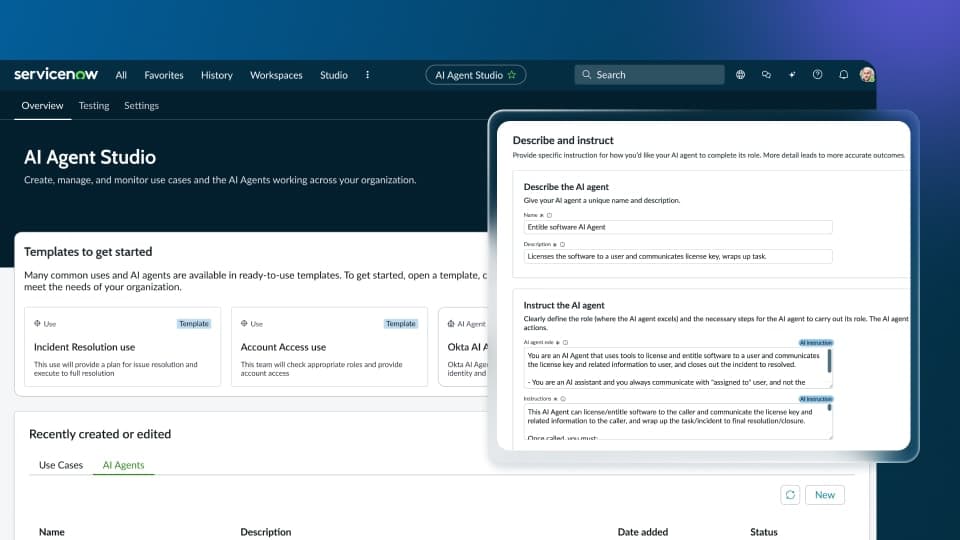
Key ServiceNow AI capabilities and common use cases
So, what does ServiceNow AI actually do in a typical workday? Its features are built to help different groups across your organization.
For your agents and support teams
For the folks on the front lines, the main goal is to cut down on manual work and help them resolve issues faster.
-
Case and incident summarization: Now Assist can take a long, tangled ticket history and boil it down to a quick summary. This is a real help for agents who can get up to speed in seconds instead of piecing the story together themselves.
-
Automated ticket routing: Using Predictive Intelligence, the system looks at new tickets and automatically sends them to the right team. It analyzes the ticket's category, priority, and content to make sure it doesn't get lost in the wrong queue.
-
Knowledge article generation: When an agent solves a tough problem, Now Assist can draft a knowledge base article based on the solution. This is useful for capturing institutional knowledge and making it available for the next person who runs into the same issue.
For your developers and admins
Platform owners and developers get some handy tools to build and maintain their ServiceNow instance more easily.
-
Code and flow generation: Developers can describe what they want a script to do in plain English, and Now Assist will suggest the code. It can also help build out automated workflows in Flow Designer, turning a simple description into a working process.
-
Automated Test Framework (ATF) test generation: This is a time-saver for admins preparing for an upgrade or a big configuration change. The AI can help generate tests to make sure new changes don't accidentally break something else.
For your employees and customers
For the end user, it's all about smooth self-service, so they can find answers without waiting for a human to step in.
-
Virtual Agent: This is ServiceNow's chatbot. It's on call 24/7 to handle common requests like password resets, checking on a ticket's status, or ordering a new keyboard from the service catalog.
-
AI Search: Instead of just looking for keywords, AI Search tries to understand user intent. This helps it pull more direct and relevant answers from the knowledge base, reducing the number of new tickets people need to create.
The real-world challenges of ServiceNow AI
While a deeply integrated AI platform sounds fantastic in theory, the reality of getting it up and running can be a different story. Teams who have gone through it tend to run into a few consistent friction points.
A demanding implementation process
Adopting ServiceNow AI isn't like trying out a new app. It's a major organizational commitment. The platform is incredibly powerful, but getting the AI parts configured and working can take admins with deep platform knowledge and, for many teams, an implementation partner and a long project. This makes it a tough sell for teams that need to move fast and show results quickly.
Success depends on data quality
The usefulness of tools like Now Assist and Predictive Intelligence really hinges on the quality of your existing data.
requires your agents to put a very detailed resolution on every single past ticket

If your ticket history is messy or incomplete, as it is for most teams, the AI will struggle to find useful patterns. That typically means a substantial data cleanup project before the AI features become effective.
The risk of AI hallucinations and the need for review
A real concern with any generative AI is that it can "hallucinate," meaning it confidently generates incorrect information. This puts agents in a position where they have to double-check every AI-generated response, which can offset the time savings.
you then have to read it completely because of hallucinating... The need to review makes it bulky. Without a safe way to test the AI and build trust before it starts talking to customers, people stop using it.
Limited flexibility with external knowledge sources
Most companies don't keep all their knowledge in one tidy place. It's often spread across Confluence, Google Docs, and countless informal conversations in Slack. ServiceNow's Workflow Data Fabric and Zero Copy Connectors make external connections possible, and its external content connector documentation names Atlassian Confluence Cloud and Microsoft sources for AI Search. Setting them up still requires technical resources and time. Teams that don't do this work can end up with an AI that has gaps wherever key information lives in disconnected systems.
Understanding ServiceNow AI pricing
One of the most common questions about ServiceNow AI is what it actually costs. The answer is that pricing is not publicly listed; request a quote.
The ITSM pricing page lists three named tiers -- ITSM Foundation, ITSM Advanced, and ITSM Prime -- each of which now bundles a "Moveworks for ITSM" SKU at the matching level. All three tiers end with a "Get Custom Quote" CTA, and no dollar figures appear anywhere on the page. The autonomous pieces, the L1 Service Desk AI Specialist and AI Agents for ITSM, are only in ITSM Prime.
| AI capability | Foundation | Advanced | Prime |
|---|---|---|---|
| Now Assist and Platform AI | Foundation level | Advanced level | Prime level |
| Virtual Agent | Included | Included | Included |
| AI Voice Agents | Not listed | Included | Included |
| L1 Service Desk AI Specialist | Not listed | Not listed | Included |
| AI Agents for ITSM | Not listed | Not listed | Included |
ServiceNow's own assist rate card shows a consumption-based model for Now Assist, charging "per assist" for each AI action. Your contract sets an allowance of assists, and the document says ServiceNow may invoice you for usage above it. Third-party consultancies describe the same per-assist model. Under a contract structured this way, a busy support month means a larger AI bill. Teams operating on this model may find themselves managing usage rather than maximizing it, and accurate budget forecasting requires ongoing monitoring.
| Now Assist action | Assists used |
|---|---|
| Summarize a case or incident | 1 |
| Generate a resolution note | 1 |
| Incident assist (lookup and follow-ups) | 5 |
| Virtual Agent topic, start to finish | 10 |
| Agentic workflow, small (fewer than 4 actions) | 25 |
| Agentic workflow, medium (5 to 8 actions) | 50 |
| Agentic workflow, large (9 to 20 actions) | 150 |
That uncertainty is worth comparing against alternatives with published, fixed pricing:
| Metric | ServiceNow AI | Credit-based model (e.g., eesel AI) |
|---|---|---|
| Pricing visibility | Not publicly listed; custom quote | Published pricing |
| Pricing basis | Per-assist allowance per contract (ServiceNow rate card) | Per credit (1 credit per ticket or chat, from $299/month for 500) |
| Variable by volume | Usage above the allowance may be invoiced | Fixed monthly price, sized to ticket volume |
| Budget forecasting | Requires ongoing monitoring | Predictable: one fixed monthly price |
This ServiceNow keynote shows how large companies are deploying generative AI innovations through the platform.
A faster, more flexible approach to ITSM automation
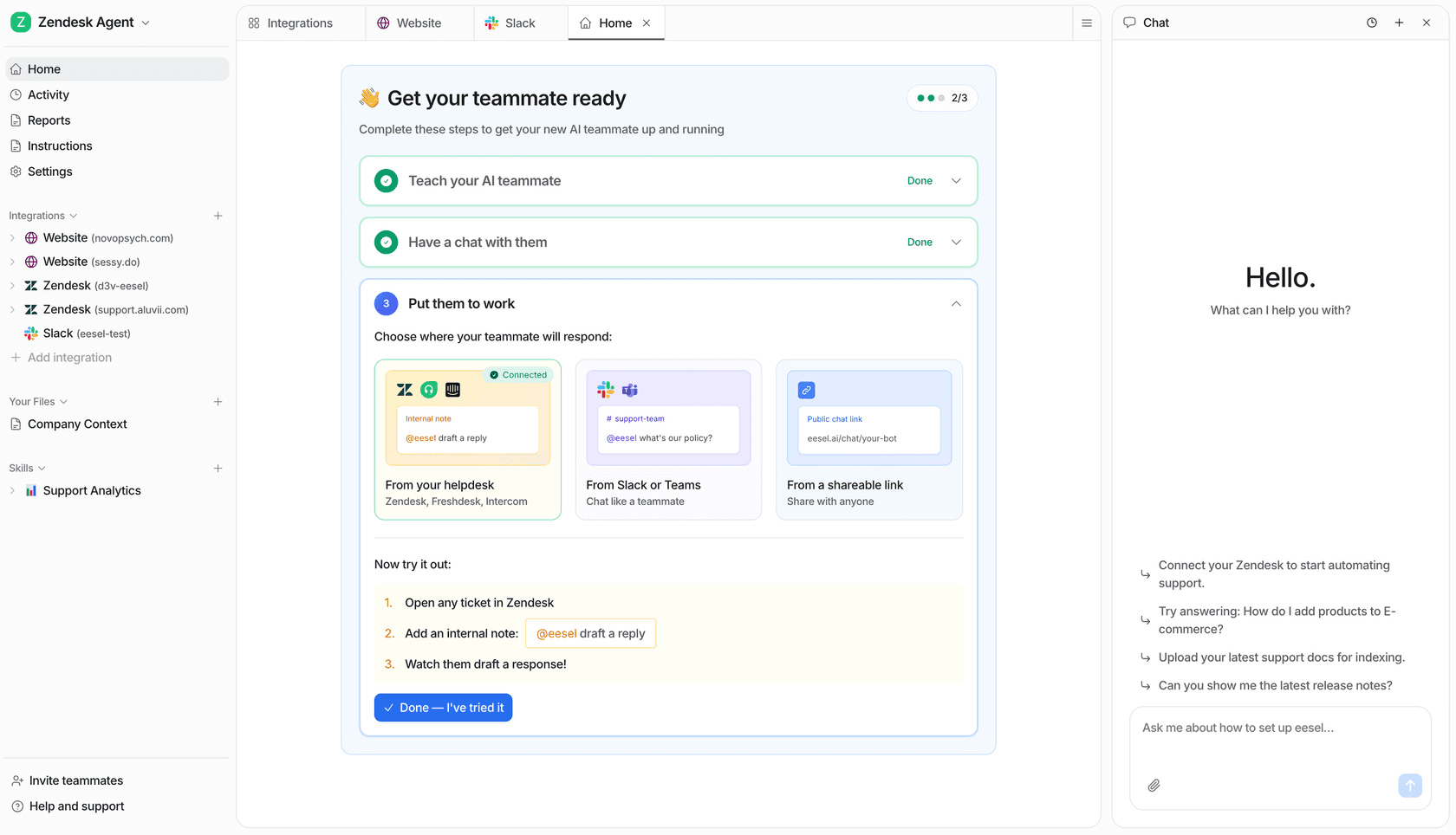
So what's the alternative for teams that can't afford a six-month implementation or a variable, usage-based bill? A dedicated AI layer offers a much more practical way to get started with automation. Instead of getting locked into a single platform, a tool like eesel AI works as an intelligent layer on top of the tools you already use, giving you speed and control.
Go live in minutes, not months
With eesel AI, you don't have to book a sales call or sit through a mandatory demo. It's a truly self-serve platform, which means you can sign up, connect your help desk, and build your first AI agent in just a few minutes. One-click integrations with tools like Jira Service Management and Zendesk mean there's no complex API work or platform migration. It just slots right into your existing setup.
Unify all your knowledge, wherever it lives
Unlike a siloed platform, eesel AI was built to connect to all your knowledge sources. It seamlessly pulls information from your past tickets, your Confluence workspace, shared Google Docs, and even internal Slack channels. It learns automatically from your existing conversations, which helps solve that "messy data" problem without forcing you to spend months on a cleanup project first.
Test with confidence and roll out gradually
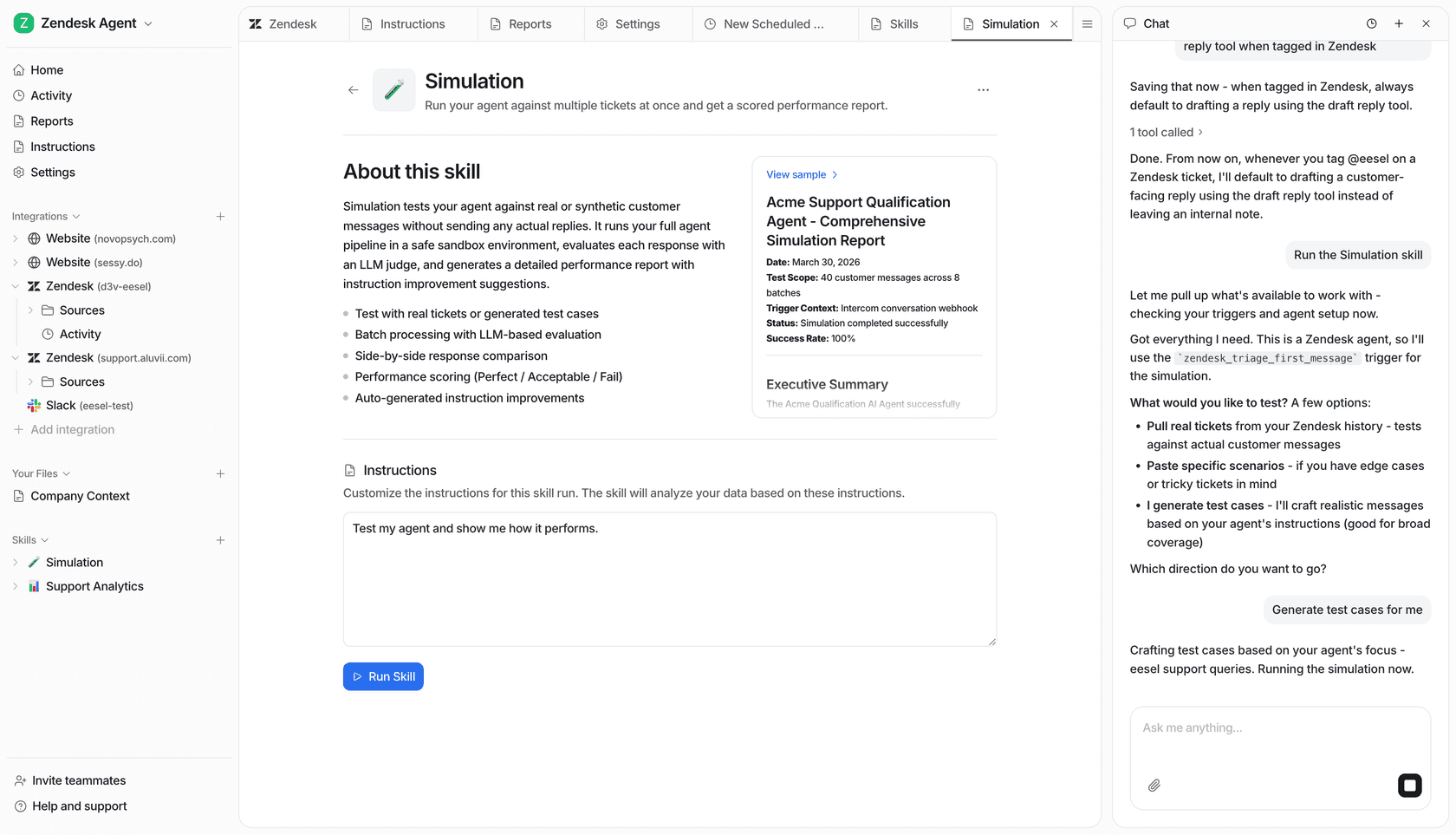
The fear of AI making mistakes is real. That's why eesel AI includes a powerful simulation mode. You can safely test your AI agent on thousands of your past tickets in a sandbox to see exactly how it would have responded. This gives you an accurate forecast of automation rates and cost savings before you ever turn it on for customers. This kind of risk-free testing builds trust and lets you roll out automation at your own pace, starting with certain types of tickets and expanding as you get more comfortable.
Get total control and predictable pricing
eesel AI gives you fine-grained control through a simple prompt editor, where you can define the AI's tone of voice, personality, and the specific actions it's allowed to take.
Best of all, the pricing is completely transparent. eesel AI uses credit-based pricing: one fixed monthly price from $299/month for 500 credits, where 1 credit covers one ticket or chat. New accounts start with 100 free credits, no credit card required. There are no per-seat fees, so adding more agents to your team doesn't affect your bill.
Is ServiceNow AI the right strategy for your team?
ServiceNow AI is a powerful solution for large companies that are already deeply invested in its ecosystem. For those organizations, it can deliver real value by embedding intelligence directly into their core processes.
But that power comes with trade-offs: long implementation cycles, high costs, data quality dependencies, and pricing you can't forecast without engaging sales. For teams that need to move faster and stay nimble, a dedicated AI platform like eesel AI offers a more practical path. By improving the tools you're already comfortable with, it provides a faster, simpler, and more predictable path to AI-powered automation.
Ready to see how fast AI automation can be? Try free and set up your first AI agent in minutes.
Frequently asked questions
What exactly is ServiceNow AI, and what are its core components?
ServiceNow AI integrates artificial intelligence directly into a company's workflows. Its core components include Now Assist for generative AI tasks, AI Agents for autonomous issue resolution, Predictive Intelligence for classification and routing, and AI Search for intelligent self-service.
How does ServiceNow AI assist different teams, such as support agents and developers?
For agents, Now Assist offers case summarization, automated ticket routing, and knowledge article generation to speed up issue resolution. Developers benefit from code and flow generation, plus Automated Test Framework (ATF) test generation, all within the ServiceNow ITSM platform.
What are some of the significant challenges companies face when adopting ServiceNow AI?
Key challenges include a demanding implementation process that requires substantial resources, a strong dependency on data quality for effectiveness, and the risk of AI "hallucinations" that require careful human review. G2 reviewers also note that AI features "can feel limited unless they are properly configured and licensed."
How is ServiceNow AI typically priced?
ServiceNow pricing is not publicly listed. Contact ServiceNow for a quote. The ITSM Plans and Packages page lists three named tiers (Foundation, Advanced, Prime), each ending in a "Get Custom Quote" CTA with no dollar figures shown. ServiceNow's published assist rate card shows a consumption-based model for Now Assist where costs vary with the AI actions you run, but the assist allowance and any overage terms are set by contract and are not published.
Can ServiceNow AI effectively utilize knowledge stored outside the platform, like in Confluence or Google Docs?
ServiceNow's Workflow Data Fabric and Zero Copy Connectors support external data connections. However, G2 reviewers note that AI features "can feel limited unless they are properly configured and licensed," and teams with knowledge spread across Confluence, Google Docs, or SharePoint may need connector setup or custom integration work to avoid gaps in AI responses.