What "Meta Muse for Salesforce Service Cloud" actually means
I read a lot of other companies' developer docs in my job, and Meta's 2026 naming is the one that takes most time to untangle. In terms of products there are three in play, but only one of them talks to your customers:
- Muse, the personal AI agent Meta launched in September for consumer errands. It wasn't built to answer a business's customers.
- Muse Spark 1.3, the model, sold through the Meta Model API. You can build a bot on it, and I cover what that means for Salesforce further down. The Muse Spark 1.3 overview has the model detail.
- Meta Business Agent, which Meta launched in June as the AI that answers your customers on WhatsApp, Messenger and Instagram. This is the one a Salesforce service team is really weighing.
The full three-way breakdown lives in my Meta Muse for customer support guide. Here I zoom in on the Salesforce side, meaning your Enhanced WhatsApp channel and Messaging Sessions with their Cases, and then the Agentforce bill. Running a different helpdesk? See Meta Muse for Zendesk or the HubSpot version.
Meta is also leaning to the Salesforce crowd directly, which is worth to note. It was a Supporting Partner at Dreamforce 2026, and it ran a September 17 session on Business Agent that listed "human handoff" among its features.
How WhatsApp works in Salesforce Service Cloud today
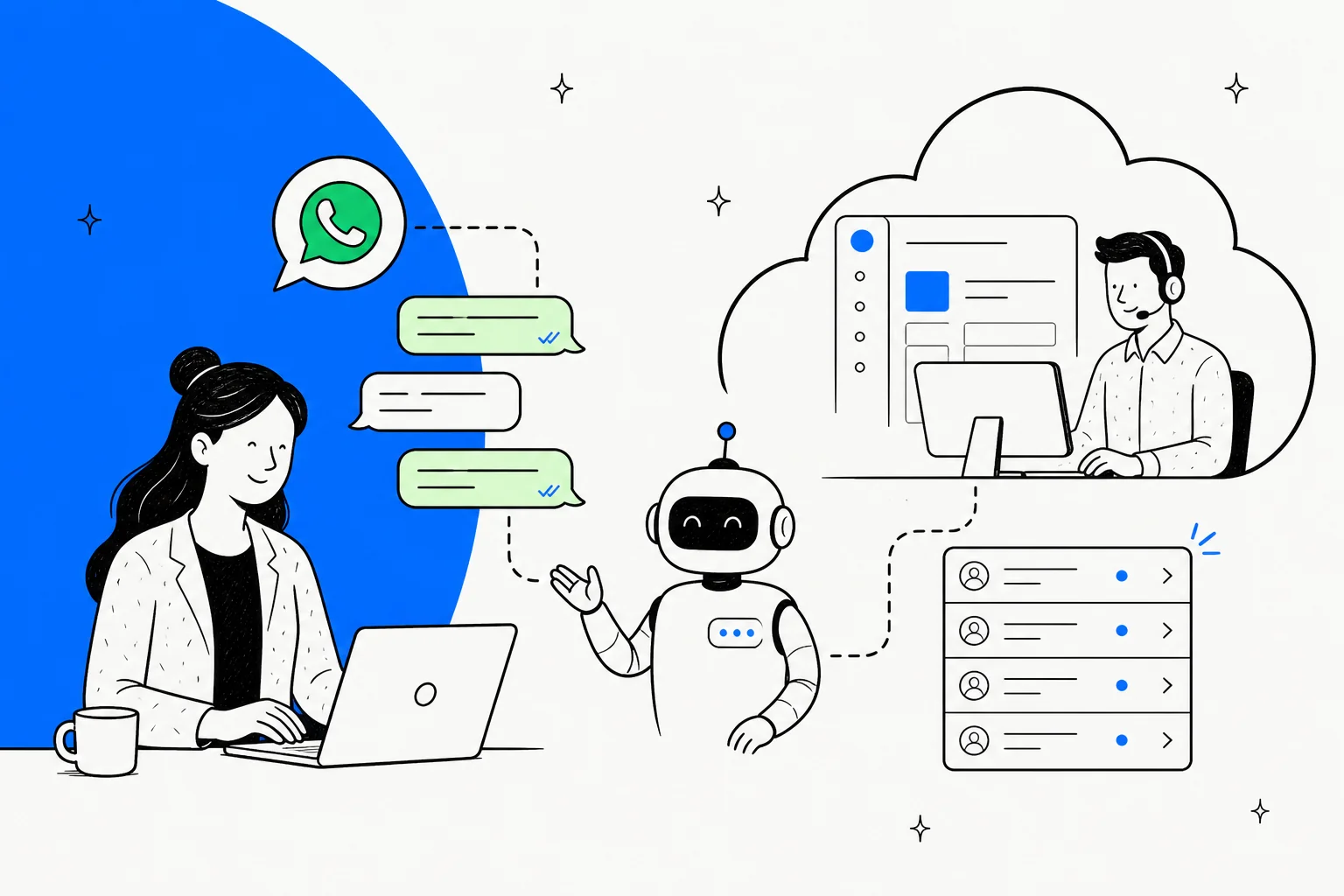
Before Meta's agent comes in, it helps to know first what your Salesforce WhatsApp channel is already doing. Salesforce's WhatsApp setup guide describes reps answering in the Service Console with text and voice messages, also clickable options, then transferring to another rep, queue or Omni-Channel flow when they can't help. Each WhatsApp thread lands as a Messaging Session, and Omni-Channel is what routes it.
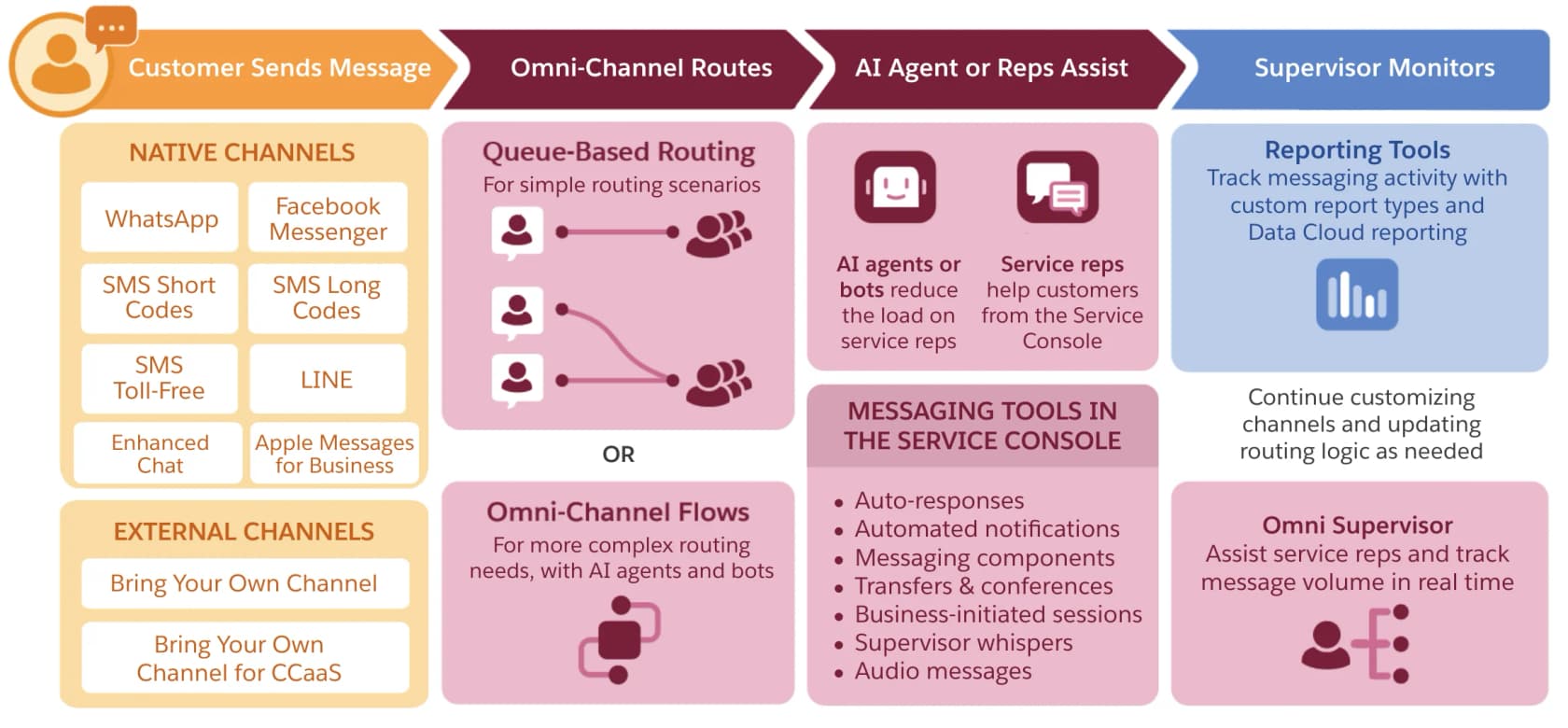
A few details from Salesforce's own docs are shaping everything that comes after this:
- It's an add-on on top of the seat. Enhanced WhatsApp needs Enterprise or Unlimited for Service plus either the Digital Engagement add-on or, since February 23, 2026, the newer Agentforce Contact Center Digital add-on. The current Service Cloud pricing lists Enhanced Messaging at an extra $75 per user per month on Core ($195) and Advanced ($395).
- Contact Center Digital runs on message credits. Per Salesforce's upgrade considerations, WhatsApp credits have been required since March 27, 2026, and you can't even create a channel without them.
- Agentforce can already sit on the number. Salesforce's voice replies guide says Agentforce now answers WhatsApp voice notes with AI-generated voice by default once the agent has a Messaging connection. So it could be that an AI is already sitting on your WhatsApp threads.
- No phone-app coexistence. Salesforce's Enhanced WhatsApp guide warns against logging into the WhatsApp app with the number: "Don't! Otherwise, you won't be able to activate the channel in Salesforce."
- One org per WhatsApp account. Salesforce's WhatsApp considerations say it doesn't support linking one WhatsApp Business Account to more than one Salesforce org, and numbers you keep with another provider count against your 25-number limit.
For the rest of the platform, my Service Cloud overview walks through it, then the Salesforce ticketing post is covering the Case object.
The add-on stacking is the place where Salesforce buyers feel it first. One G2 reviewer of Agentforce Service put it this way:
"The base platform is fine, but once you start adding features, integrations, or AI capabilities, the pricing increases quite a bit. It's something you need to plan for upfront; otherwise, it can feel expensive over time."

What happens when Meta Business Agent joins your Salesforce number
Meta's docs got a lot more detailed in September, and in terms of planning, that detail changes the picture for a Salesforce team.
It becomes the first responder, and Salesforce moves to standby
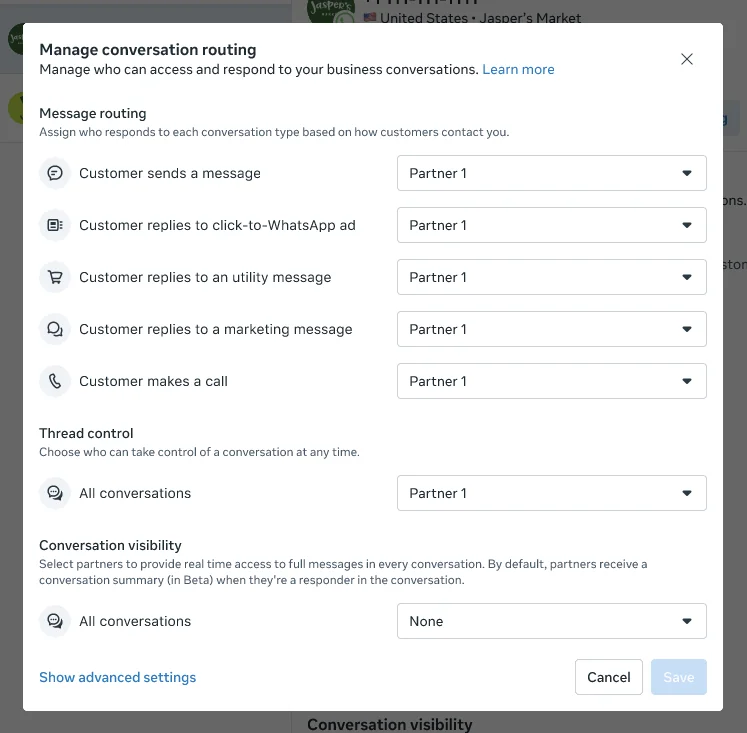
Meta's Conversation Routing decides which app answers each message when more than one app is connected to a number. Your Enhanced WhatsApp channel counts as one of those apps. When you turn on Business Agent, "The agent becomes the sole primary for messaging entry points" and "Previous primary destinations move to standby so they retain context", per Meta's routing setup guide.
In plain terms, new WhatsApp messages reach Meta's agent first and not Omni-Channel, so no Messaging Session is routed to a rep until the thread comes back to you. You can also split this by entry point, for example keeping Salesforce primary for direct messages while the AI takes the click-to-WhatsApp ads. That setup lives only in Meta Business Suite: "There is no public API for configuring Conversation Routing."
One AI per number, so Agentforce and Business Agent can't share
Meta's Platform overview spells out the eligibility rule in a clear way: the number must be "Not already running another AI agent on that number", because "an active authorized-agent integration blocks Meta Business Agent."
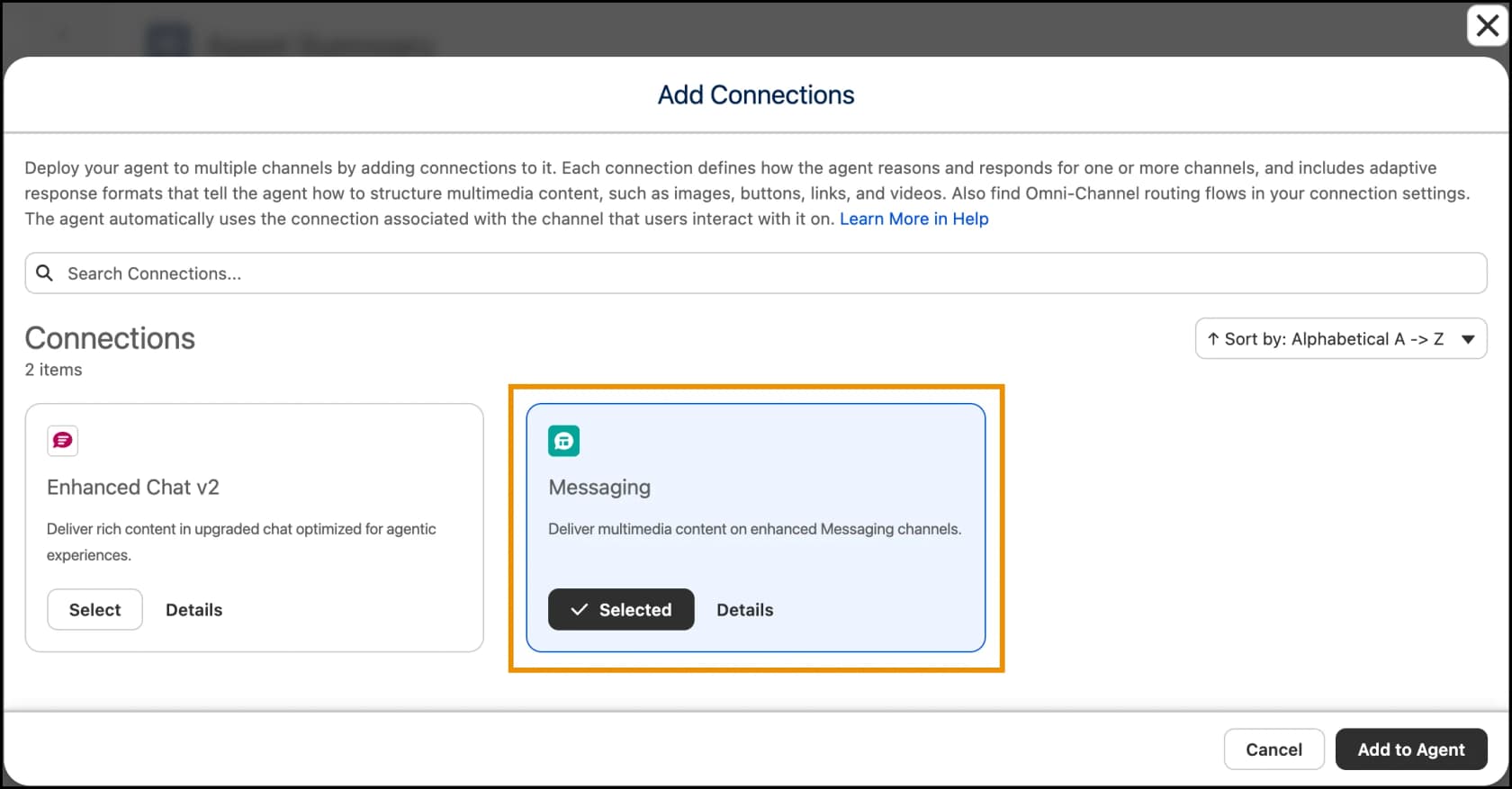
Meta doesn't define "authorized-agent integration." The plain reading, which is also the one I'd plan around, is that an Agentforce agent answering on the number counts. So it is a choice and not a stack. In Salesforce the agent reaches WhatsApp through a Messaging connection in Agentforce Builder, so that connection with its Omni-Channel flow is what you would unwind at first.
Salesforce is a named handoff partner, but the flow is still undocumented
When Business Agent hands off, the chat stays on the same WhatsApp thread and the ownership passes to another app on the number. Meta's customer support guide lists "A staffed destination for handed-off conversations" as one prerequisite, and a plain handoff goes to whichever app you set as the "escalation partner", per the thread control docs.
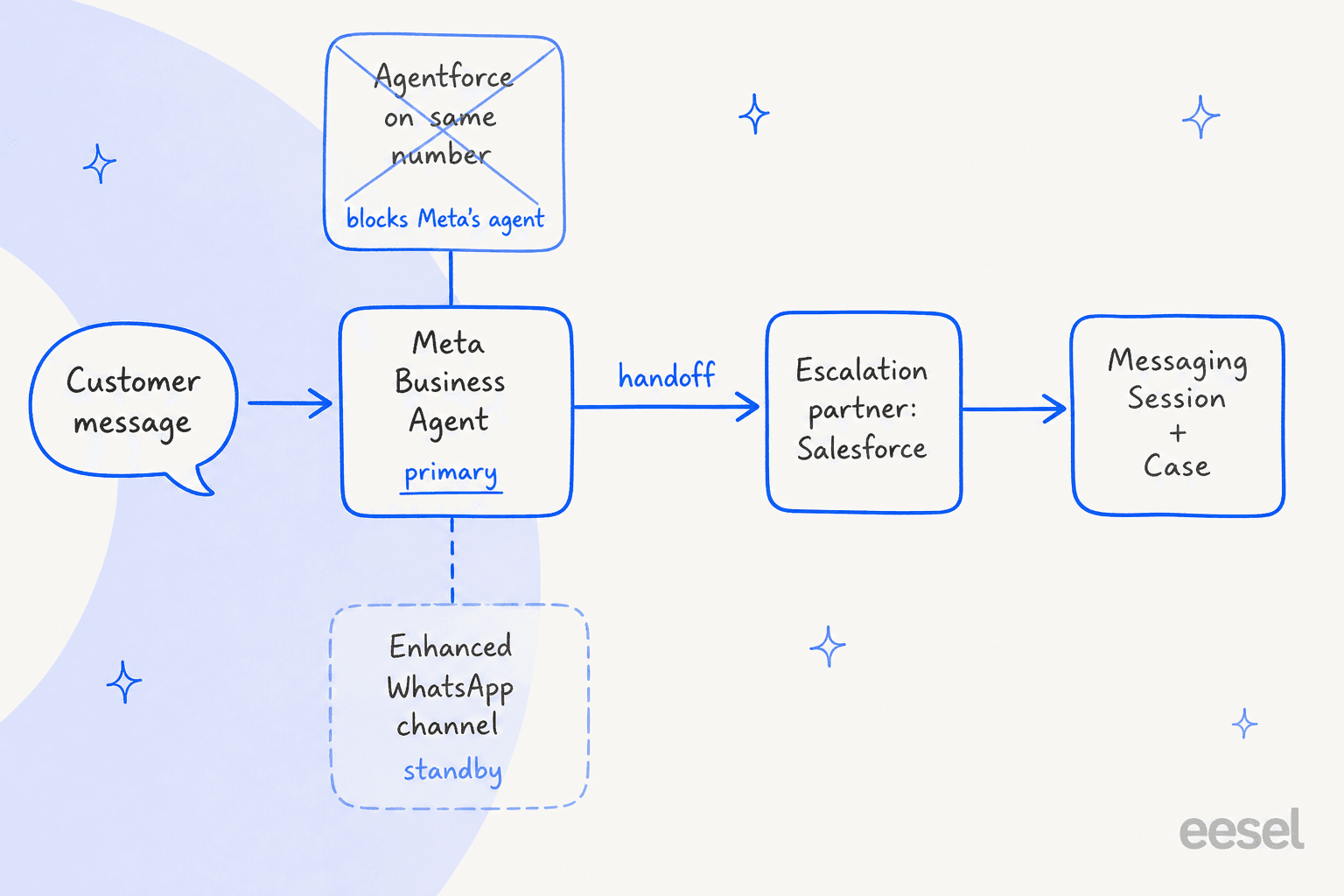
This is the place where Salesforce differs from most of the helpdesks in this series. When Meta introduced Business AI (Business Agent's earlier name), it listed handoff partners as "Salesforce, Microsoft Dynamics 365 Contact Center, ServiceNow, Zendesk, Gorgias and Klaviyo Service." Salesforce is first on that list. HubSpot and Front aren't on it at all, and neither is Freshdesk.
Being named isn't the same thing as being documented, though. None of the Salesforce WhatsApp, Messaging or Agentforce help articles I checked mention Business Agent or standby, nor thread control, and Meta's routing docs only landed on September 23. By Meta's model, a handoff should arrive in Salesforce as a normal inbound Messaging Session if Salesforce is the escalation partner. I'd still test it on a sandbox number first, before trusting it with customers.
A few more handoff details that are worth to know:
- Context travels in a 2,000-character note. The handoff event carries a free-text
metadatafield Meta suggests using "to carry the ticket or order reference". Your reps get either an AI summary or a live standby copy, never both. - You don't control the triggers. On the Platform, handoff fires on low confidence, integrity issues or a customer asking for a human, and "You do not configure the triggers," per Meta's capabilities page. Agentforce, by contrast, lets you write your own escalation rules into the agent and the Omni-Channel flow.
- Meta warns about the 2am handoff. Its guide says: "An agent that hands off at 02:00 into an unstaffed queue produces a worse outcome than one that says when the team is next available and raises a ticket."
One BSP consultant with early Platform access summed up Meta's controls in this way:
"The harness is very basic. You only get 4 controls - knowledge, personality, audience, handoff. Fine for a simple FAQ or catalog bot. But if you want real step-by-step logic, you hit the wall fast."

How a good handoff looks like on any stack is in my AI agent handoff guide.
Salesforce's client credentials flow fits Meta's connector auth exactly
Business Agent takes actions through connectors, HTTP APIs or remote MCP servers you define yourself, and Meta's support guide walks through a create_support_ticket tool. On the Gorgias and Freshdesk posts this was the point where things broke, because Meta's connectors reference says "only OAUTH2_CLIENT_CREDENTIALS, API_KEY, and NONE are supported."
Salesforce lands on the best side of this among all helpdesks I've checked. Its client credentials flow is available in all editions and lets an external client app trade "its consumer key and consumer secret" for an access token. That's the exact shape of Meta's OAUTH2_CLIENT_CREDENTIALS type, with a token URL plus a client ID and secret. So Meta's agent could, on paper, create a Case or look up a Contact, and also check an order in your org before the handoff lands.
There are three cautions if you build it:
- It runs as one integration user. Salesforce says the flow requires "an integration user to run the integration", so every write from Meta's agent carries that user's name and permissions. Scope that user's profile tightly.
- The Hosted MCP servers don't fit. Salesforce's hosted MCP setup requires PKCE and tokens for named users, which Meta's client-credentials connector can't do. Use the REST API. The Claude for Salesforce post goes deeper on those servers.
- Failures are silent. Meta flags it itself: "A failed ticket is invisible: the agent has already said a colleague will be in touch, the shopper waits, and nobody finds out until they message again angrier."
What it costs: Meta Business Agent vs Agentforce on WhatsApp
The two AIs are billing in different units, and both of them sit on top of the Service Cloud seats and messaging add-on that you already pay for.
| Cost line | Meta Business Agent | Agentforce on Enhanced WhatsApp |
|---|---|---|
| Unit | Tokens, $2.00 per 1M (Meta pricing) | Per conversation or per action (Agentforce pricing) |
| Per message or outcome | About 4 to 5 cents a message | $2 per conversation, or 20 Flex Credits ($0.10) per action |
| Simple question (Meta's example, 4 messages) | About 16 to 20 cents | $2, or about $0.20 to $0.30 at 2 to 3 actions |
| Complex question (Meta's example, 10 messages) | About 40 to 50 cents | $2, or about $0.50 at 5 actions |
| Bulk rate | None | $500 per 100,000 Flex Credits |
| Included with your plan | Nothing | Max ($550/user) includes 2.75M Flex Credits per org per year |
| Channel cost | WhatsApp Business Platform number | Enhanced Messaging, +$75/user/month on Core or Advanced |
| Can handoffs cost you | Yes, every message is billed | Yes, actions run before the handoff are billed |
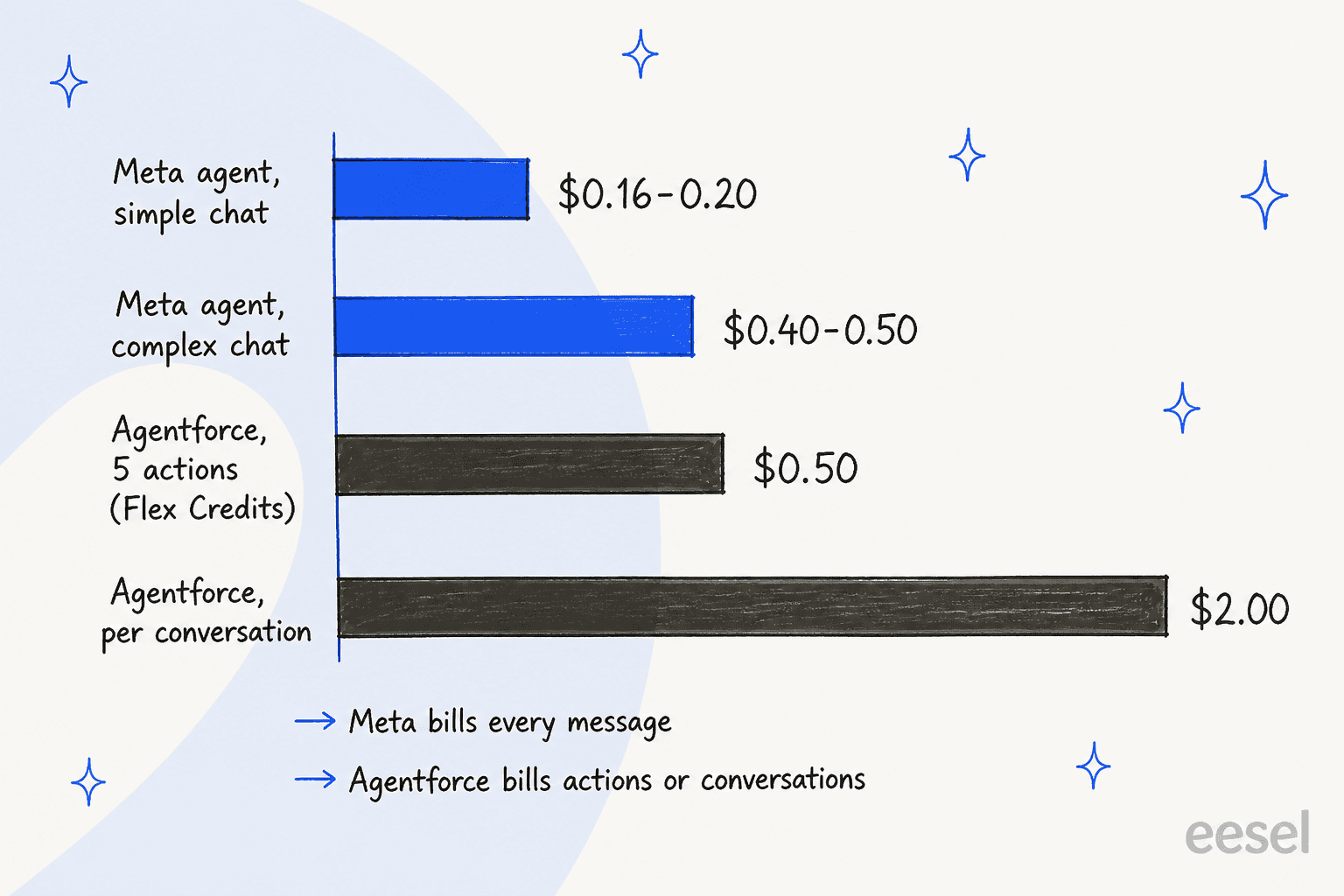
Per conversation, Meta's agent comes out cheaper than Agentforce's per-conversation price in every example Meta publishes. On Flex Credits the gap closes, which then depends on how many actions your agent runs in each chat. My Flex Credits explainer covers that math. The per-action unit is also the one Salesforce admins find hardest to forecast. One G2 reviewer wrote:
"If an AI agent gets stuck in a loop or handles an unexpected surge in holiday traffic, your 'digital wallet' of credits can drain faster than anticipated. You have to be very strict with Guardrails in the Agent Builder (like limiting the number of turns per session) just to keep costs predictable."
Meta's per-message model gets the same pushback from its early users:
"My concern is that the per-message cost is insanely high at approximately 5 cents per message."
For the full picture of seats and add-on, see my Service Cloud pricing and Agentforce pricing breakdowns.
October 1 is the open question on Salesforce's side
The change that most Salesforce teams will feel is not the AI price. From October 1, 2026, Meta charges service messages per message after 1,000 free per phone number per month. Service messages are free-form replies from a person or a third-party AI, and Meta's pricing page says each message is billed "either as a Meta Business Agent message or as a service message, never both."
Salesforce sits in the middle of that bill on Contact Center Digital, because it is metering WhatsApp through message credits. Its WhatsApp rate card, effective August 1, 2026, still says free-form service messages in the 24-hour window are "free of cost" and lists the service multiplier as 0 in every market. Salesforce has already announced WhatsApp multiplier changes for November 1, 2026, but none of those pages say how the October service charge will be passed through. If your reps are sending a lot of WhatsApp replies, it is worth to ask your account executive now. My WhatsApp API pricing explainer has the rate history, and the Meta policy changes post covers what Meta did to third-party bots.
Building your own Salesforce bot on Muse Spark
The third route skips Business Agent and builds on the model, which is the closest one to my day job.
On the model side, Muse Spark 1.3 costs $1.25 input and $4.25 output per 1M tokens on the standard tier (Meta Model API docs), with tool calling and structured output. The cheaper contributor tier is off the table for support work, because Meta's terms say "You must not submit sensitive, confidential, or personal information to the Discounted Services." My Muse Spark 1.3 review covers where the model is strong.
On the Salesforce side the good news is that there is a front door. Salesforce's messaging editions table lists Bring Your Own Bot for Enterprise, Unlimited and Developer with Agentforce Contact Center Digital plus the Partner Messaging Bot add-on. Salesforce keeps the WhatsApp connection, and your bot then plugs into the Messaging Session. That is a better deal in comparison with HubSpot, whose API can't send WhatsApp messages at all.
All the rest is yours to own:
- Knowledge. Knowledge articles, macros and past Cases, kept in sync.
- The case loop. Reading the session, drafting a reply, and updating Case status, priority and owner through the REST API.
- Escalation. Your own confidence threshold, handing back to an Omni-Channel flow.
- Testing. Replaying real Cases before anything reaches a customer.
- Trust review. Your security team will ask why case data leaves the Einstein Trust Layer for Meta's API.
Count the maintenance also, not only the build. My build vs buy guide lays out the full list. For the same build on other models, see ChatGPT for Salesforce and Grok for Salesforce.
Where Meta's agent stops for a Salesforce team
None of this is hidden in Meta's docs, but it lands harder on a Service Cloud org:
- It only answers in Meta's apps. Your org carries Email-to-Case, web forms, chat and often voice. Business Agent covers none of those, so you'd run two AIs with two sets of rules. My Salesforce chatbot post covers the web side.
- Your case history isn't a knowledge source. Meta's support guide tells you to "export the top drivers from your helpdesk for the last quarter" and write FAQ entries by hand. Years of closed Salesforce Cases stay out of reach.
- It doesn't see your CRM unless you wire it. Agentforce already knows the Contact, Account and entitlements it's talking about. Meta's agent knows only what your connector fetches.
- Regulated industries are excluded. Per Meta's Platform overview, businesses in finance, health, government, alcohol or gambling can't use it, and those are core Salesforce verticals.
- Accuracy still needs grounding. Meta's help center warns "Some AI messages may be inaccurate or inappropriate", and an early tester saw "the same product come back at two different prices in two replies" (Reddit).
Data quality is cutting both ways here. A G2 reviewer's warning about Agentforce applies just as much to anything you feed Meta's agent:
"Agentforce is only as smart as the data it can 'read.' If your Salesforce org has years of technical debt - duplicate records, stale knowledge articles, or poorly mapped fields - the AI will struggle."
The case-history point comes up in almost every eesel sales call, and my colleague Amogh, one of eesel's founders, put it plainly after one of them:
"Also - past ticket training strikes again. Classic. People really, really, really want to train on past tickets."
With Business Agent you would be writing that history back out as FAQs by hand, which for many Service Cloud teams is what decides it. The Service Cloud AI limitations post covers the Salesforce side of the same question.
Which setup fits your Salesforce team
Here is how I would pick, and it is based on where your customers write in and also how your team works.
| Your situation | Best fit | Why |
|---|---|---|
| WhatsApp-heavy B2C brand, simple order and hours questions | Meta Business Agent, Salesforce as escalation partner | Cheapest per chat, and Salesforce is a named handoff partner |
| Service Cloud org with WhatsApp plus email, web and chat cases | An AI agent working on Salesforce Cases | One set of rules, CRM context, no handoff plumbing |
| Already on Agentforce with Flex Credits, low WhatsApp volume | Stay put | Switching means unwinding the Messaging connection on that number |
| Engineering team that wants full control | Muse Spark via Bring Your Own Bot | Cheap per token, Salesforce keeps the WhatsApp connection |
| Finance, health or another regulated vertical | Not Business Agent | Excluded from the Platform |
For most Salesforce teams I talk with, the second row is the real one. A customer writes on WhatsApp, follows up by email and later calls, and your reps need all of it on one Case and one Contact, not split between Salesforce and Meta.
If you're comparing options inside Salesforce, my Service Cloud AI roundup and Agentforce alternatives list are good next reads. For WhatsApp across tools, see the best AI for WhatsApp support.
Try eesel for WhatsApp in Salesforce
eesel is an AI helpdesk teammate that joins Service Cloud like a new hire, with no separate widget and no second inbox. It drafts and sends replies on Cases, adds internal notes, updates status, priority and owner, and routes Cases to queues, using live Contact and Account context as it goes. It respects your assignment rules, escalation rules and entitlements, and it also connects to WhatsApp directly. It learns from your past Cases, knowledge articles and email templates, and before it answers a single customer it runs a simulation against your past Cases, so you see which ones it would get right. After that you choose the case types which it's allowed to touch.
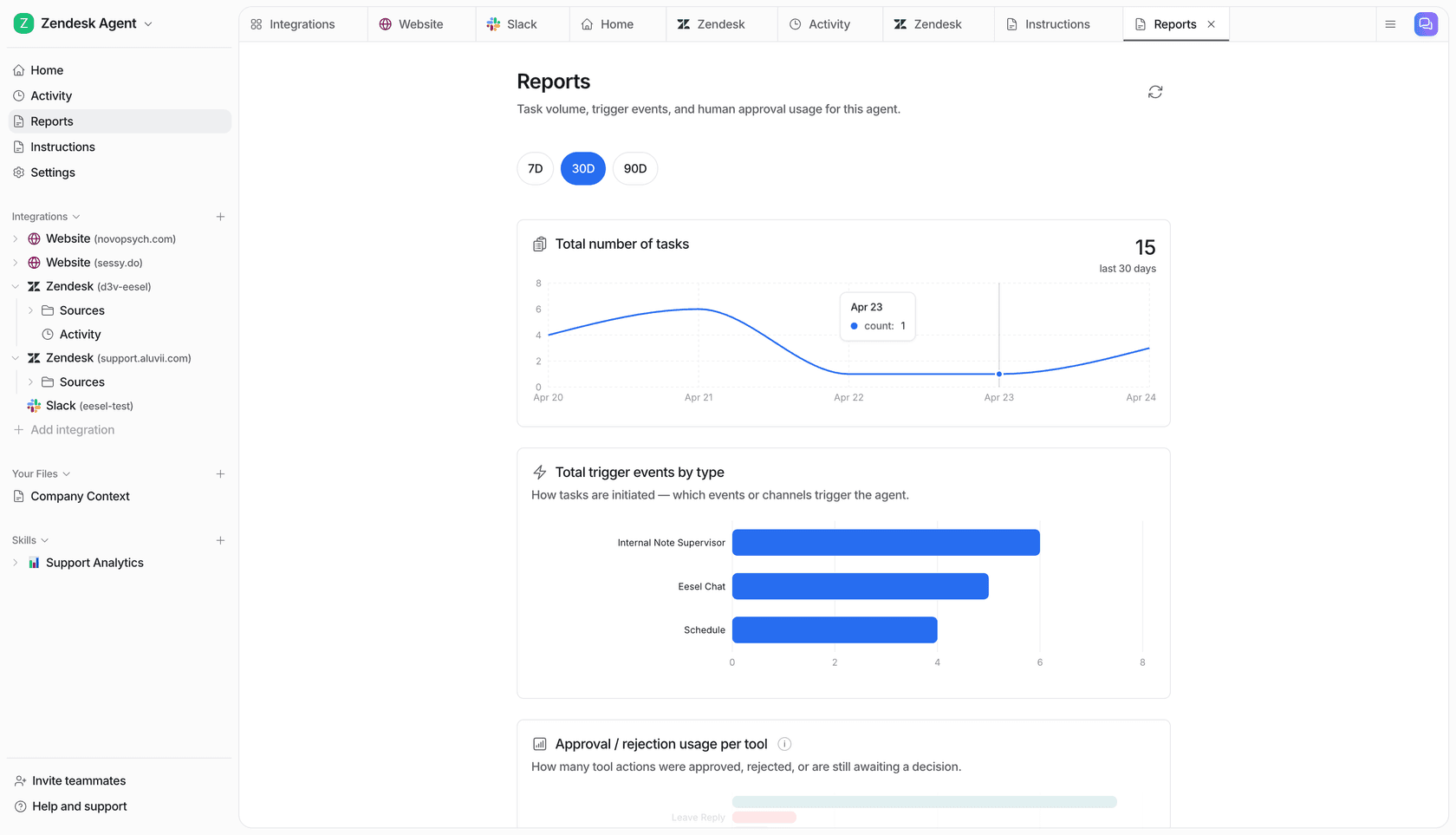
Pricing is a fixed monthly credit plan, where a case or chat counts as one credit however many replies it takes. No Flex Credit math per action. If you'd rather script the setup, the eesel CLI lets you, or a coding agent like Claude Code, connect Salesforce, add knowledge and approve actions from a terminal, with JSON output for every command.
Try eesel free with 100 credits and no card, and see how it handles your Salesforce WhatsApp cases before the October 1 pricing change lands.
Frequently Asked Questions
Can I use Meta Muse with Salesforce Service Cloud?
Does Meta Business Agent integrate with Salesforce?
How much does Meta Business Agent cost compared with Agentforce?
Which Salesforce edition do I need for WhatsApp?
What changes for Salesforce WhatsApp costs on October 1, 2026?
Can I build a Salesforce WhatsApp bot on Muse Spark instead?
What is the best AI for Salesforce Service Cloud WhatsApp support?


Article by
Rama Adi
Rama is a software engineer at eesel AI with two years of experience writing about B2B SaaS, AI tools, and customer support technology. Based in Bali, Indonesia, he brings a developer's perspective to product comparisons — cutting through marketing copy to what the integrations and APIs actually do.