
Why "Grok Bot for Salesforce Service Cloud" is even a search
When xAI launched Grok Bot on 2026-08-11, the whole pitch was an agent that signs into your real tools and works end to end, no API required. The product page even ships an example prompt aimed straight at support: "Sign in to Zendesk so I can work the support queue." Swap Zendesk for Salesforce and you have the exact question a lot of Service Cloud admins are now typing into search.
I build integrations for a living, and I'll give you the honest version up front: the gap between "an agent can click through cases in a demo" and "an agent I'd trust to close a stranger's billing case unsupervised" is enormous. I've watched confident-sounding bots quietly send wrong answers when the knowledge base came back empty, which is exactly why every rollout I've been near now gets rehearsed against a team's real historical tickets before it touches a single customer. On one e-commerce inbox, that dry run came back 93% accurate on triage and 7% factually wrong on drafts, and we knew both numbers before a customer saw anything.
So when a brand-new autonomous agent tells me it'll work my Service Cloud queue, my first question isn't "can it click." It's "what happens the first time it's confidently wrong at 2am, and who finds out?" That is the lens for this whole piece. Grok Bot is a genuinely interesting general-purpose worker. Let's look at how you'd point it at Service Cloud, what it does well, and where the seams show for support specifically.
The two ways to connect Grok to Service Cloud
There are exactly two routes, and they are very different amounts of work.
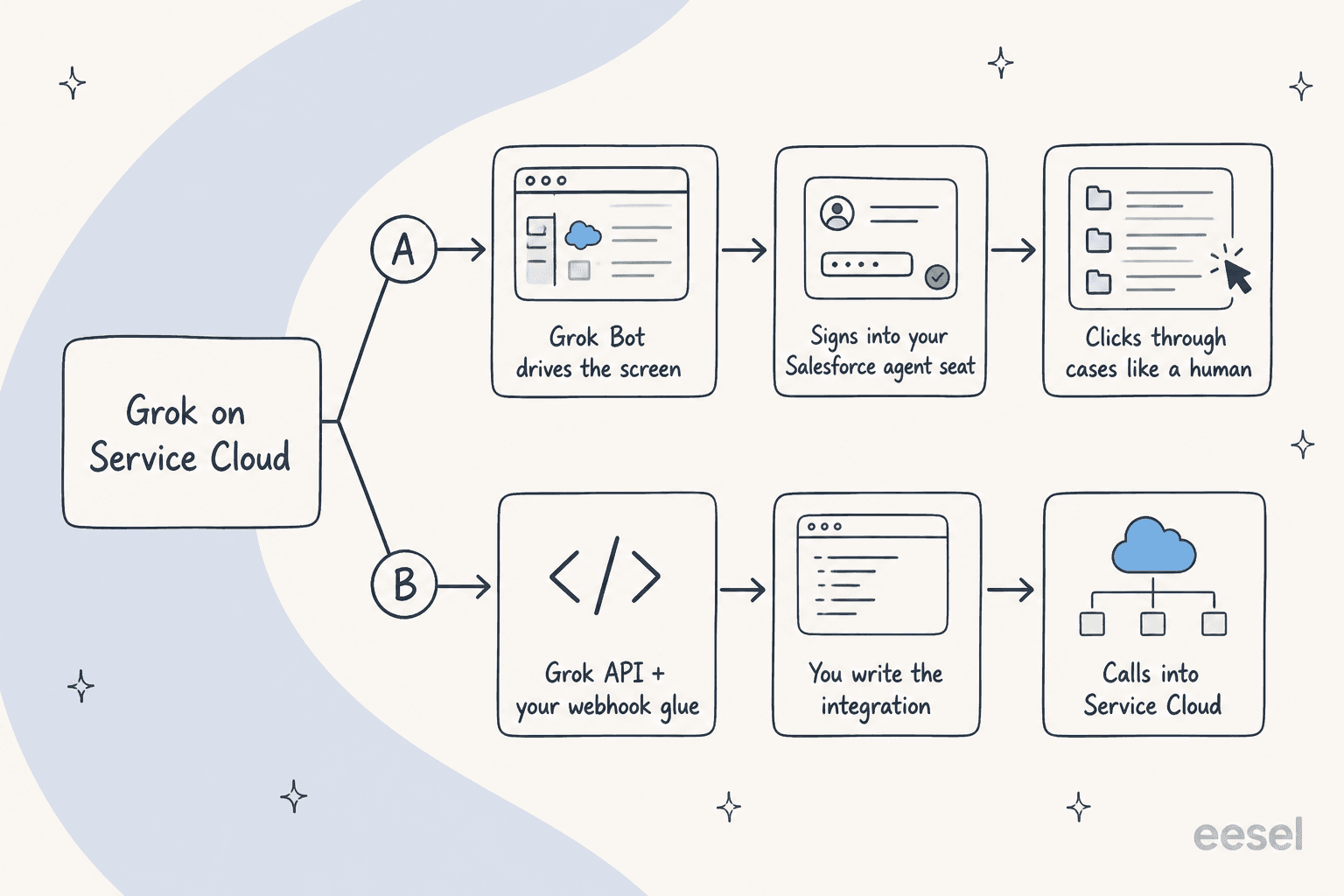
Route A: let Grok Bot drive the screen. This is the headline feature. Grok Bot spins up a managed cloud computer, you tell it "sign in to Salesforce and work my case queue," it opens a browser, and you type your credentials in a screen handoff. From then on it clicks through the Service Console like a logged-in rep: opening cases, reading the thread, drafting a reply, updating fields. Nothing on the Salesforce side needs configuring, because as far as your org is concerned, a human is using the seat. That is the whole appeal, and the whole problem, and I'll come back to it.
Route B: call the Grok API and build your own glue. The other route treats Grok as a model, not a worker. You call grok-4.6 from your own middleware, then write results back into Service Cloud through the Salesforce API, Apex callouts, or Flow. This is the reliable, auditable path, but it is a build. Worth knowing before you start: Salesforce's own native AI is Agentforce, and its bring-your-own-model support runs through the Einstein Trust Layer around OpenAI, Anthropic, and Google models. Grok isn't one of the providers Salesforce exposes there, so the API route is glue you write and maintain yourself, not a model you pick from a menu.
For most teams, Route A is what "Grok Bot for Salesforce" actually means, so that's where I'll spend the most time.
What Grok Bot is genuinely good at
Let me be fair before I'm critical, because the design is clever. Grok Bot reaches tools that have no API by driving the UI the way a person does, which is the honest descendant of RPA. If your Service Cloud org is a maze of custom Lightning components, third-party managed packages, and a screen flow nobody has documented since 2022, an agent that just uses the screen sidesteps all of it. There's no integration project.
It's also good at the long-tail, one-off task. "Pull every case tagged billing from the last week, summarise the pattern, and drop it in a Slack channel" is the kind of ad-hoc job it handles well, because it can move between Salesforce, Slack, and a doc in one session without you wiring anything together. As a research and triage assistant for one power user, that flexibility is real.
And the model underneath is strong. Grok 4.6 is a capable reasoning model, so the drafts it writes read well. The catch is that "reads well" and "is correct" are different tests, and a support queue only rewards the second one.
Where it gets risky for a live case queue
Here is where the "just use the screen" design turns from a feature into a liability. This isn't about Grok the model being weak. It's that a general-purpose worker with a shared browser session is the wrong shape for a production support desk.
There is no dry run. xAI's own docs say it plainly: "A test run performs real work. It can navigate websites, change files, and call connected tools." So there is no way to point Grok Bot at your last 500 closed cases and see how it would have answered before it answers a live one. For a helpdesk copilot this is the single biggest gap. The whole discipline of a safe rollout is rehearsal, and this route skips straight to opening night.
One shared computer, one reused login. All of a user's bots share a single cloud computer, and once you've signed into Salesforce, that session persists and every other bot can reuse it. xAI says it twice in its docs: "Do not use separate Bots as a security boundary." Deleting a bot leaves its files and sign-ins behind.
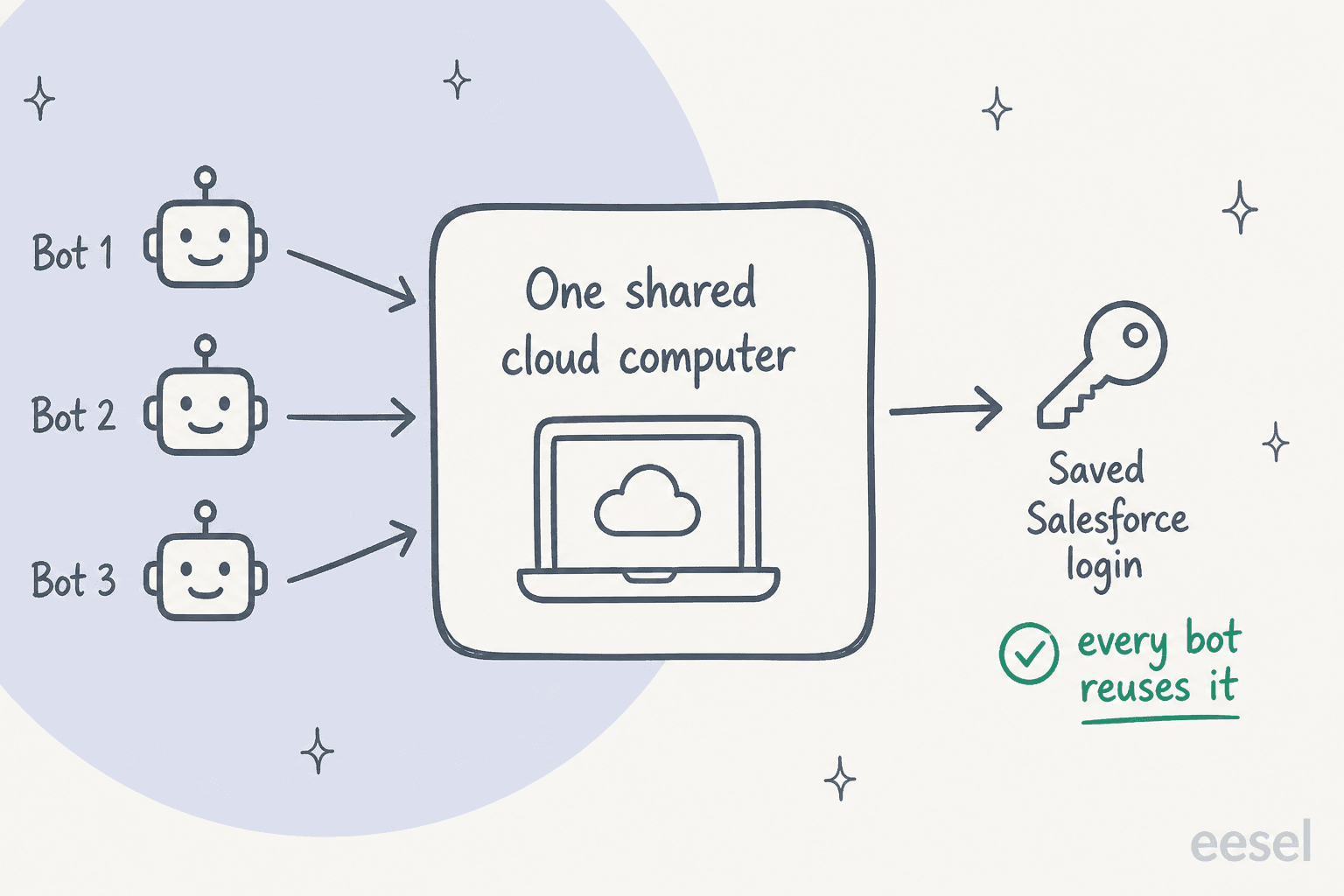
Now picture what a Service Cloud session actually holds. Support cases carry card numbers, passwords, and account details, and a persisted login to that org is a standing key to all of it. On a recent rollout, a buyer's security review wouldn't sign off until we could show that ticket data containing PII stays inside their environment and the model looks at question type and response style, not raw personal data. A shared, always-signed-in browser session is exactly the surface that review is designed to catch. If you care about Service Cloud data privacy, start here.
No per-response audit, and no scoping. Grok Bot's docs say "An audit view of Bot actions is coming," in the future tense. So today there's no per-response record of why it answered the way it did. And because it's signed in as a human working the whole seat, there's no clean way to say "only touch cases of this type" or "only act when I explicitly ask." Those constraints are the entire requirement for a lot of teams. One support lead put the autonomy problem better than I can:
"The AI will never be able to answer 100% of the questions, but if it tries and just answers 'sorry I don't know this,' I cannot go and check all my 7,000 tickets to see if the AI actually made a good answer, then the point is a little bit gone. I need an AI who is only handling the tickets that it's confident to handle and all the other ones, leave them alone."
A CX lead at a DTC brand running ~7,000 tickets/month
A logged-in worker has one mode: it works the queue. This buyer's whole requirement was that the AI not touch most of it. And approvals don't fully close the gap, because xAI's docs note an approval "controls the proposed action. It does not reverse work already completed." I've seen the cost of that up close, an autonomous run that emailed a report nobody asked for, and one that impersonated a named human agent on an escalation that then auto-closed so no real person ever saw it.
No compliance certifications. Grok Bot claims no SOC 2, ISO 27001, GDPR, or HIPAA, publishes no retention period, and defers to Cursor's terms. If you're a regulated Service Cloud shop, that alone ends the conversation.
The cost picture nobody screenshots
Route A looks cheap on the sticker: Grok Bot is $200/month on Cursor Ultra and $120/seat/month on Cursor Premium Teams, per x.ai/bot. But that's a seat price, it buys access to a worker, not work done, and on top of it you pay a weekly AI-token allowance with overage billed at model and token cost. There's no Grok Bot-specific spend cap yet, which for an autonomous agent is its own risk.
Route B stacks two meters. You pay Grok's API (grok-4.6 lists at $2.00 in / $6.00 out per million tokens, plus separate per-call fees for search and tools), and you still pay Salesforce's own Agentforce consumption on any native AI you use, at $2 per conversation or through Flex Credits at roughly $0.10 per action. And Service Cloud's runaway-cost stories are real. One team on Reddit described what happens when consumption has no circuit breaker:
"We got $40k bill cuz our retriever jobs hit the fan when an intern ran web crawler once, failed and Salesforce support created two new for testing, so we have to also pay for the negligence of sf support staff... Now using selfhost rag engine with openai api"

The point isn't that Grok is expensive. It's that "seat price plus uncapped usage plus Salesforce's own uncapped usage" is a genuinely hard number to forecast, which is the opposite of what you want when you're measuring support ROI.
The alternative: an agent that's actually built for Service Cloud
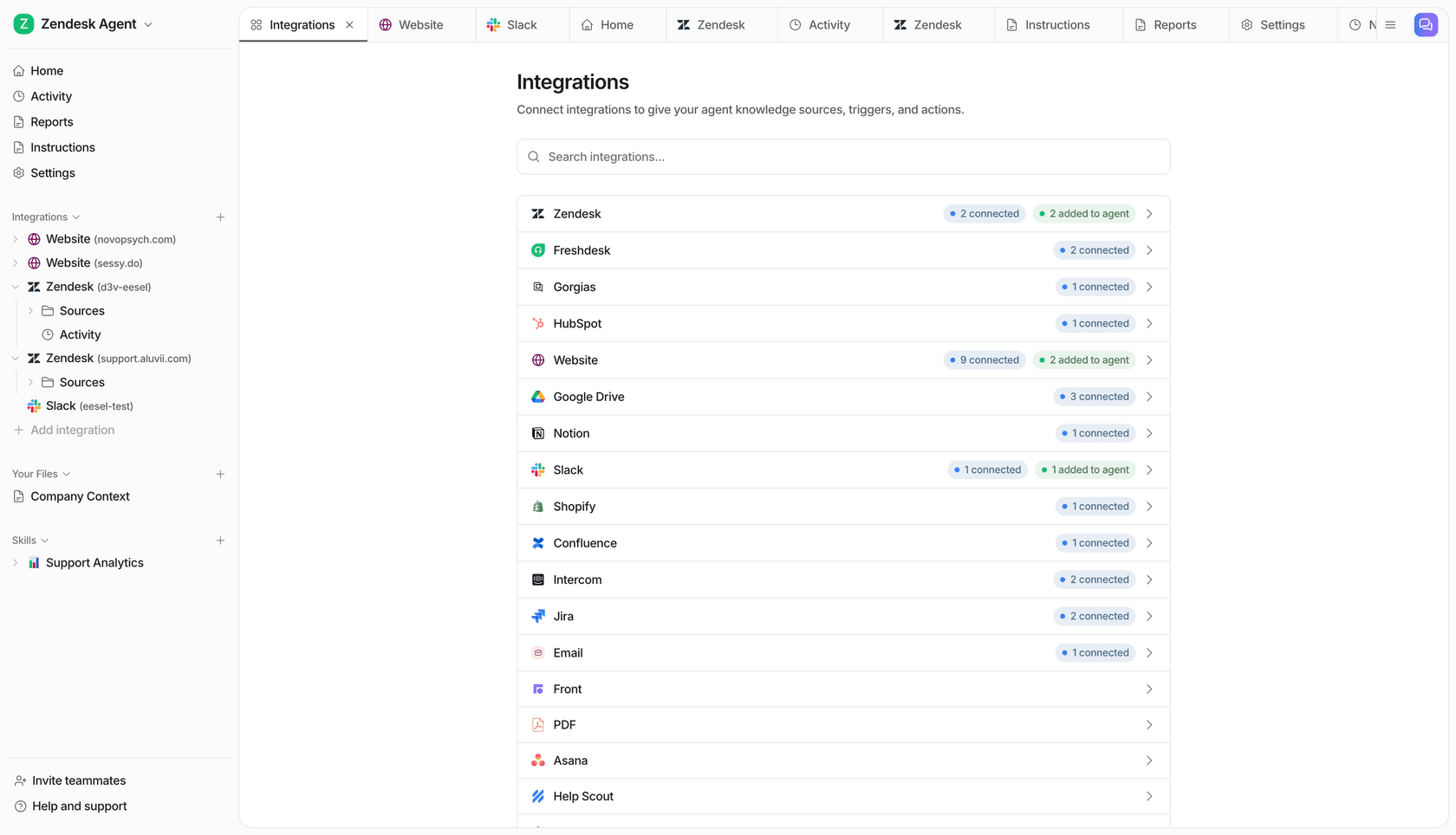
If the goal is "a reliable AI agent inside Salesforce Service Cloud," the shape that works isn't a general-purpose worker driving a shared browser. It's a helpdesk-native layer that connects to Service Cloud the way an integration is meant to, over OAuth, scoped to Cases, with the guardrails the risky bits above are missing built in from the start. That's the category eesel sits in, and it's the same "replace the layer, not the model" argument I've made for Claude and ChatGPT pointed at the same queue.
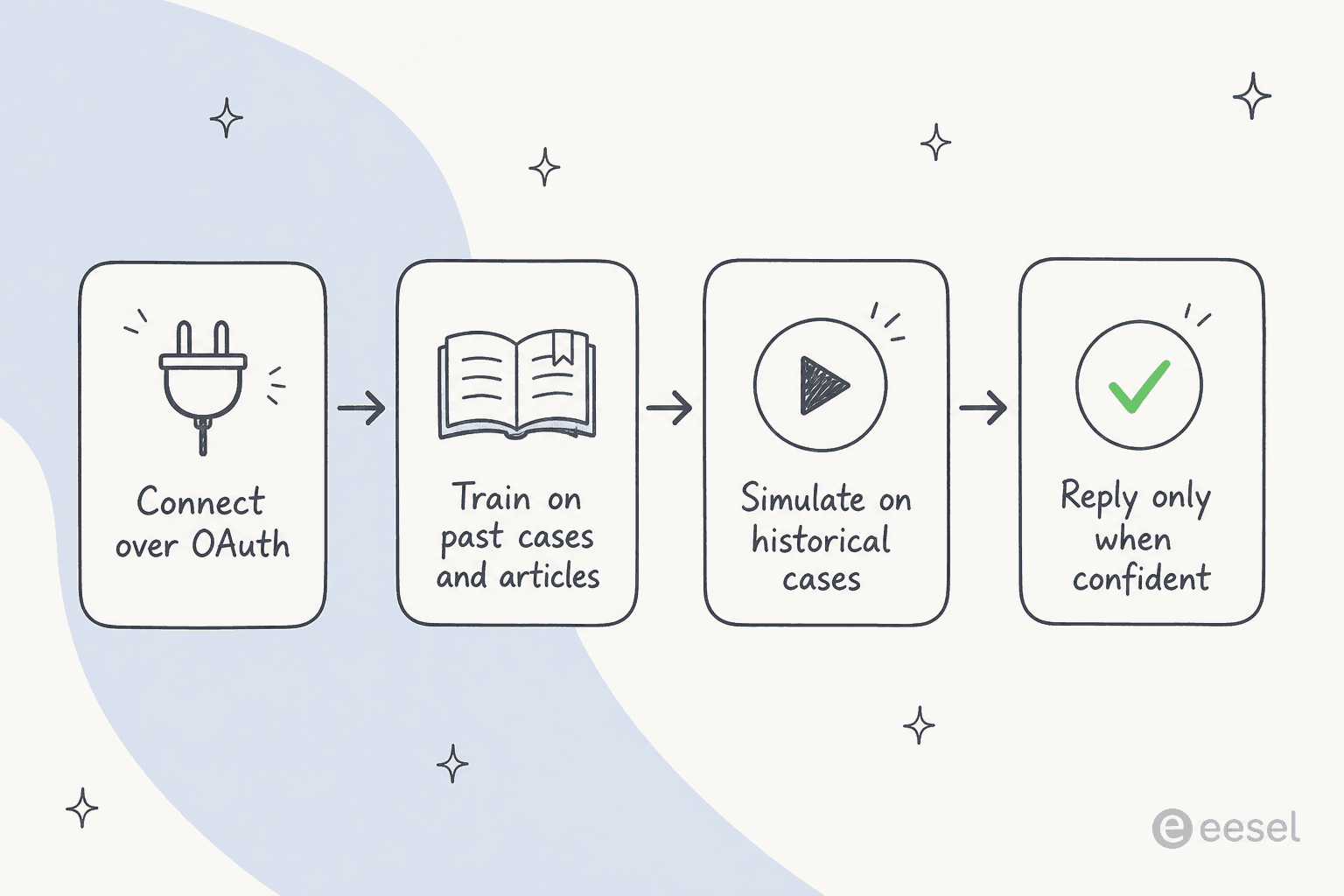
Concretely, that means four things Grok Bot's route can't express. You connect over OAuth, not by handing over a persisted logged-in seat. You train on your own knowledge, your Salesforce knowledge articles and past cases, so the agent grounds answers instead of improvising from training data. You simulate on real historical cases before go-live, which replays hundreds of your past cases and scores the AI's answers against what your team actually sent, so you get the "93% right, 7% wrong" number before a customer is involved, not after. And you scope it, run it in triage-only or draft mode first, exclude case types you don't want automated, and let it hand off to a human when confidence is low.
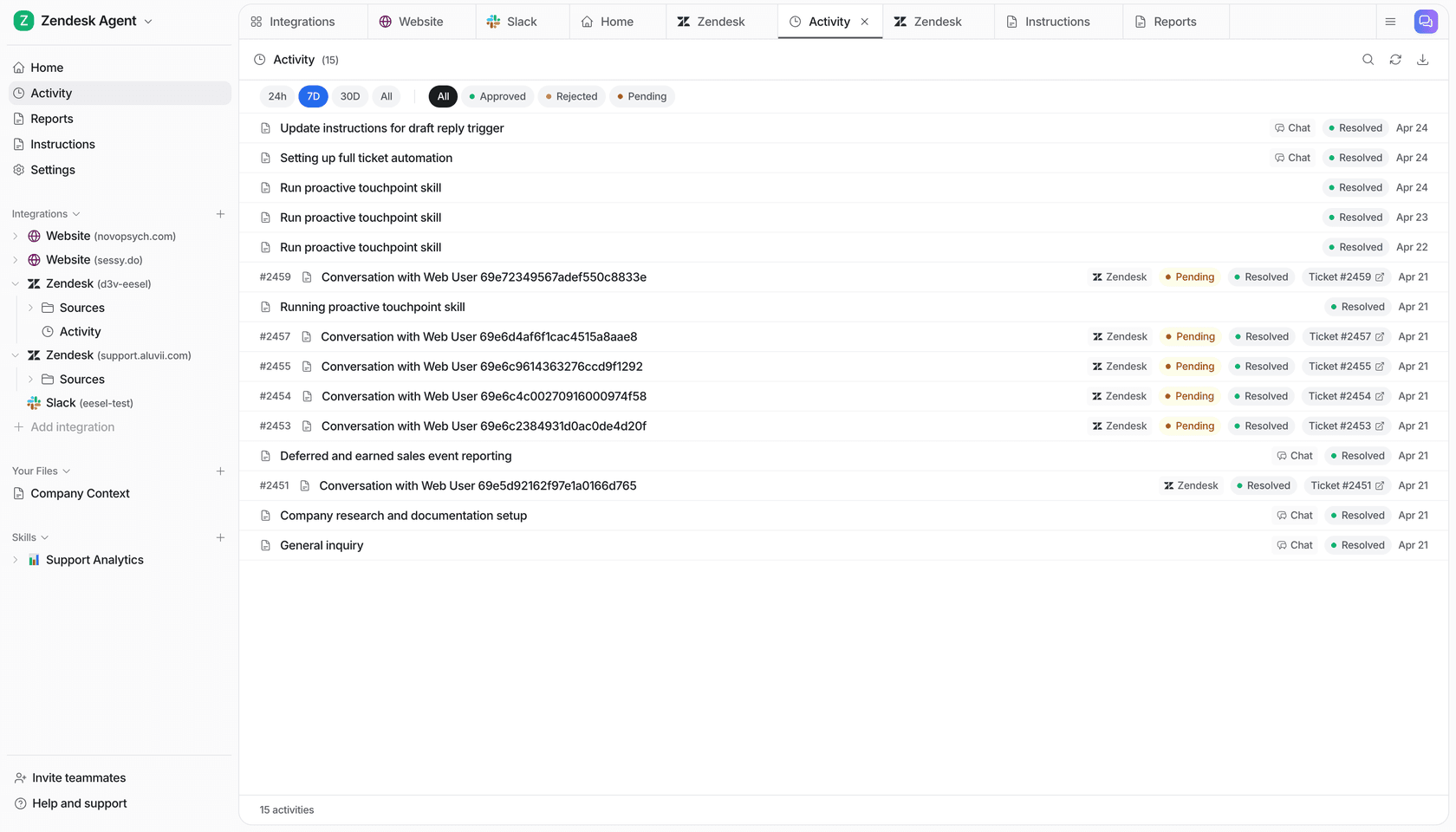
You also get the audit trail that's still "coming" on the other side. Every run shows up in an activity log with the reasoning and the sources it used, so AI ticket classification and every reply are reviewable, not a black box.
And if the reason you liked Route B was the programmability, you don't lose it. eesel exposes a real terminal surface: a CLI (@eesel/cli) where the docs literally say "everything on this site can be done from the terminal," an MCP server so coding agents like Claude Code or Cursor can drive the same workspace, plus webhooks and Network Access for calling out to your own APIs. So you can operate the agent from scripts and CI, get JSON out of every command, and even preview a write with --dry-run before it runs, without building and babysitting the Salesforce glue yourself. It's the same agent whether you use the dashboard or the terminal.
The pricing is also a different model on purpose. eesel is a flat $0.40 per case handled, with no per-seat fee, no platform fee, and a hard monthly spend cap you set. A case is billed once whether it took one reply or five, which is exactly the predictable, per-work-done number the Grok routes make hard.
Try eesel for Salesforce Service Cloud
If you came here wanting Grok to work your Service Cloud queue, the honest read is: Grok Bot can do it in a demo, but it's an "Early beta" general worker without the dry run, scoping, audit, or compliance a live support desk needs, and the API route is a build. eesel for Salesforce is the version that's actually built for this, an AI helpdesk agent that connects to Service Cloud in minutes, trains on your cases and articles, and lets you simulate on real history before it ever replies.

You can start it in draft-only mode, watch it on your own tickets, and only turn on public replies once the simulation numbers convince you. The free trial gives you $50 of usage and two blog generations with no credit card, which is enough to run a real simulation on your own case history and see the numbers for yourself before you commit to anything.
Frequently Asked Questions
Can Grok Bot work my Salesforce Service Cloud queue?
How much does Grok Bot cost for Salesforce automation?
Is Grok Bot secure enough for Salesforce customer data?
What's the difference between Grok Bot and Salesforce Agentforce?
What's the easiest way to add a reliable AI agent to Salesforce Service Cloud?


Article by
Rama Adi Nugraha
Rama is a software engineer at eesel AI with two years of experience writing about B2B SaaS, AI tools, and customer support technology. Based in Bali, Indonesia, he brings a developer's perspective to product comparisons — cutting through marketing copy to what the integrations and APIs actually do.