Salesforce Service Cloud pricing: a 2026 breakdown

Kurnia Kharisma

Katelin Teen
Last edited July 14, 2026
What you're actually paying for
I price this platform out for support teams often enough to have a reflex about it: the sticker number is never the number. We've spent the last three-plus years running AI on live support queues, and the pattern with big-CRM buyers is always the same - they anchor on "$X per user" and then get surprised by the second and third invoice. So before the table, here's the honest framing: Service Cloud is a genuinely powerful, deeply customizable service platform built on the world's most-used CRM, and it is priced like one.
It earns a lot of that. Salesforce was named G2's #1 customer service software for 2026, a Forrester Total Economic Impact study put Service Cloud's ROI at 125%, and the customer list - AAA, Uber Eats, Southwest, OpenTable, Heathrow Airport - is about as enterprise as it gets. When you're consolidating support, field service, and CRM onto one record, this is the platform that does it.
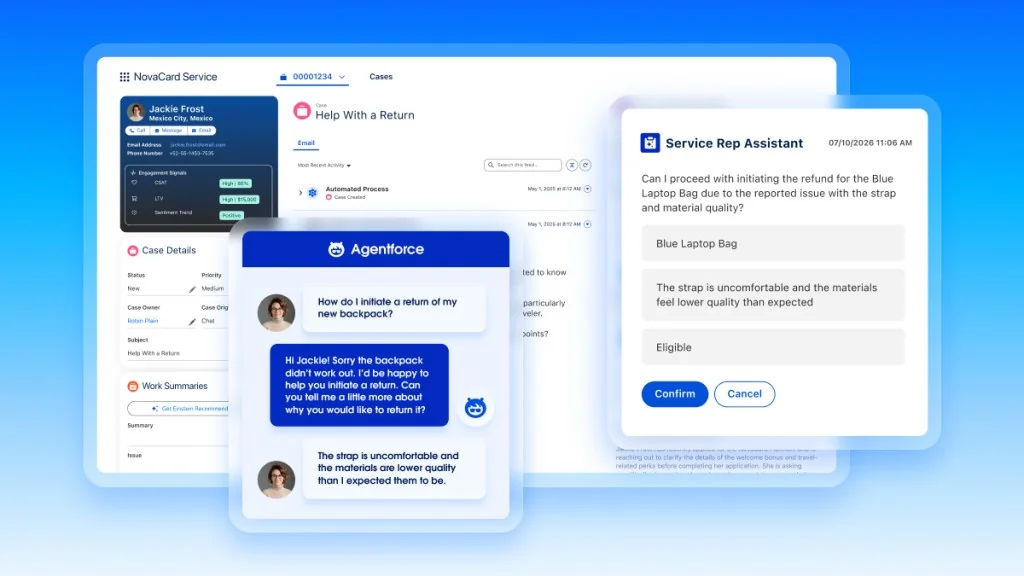
The flip side is that the pricing reflects that scope. You're buying a platform, not a help desk, and the platform economics are what the rest of this post is really about.
Salesforce Service Cloud pricing: all five editions
Here's the full grid. All prices are USD, per user, per month, from the official pricing page. The lower two "Suites" can bill monthly; Enterprise and up are annual-only.
| Edition | Price (USD/user/mo) | Billing | What it's really for |
|---|---|---|---|
| Starter Suite | $25 | Monthly or annual | Bundled sales + service + marketing + commerce for a first CRM; transaction fees apply |
| Pro Suite | $100 | Annual, contract required | More automation, real-time chat, quoting; still a suite, not a full service desk |
| Enterprise | $175 | Annual | The real starting point for service: AI for service, self-service help center, workflow automation |
| Unlimited | $350 | Annual | Adds chat & bots, Salesforce Knowledge, Premier Success, full sandbox |
| Agentforce 1 Service | $550 | Annual | Top tier: full AI suite, unmetered employee Agentforce, Tableau Next, 2.5M Flex Credits/org/year |
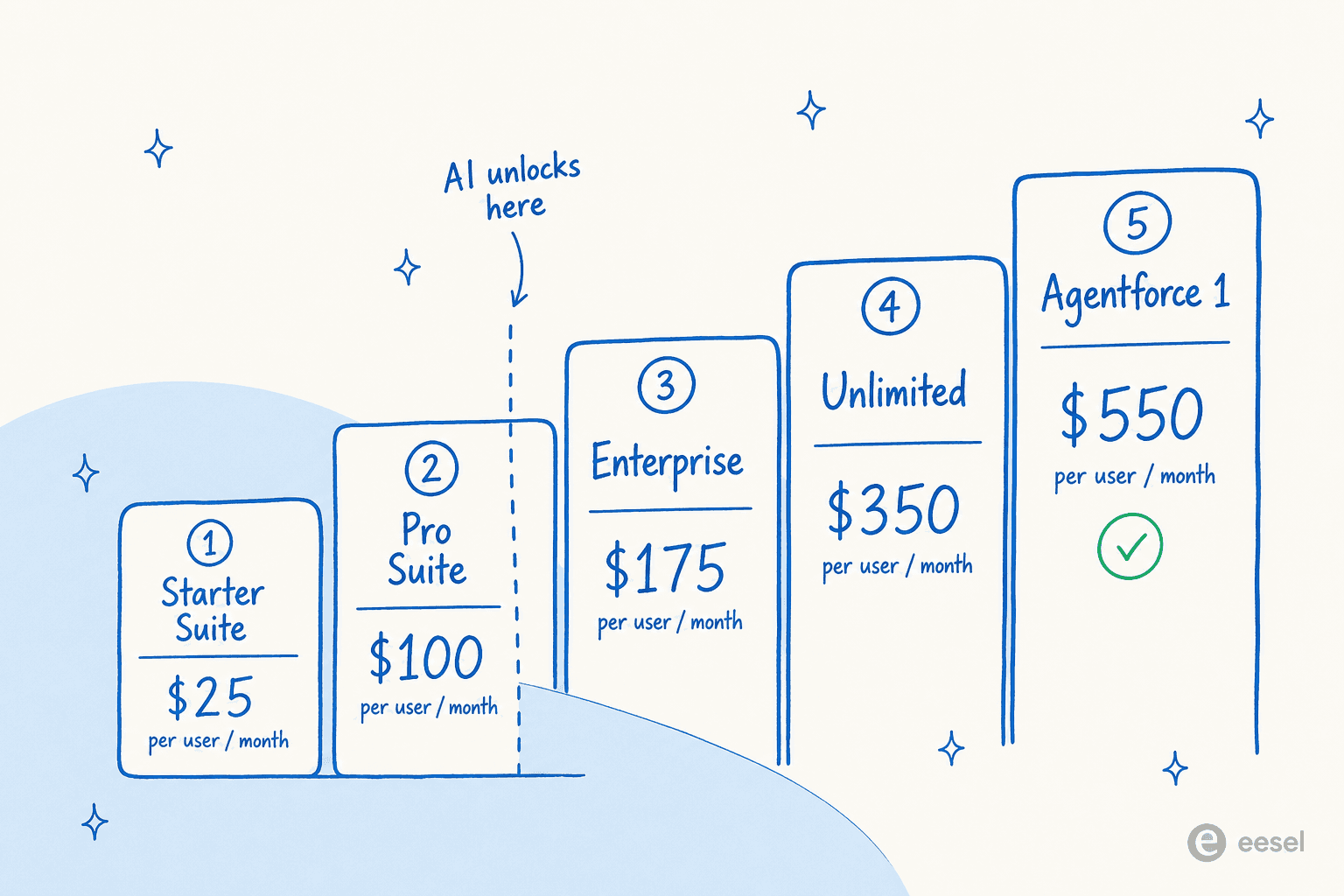
The staircase is the story. Notice where the dashed line sits: the jump from Pro Suite to Enterprise is where a bundle becomes an actual service platform with AI. Everything below that is Salesforce selling you the CRM suite, not the service desk you probably came for.
Starter Suite and Pro Suite: the bundles
Starter Suite ($25) is Salesforce's "smart CRM suite" - sales, service, marketing, and commerce in one, with built-in AI for the basics. It's a fine first CRM. It is not a customer service platform, and it carries transaction fees on top.
Pro Suite ($100) adds enhanced real-time chat, more customization and automation, sales quoting, and access to AgentExchange. It's still a suite, requires an annual contract, and still isn't where the service-specific muscle lives.
If you're at this price point and what you actually want is AI-assisted support, this is the moment to ask whether you need Salesforce at all. Teams in that spot often do better with a purpose-built help desk - we walk through the options in best AI for Zendesk and the wider Service Cloud alternatives roundup.
Enterprise ($175): where service actually begins
Enterprise is the "CRM for service with built-in AI." This is the first tier with AI for customer service, a self-service help center, and workflow automation - the things that make it a service desk rather than a CRM with a support tab. For most mid-market service teams evaluating Salesforce seriously, $175/user/month is the honest floor, not the $25 headline.
Unlimited ($350) and Agentforce 1 Service ($550)
Unlimited piles on chat & bots, Salesforce Knowledge, the Premier Success plan, and a full sandbox. Agentforce 1 Service (formerly Einstein 1 Service) is the everything tier: the full AI suite, unmetered Agentforce for employees, Tableau Next for real-time sentiment, and 2.5M Flex Credits per org per year. At $550/user/month it's aimed squarely at large, AI-forward contact centers.
Agentforce: the second meter you didn't budget for
Here's the part that changed in 2026, and the part most "Service Cloud pricing" articles miss. Salesforce's AI, Agentforce, is not just a feature toggle inside your edition. It's increasingly its own consumption-based meter running alongside your per-seat licences.
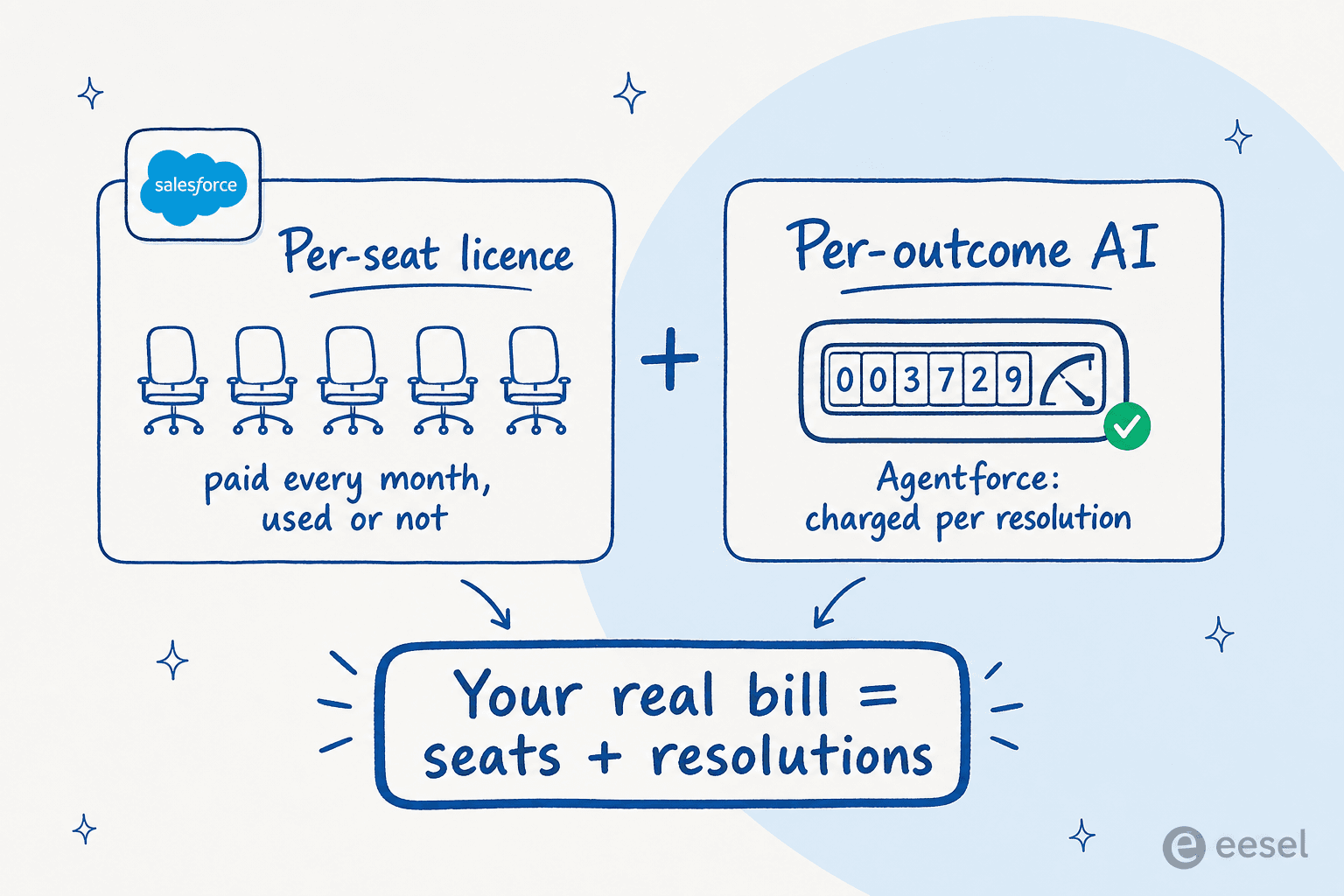
The clearest example is the Agentforce Help Agent, a pre-packaged autonomous agent that connects to your knowledge base and, in Salesforce's own words, "deploys in minutes and only charges for resolutions." That's a per-outcome (per-resolution) model - you pay when the AI actually closes something, not per seat.
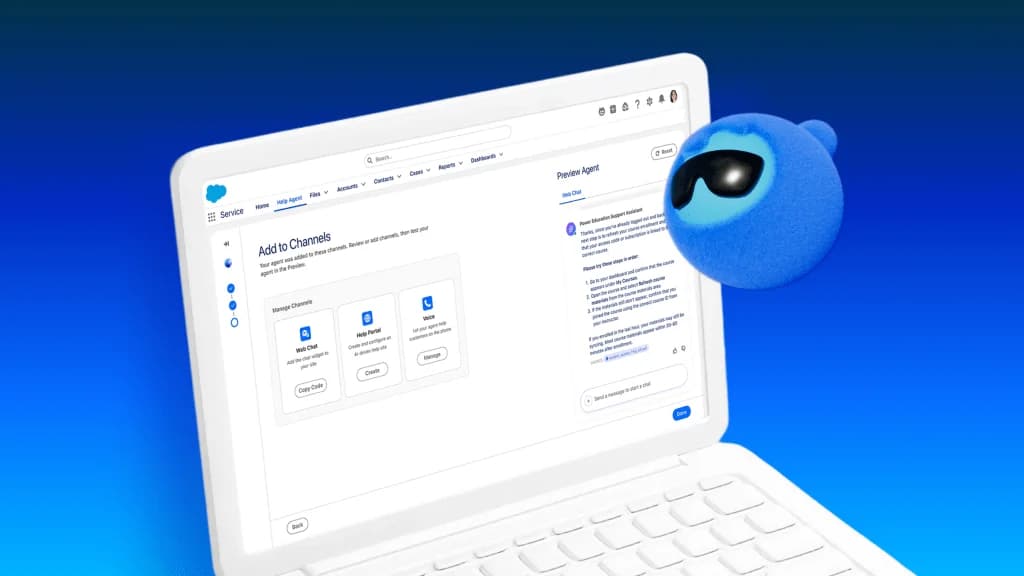
Broader Agentforce usage runs on Flex Credits. Agentforce 1 Service bundles 2.5M credits per org per year; go past that, or run heavier automation on lower editions, and you're buying more. The catch for budgeting: Salesforce doesn't publish a flat per-conversation dollar rate for general Agentforce usage, so you can't cleanly forecast it from the pricing page. You model your seats, then you negotiate the AI consumption separately.
This is a real shift, and it's worth naming plainly. The direction of travel across the whole category is toward paying for outcomes, and Salesforce is following it. The awkward bit is that Service Cloud does both now - you keep paying per seat for the platform and per resolution for the AI. That's the "seats + resolutions" in the diagram above, and it's why the total is hard to pin down from a table.
The costs that live below the waterline
Ask anyone who's run a Salesforce rollout what it cost, and the licence line is rarely the number they remember. The sticker price is the tip of the iceberg.
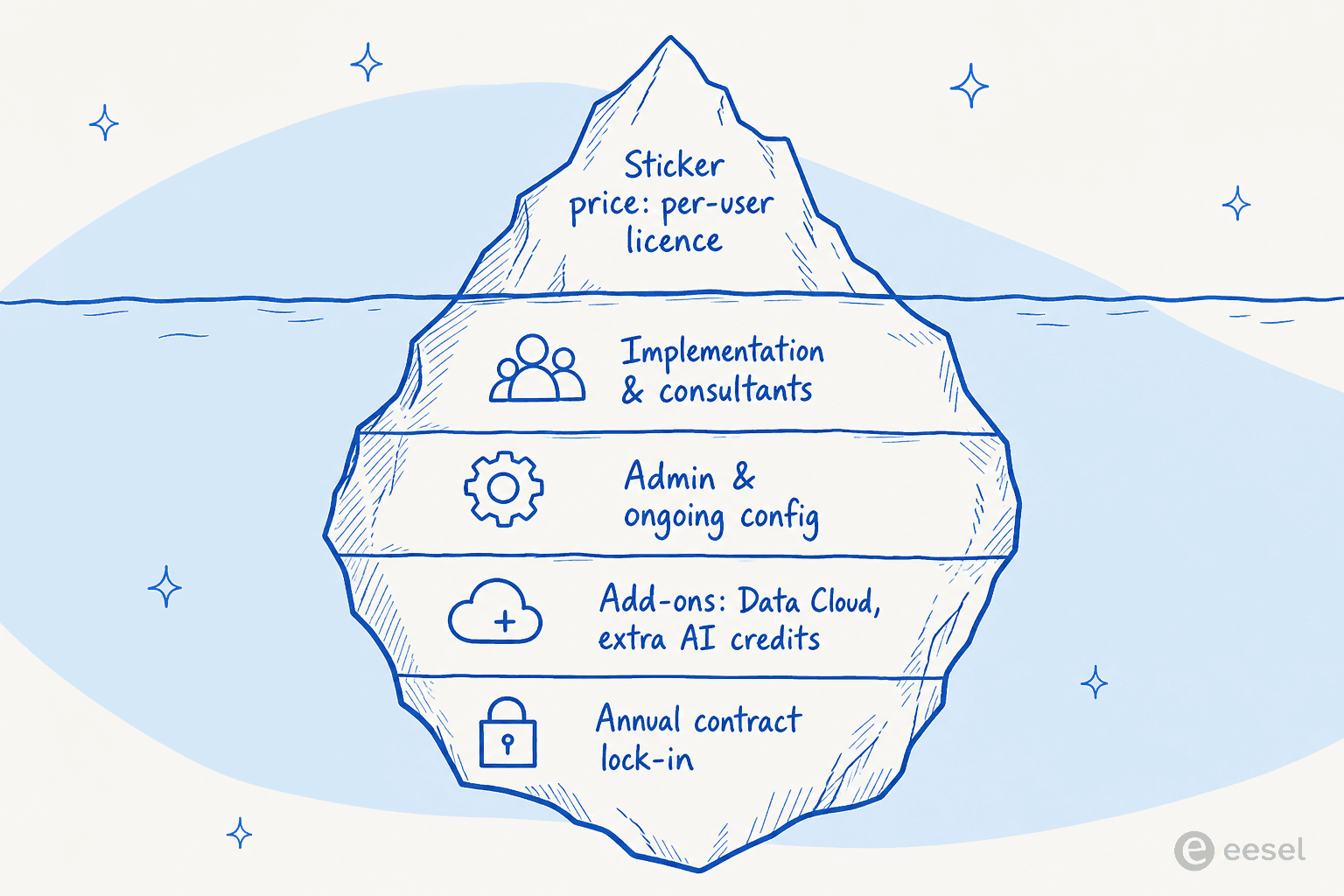
This isn't a knock on Salesforce specifically - it's the reality of enterprise CRM. But it's the part that turns "$175/user" into a much bigger number:
- Implementation and consultants. Serious Service Cloud deployments usually mean a partner or admin team to configure it. Salesforce's own ecosystem has 12,000+ trusted partners - that ecosystem exists because setup is non-trivial.
- Ongoing admin. Someone maintains the fields, flows, dashboards, and governance. On bigger orgs that's a dedicated role, not a spare afternoon.
- Add-ons. Data Cloud for unified data, extra AI credits past your Flex allotment, premium support - these are separate line items, not included.
- Contract lock-in. Enterprise and up are annual. You commit for the year regardless of whether usage ramps as fast as the sales deck promised.
Salesforce buyers say this out loud. Here's a verified reviewer on G2, writing about Salesforce's AI products:
"What I dislike about Agentforce Sales is the high implementation costs and complexity. The initial setup can be overwhelming and time-consuming, with significant cost overruns during implementation. For smaller businesses, the pricing might not justify the ROI... the feature set can be overwhelming for new Salesforce users who need extensive training."

Salesforce's platform rates 4.4/5 across 25,849 G2 reviews, so this is a well-liked product - but "cost and complexity" is the single most consistent complaint, not a fringe gripe.
A worked example: what a 20-agent team really pays
Abstract per-user numbers hide the sticker shock. So plug in a real team. Here's a quick calculator - set your seat count and edition and see the annual licence cost, before any AI consumption or implementation.
Run the numbers and the point lands fast. A 20-agent team on Enterprise is $42,000/year in licences alone - before a single AI resolution, consultant hour, or Data Cloud add-on. Bump those same 20 agents to Agentforce 1 Service and you're at $132,000/year in seats. That's the platform tax the per-user number quietly compounds.
Now compare that to how the AI itself is starting to be priced. If what you need is tier-1 deflection and drafted replies, paying per resolution (or per ticket) instead of per seat changes the math entirely - you pay for work done, not for headcount with a login.
Where eesel fits on top of Salesforce
If you've read this far, you probably already have Salesforce, or you're weighing whether the AI is worth the edition jump. Either way, you don't have to buy the top tier to get good AI on your queue.
eesel is an AI support agent that connects to Salesforce and your other tools, learns from your past tickets and help docs on day one, and drafts or autonomously resolves tier-1 tickets. The two things that matter next to Service Cloud pricing:
- It's priced by volume, not seats. eesel starts at $299/month for 500 credits (1 credit per ticket or chat) with no per-seat fee and no platform fee, plus a free plan of 100 credits. You pay for the volume the AI handles - never for a human agent's login. For a 20-agent team handling, say, 1,000 automatable tickets a month, that's $499/month versus $3,500/month in Enterprise seats.
- You can see the result before you pay for the rollout. eesel runs a simulation against your real historical tickets, so you know your deflection rate before going live. That matters because we've watched confident-sounding bots quietly give wrong answers, which is why every rollout gets simulated against past tickets first. On live queues, that approach got Gridwise to 73% tier-1 resolution in the first month.
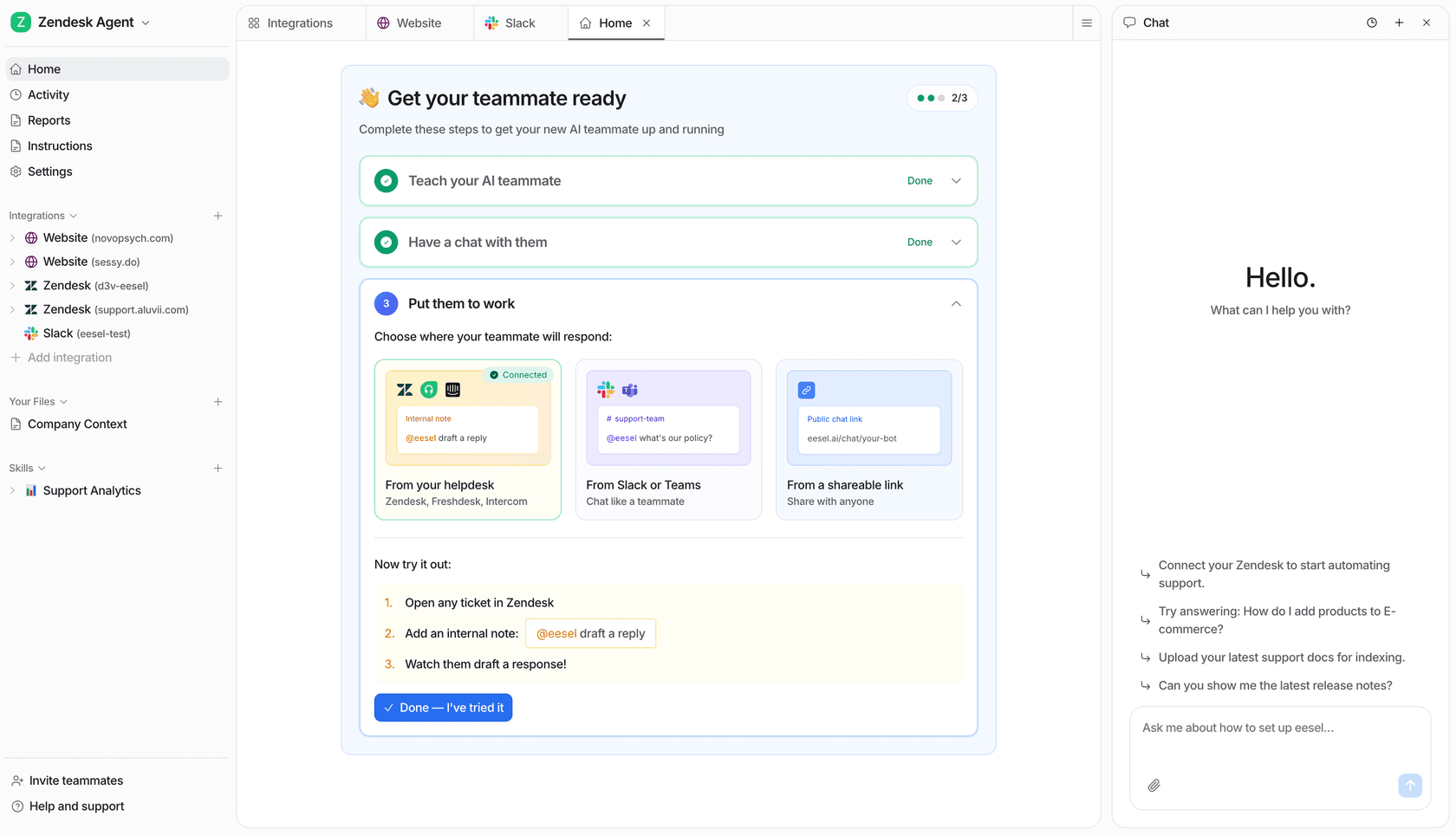
It's not an either/or, either. Plenty of teams keep Service Cloud as the system of record and put an AI layer in front of the queue so the platform tax doesn't scale with every ticket. If that's the shape you're after, try eesel free and simulate it against your own tickets first.