


Claude Ship is Anthropic's bundle of three GitHub agents that review a pull request, fix what fails, and decide whether it can be approved, launched in beta on November 23, 2026 for Team and Enterprise plans. My verdict: pilot it on one repository, with PR Steward set to manual and Claude Approvals in observe mode, and do not give it merge power yet. It is infrastructure for the pull request, and the same logic is why eesel puts an AI helpdesk teammate on the ticket queue instead of handing a support team a model.
What is Claude Ship, and what launched on November 23?
Claude Ship is three agents sold as one product, and only one of them is out of beta. Code Review is generally available. PR Steward and Claude Approvals are in public beta, per Anthropic's launch post. The pitch is that coding agents now write code faster than a team can review it, so everything after the pull request has to speed up too.
Boris Cherny at Anthropic put the motivation plainly on launch day:
"Shipping PRs hasn’t caught up, so today we’re launching Claude Ship in beta for Team and Enterprise. I use it all day every day and can’t imagine shipping without it."
That is a vendor voice, so weigh it as one. The facts I trust are the ones in the Claude Code docs, which are unusually specific about limits. If you already use the Claude Code GitHub integration or follow the Claude Code ecosystem, think of Ship as the cloud-side sibling of the /ship command: the command is for one developer on their own pull request, the agents are for a whole repository.
How does Claude Ship work on a pull request?
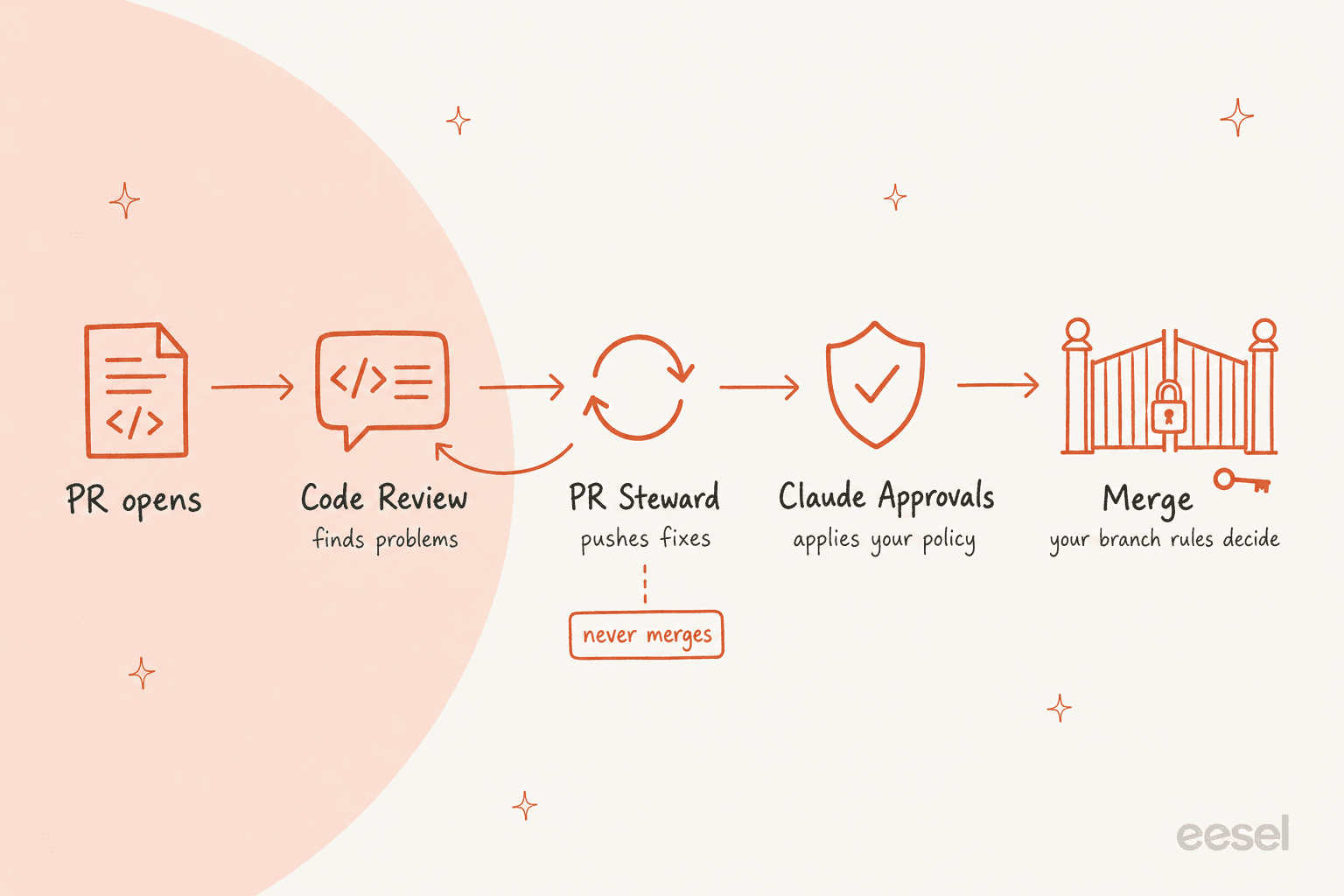
Each agent has one job, and the handoffs are explicit, which makes it a tidy example of an AI agent with guardrails built in. Code Review reads the change alongside the surrounding code and posts findings as inline comments ranked by severity. PR Steward pushes fixes for failing checks, merge conflicts and review comments. Claude Approvals reports who still has to approve, and the merge follows your normal branch rules.
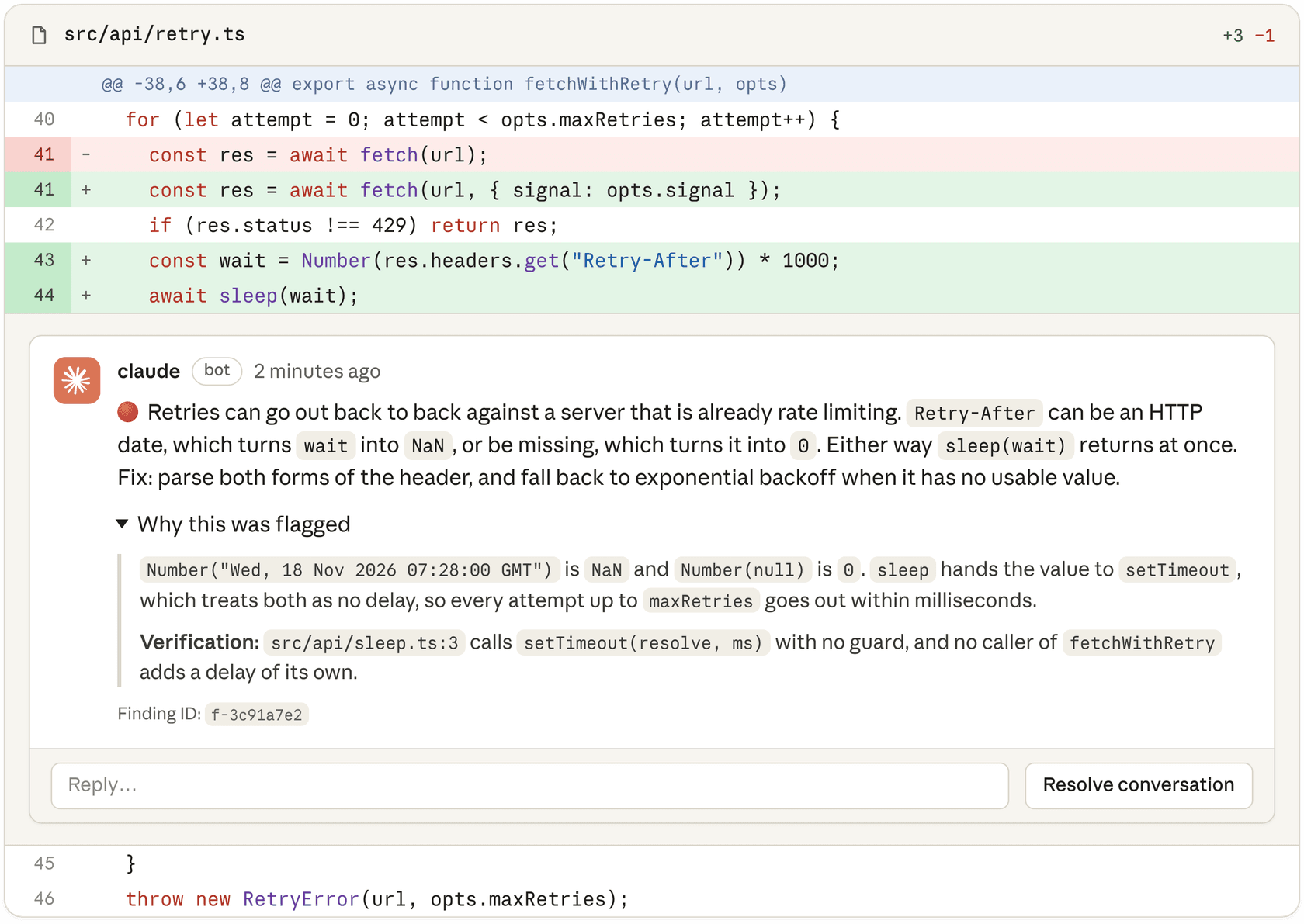
Here is what a Code Review finding looks like, from Anthropic's own example. The bot flags a retry loop where an HTTP date in Retry-After turns the wait into NaN, then shows how it verified the claim in a second file. That "why this was flagged" block is the part I like: a finding that shows its work is one a reviewer can reject in ten seconds.
Anthropic says most reviews now finish in 6 to 10 minutes, down from about 20 in preview, and that admins pick Quick, Standard (the default) or Deep per repository. That per-repo dial matters more than it sounds, because it is also your cost dial.
What does PR Steward actually fix?
PR Steward works on failing checks, merge conflicts, a person's review comments, and findings that Code Review marks Important. It runs in a cloud session and acts as the Claude GitHub App, so its commits do not use your personal usage. Per the PR Steward docs, it "pushes commits and replies to comments without asking first", which is the line I would read twice before turning it on.
The guardrails are sensible. It skips drafts, forks, bot-opened pull requests and authors without write access. Comment @claude stop or remove the claude-pr-steward-watching label and it steps back. After each push it comments with what it changed and how to undo it. For large or design-level review comments it can reply without pushing, which is the right instinct.
Carvana, in a customer quote Anthropic chose to feature, says PR Steward is helping its pilot teams "spend less time working through code review feedback and more time building." Treat that as a pilot-stage endorsement, not a benchmark.
What is Claude Approvals, and is it safe to trust?
Claude Approvals is the new idea, and it is the one to be careful with. You write a policy file, .claude/approvals.yml, that says how many people must approve changes to which paths, and when Claude may post an approving review. Anthropic's launch post calls it a smarter CODEOWNERS file.
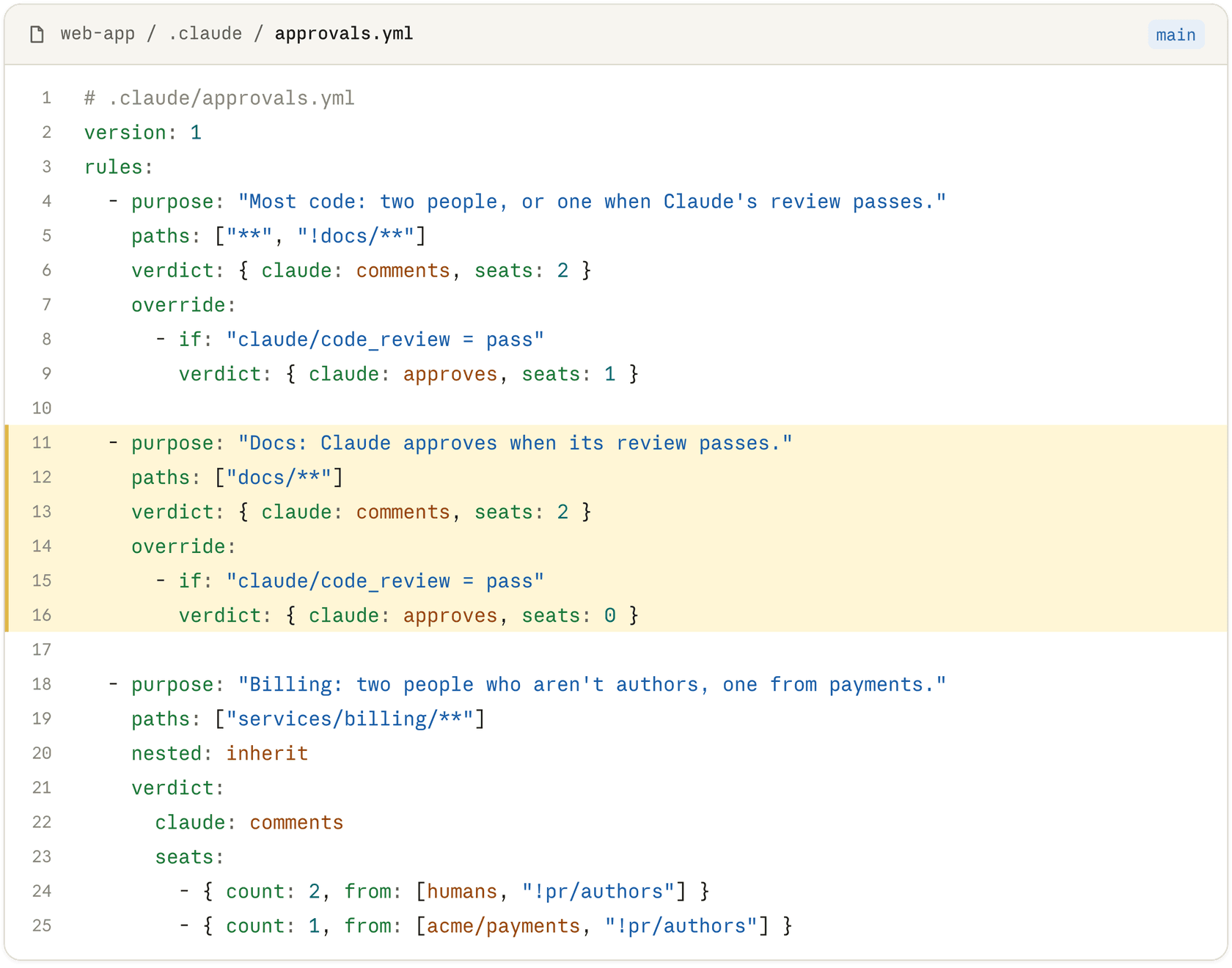
Look at the highlighted rule in Anthropic's sample: for docs/**, Claude approves with seats: 0 when its review passes. That is a policy where no human signs off on docs changes. It is a reasonable choice for docs and a bad one for services/billing/**, which the same file protects with two non-author humans and one from payments. The tool does not decide that for you. Per the policy reference, if a rule admits Claude and every rule says approves, the check "can then pass with no person's approval."
The safe on-ramp is the one Anthropic recommends: start in mode: observe, where the check reports what the policy would decide without blocking anything. The check only blocks a merge where you make it a required check in GitHub. You can also write custom classifiers in plain language, such as a change_risk rating, and a rule can ask for two people unless the classifier says low.
How much does Claude Ship cost?
There is no flat price, and that is the honest answer. Every agent is billed on token usage through your organization's usage credits, separately from your plan's included usage.
| Piece | How it is billed | Spend control |
|---|---|---|
| Code Review | Tokens, rises with Quick, Standard, Deep and how often reviews run | Org or repo spend limit; no flat per-review price |
| PR Steward | Tokens, rises with how much work it does | No spend limit of its own until an Owner sets one |
| Claude Approvals | No base charge; classifier runs and Code Reviews that a policy asks for are billed | Classifier budget, with a $10 per-run cap by default |
/ship in Claude Code | Regular Claude Code usage | Your own plan limits |
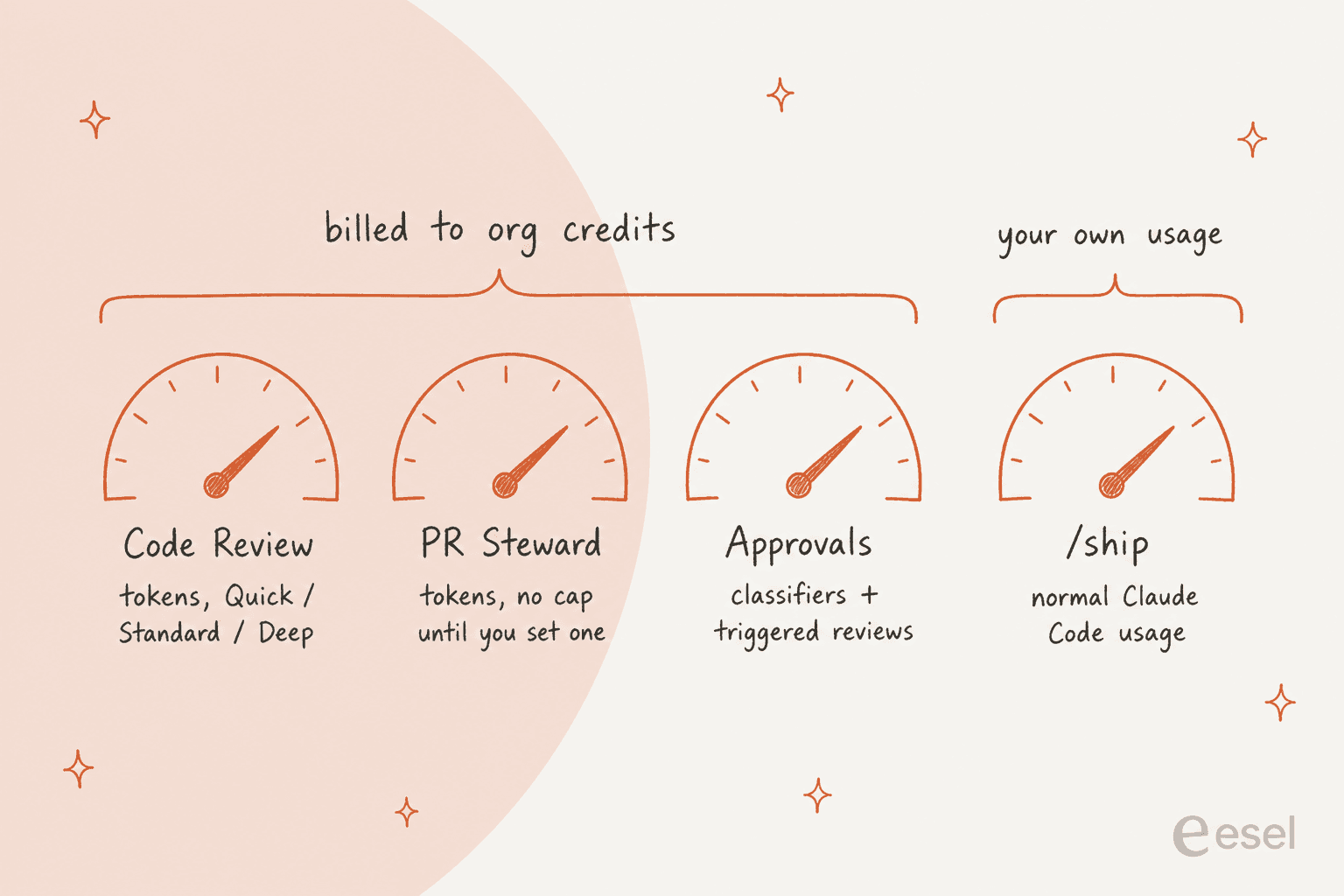
Three details change the bill. Observe mode is billed, and a policy that uses Claude's review triggers a billed Code Review even there. If you turn off usage credits in admin settings, a running agent keeps going and keeps billing until you turn it off. And a Claude Approvals policy file on the default branch changes which pull requests Code Review reviews automatically, so adding one can quietly start or stop reviews.
Anthropic is also seeding adoption: eligible Enterprise organizations can claim at least $10,000 in Claude Ship credits by January 15, 2027, to use within 30 days of claiming. If you are on a model-priced stack already, say Fable 5.2, my notes on Claude Code model selection and Opus 5.5 show how the effort dial moves spend.
Where does Claude Ship fall short?
These are the limits I would write on a whiteboard before a pilot. Each one is from Anthropic's own docs unless I say otherwise.
- Plans. Team and Enterprise only, so no Free or Pro seats. See the admin controls for how Owners are set up.
- Data rules. Not available to organizations with Zero Data Retention, the HIPAA configuration, or customer-managed encryption keys.
- Host. Built around GitHub.
/shipdoes not open a pull request on GitHub Enterprise or from a fork, so you open it yourself and then run/ship. - Beta. PR Steward and Approvals are in public beta, and Anthropic itself states that Claude Ship "uses AI and may miss bugs, security vulnerabilities, or other issues."
- Auto-merge. If you use GitHub auto-merge or a merge queue with a policy that does not require a person, a change can merge with nobody acting.
- Same-model review. If Claude wrote the code and Claude reviews it, a misreading can repeat. One commenter on Hacker News framed the fix well:
"Using a different provider's models to do the code review part seems like a pretty good separation of responsibilities."

What are developers saying about Claude Ship?
The Hacker News thread had 86 points and 32 comments when I read it, and it split into jokes, skepticism and practical notes. The sharpest skeptical take asked who the product is for:
"This is a tool which centralizes policy enforcement for teams with low-trust, I guess."
The funniest captured the trajectory everyone sees coming:
"Claude writes the code, Claude reads the code, Claude reviews the code, Claude merges the code."
The most useful was from someone who built something similar themselves and still reviews by hand:
"Right now I still review and merge everything, but for low complexity items this is not worth the time."
There was a practical gripe too: one team said the new bundled /ship command overwrites their own /ship skill. And another commenter's reaction to the exclusions was one line: "Bummer: 'Claude Ship is not available to organizations with Zero Data Retention…'"
The self-reported numbers are worth knowing, with the caveat that they come from Anthropic. On the Claude Code team, Anthropic says merged pull requests more than doubled from June to September while the share reverted fell by more than 40%, and that Claude's review is "one layer of a broader process". I would read that last phrase as the real instruction.
Who should turn on Claude Ship, and who should wait?
My recommendation, in order:
- Start with Code Review on one repository. It is the only generally available agent, and its findings are easy to judge. For ideas on wiring it into workflow automation, start there.
- Add PR Steward in manual mode. Anthropic's setup guide recommends starting with
@claude stewardas the trigger, and it has no spend limit until you set one, so set one. - Add Claude Approvals in observe mode last. Read the report for a few weeks before you make it a required check. Skip auto-merge until then.
- Turn it on if you are on Team or Enterprise, host code on GitHub, and already use Claude Code or subagents to write most of your code. A project AGENTS.md file helps keep the reviewer and the writer aligned.
- Wait if you need Zero Data Retention or HIPAA, you want a different vendor's model as the reviewer, or your reviews are not the bottleneck.
- Compare first if you are shopping. Look at GitHub Copilot and Codex on GitHub, or Devin for a fully autonomous engineer.
The wider AI coding assistants list covers the rest, and the Claude Code SDK is the route if you would rather build your own pipeline. Anthropic's own team pairs Ship with Claude Tag, which opens the pull request that Ship then reviews. My Claude Tag review covers that half.
Is a pull request agent the same as an AI teammate?
No, and this is the angle most Claude Ship coverage skips. Claude Ship is infrastructure for one job in one system: moving code through GitHub. eesel is the employee for a different job, answering customers in your helpdesk. A pull request has a diff, a test suite and a policy file. A support ticket has a help center, an order history, a tone of voice and a human who may need to take over mid-conversation.
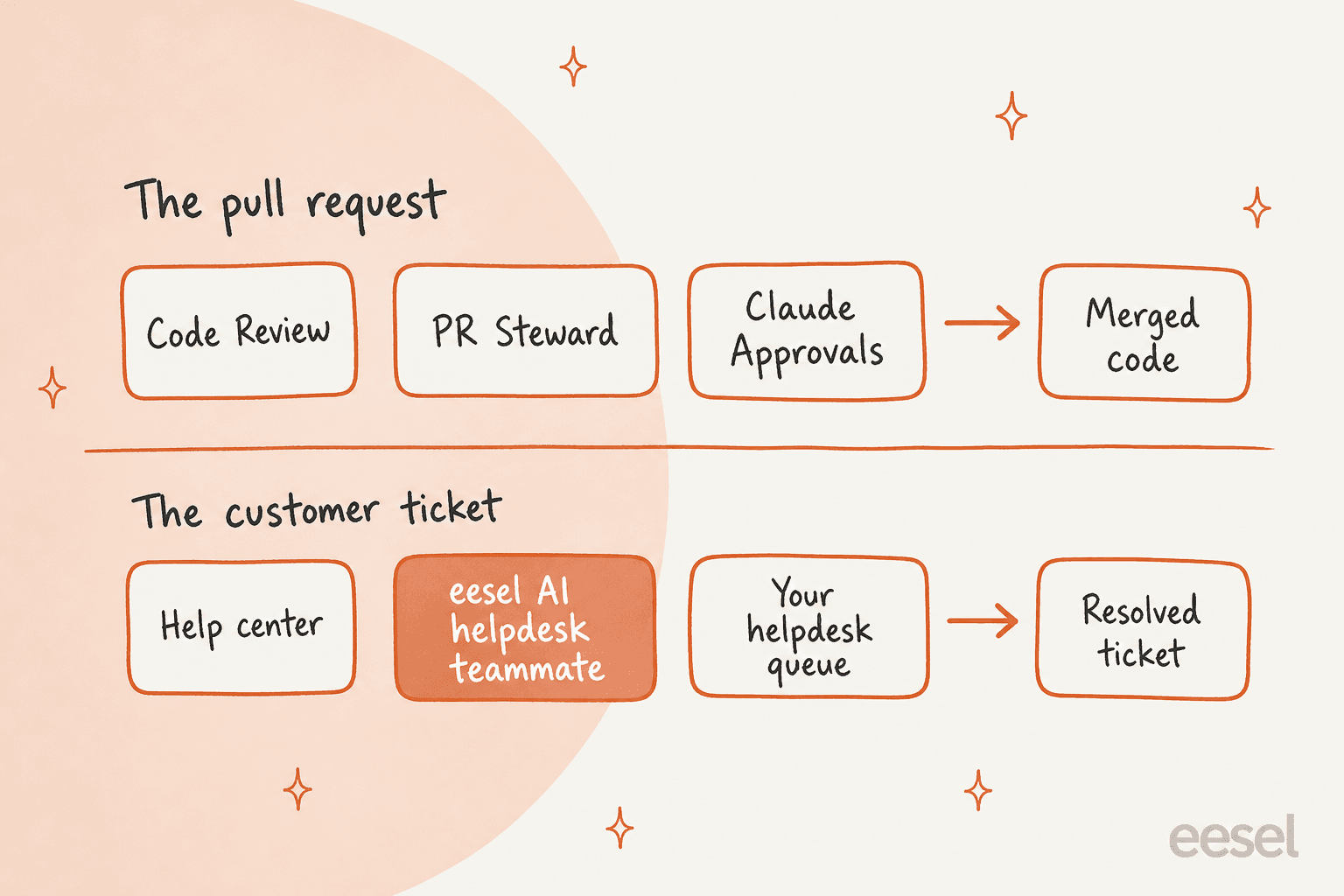
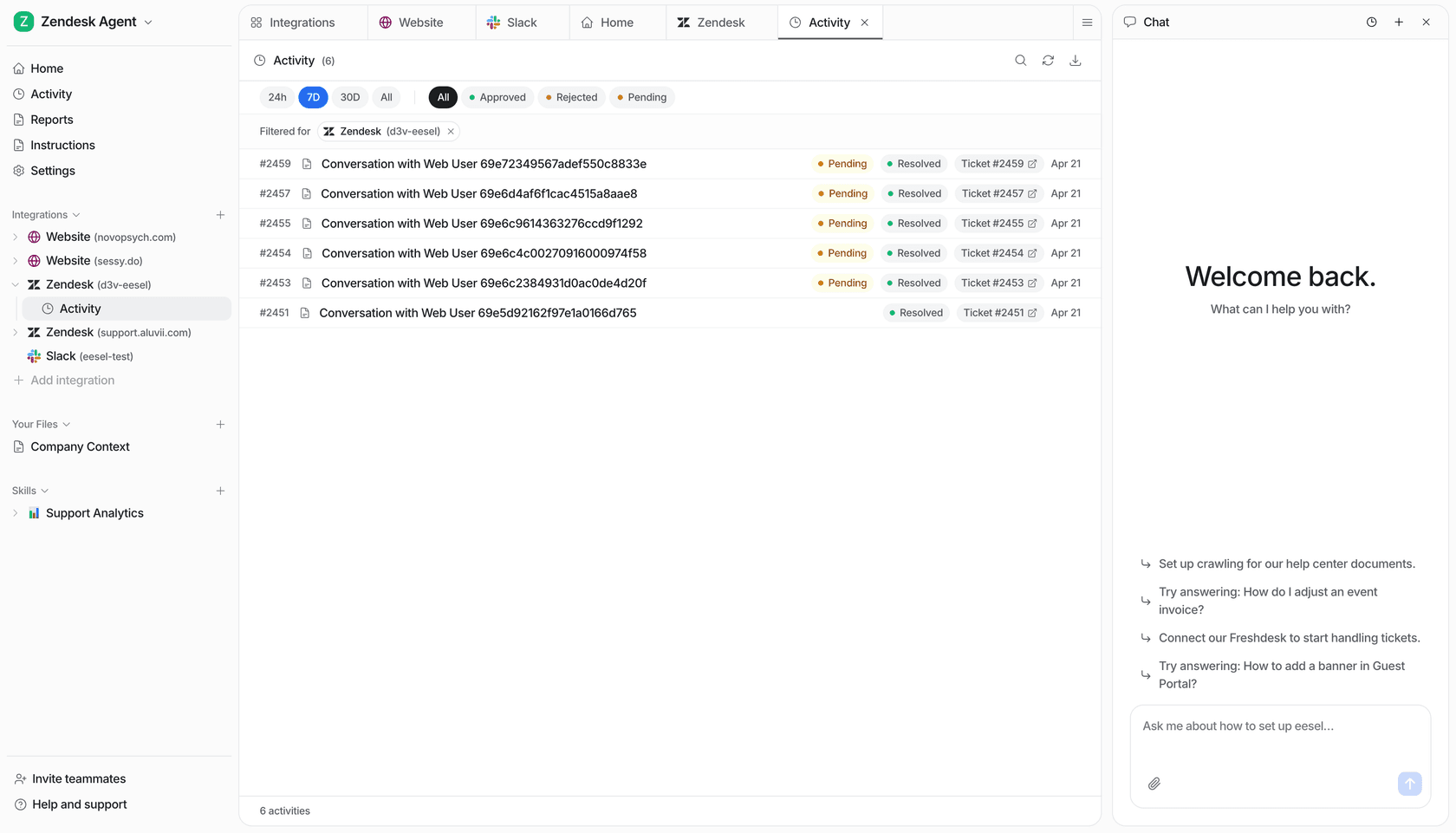
The design principle is shared, though. Ship's best feature is that people stay in control of where it runs and what needs sign-off, and @claude stop returns the work to the human. SamCart runs eesel the same way on support: one agent on Freshdesk tickets and another on its website chat, answering from about 280 help center articles. On tickets it covers, the agent replies only while no person is assigned, and once a teammate picks the ticket up, it steps back. Handoff requests or questions beyond the help center are tagged for a person. That is human-in-the-loop as a default, not a setting you discover later, and it is why I would test a support teammate on past tickets before it replies to a live customer, the same way Ship wants observe mode before enforcement.
eesel's roster today is an AI helpdesk teammate and an AI blog writer, each arriving with the skills, integrations and company context for its job. My post on AI teammates explains the broader pattern.
The same discipline of permissions and observability applies to any agent you let touch production.
The eesel CLI is where a Claude Code user meets that teammate. An AI coding agent can use it to upload approved knowledge, like exported help articles and macros, adjust the agent's instructions, and ask test questions to check the answers before anything goes live. Connecting the helpdesk itself still needs someone with admin access to approve it. If you expose help content to agents through MCP, the same approve-first habit applies.
Try eesel
If your team has solved the pull request and the next backlog is the support inbox, eesel plugs an AI helpdesk teammate into your Zendesk, Freshdesk or Gorgias queue, learns from your help center and past tickets, and lets you simulate it on historical tickets before it replies to a real customer. Developers who want to drive that from Claude Code, or who are comparing Claude developer tools, can start with the eesel CLI documentation. You can try it free, or book a demo to see it on your own tickets.
Frequently Asked Questions
What is Claude Ship?
How much does Claude Ship cost?
/ship counts as normal Claude Code usage, so see Claude Code pricing for those plans.Is Claude Ship available on the free or Pro plan?
/ship command from Claude Code, which is rolling out to the CLI and desktop app.Can Claude Ship merge code on its own?
Does Claude Ship work with GitLab or Bitbucket?
/ship can watch a branch on GitLab, Bitbucket or Azure DevOps for up to seven days, but it does not open the pull request for you there. For other tools, see my roundup of the best AI coding assistants.