


What ZCode actually is
ZCode is a desktop agentic development environment from Z.ai, formerly known as Zhipu AI. Instead of living as a chat panel bolted onto an existing IDE, it's a standalone app that combines a planning-and-execution agent with a real terminal, a workspace view, and task management, so a developer can go from a prompt to a reviewed change without leaving one window. The homepage's own tagline is blunt about the audience it's chasing: "Simple, Fast, Vibe-Ready!", leaning directly into the vibe coding framing rather than positioning as a careful, review-heavy tool.
The core mechanic is what ZCode calls Goals: a system for "continuous planning, execution, and verification" across tasks that run anywhere from two minutes to a full day, judging by the duration tags shown in the homepage's own task-list demo. In a live product transcript, an agent named "Ryan Bot" explores an existing repo, runs real shell commands like git status --short (including handling a fatal: not a git repository error gracefully when none existed yet), writes three files in one pass, self-verifies its own output with node --check app.js, and finishes with a change-summary chip reading "3 files changed +734 -7" and an Undo button. That's a complete agent loop end to end, not a single-shot completion.
Two features stand out from the rest of the field. First, remote bot control: you can start or steer a ZCode task from WeChat, Feishu, or Telegram, which the docs call "Vibeworking" when done from a phone, and which almost no Western coding-agent tool foregrounds as a headline capability. Second, the model relationship is inverted from most competitors: GLM-5.2 is the default and the whole product is described as "optimized for GLM-5.2 across reasoning, coding, and multi-agent collaboration," though ZCode's own docs confirm BYOK support for Anthropic, DeepSeek, Kimi, and OpenRouter keys if you want to swap models. It ships native installers for macOS (Apple Silicon and Intel), Windows (x64 and ARM64), and a beta Linux build, all at version 3.3.3 with a changelog banner flagging "ZCode 3.0" as the current release line.
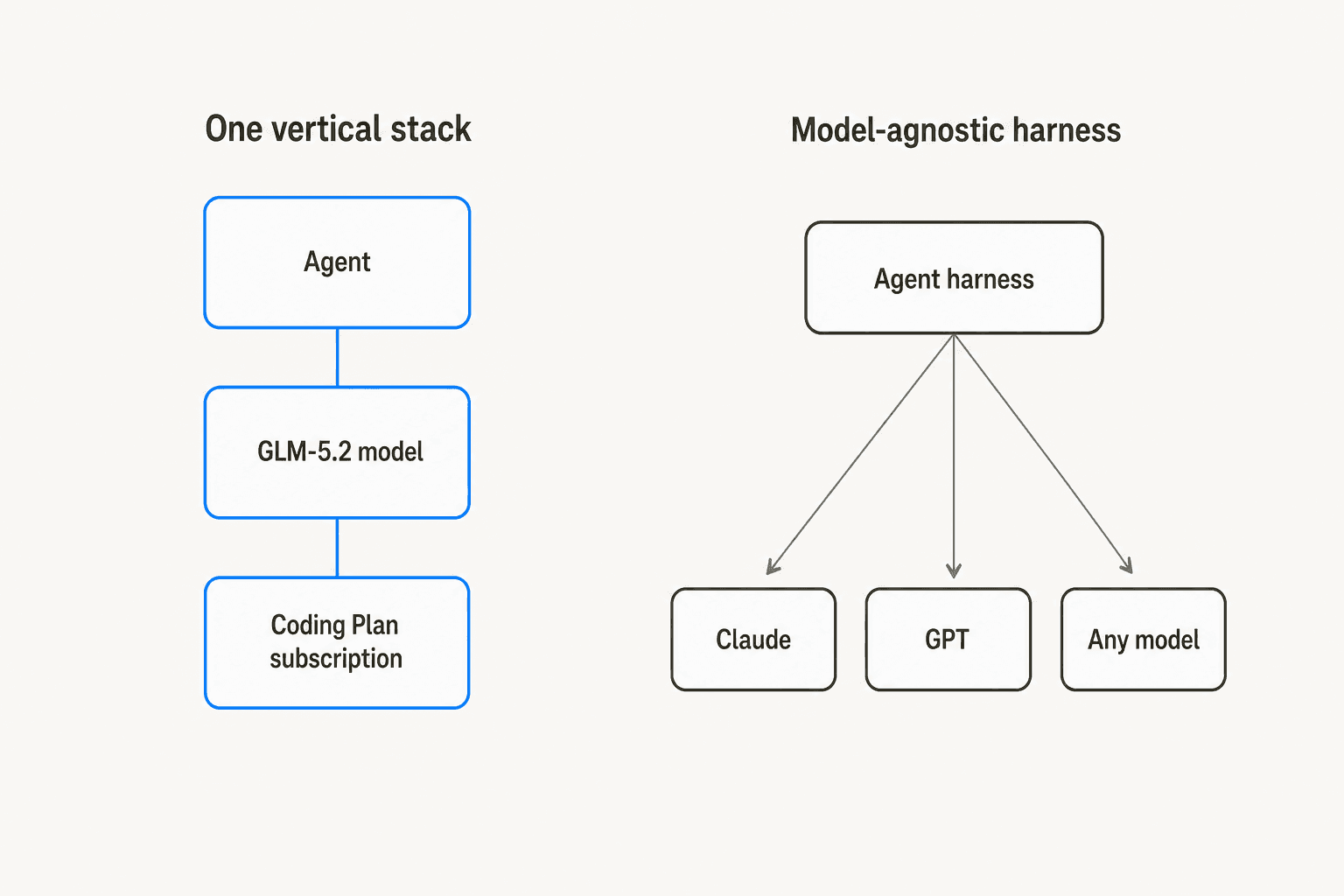
That vertical bet is exactly what one Hacker News commenter, jedisct1, questioned outright: "GLM-5.2 is a great model! But it already works really well with existing harnesses, I'm not sure why a dedicated one is needed?" It's a fair challenge.
Tools like Cursor, Claude Code, and GitHub Copilot already let you run GLM-5.2 or swap it out for whatever wins next quarter's benchmark race.
ZCode isn't alone in making the opposite bet, either. Cognition's Devin Fusion pairs its own harness with a single model too, for the same reason Z.ai gives: tighter tuning between agent and model than a generic wrapper can offer.
The "Goals" system itself is really just a specific implementation of an AI agent loop: plan, act, observe, repeat, until the task is verified done. How well that loop is engineered matters more than which model sits inside it, which is part of why a Codex-shaped UI wrapped around a different model doesn't automatically feel like a different product to reviewers who've used both.
GLM-5.2: the model doing the work
GLM-5.2 shipped June 16, 2026, and its headline claim is a usable 1M-token context window, up from GLM-5.1's 200K. Z.ai is upfront that the number alone isn't the point: "A 1M context is easy to claim, but much harder to keep reliable under real engineering pressure," and the model's IndexShare architecture, which reuses the same attention indexer across every four sparse-attention layers, cuts per-token compute by 2.9x at that context length. It ships under an MIT open-source license, with weights public on HuggingFace and ModelScope and no regional access limits, which Z.ai calls "Pure Open."
On coding specifically, GLM-5.2 offers configurable effort levels (High or Max), and Z.ai's own claim is that its agentic coding performance sits "roughly between Claude Opus 4.7 and Claude Opus 4.8" at comparable token budgets. The training behind that jump used Z.ai's own "slime" infrastructure to merge more than ten expert models via parallel distillation, completed in roughly two days, one of several ways custom AI models get built for a narrow job rather than general chat. The independently-evaluated numbers back that up closely enough to be credible:
| Benchmark | GLM-5.2 | GLM-5.1 | Claude Opus 4.8 | GPT-5.5 | Gemini 3.1 Pro |
|---|---|---|---|---|---|
| Terminal-Bench 2.1 | 81.0 | 63.5 | 85.0 | 84.0 | 74.0 |
| SWE-bench Pro | 62.1 | 58.4 | 69.2 | 58.6 | 54.2 |
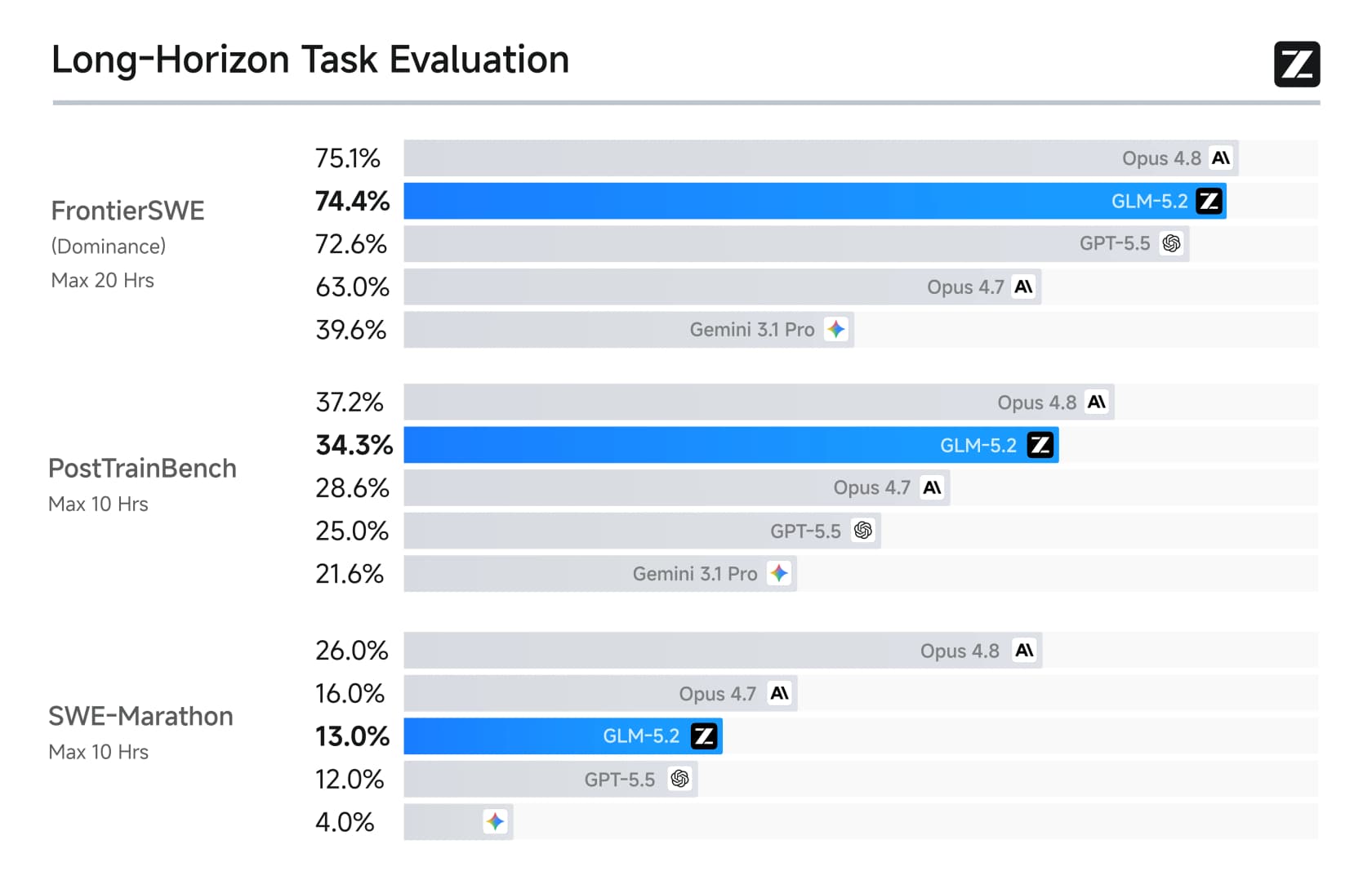
| FrontierSWE (long-horizon) | 74.4 | n/a | 75.1 | 72.6 | n/a |
| Humanity's Last Exam | 40.5 | 31.0 | 49.8 | 41.4 | 45.0 |
| AIME 2026 | 99.2 | n/a | 95.7 | 98.3 | 98.2 |
FrontierSWE, which tests open-ended technical projects running hours to tens of hours, was evaluated by third-party Proximal rather than Z.ai itself, which is the stronger citation of the two. GLM-5.2 lands within a point of Opus 4.8 there and actually posts the highest score in the table on AIME 2026, ahead of GPT-5.5 and Gemini 3.1 Pro. Z.ai's consistent framing across the release is that GLM-5.2 is "the highest-ranked open-source model" on long-horizon coding, closing much of the gap to Opus 4.8 without quite closing it. It's a similar story to Gemini 3.1 Pro's own standing against Opus: ahead on some benchmarks, behind on others, never a clean sweep either way.
ZCode pricing: the GLM Coding Plan
The GLM Coding Plan has three tiers and no free entry point, though new users get a 5-day trial (3M GLM-5.2 tokens and 2M GLM-5-turbo tokens per day, capped at 5M total, expiring after five days). The subscribe page's default view shows the annual-billing rate; a separate monthly view runs the full price with only a 10% discount instead of 30%.
| Plan | Monthly billing | Annual billing (per month) | Annual total | What you get |
|---|---|---|---|---|
| Lite | $18/mo | $12.6/mo | $151.2/yr | Base usage allowance (amount undisclosed), 20+ coding tool integrations, rolling model access |
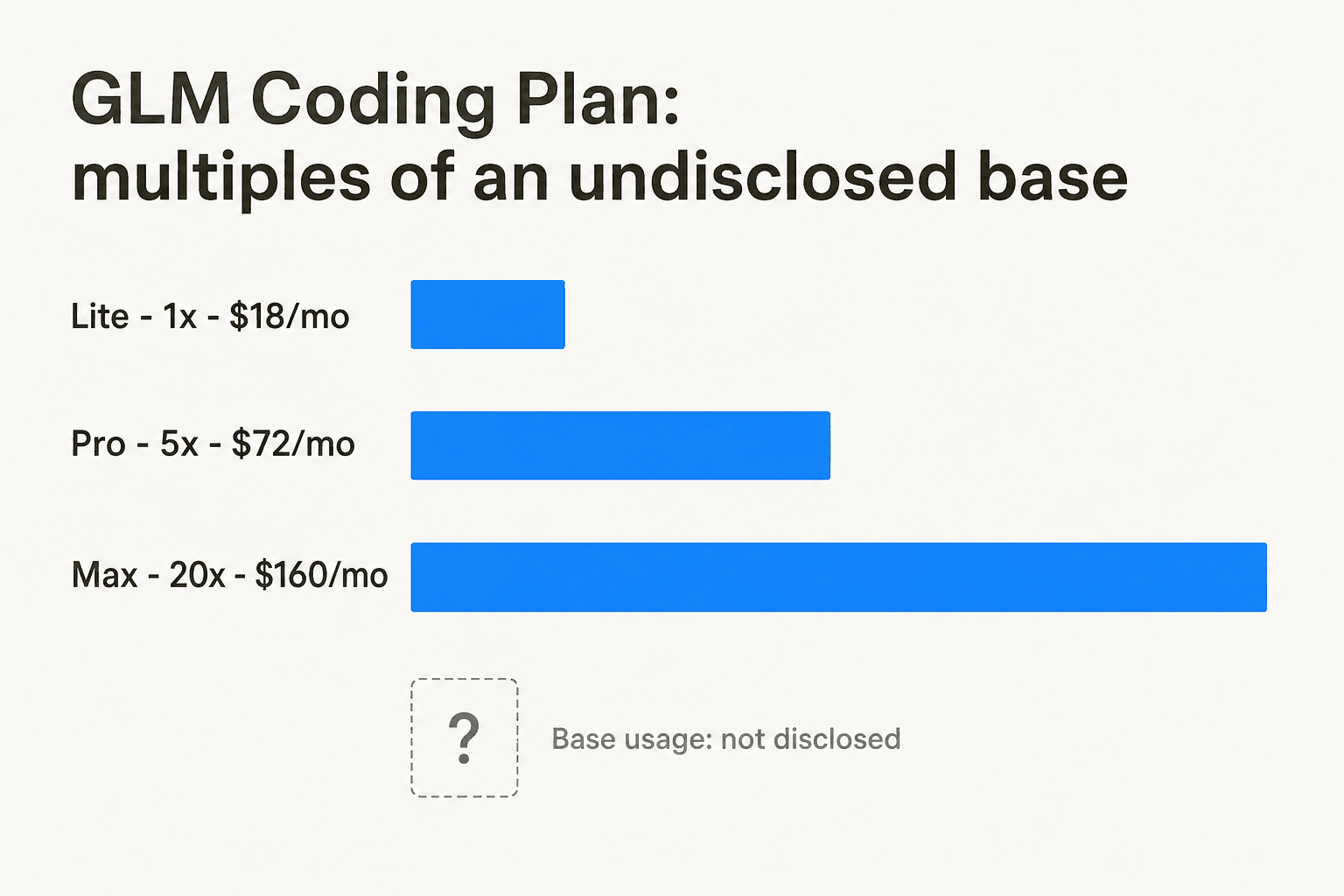
| Pro | $72/mo | $50.4/mo | $604.8/yr | Everything in Lite, 5x Lite's usage, priority model access, curated MCP tools |
| Max | $160/mo | $112/mo | $1,344/yr | Everything in Pro, 20x Lite's usage, first access to new models, dedicated peak-time resources |
Notice what's missing from that table: an actual number. Pro and Max are priced as multiples of Lite's "base usage allowance," but that base is never quantified anywhere on the pricing page, not even in the FAQ item literally titled "What is the usage limit for the plan?" On Hacker News, cube00 called this out directly: "It's impressive all these companies are getting away with 'base usage allowance included'... layering the higher plans as a multiplier of that 'base' but never disclosing what it is. I guess the base is whatever the profit margin needs to be this month."
On X, one reply framed the price-to-performance case more favorably: AndrewK404 wrote that "considering that GLM-5.2 is on par with Opus 4.6, and its pricing is much lower, it's actually very competitive." That's a fair read of the sticker price. Whether it holds up depends entirely on the number Z.ai won't publish.
How the launch actually landed
ZCode's official X launch post pulled 5,739 likes and framed the release around three bullets: a 1.5x usage quota for existing Coding Plan subscribers, BYOK support, and availability on macOS, Windows, and Linux. The most substantive independent reaction landed on the second of two Hacker News threads (the first got derailed almost entirely by localization complaints about the site defaulting to Chinese with no mobile-friendly English toggle, prompting a moderator to redirect discussion), and it was a mixed picture, not a one-sided win.
The single most detailed comparison came from InsideOutSanta, who runs both models day to day:
"Opus refuses tasks for me pretty regularly. GLM 5.2 has never refused a task. So for anything security-related or that touches on topics that trigger Opus's safety guardrails, I use GLM 5.2. OTOH, for anything related to UI design, I use Opus 4.8... Opus 4.8 is, on average, about twice as fast as GLM 5.2 running on z'ai's infrastructure for the same task... On average, I think Opus 4.8 is still a better, more reliable, and faster model, but if it went away tomorrow and I only had GLM 5.2, I wouldn't be too sad about it."

The interface itself drew sharper criticism than the model did:
"UI-wise this looks a lot closer to Codex than Claude Code. It's basically an exact copy of Codex."
"Even the hand icon, the usage in the text field, and the sidebar style are 1:1 identical to Codex. It's a misleading title, it's not close to Claude Code."
Reliability complaints piled on top of that:
"Their tui is quite heavy and crashing quite often as compared to claude code."
On X, guybedo described having to "retry each request at least 3 times because the API is so unstable," claiming the Max plan "drains tokens at least 5x faster than codex $200 and claude $200."
The trust concern ran the deepest, though. tristor wrote on Hacker News: "There's no way I would ever put a piece of proprietary Chinese software that gets full system control on anything important. This is definitely something I would only ever run sandboxed in a lab environment for toy projects, not for serious work." A reply to the same launch post on X, from John_lussier, put it more bluntly: "How to get maximal data from your environment and workflow to China in one easy step!!" Separately, lucasteske raised a fairness point about the open-source framing itself: "It seems concerning that you are releasing closed source tools while advocating to open source."
ZCode pros and cons
What it's good at:
- A model that doesn't refuse security work. Multiple commenters independently noted GLM-5.2 handles security-adjacent tasks Opus sometimes declines, which is a real, specific advantage for certain workloads.
- A real, complete agent loop. The Ryan Bot demo shows exploration, execution, self-verification, and a reviewable diff, not a single-shot code generator.
- Open weights on a capable model. MIT-licensed, no regional gating, competitive with closed frontier models on several coding benchmarks.
- Remote control most Western tools skip. Steering a task from WeChat, Feishu, or Telegram is a real differentiator, not a checkbox feature.
Where it falls short:
- The interface is a documented near-copy of Codex, not an original design, which undercuts the "from the makers of GLM" framing some coverage used.
- Reliability complaints are specific and recent: TUI crashes, unstable API calls needing multiple retries, and a token-burn rate one user put at 5x a comparable Codex or Claude plan.
- Pricing tiers are multipliers of an undisclosed base, which is the single most-cited community criticism and makes the sticker price hard to evaluate honestly.
- It's a proprietary, closed-source harness with full system access, built by a Chinese company, which several commenters treated as a hard line for anything beyond sandboxed side projects.
Full system access is the actual question
Strip away the benchmark race, and the debate ZCode triggered isn't really about GLM-5.2's coding quality. It's about what happens when you hand any AI, from any company, direct control over your filesystem, your terminal, and your Git history, with no review step in between. That's the same distinction that separates an AI agent from a traditional chatbot: a chatbot answers and stops, an agent acts, and acting without a checkpoint is where things go wrong. It's a legitimate question regardless of which flag is on the company's homepage.
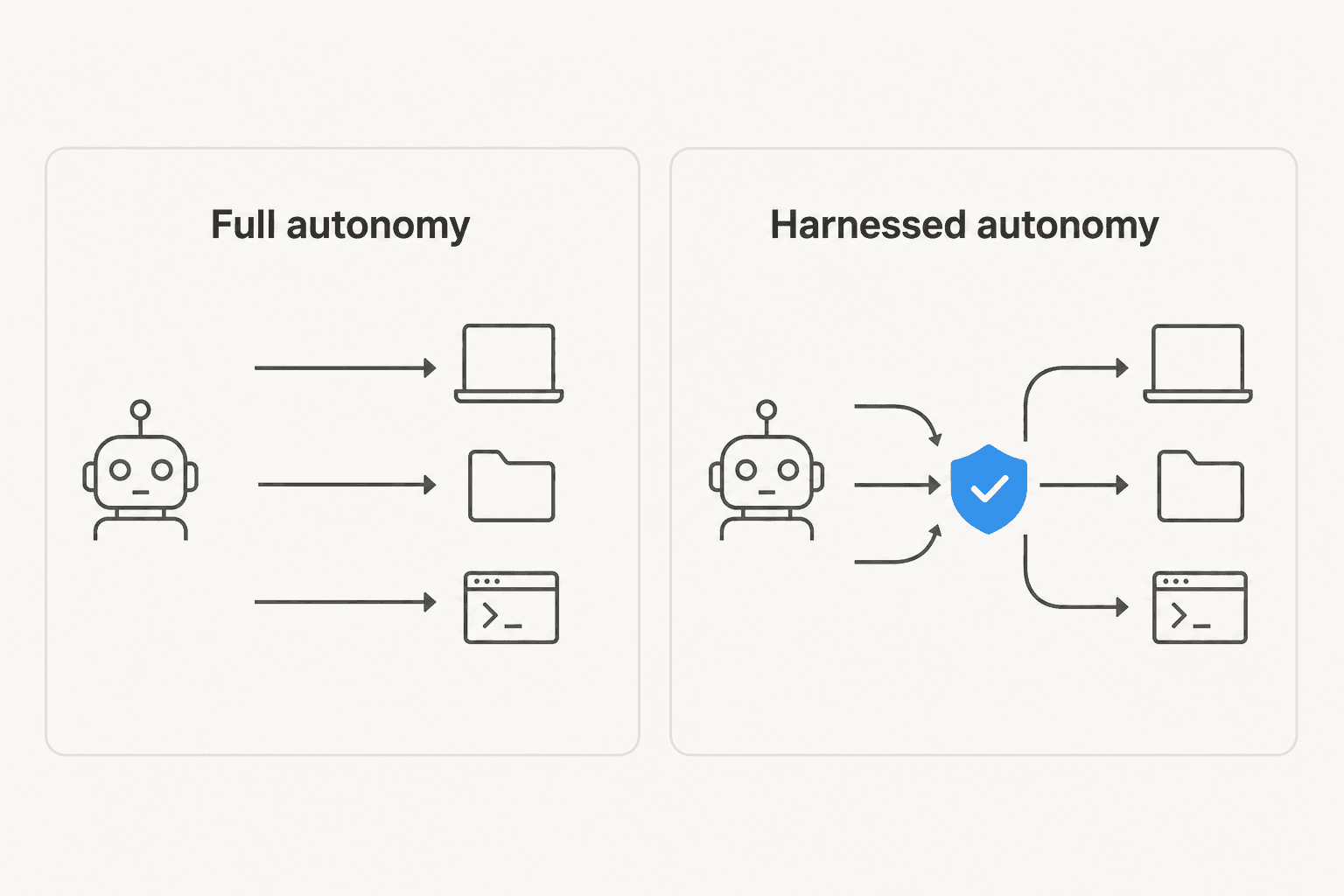
We run into the exact same tension building AI agents for customer service, just with a different blast radius. A coding agent with full system access can delete a repo; a support agent with full autonomy can send a confidently wrong answer to a paying customer, in public, with your company's name on it. We've watched an under-guarded model do exactly that: answer a completely unrelated support question with "Oxygen," lifted straight from a periodic table, a textbook AI hallucination, because a knowledge-base lookup came back empty and nothing stopped it from filling the gap anyway. The fix in both cases is the same shape, even if the implementation differs: a checkpoint between the agent's intent and the action it's about to take, not blind trust in the model's judgment.
The verdict
ZCode is a legitimate, credible entrant with a strong model behind it. GLM-5.2 earns its "strongest open-source model on long-horizon coding" claim, and the MIT license makes it one of the more open frontier-class models available today, unlike the tightly-held weights behind most OpenAI comparisons we get asked about. But ZCode the product is harder to recommend outright: the interface leans heavily on Codex's design language, launch-week reliability complaints are specific rather than vague, and the pricing tiers are sold as multiples of a number Z.ai keeps to itself.
If you're already inside the GLM ecosystem or want a real cheaper alternative to Opus-class pricing for security-adjacent work Opus tends to decline, it's worth trying. If you're evaluating it purely against Cursor or Devin Fusion, the model-agnostic option that lets you run GLM-5.2 anyway, without betting your workflow on one company's harness, is the safer default. It's a similar calculation to the one we'd make on Microsoft's own Copilot family: a first-party bundle is convenient right up until the model behind it stops being the best one for the job.
Try eesel
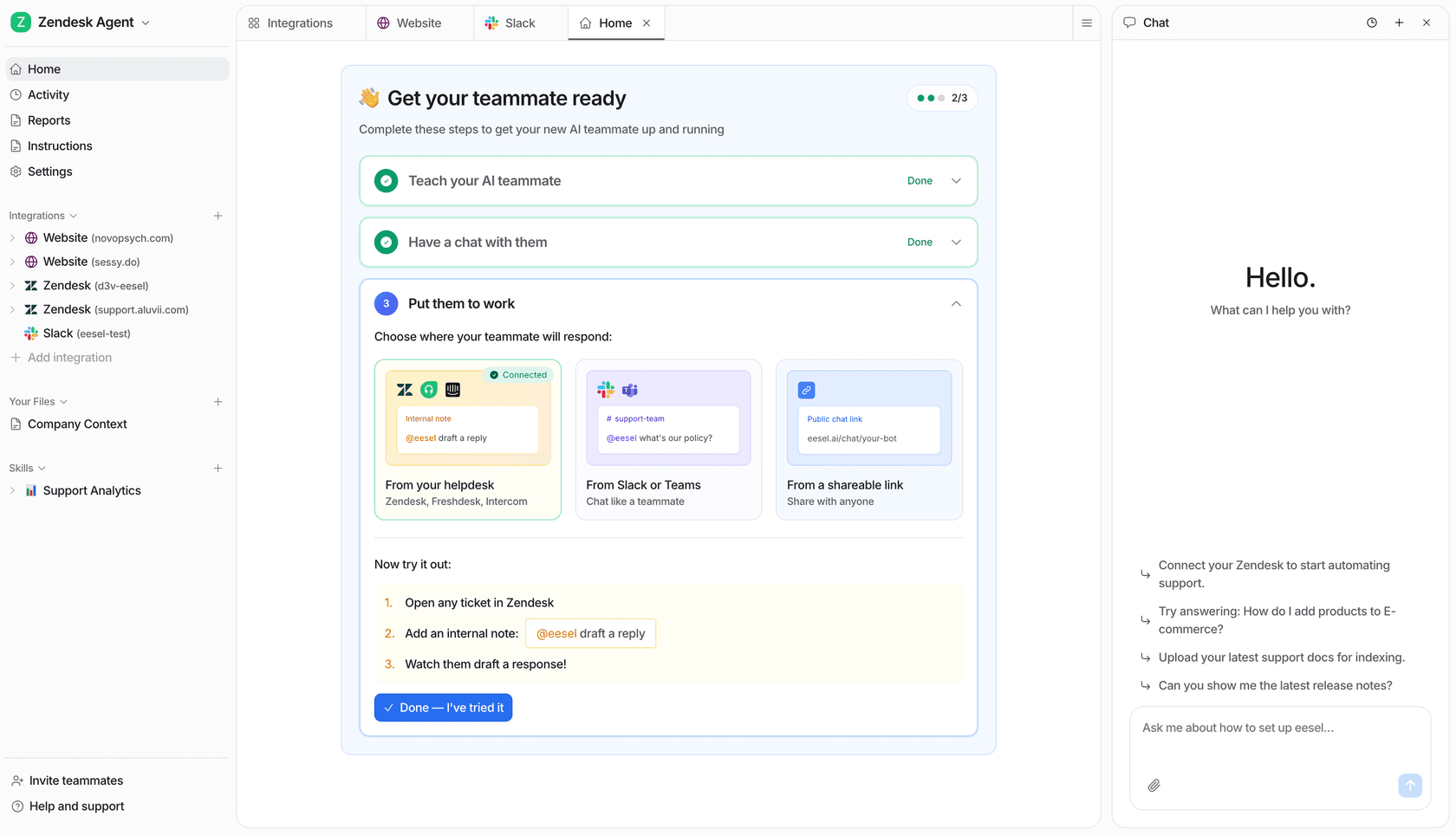
Whether the autonomous agent in question writes code or answers support tickets, the same rule holds: a model with full access and no checkpoint is a liability waiting for the wrong prompt. eesel sits on top of your existing helpdesk, whether that's Zendesk, Freshdesk, Gorgias, HubSpot, or Front, learns from your real ticket history from day one, and runs a full simulation against your past tickets so you can see exactly what it would have answered, on real historical cases, before it ever reaches a live customer. Confidence-based routing means it only answers what it's actually sure about and hands the rest to a human, the same discipline any full-access agent needs regardless of which model or which company built it. Pricing is one fixed monthly price from $299/month for 500 credits (1 credit per ticket or chat), no seat fees, so you're not paying for a benchmark score, you're paying for the tickets it actually works on.
Frequently Asked Questions
What is ZCode?
How much does ZCode cost?
Is ZCode better than Cursor or GitHub Copilot?
Is GLM-5.2 as good as Claude Opus or GPT-5.5?
Is it safe to give a coding agent like ZCode full system access?


Article by
Kira
Kira is a writer at eesel AI with a Computer Science background and over a year of hands-on experience evaluating AI-powered customer service tools. She focuses on breaking down how helpdesk platforms and AI agents actually work so that support teams can make better buying decisions.