

It feels like the AI world moves at a dizzying pace, doesn't it? One minute you’re getting the hang of the latest model, and the next, something new drops that completely changes the game. We've quickly gone from chatbots that could string together a decent sentence to digital partners that can practically build an app while you grab a coffee.
Well, Google just took another one of those big leaps with the release of Google Gemini 3, its smartest and most capable AI model yet. And we're not just talking about a small tweak here; this feels like a genuine shift in direction.
So, let's break down what Google Gemini 3 actually is, dig into its cool new features, and talk about what this new "agentic AI" era really means for businesses. Most importantly, we'll cover how you can start using this kind of powerful intelligence for your own company's knowledge base today.
What is Google Gemini 3?
At its core, Google Gemini 3 is the next evolution of Google's flagship AI models. It was built from the ground up to understand and interact with information a lot more like a human does. It’s "natively multimodal," which is a fancy way of saying it can process and reason about text, images, video, audio, and code all at the same time, without getting confused.
In the official announcement, Google CEO Sundar Pichai called it their "most intelligent model," one that lets you "bring any idea to life." This isn't just about getting slightly better at writing emails. It’s a move toward an AI that can understand context, plan out complex tasks with multiple steps, and act like a real collaborator.
Google is clearly confident in this new model, since they're plugging it directly into their core products like Search from day one. This all-in-one approach, as Business Insider pointed out, gives them a unique edge. They control the whole process from the lab to your screen, which lets them roll out powerful new features incredibly fast.
The key features that make Google Gemini 3 stand out
Google Gemini 3 brings a few new tricks to the table that are genuinely pushing the limits of what we thought AI could do. Let's look at the most important ones.
Advanced reasoning and a “deep think” mode
One of its most impressive skills is its advanced reasoning. In plain English, this means the AI can tackle complicated, layered problems and break them down, sort of like an expert would. It’s not just recognizing patterns anymore; it's about actual problem-solving. Google even shared that Gemini 3 is hitting top scores on tests designed for PhD-level thinking.
To take it a step further, they’ve added a "Deep Think" mode. Think of it as an enhanced setting for the really tough problems, giving the model extra time and processing power to think through a query. It feels like the ceiling for AI intelligence just got a lot higher.
Native multimodality for a richer understanding
Because Gemini 3 was built to handle different types of media from the start, it can seamlessly combine information from various formats. It can watch a video of your terrible pickleball form and suggest a personalized training plan. Or, it could take a look at your grandma's handwritten recipe cards and turn them into a neat digital cookbook for the whole family.
This isn’t just for fun, either. For developers, Google has added new controls that let them specify how the model should process images and videos for certain tasks, like reading text off a screen in a tutorial video.
Agentic capabilities and the rise of Google Antigravity
This might be the biggest change of all: the focus on "agentic AI." This is the shift from an AI that just answers your questions to an AI that actually does things for you. These AI "agents" can plan, carry out tasks with multiple steps, and use other tools on their own to get a job done.
To power this, Google launched Antigravity, a new platform where the AI acts as an "active partner." It has access to a code editor, a terminal, and a browser to do its work. AI expert Ethan Mollick showed how you can give it a high-level goal like "build a website summarizing my predictions," and the AI just... does it. It figures out the steps, does the coding, and checks in with you for approval along the way. It’s less like using a tool and more like delegating a project to a very capable teammate.
Our recommendation: Put Gemini-level AI to work for your business with eesel AI
While powerful models like Google Gemini 3 are amazing, using them directly requires a team of developers, a lot of technical know-how, and a sharp eye on security and costs. For most companies, there’s a much more practical way to apply this intelligence to real, valuable problems right now.
Bring all your company knowledge together with AI Internal Chat
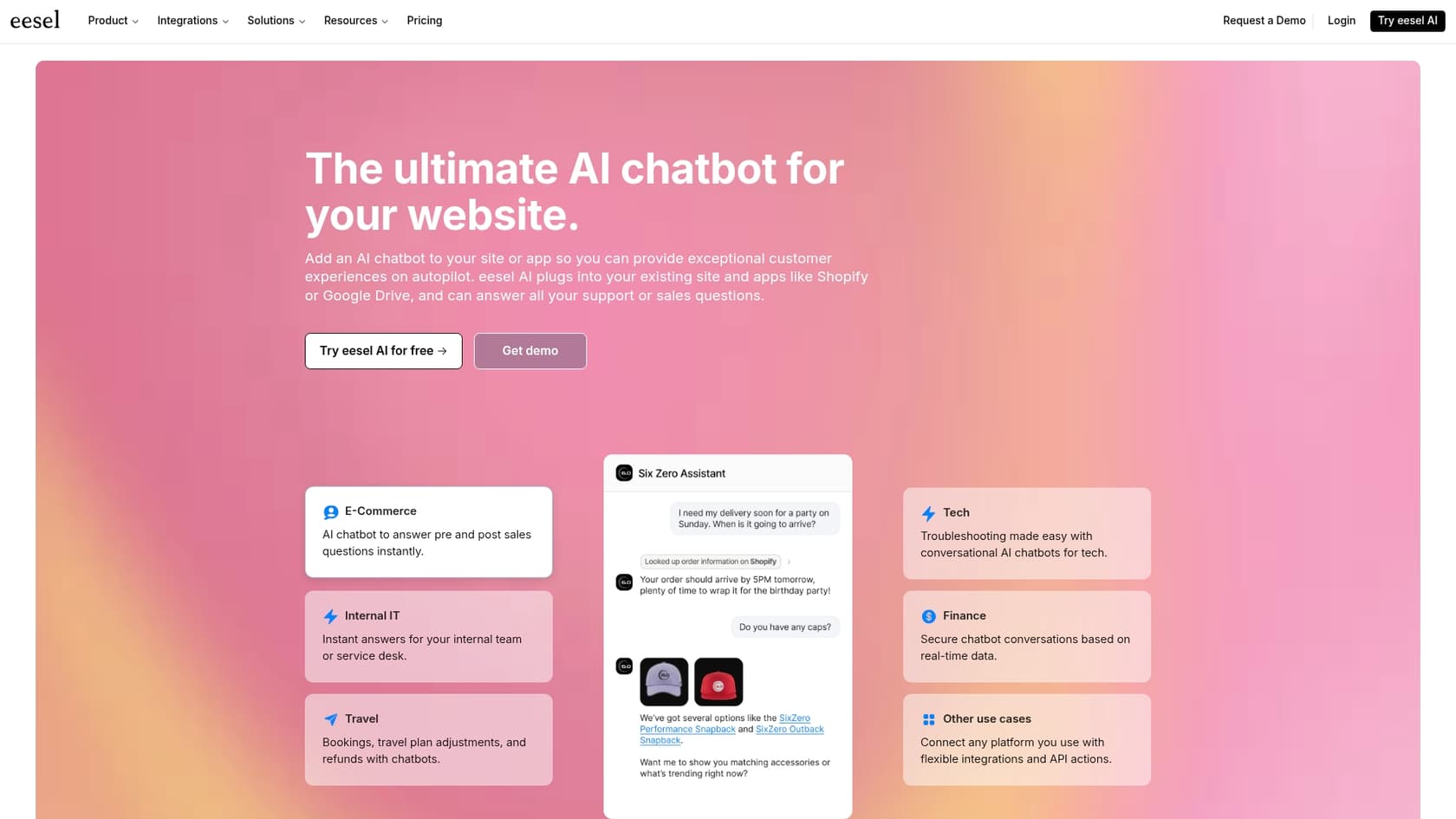
eesel AI's Internal Chat is a secure, ready-to-use platform that gives your internal teams the power of advanced AI without the headache. Instead of trying to build something from scratch, you can instantly connect all the places your company knowledge lives, like Confluence, Google Docs, and old Slack threads. This creates a single, trustworthy source of information for your employees.
Get up and running in minutes, not months
One of the best things about eesel AI is how simple it is. You can sign up and launch a fully working internal chat assistant without sitting through long sales calls or mandatory demos. Building a custom solution on a raw API can take months of work. With eesel AI, you get one-click integrations that let you see results almost immediately. It’s designed to be completely self-serve, so your teams can start getting the answers they need without any delay.
Keep complete control and security
Data privacy is a huge concern for any business looking into large AI models. With eesel AI, your data is never used to train some massive, general model. It’s kept separate and is only used to power your company’s private assistant. You also get features like "scoped knowledge," which lets you restrict the AI to specific topics or documents. This makes sure it gives relevant answers and doesn't get sidetracked, giving you a level of control that’s essential for any business tool.
Other ways to interact with Google Gemini 3
For companies with developers who are eager to build custom applications from the ground up, Google and its partners have some powerful platforms available.
1. Google AI Studio and Vertex AI
These are Google's main hubs for developers and data scientists who want to access and build with the Gemini 3 Pro API. They're perfect for creating custom AI applications, fine-tuning models, and weaving AI into existing, complex software. This route requires coding skills and experience with APIs, so it’s powerful but definitely a bigger investment.
2. Third-party developer platforms
Tools like Cursor and Replit are also integrating Google Gemini 3. These are specialized platforms for coders that embed the model’s power right into their workflow to speed up programming. They are fantastic for making developers more productive, but they're built for builders, not for general business use across a whole organization.
What Google Gemini 3 means for the future of work
The release of Google Gemini 3 hammers home a theme we're seeing more and more: we're moving out of the chatbot era and into the era of the "digital coworker."
The conversation is shifting from having a "human in the loop" to fix an AI's mistakes to having a "human who directs the AI's work." Increasingly, AI will be able to handle entire tasks from start to finish, not just feed you bits of information. For most businesses, this future starts with automating well-defined internal processes. By putting tools like AI-powered Q&A in place, companies can free up their people from answering the same questions over and over, which clears the way for more complex and valuable AI collaboration in the future.
A new kind of intelligence has arrived with Google Gemini 3
Google Gemini 3 is a huge step forward for AI, with seriously impressive reasoning and the ability to act on its own.
But while the raw power of these models is exciting for developers, the real value for businesses comes from using that intelligence in focused, secure, and easy-to-use platforms. The future of work is all about giving teams tools that don't just find answers but help them get their actual work done faster and better.
If you're ready to start using this next generation of AI for your internal teams today, check out how eesel AI's Internal Chat can bring your company knowledge together and provide instant, accurate answers.
Frequently asked questions
What exactly is Google Gemini 3?
Google Gemini 3 is the latest evolution of Google's flagship AI models, built to understand and interact with information more like a human. It's natively multimodal, meaning it can process and reason about text, images, video, audio, and code simultaneously. Google CEO Sundar Pichai describes it as their "most intelligent model" for bringing ideas to life.
What makes the "agentic capabilities" of Google Gemini 3 significant for businesses?
The agentic capabilities in Google Gemini 3 mean the AI can do more than just answer questions; it can actively plan and carry out multi-step tasks independently. It shifts AI from being a tool to an active partner, capable of using other tools and even coding to achieve high-level goals. This capability allows for greater delegation of complex projects.
How does Google Gemini 3's native multimodality enhance its understanding of information?
Google Gemini 3 was designed from the start to handle various media formats seamlessly, such as text, images, video, and audio. This allows it to combine insights from different types of information, leading to a richer and more comprehensive understanding of complex scenarios. For example, it could analyze a video and provide a personalized training plan based on visual input.
What is the most practical way for my company to leverage the power of Google Gemini 3-level AI today?
For most companies, the most practical approach is using secure, ready-to-use platforms like eesel AI's Internal Chat. These platforms allow you to connect all your company's knowledge sources, providing an AI-powered assistant for internal teams without needing a dedicated team of developers. This ensures quick implementation, security, and immediate value.
Where can developers find resources or platforms to build custom applications with Google Gemini 3?
Developers eager to build custom applications with Google Gemini 3 can utilize Google AI Studio and Vertex AI. These platforms offer access to the Gemini 3 Pro API for creating and fine-tuning AI applications. Additionally, third-party developer platforms like Cursor and Replit are integrating Google Gemini 3 to enhance coding workflows.
How does Google Gemini 3 impact the future of work, especially regarding human-AI collaboration?
Google Gemini 3 marks a significant shift from the chatbot era to the "digital coworker" era, where AI increasingly handles entire tasks from start to finish. This means humans will transition from fixing AI mistakes to directing its work, freeing up employees from repetitive tasks. The focus shifts towards more complex and valuable AI collaboration in the workplace.
What kind of advanced reasoning can Google Gemini 3 perform, including its "Deep Think" mode?
Google Gemini 3 excels in advanced reasoning, capable of tackling complicated, layered problems by breaking them down similar to an expert. Its "Deep Think" mode provides extra processing power and time for the model to think through exceptionally tough queries, allowing it to achieve top scores on PhD-level thinking tests. This enables genuine problem-solving beyond pattern recognition.