

What is Kodif pricing in 2026?
People searching "Kodif pricing" have usually sat through a demo already, or have one booked, and want a number before the sales call. Kodif actually publishes more than most enterprise AI vendors do. The Kodif pricing page lists three tiers by yearly conversation volume and two of the three per-conversation rates. What it doesn't publish is a total price per plan, so the annual figures below are my arithmetic (volume x rate), not a number Kodif prints.
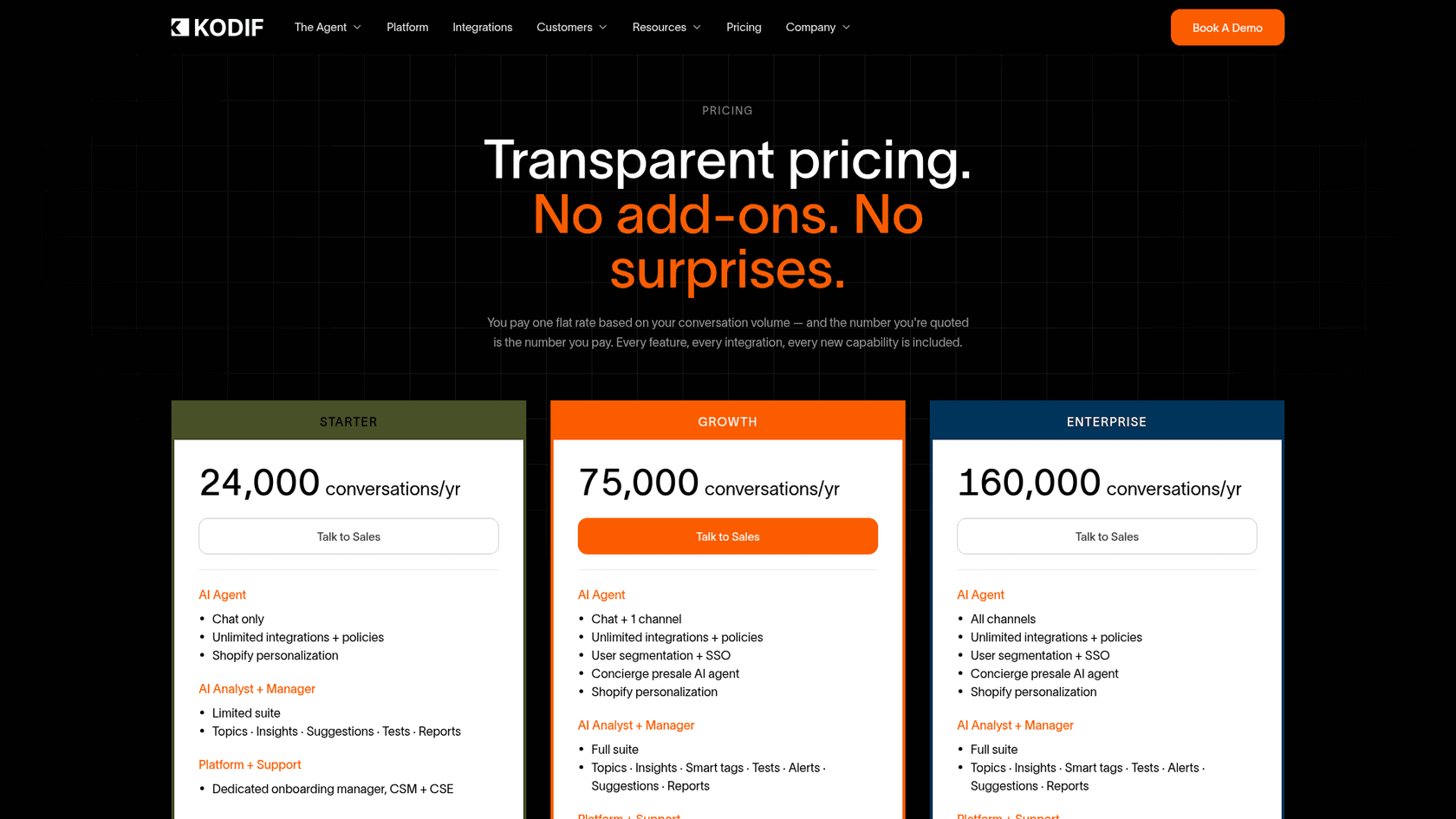
| Tier | Conversations included | Rate per conversation | Implied yearly price | Channels | Analyst suite | Notable extras |
|---|---|---|---|---|---|---|
| Starter | 24,000 a year | $1.00 | ~$24,000 | Chat only | Limited: topics, insights, suggestions, tests, reports | Unlimited integrations and policies, Shopify personalization, onboarding manager + CSM + CSE |
| Growth | 75,000 a year | Not published | Not published | Chat + 1 channel | Full suite, adds smart tags and alerts | Adds user segmentation, SSO, Concierge presale AI agent |
| Enterprise | 160,000 a year | $0.75 | ~$120,000 | All channels | Full suite | Adds executive oversight |
| Custom | 160,000+ a year | Quoted | Quoted | All channels | Full suite | "We'll build a flat rate" |
The page states a few things plainly, and they're good to know before the call, especially if you're weighing it against the wider AI customer service cost picture:
- It's yearly. "You pay one predictable number for the year," per the pricing page. There's no monthly plan listed.
- No seats, no setup fee. Onboarding, integration setup and policy configuration are included, and the FAQ says there are "no surprise line items at renewal."
- Overage bills at your plan rate. Go past your volume and Kodif charges the extra conversations at the same rate and flags it early.
- Every button says "Talk to Sales." There's no checkout, no free plan, and no trial button on the site.
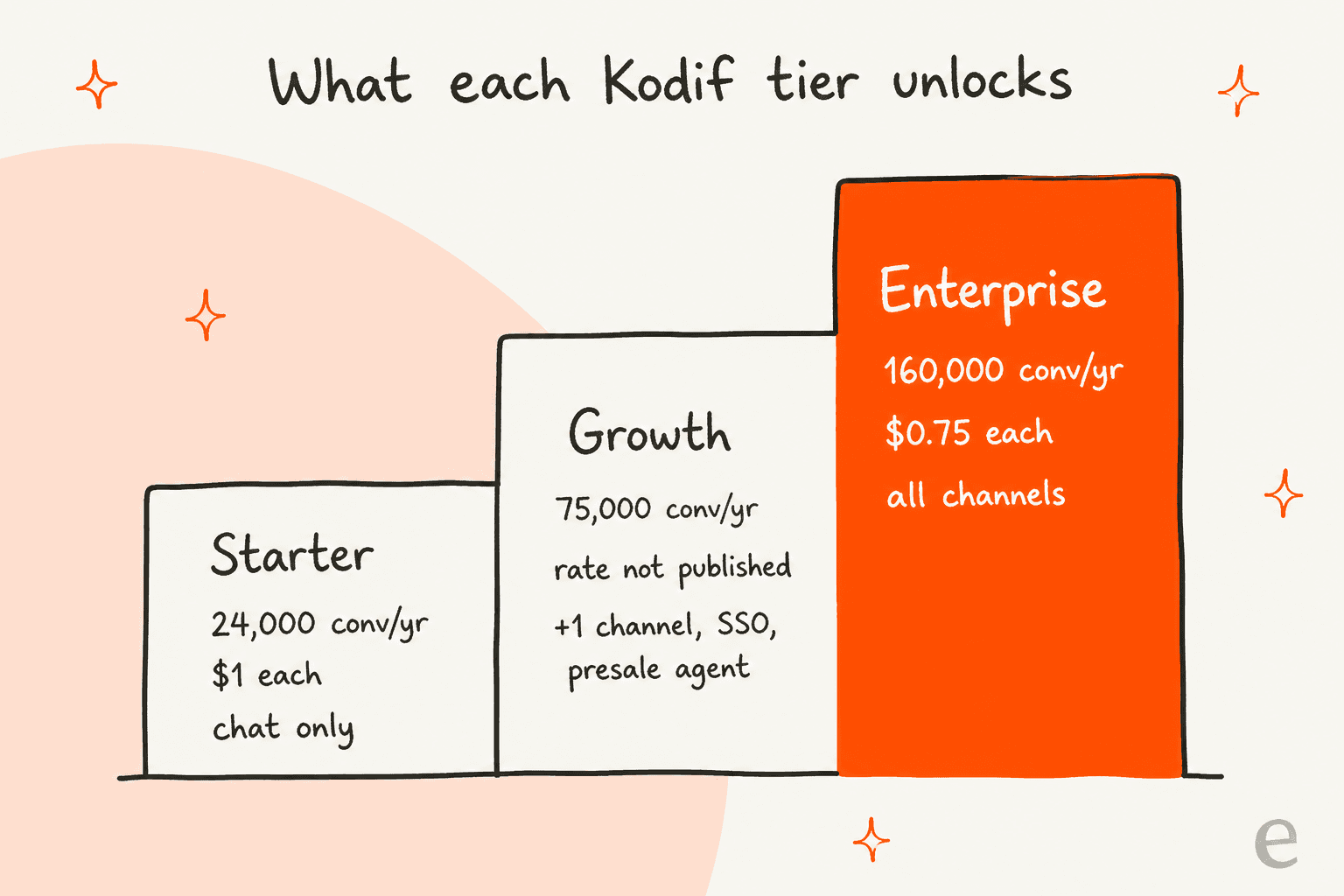
One small catch in the copy: the page says the analyst suite, smart tags and alerts "aren't paywalled gimmicks," but the tier cards show Starter on a "Limited suite" without smart tags or alerts. Small thing. Still, confirm it before you sign, since Starter is the plan most mid-size brands get quoted.
What does Kodif actually count as a conversation?
This definition decides your real bill, so slow down here. Kodif's FAQ defines it as "one customer ticket the agent works, start to finish, however many messages it takes," and follow-ups on the same issue don't count twice (pricing FAQ).
The key word is works. That's a different unit from the per-resolution (automated resolution) model you'll see at Zendesk or Gorgias, where you pay only when the AI closes the ticket. On a worked-conversation meter you also pay for tickets the agent picks up and then passes to a human.
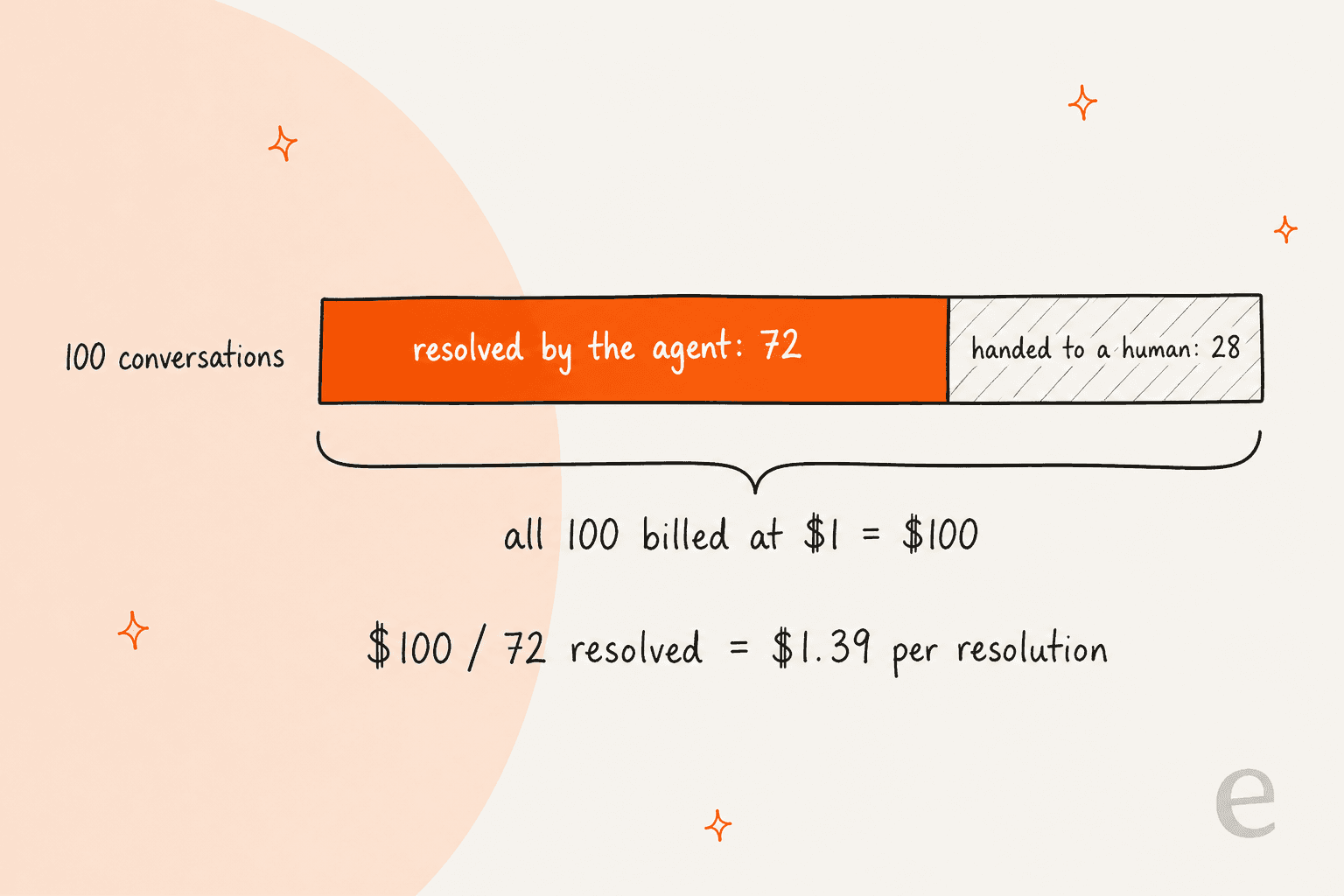
To compare Kodif fairly with a per-resolution vendor, divide its rate by your containment rate:
- At the 72% that Kodif's Resolution Agent page quotes, $1 per conversation is $1.39 per resolution.
- At the "around 60%" one G2 reviewer reports, it's $1.67.
- At 50%, it's $2.00.
"It is resolving around 60% of the tickets assigned to it, while the more complex ones are handed over to the agents."

In fairness to Kodif, the worked-conversation model has one real upside. Your bill doesn't jump when the agent gets better. Under per-resolution pricing, a higher resolution rate means a bigger invoice. I've seen this play out in an eesel cost analysis for a German jewelry brand handling about 1,000 tickets a month, where per-resolution pricing at 80% resolution would have quadrupled the monthly bill during the Black Friday spike. Flat volume pricing sidesteps that problem.
That same analysis raised a second question for Kodif: 22% of that brand's inbox was spam. If the agent "works" a spam ticket by closing it, does it count toward your 24,000? The pricing page doesn't say, so put it on your list for the sales call.
There's also a wording mismatch to clear up. The Resolution Agent FAQ says "you pay for tickets the agent closes," and the Retention Agent FAQ says you pay "for the subscriptions the agent retains." The pricing page is the newest and most specific of the three, so I'd treat "per conversation worked, billed yearly" as the model, but get the unit written into the order form.
What will Kodif cost at your volume?
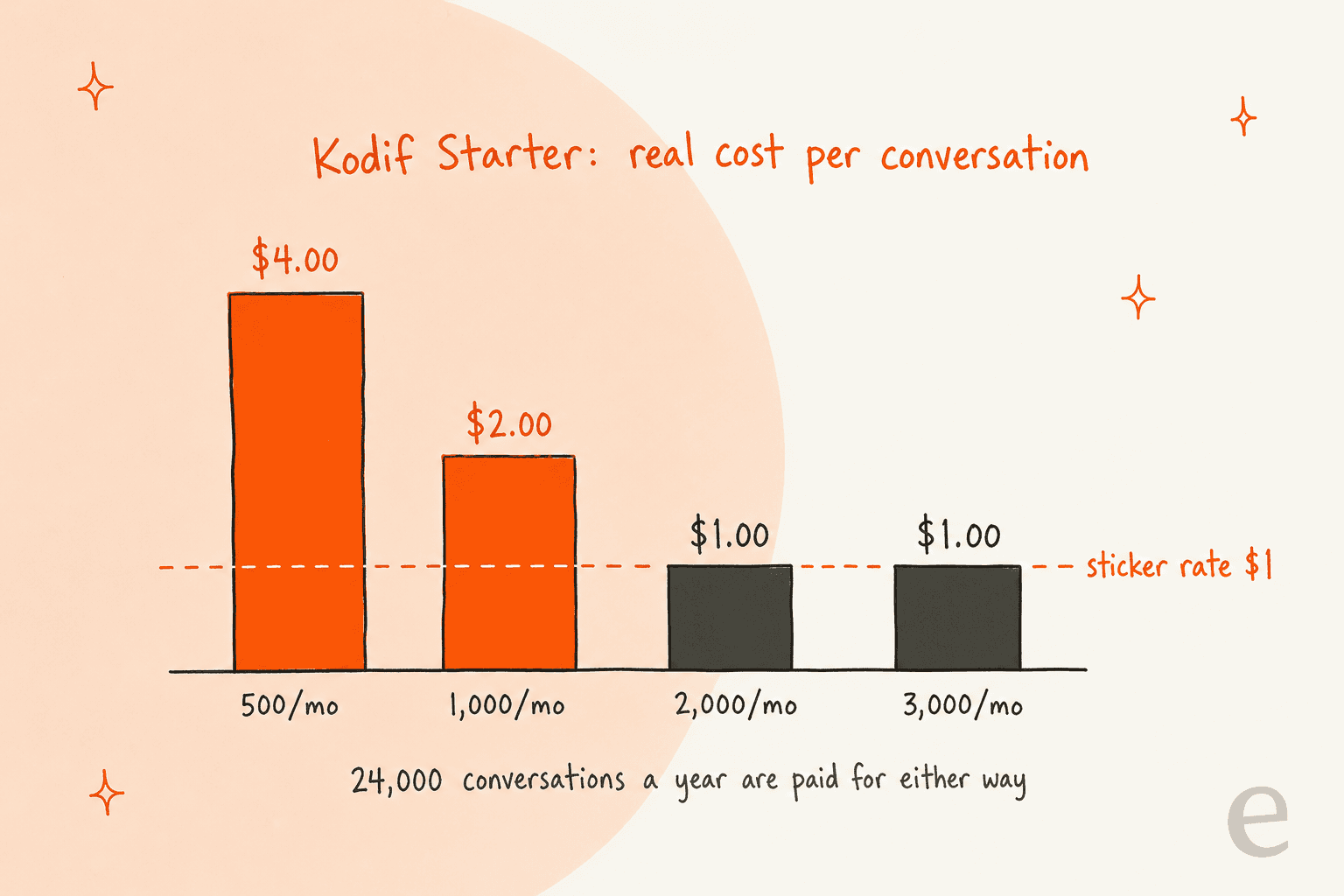
Here's where the flat yearly rate matters more than the $1 sticker, and where your real cost per ticket gets decided. Starter is priced for 24,000 conversations, which is 2,000 a month. Fall below that and you still pay for the whole bundle, so your real cost per conversation climbs.
| Conversations a month | Conversations a year | Kodif yearly bill | Real cost per conversation | Per resolution at 72% | eesel yearly (monthly plan) |
|---|---|---|---|---|---|
| 500 | 6,000 | ~$24,000 (Starter) | $4.00 | $5.56 | $3,588 (500 credits) |
| 1,000 | 12,000 | ~$24,000 (Starter) | $2.00 | $2.78 | $5,988 (1,000 credits) |
| 2,000 | 24,000 | ~$24,000 (Starter) | $1.00 | $1.39 | $10,188 (2,000 credits) |
| 4,000 | 48,000 | ~$48,000 (Starter + overage) | $1.00 | $1.39 | $17,388 (4,000 credits) |
| ~13,300 | 160,000 | ~$120,000 (Enterprise) | $0.75 | $1.04 | Talk to sales |
Kodif figures are volume x published rate from the pricing page. eesel figures are its list monthly prices x 12 from eesel pricing. Neither column includes your helpdesk.
A couple of notes on the table. At 4,000 a month I've kept Starter plus overage, since Kodif bills overage at the plan rate. In practice Kodif would likely steer you to Growth, which includes 75,000 a year, but its rate isn't public. If it lands anywhere between Enterprise's $0.75 and Starter's $1, Growth would come to roughly $56,000 to $75,000 a year. And Starter is chat only, so a brand at 4,000 a month with a real email queue needs Growth anyway.
The pattern I'd take from this: Kodif gets cheaper per conversation as you grow, but it's priced for brands already doing 2,000+ conversations a month. Below that, the yearly floor is the number that matters, not the rate.
Try your own numbers below. The calculator uses the same published rates and the same containment assumption for both tools, so treat the per-resolution figure as a like-for-like estimate, not a quote.
What do you get for the money?
Price is only half of it, so here's what that $24,000 floor actually buys. Kodif describes itself as "the AI agent built for ecommerce" and sells one agent doing three jobs: the Resolution Agent for refunds, returns, order status and order edits, the Retention Agent for subscription cancel-saves written back to billing, and the Revenue Agent for presale recommendations.
Every tier includes the following, and these make the price easier to justify:
- The build is done for you. "Setup happens mostly on our side," per the Resolution Agent page, and every plan comes with a dedicated onboarding manager, a CSM and a CSE. Kodif claims "9 days from contract to fully resolving tickets in production" on its homepage.
- Unlimited integrations and policies. Kodif lists 10 helpdesks plus subscription, returns and shipping tools like Recharge, Skio, Loop and AfterShip, and says it can build a new integration in "3hr."
- The retention math. The Retention Agent page claims a "19% save rate on cancellation tickets." If you run a subscription brand with real churn, a few saved subscriptions a week can cover a chunk of the bill. My subscription business roundup covers how other tools handle the same job.
- Security paperwork. Kodif says it's SOC 2 Type II and HIPAA compliant and meets ISO 27001, GDPR and CCPA (platform page).
Kodif's customers back up those containment claims. Helix Sleep reports 71.8% containment across 31,821 eligible conversations from January to May 2026 (Helix case study), and Who Gives A Crap resolved 66% of chat and 63% of email end to end in Q1 2026 (case study).
What isn't in the Kodif price?
Kodif's headline is "No add-ons. No surprises," and on its own invoice that mostly holds up. The costs you need to plan for sit around it:
- Your helpdesk. Kodif runs on top of Zendesk, Gorgias, Kustomer, Gladly, Freshdesk, Dixa and others, and "resolves and tags in-place" (integrations). Your helpdesk seats stay on their own bill.
- Unused volume. The page says you pay one number for the year. It doesn't say unused conversations roll over or get credited, so assume they don't unless your contract says otherwise.
- Extra channels. Starter is chat only. If a good share of your volume comes in by email or SMS, the real starting point is Growth, and that rate is quoted.
- Your team's time on changes. No invoice will show this one. Two G2 reviewers say policy work leans on Kodif's engineers, which is fine while response times are quick, but it shapes how fast you can change things during a sale or a policy change.
"Due to the complexity of automations, we do need a KODIF engineer to finish the policies, however they are very responsive and quick."
Kodif's G2 profile carries a 4.8/5 from 31 reviews with no review below four stars, which is a strong signal on service. The same page shows an average implementation time of 2 months and a "Perceived Cost" of five dollar signs out of five (G2), so reviewers clearly see it as a premium buy.
How does Kodif pricing compare to other AI agents?
Kodif sits in a group of ecommerce AI agents that each count something different, which is why sticker prices are hard to line up. Here's the billing unit next to the entry price:
| Tool | What you pay for | Entry price | Contract |
|---|---|---|---|
| Kodif | Each conversation the agent works | ~$24,000/yr (24,000 conversations) | Yearly |
| Siena | $750/mo platform fee + $0.90 per automated ticket | ~$9,000/yr before tickets | Monthly fee |
| Yuma | Each full resolution | $14,400/yr (12,000 resolutions) | 12-month commit |
| Gorgias AI Agent | Each automated interaction, $0.85 to $1.00 | On top of a Gorgias helpdesk plan | Monthly or yearly |
| Zendesk AI agents | Each automated resolution past your included amount, $1.50 to $2.00 | On top of a Suite plan from $55/agent/mo | Monthly or yearly |
| Richpanel | $0.20 per AI conversation + $69 per seat | $200/mo minimum + $2,000 one-time AI setup | Yearly |
| eesel | 1 credit per ticket or chat handled | $299/mo for 500 credits; free plan with 100 credits | Monthly |
Prices are from each vendor's own pricing page, checked October 8, 2026.
At 2,000 tickets a month, the sibling posts work the math through: Siena beats Kodif Starter until about 69% automation (Kodif vs Siena), and eesel lists at $10,188 for the year against Kodif's ~$24,000 (Kodif vs eesel).
For the full field, my Kodif alternatives roundup goes tool by tool, and my cost per resolution explainer covers the math behind all of these units.
Is Kodif worth the price?
My take: Kodif is fairly priced for subscription-heavy brands doing 2,000+ conversations a month who want the build handled for them. At that volume the $1 rate is real, the overage terms are friendly, and the included onboarding team replaces work you'd otherwise staff. If the Retention Agent saves even a modest share of cancellations, the churn math can pay for a lot of it.
I'd skip it, or at least price the alternatives first, in three situations:
- You handle fewer than 2,000 conversations a month. The Starter floor turns $1 into $2 to $4 per conversation.
- Most of your queue is email. Starter won't cover it, and Growth's price isn't public.
- You want your own team to change the agent. If you'd rather edit refund rules yourself (a common reason teams look at Gorgias alternatives too) the day a promo goes live than file a request, a self-serve tool fits better. My Gorgias AI Agent vs eesel post covers that trade-off on Gorgias.
Questions I'd bring to the Kodif sales call: Does a spam ticket the agent closes count as a conversation? Do unused conversations roll over? What's the Growth rate for my volume? And is the unit on my order form "conversation worked" or "resolution"?
Try eesel for Gorgias and Zendesk ecommerce support
If the Starter floor is more than your volume justifies, eesel is the AI helpdesk teammate I'd test first. It joins your Gorgias or Zendesk queue, learns from your past tickets, macros and help center, and checks Shopify orders before it replies.
That means order tracking, refund requests and returns get handled the way your team already handles them, using the same macros and the same order data.
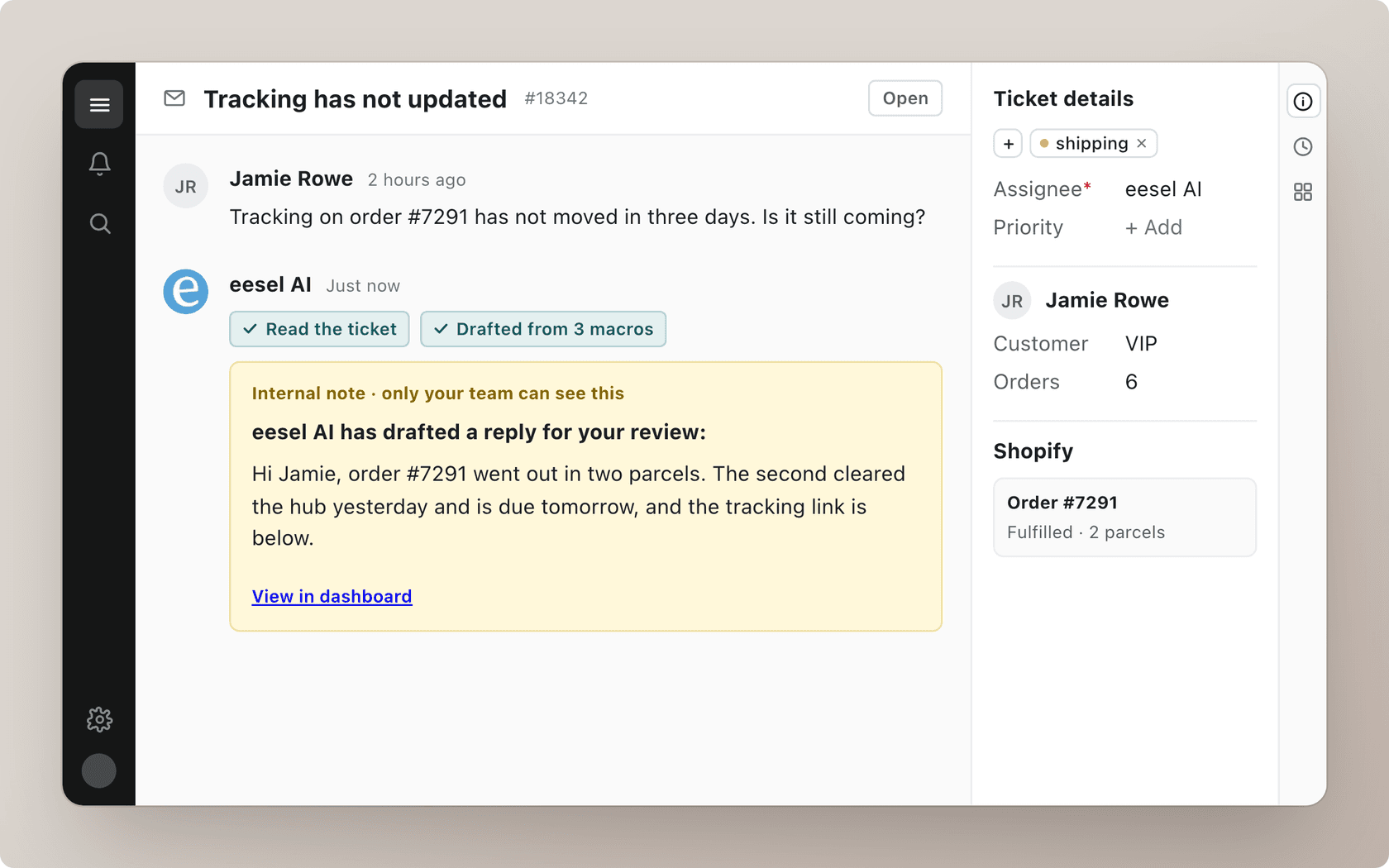
For this post, the pricing difference is what matters. eesel is month to month, from $299 for 500 credits, and one credit is one ticket or chat handled, so you're not paying for a year of volume you haven't reached. You can start on the free plan with 100 credits, run it against your own past tickets, and change its rules in plain English the same afternoon instead of waiting on someone else's engineer. For subscription brands, it also works with Recharge on Gorgias.
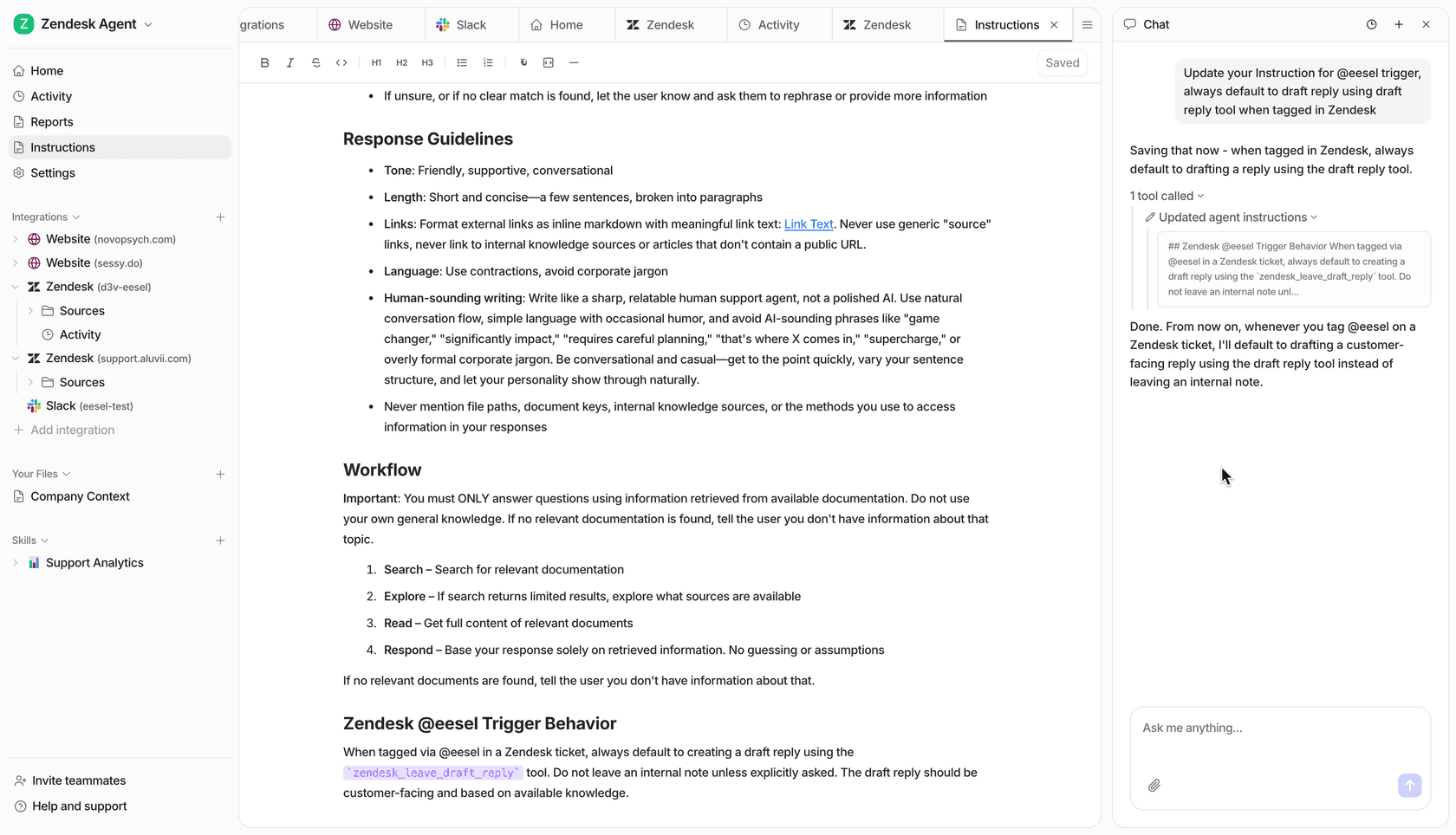
Try eesel free on your own tickets before you sign a yearly contract with anyone.
Frequently Asked Questions
How much does Kodif cost?
Does Kodif charge per resolution or per conversation?
Is there a free trial or free plan for Kodif?
What does Kodif pricing look like for a small Shopify brand?
Does Kodif pricing include the helpdesk?
What happens if I go over my Kodif conversation volume?
Are there cheaper alternatives to Kodif?



Article by
Kurnia Kharisma
Kurnia is a software engineer and writer at eesel AI with two years of SEO experience, writing about AI tools, helpdesk software, and customer support. He pairs a developer's understanding of how these products are built with search-driven research into what actually ranks and resonates with the people searching for them.