Outcome-based pricing
Outcome-based pricing is a model where the buyer pays for results actually delivered, such as resolved tickets, rather than for seats, licenses, or a flat subscription.
What outcome-based pricing means
Outcome-based pricing is a model in which the buyer pays for results actually delivered rather than for access to a product. Instead of a fixed monthly subscription or a fee per user, the charge is tied to a defined outcome, and it only applies when that outcome is reached. The core idea is that cost should follow value: if nothing useful happens, there is little or nothing to pay.
In customer support, the outcome is typically a resolved ticket. A vendor charging this way bills per resolution or per ticket handled, so a quiet month costs less than a busy one and the price tracks the actual support work performed. This stands in contrast to the long-standing per-seat model, where a team pays the same amount for every licensed agent whether that agent closes a hundred tickets or none.
Why outcome-based pricing matters
- Cost scales with value, not with access. You pay when a ticket is resolved, so spend follows the work that was done rather than the number of logins.
- It removes the seat tax on collaboration. With no per-seat fee, adding viewers, occasional users, or whole teams does not raise the bill, which removes a quiet penalty on bringing more people in.
- It aligns vendor and buyer incentives. The vendor only earns when the tool produces the result, so there is direct pressure to make resolutions genuinely happen rather than just sell licenses.
- It maps to a unit teams already track. Pricing in resolved tickets or ticket volume is something support leaders already think in, unlike abstract "credits" that force conversion math.
- It exposes the real economics. Because the charge attaches to outcomes, it sits cleanly next to cost per ticket and makes the return on the tool easy to see.
It helps to see outcome-based pricing as one end of a wider range rather than a single switch:
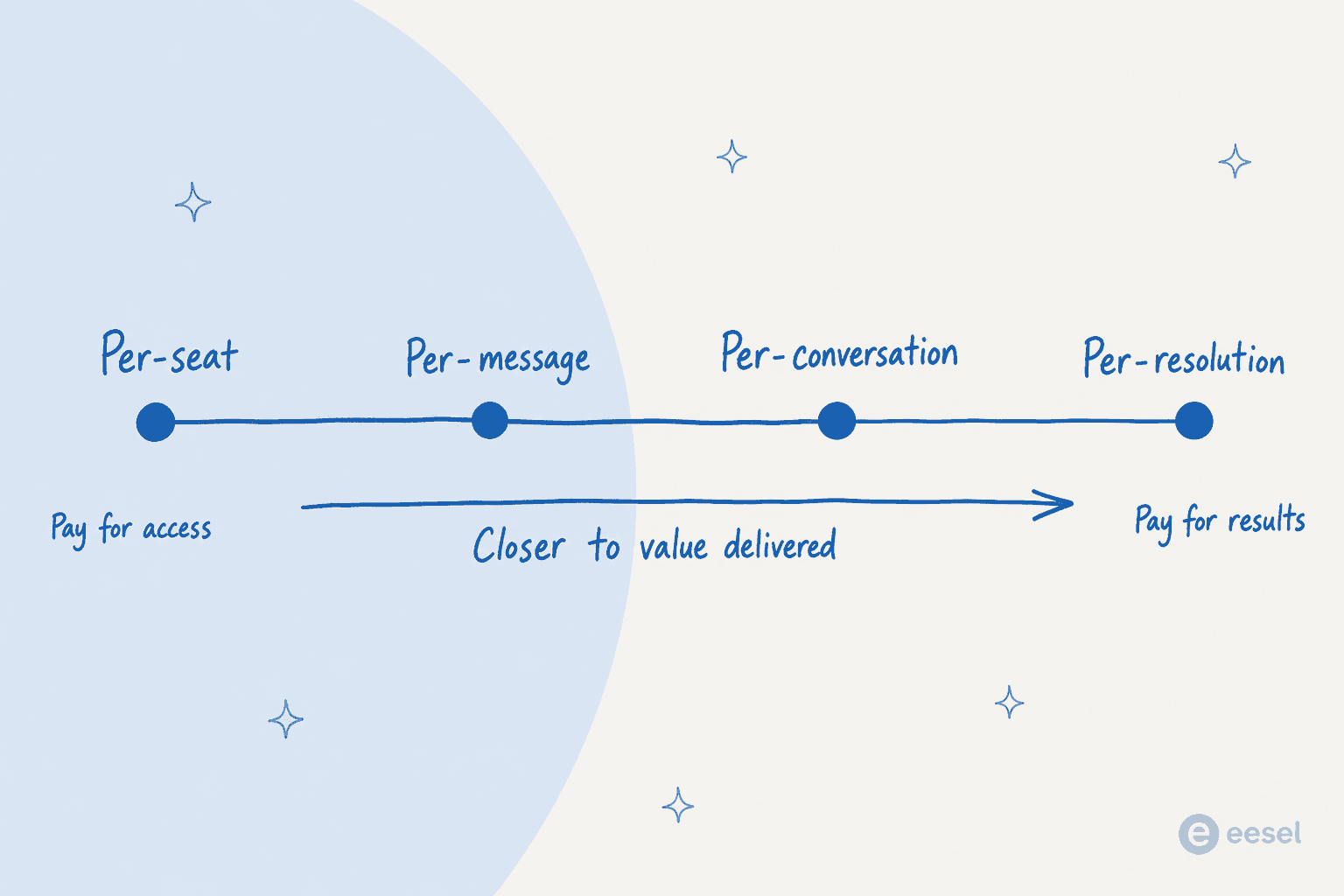
Moving from left to right, each model ties the bill more tightly to value: per-seat charges for access, per-message and per-conversation charge for activity, and per-resolution charges only when the result lands. Outcome-based pricing sits at the far right, where you pay for results rather than logins.
How outcome-based pricing works
A typical outcome-based model runs like this:
- Define the outcome. Both sides agree on what counts as a billable result, most often a resolved or fully automated ticket.
- Meter the outcomes. The system counts each qualifying result over the billing period.
- Charge per result. The buyer pays a set rate for each counted outcome, with no separate seat or license fee underneath.
- Report and reconcile. The buyer sees how many outcomes were delivered and what they cost, so spend is traceable to value.
eesel AI is a direct example of this model in support: its pricing is usage-based and tied to the support work it does, with no per-seat fee, so the cost follows tickets handled rather than how many people are logged in. The deliberate design choice there is the fewest pricing dimensions possible, priced in a unit teams already understand, so the bill is predictable instead of a guessing game.
Put your own seat count and resolution volume in to see which model comes out cheaper:
Type your seat count and monthly resolutions into each card to see which pricing model comes out cheaper.
Outcome-based pricing in practice
The make-or-break detail is the definition of the outcome. If "resolution" is fuzzy, both sides end up arguing over what they are paying for, which is why the cleanest implementations charge on a unit the customer can see and verify, like a closed ticket, rather than an invented metric. The second consideration is budgeting: because the bill moves with volume, finance teams used to a flat line have to plan against a range instead. In exchange, they stop paying full price in slow months and stop paying for seats that never touch the queue, which is usually the trade support leaders are happy to make.
Pricing that follows the work, not the seats
eesel AI uses usage-based pricing tied to tickets handled, with no per-seat fee, so cost tracks the support work it actually does.