

Why this question is so hard to answer cleanly
"Gorgias pricing for Shopify stores" is one of the highest-intent things a store owner ever searches, and it's also one of the hardest to get a straight answer on, because the sticker price and the real bill are two different numbers.
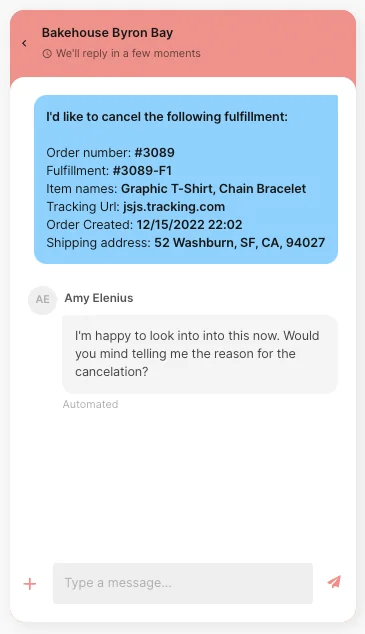
Here's a moment that stuck with me. I watched a Shopify brand run a Gorgias trial: twelve clean test chats, the AI Agent handled every one of them well, the team was sold. Then someone opened the billing page, did the math on their actual volume, and within minutes fired off a message that read, almost verbatim, "PLEASE CANCEL MY subscription." The product worked. The pricing model is what scared them off. That gap, between "this is great" and "wait, what will this cost me in November", is exactly what this breakdown is for.
So let's do the thing the pricing page doesn't quite do: define the billable unit, lay out every plan, add the AI cost on top, and run a real Shopify store's numbers through it.
How Gorgias pricing actually works: the billable unit
Before the plans, the unit. Gorgias doesn't charge per agent seat the way a traditional helpdesk does. It charges on billable tickets per month, and gives you near-unlimited seats on most plans. That's a genuinely good fit for ecommerce, where you might have a swarm of seasonal agents but predictable-ish ticket volume.
A billable ticket is any conversation, on any channel, that gets a response from a human agent, a Rule, or the AI Agent. One ticket counts once no matter how many back-and-forth messages it holds (though a reply after a long gap of inactivity can re-open as a new billable ticket). Newsletters, spam, and auto-responders are filtered out and not charged, which is fair.
The unit you need to watch is the AI resolution, because it's billed on a second meter. When the AI Agent fully resolves a conversation with no human in the loop, you pay a per-resolution fee and that interaction counts as a billable ticket. So the model has two dials turning at once, and on a Shopify store at peak season they turn together. More on that in a moment, but keep the ticket-vs-resolution distinction in mind, because it's where most surprise bills come from.
The five Gorgias plans, line by line
Here's the full 2026 plan structure from the Gorgias pricing page. The "from" prices are the annualized monthly rates; pay monthly and the headline numbers run a little higher.
| Plan | From (monthly) | Tickets/mo | Helpdesk overage | AI resolutions included | User seats |
|---|---|---|---|---|---|
| Starter | $10 | 50 | $0.40 / ticket | 0 | 3 |
| Basic | $50 | 300 | $40 / 100 tickets | 60 | 500 |
| Pro (recommended) | $300 | 2,000 | $36 / 100 tickets | 600 | 500 |
| Advanced | $750 | 5,000 | $36 / 100 tickets | 2,500 | 500 |
| Enterprise | Custom | 5,000+ | $32 / 100 tickets | Custom | 500 |
A few things worth flagging for a Shopify store specifically:
- Starter is a trap if you have any real volume. It's $10, but it caps you at 50 tickets and 3 seats, the AI Agent runs at the full $1.00/resolution, and you don't get revenue statistics. It's a "test the waters" plan, not an operating plan. My Gorgias Basic plan note has more on where Starter stops making sense.
- Pro is where most growing stores land. 2,000 tickets and 600 included resolutions for $300/mo is the sweet spot Gorgias steers you toward, and it's the first tier with revenue statistics turned on.
- Annual billing saves ~16% (two months free), but it locks you in for twelve months paid upfront, which matters if your volume is seasonal.
The plans comparison goes deeper on the feature gates between tiers, but the headline is simple: you're buying ticket capacity, and the AI sits on top as a separate charge.
The AI Agent add-on: where Shopify bills really climb
This is the section to read twice. The Gorgias AI Agent is genuinely capable, it's pre-trained on a billion-plus ecommerce conversations and can handle returns, edit orders, generate discounts, and recommend products. I'm not knocking the product. I'm flagging the meter.
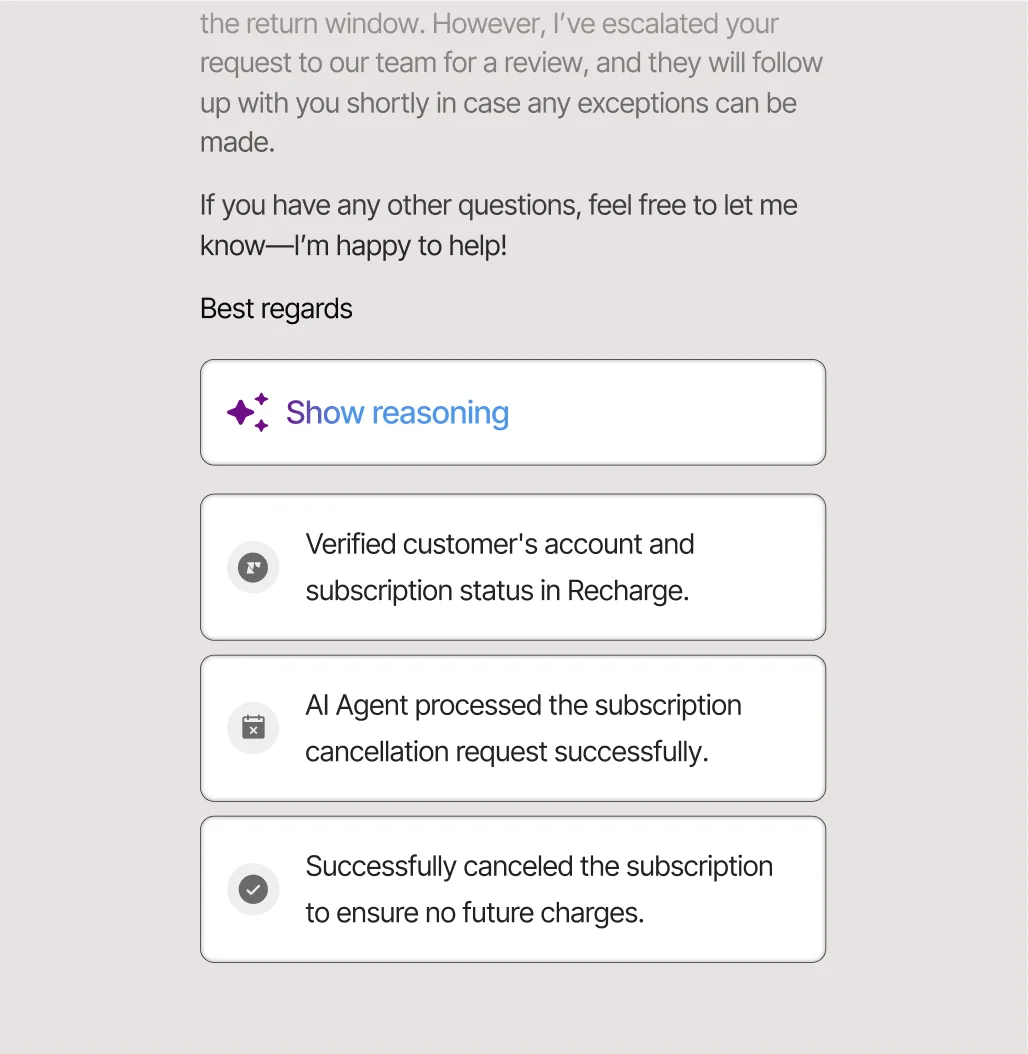
Here's how AI Agent pricing works:
- $0.90 per resolved conversation on annual plans, $1.00 on monthly.
- You're only charged for fully automated resolutions, with no human in the loop.
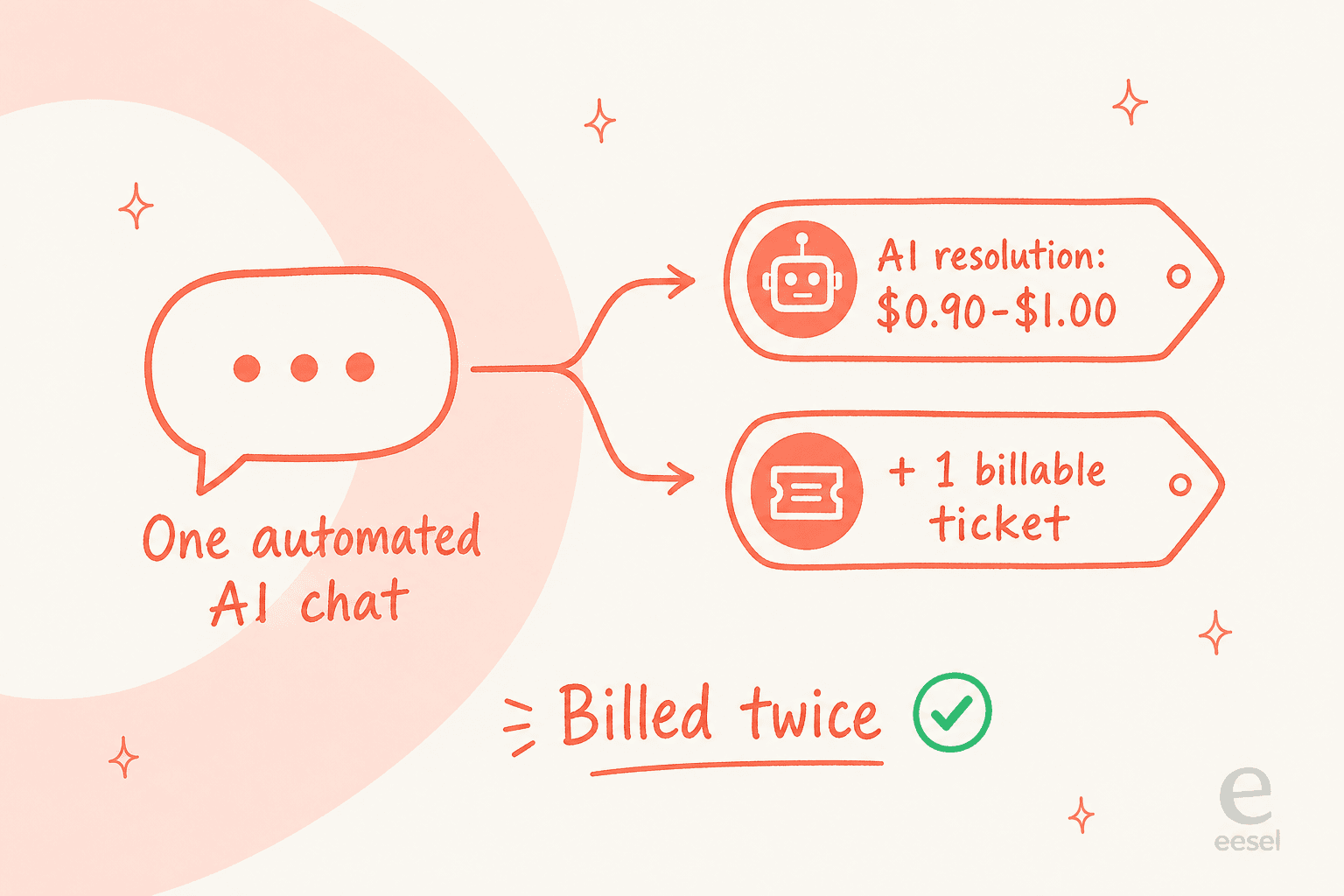
- Each automated resolution also counts as a billable helpdesk ticket.
- If a shopper reaches a human within 72 hours of an automated resolution, it's billed as a ticket only, not as an AI resolution.
That third bullet is the one that bites. One automated chat consumes a resolution charge and a ticket from your plan allowance. So when you model your costs, the AI isn't replacing your ticket spend, it's stacking on top of it.
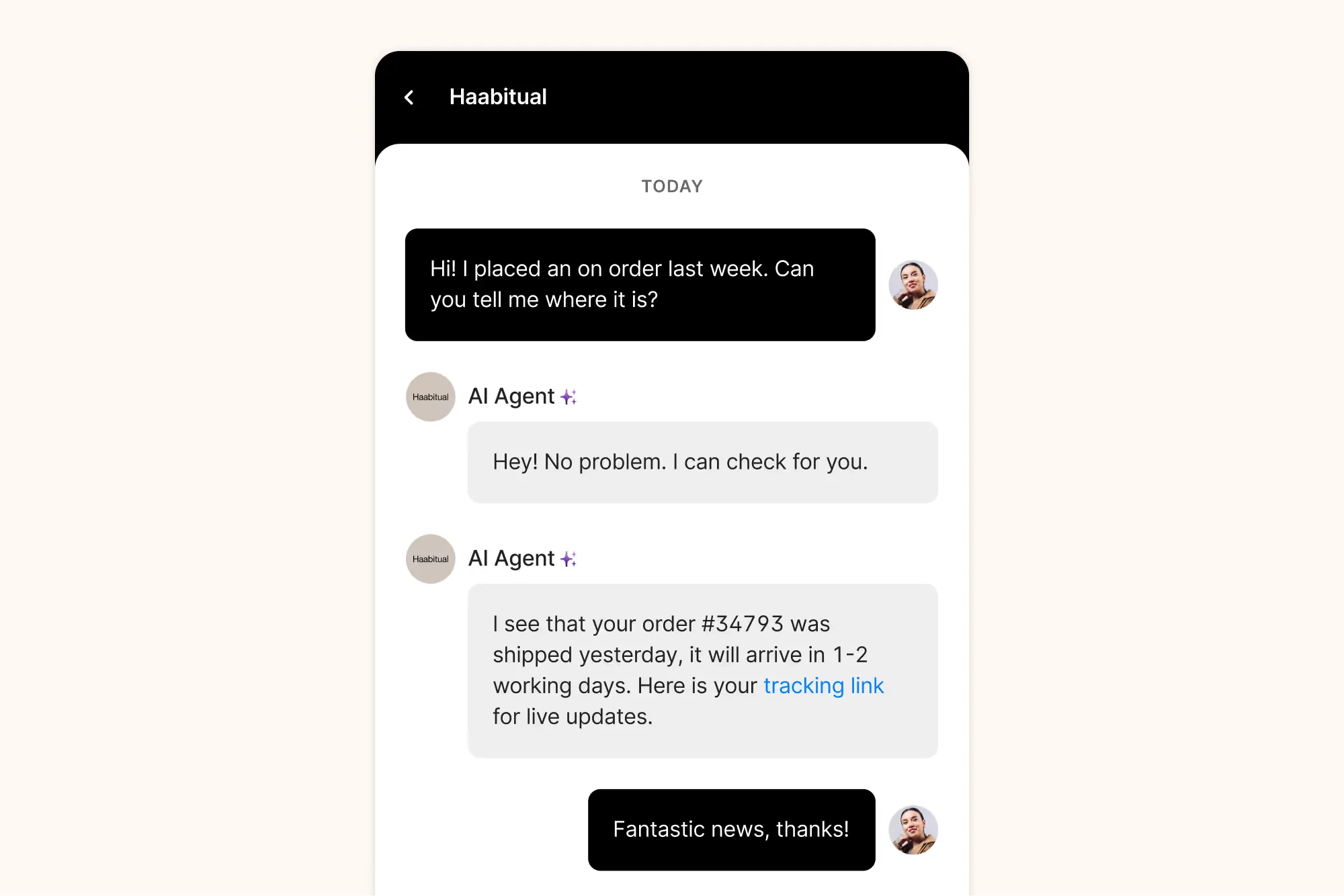
For a Shopify store, this is the exact kind of work the AI is great at: a customer asks "where's my order?", the agent pulls the live tracking and answers in seconds. Brilliant experience. But every one of those WISMO resolutions is two charges, and WISMO is the single highest-volume ticket type in ecommerce.
What a real Shopify store actually pays
Let's run numbers on a believable store: a DTC brand doing 2,000 support tickets a month, the kind of volume I regularly see on Gorgias-plus-Shopify setups (one brand I looked at recently was doing about 7,000 tickets a month on exactly that stack). Say the AI resolves 60% of them.
- Plan: Pro, $300/mo (2,000 tickets, 600 resolutions included).
- AI resolutions: 60% of 2,000 = 1,200 resolutions. 600 are included; the other 600 bill at ~$1.50 each in AI overage = $900.
- Running total: roughly $1,200/mo, before any Voice, SMS, or ticket overage.
Now hold that store's hand through Black Friday, when volume quadruples to 8,000 tickets in the month. The ticket overage kicks in, the resolution count balloons, and both meters spike together. This is the structural problem with usage-plus-per-resolution pricing: your bill is highest exactly when your margins are thinnest.
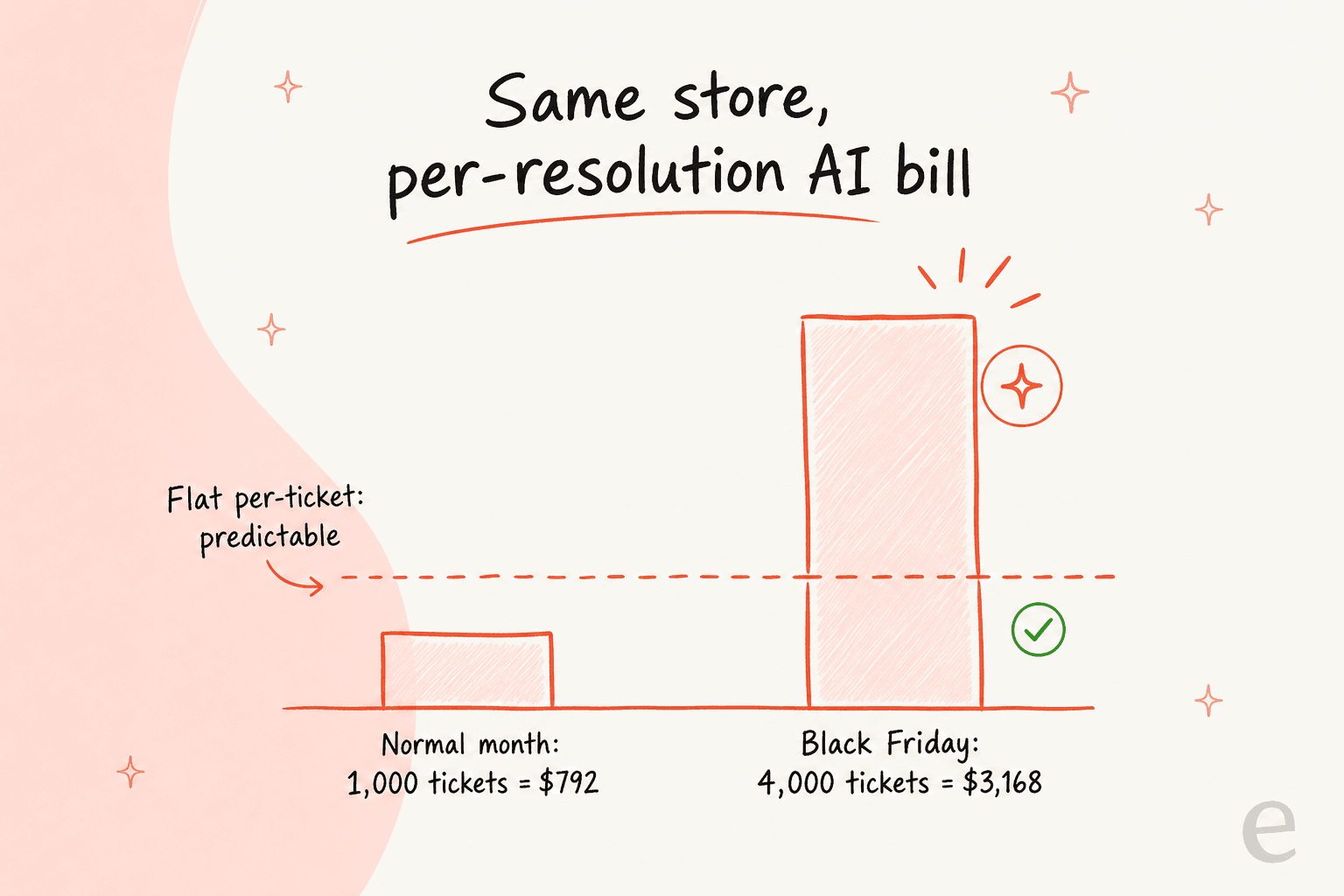
When I ran this comparison for a real store, the pattern was stark. On a per-resolution model, 1,000 tickets a month at an 80% resolution rate came to around $792; the same store at a Black Friday peak of 4,000 tickets hit roughly $3,168 (illustrative figures at about $0.99 a resolution). A flat per-ticket rate over the same period stays flat. Two things make per-resolution pricing uncomfortable for ecommerce: it charges you more the better your automation gets, and it charges you most during uncontrollable seasonal spikes.
The hidden costs Shopify owners miss
Beyond the plan and the AI meter, a handful of line items don't show up until the invoice does:
- Ticket overages. Blow past your plan's ticket cap and you pay per ticket: $0.40 on Starter, around $0.36/100 on Pro and Advanced. Gorgias will nudge you to upgrade if a higher tier is cheaper, which is fair, but it's still a variable line.
- Voice and SMS are add-ons. Phone support and SMS aren't in the base plan, they're priced separately by volume. Easy to forget when you're budgeting.
- The Starter seat cap. Three users only. If you've got a seasonal team, you're on Basic or above whether you like it or not.
- Support tier follows your revenue, not your plan. A dedicated CSM and 1:1 onboarding only kick in once your store is doing $20M+ in annual GMV (or you're on a $40k+ contract). Below that, you're on standard 24/7 email and chat support.
- The automation add-on and Flows have their own pricing nuances worth reading before you switch them on.
None of these are dealbreakers on their own. Together they're the difference between the $300 you budgeted and the $1,400 that lands.
What Shopify owners actually say about the price
The sentiment online is remarkably consistent: people love the Shopify integration and wince at the bill. From a long r/CRM thread comparing Gorgias and Zendesk for a Shopify brand:
"Gorgias is awesome if you're super deep into Shopify workflows... The downside is the price adds up quick once your volume grows."
u/ShoddyPut8089, r/CRM

The same thread landed on a clean decision rule that I think is the single most useful thing in this whole post:
"I've been around ecommerce for 10+ years and this is honestly how I'd choose: 40%+ tickets need Shopify actions → I'd lean Gorgias. Mostly conversational support → Zendesk is fine."
u/cavalry18, r/CRM
It holds up on the review sites too. Gorgias sits at a strong 4.6 out of 5 on G2 across 560+ reviews, with praise centering on ease of use and the Shopify integration, exactly the things you're paying the premium for. Operators on X echo it: "Gorgias isn't the cheapest... but it is great. They integrate with all of the platforms we use." The verdict is rarely "it's bad." It's "it's good, and it's expensive, so make sure you're using what you're paying for."
Is Gorgias worth it for your Shopify store?
Here's my honest take after running the numbers. Gorgias is the best Shopify-native helpdesk on the market, and for the right store it's worth every dollar, as I said in my Gorgias review. The question isn't whether it's good. It's whether your ticket mix matches what you're paying for.
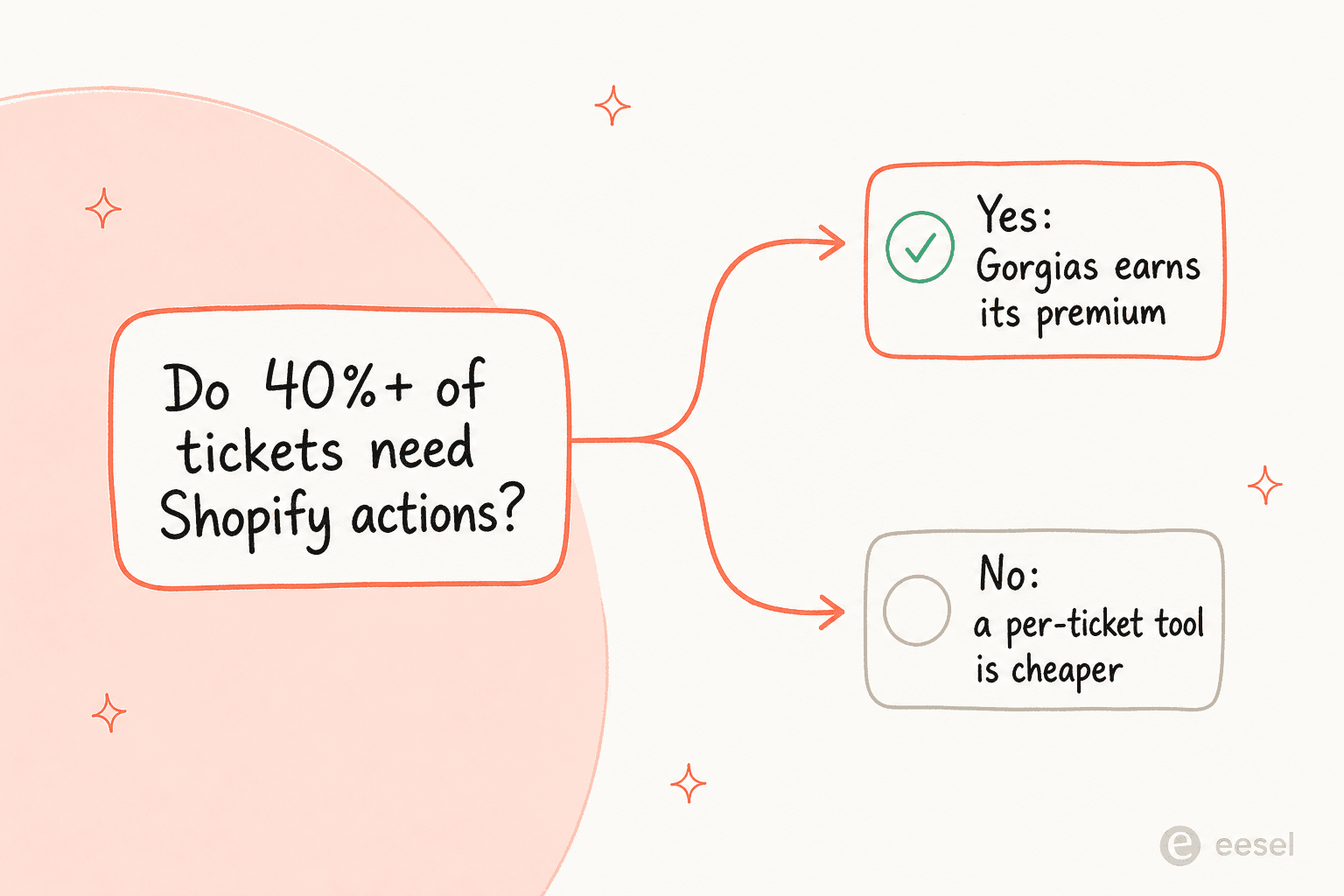
- Lean Gorgias if 40%+ of your tickets need direct Shopify actions, you run multiple channels (chat, social DMs, email), and you've got the volume to use the included resolutions. The order-action workflows are best-in-class. My Gorgias for Shopify deep-dive covers where it shines.
- Look elsewhere if most of your volume is conversational FAQs, you're a small team feeling the per-resolution sting, or your traffic is highly seasonal and a peak-season bill spike would hurt. That's when a Gorgias alternative or a flat-rate AI layer makes more sense than swallowing the full stack.
If you're cross-shopping, it's worth comparing against Zendesk for ecommerce support, Gorgias vs Help Scout, and the cheaper Shopify chatbot apps before you sign an annual contract. And if it's purely the AI cost giving you pause, you don't have to rip out Gorgias at all.
Keep Gorgias, lose the per-resolution bill, with eesel
If the breakdown above made the math feel scary, here's the practical move: keep Gorgias as your ecommerce helpdesk and put eesel AI on top to do the automation, billed at one flat rate per ticket instead of per resolution.
eesel connects to both Gorgias and Shopify, learns from your past tickets and help docs on day one, and lets you simulate the whole thing against your historical tickets before it ever replies to a real customer, so you see your resolution rate and your cost up front rather than discovering them on the invoice. Because eesel charges per ticket handled (starting at $0.40, no per-seat fee, no per-resolution surcharge), your November bill looks like your March bill, which is the opposite of how per-resolution pricing behaves during a Black Friday spike. There's no charge for tickets your human agents handle, so a gradual rollout costs you only what the AI actually does.
That's exactly the situation the Gorgias trial user I opened with was in: the automation worked, the pricing model didn't fit. If that's you, you can try eesel free, run it against your own ticket history, and see the real cost before you commit a dollar.
Frequently Asked Questions
How much does Gorgias cost for a Shopify store?
What is a billable ticket in Gorgias pricing?
Is Gorgias worth it for a small Shopify store?
How does Gorgias AI Agent pricing work?
What happens to my Gorgias bill during Black Friday?
Can I use AI on Gorgias without paying per resolution?



Article by
Kurnia Kharisma Agung Samiadjie
Kurnia is a software engineer and writer at eesel AI with two years of SEO experience, writing about AI tools, helpdesk software, and customer support. He pairs a developer's understanding of how these products are built with search-driven research into what actually ranks and resonates with the people searching for them.