

What you actually get with Gorgias AI
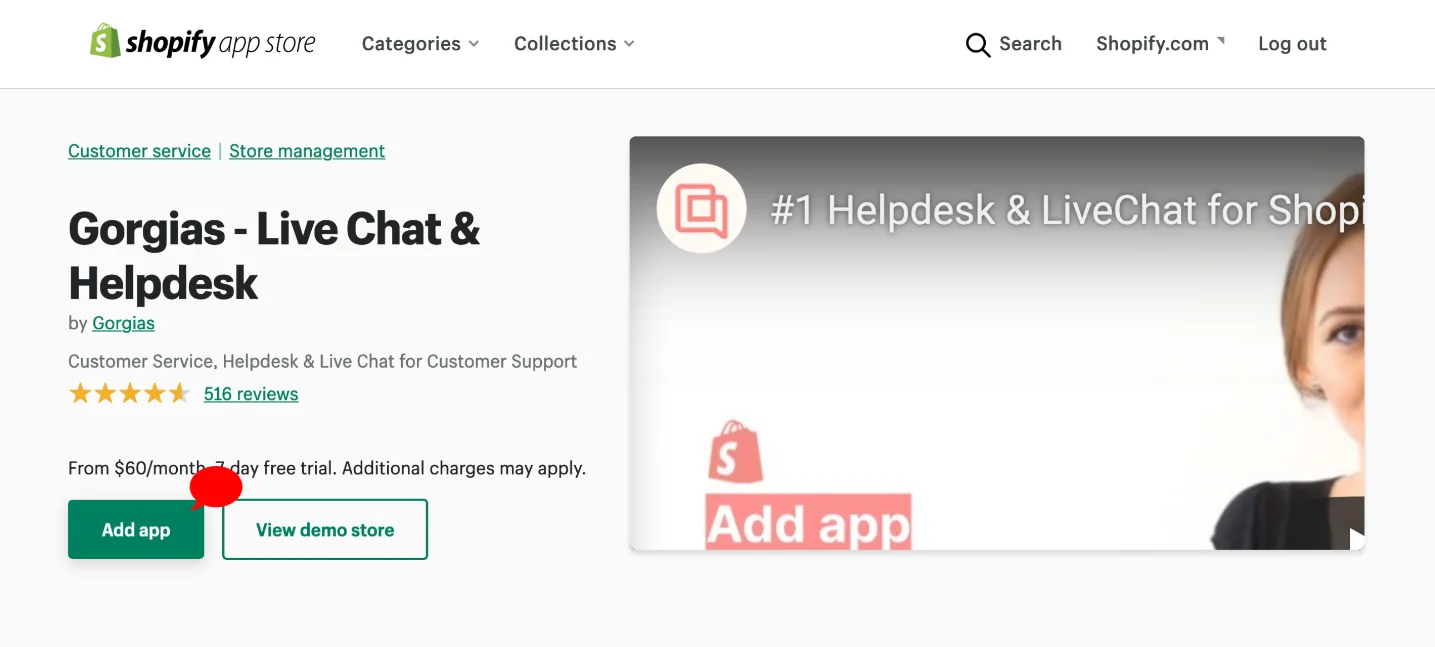
Before we can answer "is it worth it," it helps to be precise about what "Gorgias AI" even is. Gorgias is an ecommerce-first helpdesk that's been built around Shopify from the start, and it's earned the install base to match: it claims to power customer conversations for 40% of Shopify brands and serves 17,000+ ecommerce brands. On the Shopify App Store the helpdesk app sits at 4.5 stars across 516 reviews, and on G2 it holds 4.6/5 from 560+ reviews. So the underlying helpdesk is well-liked. The question is the AI.
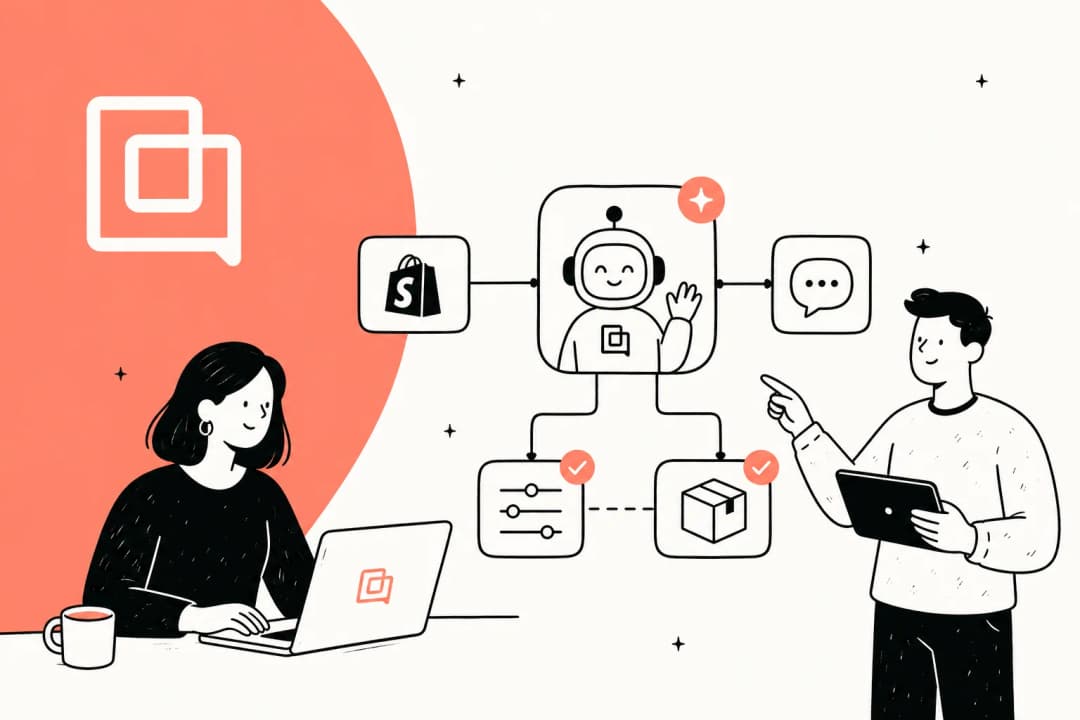
The headline product is the Gorgias AI Agent, which is pre-trained on a billion-plus ecommerce conversations and plays two roles from the same subscription: a support agent (post-purchase) and a shopping assistant (pre-purchase). Under the hood, you direct it with three building blocks: Skills (the WHEN/IF/THEN instructions that trigger on a customer intent), Actions (the steps that actually do something in Shopify, Recharge, Loop, and friends), and Guidance (reference knowledge it pulls by relevance). An Action only fires when the AI Agent calls it from inside a skill, which is the part that makes it feel less like a chatbot and more like a teammate with permissions.
The practical upshot is a decent catalogue of things it can resolve end to end: track an order, cancel an unshipped order, edit a shipping address, start a return or exchange through Loop, process a refund, pause or skip a subscription, and on the shopping side recommend products or drop a discount code at a high-intent moment. For the consequential ones, cancelling an order, editing an address, killing a subscription, Gorgias auto-forces a customer-confirmation step, which is a sane default.
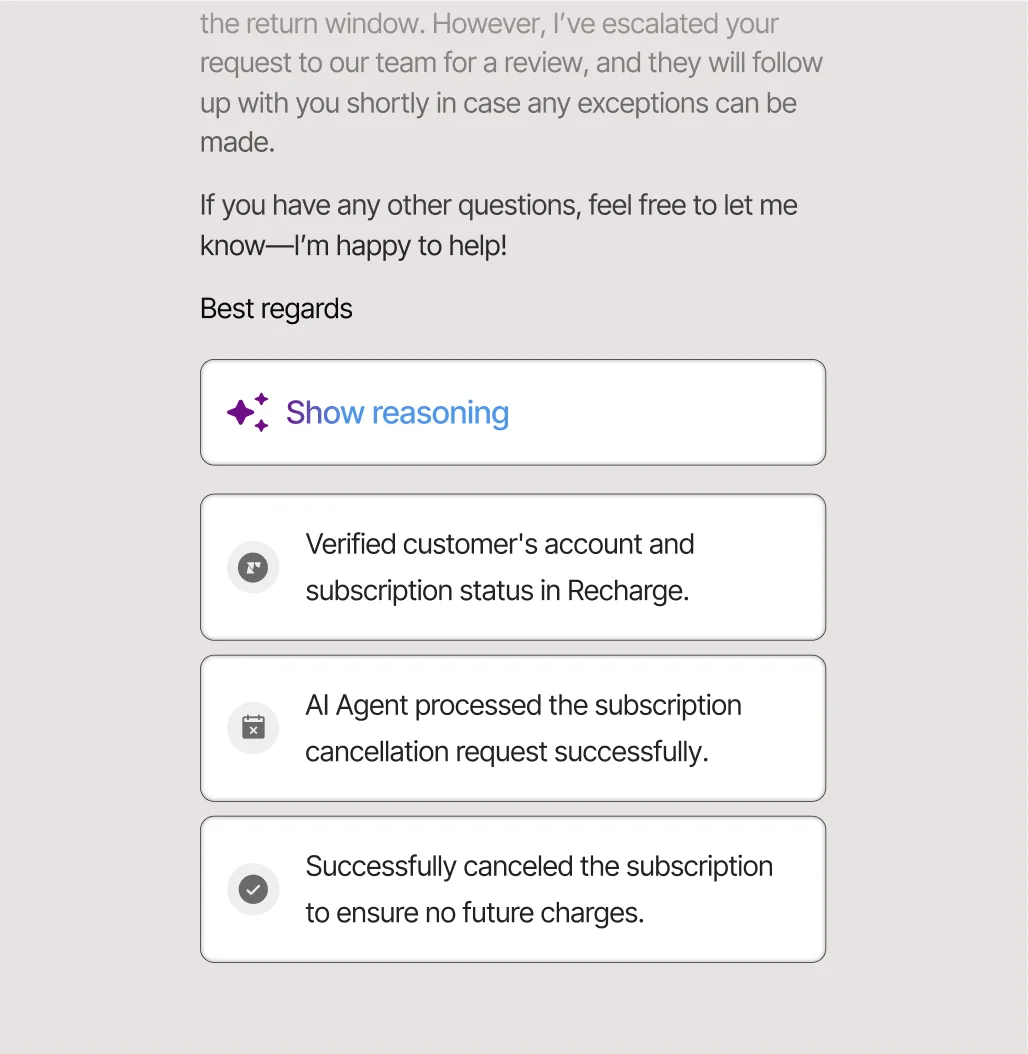
When it can't help, it hands over to a human, and the guardrails here are better than most. A generated reply has to clear a second AI model's confidence threshold before it's sent, it escalates on sensitive topics or detected frustration, and if it can't ground an answer in your knowledge, it won't guess. That anti-hallucination posture is the right one for a brand putting AI in front of paying customers.
What it costs (and the part that catches people out)
Here's where the "worth it" math gets real. Gorgias prices the helpdesk on billable tickets, not seats, which is unusual and matters a lot for high-volume stores.
| Plan | Starting price (monthly) | Tickets/mo included | Helpdesk overage | AI resolutions included |
|---|---|---|---|---|
| Starter | from $10/mo | 50 | $0.40 / ticket | 0 |
| Basic | from $50/mo | 300 | $40 / 100 tickets | 60 |
| Pro (recommended) | from $300/mo | 2,000 | $36 / 100 tickets | 600 |
| Advanced | from $750/mo | 5,000 | $36 / 100 tickets | 2,500 |
| Enterprise | Custom | 5,000+ | $32 / 100 tickets | Custom |
Source: Gorgias pricing. Annual billing includes two months free.
The AI Agent itself is a usage-based add-on on top of any plan, billed at $0.90 per resolved conversation on annual plans, $1.00 on monthly. So far, fair enough, you pay for outcomes. The wrinkle that trips teams up is in the fine print: per the how-you're-billed docs, every AI Agent interaction also counts as a billable helpdesk ticket. So a ticket the AI fully resolves carries two charges, the ticket fee and the automation fee, stacked.
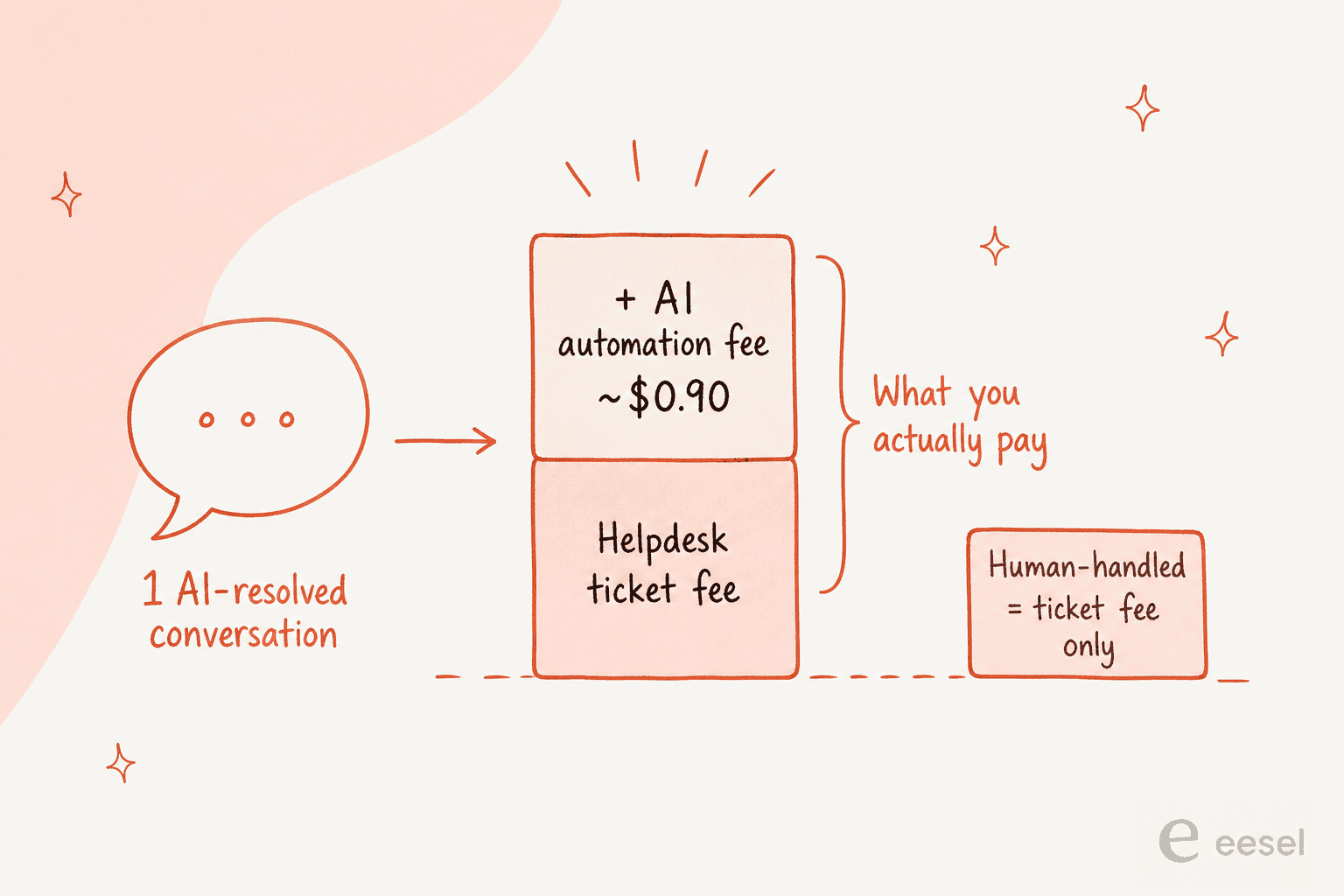
This isn't a gotcha so much as a model you have to plan around. It's also why we've watched a US swimwear brand run a dozen clean test chats, love the results, then open two cancellation requests the moment they landed on the billing page. The product worked; the sticker did the talking. If you're going to evaluate Gorgias AI, do the per-resolution arithmetic at your monthly volume first, not the demo's, and our Gorgias AI pricing guide lays out the worked examples.
Where Gorgias AI really earns its keep
Set the price aside for a second, because the capability is real. The single strongest case for Gorgias AI is the WISMO ticket, the endless "where's my order?" message that drowns every growing store. Because the order data lives natively inside Gorgias, the AI can look up the order, confirm it shipped, and hand back a tracking link without a human ever touching it.
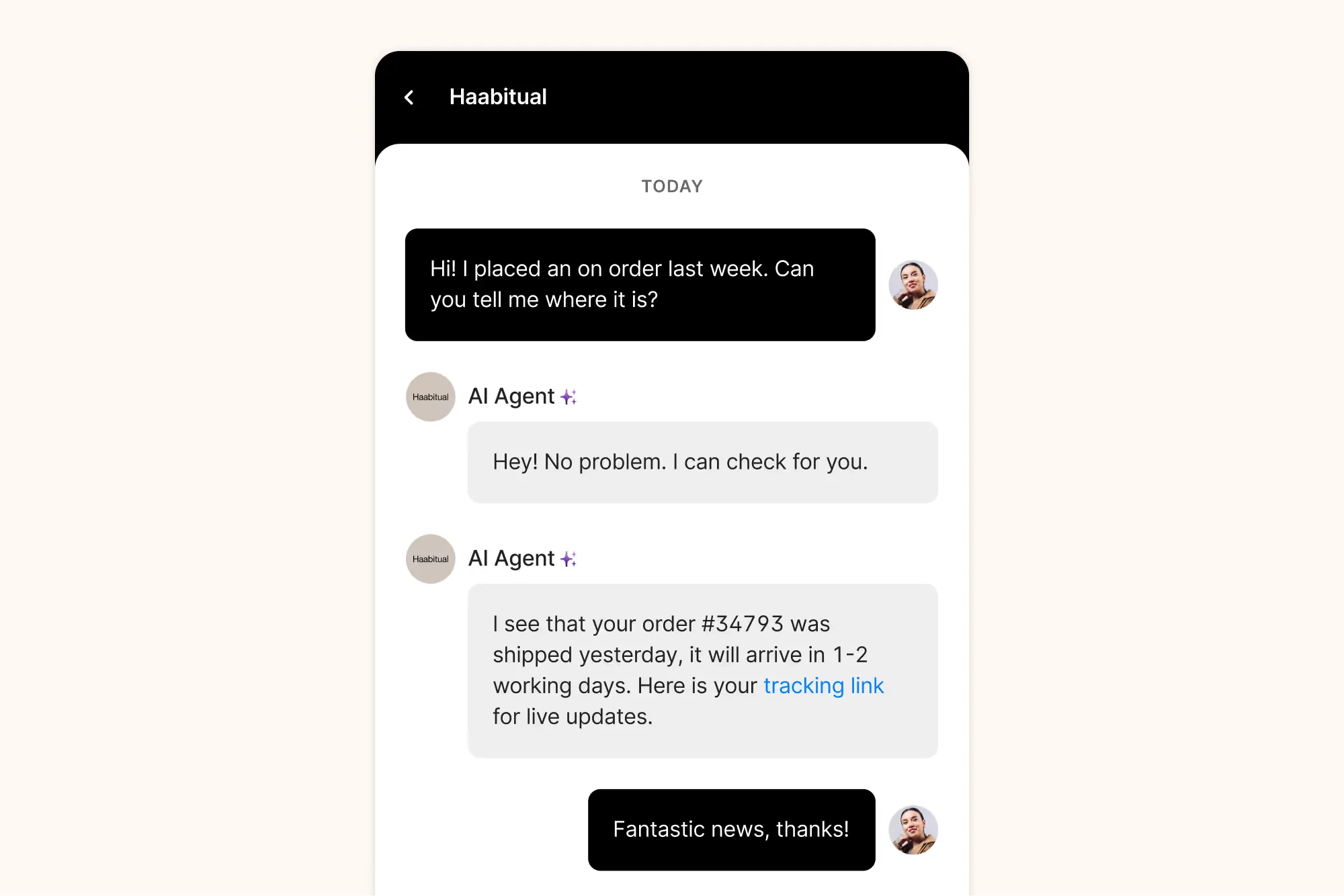
That deep Shopify integration is the thing the community keeps coming back to. From a long Reddit thread weighing Gorgias against Zendesk for a Shopify brand:
"If a meaningful chunk is WISMO, address changes, cancels, refunds, exchanges, Gorgias usually feels worth it because the agent can do the work inside the ticket with Shopify context right there."
u/cavalry18, r/CRM

The same operator put a sharp number on it: "40%+ tickets need Shopify actions → I'd lean Gorgias. Mostly conversational support → Zendesk is fine." That 40% figure shows up again and again, and it's the most useful filter we've found for this decision. Brand operators on X echo it, with one DTC founder noting that Gorgias "isn't the cheapest but for an eCommerce native brand it is great. They integrate with all of the platforms we use."
The other underrated win is that the AI plays both support and sales from one agent, so the same tool that handles a refund can also recommend a product or float a discount via the shopping assistant. For a brand that wants its support channel to also nudge revenue, that's a tidy package the generic helpdesks don't match.
Where it strains
Being fair to a tool means naming where it isn't the right fit, and Gorgias AI has three honest limits.
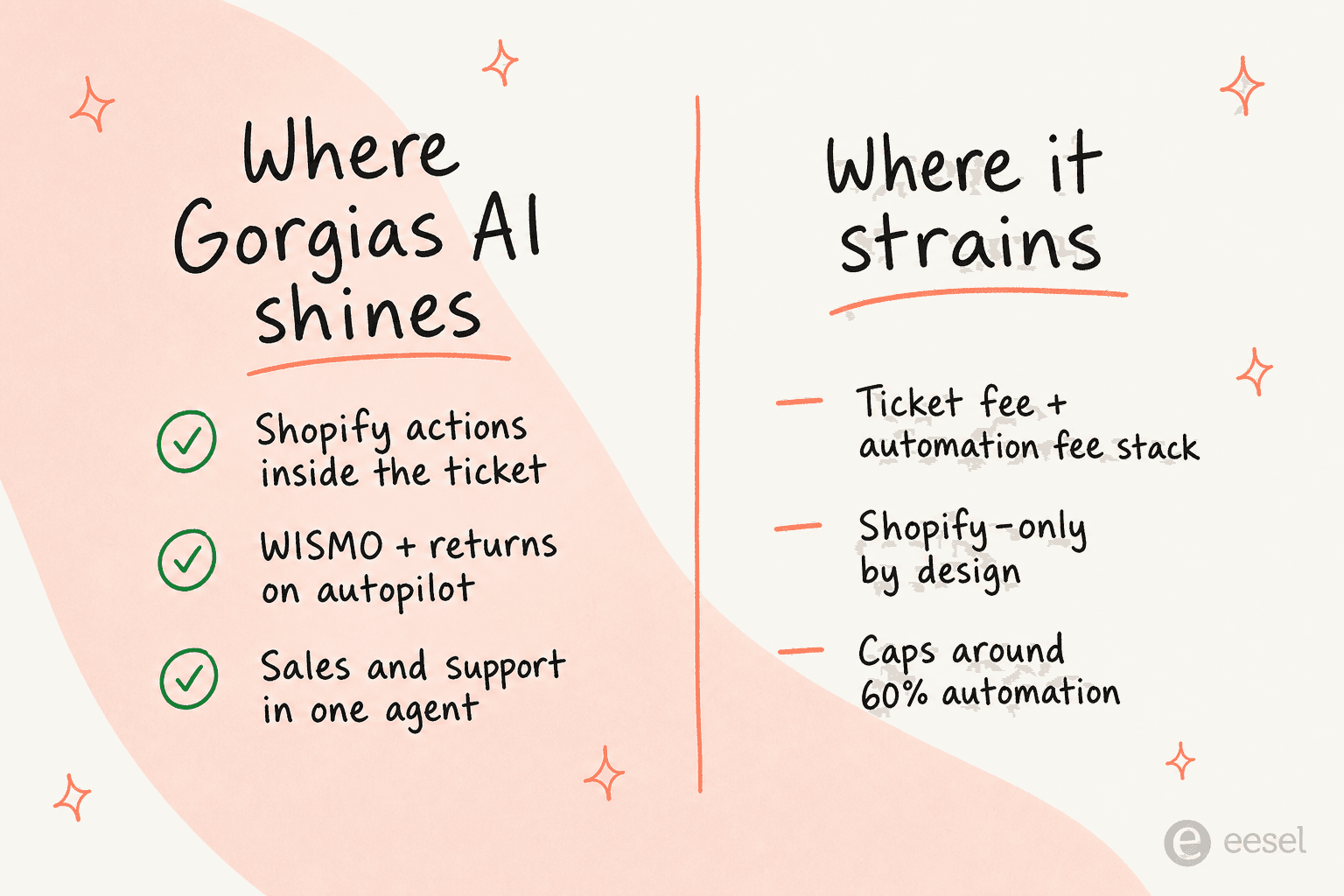
First, the cost creep we covered. It's the most-cited concern by a distance, and it bites hardest on small teams with high inquiry volume, exactly the stores that most want automation. As one commenter put it, "for a single agent (or even 2-3), the pricing jump is hard to justify unless you're really squeezing value out of those workflows."
Second, it's Shopify or bust. The AI Agent requires a connected Shopify store, you get one agent per store, and its conditions and variables draw from Shopify fields. If you run BigCommerce, Magento, or a custom cart, you're pushed onto advanced HTTP actions, which need someone comfortable making API requests. And the AI resolves on email, chat, and SMS only, not on the social DM channels (Instagram, Facebook, WhatsApp, TikTok) that many DTC brands live on.
Third, it's not plug-and-play, and the ceiling is real. Gorgias's own marketing caps automation at ~60% of email and chat, so budget for humans on the other 40%. Getting even to that number means authoring skills (each with a 30,000-character limit), building actions with conditions and app authentication, and reconciling your existing automation rules so they don't double-reply. One footgun worth flagging: switching an action to advanced options is one-way, and test conversations can mutate real customer data unless you point them at a fake profile.
On security, Gorgias is solid for most ecommerce: it holds SOC 2 Type II (renewed annually), is GDPR and CCPA compliant, and offers a HIPAA BAA on request. Worth knowing that ISO 27001 is held by its cloud host, not Gorgias itself, if that's a hard procurement gate for you.
So, is Gorgias AI worth it?
Here's our take, and it's deliberately narrow because a narrow answer is the honest one. Gorgias AI is worth it if you're a Shopify brand where order actions dominate your ticket queue. If 40% or more of your tickets are WISMO, returns, cancels, refunds, and order edits, the in-ticket Shopify automation does work no generic helpdesk matches, and the per-resolution price buys back real agent hours.
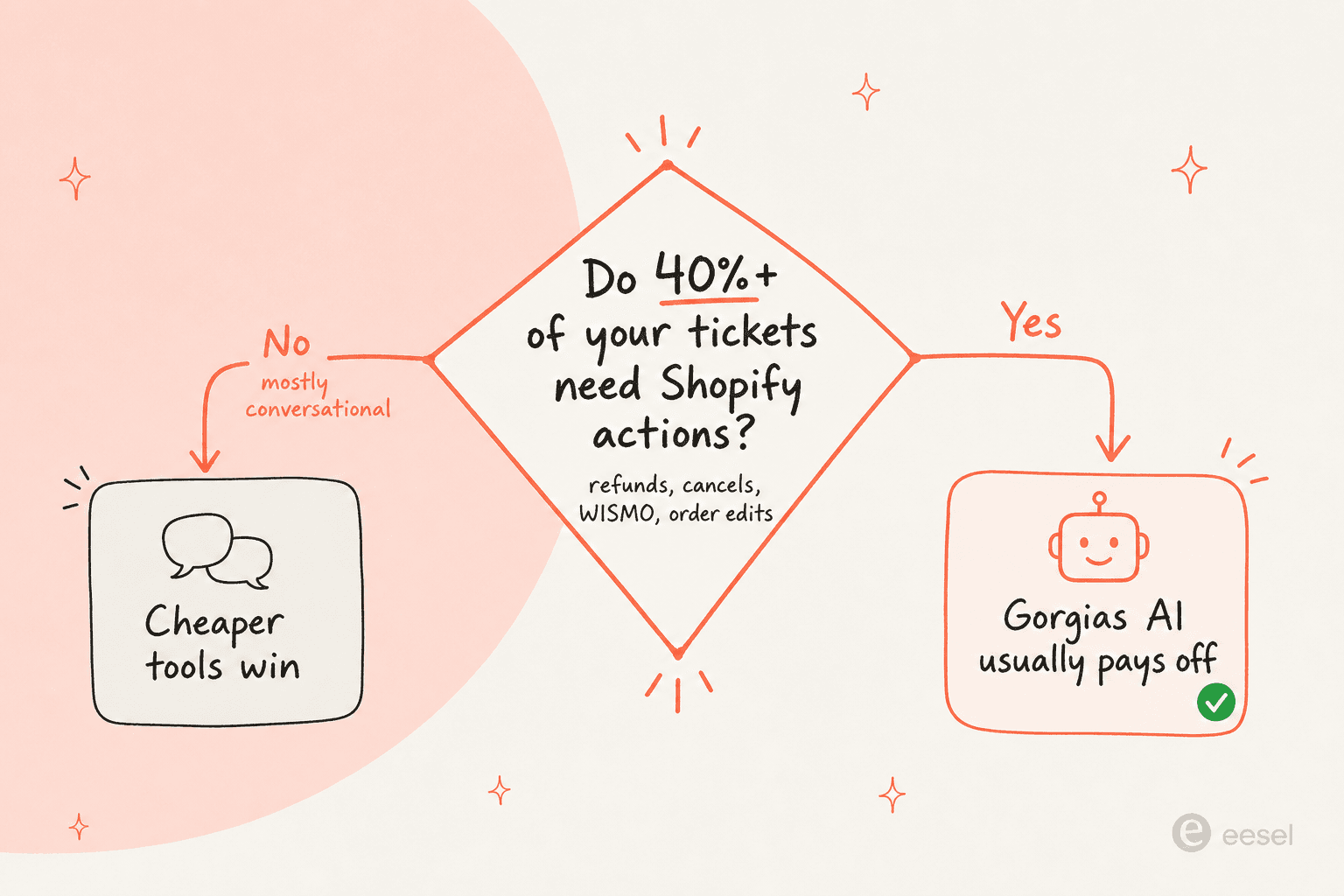
If you're below that line, mostly answering conversational questions, running a small team with high volume, on a non-Shopify platform, or simply unwilling to be double-billed per resolution, then it's a harder yes, and you've got better-value options. The deciding factor isn't the AI's quality (it's good), it's whether your ticket mix and your platform match what Gorgias is built to automate. Run the math on your own numbers, and use the free 7-day trial to test against real tickets before you commit.
What users actually say
We've sprinkled community voice throughout, but it's worth zooming out on the consensus, because it's remarkably consistent. Across Reddit, X, and LinkedIn, three things repeat: the Shopify integration is best-in-class, the AI is capable, and the price climbs faster than people expect as volume grows.
"Gorgias is awesome if you're super deep into Shopify workflows... The downside is the price adds up quick once your volume grows."
u/ShoddyPut8089, r/CRM
That tension, love the product, watch the bill, is the whole review in one sentence. It's also why so many teams in those threads land on the same conclusion: reduce ticket volume rather than just paying to handle more of it, often by pairing or replacing the native AI with a usage-based automation layer. If you want the wider field, our best Gorgias alternatives roundup covers who wins on what.
Try eesel for ecommerce support
If the per-resolution double-billing or the Shopify lock-in is what's giving you pause, that's the gap eesel AI fills. eesel is an AI agent that sits on top of the helpdesk you already run, Gorgias, Zendesk, Freshdesk, Front, plus Shopify and 100+ other integrations, and learns from your past tickets and docs on day one. Pricing is flat usage: $0.40 per ticket with no platform fee, no per-seat charge, and no separate automation surcharge stacked on top, so one resolved ticket is one cost, not two.
The other differentiator is that you can see the answer to "is it worth it" before you pay: eesel's simulation mode runs the agent against your historical tickets to forecast deflection by theme, and confidence-based routing means low-confidence answers come back as drafts, not live replies. One customer, Gridwise, resolved 73% of tier-1 requests in the first month, with results visible inside the 7-day trial. Try eesel and run it against your own ticket history to get a real number, not a demo one.
Frequently Asked Questions
Is Gorgias AI worth it for a small Shopify store?
How much does Gorgias AI cost per resolution?
Does Gorgias AI work without Shopify?
What can the Gorgias AI Agent actually automate?
What automation rate should I expect from Gorgias AI?
Is Gorgias AI secure enough for my brand?
Can I use Gorgias AI alongside my existing helpdesk?


Article by
Alicia Kirana Utomo
Kira is a writer at eesel AI with a Computer Science background and over a year of hands-on experience evaluating AI-powered customer service tools. She focuses on breaking down how helpdesk platforms and AI agents actually work so that support teams can make better buying decisions.