
What people actually mean by "churn management software"
I work the support queue, so I see churn from the wrong end: not as a number in a board deck, but as the customer who sent three tickets, got slow answers, and never renewed. That view shapes how I read this whole category.
The phrase is a fuzzy umbrella. When someone types "churn management software" into Google, they could be any of three buyers with three different problems. It helps to name them.
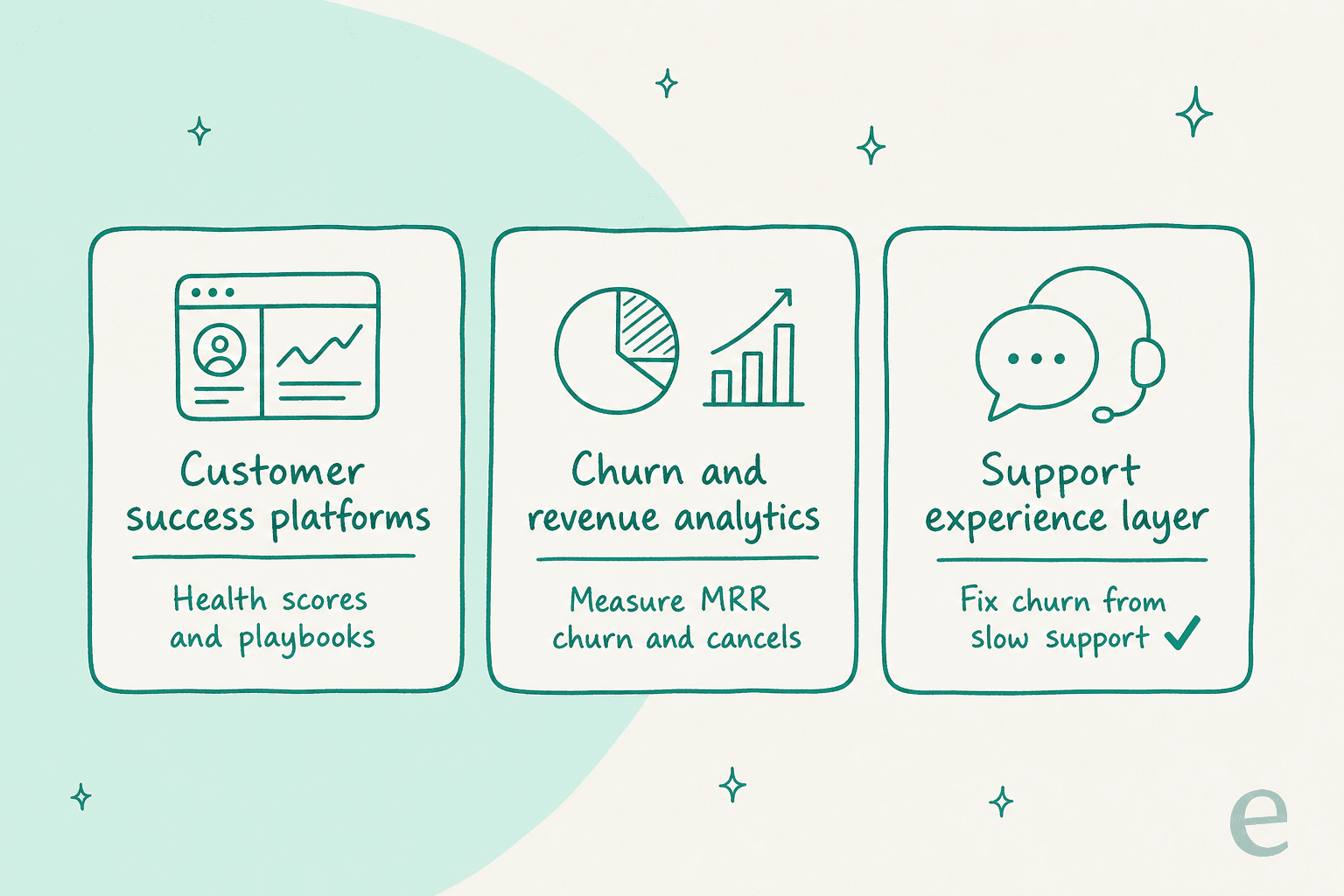
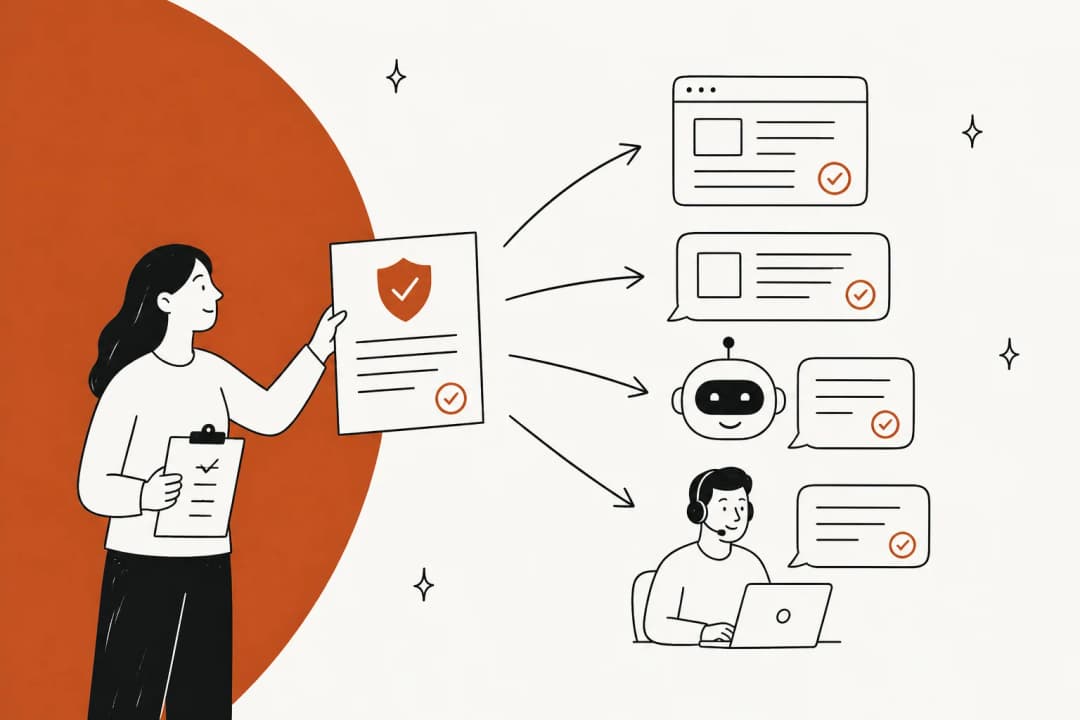
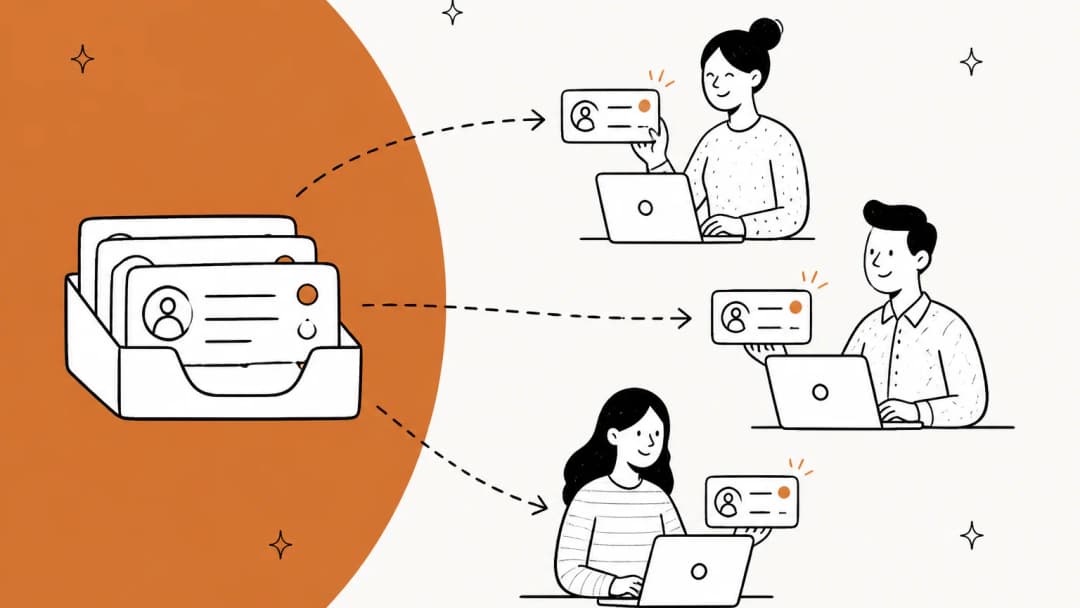
Customer success platforms (CSPs). These centralise account data, compute health scores, and fire playbooks so a customer success manager can step in before renewal. Think Gainsight, ChurnZero, Totango, Custify, and Vitally. This is the human-in-the-loop, named-account approach, best for B2B SaaS with a real CS team.
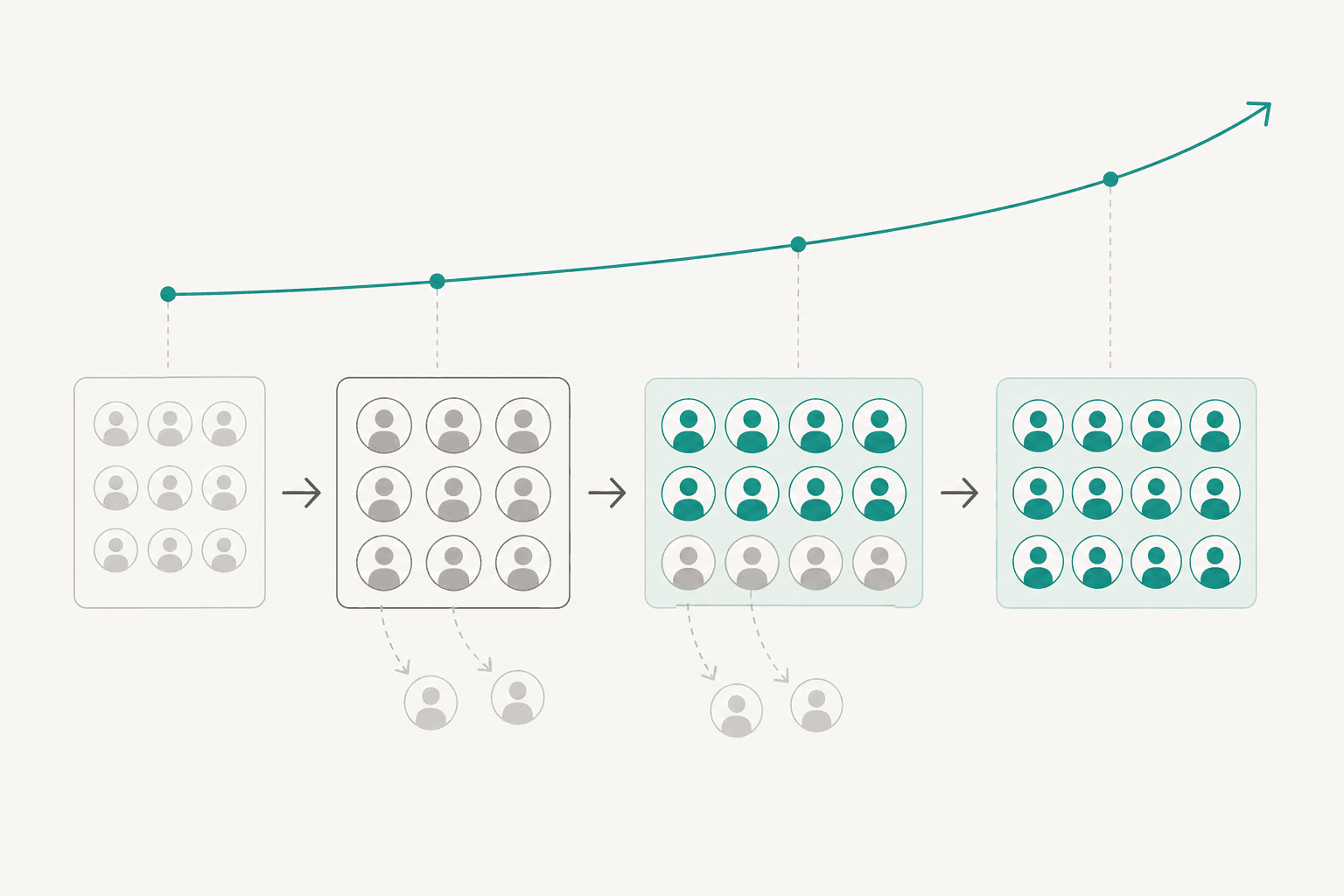
Churn and revenue analytics. Narrower and more quantitative: cohort retention curves, MRR/ARR waterfalls, involuntary (failed-payment) churn, and cancellation-flow interception. Baremetrics is the clearest example. This camp measures churn and recovers involuntary churn, best for high-volume, self-serve businesses where you can't assign a human to every account.
The support experience layer. The one most of these tools quietly leave out. A big chunk of churn is simply that support was slow, unhelpful, or absent when a customer needed it. Here the "churn management software" that matters is your helpdesk and the AI layer on top of it, because the cheapest churn to prevent is the churn a customer never even told you about. This is where an AI copilot for customer service does more for retention than another dashboard.
Most coverage stops at the first camp. The rest of this guide walks all three, then explains why I'd reach for the third first.
Get the churn vocabulary right first
Before you compare tools, get the language straight, because vendors use it loosely and it changes what "good" looks like.
- Logo churn is the count of customers lost, regardless of size. Lose 10 of 200 accounts and that's 5% logo churn, whether they were tiny or huge.
- Revenue churn is the dollars lost. One enterprise account leaving barely dents logo churn but can gut revenue churn.
- Gross Revenue Retention (GRR) is revenue kept from your existing base, excluding upsell. It caps at 100% and it's the pure "how much are we leaking?" number.
- Net Revenue Retention (NRR) is the same base including expansion. It can exceed 100%, which is why investors love it.
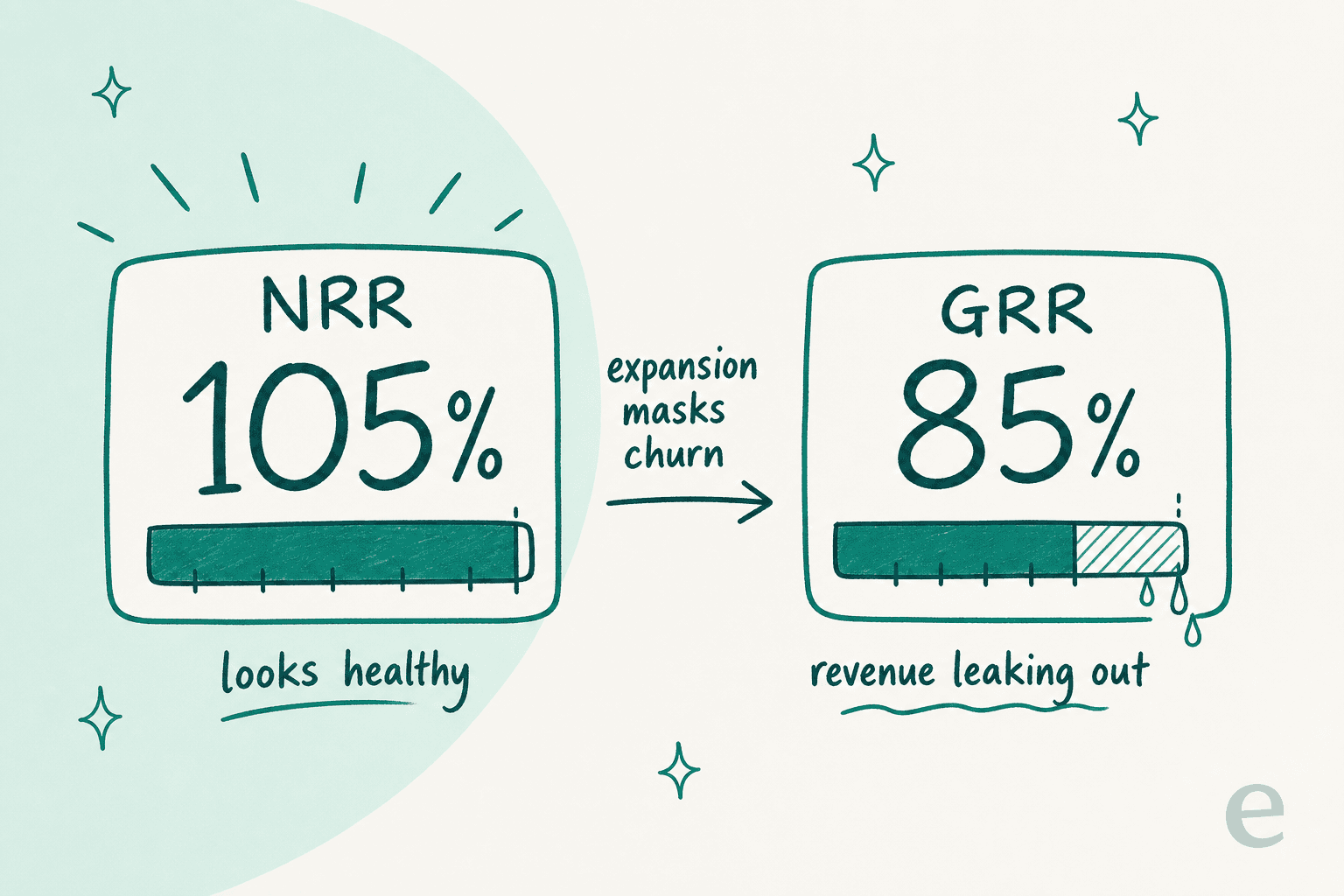
The trap: NRR can hide a churn problem. A company can post a healthy-looking 105% NRR while its GRR is 85%, because a few big expansions mask heavy small-account churn. Good churn management watches both.
Benchmarks for context: SaaS Capital's 2025 data puts median gross revenue retention for private B2B SaaS around 88-90%, with the top quartile above 95%. Benchmarkit's 2025 numbers show median NRR near 106% and GRR near 90%, with sub-$10M ARR firms sitting lower (around 98% NRR, 85% GRR). If you're leaking more than roughly 10-12% of gross revenue a year, that's the signal to act.
The tools, camp by camp
Here's the honest lay of the land. One caveat up front: almost every customer success platform is quote-gated, so I won't invent numbers. Where pricing is public, it's here.
| Tool | Camp | Best for | Public pricing | Churn-facing strength |
|---|---|---|---|---|
| ChurnZero | CS platform | Mid-market SaaS CS teams | No (quote only) | Mature automation + AI agents for CSMs |
| Gainsight | CS platform | Enterprise with complex post-sale | No (quote only) | Deepest feature set; renewal forecasting |
| Totango | CS platform | Enterprise; standalone AI scoring | No (quote only) | Unison AI churn prediction, CSP-agnostic |
| Custify | CS platform | SMB/mid-market SaaS | No (quote only) | Lighter, faster to implement |
| Vitally | CS platform | Modern SaaS CS teams | No (quote only) | Best UX + CSM productivity |
| Baremetrics | Churn analytics | Stripe-based SaaS, founders | Yes, from $49/mo | Measures + recovers revenue churn |
Customer success platforms
These are what most people picture when they hear "churn management software." They're genuinely powerful for the right team, and genuinely heavy for the wrong one.
Gainsight is the enterprise heavyweight, positioning itself as the #1 platform for customer success. It sells two Customer Success tiers, Essentials and Enterprise, but both say "Request Pricing" with no public figure. Enterprise adds renewal and expansion forecasting, which is the most directly churn-facing feature in the set. The strength is completeness; the limitation is that it's the heaviest to implement, and practitioners are blunt about it:
"We went with Gainsight and it requires a strong internal team to manage and your data needs to be clean/setup right, it was about $220k for two years, 20 licenses."

ChurnZero is purpose-built for CS and leans hard into AI agents that act on risks rather than just flag them. Its /pricing/ page 404s, so pricing is sales-led. Totango is interesting because its Unison "Customer Intelligence Engine" sells AI churn prediction that can layer on top of your existing stack without ripping out a CSP, though the three-product structure (Totango, Unison, Catalyst) takes a minute to navigate.
Custify targets SMB and mid-market teams that want health scores and automated playbooks without Gainsight-scale complexity, and Vitally is the UX favourite, with a Notion-like interface, built-in project management, and a Vitally AI layer reviewers single out for account summaries. Both are quote-gated too.
The recurring criticism across this whole camp isn't that the software is bad, it's that it's a lot:
"They are overkill for tracking NPS and CSAT. You can do that with many other tools."
The honest read: a CSP centralises data and standardises the human retention motion. It does not, by itself, reduce customer churn. Someone still has to act on the health score. If you have a staffed CS org and clean CRM data, that's a fair trade. If you don't, you've bought a very expensive dashboard.
Churn and revenue analytics
Baremetrics is the outlier here, and refreshingly, the only tool in this whole roundup with transparent, self-serve pricing. It's subscription analytics, not a CS platform: connect Stripe (or Shopify, Chargebee, Recurly, and others) and it surfaces 28+ metrics including MRR, ARR, and churn rate.
Its churn angle is measurement and recovery. Cancellation Insights runs in-app cancel-reason surveys so you learn why people leave, and Payment Recovery dunning claws back involuntary churn from failed cards. Pricing is gated by ARR, with a 35% annual discount:
| Baremetrics plan | Starts at | ARR band | Notable |
|---|---|---|---|
| Launch | $49/mo | $0-360K | Core analytics, single integration |
| Growth | $189/mo | $360K-3.6M | Custom dashboards, benchmarks, Slack |
| Scale | $749/mo | $3.6M+ | Scenario planning, analytics API |
Payment Recovery and Cancellation Insights are +$129/mo each. It's the best tool here for quantifying churn and recovering involuntary churn on a small budget. The limitation is the flip side of its focus: it tells you churn is happening and why, but it won't run the human retention motion, and it won't touch the support experience that caused the churn in the first place.
The support experience layer (the one most tools skip)
Here's where my frontline bias comes in, and where I think most churn budgets are misallocated.
A CSP tells you an account's health score dropped. Baremetrics tells you the MRR churned and that the cancel reason was "poor support." Both are looking at the crime scene after the fact. The actual moment the customer decided to leave was a slow, unhelpful, or missing support reply weeks earlier, and here's the brutal part: they probably never told you.
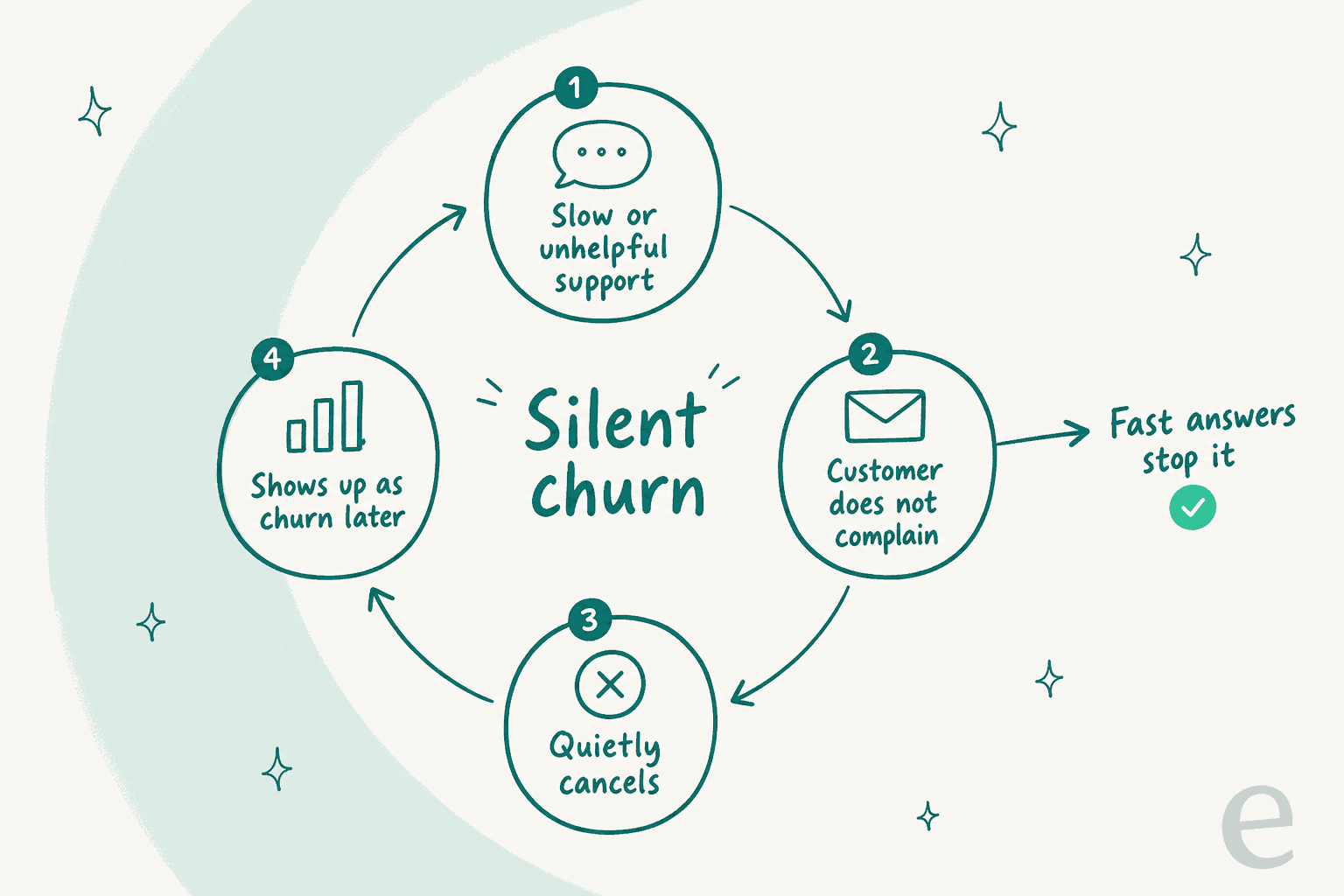
The data backs the pattern up. Per Zendesk's 2026 CX benchmark data, 73% of consumers will switch to a competitor after multiple bad experiences, and more than half will switch after just one. Worse for anyone relying on tickets to spot risk: Coveo's research found 56% of consumers rarely complain, they just quietly switch. You never get the ticket, so no health score ever moves.
You can hear it in the wild too. One founder describing why they cancelled a $15k/year subscription put the support failure at the centre:
"Customer support basically said 'yeah that happens.' I was paying $1,250/month for a 50% accuracy rate."
The economics make this the highest-leverage place to spend. The classic Bain research cited by Harvard Business Review still holds as the anchor: acquiring a new customer costs 5 to 25 times more than keeping one, and a 5% bump in retention can lift profits 25-95%. Forrester's 2024 CX Index found customer-obsessed organisations report 51% better retention. Fixing the support experience isn't a cost centre; it's a retention lever most churn tools don't even reach.
That's the gap an AI helpdesk agent closes, and it's why I'd start there before signing a CSP contract. Fast, accurate first answers stop the silent-churn loop at stage one, instead of measuring it at stage four.
So which do you actually need?
A quick way to decide, without over-buying:
- You have a staffed CS team and named enterprise accounts. A CSP earns its keep, if your CRM data is clean and you have an admin to run it. Look at Totango's Unison if you want AI scoring without replacing your stack.
- You're self-serve/product-led (PLG) and want to see and recover revenue churn. Start with Baremetrics. It's cheap, transparent, and plugs into Stripe in minutes.
- Your churn is quietly driven by support quality. This is most teams, whether they realise it or not. Fix the support experience first with an AI support layer, because it's the churn you can prevent fastest and the churn no dashboard will show you.
These aren't mutually exclusive. But if I could only fund one this quarter, and I've watched enough tickets turn into cancellations to be sure, I'd fix the support experience before I bought another place to watch churn happen.
Try eesel for the churn that starts in support
If a real slice of your churn traces back to slow or unhelpful support, that's the part eesel AI is built to fix. It's an AI helpdesk agent that plugs into the tools you already run, Zendesk, Freshdesk, Gorgias, HubSpot, Front, and more, learns from your past tickets and help docs on day one, then drafts and resolves tier-1 tickets so response times stay low and frustration doesn't quietly build into a cancellation.
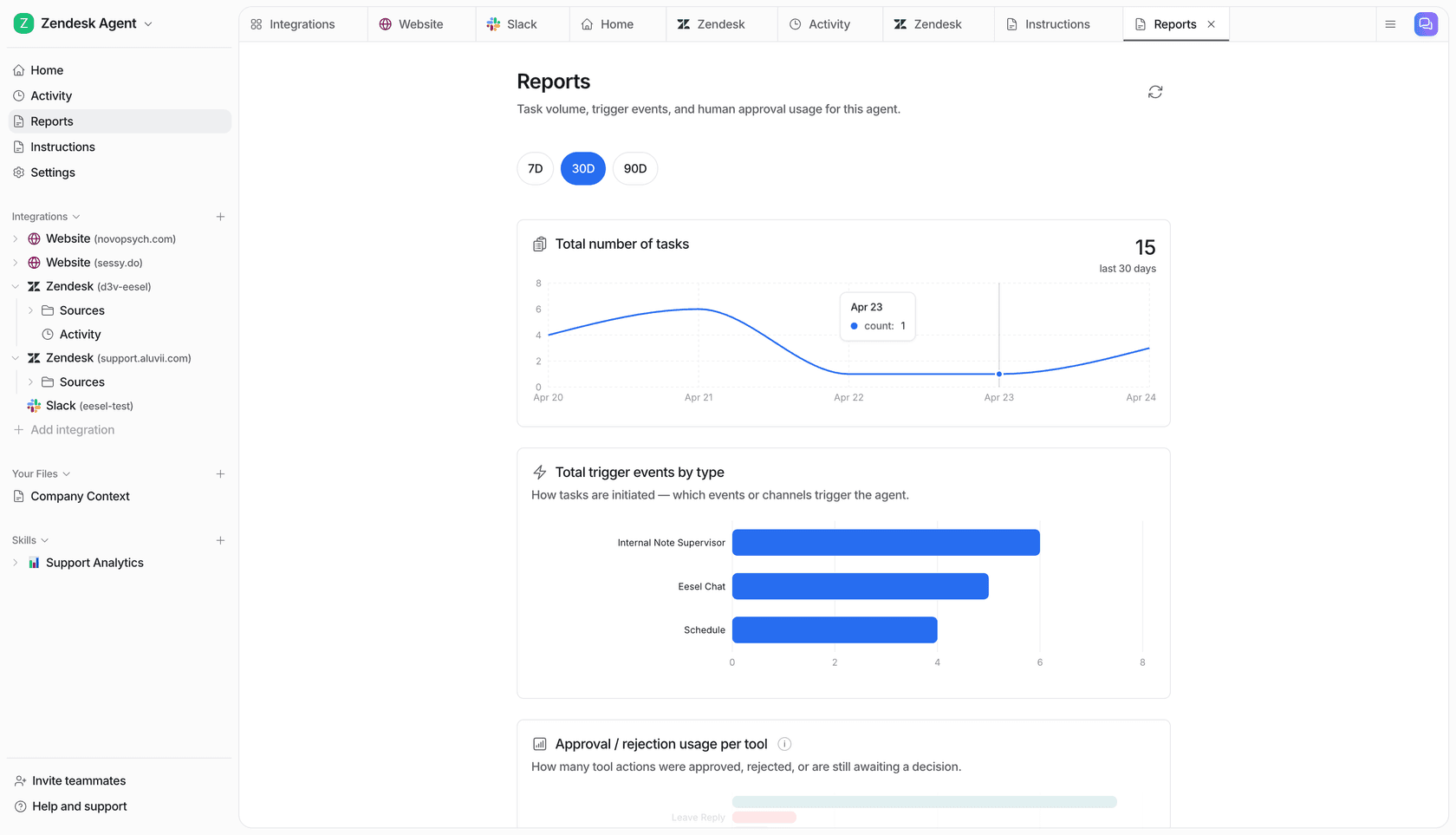
The differentiator I'd point to is the simulation mode: you run the agent against your real historical tickets before it ever touches a live customer, so you see exactly what it would have resolved and where the gaps are. That's how Gridwise got to 73% of tier-1 requests resolved in the first month, and how larger deployments like Smava run 100,000+ tickets a month on autopilot. Pricing is one fixed monthly price sized to volume (from $299/month for 500 credits, 1 credit per ticket or chat) with no per-seat fees, so it scales with volume, not headcount. It's free to try with 100 credits, no credit card, and you can see your own numbers in a simulation before committing to anything.
Frequently Asked Questions
What is churn management software?
How much does churn management software cost?
Does customer success software actually reduce churn?
What's the difference between logo churn and revenue churn?
How does AI support help with churn management?


Article by
Riellvriany Indriawan
Riell is a designer and writer at eesel AI with about two years of experience researching CX platforms, AI chatbots, and helpdesk software. She combines her design background with a sharp eye for how these tools actually look and feel in practice — making her comparisons unusually visual and user-focused.