
The retention math nobody argues with
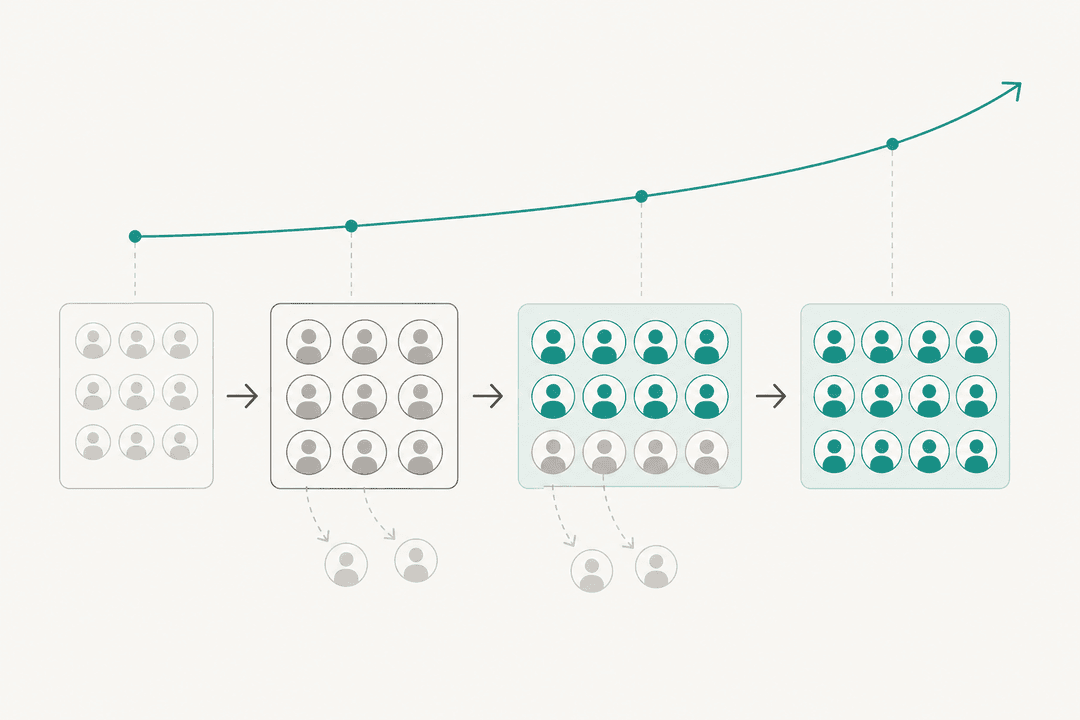
Retention is one of the few areas of a business where the numbers are almost embarrassingly one-sided. The classic benchmark comes straight from Bain & Company, in Fred Reichheld's own words: an increase in customer retention rates of 5% increases profits by 25% to 95%. Harvard Business Review later re-cited the same figure, and it has held up because the underlying logic is simple: you already paid to acquire these people, so every extra month they stay is nearly pure margin.
The flip side is just as stark. Qualtrics puts $4.7 trillion in annual revenue at risk globally from preventable churn, and finds that 32% of customers switch after a single poor experience. "Preventable" is the operative word. This isn't customers ageing out of your product or their needs changing; it's people who would have stayed if something had gone a little better.
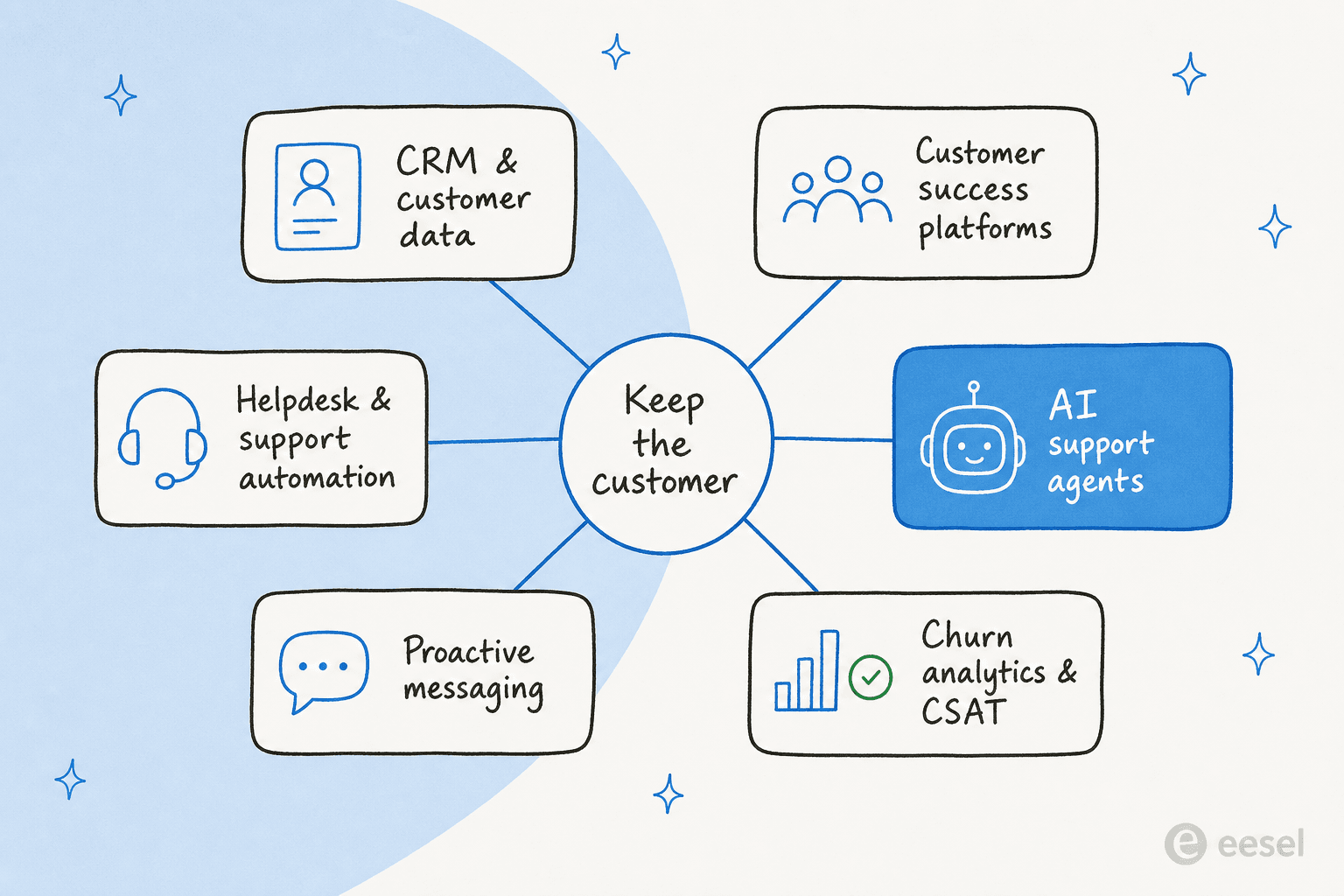
Here's what's changed recently: retention has moved from a fuzzy "customer success" concern to a tracked service KPI. In Salesforce's State of Service report, the share of service organizations tracking revenue generation nearly doubled since 2018 (51% to 91%), and the share tracking customer retention jumped 29 percentage points over the same window. Support is no longer just a cost center you tolerate; it's a retention channel you measure.
The categories, and what each one actually does
"Customer retention technology" is a big umbrella. It helps to separate the layers, because they solve genuinely different problems and a lot of teams buy one when they needed another.
| Category | What it does | Retention job | Example tools |
|---|---|---|---|
| CRM | Stores the unified customer record | The data backbone everything else reads from | Salesforce, HubSpot |
| Customer success platform | Turns usage + support data into health scores | Flags at-risk accounts before they cancel | Gainsight, ChurnZero, Totango |
| Helpdesk / support automation | Routes and resolves inquiries across channels | Fast, consistent resolution so people don't leave frustrated | Zendesk, Freshdesk, Front |
| AI support agent | Resolves tickets end-to-end, no human needed | Instant answers 24/7; removes the "repeated bad experience" pattern | eesel, native helpdesk AI |
| Proactive messaging | Triggered outreach before a customer goes quiet | Intervene before the risk becomes a cancellation | Lifecycle email, in-app nudges |
| Churn analytics | Predictive risk scoring from behavior + feedback | Tells you who is likely to leave | Predictive models, health dashboards |
| Feedback / CSAT | Surveys that surface dissatisfaction early | The leading indicator before churn lands | CSAT, NPS, CES tools |
A few of these are worth a closer look, because the differences are where teams get their spend wrong.
CRM is the system of record. Platforms like Salesforce hold the contact, deal, and service history so every team reads from one profile. Salesforce frames a single view of the customer as the thing that lets teams deliver proactive service before an issue becomes a cancellation. It's essential, but on its own a CRM doesn't retain anyone; it just makes the record legible to the tools that do.
Customer success platforms (CSPs) are the purpose-built churn fighters for subscription businesses. Gainsight, ChurnZero, and Totango pull product usage, tickets, and CRM data into health scores and automated "plays". A verified G2 reviewer, a senior director of customer success at an enterprise, put the value plainly:
"From a Customer Success perspective, ChurnZero addresses the two biggest headaches we deal with: fragmented data and constant reactive firefighting... Instead of waiting for a cancellation notice, the ChurnScore alerts you as soon as an account's health dips. It helps shift your role from 'firefighter' to 'strategic advisor.'"
CSPs are excellent at telling you an account is slipping. What they don't do is answer the customer's question. That handoff, from "we know they're at risk" to "we actually fixed the thing that made them at risk", is where the support layer lives.
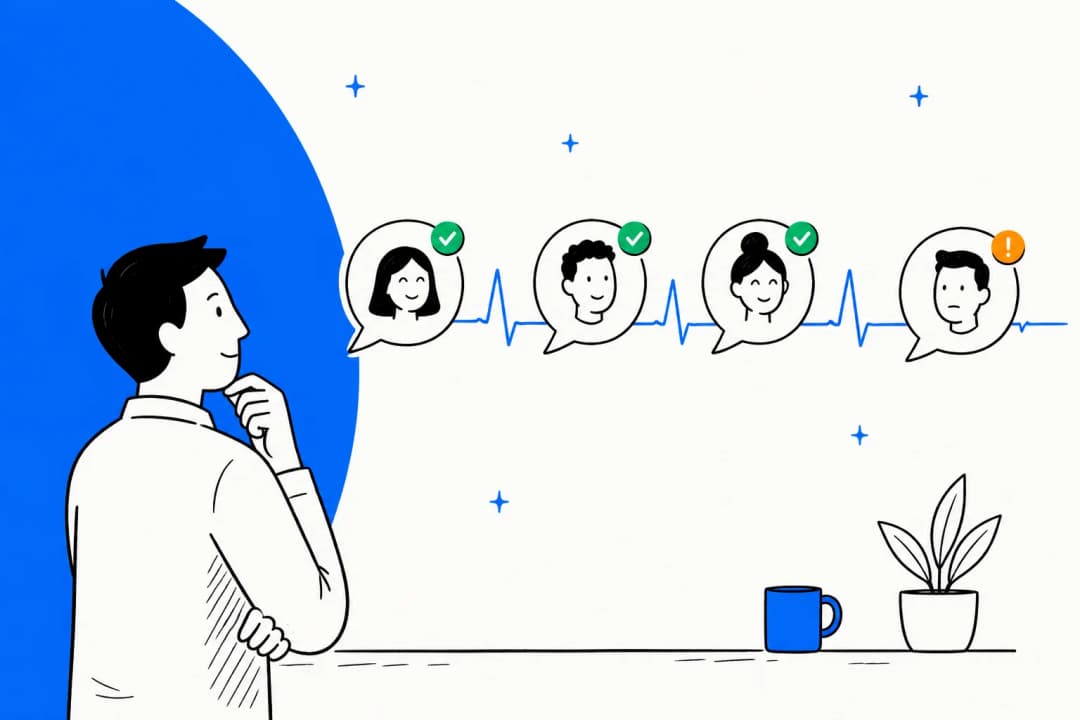
Churn analytics and feedback tools are the sensing layer. Qualtrics connects behavioral signals, feedback patterns, and engagement data into predictive churn models; G2 defines the category as software that predicts growth and churn risk from usage data. These matter more than they look, because most unhappy customers never say a word. In a statistics roundup on Zendesk's site, a Coveo figure says 56% of consumers rarely complain about a bad experience; they just quietly switch. If you're waiting for angry tickets to tell you something's wrong, you're already losing the silent majority.
Why support quality is the retention lever most stacks ignore
Here's where I'll plant a flag. Most retention budgets over-index on the prediction layer and under-invest in the resolution layer, and it's backwards.
The data on service-driven churn is brutal. Zendesk's benchmark finds 73% of consumers will switch to a competitor after multiple bad experiences, and more than half will leave after just one. Zendesk's 2025 CX Trends report pushed that further: 63% of consumers are now willing to switch after a single bad experience, up 9% year-on-year. The tolerance for a slow or wrong answer is dropping every year.
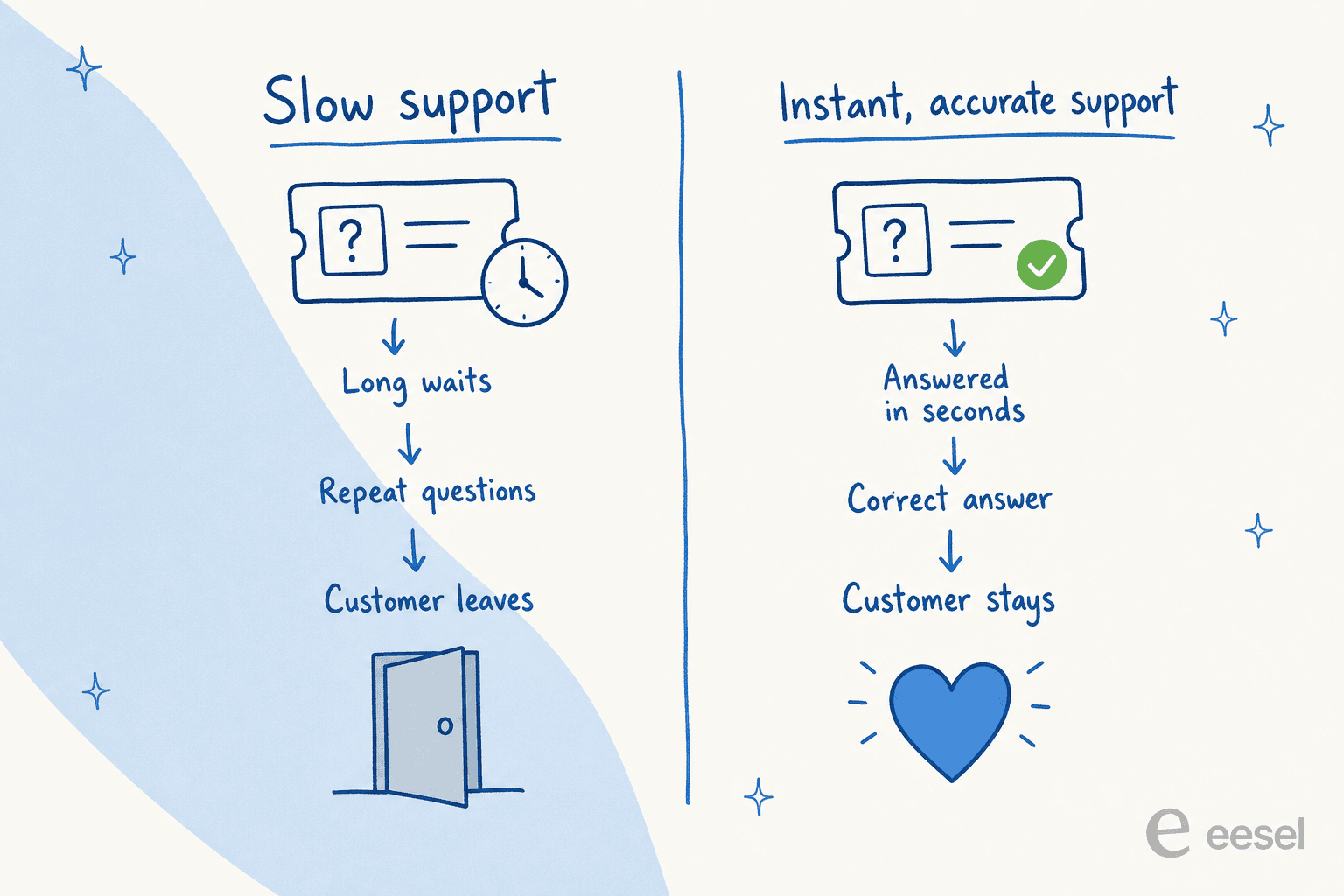
This is not a hunch for me. On the queue, the churn stories that hurt most are rarely "the product was missing a feature". They're "I asked a simple question and waited two days". That sporting-goods brand from the TL;DR didn't leave because our AI couldn't do the job; they left after a sync broke and support was slow to help, and they told us straight that faster, better support would have kept them. A customer success platform would have scored that account as healthy right up until the cancellation, because on paper it was.
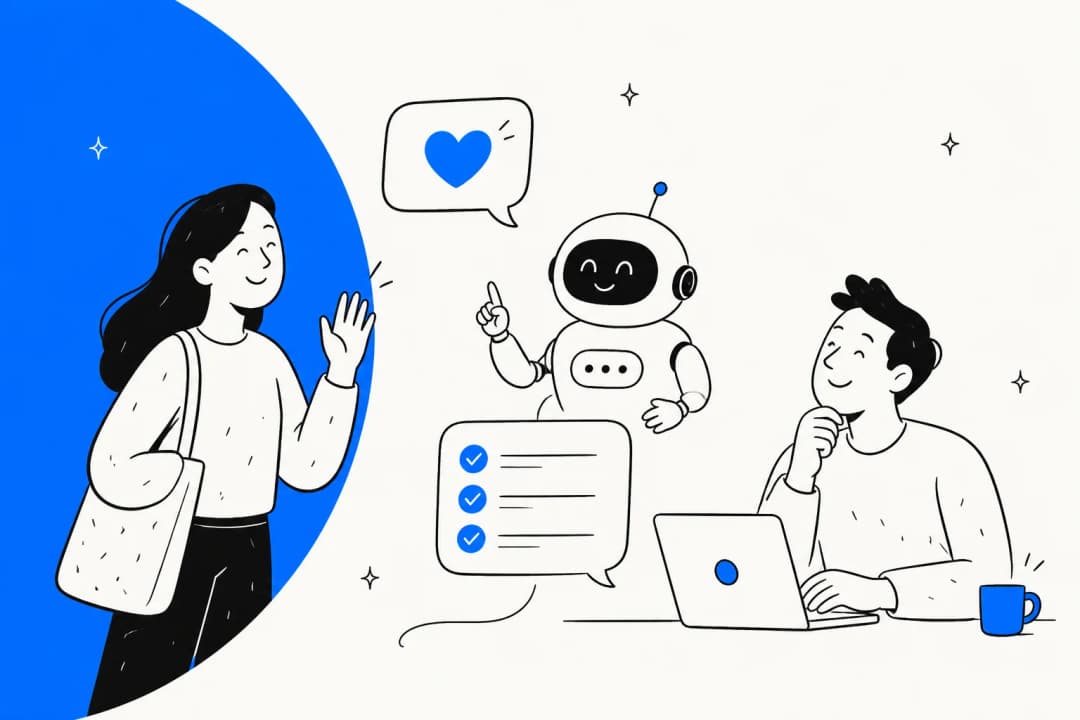
That's the gap. Prediction tells you the house is on fire. The support layer is the fire extinguisher. And a good AI support agent is the difference between "answered in seconds" and "answered in two days", which, per the numbers above, is often the difference between a customer who stays and one who doesn't.
The whole industry is leaning this way. Zendesk reports 90% of "CX Trendsetters" expect AI to resolve 8 in 10 issues without a human within the next few years, and Salesforce expects AI to handle half of all service cases by 2027, up from around 30% today. The teams treating AI customer service as a retention investment, not just a deflection tool, are the ones pulling ahead.
Put a number on it
Abstract percentages are easy to nod along to and hard to act on. Plug your own figures in below to see what preventable, service-related churn is actually costing you, and what closing part of that gap is worth. The 5% retention line ties back to the Bain benchmark above.
The number that usually gets people is the middle row: the slice of churn that's recoverable because it came from support, not the product. That's the budget you're leaving on the table when the retention stack has a great dashboard and a slow inbox.
How an AI support agent actually keeps customers
"AI resolves tickets" is easy to say and easy to do badly. The version that helps retention, rather than quietly annoying customers into leaving faster, works on a specific loop.
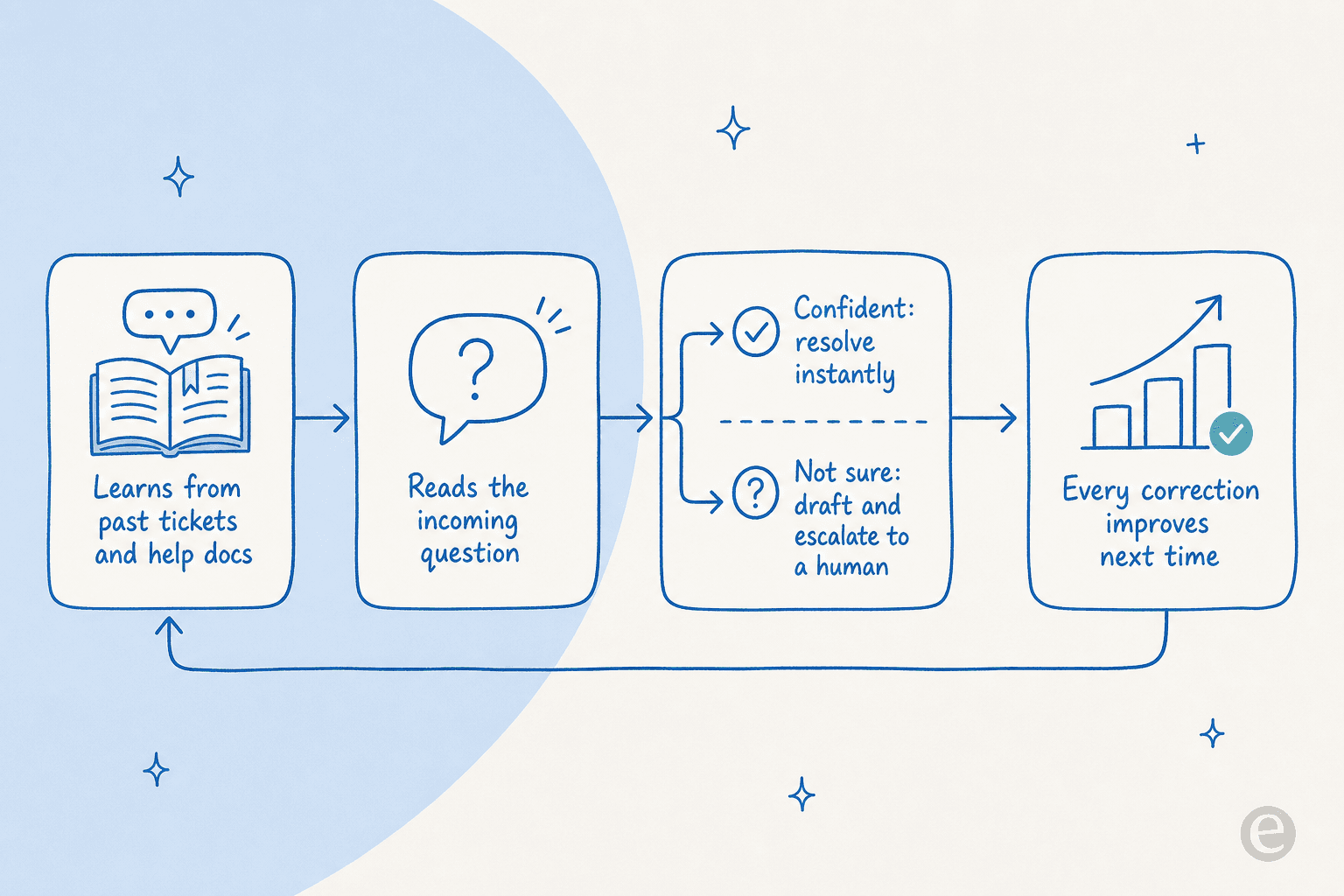
It starts by learning from your solved tickets and help center, not just a generic FAQ, so the answers sound like your team and match how you actually handle things. It reads each incoming question, and here's the part that matters most for trust: it only resolves what it's confident about, and drafts or escalates the rest to a human. One customer running 7,000 tickets described the requirement exactly:
"The AI will never be able to answer 100% of the questions, but if it tries and just answers 'sorry I don't know this,' I cannot go and check all my 7,000 tickets... I need an AI who is only handling the tickets that it's confident to handle and all the other ones, leave them alone."
That confidence gate is the whole game. An AI agent that guesses and gets it wrong does more churn damage than a slow human, because now the customer got a fast, confident, wrong answer. Done right, the loop also learns from every correction, so the set of tickets it can safely handle grows over time. If you want the deeper mechanics, we wrote a full implementation guide and a piece on AI versus human support that covers where each wins.
The retention payoff is concrete. A gig-economy analytics app on Zendesk resolved 73% of tier-1 requests in its first month with eesel, with results showing during a 7-day trial. Tier-1 is exactly the repetitive, "answer me now" volume that, left slow, produces the repeated bad experiences that drive people out.
How to choose retention technology (without over-buying)
A quick, opinionated way to sequence the spend, based on what I see actually move the needle:
- Start where the leverage is highest. For most teams that's the support layer, not a heavy customer success platform. Fixing slow, inconsistent answers addresses the biggest preventable churn driver first. Our 24/7 support guide and first-response-time guide are the concrete starting points.
- Insist on real measurement. If a tool can't report churn, retention, resolution rate, CSAT, and first response time cleanly, you can't tell if it's working. See our rundown of AI customer service metrics.
- Test on your own history before you trust it. The single biggest way AI support goes wrong is going live untested. A simulation against past tickets tells you, up front, what percentage it would have handled and where it would have slipped, before a real customer ever sees it.
- Watch for the confidence gate. Any AI support agent worth buying lets you keep it on drafts until it's earned autonomy. If a tool sends everything live on day one, that's a retention risk, not a retention tool.
- Don't let it silently drift. A chatbot escalation path and analytics that show you what it's actually doing keep quality from quietly degrading, which is a real failure mode I've watched happen when teams over-tweak prompts.
For the wider tooling picture, our roundups of AI customer service software, customer support automation tools, and helpdesk software for high-volume teams go category by category. And on the build-or-buy question, we wrote about that too, since "we'll just build our own" is a common instinct that rarely survives contact with maintenance.
Try eesel for support-driven retention
If you buy the argument that support is where preventable churn starts, eesel AI is built to plug into exactly that layer. It's an AI support agent that connects to your existing helpdesk (Zendesk, Freshdesk, Front, HubSpot, Gorgias, and more), learns from your past tickets and help docs on day one, and resolves tier-1 volume in seconds while routing anything it's unsure about to a human.
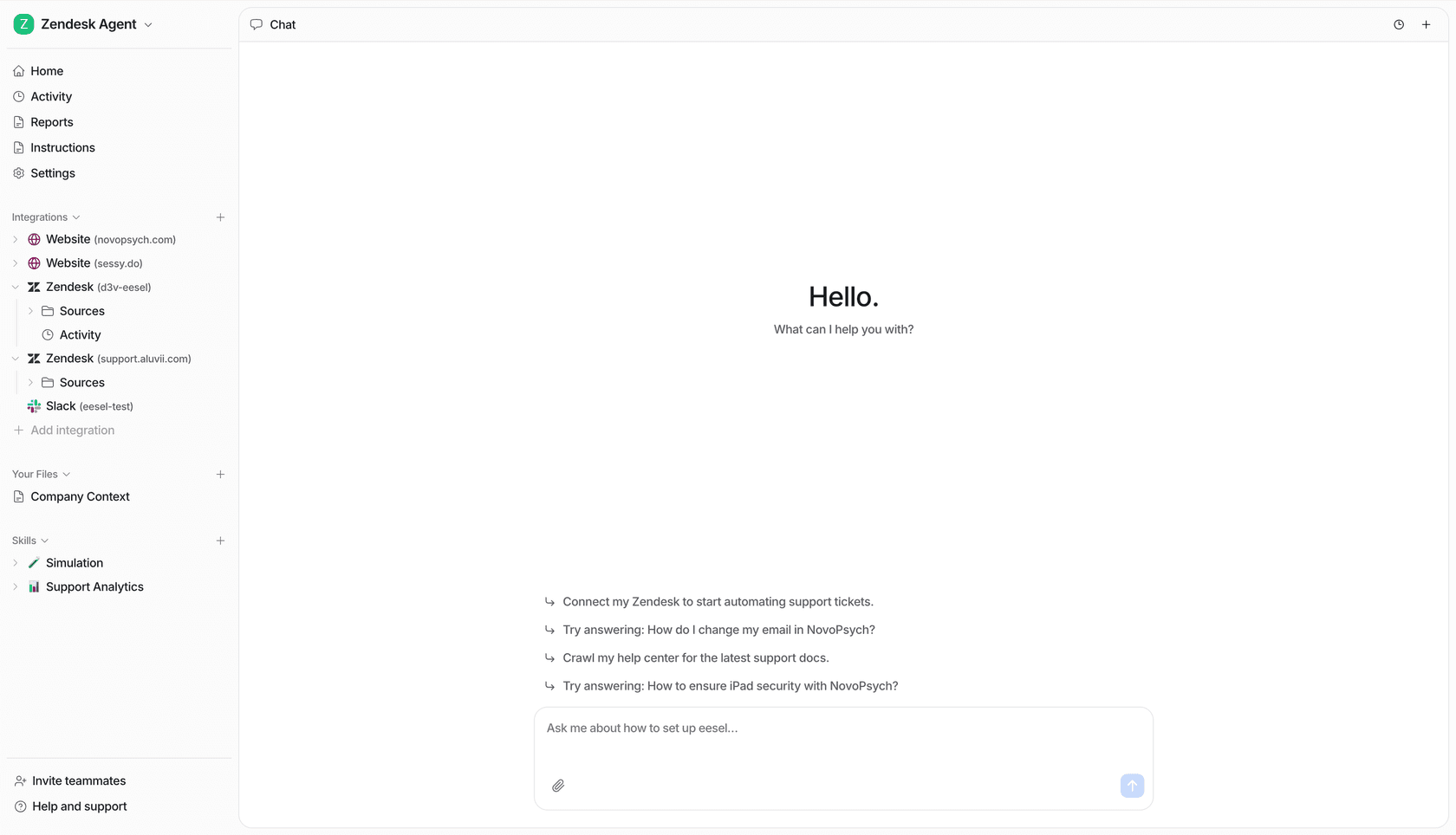
The differentiator for retention specifically is the simulation mode: you test the agent against hundreds of your past tickets, with each answer scored and fixes suggested, before going live, so you're not gambling a fast-wrong answer on a real customer. Pricing is one fixed monthly price on the Teammate plan, from $299/month for 500 credits (1 credit per ticket or chat) with no per-seat fees, so you pick the size that matches the volume you're retaining against. It's free to try with 100 free credits and no credit card, and you can connect your helpdesk and see real drafts on your own tickets before paying, rather than take my word for any of this.
Frequently Asked Questions
What is customer retention technology?
How does AI customer service reduce churn?
Is customer retention technology worth the cost for a small team?
What is the difference between a CRM and a customer success platform?
How do I measure whether my retention technology is working?
What are the main types of customer retention software?
Can AI customer retention technology work with my existing helpdesk?


Article by
Riellvriany Indriawan
Riell is a designer and writer at eesel AI with about two years of experience researching CX platforms, AI chatbots, and helpdesk software. She combines her design background with a sharp eye for how these tools actually look and feel in practice — making her comparisons unusually visual and user-focused.